Laboratory Reagent Containers: Where Chemical Inertness and Dimensional Precision Meet
Laboratory and diagnostic reagent containers occupy a critical position in the healthcare and scientific supply chain. A chemical buffer solution with the wrong pH due to extractable leaching from its container, a diagnostic assay reagent contaminated with trace metals from the packaging material, or an enzyme reagent that has absorbed onto the container wall at levels that alter the effective concentration — each of these container-reagent interaction failures produces an analytical result error that propagates through every test conducted using that reagent lot. In clinical diagnostic settings, these errors affect patient treatment decisions. In research settings, they invalidate experimental datasets. In quality control laboratories, they cause product release or rejection decisions based on incorrect measurements.
The injection stretch blow molding machine produces reagent containers that address these failure modes through intrinsically low extractable content (biaxially oriented PET from pharmacopoeial-grade resin has very low migration potential for the trace-level substances that affect analytical accuracy), dimensional precision for automated liquid handling equipment compatibility, and the optical clarity that allows operators to assess reagent condition and fill level visually before analytical use. This guide covers the specific application requirements of the laboratory reagent bottle sector and how ISBM production meets them.
Australia Ever-Power Injection Stretch Blow Moulding Machine Co., Ltd, operating from Condell Park NSW 2200, provides laboratory supply manufacturers and diagnostic reagent producers with ISBM technology and technical support calibrated for the analytical chemistry and clinical diagnostics sectors.
Chemical Resistance Requirements for Laboratory Reagent Containers
The chemical compatibility of PET ISBM containers with laboratory reagents spans a wide range that must be evaluated individually for each reagent application. Unlike standard consumer goods packaging where general category compatibility data is often sufficient for a production decision, laboratory and diagnostic reagent containers require specific compatibility evaluation because the analytical performance consequences of even minor container-reagent interactions can be significant. The following categories represent the principal reagent types used in laboratory and diagnostic applications and their compatibility considerations with PET ISBM containers.
Aqueous Buffers and Electrolyte Solutions
Phosphate, citrate, HEPES, TRIS, and carbonate buffer systems in aqueous matrices at pH 5.5–9.0 are fully compatible with PET across all normal laboratory storage temperatures and shelf lives. These are the most common reagent formulation matrices in clinical diagnostics, and PET ISBM containers are well-established for this application category. The relevant extractable concern for buffer applications is metal ion migration — trace-level iron, antimony (from PET’s polymerisation catalyst), or other metal ions from the PET matrix that could affect metal-sensitive analytical methods. Pharmaceutical-grade PET resin with low antimony catalyst residue (antimony-based polymerisation is the standard manufacturing route — antimony levels in finished food/pharma-grade PET are typically below 10 µg/L migration into aqueous solutions at normal storage conditions) is the appropriate resin specification for metal-sensitive laboratory buffer applications.
Enzyme and Protein Reagent Storage
Enzyme reagents (restriction enzymes, PCR polymerases, immunoassay enzyme conjugates) and protein reagents (antibodies, calibrators, quality control materials) present a specific packaging challenge beyond chemical compatibility: protein adsorption onto the container surface. Proteins adsorb onto polymer surfaces through hydrophobic and electrostatic interactions, depleting the reagent’s effective concentration from the solution over time and potentially denaturing adsorbed protein fractions, altering the reagent’s biological activity. PET’s surface energy is intermediate between hydrophobic polymers (PP, PE) and hydrophilic materials (glass) — PET adsorbs proteins less strongly than HDPE or PP in most cases, but more strongly than treated glass or surface-modified specialty plastics. For enzyme reagents where adsorption depletion could affect assay precision, a blocking surfactant (typically 0.1–0.5% BSA or 0.05% Tween-20) in the formulation matrix significantly reduces protein-surface interaction regardless of container material. The container material selection for enzyme reagents should include adsorption testing at the specific protein concentration and formulation matrix of the reagent — general container material claims about protein compatibility without application-specific data are not reliable guides for laboratory reagent container selection.
Organic Solvent-Containing Reagents
Reagents containing organic solvents — methanol, ethanol, acetonitrile, DMSO, DMF, and various co-solvents — require chemical compatibility assessment with PET at the specific solvent identity and concentration. Ethanol at concentrations below 40% is fully compatible with PET; above 60%, PETG is preferred. Methanol, acetonitrile, and DMSO at concentrations typically used in laboratory reagent formulations (5–20% co-solvent in aqueous matrix) are generally compatible with PET, but formal stability testing at the specific concentration and storage temperature is always recommended before commercial adoption for any organic solvent-containing reagent. Highly non-polar organic solvents (hexane, DCM, chloroform) are incompatible with PET and require glass or fluoropolymer containers regardless of concentration.
Diagnostic Reagent Containers for Automated Clinical Analysers
The shift from open manual laboratory assay systems to closed automated clinical chemistry, immunoassay, and haematology analysers over the past two decades has created a specific and technically demanding reagent container application: the analyser-dedicated reagent bottle. These containers are not generic laboratory bottles — they are precision-engineered components designed to interface mechanically with a specific analyser model’s reagent loading, bar code reading, reagent probe access, and carousel storage systems. Every dimension of the analyser-dedicated reagent bottle is determined by the analyser manufacturer’s mechanical specification, and a container that does not conform to this specification will not load into the analyser correctly, will not be read by the analyser’s RFID or bar code system, or will not allow the reagent probe to access the reagent at the correct liquid level.
Dimensional Precision for Analyser Interface Compatibility
Analyser-dedicated reagent containers are specified to tolerances that are tighter than standard pharmaceutical containers — body diameter ±0.20mm, body height ±0.30mm, neck bore ±0.10mm, base flatness ±0.15mm — because the analyser’s mechanical loading and reagent probe systems are designed to engage the container within these tolerances without individual container adjustment. ISBM’s injection-formed neck and controlled blow-mould geometry are the production approach that achieves these tolerances reliably across multi-cavity production tooling. A significant advantage of ISBM over the glass container it replaces for analyser applications is that ISBM’s dimensions are determined by tooling geometry (reproducible from machine to machine and batch to batch with controlled variation), while glass container dimensions are subject to the inherent variation of the glass forming process that makes very tight tolerances difficult to maintain in volume production.
RFID Tag and Bar Code Label Integration
Modern clinical chemistry analysers read reagent lot information, expiration date, and remaining volume data from RFID transponders or 2D bar code labels on the reagent container. These identification systems require defined zones on the container body — a flat label panel of specified dimensions at a defined position relative to the container base for bar code labels, or an RFID tag seat at a defined position for transponder integration. ISBM blow mould tooling includes these geometric features as integral elements of the container design — the label panel is formed by the mould cavity geometry with ±0.20mm flatness and ±0.30mm dimensional consistency, ensuring that the bar code label applies consistently in the same position on every container and that the bar code reading axis of the analyser engages the label correctly on every container insertion.
Reagent Probe Entry Neck Design
The reagent probe of an automated clinical analyser pierces through the reagent container’s septum or enters through a defined neck opening to aspirate reagent during each assay cycle. The neck design for the reagent probe entry must be specified to: (1) allow clean, perpendicular probe entry at the analyser’s defined approach geometry without the probe contacting the neck wall (which would contaminate the probe with container material); (2) maintain the neck geometry precisely enough that the probe penetrates to the same depth in every reagent cycle, ensuring consistent liquid uptake from the defined reagent level in the container; and (3) seal against evaporation between probe entries (for reagents that require protection from evaporation over the container’s on-board use period). ISBM’s injection neck provides the geometric precision for the first two requirements; the septum or cap design addresses the third, and must be validated in combination with the ISBM container neck as a complete reagent access system.
Optical Clarity for Visual Reagent Quality Assessment
Laboratory and clinical operators routinely assess reagent quality visually before use — looking for particulate matter, turbidity, colour change indicating degradation, phase separation in emulsion reagents, and precipitate formation. This visual assessment is a critical quality step that prevents the use of degraded or contaminated reagents in analytical procedures. It requires that the container provides an unobstructed, optically clear view of the reagent contents from the inspection angle used in the laboratory workflow.
ISBM PET and PETG reagent containers achieve haze values of 1.0–2.0% on body panel specimens — within the range of optical glass for standard laboratory viewing angles and lighting conditions. This optical clarity allows visual inspection of reagent particle content, colour, and phase state with the same reliability as glass containers for all but the most demanding optical inspection requirements (nephelometric turbidity measurement, for example, uses purpose-built optical instrumentation rather than visual inspection). For reagent applications where visual clarity is commercially critical — diagnostically important reagents where visual assessment is the primary quality check before each analytical run — ISBM’s glass-comparable clarity is a direct performance equivalence that supports the glass-to-PET transition without compromising the laboratory quality workflow.
The optical clarity of ISBM reagent containers must be specified and verified in the container specification as haze ≤ 2.0% (for standard clarity applications) or haze ≤ 1.5% (for high-clarity applications where fine particulate visual inspection is critical). Haze measurement is conducted by the ASTM D1003 method on body panel specimens from production containers, and the measurement is included in the container specification test battery for each production batch.
Cold Storage Compatibility for Refrigerated and Frozen Reagents
Many clinical diagnostic and research reagents are stored at +2–8°C (refrigerated) or -20°C (frozen), with some speciality reagents (nucleic acid polymerases, restriction enzymes, antibody conjugates) stored at -80°C. The ISBM container must maintain dimensional integrity and closure performance at these storage temperatures, and must withstand the freeze-thaw cycles experienced by reagents that are thawed and refrozen between analytical sessions.
Performance at -20°C for Enzyme and Antibody Reagents
Biaxially oriented PET maintains adequate impact resistance at -20°C for standard laboratory handling — the biaxial orientation prevents the brittle fracture at low temperatures that unoriented PET and some other plastics can exhibit. However, at -20°C, PET does become more brittle than at ambient temperature, and the drop impact resistance at -20°C is lower than at ambient. For reagent containers that are routinely handled in a frozen state (pulled from a -20°C freezer and immediately used), the container body and neck geometry must be designed to avoid sharp internal corners or thin zones that would be stress concentration points for brittle fracture at low temperature. ISBM’s preform and mould design can address this requirement through appropriate wall thickness transitions and fillet radii in the tooling design.
Freeze-Thaw Cycle Dimensional Stability
Aqueous reagents expand approximately 9% in volume when frozen. A closed container filled to its nominal capacity and frozen will experience internal pressure from this volumetric expansion unless the container design accommodates the expansion. ISBM reagent containers for frozen reagent applications should either: be filled at 85–90% of nominal capacity (leaving headspace that accommodates the expansion without pressurising the container), or be designed with flexible side wall panels that deform reversibly to accommodate the expansion — similar to the vacuum-compensation panel design used for hot-fill beverage containers, but functioning in reverse. Freeze-thaw cycle testing (minimum 5 cycles from -20°C to +25°C) on container-filled reagent samples with the appropriate fill volume and headspace confirms the container’s dimensional integrity across the expected freeze-thaw history.
-80°C Ultra-Low Temperature Reagent Storage
At -80°C (ULT freezer storage for specialty biologics, nucleic acid samples, and research reagents), standard PET ISBM containers are generally not the recommended primary container — at -80°C, PET approaches and may fall below the brittle-to-ductile transition temperature at which drop impact causes catastrophic brittle fracture rather than the controlled deformation that PET shows at higher temperatures. Polypropylene (PP) or polycarbonate (PC) containers are standard for -80°C ULT storage because of their better low-temperature impact performance relative to PET. For reagent applications that span refrigerated (+2–8°C) and standard frozen (-20°C) storage, PET ISBM containers with appropriate design and fill level are appropriate — for applications requiring -80°C storage, specialist ULT-rated containers should be used.
Reagent Container Closure Systems: Sealing Against Evaporation and Contamination
Laboratory reagent containers require closure systems that address two simultaneous sealing challenges: preventing evaporation of volatile reagent components over the container’s shelf life and on-board use period, and preventing microbial and particulate contamination of the reagent during storage and use. These requirements drive reagent container closure design toward either threaded cap-and-seal systems (for containers opened and recapped manually) or septum-based systems (for analyser-dedicated containers accessed repeatedly by probe).
Screw Cap Systems with Foil Induction Seals
For reagent containers with scheduled opening and resealing — most manually operated laboratory reagents — a combination of a polypropylene screw cap and an aluminium induction foil liner inside the cap provides both the hermetic seal for shelf-stable storage and the tamper-evidence that confirms the container has not been opened before purchase. The ISBM neck sealing surface must be specified to provide reliable induction foil bonding — Ra ≤ 0.40 µm and flatness ±0.12mm on the sealing land zone. Once the induction seal is broken on first opening, the cap alone provides the resealing closure — which must maintain adequate vapour barrier for the reagent’s volatility at the laboratory’s storage temperature. Thread engagement precision for the screw cap (±0.08mm on thread dimensions) ensures consistent cap-to-bottle sealing torque for reliable resealing across the container’s on-board use period.
Septum Systems for Repeated Probe Access
Analyser-dedicated reagent containers use septum systems — typically a rubber or elastomeric membrane across the neck opening — that allow the analyser’s liquid-handling probe to penetrate and aspirate reagent during each assay cycle without opening a cap. Between probe entries, the septum self-seals (or is positively sealed by the analyser’s closure mechanism) to prevent evaporation and contamination. The ISBM container neck bore must be dimensionally matched to the septum housing specification — the neck bore provides the mechanical support for the septum seat, and must be within ±0.10mm of the housing specification to ensure that the septum is held at the correct compression for reliable self-sealing after probe withdrawal. Septum compatibility testing for a new ISBM reagent container must include: probe insertion force at ambient and cold-storage temperatures, probe withdrawal force (confirming self-sealing after each probe entry), evaporation testing over the container’s rated on-board use period, and contamination barrier testing confirming the septum prevents external particulate and microbial entry.
Production Traceability for IVD Regulated Reagent Packaging
In Vitro Diagnostic (IVD) reagent products regulated by the TGA under the Therapeutic Goods (Medical Devices) Regulations 2002 require packaging components to be manufactured under a quality management system that supports the IVD product’s device history record — the documentation that demonstrates the device was manufactured according to its approved design specification. For reagent container manufacturers supplying TGA-regulated IVD products, the ISBM production process must generate traceability documentation linking each container production lot to the specific resin batch, process parameters, and quality inspection results used in its manufacture.
The ISBM machine’s process data logging system — recording barrel temperatures, injection parameters, conditioning settings, and stretch rod positions cycle-by-cycle — provides the process history record that IVD traceability requires. Combined with the incoming material CoC records for each resin and masterbatch lot, and the in-process and finished container inspection records, this constitutes the complete container lot history record that the IVD manufacturer needs for their device history documentation. The container lot record must identify: the specific resin lot(s) used, the process parameter values throughout the production run, the quality inspection results and any deviations detected and resolved, and the final container specification test results confirming conformance with the approved container specification before release.
ISO 13485 quality management system certification — the QMS standard for medical device manufacturers, including IVD reagent producers — is increasingly required from reagent container suppliers by major IVD manufacturers. Ever-Power provides quality system documentation support that assists ISBM reagent container producers in building the ISO 13485-aligned quality system that IVD supply chain requirements demand. Contact [email protected] to discuss the quality system documentation framework for your reagent container ISBM operation.
Specimen Collection and Transport Containers: A Key ISBM Diagnostic Application
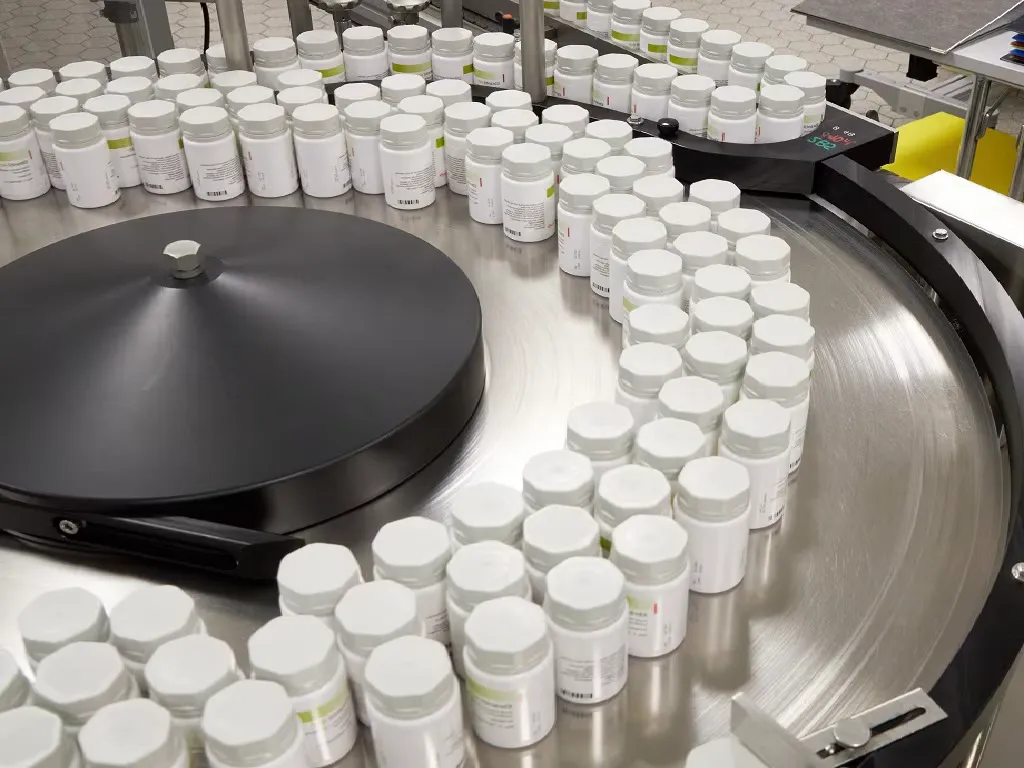
Urine collection bottles, throat swab transport media containers, faecal collection containers, and general biological sample transport containers represent one of the highest-volume diagnostic packaging segments in the Australian laboratory supply market. Every pathology laboratory in Australia uses urine collection containers — the single most common diagnostic specimen container — in volumes that directly correlate with the laboratory’s test throughput. For a medium-sized diagnostic laboratory processing 500 urine specimens per day, the annual container requirement is over 180,000 units — generating a commercially significant local ISBM production opportunity for laboratory supply manufacturers serving Australian healthcare.
ISBM PET urine collection containers have specific advantages over HDPE alternatives: the optical clarity allows direct visual assessment of specimen colour and turbidity by the laboratory technician before processing; the low surface energy reduces protein and cell adhesion to the container wall, reducing the risk of specimen carryover between collection and analysis; and the dimensional precision of the ISBM neck ensures consistent engagement of the automated urinalysis analyser’s specimen probe or vacuum aspiration tube. These advantages justify a small price premium over commodity HDPE urine containers in the laboratory supply market, and are recognised by quality-focused pathology laboratories and hospital laboratory systems that specify PET for their urine collection programme.
The production economics for ISBM urine collection containers at Australian diagnostic laboratory volumes — major hospital laboratory networks ordering 50,000–200,000 units per year, national pathology groups at 500,000–2 million units annually — are well-suited to local ISBM production from single-cavity or 2-cavity tooling. The 8–14 week import lead time from offshore HDPE container suppliers creates significant inventory management costs that local ISBM production eliminates, and the product differentiation advantage of PET transparency provides the commercial rationale for a premium positioning that justifies the production investment.
Production Configuration for Laboratory Reagent ISBM Operations
Laboratory reagent container ISBM operations typically produce a range of container formats — from 10ml dropper-neck diagnostic reagent units through 100ml enzyme reagent containers to 1L buffer and wash solution containers — across multiple product lines with different chemical compatibility, closure, and labelling requirements. The production configuration that serves this diversity efficiently depends on the volume profile across the range.
| Reagent Format | Volume Range | Typical Annual Volume | ISBM Configuration |
|---|---|---|---|
| Analyser-dedicated reagent | 20ml – 100ml | 50K – 500K units | 1–2 cavity, HGYS150-V4 |
| Urine collection bottles | 60ml – 120ml | 200K – 2M units | 2–4 cavity, HGYS200-V4-B |
| Buffer and wash solutions | 500ml – 2L | 50K – 300K units | 1–2 cavity, HGYS200-V4-B |
| Microbiological transport media | 5ml – 50ml | 100K – 1M units | 2–4 cavity, HGYS150-V4 |
| Enzyme and protein reagents | 1ml – 50ml | 10K – 100K units | Single cavity prototype + production |
For operations producing across multiple reagent container formats, a single ISBM machine platform with configurable tooling and recipe management accommodates the full range through scheduled changeovers — achieving the production flexibility that a diverse reagent container portfolio requires without the capital overhead of maintaining separate dedicated machines for each format family.
Ever-Power’s Support for Reagent Container ISBM Production in Australia
Australia Ever-Power Injection Stretch Blow Moulding Machine Co., Ltd provides laboratory supply manufacturers and IVD reagent producers with ISBM machine technology and application engineering support calibrated for the analytical chemistry and diagnostic sectors. The technical support programme for reagent container applications covers: container design review for analyser interface compatibility (including dimensional specification review against the analyser manufacturer’s published tolerance requirements), chemical compatibility guidance for specific reagent formulation matrices, closure system qualification protocol development, freeze-thaw cycle qualification programme design, and the IVD traceability documentation framework that ISO 13485 quality systems require from container suppliers.
For laboratory supply manufacturers currently importing reagent containers from offshore glass or plastic container suppliers, Ever-Power’s pre-investment analysis provides a total cost of supply comparison incorporating all supply chain cost components — landed cost overhead, lead time inventory carrying cost, and the quality differentiation premium achievable from locally produced PET containers — against the in-house ISBM production cost at the specific volume and product range of the operation.
Contact [email protected] or visit isbm-technology.com/contact-us to discuss your reagent container ISBM production requirements with our Condell Park NSW engineering team.
Recommended Machine
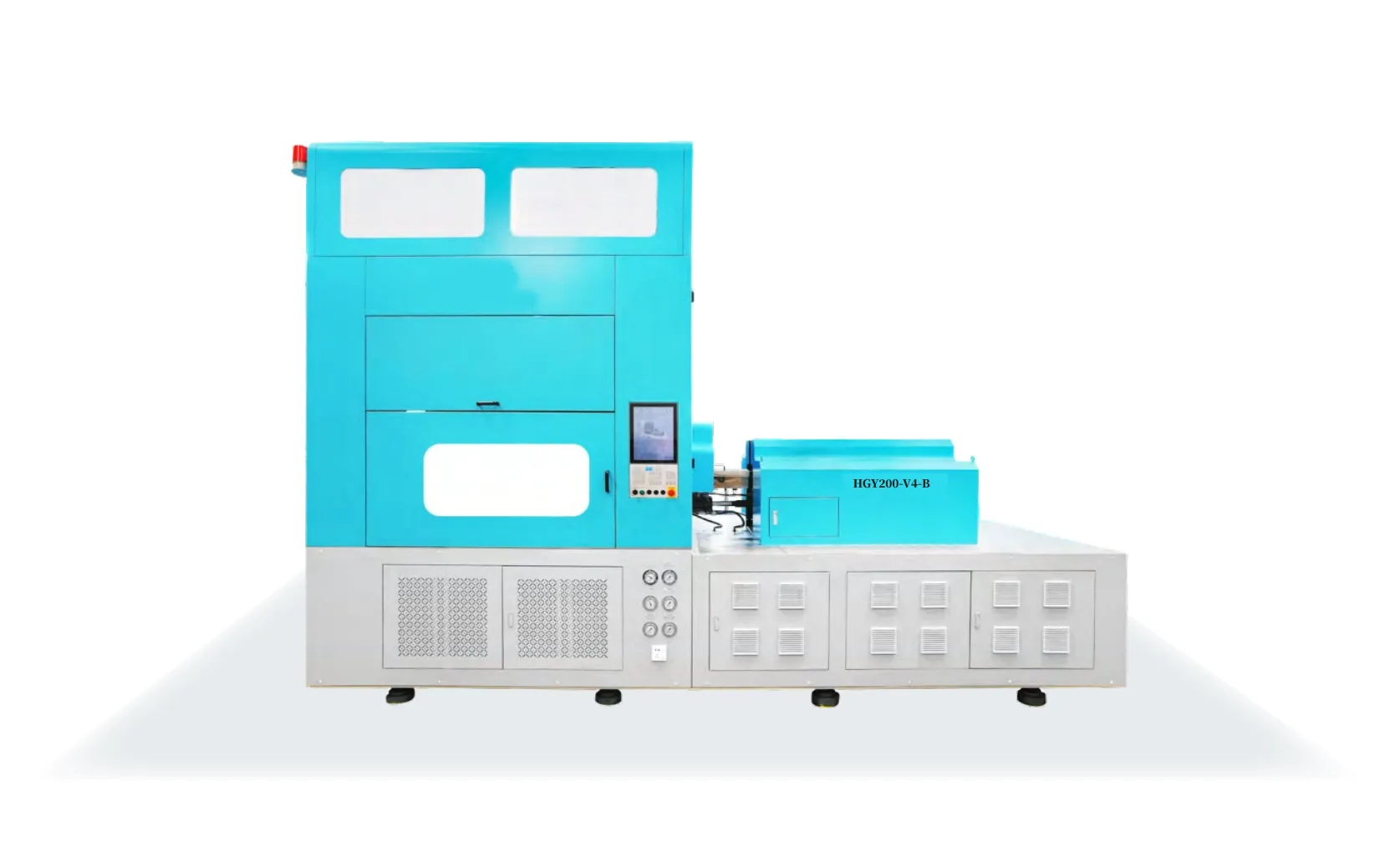
HGYS200-V4-B — Four-Station ISBM for Reagent Container Production
For laboratory reagent container and diagnostic packaging operations producing 50ml–500ml containers across multiple product formats with diverse chemical compatibility and dimensional precision requirements, the HGYS200-V4-B four-station one-step ISBM machine provides the production platform that balances precision and flexibility for the diagnostic supply sector. The four-station rotary design delivers consistent cavity-to-cavity dimensional uniformity critical for analyser-interface dimensional specifications — all four cavities produce containers simultaneously within the ±0.10–0.20mm tolerance ranges that automated analyser loading and reagent probe access require. The machine processes both PET and PETG across the 20ml dropper-neck diagnostic reagent format through 1L buffer and wash solution containers, accommodating the full neck finish range for laboratory closure systems — screw caps, septum housings, and dropper assemblies. Process data logging with lot-traceable production records supports ISO 13485 quality system documentation for IVD-regulated reagent container supply. The machine’s colour and material changeover flexibility (15–30 minute colour purge, 90–180 minute full mould change) makes the multi-format reagent container production schedule manageable from a single platform.