Power steering fluid sits at the intersection of hydraulic engineering and packaging chemistry — a product category where the consequences of packaging failure are measured in premature pump wear, steering rack corrosion and, in severe contamination cases, complete hydraulic steering system failure. The polyol-ester and mineral-oil-based hydraulic fluids that power modern rack-and-pinion and recirculating ball steering systems carry additive packages for anti-oxidation, anti-wear, seal swell conditioning and foam suppression — each of which must remain at specification concentration from the moment the bottle is sealed at the production facility until the last millilitre is dispensed into a vehicle. For packaging engineers targeting the Australian automotive aftermarket, injection stretch blow molding provides the combination of chemical barrier performance, dimensional consistency and output efficiency that power steering fluid packaging demands.
Power Steering Fluid Chemistry and Packaging Compatibility Demands
OEM Specification Chemistry and Polymer Interaction
Power steering fluid formulations split into two primary chemistries in the Australian market: mineral-oil-based fluids (used across most Japanese and Korean vehicles and many older European platforms), and polyol-ester or synthetic-base fluids (specified for modern European vehicles requiring Pentosin CHF 11S, CHF 202, or Dexron-VI compatibility). Mineral-based power steering fluids share chemical characteristics with automatic transmission fluid — moderate aromatic content, additive polarity profile in the mid-range, flash points around 170–200°C — and their interaction with PET packaging is governed primarily by the aromatic base-oil fraction. Aromatic hydrocarbons at concentrations above 20% in the base oil can initiate stress cracking in non-oriented or improperly specified PET under sustained contact at elevated temperature, making material specification and processing method critical packaging decisions rather than afterthoughts in the procurement cycle.
Seal Swell Additives and Polymer Compatibility
A packaging-specific consideration for power steering fluids is the seal swell additive package — low-molecular-weight esters and aromatics deliberately incorporated to maintain rubber seals in the power steering pump and rack at their functional dimensions. These additives, while beneficial for the vehicle’s rubber components, can interact with packaging polymers in ways that mimic their effect on rubber — subtle plasticisation of amorphous polymer regions, potential for additive depletion from the fluid into the bottle wall over extended storage, and in extreme cases surface softening at the bottle interior. Biaxially oriented PET’s reduced free-volume and higher crystallinity make it significantly more resistant to these seal-swell additive interactions than non-oriented packaging materials, providing the chemical resistance that long-shelf-life power steering fluid products require.
Why Injection Stretch Blow Molding Suits Power Steering Fluid Containers
Hydrocarbon Barrier Through Biaxial Orientation
The biaxial molecular orientation produced during the injection stretch blow molding process reduces the diffusion pathways through which hydrocarbon molecules can migrate through the bottle wall. Biaxially oriented PET achieves hydrocarbon transmission rates 30–50% lower than non-oriented PET at equivalent wall gauge — and 5–8× lower than HDPE, the conventional alternative for automotive fluid packaging. For power steering fluid with its mineral oil base and aromatic additive fractions, this barrier advantage means lower evaporative concentration change during storage and reduced additive depletion through the bottle wall over the product’s 24–36 month shelf life. Both outcomes directly preserve the fluid’s performance specification at point of use — the criterion that drives product quality in the professional workshop and fleet maintenance channels where power steering fluid is most actively consumed.
Neck Precision for Drip-Free Dispensing and Cap Sealing
Power steering fluid dispensing in workshop environments requires precise pour control into the reservoir opening under engine bay access conditions — typically overhead reach at awkward angles over a warm engine. The neck and dispensing geometry of the bottle directly affects dispensing control: a precision-formed pour spout with a defined pour lip radius reduces drip residue after dispensing, while the thread dimensions govern the sealing force that prevents cap-off evaporation losses during storage. ISBM’s injection-formed neck finish holds ±0.10mm thread pitch diameter tolerance, ensuring consistent cap engagement torque across all bottles in a production run — the sealing reliability that workshop shelf storage of partially used containers requires. For 500ml and 1L power steering fluid bottles, 24/410 and 28/400 neck finishes are the standard — small enough to control pour rate, large enough to accept direct top-up without spillage under normal workshop lighting and access conditions.
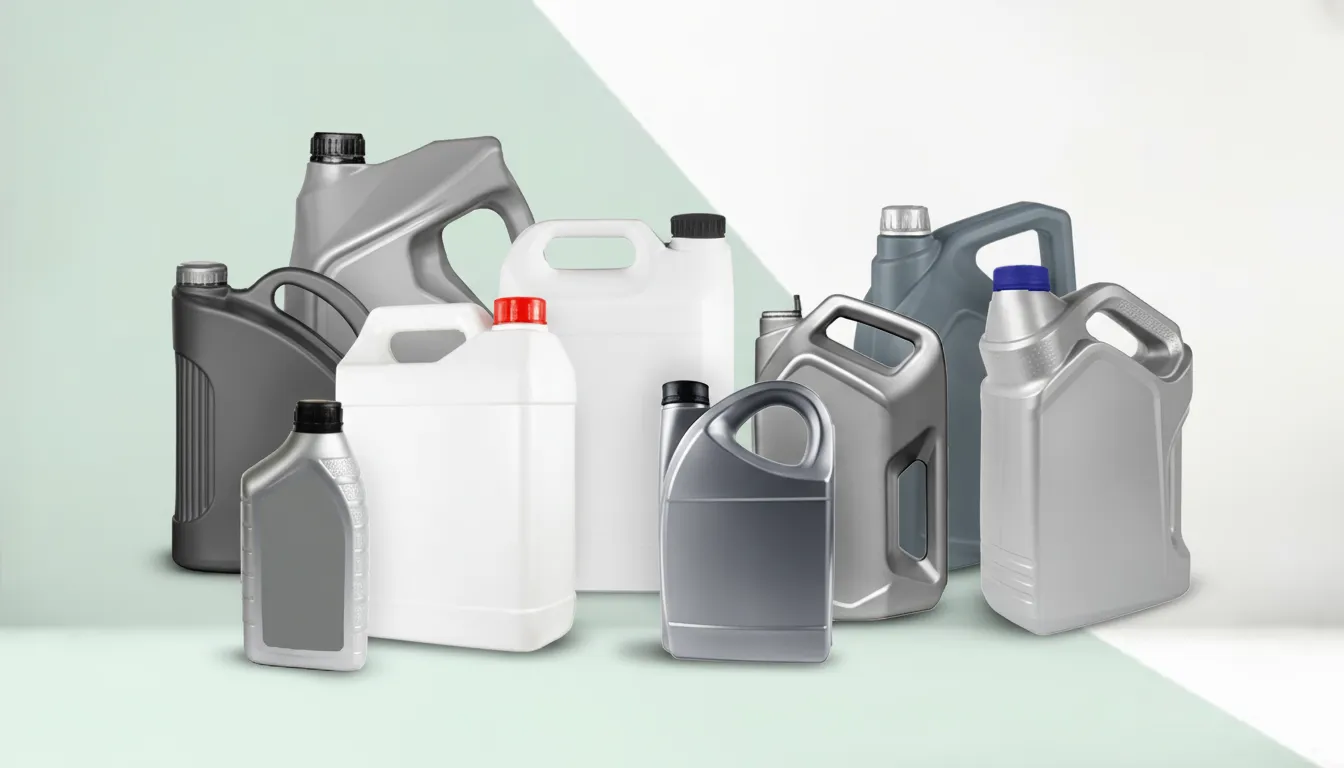
Power Steering Fluid Volume Formats and Design Specifications
Consumer Retail Formats: 250ml to 1L
Power steering fluid is sold in the Australian automotive aftermarket predominantly in 250ml, 500ml and 1-litre formats through Repco, Supercheap Auto and specialist workshop supply channels. The 500ml format represents the dominant retail SKU for passenger vehicle top-up applications — sized to address the volume typically lost through minor pump seal seepage over 30,000–50,000 kilometres of normal driving without carrying excess fluid the consumer must store. Clear ISBM PET in this format serves a dual commercial purpose: the product’s characteristic red, amber or clear colouration (OEM specifications vary by vehicle manufacturer) is visible through the bottle wall for immediate product identification, and the optical clarity distinguishes premium synthetic formulations from mineral-based generic alternatives on the retail shelf. Label panels must accommodate OEM compatibility cross-references, application viscosity grades and hazard labelling within the primary display area — design constraints that influence bottle body proportions during the ISBM mould engineering phase.
Workshop and Fleet Service Formats: 1L to 4L
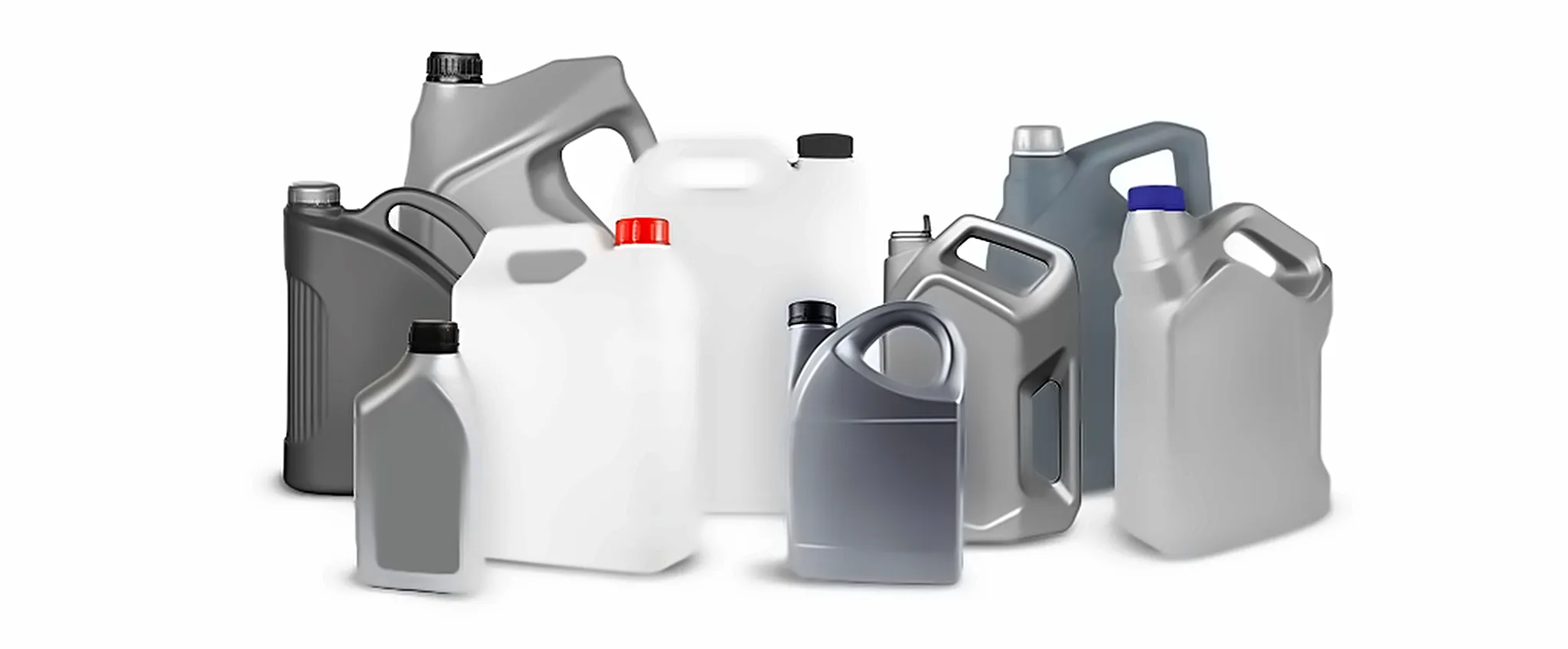
Automotive workshop and fleet service operations consume power steering fluid in 1-litre and 2-litre formats for single-vehicle flush-and-fill operations and in 4-litre bulk packs for high-volume fleets performing preventive maintenance across large vehicle portfolios. The 4-litre format requires an integrated handle — tested to 5× filled weight tensile load — and a neck design that accommodates professional-grade fluid transfer pumps with 24–28mm dip tubes used in workshop service bays. Colour coding of the bottle body in red (for ATF-compatible power steering fluid, which is the most widely specified in Australian vehicles) or clear (for dedicated PSF formulations) must be consistent batch-to-batch at ΔE ≤1.5 to maintain OEM compatibility communication at retail. Custom automotive bottles for fleet accounts may incorporate brand-specific embossing, anti-counterfeit features and tamper-evident overcap geometry requested by fleet operators managing vehicle maintenance documentation under warranty requirements.
Material Specification for Power Steering Fluid Packaging
Bottle-grade PET with intrinsic viscosity (IV) of 0.76–0.84 dL/g is the standard resin specification for clear power steering fluid bottles on ISBM equipment. This IV range provides efficient plasticisation at 270–290°C while delivering the post-blow tensile strength and chemical barrier performance needed across power steering fluid’s formulation range. For mineral-oil-based fluids, the key compatibility verification test is a 30-day immersion at 50°C using the target formulation, assessing weight change (target below +0.3%), dimensional change (target below ±0.5mm in any direction) and surface appearance (no whitening, crazing or delamination). Formulations with aromatic content above 15% in the base oil warrant more conservative test conditions — 60 days at 50°C — before production tooling is committed, as aromatic-induced stress cracking in PET typically manifests after 3–4 weeks of contact at elevated temperature rather than immediately.
| Fluid Type | Aromatic Content | PET Compatibility | Test Protocol |
|---|---|---|---|
| Mineral-base PSF | 5–15% aromatics | ✅ Good | 30 days @ 50°C standard |
| ATF-type PSF (Dexron) | 10–18% aromatics | ✅ Good | 30 days @ 50°C standard |
| Synthetic polyol-ester PSF | <5% aromatics | ✅ Excellent | 30 days @ 50°C standard |
| High-aromatic mineral PSF | >20% aromatics | ⚠️ Verify first | 60 days @ 50°C extended |
ISBM Production Workflow for Power Steering Fluid Bottles
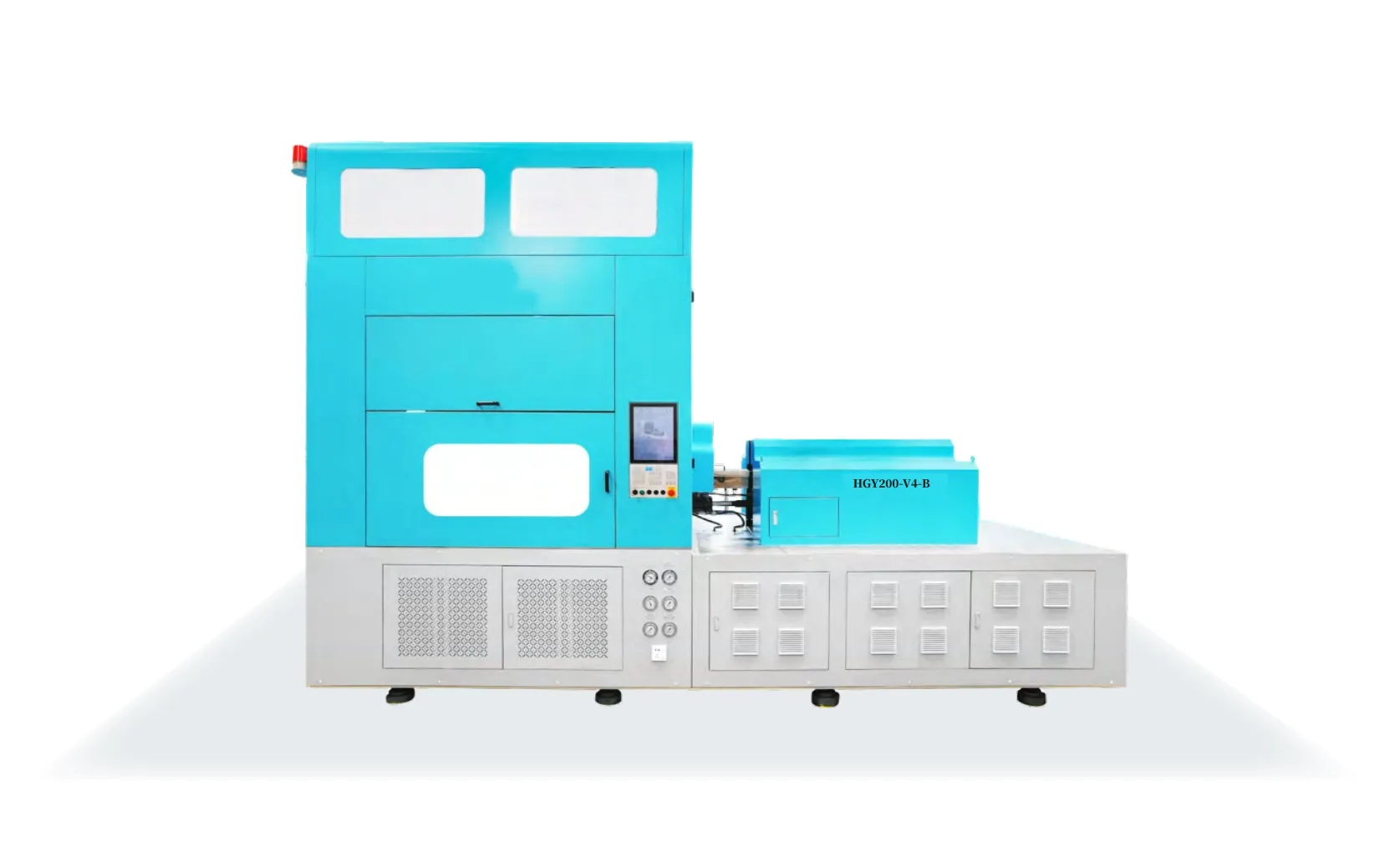
Power steering fluid bottles on a four-station ISBM platform follow the standard one-step production sequence with process parameters tuned to maximise hydrocarbon barrier performance and maintain colour consistency across the tinted product ranges used for OEM specification identification.
① Resin Drying and Masterbatch Preparation
PET is dried to below 50 ppm moisture at 160–170°C for 4–6 hours. Red, amber or clear masterbatch for OEM colour coding is pre-dried separately and blended gravimetrically at ±0.05% accuracy. For red-tinted ATF-compatible power steering fluid, pigment uniformity through the preform wall is critical — colour streaking visible through the translucent red bottle body is a retail appearance failure that is prevented at the drying and blending stage rather than detectable at ejection.
② Preform Injection
PET is plasticised at 270–288°C and injected under laminar-flow velocity profiles to achieve streak-free tinted preforms. The 24/410 or 28/400 neck finish is formed with injection-moulding precision. For pour-spout neck designs used in 1L workshop formats, the extended neck geometry is produced at the injection stage — the only stage where the long, thin neck cross-section required for controlled pouring can be dimensionally stabilised without the thermal distortion that blow-stage neck forming would introduce.
③ Thermal Conditioning
Body zone conditioning at 106–114°C establishes the temperature gradient for biaxial orientation. For power steering fluid bottles where hydrocarbon barrier maximisation is the primary objective, conditioning temperature is set toward the upper body range to promote the higher stretch ratios that produce denser chain alignment and lower the hydrocarbon diffusion coefficient through the bottle wall. Handle zone conditioning is set 6–9°C lower for 4L formats to retain material at the handle wall.
④ Stretch-Blow Moulding
Stretch rod at 1.0–1.2 m/s maximises axial chain alignment before pre-blow air (6–8 bar) initiates radial expansion. High-pressure blow at 30–40 bar drives full mould contact, reproducing the pour-lip radius and label panel geometry that power steering fluid bottle designs require. Mould cooling at 7–12°C freezes the biaxial orientation state, locking in the hydrocarbon barrier and the dimensional stability that automotive distribution temperature cycling demands.
⑤ Ejection and Quality Verification
Bottles are ejected for inline weight check, neck gauge measurement and colour spectrophotometer verification. For automotive fluid bottles destined for OEM service channel distribution — where product compatibility is verified against vehicle-specific specifications by the distributor — Certificate of Conformance documentation is generated per production batch, confirming material specification, dimensional conformance data and process parameter records to support distributor quality management requirements.

Key Machine Parameters for Power Steering Fluid Bottle Production
| المعلمة | Typical Range | Impact on Power Steering Fluid Bottles |
|---|---|---|
| Injection barrel temp | 270–288°C | IV retention; laminar flow for streak-free tinted preforms |
| Masterbatch dosing | ±0.05% gravimetric | OEM colour coding consistency ΔE ≤1.5 batch-to-batch |
| Body conditioning temp | 106–114°C | Orientation density → hydrocarbon barrier performance |
| Stretch rod speed | 1.0–1.2 m/s | Axial chain alignment; additive migration resistance |
| High-pressure blow | 30–40 bar | Pour-lip radius; label panel flatness |
| Cycle time (500ml, 4-cav) | 15–22 seconds | Output 3,600–5,760 bottles/hr |
Stretch rod speed is the single highest-leverage process parameter for hydrocarbon barrier performance in power steering fluid bottle production. At 1.0 m/s, axial chain alignment is substantially complete before radial blow expansion begins, producing high biaxial orientation density and the correspondingly low hydrocarbon diffusion coefficient that 24-month shelf-life performance requires. Reducing rod speed below 0.9 m/s — as may occur on hydraulic-drive machines with worn servo proportional valves — measurably increases hydrocarbon permeation through the bottle wall, potentially causing additive depletion in high-value synthetic power steering fluids over extended retail storage. Servo-driven ISBM machines with programmable rod velocity profiles maintain this critical parameter within ±0.05 m/s of setpoint across multi-shift production, providing the process consistency that automotive fluid barrier specifications require.
OEM Compatibility Labelling and Australian Regulatory Requirements
Power steering fluid sold through the Australian automotive aftermarket must carry OEM compatibility information that allows workshop technicians and consumers to confirm the fluid meets the specification of the vehicles they service. Common compatibility designations include Ford ESW M2C33-F, Chrysler MS 9602, GM Dexron, Volkswagen G 002 000, and the Japanese vehicle manufacturers’ SPIII/SPIV specifications — each representing a distinct additive package chemistry that must match the vehicle manufacturer’s hydraulic system design. The label panel on power steering fluid bottles must present this cross-reference information clearly, typically in a tabular format showing vehicle make and compatible specification, within a legible area that also accommodates GHS hazard labelling for mineral-oil classification under HCIS.
Mineral-oil-based power steering fluids at flash points above 61°C are classified as Class C2 Combustible Liquids under the Australian Dangerous Goods Code, requiring GHS Category 4 Flammable Liquid designation on transport documentation (where flash point falls below 93°C) and the corresponding label elements including the flame pictogram, Danger signal word and H227 hazard statement. The label panel on a 500ml retail bottle must accommodate these elements alongside OEM cross-references and product identification within typical flat panel dimensions of 90mm × 120mm — a spatial constraint that package designers must resolve during bottle geometry specification, before ISBM blow mould steel is cut.
Sustainability Strategy for Power Steering Fluid Packaging
ISBM PET power steering fluid bottles are kerbside recyclable through Australia’s PET (01) stream, provided they are designed as mono-material containers with polyolefin closures and label adhesives compatible with the wash-float-sink separation process at rPET processing facilities. The primary sustainability challenge for tinted power steering fluid bottles — particularly the red-tinted ATF-compatible formats — is that heavier pigment loading creates rPET streams with colour that reduces their application range compared to clear rPET. Specifying light tinting (below 1% red masterbatch loading) instead of deeply saturated red achieves acceptable colour communication for product identification while producing rPET that sorts to a broader range of end-use applications.
ISBM PET’s 20–30% bottle weight advantage over HDPE EBM alternatives in the same volume format reduces the per-unit material consumption and embedded carbon across the power steering fluid category’s production volumes. For brands reporting under APCO’s Australian Packaging Covenant framework, this lightweighting data — documented as grams of packaging per litre of product — contributes directly to the packaging intensity reduction metrics that the Covenant’s annual reporting requires. Incorporating 15–20% food-contact-grade rPET into the base PET resin blend for clear or lightly tinted power steering fluid bottles provides a verified recycled content claim that supports both ARL label compliance and retail sustainability scorecard requirements without compromising the chemical barrier performance that hydrocarbon fluid packaging demands.