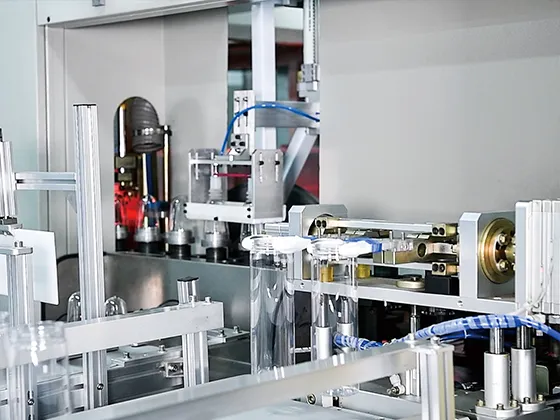
Deodorant packaging sits at the intersection of functional chemistry and consumer aesthetics. The bottle must contain alcohol-based or aqueous fragrance formulations without permeation loss, fit precisely onto roll-on ball assemblies or actuator heads, survive bathroom cabinet conditions across a product’s 24-month shelf life, and present a surface finish good enough to carry embossed logos and high-definition sleeve labels. Injection stretch blow molding addresses every one of these requirements with a level of dimensional control and material efficiency that alternative blow molding methods cannot consistently deliver. This article explores how the one-step ISBM process maps onto the real geometry, chemistry, and production economics of deodorant bottle manufacturing.

The Deodorant Packaging Market: Volume, Format Diversity, and Brand Pressure
A Category Defined by Consumer Loyalty and SKU Proliferation
Personal care deodorants represent one of the most repurchased categories in grocery and pharmacy retail, with global annual volume consistently exceeding several billion units. The category fragments into roll-on (ball applicator), aerosol spray, pump spray, gel stick, and cream formats—each placing distinct mechanical demands on the primary container. Roll-on bottles, in particular, require a neck finish machined to tolerances that govern ball-socket fit: too loose and the ball drops out; too tight and it binds, preventing liquid flow to the application surface. No other packaging process achieves this level of neck geometry precision at production rates comparable to ISBM.
Brand Differentiation Through Bottle Architecture
Major personal care brands—and the private-label challengers that compete for shelf adjacency—invest significantly in bottle architecture as a brand-building tool. Slender profiles, geometric facets, ergonomic waist curves, and frosted or coloured transparency are all packaging decisions that influence purchase at the point of display. The ISBM process, with its injection-precise preform geometry and blow mold fidelity to within ±0.2 mm of nominal body dimensions, enables brands to implement these structural design decisions without the wall-distribution compromises that constrain EBM or standard IBM tooling. A deodorant bottle with a sharp hexagonal body profile is a commercially viable ISBM design; it would be significantly more difficult to execute reliably in an extrusion-based process.
Formulation Chemistry and Barrier Demands
Alcohol-based roll-on and pump deodorants present a specific barrier challenge: ethanol and fragrance compound esters permeate through bottle walls at rates that depend on both polymer polarity and wall orientation density. An unoriented HDPE roll-on bottle loses approximately 1–3% of its fragrance-active compounds per year through permeation—a loss that affects scent performance and regulatory fill-weight compliance. ISBM-produced PET, with its biaxially oriented crystalline barrier structure, reduces fragrance permeation to below 0.3% annually in most formulations, preserving both product performance and the brand’s regulatory shelf-life claim. For premium products where fragrance integrity is a core brand promise, this barrier superiority is a compelling commercial argument for ISBM over alternative packaging methods.
Technical Requirements by Deodorant Format
Roll-On Deodorant Bottles
The most dimensionally critical format. The neck must accept a 35 mm or 50 mm ball housing with a radial clearance of 0.05–0.10 mm to allow free rotation without slop. Any oval distortion of the neck finish beyond ±0.08 mm causes ball binding during warm storage. ISBM delivers injection-formed neck roundness of ±0.04 mm—the only blow process that meets this tolerance at production volume. Body volume tolerance of ±1 mL ensures fill-weight accuracy on automated filling lines.
Pump Spray Deodorant Bottles
Pump-spray deodorant bottles face repeated cyclic load from actuation—each pump stroke applies ~15–25 N of vertical force to the neck and shoulder region. Over 300+ actuation cycles across a bottle’s life, this fatigue load can initiate micro-cracking in poorly oriented walls. ISBM’s biaxial orientation, particularly at the shoulder-to-neck transition, delivers fatigue resistance that sustains indefinite actuation cycles at normal usage forces. Neck finishes of 24/410 are common; a tight perpendicularity specification of ±0.10 mm ensures pump gasket sealing without leakage.
Gel and Liquid Deodorant Bottles
Gel and thick-liquid deodorant formats require bottles with consistent sidewall rigidity to prevent the squeezed-bottle effect that can cause gel dispensing to surge. ISBM’s controlled hoop orientation stiffens the sidewall without adding wall weight, delivering a container whose squeeze-back recovery is predictable across the full fill-level range. Clarity is particularly valued in this segment—visible gel colour and texture are key in-store purchase drivers that translate directly into stocking decisions by retail category managers.

How the One-Step ISBM Process Produces Deodorant Bottles
Deodorant bottle production demands tighter-than-average process windows due to the small container volumes (50–150 mL is the dominant range) and the precise neck geometries required for ball-socket and pump fitment. The one-step configuration is particularly well suited because it eliminates the preform reheating step where thermal non-uniformity most often translates to dimensional inconsistency in small-format bottles.
Resin Preparation
Cosmetic-grade PET (IV 0.76–0.80 dL/g) is dried to below 30 ppm moisture—tighter than standard beverage bottle practice—because small-format deodorant bottles have less total wall mass to absorb minor IV degradation before it manifests as surface fogging or brittleness. Masterbatch colourant or nucleating agent, where specified, is blended at the hopper.
Preform Injection
Molten PET is injected into preform cavities at 265–280 °C. For small deodorant bottle preforms (6–12 g shot weight), cavity-pressure balance across multi-cavity tooling is especially critical—any cavity imbalance greater than ±3% produces preform weight variation that directly affects bottle volume accuracy, a non-trivial issue on automated filling lines validated to ±1 mL tolerance.
Thermal Conditioning
The small preform mass cools rapidly; precise control of the conditioning station dwell time (typically 2.5–4.5 s for deodorant formats) is essential to hold the stretch-optimal body temperature at 95–108 °C while the neck—which carries the ball-socket fitment geometry—is actively chilled to below 72 °C to preserve the sub-micrometre roundness achieved during injection.
Axial Stretch
The servo stretch rod extends at a velocity profile optimised for the deodorant bottle’s aspect ratio—typically a moderate 2.5–3.2× axial stretch for the 50–100 mL roll-on format. For slender 150 mL spray deodorant designs with height-to-diameter ratios above 3:1, axial stretch ratios of 3.4–3.8× may be required to achieve sufficient material distribution at the base without over-thinning the shoulder.
Blow Molding
Air at 28–38 bar inflates the preform against precision-ground mold cavities chilled to 8–12 °C. For cosmetic bottles, mold surface finish is typically Ra ≤ 0.2 µm—a mirror polish that transfers directly to the bottle exterior. This surface quality enables high-resolution embossed brand marks and faceted body profiles without secondary buffing or coating operations.
Ejection & Vision Inspection
Bottles pass through automated vision inspection checking neck roundness (critical for ball-socket fitment), body volume (by dimensional proxy), base flatness (essential for standing stability in retail displays), and surface clarity. Reject rates for neck-geometry non-conformance on well-optimised ISBM deodorant lines routinely fall below 0.3%—a figure that makes 100% inspection economically justified given the downstream cost of a non-conforming component reaching the filling line.
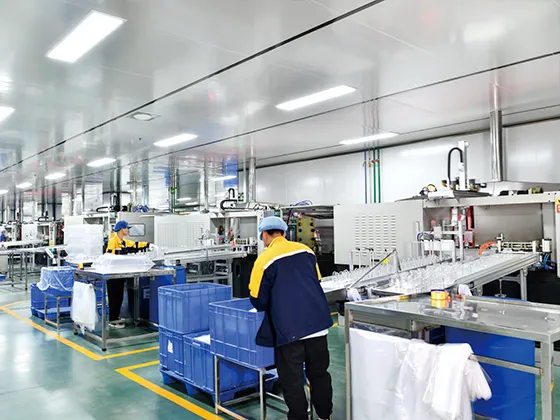
Material Options for Deodorant Bottle Production
| Material | Clarity | Fragrance Barrier | Surface Finish | Typical Use |
|---|---|---|---|---|
| Virgin PET | Excellent (<2% haze) | Very high | Mirror/satin grade | Premium transparent deodorant |
| rPET (cosmetic grade) | Good (2–5% haze) | High | Good with tinted colour | Eco-positioned lines |
| PETG | Excellent (crystal) | Good | Outstanding | Luxury cosmetic bottles |
| PP (opaque) | Translucent | معتدل | Good (coloured) | Sport/value deodorant |
Design Customisation for Brand Differentiation
Body Profile and Surface Detailing
Deodorant bottle body profiles have become brand property for market leaders. The oval cross-section of some established roll-ons, the faceted hexagonal form of others, and the soft-curve ergonomic waist of premium female-targeted lines are all feasible ISBM mold geometries. Because the blow mold defines the external profile with high fidelity (wall dimensional variation ±0.2 mm), these design features transfer from CAD to production bottle with the precision that was previously only achievable in injection-molded solid plastics. Brands that invest in a proprietary bottle profile receive a physical form that is difficult to replicate through lower-fidelity processes, creating a packaging moat that is visible on-shelf without any additional communication spend.
Colour, Tinting, and Frosted Effects
ISBM allows colourant masterbatch to be introduced at the injection stage, producing through-wall tinted bottles where the colour remains consistent regardless of wall thickness variation—a significant advantage over painted or coated bottles where adhesion failures cause finish degradation in humid bathroom environments. Frosted finishes, achieved through either surface-textured mold polishing (Ra 0.8–1.6 µm) or nucleating agents in the PET resin, give a tactile premium quality that commands shelf price premiums in the female personal care segment. Pearl and metallic effects are achievable through appropriate masterbatch selection, producing bottles that require no secondary decoration to meet luxury-tier shelf requirements.
Label Panel Engineering
Deodorant bottles carry either pressure-sensitive labels, heat-shrink sleeve labels, or—in the most premium segment—embossed/debossed brand marks in conjunction with minimal labelling. ISBM mold design specifies label panel flatness (typically ±0.25 mm for PSL, ±0.40 mm for sleeve) and taper angles (0.5–1.5° for PSL, flat for sleeve) to guarantee label seating without air pockets or peel-back over the bottle’s retail display life. Embossed brand marks are cut directly into the mold cavity, adding no per-unit cost to the decoration and producing a feature that communicates permanence and quality in the consumer’s hand.
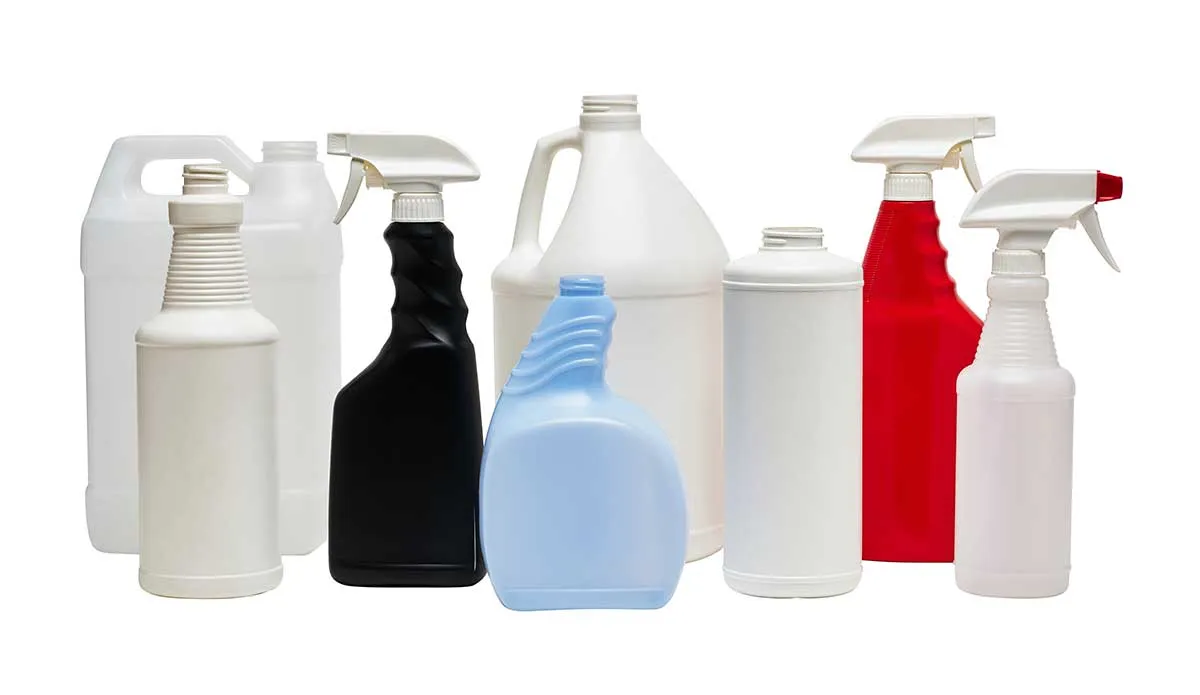
Production Performance for Deodorant Bottle Lines
Small-format personal care bottles can be produced at high cavitation on ISBM platforms, making the per-unit economics attractive despite the higher tooling complexity required by precise neck specifications. The figures below reflect benchmark performance on a four-station ISBM machine running a 75 mL roll-on deodorant bottle format.
Sustainability Credentials for Personal Care Packaging
Sustainability is no longer a fringe concern in personal care packaging—it is increasingly a purchase driver that affects retail ranging decisions. Major Australian supermarket chains and pharmacy groups now require supplier sustainability declarations covering recycled content, recyclability, and weight reduction commitments. ISBM-produced PET deodorant bottles address all three dimensions.
A 75 mL ISBM PET roll-on bottle weighing 12–14 g represents a 20–25% weight reduction versus an equivalent HDPE container at the same structural performance—a saving that multiplies meaningfully at production volumes of 50 million units annually. Cosmetic-grade rPET at 25–30% content can be processed through ISBM equipment without mold tooling changes, enabling brands to make verified recycled content claims that differentiate product at shelf. Finally, PET type-1’s recyclability in Australia’s kerbside infrastructure means the bottle re-enters the material loop at end of life—a closed-loop story that supports both APCO reporting and consumer-facing sustainability communication.
For personal care brands targeting younger demographic segments where sustainability authenticity is scrutinised, the combination of measurable lightweighting, verified rPET content, and confirmed recyclability—all deliverable through ISBM PET production—provides a packaging sustainability narrative that is both commercially credible and technically substantiated.
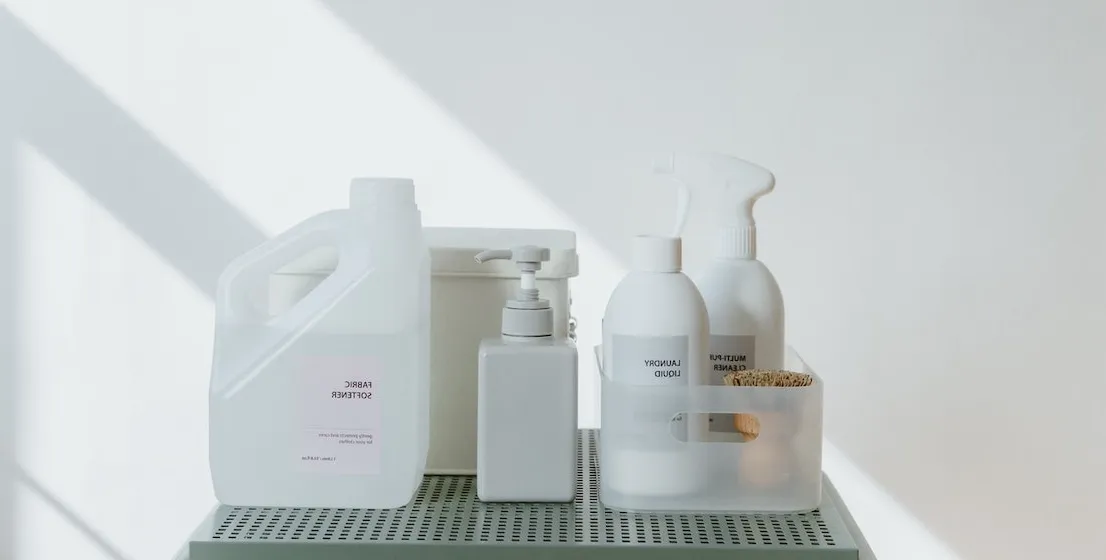
Recommended Equipment: Fully Servo HGYS150-V4-EV for Deodorant Bottle Production
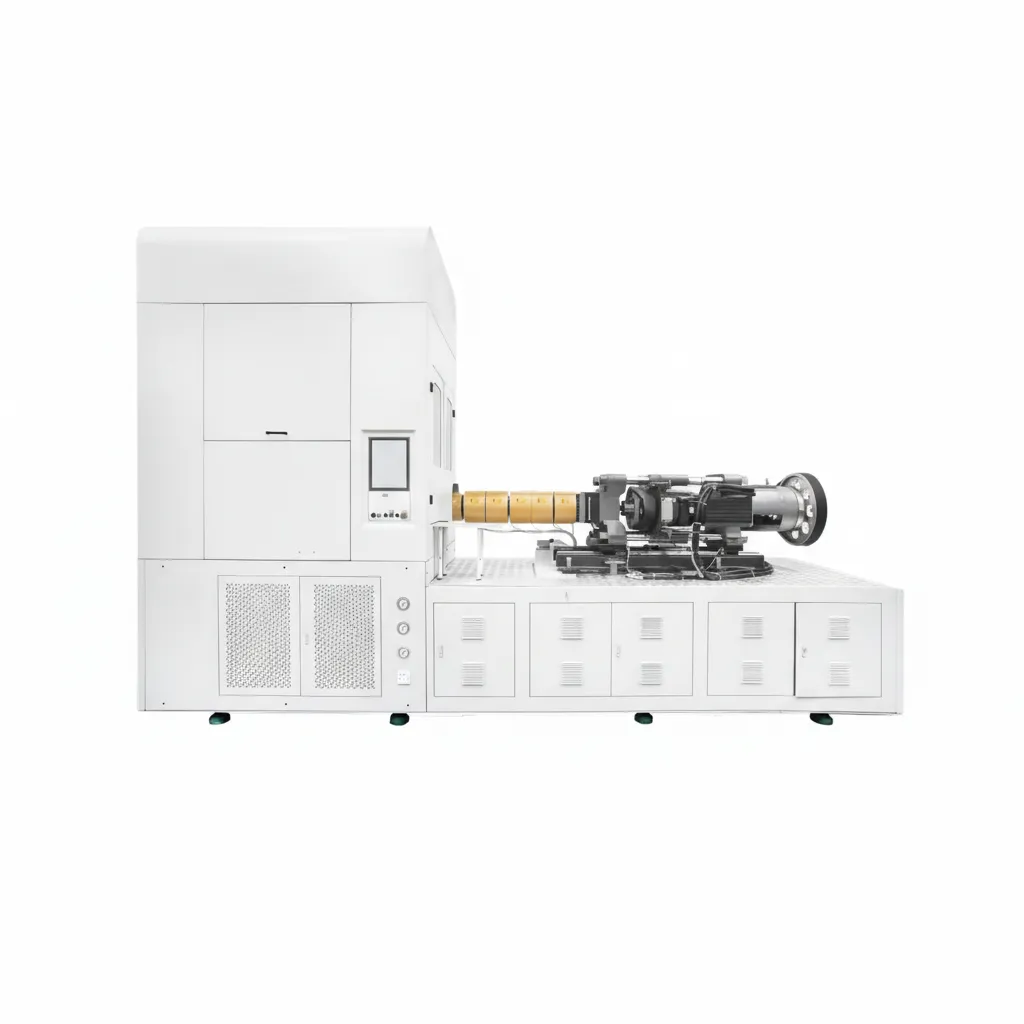
Fully Servo HGYS150-V4-EV One-Step Injection Stretch Blow Molding Machine
The fully servo HGYS150-V4-EV injection stretch blow molding machine is engineered specifically for the demands of small-to-medium personal care container production. Its fully servo-driven architecture—covering clamping, injection, stretch rod, and take-out—delivers the motion precision and repeatability that deodorant bottle neck specifications require. The machine’s compact footprint suits the multi-SKU production scheduling common in personal care manufacturing, where rapid tooling changeovers between roll-on, pump spray, and gel bottle formats are a daily operational reality.
- Output: up to 5,000+ bottles/hr (75 mL format)
- Volume range: 30 mL – 600 mL
- Neck finish range: 15–38 mm diameter
- Full servo drive: 35–45% energy saving vs hydraulic
- Neck roundness tolerance: ±0.04 mm achievable
- Compatible with cosmetic-grade PET and rPET