
Visual Excellence as the Core Performance Requirement of Cosmetic Bottle Packaging
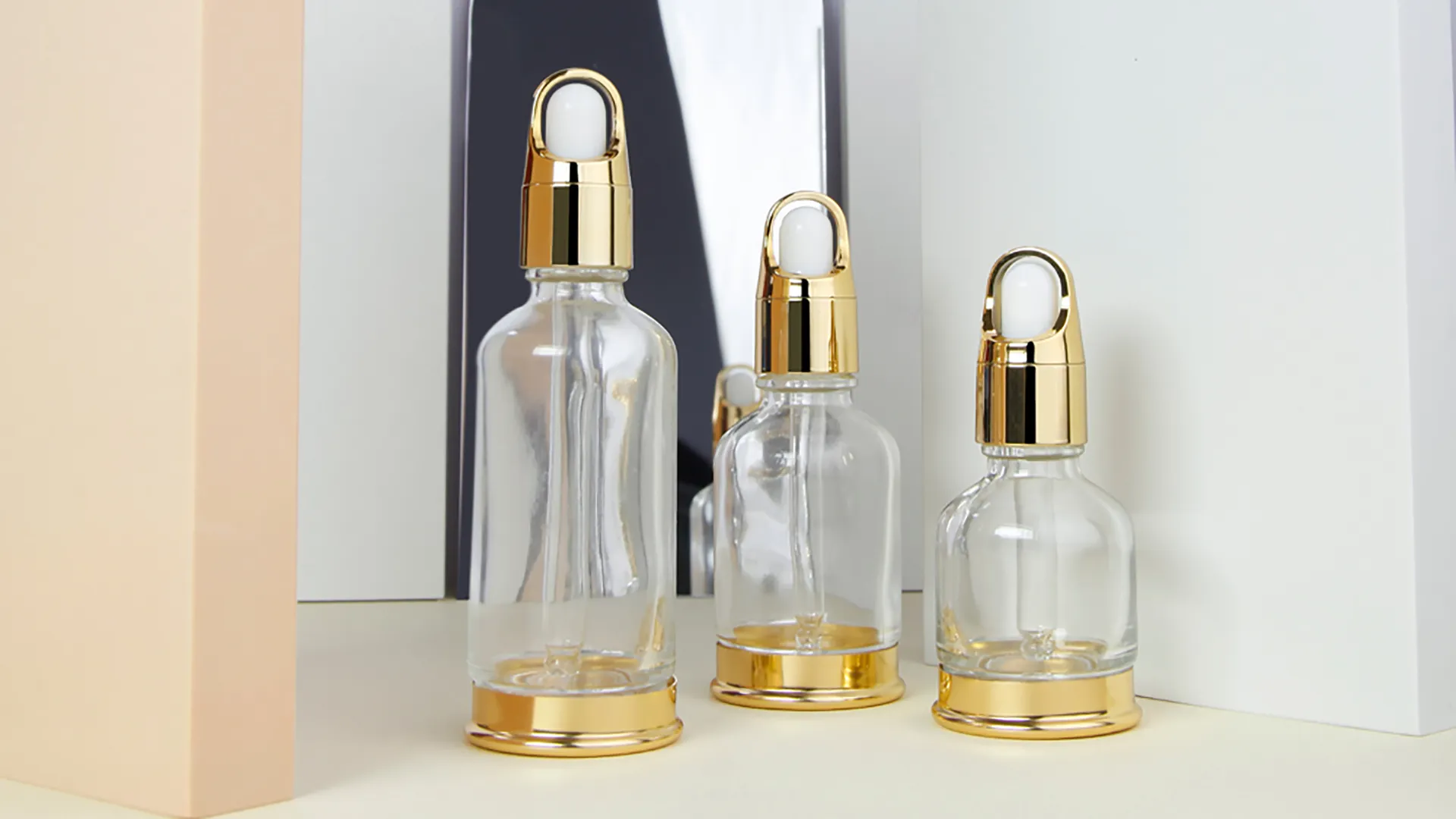
Cosmetic bottle packaging is evaluated against a more exacting visual standard than any other consumer product category. A beverage bottle that is slightly hazy or carries minor surface marks passes the shelf test because the consumer’s attention is on the label and the flavour claim. A cosmetic bottle with equivalent optical defects fails — because the container itself is the product experience for the first several seconds of consumer interaction, and a visual flaw communicates a quality shortcut that damages the entire brand impression before the formulation’s quality can speak for itself. Cosmetic brands invest in premium formulations, expert marketing, and high-specification closures — the bottle must match that investment in every visible dimension.
The injection stretch blow molding process, when properly configured and operated, is the production technology that can consistently deliver the optical and visual properties that cosmetic packaging demands — glass-equivalent clarity, pristine surface quality, colour precision, and three-dimensional form accuracy — at production scales from small artisan batches to major brand commercial volumes. The key word is “properly”: the ISBM process has the capability, but realising that capability requires disciplined material specification, tooling design, process parameter management, and quality inspection practice at every stage of the production chain.
This article provides a detailed technical account of how the ISBM process creates the visual properties that cosmetic bottles require, which specific process and tooling variables control those properties, how to optimise them, and how to maintain them across the extended production runs that commercial cosmetic bottle supply demands. Australia Ever-Power Injection Stretch Blow Moulding Machine Co., Ltd provides the machine technology and technical expertise that Australian cosmetic packaging operations need to achieve and sustain these standards.
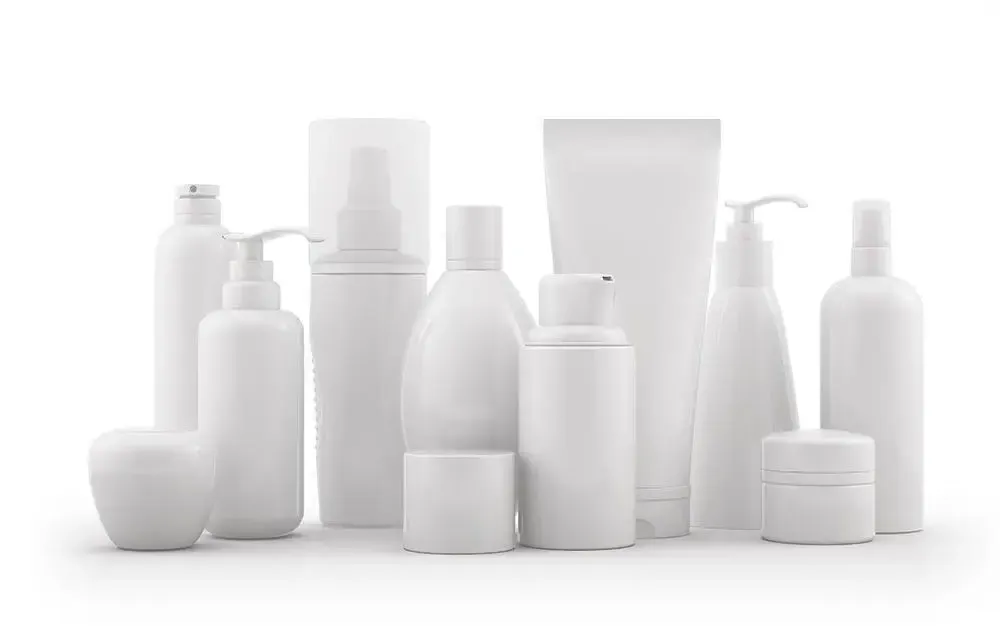
The Optical Science of PET/PETG Cosmetic Bottles: Understanding Clarity, Haze, and Depth
To control optical quality in ISBM cosmetic bottle production, it is necessary to understand what produces the optical effects that consumers respond to — and which process variables control each effect. Optical performance in a PET/PETG bottle has three components: clarity (the directional transmission of light, which determines how sharply objects behind the bottle wall are seen), haze (the diffuse scattering of transmitted light, which creates the cloudy appearance that reduces perceived quality), and surface reflectance (the specular reflection of incident light from the bottle surface, which creates the luminous, liquid-like appearance of premium bottles under display lighting).
The Molecular Basis of PETG Clarity Superiority
PETG’s optical superiority over standard PET for cosmetic bottles derives from its resistance to thermal crystallisation — the process by which PET forms crystalline domains that scatter light. In standard PET, thermal crystallisation can initiate when the material is processed at the wrong temperature or cooled too slowly, creating spherulitic crystalline structures with dimensions comparable to the wavelength of visible light (400–700nm). These structures scatter light uniformly in all directions, producing the opaque, white appearance of maximum crystallisation in one extreme (as in PET fibre or packaging tape) or the hazy, slightly cloudy appearance of partial crystallisation in the range most likely to occur in borderline ISBM processing conditions. PETG’s glycol co-monomers disrupt the regular chain structure needed for thermal crystallisation, keeping the material in its amorphous (non-crystalline), transparent state across a wider temperature range than standard PET — providing an inherently more robust optical stability during ISBM processing.
Optical Depth: The Wall Thickness Variable
The optical depth effect — the impression that the product inside the bottle is visible through a layer of clear material, analogous to looking through a thick glass vessel — depends directly on wall thickness. A bottle wall of 0.25mm appears to the eye as nearly nothing: the product appears to be directly at the bottle surface. A wall of 1.0–1.5mm produces a visible depth effect where the refraction of light entering the wall, travelling through it, and exiting toward the eye creates the appearance of looking into a glass object rather than through a film. A wall of 2.0mm or more approaches the visual weight of a cut glass crystal object. For cosmetic bottles designed to communicate glass-equivalent premium — facial serums, prestige moisturisers, luxury oils — designing the wall thickness to create this optical depth effect is as important as specifying the surface finish. Bottle wall thickness optimisation for cosmetic bottles therefore has two objectives: achieving the structural performance requirements (which often allow thinner walls than the optical depth target requires) and achieving the optical weight target (which may drive the minimum wall thickness above the structural minimum).
Surface Reflectance and Display Lighting Interaction
The surface reflectance of an ISBM cosmetic bottle — how it appears under the specific lighting conditions of its retail display environment — is controlled by the mould cavity surface finish. A mirror-polished cavity (Ra ≤ 0.04 µm) produces a bottle surface with specular reflectance approaching that of optical glass — the bottle catches and reflects directional light sources as a bright, crisp highlight that moves across the surface as the viewer changes angle, creating the liquid luminosity that signals premium quality. A satin or frosted cavity (Ra 0.2–0.8 µm) produces diffuse reflectance — the surface appears softly lit rather than sparkled, communicating a different premium signal associated with matte glass, stone, and contemporary minimal aesthetics. Understanding which reflectance characteristic serves the brand’s intended positioning is the first optical design decision in any cosmetic bottle development project.
Process Variables That Control ISBM Cosmetic Bottle Optical Quality
The optical quality of an ISBM cosmetic bottle is determined by a set of interacting process variables, each of which affects clarity, surface quality, or both. Understanding these variables and their interactions is the foundation of process control for premium cosmetic bottle production.
Conditioning Temperature Uniformity
The single most important process variable for cosmetic bottle optical quality. Circumferential temperature variation above ±2°C produces zones of differential stretch that create visible wall thickness variation — appearing as light-and-dark banding when the bottle is held up to light. Closed-loop infrared pyrometer feedback is the best-practice standard for PETG cosmetic bottles where zero visual defects are required.
PET/PETG Resin Moisture Content
Moisture above 30 ppm causes hydrolytic chain scission during injection — permanently reducing IV, increasing AA generation, and producing a melt with reduced viscosity that cannot be biaxially oriented to full optical potential. For cosmetic bottles where water-white clarity is specified, drying to below 20 ppm (not just 30 ppm) with dew point verification before each production batch provides an additional margin that matters in premium cosmetic optical quality management.
Injection Profile and Screw Speed
Excessive screw speed or aggressive injection rate generates shear heating in the melt that locally degrades PETG chains — producing a yellowing or slight turbidity in the preform that is amplified in the blown bottle. For optical-grade cosmetic preforms, conservative screw speeds (below 0.2 m/s tip speed for PETG) and ramped injection profiles that fill the preform cavity progressively without pressure spikes are standard practice. Post-injection hold pressure settings also affect gate zone quality — overpacking the gate creates a dense, slightly opaque gate vestige that is visible in the base of clear PETG cosmetic bottles.
Mould Temperature and Cooling Uniformity
For standard (non-heat-set) cosmetic ISBM, mould temperature should be maintained at 6–10°C for maximum optical clarity — lower temperatures lock the oriented molecular structure before it can relax, preserving the clarity-maximising state. Uneven cooling (from blocked channels or insufficient flow rate) produces zones of differential crystallinity in the bottle wall that appear as subtle cloudiness patterns under oblique light. Quarterly cooling channel flow rate verification is a critical maintenance practice for premium cosmetic ISBM operations.
Stretch Ratio and Wall Thickness Distribution
Wall thickness distribution determines both the optical depth uniformity of the bottle (thin zones appear lighter than thick zones under backlighting) and the reflectance uniformity of the surface (thickness variation creates subtle undulation in the bottle wall surface geometry that appears as visual distortion under display lighting). Optimising the preform wall thickness profile to deliver the target blown bottle wall distribution is the most impactful single tooling and process design investment for cosmetic optical quality.
Cavity Surface Condition
The cavity surface is faithfully reproduced on the bottle surface — every pit, scratch, and tool mark appears on every bottle. For premium cosmetic ISBM, cavity Ra measurement at each scheduled maintenance interval (every 250,000–500,000 cycles depending on usage intensity) with profilometer verification and re-polishing when Ra exceeds the specification limit is the non-negotiable quality management practice that protects optical standards over the tooling’s service life.
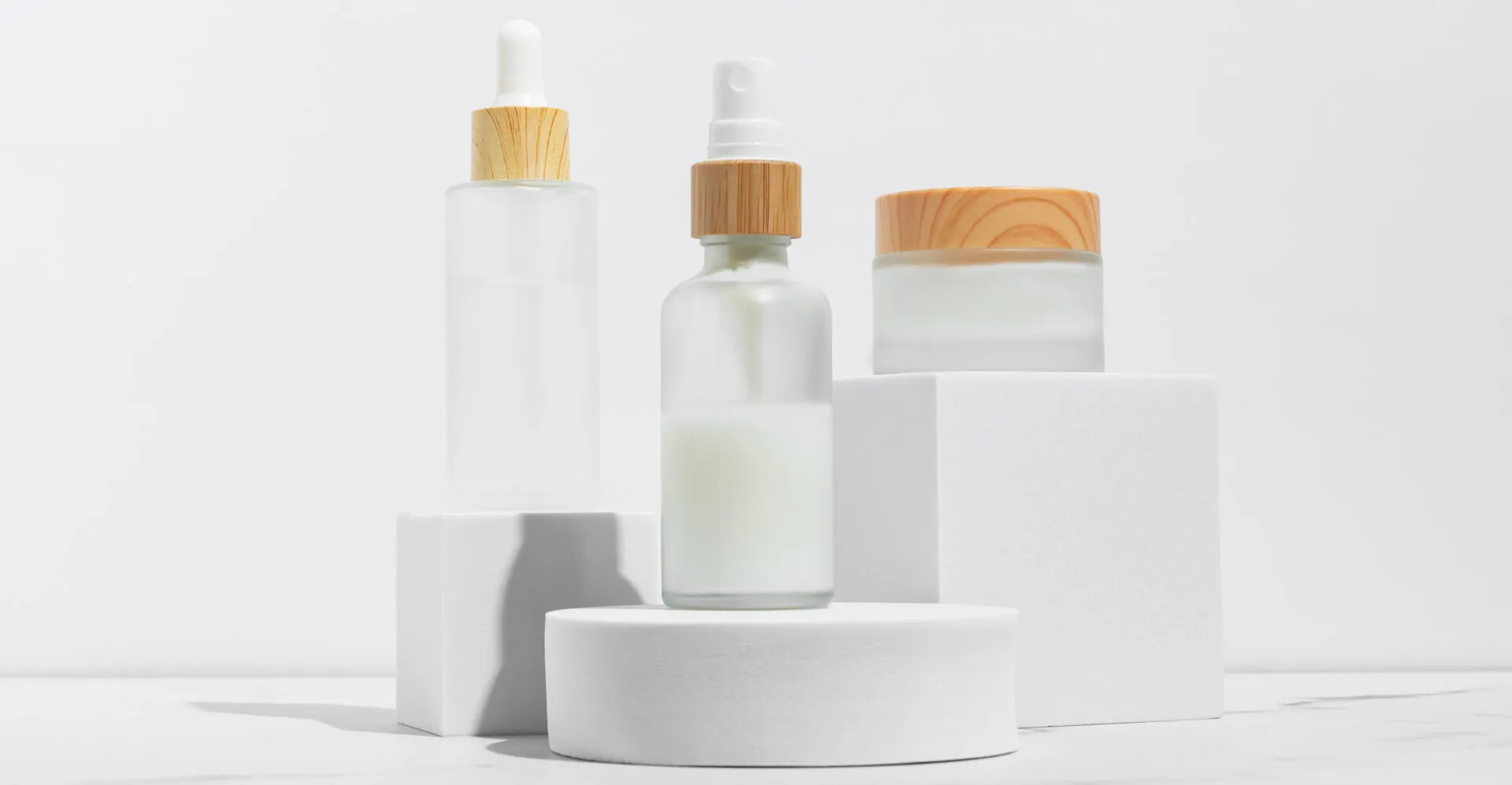
Wall Thickness Optimisation: Engineering the Visual Weight of a Cosmetic Bottle
Wall thickness optimisation for cosmetic ISBM bottles serves a different primary objective than beverage bottle wall thickness optimisation. For beverage bottles, the objective is minimum wall thickness consistent with structural performance — every gram reduced saves material cost. For premium cosmetic bottles, the objective is target wall thickness consistent with the brand’s optical weight positioning — some applications call for maximum optical depth (thicker walls) while others call for deliberate lightness (thinner walls that communicate contemporary minimalism). The optimisation process addresses both dimensions simultaneously.
Achieving Uniform Wall Thickness in Complex Cosmetic Geometries
Complex cosmetic bottle geometries — particularly those with pronounced waist profiles, integrated shoulder ridges, asymmetric cross-sections, or wide-shoulder-to-narrow-neck proportions — present significant challenges for achieving uniform wall thickness distribution through the ISBM blow phase. Material flows along the path of least resistance during blowing: zones with lower stretch ratio (near the neck and base) receive relatively more material than high-stretch zones (the widest diameter sections), resulting in naturally thick necks and bases with potentially thin equatorial sections. This natural distribution is manageable for beverage bottles where thickness variation within ±20% of the mean is acceptable, but may be visually problematic for cosmetic bottles where the thickness shadow pattern is visible from the outside under display lighting. Preform design must compensate for this natural distribution tendency by deliberately thickening the preform wall in zones that will be highly stretched and thinning it in zones with lower stretch ratios — engineered through mould flow simulation before tooling is cut.
Base and Shoulder Thickness Design for Visual Stability
The base of a cosmetic bottle is the zone of minimum stretch ratio and maximum material accumulation — typically the thickest point in the blown bottle. This thickness serves a double purpose: it provides the stable standing surface that ensures the bottle does not rock or tip (a non-negotiable functional requirement for retail shelf standing), and it creates the optical mass at the base that gives premium thick-wall cosmetic bottles their characteristic visual weight and stability impression. For cosmetic bottles designed with base ring designs or integrated base-to-body transition curves that serve as visual weight anchors, the base wall thickness is intentionally maintained at 2.0–3.0mm rather than minimised — the weight at the base is a deliberate design element that communicates quality, not a processing inefficiency to be corrected.
Measuring and Verifying Wall Thickness in Production
Production verification of wall thickness in cosmetic ISBM bottles uses ultrasonic thickness gauging, applied to a defined grid of measurement points across the bottle body. For premium cosmetic bottles where wall thickness distribution directly affects visual quality, the measurement grid should cover a minimum of 12–16 points across the body panels, with additional measurements at the shoulder and base transition zones. Measurement results are recorded against the target thickness and tolerance for each point, and any batch where more than 5% of measurements fall outside the tolerance range triggers process review. Statistical process control applied to the wall thickness data — tracking the mean and standard deviation at each measurement point across production batches — detects the drift toward non-uniform distribution that precedes visible optical quality degradation, enabling correction before defective bottles are produced.
Colour in Cosmetic ISBM Bottles: Precision, Consistency, and the Science of Perceptual Branding
Colour in cosmetic packaging is a brand asset that must be managed with the same precision as any other brand trademark. The specific shade of a brand’s signature packaging colour communicates brand recognition, category positioning, and product tier before a single word of label copy is read. Inconsistency in colour — between production batches, between bottle sizes in the same range, or between the bottle and its outer packaging — communicates production carelessness that directly damages brand trust. Managing colour precision in ISBM cosmetic bottle production requires understanding how colour behaves in a blown PET/PETG bottle and what process and measurement practices maintain consistency at production scale.
How Wall Thickness Affects Colour Depth in Tinted Bottles
A fundamental property of tinted ISBM bottles that every cosmetic production team should understand: the apparent colour depth of a tinted PET/PETG bottle is proportional to the wall thickness at the point of observation. A 1.0mm wall in a pale blue PETG bottle appears noticeably darker blue than a 0.4mm wall with the same colourant concentration, because the light path through the 1.0mm wall is 2.5× longer and absorbs proportionally more of the transmitted light at the blue-absorbing wavelengths of the complementary colour system. This means that for cosmetic bottles with significant wall thickness variation — thicker bases and shoulders, thinner mid-body panels — the colour will appear deeper in the thick zones than in the thin zones, creating a visible colour gradient in the physical bottle that was not visible in the flat-colour renders used during design approval. This effect is completely predictable and manageable through the colourant concentration calibration process, but it must be anticipated and accounted for in the design brief rather than discovered at prototype stage.
Spectrophotometric Colour Control at Production Scale
Colour consistency across production batches in cosmetic ISBM must be managed through spectrophotometric measurement (CIE L*a*b* colour space, with ΔE calculated against the approved colour standard) rather than visual comparison alone. The human eye adapts to colour shifts in context, making visual approval of a colour batch against a standard unreliable when both are being assessed in the same viewing environment. A spectrophotometer measures colour objectively, identifies shifts that may be imperceptible in isolation but would be visible when bottles from two batches are placed side by side on a retail shelf. Acceptable batch-to-batch ΔE tolerances for cosmetic bottles range from ΔE ≤ 1.0 (for prestige brands with very strict colour standards) to ΔE ≤ 2.0 (for standard commercial cosmetic production). Every production batch should include a colour measurement record, and any batch exceeding the specified ΔE limit should be flagged for brand team review before release to filling.

The Aesthetics of Surface Texture and Finish in Cosmetic ISBM: A Production Guide
Surface texture and finish in cosmetic ISBM bottles serves both aesthetic and functional purposes — communicating brand values through visual and tactile signals while simultaneously addressing practical requirements of wet-hand grip, fingerprint resistance, and label adhesion compatibility. This section provides production-level guidance on achieving and maintaining the surface finish characteristics that cosmetic brands specify.
Mirror Polish: Achieving and Maintaining Ra ≤ 0.05 µm
Mirror-polished ISBM cavities require initial polishing to Ra ≤ 0.04–0.05 µm through progressive diamond abrasive polishing stages followed by hard anodising (20–25 µm aluminium oxide layer) to protect the polished surface against erosive wear from the high-velocity blow air stream. In production, the cavity surface must be inspected for the first signs of surface degradation at each scheduled maintenance interval — specifically in the zones of maximum air velocity (the base entry zone and the widest body diameter, where the blowing air decelerates and creates turbulent erosive contact). Re-polishing to specification at the first detectable Ra increase (typically from 0.05 µm back toward 0.10 µm) costs a fraction of the re-polishing required to restore a cavity that has been allowed to degrade to Ra 0.25–0.40 µm through neglected maintenance, and produces a fraction of the defective bottles that accumulate during the degradation period.
Engineered Satin and Frosted Textures: Specification and Consistency
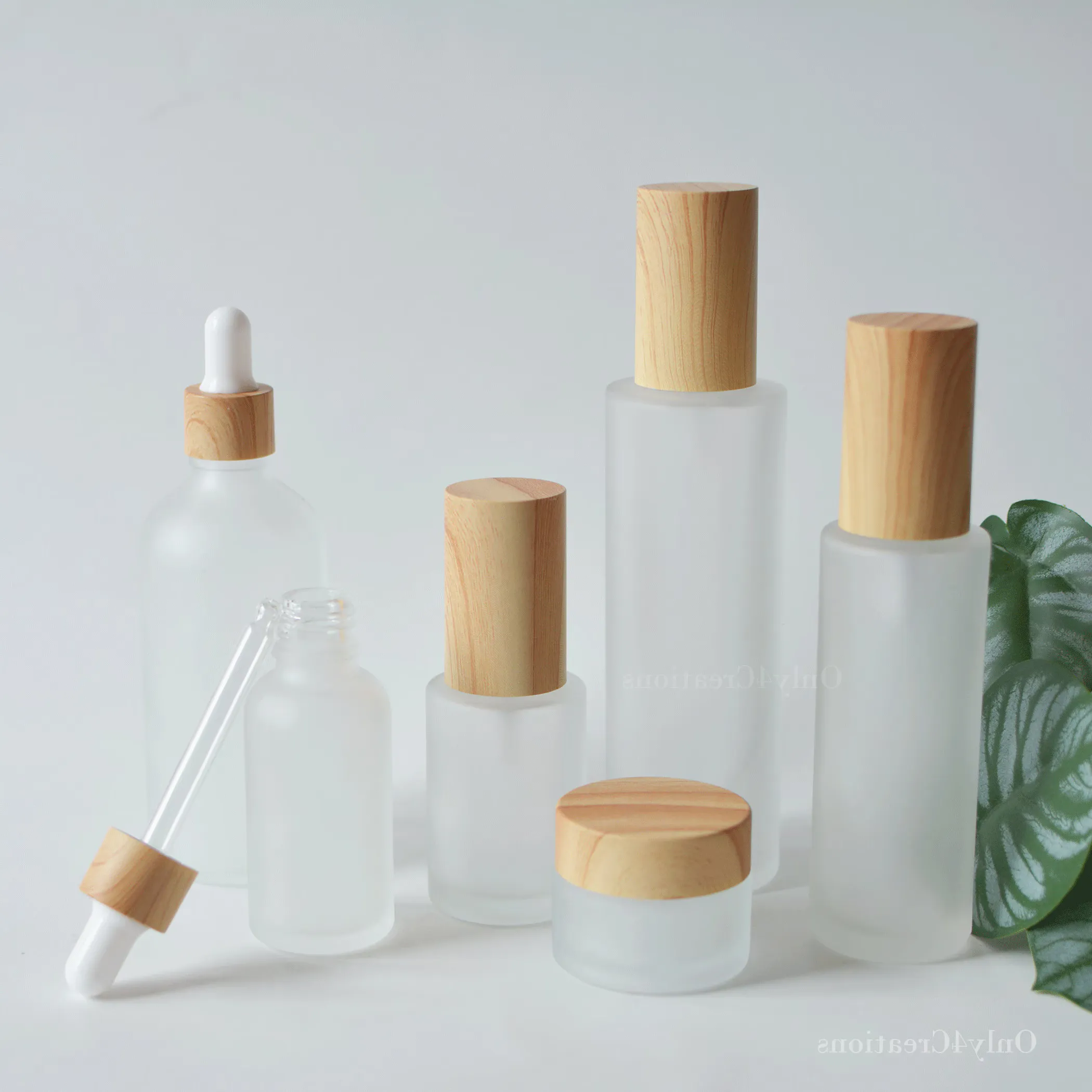
Cosmetic satin and frosted surface finishes on ISBM bottles are achieved through controlled acid etching or fine bead blasting of the cavity surface to a specified Ra in the range 0.15–0.80 µm depending on the desired appearance (lighter satin at the lower end, more pronounced frosted at the upper end). The critical quality management practice for textured finishes is ensuring that the texture specification is applied uniformly across the cavity surface — uneven texturing from inconsistent etch depth or bead blast coverage produces a patchy frosted appearance visible as tonal variation across the bottle. The texture specification should be documented with reference photography of the approved textured cavity and verified at each maintenance interval against the reference. Retexturing of degraded satin surfaces (where the texture has been partially polished away through production wear) restores the texture depth and uniformity to original specification.
Fingerprint-Resistant Finishes for Cosmetic Retail Environments
Fingerprint visibility is a practical quality concern for cosmetic bottles displayed in self-service retail environments where consumers handle bottles before purchase. Mirror-polished bottles are most susceptible to fingerprint marking — the oleic acid in fingerprint oil deposits appears as a visible cloudy mark against the highly reflective background of a mirror surface. Satin and frosted surfaces (Ra 0.20–0.60 µm) dramatically reduce fingerprint visibility because the diffuse reflectance of the textured surface masks the greasy fingerprint residue rather than contrasting against it. For cosmetic brands whose bottles will be extensively handled in self-service retail — including pharmacies, beauty supply stores, and supermarkets — designing the grip and handling zones of the bottle with a fingerprint-resistant satin finish while maintaining mirror polish in the label panel zone (where fingerprints are less likely) represents an optimal balance of premium appearance and practical resistance to retail handling marking.
Secondary Decoration Processes Compatible With ISBM Cosmetic Bottles
The visual complexity of premium cosmetic bottles frequently combines the in-mould effects achievable through ISBM (surface finish, embossing, base colour, form) with secondary decoration processes applied after blow production. Understanding which secondary decoration processes are compatible with ISBM PET/PETG bottles — and what surface preparation requirements they impose — allows cosmetic brand teams to design the complete decoration scheme before tooling is commissioned, preventing the incompatibilities that are expensive to discover after production begins.
| Secondary Process | PET/PETG Compatibility | Surface Prep Required | Cosmetic Application |
|---|---|---|---|
| Pressure-Sensitive Label | ✅ Excellent | Clean, flat panel; may need corona if low surface energy PET grade | All categories; dominant for mid-market cosmetics |
| Shrink Sleeve | ✅ Excellent | Bottle profile must be designed for sleeve shrink compatibility | 360° graphic coverage; K-beauty; prestige brand storytelling |
| Vacuum Metallising | ✅ Good with preparation | Primer coat required; mirror surface amplifies metal appearance | Gold/silver/chrome effect; luxury positioning; fragrance-adjacent |
| Hot Foil Stamping | ✅ Good on flat/slightly curved surfaces | Requires flat or low-curvature stamping zone; adequate wall thickness | Brand logo accent; prestige tier brand mark; limited edition |
| Screen Print / Pad Print | ✅ Good with compatible inks | UV-curable PET-compatible inks; surface activation typically required | Label-free branding; mineral/clean beauty; limited edition |
| UV Inkjet Direct Print | ✅ Good — digital flexibility | Surface activation; primer for adhesion on PETG | Short-run, variable data, personalisation programmes |
| Lacquer / Coating | ✅ Good with PET-compatible systems | Pre-treatment; adhesion test at 100% colour coverage required | Opaque colour wash; colour-over-texture effect; solid colour bodies |
The compatibility of each secondary process with ISBM PET/PETG bottles is well-established — the table above reflects validated commercial practice, not theoretical compatibility assessment. The key variable in each case is the surface preparation requirement, which must be built into the production process before the secondary decoration step. Any cosmetic brand planning to apply secondary decoration to an ISBM bottle should confirm the specific preparation requirements with both the ISBM production team and the decoration supplier before finalising the bottle design and the production sequence.
Quality Inspection for Aesthetic Attributes: Building a Cosmetic-Grade Visual QC System
A cosmetic-grade visual quality control system must be specifically designed for the inspection task: detecting aesthetic defects that affect the consumer’s visual experience of the bottle, under the lighting conditions that the consumer will actually encounter. Generic factory quality inspection, conducted under overhead fluorescent lighting with no specific methodology for cosmetic visual attributes, consistently misses defects that are prominent in the retail display environment. Building a cosmetic-grade QC system requires investment in the right inspection infrastructure, the right standards, and the right inspector training.
The inspection station should be a dedicated, separated workstation with calibrated LED cool-white spot lighting at 45-degree incidence, a side-lighting panel for detection of surface marks and tool traces, and a backlight panel for wall thickness distribution assessment. Physical colour standards from the approved prototype batch, stored in UV-protective sleeves to prevent degradation, must be present at the station for colour comparison. Defect reference bottles (representing each defect category that has historically occurred in the production run) should also be available for the inspector to calibrate their detection sensitivity against.
Inspector training for cosmetic visual QC should include: defect recognition under each lighting condition (haze patches most visible under backlight; surface marks under side light; emboss clarity under oblique front light; colour consistency under standard overhead reference light plus comparison to standard); the defect severity grading system used by the brand (critical defects requiring 100% rejection versus minor defects acceptable at statistical AQL levels); and the production response protocol for each defect category (immediate machine parameter check, tooling inspection, or management escalation). Documented inspector certification against the standards, renewed annually, ensures QC performance consistency across personnel changes.
Advancing ISBM Aesthetic Capability: The Role of Machine Technology in Visual Quality
The visual quality achievable from an ISBM cosmetic bottle production operation is bounded by the capability of the machine platform itself. Machine architecture — servo-electric versus hydraulic, conditioning system resolution, blow valve control precision — determines how closely process parameters can be controlled and how consistently they can be maintained across a production run. Premium cosmetic bottle optical quality requires the highest-precision machine architecture available, because the cosmetic quality standard leaves far less room for process variation than beverage applications.
All-electric servo ISBM machines deliver the process precision that cosmetic optical quality demands — specifically in the conditioning temperature control (infrared lamp output controlled by servo drives rather than on/off switching) and the stretch rod position and speed control (encoder-verified servo positioning versus open-loop pneumatic actuation). For PETG cosmetic bottles where the conditioning temperature window for optimal clarity is as narrow as ±3°C, the ±0.5°C temperature control precision achievable with servo-electric conditioning systems versus the ±3–5°C variation typical of on/off-controlled systems makes a measurable difference to the consistency of optical quality across a production run.
The elimination of hydraulic oil in all-electric machines also contributes to cosmetic visual quality indirectly: hydraulic oil contamination of the production environment, while typically minor in controlled conditions, can produce visible oil spots on bottle surfaces that represent a zero-tolerance defect in prestige cosmetic production. All-electric ISBM machines used in dedicated cosmetic packaging production environments provide the clean manufacturing foundation that prestige cosmetic brands’ supply chain audit standards require.
Practical Troubleshooting: Diagnosing and Resolving Cosmetic ISBM Visual Defects
When visual defects appear in cosmetic ISBM production, rapid and accurate diagnosis is commercially critical — every minute of production with defective bottles generates scrap and delays to the filling schedule. The diagnostic guide below addresses the most common cosmetic visual defect types and their most likely root causes.
Haze Patches or Overall Cloudiness
Most likely causes: Conditioning temperature below minimum (stress-whitening from over-forced stretch of cold material); PET/PETG moisture above 30 ppm (hydrolytic degradation during injection); processing temperature too high (thermal crystallisation producing visible spherulites); cavity surface degraded (surface irregularities scattering light). Diagnostic first step: Check pyrometer readings and compare to recipe; pull a dryer dew point log; inspect cavity surface with Ra probe.
Visible Banding (Light/Dark Stripes in the Wall)
Most likely cause: Circumferential temperature non-uniformity in the conditioning station — specific lamp zones producing higher or lower output than others. Typically caused by lamp degradation (lamp output decreasing with age), lamp reflector fouling (dust or contamination reducing effective output), or pyrometer sensor drift. Diagnostic first step: Perform a full pyrometer survey of the preform surface circumference at the conditioning station; compare against last calibration record; inspect and clean lamp reflectors.
Yellowing or Warm Tint in Clear PETG Bottles
Most likely cause: Excessive shear heating from too-high screw speed or too-aggressive injection rate degrading PETG chains and generating yellow chromophore compounds; or residency time in the injection barrel too long (material sitting at melt temperature for too long before injection). Diagnostic first step: Reduce screw speed by 20%; check injection barrel temperature profile; verify that no material is sitting in the barrel during extended stoppages without purging.
Surface Marks or Scratches on the Bottle Body
Most likely cause: Contact damage during bottle conveying (bottle-to-bottle or bottle-to-conveyor contact at ejection or conveyor transfer points); or cavity surface damage from foreign material (gate vestige fragments, resin contamination, or tooling debris) caught between the preform and the cavity surface during blow. Diagnostic first step: Inspect ejection chute and conveyor entry points for sharp edges or irregular contact surfaces; inspect cavity surface for embedded debris or scoring; check gate vestige quality on recent bottles.
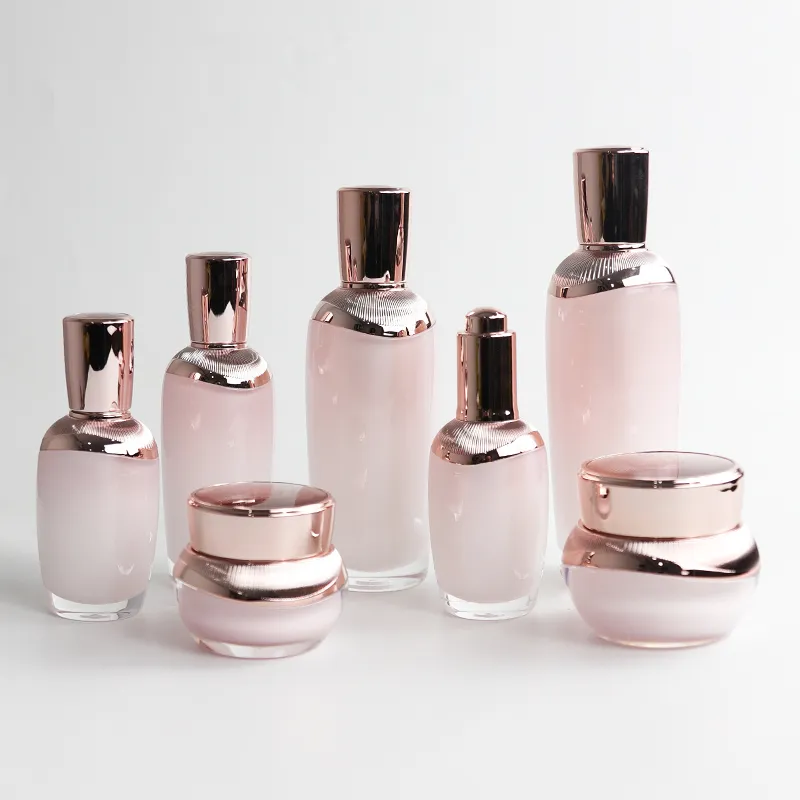
Ever-Power’s Technical Support for Cosmetic ISBM Visual Quality Achievement
Australia Ever-Power Injection Stretch Blow Moulding Machine Co., Ltd provides cosmetic packaging operations with dedicated technical support focused on the optical and visual quality standards that cosmetic brands require — standards that are more demanding than those applied in beverage or industrial packaging and that require specific expertise in PETG processing, cavity surface engineering, colour management, and cosmetic-grade quality inspection methodology.
At the commissioning stage, Ever-Power’s engineers establish the process parameter baselines for optical quality in the specific PETG grade and bottle design being qualified — conditioning temperature targets, conditioning uniformity tolerance, injection rate limits, and mould temperature — and validate them through a series of optical quality confirmation tests: hazemeter measurement, visual inspection under calibrated display lighting, spectrophotometric colour measurement (for tinted bottles), and wall thickness grid mapping. The validated process recipe is documented and stored in machine memory with access control, providing the operational foundation for consistent optical quality from first commercial production run onward.
Post-commissioning, Ever-Power’s technical advisory programme provides quarterly process review visits for cosmetic ISBM operations, covering optical quality trend analysis from production data, tooling surface condition review, conditioning system calibration verification, and process parameter optimisation as machine and tooling age. This ongoing support programme is specifically designed to prevent the slow drift from premium optical quality that occurs without active monitoring and intervention — the drift that production teams rarely notice incrementally but that results in measurable brand quality standard degradation over 12–18 months of unmanaged production. Contact the Ever-Power team at [email protected] to discuss your cosmetic bottle visual quality programme.
Achieve Premium Optical Quality in Your Cosmetic Bottle Production
Australia Ever-Power’s engineering team in Condell Park NSW provides cosmetic ISBM operations with the technical expertise in optical quality management, process control, and tooling maintenance that sustained premium visual standards require.
Request an Optical Quality Consultation →
[email protected] | Condell Park NSW 2200, Australia | isbm-technology.com
Featured Product
Fully Servo One-Step Injection Stretch Blow Molding Machine — Four-Station HGYS150-V4-EV
For cosmetic packaging operations where optical quality and process precision are the primary production objectives, the HGYS150-V4-EV fully servo four-station one-step injection stretch blow molding machine from Australia Ever-Power provides the machine architecture that premium cosmetic visual standards demand. The fully servo-electric drive system eliminates hydraulic oil entirely — creating the clean, contamination-free production environment that prestige cosmetic brands require — while delivering the conditioning temperature precision, stretch rod position control, and blow valve timing repeatability that PETG cosmetic bottle optical quality depends on. The machine’s all-electric architecture enables adaptive conditioning lamp power control per zone, providing the ±0.5°C conditioning temperature precision that eliminates banding and haze variation defects in demanding PETG cosmetic applications. It processes PET and PETG across cosmetic bottle volumes from small-format serums to standard body care formats, accepts the full range of cosmetic neck finishes for pump and dropper applications, and supports rPET blends for brands building sustainability credentials alongside their optical quality programme. Detailed specifications, PETG processing capability confirmation, and cosmetic application examples are available at isbm-technology.com. Contact [email protected] to discuss optical quality capability for your cosmetic bottle application.
Frequently Asked Questions: ISBM Transparency and Visual Quality in Cosmetic Bottle Production
Australia Ever-Power Injection Stretch Blow Moulding Machine Co., Ltd