OTC Medicines: The Largest Volume Pharmaceutical Packaging Segment in Australian Retail
Over-the-counter pharmaceutical products — analgesics, vitamins and minerals, antihistamines, antacids, cold and flu preparations, sleep aids, and the extensive range of Schedule 2 and Schedule 3 medicines available without prescription in Australian pharmacies — represent the highest-volume segment of the pharmaceutical packaging market by unit count. Every Australian pharmacy, supermarket, and consumer health channel sells OTC medicines to consumers who self-select, self-diagnose, and self-treat with these products. The container for an OTC medicine must accomplish something commercially more demanding than its prescription counterpart: it must simultaneously communicate brand identity in a crowded retail environment, persuade a consumer to select it over competitors, ensure child safety through CRC compliance, enable easy dispensing for regular adult users, and protect the pharmaceutical formulation through the product’s shelf life in a domestic environment ranging from bathroom cabinet to holiday luggage.
The آلة حقن القوالب بالنفخ والتمديد serves the OTC pharmaceutical packaging market through its combination of pharmacopoeial-grade material compliance, CRC neck finish dimensional precision, and custom bottle design capability that enables OTC brands to achieve the proprietary container shapes and premium appearance that drive retail performance. This guide addresses the specific technical, commercial, and regulatory requirements of OTC pharmaceutical bottles for the Australian consumer health market.
Australia Ever-Power Injection Stretch Blow Moulding Machine Co., Ltd, Condell Park NSW 2200, provides OTC pharmaceutical manufacturers and consumer health brands with ISBM machine technology and packaging development support calibrated for the commercial and regulatory requirements of the Australian OTC medicine sector.
OTC Product Categories and Their Specific Container Requirements
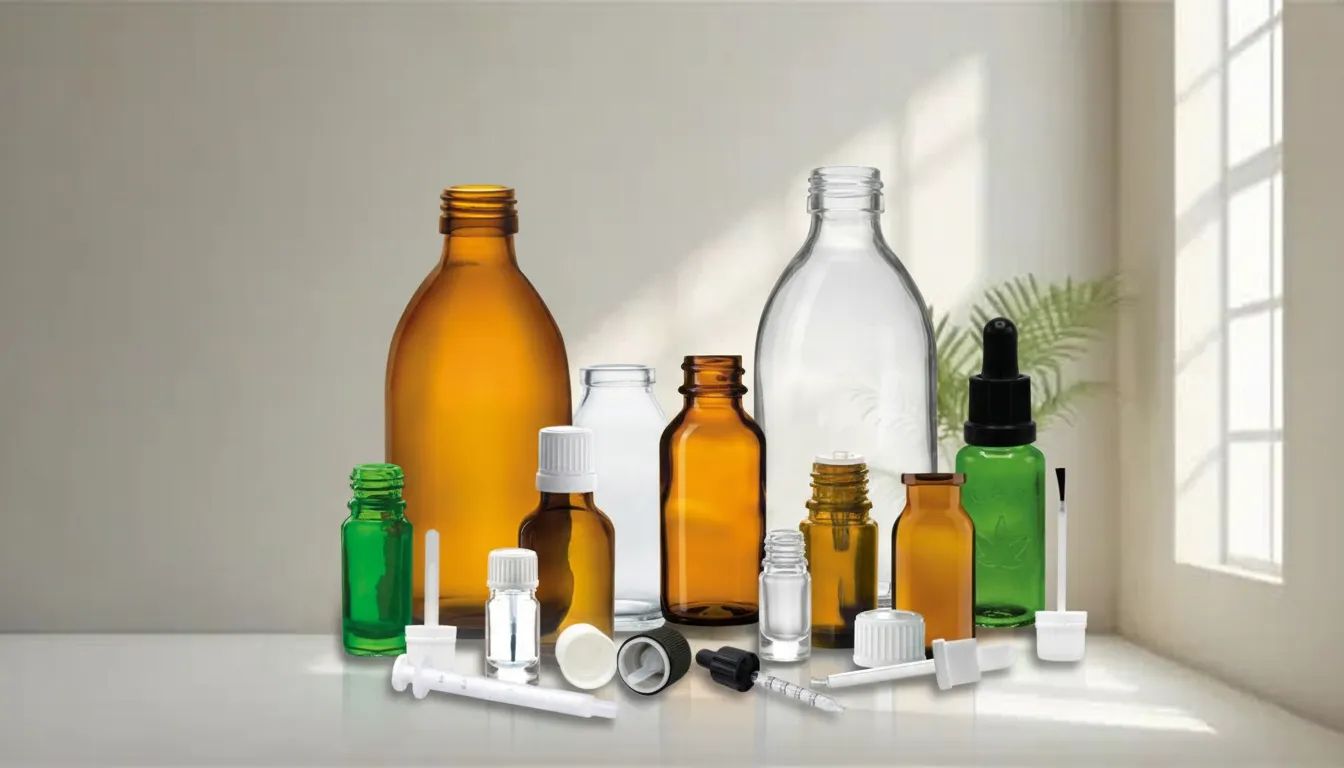
The OTC pharmaceutical category spans products with very different formulation types, patient populations, and regulatory classifications — each with distinct container design priorities.
Analgesics and Anti-Inflammatory Tablets and Liquids
Paracetamol, ibuprofen, and aspirin — the three highest-volume OTC pharmaceutical products in Australia — are available in solid tablet, caplet, and liquid forms. Tablet analgesics are typically packaged in plastic bottles (HDPE or PET) at counts of 24–100 tablets; paediatric liquid analgesics in 200ml syrup bottles with dosing cups. Both formats require CRC closures (scheduled substances under the Poisons Standard) and induction foil tamper evidence seals. The commercial differentiator in the high-competition retail analgesic category is the bottle design — proprietary bottle shapes that create visual shelf presence and brand recognition are significant commercial investments for the major OTC brands (Panadol, Nurofen, Voltaren). ISBM’s custom bottle design capability directly serves this commercial need, providing proprietary bottle silhouettes that offshore commodity HDPE production cannot match.
Vitamins, Minerals, and Dietary Supplements
The Australian vitamins and dietary supplements market — estimated at over AUD 2 billion annually — is a premium consumer health segment where packaging quality directly influences purchase decisions. Premium vitamin brands (Blackmores, Swisse, Metagenics) invest heavily in proprietary bottle designs that communicate quality and brand authority. ISBM PET’s clarity (vitamins are often bright capsule or tablet colours that display attractively through a clear container), premium surface appearance, and custom geometry capability serve this premium positioning need. Unlike pharmaceutical scheduled substances, most vitamins do not require CRC packaging unless they contain scheduled ingredients at scheduled concentrations — but many premium vitamin brands choose CRC closures regardless of regulatory requirement as a quality signal and safety feature for households with children. The vitamin bottle ISBM development brief typically emphasises brand differentiation, consumer ergonomics (easy one-hand opening, secure grip), and visual product display through the bottle rather than CRC compliance alone.
Antihistamines, Cold and Flu Products, Sleep Aids
Schedule 2 and Schedule 3 antihistamines (loratadine, cetirizine, diphenhydramine), cold and flu combination products, and sleep aids containing antihistamines represent a significant retail OTC category requiring CRC packaging. These products target the adult consumer who self-medicates seasonal and symptomatic conditions — the container must be easy to open under the dulled dexterity that a heavy cold produces, while remaining CRC-compliant for the adult panel test. The ISBM push-and-turn CRC for this category should be calibrated to the ISO 8317 adult panel test (≥90% accessibility for adults aged 50–70) rather than maximum child resistance force — ensuring that an unwell adult consumer can access their antihistamine without excessive effort.
Antacids, Digestive Aids, Laxatives
Antacid liquid preparations (calcium carbonate suspension, aluminium hydroxide suspension) and liquid laxatives represent medium-volume OTC liquid categories with specific container requirements: adequate bottle volume for the typical course (antacid bottles of 200–500ml for a 2–4 week treatment course); a wide-mouth format for direct swig dosing or dosing cup compatibility; and chemical compatibility with the suspension formulations (alkaline pH for antacid suspensions, typically pH 8.5–10.5). PETG rather than standard PET is recommended for antacid suspension containers at these alkaline pH values, for the same alkaline hydrolysis resistance reasons described in the dialysis fluid chapter. Contact [email protected] for antacid suspension PETG compatibility assessment for your specific formulation.
CRC Engineering for OTC Consumer Health Products
Child-resistant closure requirements for OTC pharmaceutical products follow the same TGA CRC Order 2021 legislative framework described in the paediatric and oral liquid medicine chapters — scheduled substances require CRC packaging regardless of whether they are prescription or OTC. For the OTC category, this means that the majority of Schedule 2 and Schedule 3 medicines sold at pharmacy without prescription require CRC closures, including many high-volume consumer health products that consumers may not intuitively associate with childproofing requirements.
The OTC category adds a commercial dimension to the CRC design challenge that prescription medicines do not face: the CRC must pass the ISO 8317 child panel test while also performing well in consumer preference research. OTC consumers directly choose between competing products on the retail shelf, and consumer research consistently shows that frustrating CRC performance (a closure that is difficult to open for adults, or one that rattles and feels insubstantial) reduces consumer satisfaction and repeat purchase intent. The ISBM OTC CRC specification must therefore optimise for both child resistance (legal requirement) and adult accessibility (commercial requirement) — calibrating the engagement force to the specific demographic of the product’s consumer base. A vitamin supplement for the 55+ market requires a lower opening torque specification than the ISO 8317 adult accessibility requirement’s 90% pass rate, because the specific consumer base skews toward lower hand strength than the general adult population.
ISBM injection neck dimensional consistency (±0.08mm CRC engagement dimensions across all production cavities) is the production quality foundation that ensures the CRC performance is consistent across the full commercial production population — not just the samples submitted for ISO 8317 qualification testing. Multi-cavity CRC qualification (testing containers from all production cavities simultaneously) confirms that commercial production maintains the ISO 8317 pass rates that the initial qualification achieved on specifically selected samples.
Consumer-Friendly Dispensing Design for OTC Convenience
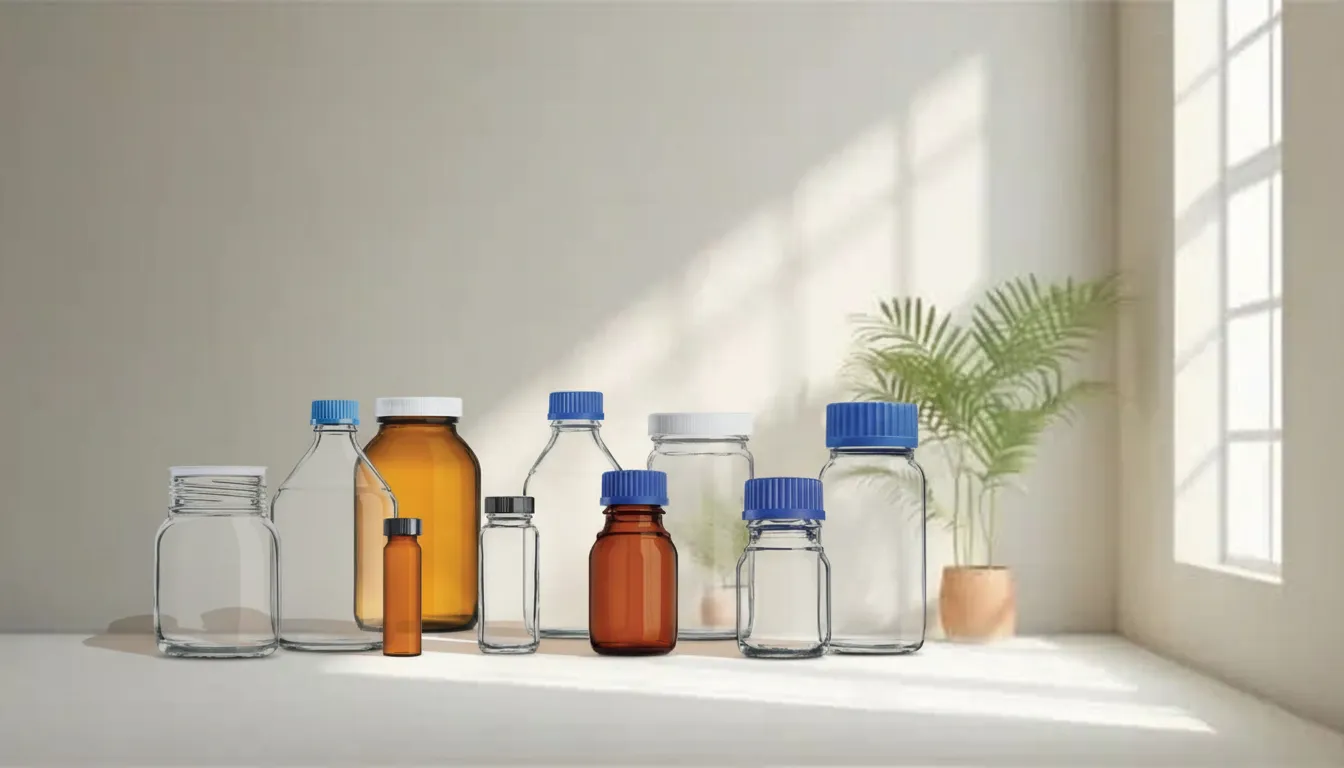
OTC consumer health products are used in the home by consumers managing their own health — not in a clinical setting with professional pharmaceutical support. The container’s dispensing design must accommodate the full range of consumer health contexts: a parent administering paracetamol to a sick child at 3am; an elderly consumer managing arthritis pain with reduced hand strength; a consumer taking daily vitamins as part of a routine; and a consumer with a cold using antihistamine while managing normal daily activities. Each of these contexts places specific demands on the dispensing design that ISBM addresses through container geometry and closure system engineering.
One-Hand Operation Design
Body waist grip zone and defined shoulder geometry enabling the bottle to be held securely in one hand while the other hand operates the CRC and tilts the bottle to dispense tablets or liquid. Base stability (flat base ±0.15mm) preventing tipping during one-handed dispensing. Essential for elderly consumers, parents managing young children, and consumers with reduced hand dexterity.
Tablet Dispensing Geometry
Neck bore size and shoulder angle calibrated to dispense 1–3 tablets per tilt without tablet avalanche (over-dispensing from excessive tilt). ISBM’s injection-formed neck bore (±0.05mm) and consistent shoulder geometry across all production cavities ensures that the tablet dispensing behaviour is uniform across all commercial production — no “surprise” bottles that dispense 6 tablets at once.
Label Readability at Point of Use
A cylindrical or flat-front body panel with ±0.20mm flatness maintains the high-contrast label readability that consumer health products require for dosing instructions at point of use. For consumers with presbyopia (common in the 50+ OTC user demographic), the label panel must present the dosing instructions without optical distortion from curved or uneven body surfaces under typical bathroom lighting.
Brand Visual Clarity
Clear PET body allows visible product display (coloured tablets, capsule colour range) reinforcing brand identity and product freshness signals. Haze ≤ 2.0% body panel specification maintains transparency equivalent to glass at ambient storage conditions — a premium quality cue that HDPE packaging cannot provide and that premium OTC consumer health brands leverage as a commercial differentiator.
Brand Differentiation Through Custom ISBM Bottle Design
The Australian OTC pharmaceutical retail market is intensely competitive — the major pharmacy chains (Chemist Warehouse, Priceline Pharmacy, Terry White Chemmart, Amcal) stock multiple competing analgesic, vitamin, and antihistamine products on the same shelf. In this environment, the bottle’s visual impact at point of sale is a commercial asset with measurable financial return. Consumer research consistently shows that distinctive bottle shapes with strong brand visual identity (the Panadol curved bottle, the Blackmores angular supplement bottle, the Nurofen dark blue format) drive spontaneous purchase recognition and brand loyalty that commodity square-bottle competitors cannot match.
ISBM’s custom bottle design capability — the ability to produce any commercially viable bottle geometry from custom blow mould tooling — enables OTC brands to develop proprietary bottle shapes that become registered trade dress in Australia, creating a legally protectable packaging asset that differentiates the brand from generic competitors. Unlike offshore commodity container sourcing where the brand buys from a catalogue of standard shapes, ISBM allows the brand to brief a container designer for the desired shelf presence, ergonomics, and brand language, then manufacture exactly that design at commercial volumes from Australian tooling with Australian lead times.
The commercial ROI on custom ISBM bottle design for premium OTC brands is demonstrated in Australian market research: premium vitamin and supplement brands in proprietary ISBM PET bottles consistently command 30–60% price premiums over equivalent products in standard HDPE packaging on the same pharmacy shelf. The tooling investment (typically AUD 15,000–40,000 for a custom OTC bottle tool) is recovered within 2–4 months of commercial production at typical OTC brand volumes of 500,000–2,000,000 units per year. Visit isbm-technology.com/contact-us to discuss custom OTC bottle design and commercial return analysis for your brand.
TGA Regulatory Requirements for OTC Medicine ISBM Containers
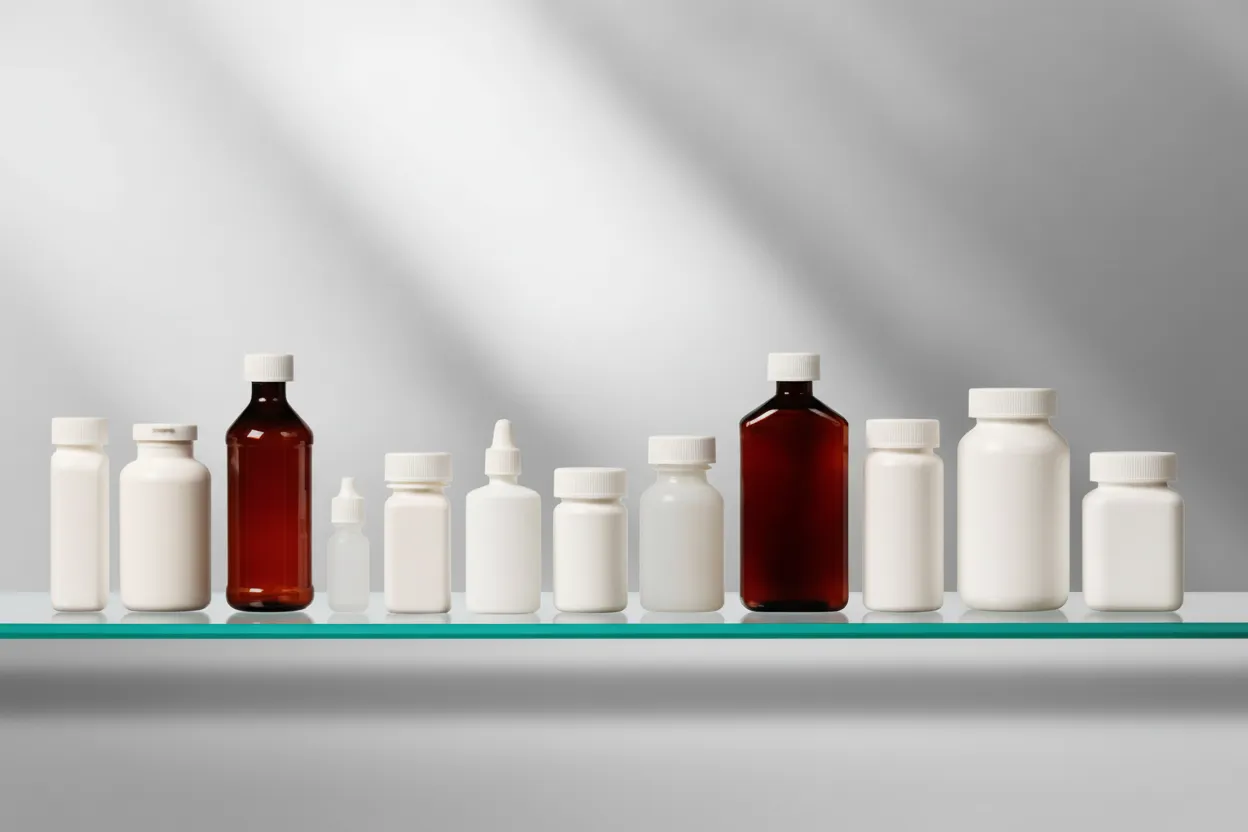
OTC medicines in Australia are regulated as either registered medicines (Schedule 2 and Schedule 3 products requiring ARTG registration, plus some general sales category OTC products requiring registration) or listed medicines (low-risk OTC products assessed for quality, safety, and presentation by the sponsor and listed on the ARTG without TGA pre-market review of efficacy). The container documentation requirements differ between these regulatory pathways.
| OTC Product Type | TGA Pathway | CRC Required | Container Documentation |
|---|---|---|---|
| Paracetamol / ibuprofen tablets (S2) | ARTG Registered | Yes | Full CCS: pharmacopoeial, stability, CRC cert |
| Antihistamine (S2/S3) tablets/liquid | ARTG Registered | Yes | Full CCS: pharmacopoeial, E&L, stability, CRC cert |
| Vitamins and minerals (Listed) | ARTG Listed | Depends on ingredient schedule | Container type/material, GMP declaration, stability evidence |
| Iron supplements (S2) | ARTG Listed or Registered | Yes (iron is CRC-listed) | CCS with CRC cert; amber container for liquid iron |
| Antacid suspension (Listed) | ARTG Listed | Usually not required | PETG compatibility, stability, GMP declaration |
Production Economics for OTC Pharmaceutical Brands
OTC pharmaceutical brands in Australia operate across a wide volume range — from smaller boutique supplement brands producing 200,000–500,000 units per year to major OTC pharmaceutical companies producing 5–50 million units per year. ISBM investment economics scale across this range, with single-cavity tooling serving the smaller brands and multi-cavity configurations serving the major OTC players. The commercial case for local ISBM production of OTC containers rests on five economic drivers: custom bottle design ROI (the price premium a proprietary bottle commands versus the commodity alternative); supply chain agility (response to seasonal demand spikes — cold and flu season, sun exposure season for vitamin D products); elimination of offshore procurement lead times and minimum order quantity constraints; regulatory supply chain security (production under Australian GMP oversight); and sustainability cost savings from lightweighting programmes and reduced transport embodied carbon.
For established OTC brands currently purchasing standard HDPE or PET bottles from offshore suppliers, Ever-Power’s pre-investment analysis calculates the full commercial case: the price premium recoverable from a custom ISBM bottle design (typically 15–40% price increase to the consumer vs. standard format, with minimal additional production cost), the supply chain risk reduction value, and the per-unit cost comparison at the brand’s actual production volumes. This analysis forms the basis of a capital investment recommendation that is grounded in the brand’s specific commercial context rather than generic ISBM economics. Contact [email protected] for a complimentary OTC brand ISBM investment analysis.
Sustainability for OTC Consumer Health Packaging
OTC consumer health brands face growing sustainability expectations from both retail channel partners (Chemist Warehouse, Priceline, and Woolworths/Coles for supermarket OTC channels all have published packaging sustainability commitments) and from their consumer base (the health-conscious OTC consumer demographic over-indexes on environmental awareness and sustainability purchasing criteria). PET ISBM containers provide the sustainability platform for OTC brands because: PET is kerbside recyclable in all Australian states; rPET content is achievable for most OTC applications (vitamins, antihistamines) at 25–50% from certified food-contact supply chains with stability confirmation; lightweighting through ISBM optimisation reduces material use without compromising container performance; and the Australian Packaging Covenant Organisation (APCO) reporting framework credits all of these improvements in the brand’s annual APCO reporting obligations.
The Container Deposit Scheme (CDS) operating in most Australian states includes beverage containers but not pharmaceutical containers under current scheme rules — OTC medicine bottles are not CDS-eligible, which means the recycling pathway for used OTC containers is kerbside recycling rather than deposit return. PET ISBM containers with RIC code 1 labelling and “recyclable” on-pack claim are eligible for kerbside recycling when rinsed and empty — a claim that HDPE alternatives (RIC code 2) share, so the sustainability differentiation between PET and HDPE is primarily in the rPET content achievability and the per-unit weight savings that PET’s lower density relative to HDPE enables at comparable structural performance.
For OTC brands seeking to meet APCO’s 2025 targets (100% recyclable packaging, 50% recycled content in packaging), the ISBM PET container with certified rPET content and documented recyclability provides the most direct pathway to APCO compliance for the primary container component of OTC packaging systems.
Quality System Requirements for OTC ISBM Production
OTC pharmaceutical ISBM container production must operate under a pharmaceutical GMP quality management system that meets TGA’s expectations for listed and registered medicine container supply. For listed OTC products (the majority of vitamin and supplement OTC products), the QMS requirement is GMP compliance with PIC/S PE 009 (the Australian GMP standard for medicines) for the relevant manufacturing operations — in practice, this means documented procedures, batch records, incoming material testing, in-process controls, and finished product release with QA sign-off. For registered OTC products (Schedule 2/3 analgesics, antihistamines), the same GMP standard applies, with the additional expectation that the container batch records are available for TGA audit as part of the registered product’s manufacturing history.
For OTC supplement brands that are not licensed pharmaceutical manufacturers and that purchase containers from ISBM producers as a component of their product, the container producer’s GMP certificate and lot-specific quality records form part of the brand’s own GMP quality system — the brand must qualify the container supplier as a GMP-compliant critical material supplier and maintain the supplier’s quality documentation as part of their own batch history. ISBM container producers supplying OTC pharmaceutical brands must be prepared to support this supplier qualification process — providing TGA GMP certificates, quality agreements, and the lot-specific batch records that OTC brands need for their own TGA compliance.
Ever-Power’s OTC Pharmaceutical ISBM Development Programme
Australia Ever-Power provides OTC pharmaceutical manufacturers and consumer health brands with ISBM machine technology and commercial packaging development support across the full OTC pharmaceutical container range. The OTC programme covers: custom bottle design development (from design brief through tooling fabrication and first production samples); CRC system qualification for scheduled OTC products; pharmacopoeial material compliance documentation for ARTG listed and registered product submissions; brand-specific colour and surface finish specification; and the production economics analysis that supports OTC brand capital investment decisions.
For OTC brands transitioning from offshore HDPE commodity sourcing to local custom ISBM PET production, Ever-Power manages the transition programme — including the TGA variation or notification requirements for container material changes, the stability bridging programme, and the commercial brand relaunch planning that maximises the return on the packaging investment from day one of commercial production.
Visit isbm-technology.com/contact-us or contact [email protected] to start your OTC pharmaceutical ISBM bottle development conversation with Australia’s local packaging specialist.
Recommended Machine
HGYS150-V4 — Four-Station ISBM for OTC Pharmaceutical Container Production
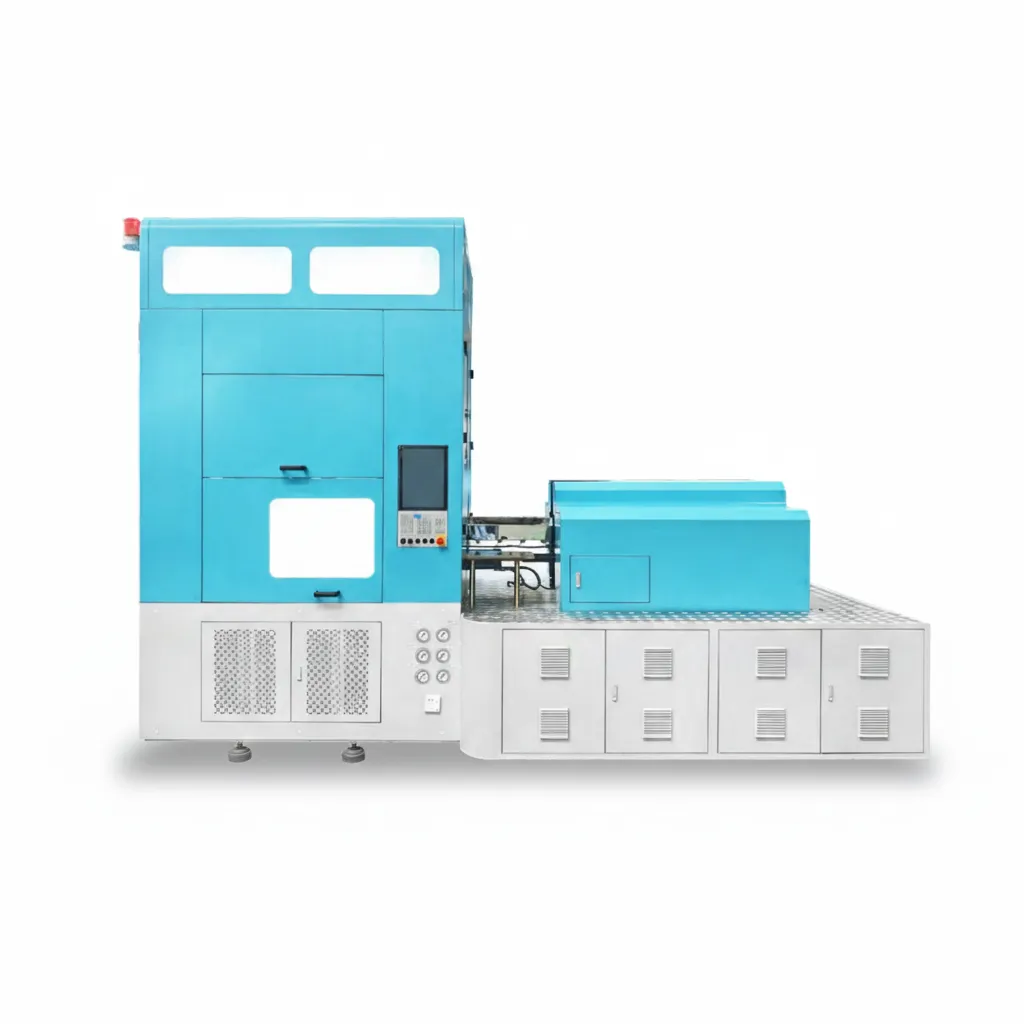
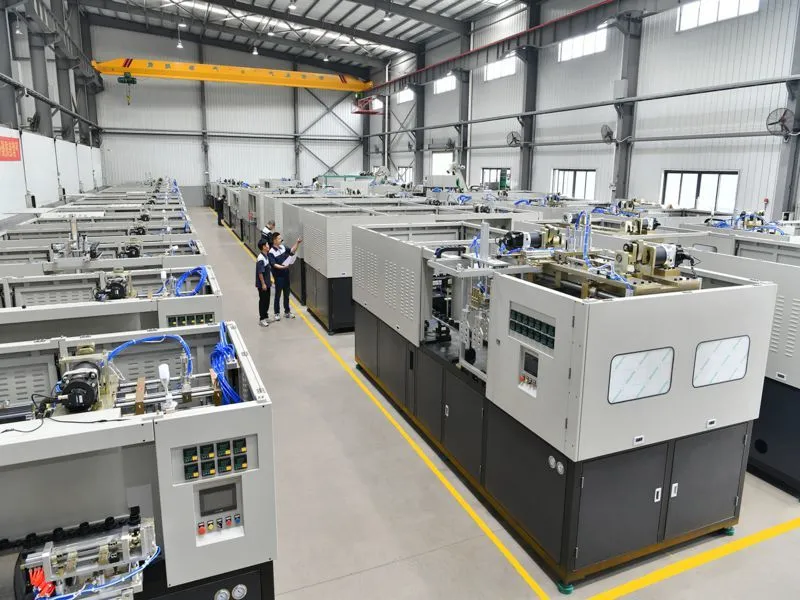
For OTC pharmaceutical and consumer health container production spanning analgesic tablet bottles, vitamin supplement formats, liquid OTC medicine bottles, and antacid suspension containers in the 30ml–500ml volume range, the HGYS150-V4 four-station one-step ISBM machine provides the custom bottle design capability and OTC pharmaceutical compliance platform that Australian consumer health brands require. The four-station architecture delivers consistent CRC neck finish precision across all production cavities — maintaining ISO 8317 compliance across commercial volumes without cavity-to-cavity CRC performance variation that would produce inconsistent consumer opening experience. Custom blow mould tooling accommodates brand-specific bottle geometries from standard rectangular analgesic formats through distinctive curved and ergonomic supplement designs. The machine processes standard PET for clear vitamin and analgesic formats, amber PET for photosensitive iron and light-sensitive products, and PETG for alkaline antacid suspension formats. UV-stable colour masterbatch processing serves OTC brand colour identity requirements. Rapid mould changeover (90–150 minutes) enables multi-SKU OTC brand ranges to be served from a single machine platform. PLC process data logging generates the pharmaceutical GMP batch records that TGA registered and listed product compliance requires.