
1. The Rotary Platform Architecture: Why Parallel Processing Defines One-Step ISBM
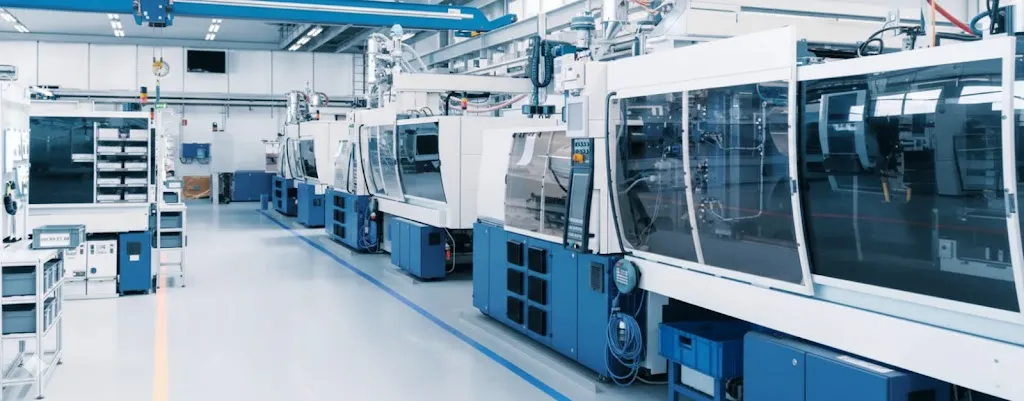
The defining structural feature of a one-step injection stretch blow moulding machine is the rotary indexing table — a precision-engineered rotating platform that carries the core rods and partially formed containers through each processing station in sequence, with all stations operating simultaneously during every machine cycle. This parallel concurrent operation is the physical basis for the 10–30 second cycle times that make one-step ISBM commercially competitive: instead of completing one operation sequentially, transferring the part to the next machine or station and completing the next operation, all operations execute concurrently on different parts at different stages of completion. During every cycle, the injection station is forming a new preform, the conditioning station is thermally equilibrating the previous cycle’s preform, the stretch-blow station is orienting and expanding the conditioned preform into a finished container, and the ejection station is releasing the cooled container from the previous blow cycle — four simultaneous value-adding operations producing one finished container per cycle per cavity set.
The rotary table positions core rods at each processing station with rotational accuracy of ±0.05 mm, maintained by a precision index cam drive on standard servo-hydraulic models or a direct servo motor drive on Australia Ever-Power’s full servo EV series machines. This positional accuracy is critical at two stations: at the injection station, the core rod must close against the preform mould cavity with a sealing face clearance of less than 0.01 mm to prevent flash formation at the preform body; at the stretch-blow station, the core rod bore axis must be concentric with the blow mould cavity axis to within 0.1 mm to ensure the stretch rod enters the preform centrally and produces a symmetric wall thickness distribution around the container circumference.
Any cumulative positional error in the rotary table — caused by bearing wear, index cam wear or differential thermal expansion during the production shift warm-up period — propagates directly into container quality defects: asymmetric wall thickness distribution, off-centre base gate, and parting-line misalignment. Australia Ever-Power’s rotary table design uses ribbed structural cast iron with temperature-controlled bearing housings to maintain positional accuracy throughout the full production shift as the machine reaches thermal equilibrium, with alignment verification built into the commissioning IQ protocol and annual preventive maintenance schedule.
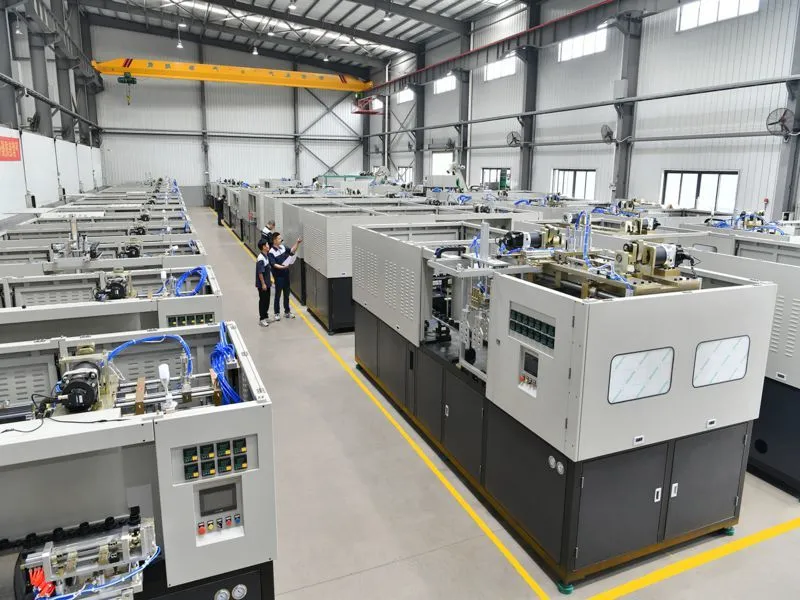
2. Three-Station vs Four-Station Architecture: A Definitive Comparison
The number of processing stations is the single most important machine architecture decision after drive system selection. The station configuration determines the cycle time structure, the process flexibility available for different resin types and container geometries, and the output rate achievable for thick-wall and engineering resin applications. The two architectures are not interchangeable — they represent fundamentally different engineering philosophies with clearly defined optimal application envelopes.
The fundamental operational advantage of four-station over three-station architecture is the independence of conditioning dwell time from blow cycle time. In a three-station machine, Station B must accommodate both the thermal conditioning period required to bring the preform body to the correct stretch window temperature and the mechanical stretch-blow cycle within the same station dwell — a constraint that forces a trade-off between conditioning adequacy and production rate. For thin-wall PET with fast thermal equilibration this trade-off is manageable. For thick-wall cosmetic PETG jars, pharmaceutical oral liquid bottles or PP hot-fill containers — all of which require significantly longer conditioning times — the three-station constraint either compromises container quality (insufficient conditioning producing orientation non-uniformity and haze) or production rate (extended dwell time reducing output) or both simultaneously.
3. Station 1 — The Injection System: Converting Resin Pellets to a Precision Preform
3.1 Plasticising Screw Design for ISBM Applications
The plasticising screw is the thermal heart of the injection system, and its geometry for ISBM PET processing is specifically engineered to minimise shear heating. PET has low thermal conductivity and a narrow processing window — melt temperature 270–290 °C, with thermal degradation beginning above 300 °C — which means screw geometry that generates excessive shear produces localised hot-spots that degrade the polymer to acetaldehyde and oligomers even when the barrel zone temperature controllers read within specification. The standard ISBM PET screw uses a low-compression-ratio design of 2.0–2.5:1 (versus 3.0–3.5:1 for general-purpose injection moulding screws) with a high length-to-diameter ratio of L/D ≥ 24:1 to ensure adequate plasticising capacity at moderate screw speeds. A barrier flight in the metering zone creates a secondary melt channel that prevents solid polymer fragments from passing through the screw without complete melting — the primary cause of visible streaks and optical defects in transparent PET containers that appear intermittently and are difficult to trace to their root cause without understanding screw design fundamentals.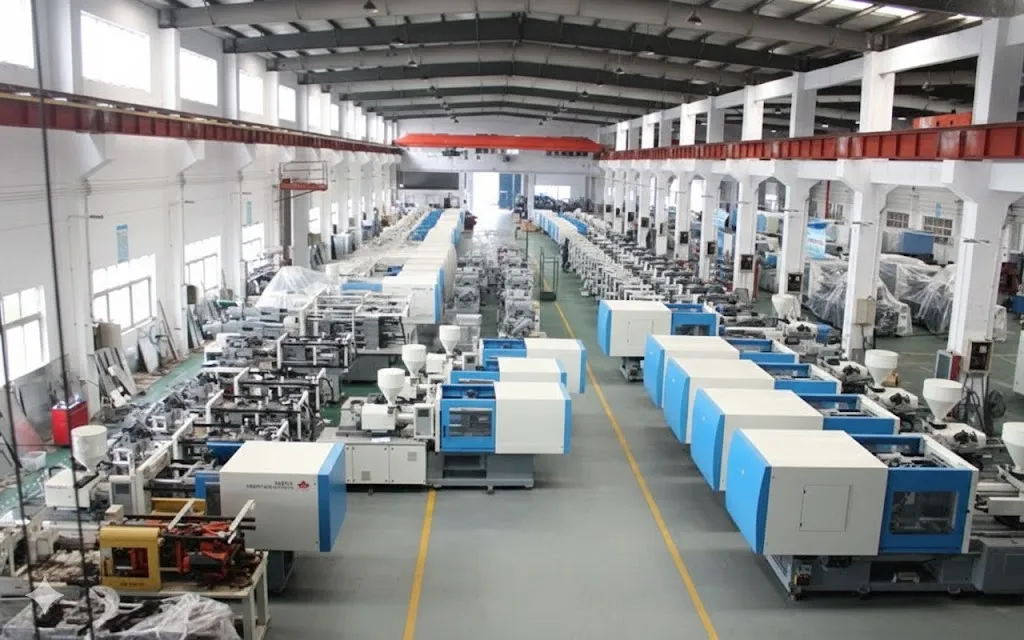
3.2 Hot-Runner System: Temperature Management to the Gate
The hot-runner system distributes melt from the injection barrel through heated manifolds and nozzles to each preform cavity, maintaining the PET melt at processing temperature all the way to the gate point where it enters the preform cavity. The critical performance specification for an ISBM hot-runner system is temperature uniformity across all nozzle tips: variation of more than ±3 °C between nozzle tip temperatures produces measurable differences in PET melt viscosity (PET viscosity is sensitive to temperature in the processing range) that cause uneven fill patterns across multi-cavity tools. The consequence of this fill non-uniformity is cavity-to-cavity weight variation — containers from different cavity positions have different preform wall thickness profiles entering the conditioning station, which then produce different final container wall thickness distributions after stretch-blow even though all conditioning parameters are identical. Australia Ever-Power’s hot-runner systems use individually thermocouple-monitored nozzle tips with independent PID temperature controllers for each zone, providing nozzle-to-nozzle uniformity within ±2 °C under full production conditions.
3.3 Injection Velocity Profiling: The Servo Advantage for Transparent Containers
Injection velocity profiling — programming different injection speeds at different stroke positions during the fill phase — is the primary process tool for eliminating flow marks and jetting defects in transparent ISBM containers. The optimal profile for thick-wall transparent preforms (PETG cosmetic jars, pharmaceutical bottles) is a slow initial fill velocity of 25–50 mm/s through the gate area and the first 20–30% of the preform volume, followed by a higher sustained fill velocity of 60–100 mm/s through the body, and a controlled deceleration to 20–40 mm/s through the final 10–15% of fill as the melt front approaches the end of the preform cavity. This profile prevents gate jetting (caused by excessive initial velocity), maintains adequate fill speed to avoid premature solidification, and prevents the flow-front instability at end-of-fill that produces fine radial lines visible in the finished clear container. The full servo injection unit of Australia Ever-Power’s آلة نفخ القوالب الأوتوماتيكية EV series delivers this multi-stage velocity profile with ±0.1 mm/s repeatability cycle to cycle — a precision level that hydraulic injection systems, with their inherent pressure variation and valve response lag, cannot achieve in the low-velocity range critical for transparent thick-wall applications.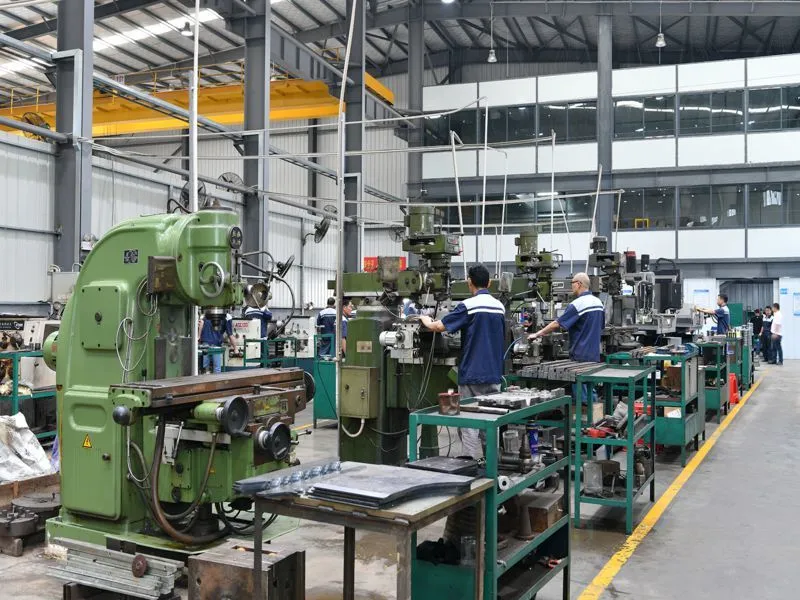
4. Station 2 — The Conditioning System: The Innovation That Defines One-Step
The conditioning station is the engineering innovation that gives one-step ISBM its fundamental advantage over two-step reheat processing, and it deserves more detailed technical examination than it typically receives in machine sales literature. The station must simultaneously achieve two thermal objectives that are in apparent conflict: bringing the preform body to the precise stretch temperature window (95–110 °C for standard PET) while simultaneously maintaining the preform neck at or below the material’s heat deflection temperature (≤70 °C for PET) to prevent neck distortion that would compromise the thread form and closure compatibility.
Conditioning Station Thermal Control Architecture
External Heater Banks
8–12 independent IR heater zones radiating into the preform body. Each zone independently controlled ±2 °C. Creates precise axial temperature gradient profile targeting the stretch window at each preform body position.
Core Rod Internal Cooling
Chilled water at 8–15 °C circulated through internal channels in the core rod. Extracts heat from the preform inner surface. Prevents core rod thermal saturation that would add energy to the preform body zone.
Neck Ring External Cooling
Water-cooled clamps around the neck region maintain thread and support ring at or below 70 °C regardless of body heater temperatures immediately above. Preserves thread form geometry through the conditioning dwell.
The three-mechanism thermal control system achieves the apparently contradictory objectives of simultaneously heating and cooling different zones of the same preform because the mechanisms operate on entirely different surfaces: the external heater banks operate on the outer preform surface (heating), the core rod internal cooling operates on the inner preform surface (cooling and preventing net heat addition), and the neck ring external cooling operates on the outer neck surface (cooling) while the body heaters operate on the outer body surface above the neck zone. The result is an axial temperature profile across the preform that rises steeply from the neck-body transition upward through the body zone to a plateau at the target stretch temperature, with the neck zone maintained well below the heat deflection threshold throughout.
Australia Ever-Power’s four-station conditioning system uses 8–12 independently controlled heater zones per station on the HGYS150 and HGYS200 platforms, providing the temperature profile resolution required for complex preform geometries — in particular, the non-linear axial temperature profiles needed for high-aspect-ratio preforms where the material distribution requirement varies significantly between the shoulder, sidewall and base zones of the finished container. This is the station that eliminates the reheat energy penalty of two-step processing: by retaining the thermal energy invested at the injection station rather than dissipating it to ambient and then reapplying it at a second machine, the conditioning station delivers the 20–30% energy saving that is the primary economic driver of one-step ISBM adoption.
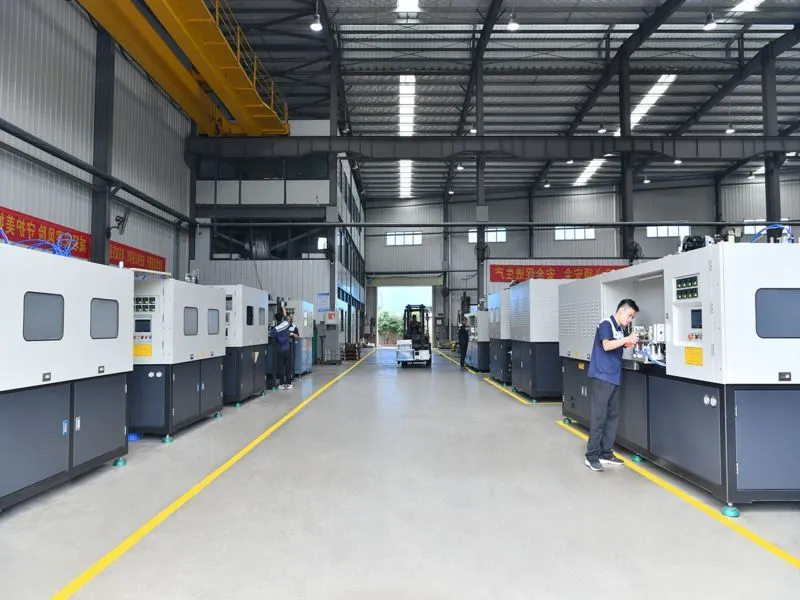
5. Station 3 — Stretch and Blow: Building the Molecular Architecture of the Container
5.1 The Blow Mould Clamping System
The blow mould clamping system holds the two blow mould halves closed against the internal blow pressure during the blowing cycle. The required clamping force is calculated as the product of the maximum projected container area at the mould parting line (in mm²) and the maximum blow pressure (in MPa), multiplied by a safety factor of at least 1.3. This calculation is non-negotiable: under-clamping produces parting-line flash that no process adjustment resolves. In the full servo EV series machines, the clamping motion is driven by a servo motor through a toggle mechanism, providing precise position control at both the fully open and fully closed positions, a soft landing at mould close to prevent cavity surface impact damage, and programmable clamping force set to the calculated minimum required — avoiding the over-clamping that accelerates mould wear in conventional hydraulic clamping systems. Mould open and close cycle time on Australia Ever-Power machines is 0.4–0.8 seconds for the complete sequence, minimising the non-productive proportion of the machine cycle.
5.2 The Servo Stretch Rod: Axial Orientation and Material Distribution
The stretch rod — a hardened steel rod of 8–16 mm diameter depending on preform bore size — descends through the core rod bore under servo-controlled actuation in a precisely programmed multi-stage velocity profile. The three velocity stages are: slow initial entry at 0.3–0.5 m/s to prevent puncture of the preform gate area where the material is thinnest and most vulnerable to mechanical penetration; rapid mid-stroke extension at 1.0–1.5 m/s through the preform body to achieve axial orientation at the rate required for the target molecular alignment; and controlled deceleration as the rod approaches its programmed full extension position to prevent base over-stretch and the rod-contact base thinning that produces a visible dimple at the container base centre. The stretch rod tip geometry — hemispherical, flat with radius, or custom profile — is selected to match the preform gate geometry without creating pressure concentration that would cause localised thinning at first contact.
5.3 Pre-Blow and Main Blow: The Pneumatic Biaxial Orientation System
The blow air system operates in two distinct pressure stages timed relative to stretch rod position — not to time elapsed since cycle start. Pre-blow at 0.5–0.8 MPa initiates when the stretch rod reaches a programmed position of 15–30% of its full extension stroke. This position trigger — rather than a time trigger — is one of the key technical differentiators between high-performance and basic ISBM machines: position-based triggering ensures that pre-blow begins at the same rod position regardless of cycle-to-cycle variations in the time taken for the rod to reach that position, producing consistent radial expansion support for the preform sidewall during axial stretching. If pre-blow initiates too early (before adequate rod penetration), the preform base inflates before axial stretch is established, producing a thin, poorly oriented base; if too late, the unsupported sidewall folds or necks down during axial stretching, producing an irregular, non-uniform sidewall profile. Main blow at 2.5–4.0 MPa then forces the preform wall fully against the blow mould cavity surface once the rod reaches its full extension position, completing the radial orientation and defining the container’s final dimensions.
Stretch-Blow Sequence — Position-Triggered Timeline
Rod enters at 0.3–0.5 m/s (0–15% extension)
Slow entry through gate area — prevents mechanical puncture of the thinnest preform zone. No blow air yet.
Pre-blow triggers at rod position 15–30% — 0.5–0.8 MPa
Radial expansion begins simultaneously with axial stretching. Prevents sidewall folding. Rod accelerates to 1.0–1.5 m/s through body zone.
Rod decelerates through 80–100% extension
Controlled deceleration prevents base over-stretch and rod-contact thinning at the container base centre gate area.
Main blow at full rod extension — 2.5–4.0 MPa (±0.05 MPa)
Container wall forced to mould cavity surface. Final dimensions set. Biaxial orientation locked in. Blow pressure held during cooling dwell.
The biaxial molecular orientation created by the simultaneous axial (rod) and radial (air) stretching transforms the amorphous PET preform into a highly oriented container with dramatically improved physical properties: tensile strength increases by more than 30%, gas barrier performance (CO₂ retention in carbonated beverages, O₂ exclusion in sensitive food products) improves by a factor of 5–8 versus unoriented PET of the same wall thickness, and optical clarity improves because the orientation reduces the crystallite size below the wavelength of visible light. These are not incremental improvements — they are the physical basis for why oriented stretch-blown PET containers command a performance and commercial premium over equivalent non-oriented containers in virtually every packaging category.
6. Station 4 — Cooling and Ejection: Locking In Dimensions and Releasing to the Line
The cooling station holds the blown container against the mould cavity surface under residual blow pressure while chilled water at 8–15 °C flowing through mould cooling channels extracts heat from the container wall, allowing the PET to solidify and the biaxial molecular orientation to lock in without dimensional relaxation. The cooling dwell time — 5 to 20 seconds depending on container wall thickness, resin grade and cooling water temperature — is one of the most production-rate-sensitive parameters in the ISBM cycle: reducing it below the minimum required for full container dimensional stability produces shrinkage, base panelling under subsequent filling pressure, and dimensional non-conformance at the neck finish that causes closure application failures downstream.
The cooling mould temperature uniformity specification is ±2 °C across the full cavity surface — the same requirement as for the blow mould at Station 3. Australia Ever-Power’s cooling circuit design uses separate temperature-controlled water circuits for the body, shoulder and base zones of the cooling mould, with each circuit independently monitored by inline temperature sensors that feed into the machine’s PLC alarm system. A cooling water temperature deviation alarm triggers before the process drifts outside the validated parameter range, allowing corrective action before dimensional non-conformance affects production containers.
Container ejection from the cooling station occurs after the blow pressure is released and the mould has completed its programmed cool dwell. The core rod retracts from the container neck, the cooling mould opens, and the container is ejected — by gravity on horizontal orientation machines or by a servo-controlled ejection arm on vertical orientation machines — onto a downstream conveyor that carries it directly to the inspection, labelling and secondary packaging operations. The entire process from resin pellets entering the injection barrel to a finished, inspected container on the exit conveyor is complete: no second machine, no intermediate handling, no atmospheric exposure between injection and ejection, and no thermal energy invested in the process that is not directly contributing to container formation.
7. Six Technical Differentiators That Separate Premium Machines from Basic Specifications
Not all one-step injection stretch blow moulding machines are equivalent in technical sophistication, and the differences are not always apparent from specification sheets or sales presentations. The six characteristics below most reliably distinguish high-performance machines — those that consistently produce premium containers at validated quality specifications over a 15-year service life — from basic configurations that appear comparable on paper but reveal their limitations in production.
① Hot-Runner Nozzle Temperature Uniformity: ±2 °C vs ±5–8 °C
Premium machines maintain ±2 °C between individually controlled nozzle tips. Basic machines use zone control at ±5–8 °C. The difference produces measurable cavity-to-cavity weight variation in multi-cavity tooling and differential orientation in the stretch-blow station — a quality defect that is difficult to trace to its root cause without understanding the hot-runner specification.
② Stretch Rod Position Trigger Resolution: 0.1 mm Servo vs Time-Based
Premium machines trigger pre-blow based on servo rod position at 0.1 mm resolution. Basic machines use time-based triggering from the start of the blow cycle. Position-based triggering produces consistent pre-blow timing regardless of cycle-to-cycle variation in rod acceleration, delivering tighter container base and sidewall thickness consistency.
③ Blow Air Pressure Regulation: ±0.05 MPa vs ±0.15–0.20 MPa
Premium machines regulate blow pressure at the mould inlet to ±0.05 MPa through a servo-controlled regulator with closed-loop feedback. Basic machines use standard pneumatic regulators at ±0.15–0.20 MPa. Pressure variation above ±0.1 MPa produces statistically measurable container volume variation in carbonated soft drink bottles — a defect detectable by the filling line’s weight-check rejection system.
④ Conditioning Heater Zone Count: 8–12 Independent Zones vs 4 Zones
Premium machines provide 8–12 independently controlled heater zones per conditioning station, enabling fine axial temperature profile control for complex preform geometries and engineering resins. Basic machines use 4 zones, which is adequate for simple thin-wall PET preforms but insufficient to produce the precise temperature gradients that thick-wall PETG cosmetic containers and PP hot-fill preforms require for optimal orientation uniformity.
⑤ Rotary Table Index Repeatability: ±0.05 mm vs ±0.15 mm with Wear
Premium machines maintain ±0.05 mm rotary table positional accuracy across 10,000 production cycles through precision roller cam or direct servo drive. Basic machines with conventional cam and follower drives drift to ±0.15 mm or more with wear, producing progressive misalignment between the core rod bore axis and the blow mould cavity axis that manifests as asymmetric wall thickness distribution developing gradually over months of production.
⑥ Data Logging and Remote Diagnostics: Cycle-by-Cycle SCADA vs Alarm Log Only
Premium machines log every critical process parameter for every production cycle to a tamper-evident electronic batch record with full SCADA integration capability and secure VPN remote access for technical support. Basic machines record alarm events only. Full cycle-by-cycle data logging is mandatory for pharmaceutical GMP qualification and enables root cause analysis of intermittent quality issues that alarm-only logging cannot resolve — because intermittent defects occur between alarm events, not during them.
8. Control System Architecture, Remote Diagnostics and Preventive Maintenance
8.1 PLC Architecture and SCADA Integration
Australia Ever-Power machines use Siemens S7 series PLC hardware with TIA Portal programming environment, providing full integration with standard SCADA and MES systems through Ethernet/IP and Profinet communication protocols. The control system architecture distributes processing across a central motion controller (coordinating all servo axes — injection, clamping, stretch rod, rotary table index and ejection), a process controller (managing all temperature zones, pressure regulators and cooling water circuits), and a supervisory HMI touchscreen providing operator access to process monitoring, recipe management, alarm handling, production statistics and data export. Cycle-by-cycle records of all critical process parameters are logged to the electronic batch record system with full audit trail, user access controls and electronic signature capability — satisfying 21 CFR Part 11 data integrity requirements for pharmaceutical GMP installations and providing the evidentiary data trail that ASRS climate disclosure verification requires.
8.2 Remote Diagnostic Capability: Resolving Issues Without a Site Visit
Australia Ever-Power’s remote diagnostic capability allows the Sydney-based service engineering team (Condell Park NSW) to access the full PLC data of any installed آلة نفخ زجاجات البولي إيثيلين تيريفثالات in Australia in real time through a secure VPN connection, enabling remote fault diagnosis, process parameter review and trending analysis without the cost or delay of a site visit. Remote diagnostic sessions resolve 60–70% of process issues — parameter drift, sensor calibration questions, alarm root cause investigation — without the 24–48 hour site visit response time that applies to operations in Queensland, South Australia and Western Australia. For issues requiring physical intervention, critical spare parts held at Condell Park are dispatched same day by overnight courier, ensuring next-morning availability at most Australian metropolitan and regional locations.
8.3 Preventive Maintenance Programme Structure
Australia Ever-Power structures the preventive maintenance programme across three tiers that together maintain machine performance at specification across the full 10–15 year service life. Daily pre-production checks (approximately 20 minutes) cover lubrication levels, cooling water temperature and flow rate at each circuit, compressed air quality verification and visual inspection of core rod surfaces and mould parting lines. Monthly service (approximately 4 hours) covers servo drive unit inspection, rotary table bearing preload verification, hot-runner heater resistance measurement, mould alignment verification by dial indicator and cooling water circuit flushing. Annual overhaul (1–2 business days, typically scheduled to coincide with mould tooling maintenance) covers full disassembly inspection of the rotary table cam or servo drive system, replacement of core rod sealing O-rings and stretch rod guide bushings, re-calibration of all temperature controllers and pressure transducers against NATA-traceable standards, and servo amplifier firmware update. Australia Ever-Power provides a machine-specific preventive maintenance manual with every installation, including the complete Australian spare parts sourcing list, tool requirements for each procedure, and calibration record templates formatted for the customer’s quality management system documentation requirements.