Dialysis Fluid Packaging: The Most Demanding Large-Volume Clinical Fluid Container Application
Dialysis — both haemodialysis (HD) and peritoneal dialysis (PD) — is the life-sustaining renal replacement therapy for over 15,000 Australians with end-stage kidney disease who receive treatment three or more times per week. The dialysis fluids used in these treatments — HD bicarbonate concentrate, HD acid concentrate, and PD solutions — are among the most strictly regulated medical products in Australian healthcare, because every litre of dialysate fluid contacts the patient’s blood or peritoneal membrane directly: in haemodialysis, the dialysate solution is separated from the patient’s blood only by a semi-permeable dialyser membrane, with the actual blood purification occurring through the concentration gradient between blood and dialysate. Any contamination or chemical impurity in the dialysis fluid that crosses the membrane enters the patient’s bloodstream directly.
The packaging for dialysis concentrates and solutions must maintain chemical purity from manufacture to point of use across an extremely diverse formulation chemistry — from the strongly acidic HD acid concentrate (pH 2.8–3.5, containing acetic or citric acid as the buffering agent) through the alkaline HD bicarbonate concentrate (pH 8.0–9.0) and the physiological PD solutions (pH 5.0–7.4 with lactate or bicarbonate buffer). The injection stretch blow molding machine produces dialysis fluid containers that meet each of these demanding requirements through precise material selection, validated production processes, and the hermetic closure systems that clinical fluid application demands.
Australia Ever-Power Injection Stretch Blow Moulding Machine Co., Ltd, Condell Park NSW 2200, supports dialysis product manufacturers and renal therapy supply operations with ISBM machine technology and pharmaceutical engineering guidance for dialysis fluid container development and production.
Dialysis Fluid Formulations and Chemical Compatibility Requirements
Dialysis therapy uses two distinct fluid types with very different chemistry — haemodialysis concentrate solutions and peritoneal dialysis solutions — each requiring specific material compatibility validation for PET ISBM containers.
Haemodialysis Acid Concentrate: Low pH and Acetic Acid Compatibility
HD acid concentrate — the acidic component of the bicarbonate dialysate system — contains acetic acid (typically 80–100 mmol/L, pH 2.8–3.0) or citric acid as the acidifying buffer, along with electrolytes (sodium chloride, potassium chloride, calcium chloride, magnesium chloride) and glucose. PET’s compatibility with dilute acetic acid at these concentrations is well-established — PET shows no measurable degradation of mechanical properties, surface quality, or extractable profile when in contact with acetic acid at the concentrations used in HD acid concentrate at ambient storage temperatures. The electrolytes in HD acid concentrate are fully compatible with PET. Formal stability testing at 40°C/6 weeks with the specific HD acid concentrate formulation confirms this compatibility at accelerated conditions before commercial adoption. One consideration specific to HD acid concentrate is that the high ionic strength of the formulation (approximately 250–280 mOsm/L) slightly elevates the antimony migration rate from PET compared to pure water — the specific antimony migration value from production containers with the HD acid formulation matrix must be confirmed to be below the pharmacopoeial limit as part of the container-closure system extractables study.
Haemodialysis Bicarbonate Concentrate: Alkaline pH Challenges
HD bicarbonate concentrate — the alkaline component containing sodium bicarbonate at high concentration (typically 630–700 mmol/L, pH 8.0–9.0) — presents the most significant compatibility challenge for PET containers in the dialysis application range. At pH 8.0–9.0, hydroxide ions attack PET’s ester linkages through saponification — the same mechanism that causes glass delamination in alkaline solutions, but affecting the polymer surface rather than the glass surface. The rate of this surface saponification increases with temperature and pH. For ambient storage of HD bicarbonate concentrate (15–25°C), PETG provides better alkaline stability than standard PET because the glycol co-monomer in PETG disrupts the regular ester linkage spacing that the saponification reaction exploits. A 60°C/8-week accelerated stability study at the specific concentrate pH is required to confirm PETG compatibility before commercial HD bicarbonate packaging adoption. For storage temperatures consistently below 20°C (refrigerated or cool-room storage), the saponification rate is sufficiently reduced that standard PET may be acceptable — confirmed by the product-specific stability study at the actual storage conditions.
Peritoneal Dialysis Solutions: Physiological Chemistry and Long-Term Contact
Peritoneal dialysis solutions — used in continuous ambulatory PD (CAPD) and automated PD (APD) — have physiological formulation chemistry: electrolytes at physiological concentrations (sodium 132–134 mmol/L, calcium 1.25–1.75 mmol/L, magnesium 0.25–0.75 mmol/L), a buffer system (lactate 35–40 mmol/L or bicarbonate for newer PD solutions), and an osmotic agent (glucose 1.5–4.25% or icodextrin for glucose-free formulations). The pH range of PD solutions (pH 5.0–7.4) is within PET’s comfortable compatibility zone. However, PD solutions are instilled directly into the peritoneal cavity and remain in contact with the peritoneal membrane for 4–6 hours (CAPD) or multiple cycles of 1–2 hours (APD) — the dialysis fluid’s extractable profile must be confirmed to not introduce compounds that would irritate the peritoneal membrane or adversely affect peritoneal transport parameters at the concentrations entering the peritoneal cavity from the container.
Hermetic Sealing and Container Integrity for Clinical Use
Dialysis fluid containers require hermetic sealing that maintains the clinical purity of the dialysis concentrate from manufacture through the distribution chain to the point of use connection to the dialysis machine. Any breach of the hermetic seal — whether from a failed closure, a hairline crack from handling, or a compromise of the induction foil seal — exposes the dialysis concentrate to atmospheric contamination and renders the container unsafe for clinical use. Container integrity failure in dialysis fluids is a patient safety event with direct clinical consequences — a contaminated dialysis concentrate used for an HD session would expose the patient to the contaminant across the blood-dialysate membrane interface throughout a 4-hour treatment session.
Induction Foil Seal Specifications for Dialysis Concentrates
The induction foil seal on HD concentrate containers provides both tamper evidence (confirming the container has not been accessed between manufacture and clinical use) and the hermetic barrier against atmospheric contamination. The seal integrity specification for dialysis concentrate containers should be more stringent than for standard oral pharmaceutical products because the consequence of seal failure — contamination of a blood-contact fluid — is more severe. A vacuum decay or helium leak test confirming no detectable leak at a defined sensitivity (typically a minimum detectable leak rate of 10⁻³ mbar·L/s or better) should be conducted as a 100% in-process check on the filling line, supplemented by periodic destructive peel-strength testing confirming adequate foil bond strength for tamper-evidence performance. The ISBM bottle’s neck sealing surface — Ra ≤ 0.40 µm, flatness ±0.10mm (tighter than standard oral pharmaceutical specification) — provides the surface quality for reliable induction seal formation at the specified seal integrity level.
Container Closure Integrity Through the Distribution Chain
Dialysis concentrate containers are distributed through hospital supply chains — delivered to hospital dialysis units from central medical supplies or from direct manufacturer supply, stored in clinical storage areas, and used at the dialysis machine. The distribution handling includes palletised transport, manual handling by hospital supply staff, and storage in conditions ranging from air-conditioned hospital storage rooms to less controlled areas. Container integrity through this distribution chain must be confirmed by drop testing (1.2m drop from all orientations without closure breach or body crack), top-load testing (confirming palletised stacking load does not compromise the container), and vibration testing simulating road transport conditions (confirming no progressive fatigue damage from distribution vibration). ISBM PET’s biaxial orientation-enhanced impact resistance and the injection-formed neck’s dimensional consistency for closure engagement provide the physical container integrity that distribution chain stresses require.
Visual Clarity for Pre-Use Inspection
Dialysis unit nurses and technicians visually inspect each dialysis concentrate container before connecting it to the dialysis machine — checking for clarity (confirming the concentrate has not crystallised or precipitated), correct colour (HD bicarbonate concentrate should be crystal clear; HD acid concentrate may be faintly yellow from the glucose content), and absence of visible particles. ISBM PET’s haze ≤ 2.0% (body panel specification) provides the optical clarity for reliable pre-use visual inspection. For HD acid concentrate containers where the glucose content at elevated storage temperature can produce a Maillard reaction browning (caramelisation of glucose at >40°C) that changes the product colour from colourless to yellow-brown, the container’s transparency allows this colour change to be detected visually at the inspection step before use — a direct patient safety benefit of the clear container versus an opaque alternative.
Hygienic Production Standards for Dialysis Fluid Containers
Dialysis fluid containers must be produced under hygienic conditions that limit microbial contamination of the container interior — contamination that would transfer to the dialysis concentrate during filling and potentially reach the patient through the dialysis circuit. The TGA’s GMP requirements for medical devices (dialysis fluid containers are regulated as medical devices under the TGA Medical Devices Regulations as they are integral to the dialysis treatment system) specify that containers must be manufactured under quality systems that ensure their fitness for the intended medical purpose, including freedom from contamination levels that could compromise patient safety.
For ISBM production of dialysis concentrate containers, the production environment classification (ISO Class 7 or 8 controlled environment with HEPA-filtered air, regular environmental monitoring, and bioburden testing on production containers) provides the hygienic production standard that dialysis product manufacturers require from their container suppliers. The ISBM machine’s oil-free servo-electric architecture eliminates the hydraulic oil contamination pathway that conventional hydraulic machines create — a critical advantage for medical fluid container production where any lubricant contamination of the container interior is a direct patient safety risk.
Container washing and rinsing before filling — a standard practice in dialysis concentrate manufacturing operations where containers are supplied to the filling operation and washed with purified water before the filling step — removes any residual production environment bioburden from the container interior. The ISBM container’s smooth interior surface (Ra ≤ 0.10 µm on the body interior, achieved through mirror-polish cavity tooling) is more amenable to effective washing and rinsing than containers with textured or rough interior surfaces that can harbour residual bioburden in surface irregularities. Contact [email protected] for ISBM dialysis container hygienic production programme design.
High-Temperature Compatibility for Heat-Sterilised Dialysis Products
Some dialysis fluid manufacturers use heat treatment of the filled and sealed container as part of the manufacturing process — either as a terminal sterilisation step for PD solutions (autoclave at 121°C) or as a pasteurisation step for HD concentrates (heat treatment at 60–80°C for microbial reduction). As discussed in the infusion container chapter, standard PET is not compatible with autoclave sterilisation at 121°C — PD solutions requiring autoclave terminal sterilisation use polypropylene bags (flexible) or glass bottles (rigid) as their primary container, not PET ISBM. For manufacturers using heat pasteurisation at temperatures below PET’s Tg (below 75°C), PET ISBM containers may be suitable with appropriate stability confirmation at the specific pasteurisation temperature and time combination.
PET ISBM containers are most appropriate for dialysis concentrate applications where the filling process uses sterile filtration and aseptic fill (rather than terminal heat sterilisation), or where the product’s preservation relies on formulation chemistry (very low pH for HD acid concentrate, high osmolality for HD bicarbonate concentrate) rather than heat treatment. Many commercial HD concentrate products in Australian markets are produced by cold aseptic fill into pre-sterilised containers — PET ISBM containers gamma-irradiated before filling provide the appropriate sterility pathway for these products without requiring heat treatment of the filled container.
Heat-set PET (HSPET) — produced by exposing the blown PET container to elevated mould temperature during the blow phase — raises the container’s effective softening point to approximately 90–95°C through partial crystallisation of the container wall. For dialysis fluid manufacturers using a hot-fill process at 80–90°C (some HD bicarbonate concentrate processes use this approach to achieve microbial reduction without terminal sterilisation), heat-set ISBM containers represent a technically viable PET solution — confirmed through hot-fill compatibility testing at the specific fill temperature and fill volume. Ever-Power provides heat-set ISBM capability for dialysis fluid container applications — contact [email protected] for heat-set dialysis container technical assessment.
Extractables and Leachables for Dialysis Fluid Containers
The E&L requirements for dialysis fluid containers represent a demanding assessment because dialysis fluids are either administered into the peritoneal cavity (PD solutions) or contact the blood through the dialyser membrane (HD concentrates). While the dialyser membrane acts as a barrier to large extractable molecules, small hydrophilic compounds can diffuse across the membrane from the dialysate into the blood — the same mechanism that makes dialysis effective at removing small uremic toxins also makes the dialysate an exposure pathway for small extractable compounds from the concentrate container.
The E&L assessment for HD concentrate PET ISBM containers must use the membrane transfer-adjusted exposure calculation — accounting for the fraction of small hydrophilic extractable compounds that would transfer across the dialyser membrane from the dialysate into the blood during a standard 4-hour HD session. Acetaldehyde (AA) — the principal extractable of concern for PET in dialysis applications — is a small, hydrophilic molecule (MW 44) that would transfer across a standard HD dialyser membrane under normal dialysis conditions. At the AA concentrations typically present in pharmacopoeial-grade PET dialysis containers (typically below 5 µg/L in the filled product), the calculated patient exposure from membrane transfer during a 4-hour session is well below the AA oral TTC — but this calculation must be specifically performed for the dialysis exposure scenario, not assumed from oral TTC data. For PD solutions in PET ISBM containers, the E&L assessment must evaluate extractable compounds against the peritoneal membrane contact standard — confirming no compound irritates the peritoneal mesothelium or affects peritoneal transport characteristics at the concentrations present in the PD solution from the container.
Contact [email protected] for dialysis-specific E&L assessment protocol design — including membrane transfer calculations for HD concentrates and peritoneal exposure assessment for PD solutions.
Dialysis Container Formats and Production Configurations
Dialysis fluid containers span a wide volume range from small-format HD concentrate containers through large-format PD solution bags. ISBM is most commercially applicable to the rigid container segment of the dialysis fluid market.
| شكل | مقدار | Application | Material |
|---|---|---|---|
| HD acid concentrate (Part A) | 1L – 5L | Bedside concentrate bottle, HD machine input | PET (pH 2.8–3.0 compatible) |
| HD bicarbonate concentrate (Part B) | 500ml – 1L | Bicarbonate cartridge or bottle for HD machine | PETG (pH 8.0+ resistant) |
| PD solution ready-to-use | 1.5L – 3L | Home CAPD/APD patient use | PET (pH 5.0–7.4, aseptic fill) |
| Haemodialysis water treatment concentrate | 5L – 25L | Centralised dialysis unit bulk supply | PET or PETG, heavy preform |
TGA Regulatory Pathway for Dialysis Fluid Containers
Dialysis fluids and their primary containers are regulated as complementary components of the dialysis treatment system. In Australia, haemodialysis solutions and their containers are regulated under the TGA as either registered medicines (dialysis fluid products requiring ARTG registration) or medical devices (dialysis concentrates and the containers that are integral to the treatment system). The specific regulatory classification depends on the product’s composition, how it is supplied, and its intended clinical use — a formal TGA regulatory classification assessment is required before committing to a product development programme for dialysis container packaging in PET ISBM.
For PET ISBM containers proposed for use with existing ARTG-registered dialysis fluid products, a container change variation may be required — the data package must address the specific dialysis-route E&L requirements (including membrane transfer calculation for HD) and stability confirmation in the PET container at the approved storage conditions. Pre-submission engagement with TGA’s Medical Devices and Medicines Assessment teams is recommended before investing in the full development programme, because the dual regulation of dialysis fluids as medicines/devices creates some regulatory pathway ambiguity that is best resolved with TGA guidance before development investment is committed.
Visit isbm-technology.com/contact-us أو اتصل [email protected] to discuss the dialysis fluid ISBM container regulatory pathway for your specific product.
Recommended Machine
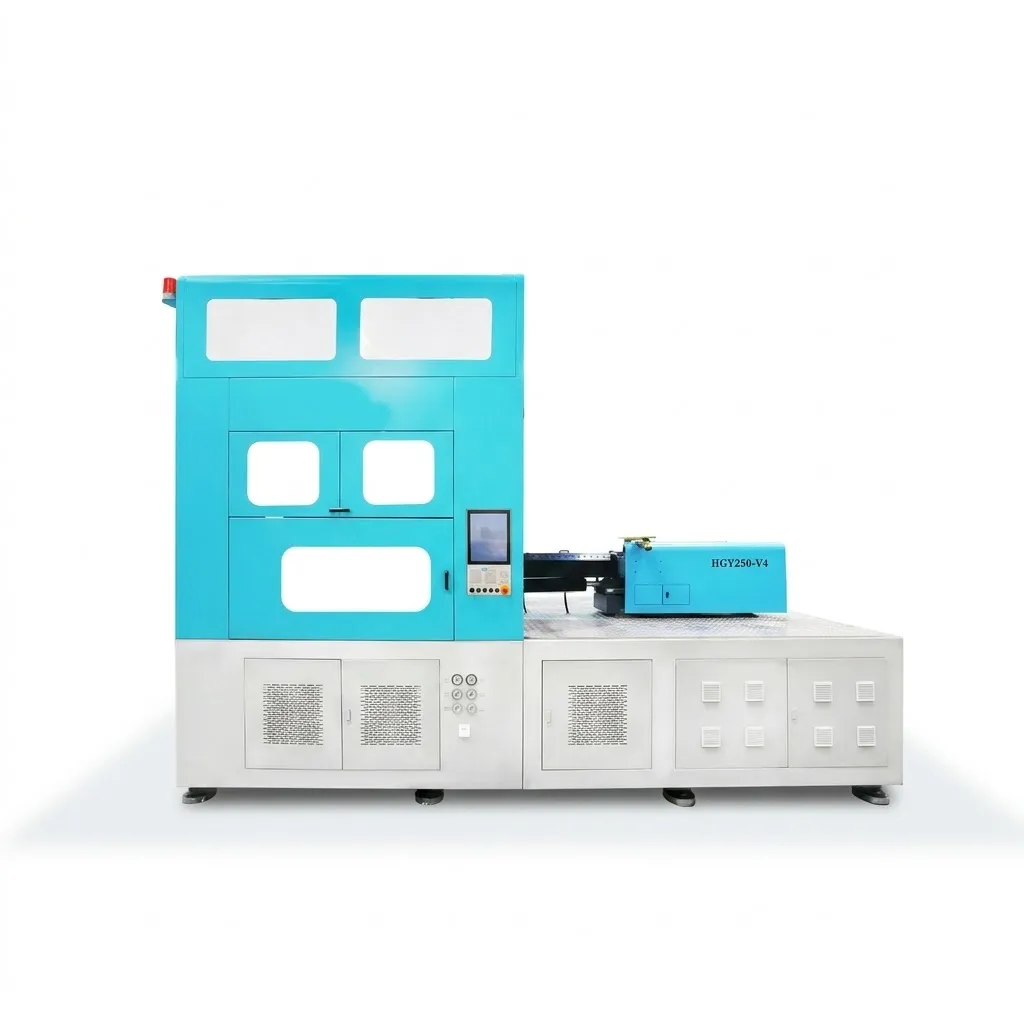
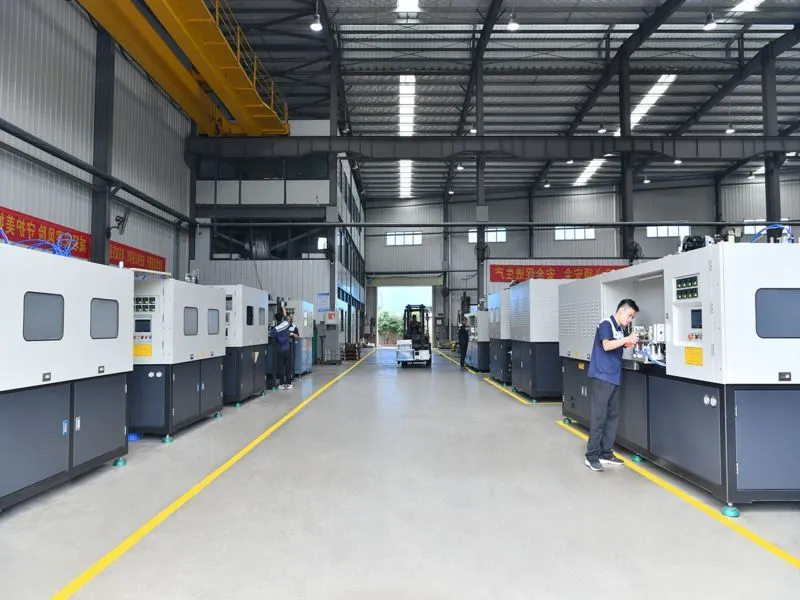
HGY250-V4 — Four-Station ISBM for Dialysis Fluid Container Production
For dialysis fluid container production spanning HD acid concentrate, bicarbonate concentrate, and PD solution formats in the 500ml–5L volume range, the ماكينة HGY250-V4 ذات أربع محطات وخطوة واحدة ISBM provides the production platform appropriate for renal therapy fluid container manufacturing. The four-station design delivers cycle-to-cycle wall thickness consistency for the thicker-wall specifications required by dialysis concentrate bottles handling repeated manual pouring operations and distribution chain stresses. The machine processes both standard PET (for HD acid concentrate pH range applications) and PETG (for HD bicarbonate concentrate alkaline pH applications) with equal production capability. PLC process data logging generates the production traceability records required for TGA medical device quality system compliance. The machine’s induction seal compatibility and smooth interior surface specification (mirror-polish cavity) support the hygienic production standards that dialysis concentrate manufacturers require from their container supplier qualification programmes.