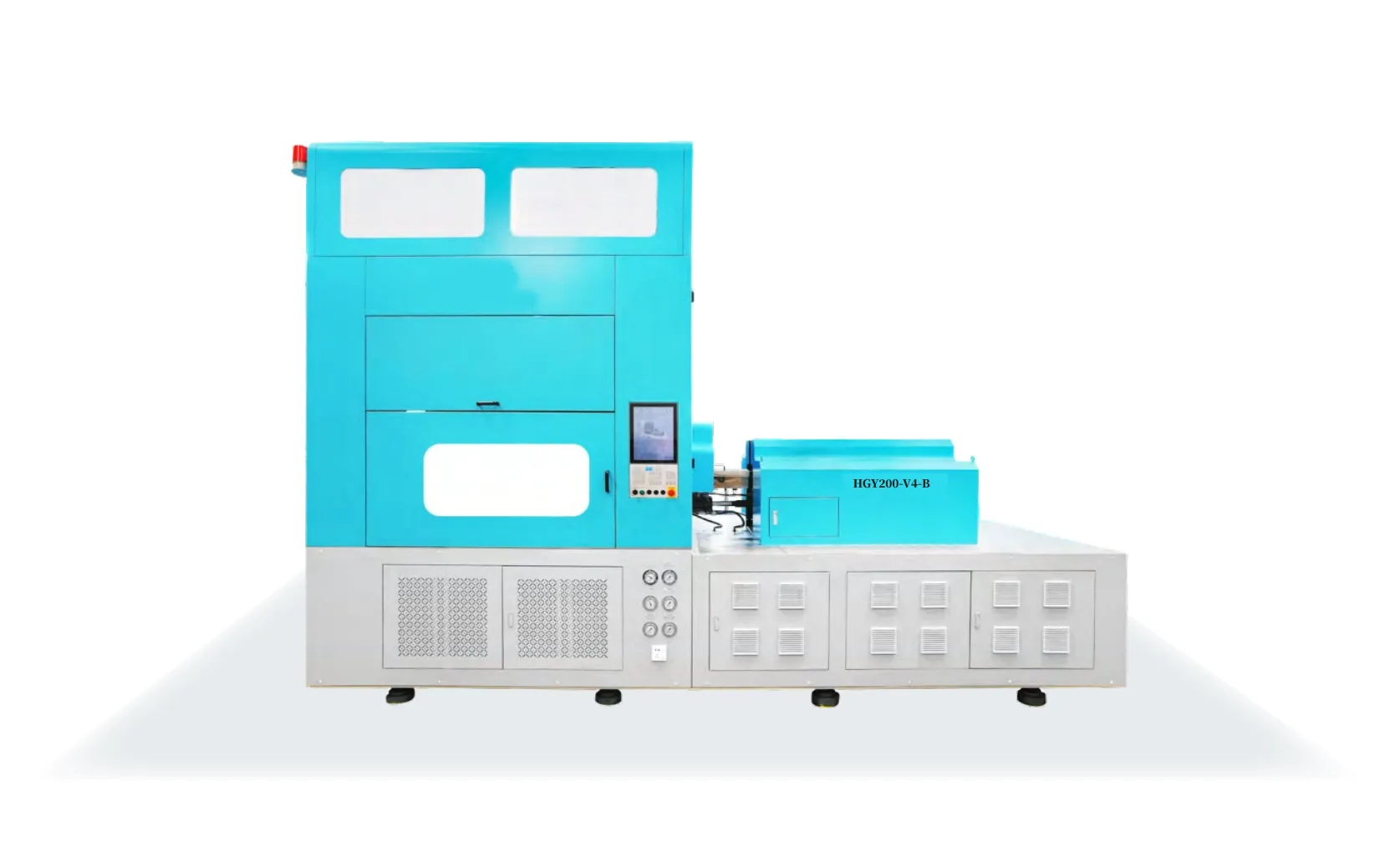

Premium moisturising hand wash sits at the intersection of personal care and interior design — a product category where the bottle occupies permanent display space on bathroom vanities, kitchen benchtops and hotel washrooms, and where packaging appearance quality directly determines the brand’s price positioning in the minds of consumers who choose it as both a functional product and a domestic aesthetic statement. Achieving the optical clarity, geometric precision, embossing sharpness, surface texture consistency and colour accuracy that premium hand care packaging demands is not possible through conventional blow moulding methods. Injection stretch blow molding delivers each of these attributes from a single, integrated production cycle — producing bottles with the visual quality of glass, the weight economy of lightweight PET, and the dimensional precision that premium dispensing closures require — at output rates that support the volume requirements of national retail distribution.
What Separates Premium Hand Wash Packaging from Standard Retail Formats
The premium hand wash segment — typically retailing at $12–$30 per 300ml unit in the Australian market — is defined by a set of packaging performance criteria that go well beyond what functional hygiene product packaging requires. First, surface gloss: premium hand wash bottles are expected to achieve specular gloss values above 85 GU (gloss units at 60°) — approaching the mirror-like appearance of glass — compared to 55–70 GU typical of standard extrusion blow-moulded HDPE bottles. ISBM’s high-pressure blow contact against the polished blow mould cavity produces this surface quality without secondary polishing operations, making it an inherent process advantage rather than a cost-adding post-processing step.
Second, geometric symmetry: premium hand wash bottles in the 250–500ml format are examined closely by consumers in retail environments and on home bathroom counters at eye level — distances at which body asymmetry, label panel curvature and shoulder inconsistency are visible to the naked eye. ISBM’s injection-moulded neck and thermally conditioned stretch-blow cycle produces bottle bodies with circumferential height variation below ±0.3mm and shoulder form deviation below ±0.4mm — tolerances that ensure the bottle sits and reads symmetrically under cosmetic retail lighting conditions. Third, embossing and surface texture reproduction: premium hand care brands use embossed brand marks, product names, decorative patterns and textured grip zones as intrinsic bottle design elements rather than label substitutes — features that require blow mould surface definition at the 0.05–0.15mm feature depth level that high-pressure ISBM blow contact delivers consistently.
Fourth, colour accuracy and consistency: premium hand care ranges typically encompass 3–6 product variants sharing a coordinated colour palette — rose, sage, pearl, midnight — where colour batch variation exceeding ΔE 1.5 between production runs is commercially unacceptable as it creates visual dissonance on retail shelves displaying multiple SKUs side by side. ISBM’s injection-stage colour masterbatch introduction with gravimetric dosing control delivers colour consistency within ΔE 0.8 across production runs — meeting the most demanding premium cosmetics colour matching standards and enabling ranges to grow their SKU count without compromising visual coherence at retail.
ISBM Optical and Surface Capabilities for Premium Bottle Aesthetics
Glass-Like Clarity and Haze Performance
In a one-step injection stretch blow molding machine, the preform moves from injection to blow while retaining the thermal energy of the injection stage — never cooling to ambient temperature. This thermal continuity ensures that the PET enters the blow mould in a precisely conditioned state, expanding against a polished cavity surface at 30–40 bar blow pressure with full surface contact. The result is a bottle inner surface formed against a glass-polished tool surface, and an outer surface similarly formed against the polished mould cavity — achieving the bilateral surface quality that produces haze values below 1.5% in well-processed standard PET grades. This clarity level places ISBM PET bottles visually indistinguishable from glass to casual observation — the benchmark that premium hand care brands require when their product colour, product texture through the bottle wall, and fill level are part of the product’s consumer value proposition.
Frosted, Pearlescent and Satin Surface Finishes
Beyond clarity, premium hand wash bottles increasingly employ frosted or satin surface finishes as a design language — communicating luxury through tactile and visual differentiation from standard glossy containers. Frosted surface effects are achievable through two routes on ISBM production: acid-etch or bead-blast texture applied to the blow mould cavity inner surface (producing a permanent mould-textured frosted finish that transfers to every bottle), or post-blow surface treatment with chemical frosting agents applied inline. Mould-integrated texturing is the superior solution for premium production because it is permanent, zero-waste and produces consistent texture depth across every bottle without the batch variation that chemical post-treatment introduces. Texture depth specifications of Ra 0.8–2.0µm correspond to the satin-to-light-frost visual range most common in premium hand care; textures finer than Ra 0.4µm appear semi-gloss rather than frosted. Pearlescent effects — a popular premium marker in hand care bottle design — are achieved through 0.5–1.5% mica-based pearlescent masterbatch introduced at the injection stage, producing a shimmer throughout the bottle wall that appears different in transmitted versus reflected light and cannot be replicated by post-production decoration at equivalent visual depth and consistency.
Formulation Compatibility for Premium Moisturising Hand Wash
Premium moisturising hand wash formulations are characterised by higher humectant loading (glycerin at 3–8%, sodium PCA, hyaluronic acid), emollient additions (shea butter extracts, argan oil, plant ceramide actives), skin pH-buffering to 4.5–6.0 for microbiome compatibility, and sophisticated fragrance compositions including natural essential oil components at 1–3%. Each of these premium ingredients requires compatibility assessment with the PET bottle material, and together they represent a more complex chemical environment than standard functional hand wash formulations.
The most relevant compatibility variable for premium hand wash packaging is the fragrance component. Natural fragrance ingredients — particularly citrus terpenes (d-limonene, linalool), floral absolutes and resinous base notes — can cause subtle PET surface interaction at high concentrations that manifests as micro-surface haze developing over the 18–24 month shelf life. For premium hand wash packaging where clarity is a critical quality attribute, fragrance compositions containing d-limonene or citrus terpenes above 2% total should undergo a 90-day compatibility test at 40°C using the finished formulation in a production-equivalent ISBM bottle before commercial scale-up. This test protocol — surface haze measurement, weight change and dimensional assessment at 30, 60 and 90 days — provides the stability data that supports shelf-life declarations and identifies any reformulation requirements before production investment is committed.
Plant oil-based emollients at concentrations below 3% total are generally well-tolerated by plastic bottle manufacturing in PET, as the continuous phase remains aqueous and the oil droplets at emulsion concentrations do not create a sustained oil-to-wall contact interface. For concentrated formulations above 10% total oil phase — as in some ultra-rich hand conditioning treatments positioned adjacent to hand wash — PET compatibility should be verified against the specific oil blend, as some unsaturated fatty acid esters demonstrate measurable sorption into PET over extended storage, potentially affecting both the product’s moisturising efficacy and the bottle’s surface appearance over its stated shelf life.
Bottle Architecture for Premium Hand Care Range Design
Silhouette Design: Apothecary, Modern Minimalist and Organic Forms
Premium hand care bottle silhouettes in the Australian market span three dominant design languages. The apothecary style — cylindrical body, high shoulder, elongated neck — draws on pharmacy heritage and signals purity and clinical precision; these designs favour flat label panels and embossed serif logotypes on the bottle shoulder or base. The modern minimalist style — rectangular or square cross-section, chamfered corners, crisp flat panels — signals contemporary design sophistication and aligns with kitchen and bathroom interior design trends; these designs use the label panel as a canvas for high-resolution print and embossed or debossed geometric brand marks. The organic or biomorphic style — asymmetric curves, tapered forms, leaf or wave-inspired cross-sections — signals naturalness and botanical provenance; these designs maximise the visual impact of coloured or pearlescent PET by allowing product light transmission at varying wall thickness through the curved geometry. ISBM blow mould engineering can execute all three silhouette languages in PET, with the constraint that minimum local wall gauge in any area must remain above 0.28mm to avoid pinhole risk and mechanical weakness in thin sections — a design constraint that should be incorporated into the brief given to packaging designers before creative concept development begins.
Embossed Brand Mark Integration and Detail Reproduction
ISBM’s high blow pressure (30–40 bar) against the chilled blow mould cavity produces detail reproduction at the mould surface that enables embossed features at depths of 0.05–0.80mm and lateral dimensions down to 0.4mm to transfer faithfully to the bottle. This resolution supports brand logos, typographic elements in point sizes above 6pt, decorative texture patterns and geometric grid embossing — all without any secondary decoration steps. The key design rule for ISBM embossing is that feature depth must not exceed 15% of the local wall gauge at the embossed location; beyond this ratio, the local wall thinning during blow into the embossed recess creates structural vulnerability. Pre-blow simulation software can predict local wall distribution before mould steel is cut, allowing embossing design to be validated and adjusted at the virtual stage rather than through physical trial-and-error iterations that add time and cost to premium bottle programme launches.
ISBM Production Workflow for Premium Hand Wash Bottles
Premium bottle production on ISBM equipment demands tighter process control than functional packaging — every parameter deviation that would be imperceptible in a commodity bottle becomes potentially visible in a clear or lightly tinted premium article under the retail lighting conditions it is designed to be assessed in.
① Precision Resin Preparation
Low-AA grade PET with IV 0.78–0.82 dL/g is dried to below 40 ppm (tighter than standard) at 165°C for 5–6 hours. Pearlescent or colour masterbatch is dried separately and blended gravimetrically. For premium programmes, dew point monitoring below −40°C in the dryer outlet confirms adequate dehumidification — non-negotiable when any preform clarity variation will read through the clear bottle wall in the finished product.
② Preform Injection with Colour Control
PET and masterbatch are injected at 272–285°C under tightly controlled velocity and hold profiles. For pearlescent effects, injection velocity is set to achieve laminar melt flow through the gate — turbulent fill creates swirl-mark artefacts visible in the pearlescent lustre of the finished bottle. Gate design and runner balance are validated during preform tool qualification to confirm even fill across all cavities, which is essential for colour and lustre consistency in a multi-cavity premium programme.
③ Multi-Zone Conditioning
Premium bottle geometries — whether apothecary, minimalist or organic — demand the most careful conditioning temperature profiling of any hand care bottle format. Tall shoulder transitions, flat panel zones and organic taper profiles all require different axial conditioning temperatures to achieve target wall distribution. Temperature differential between any two adjacent conditioning zones is typically controlled within ±2°C — twice the precision of standard functional bottle production — to prevent the subtle wall non-uniformity that creates visible light transmission variation in clear premium bottles on retail display.
④ High-Pressure Blow for Surface Quality
Premium bottles are blown at 32–40 bar — toward the upper end of the machine’s capability — with extended blow dwell to ensure complete mould contact pressure is maintained across the full dwell period. Higher pressure and extended dwell time are the primary drivers of surface gloss and embossing sharpness in ISBM production. The polished blow mould cavity (Ra 0.05–0.10µm) is maintained clean and free of contamination between runs to prevent surface marking that would be visible in the clear bottle body under retail display lighting.
⑤ 100% Vision Inspection
Premium hand wash bottles are subjected to 100% inline vision inspection rather than statistical sampling — a quality gate that is economically justified by the higher bottle unit cost and the severe brand consequence of a clarity defect or embossing flaw reaching retail display. Camera systems inspect for haze patches, splay marks, gate blush, embossing voids and label panel curvature against tighter acceptance limits than functional packaging programmes, rejecting non-conforming bottles before they enter the filling line.
ISBM Machine Parameters Tuned for Premium Bottle Aesthetics
| Parameter | Premium Range | Aesthetic Quality Impact |
|---|---|---|
| Injection barrel temperature | 272–284°C | Minimises AA and thermal haze for maximum preform clarity |
| Conditioning temp control precision | ±1°C zone-to-zone | Prevents wall non-uniformity visible as light bands in clear bottles |
| Blow mould cavity finish | Ra 0.05–0.10µm (clear) / Ra 0.8–2.0µm (frosted) | Determines specular gloss level and frosted texture character |
| High-pressure blow air | 32–40 bar | Gloss level, embossing sharpness, label panel flatness |
| Blow dwell time | 3.5–5.5 seconds | Complete mould contact; embossing feature fill completeness |
| Colour masterbatch dosing accuracy | ±0.05% (gravimetric) | Colour consistency ΔE ≤0.8 within run and batch-to-batch |
Blow pressure and dwell time work together as the primary surface quality parameters for premium ISBM bottle production. Higher blow pressure drives more complete mould contact across complex embossed and textured surface features; extended dwell time ensures this contact is maintained long enough for the chilled mould surface to transfer its finish to the PET surface before pressure is released and the bottle cools below the temperature range where surface character can change. For premium bottles with both embossed features and frosted mould textures in different zones of the same bottle, the interaction between local wall gauge, blow pressure distribution and mould surface temperature must be modelled or empirically validated during commissioning — both surface effects require slightly different mould conditions to reproduce optimally, and the process window must be established that satisfies both simultaneously.
Colour masterbatch dosing accuracy has an outsized impact on premium programme economics compared to functional bottle production. A ΔE drift of 1.0 between the first and last production run of a season creates visible colour mismatch between bottles from different batches when displayed together on the retail shelf — an appearance problem that triggers costly remediation including blending and sorting from stock, or in severe cases a full product recall from retail. Gravimetric dosing systems with shot-by-shot colour concentration control — standard on premium ISBM programmes — prevent this outcome by maintaining masterbatch addition accuracy within ±0.05% throughout the production run, producing colour consistency that satisfies the most demanding premium retail colour matching standards without the manual sampling and colour measurement burden that imprecise volumetric dosing systems require to achieve comparable outcomes.
Decoration and Labelling for Premium Hand Wash Bottles
Premium hand wash bottles use a broader range of decoration methods than functional personal care packaging, and the ISBM bottle specification must accommodate each method’s specific surface and dimensional requirements. Pressure-sensitive labels — the most common primary decoration for premium retail hand wash — require label panel flatness within ±0.2mm and surface energy above 38 mN/m for reliable adhesion without edge lift. PET’s naturally high surface energy (typically 43–46 mN/m as-blown) satisfies this requirement without surface treatment on clear and light-tinted bottles; frosted-finish bottles may require corona or flame treatment before labelling to restore surface energy after the frosting process.
Sleeve labels — heat-shrink or roll-on-roll-off film sleeves — are increasingly used for premium hand wash as they allow 360° decoration including body contour following across the full bottle geometry, eliminating the limitation of flat label panels. ISBM bottle design for sleeve application must incorporate taper angles of at least 3° on the sleeved zone to allow smooth sleeve application without wrinkling, and sleeve registration marks must be confirmed against bottle geometry before sleeve artwork is finalised. Pad printing directly on the bottle surface — used for single-colour brand marks, logo accents and surface graphics on premium display bottles — requires the ISBM bottle surface to be dimensionally consistent within ±0.3mm in the print zone, which ISBM regularly achieves without additional fixturing. Direct printing and digital inkjet decoration are emerging premium decoration routes for ISBM bottles in short-run and personalised product formats, driven by DTC brands seeking decoration flexibility without the minimum order quantities and lead times of label and sleeve suppliers.
Sustainability in Premium Hand Wash Packaging: Reconciling Luxury and Circularity
Premium hand care brands face a specific sustainability challenge: the visual and tactile cues that communicate premium quality — decorative surface treatments, complex forms, tactile embossing — can conflict with packaging recyclability requirements if not carefully engineered from the outset. The good news is that ISBM PET packaging inherently resolves the most common tensions: clear or tinted PET bottles are mono-material by construction, compatible with Australia’s kerbside PET sorting infrastructure, and recyclable without disassembly or special consumer instructions — provided closures are in polyolefin and labels use water-soluble adhesives. Premium hand care brands can therefore meet ARL ‘Recycle’ designation requirements without compromising the visual or tactile attributes that define their premium positioning.
The emerging frontier for premium sustainability is post-consumer recycled content integration. Incorporating 15–25% food-grade rPET into premium hand wash bottles presents the visual quality challenge that the category must navigate: rPET streams introduce trace colour and haze that affects clarity and colour accuracy in tinted premium bottles. Technical solutions include using only clear rPET in lightly tinted or naturally coloured bottle recipes where minor haze increase is less perceptible, or specifying certified optical-grade rPET from dedicated personal care bottle streams that minimise contamination. Several premium hand care brands in the UK and European markets have successfully launched rPET-containing bottles with 20–30% recycled content while maintaining premium visual standards — establishing the proof of concept for the Australian market and the technical pathway that Australia Ever-Power ISBM processing expertise can support for local premium hand care programme development.