Clinical Trial Packaging: Where Drug Development Rigour Meets Supply Agility
Clinical trial drug packaging occupies a unique position in the pharmaceutical packaging landscape — it must meet the same pharmacopoeial material standards and Good Manufacturing Practice requirements as commercial pharmaceutical packaging, while operating at radically different scales (dozens to thousands of units rather than millions), timelines (weeks rather than months for new batches), and operational contexts (investigational medicinal products under regulatory oversight of the TGA’s clinical trials framework rather than commercial product registration). The packaging for clinical trial investigational medicinal products (IMPs) must be good enough to protect the drug and maintain its pharmaceutical quality through the entire trial — because a packaging failure that compromises drug stability or introduces contamination in a Phase III trial does not merely produce a product recall, it may invalidate months of clinical data and cost the developer tens of millions of dollars in wasted trial investment.
Гэты injection stretch blow molding machine serves clinical trial vial packaging through its ability to produce small batches with the same pharmaceutical quality as commercial-scale production, its support for the batch traceability and labelling systems that clinical trial supply chain management requires, and its production flexibility to accommodate the rapid design iterations that characterise the transition from early Phase I to late Phase II and III trial supply. This guide covers the specific technical and regulatory requirements of clinical trial vial packaging for ISBM containers, with specific reference to Australia’s TGA CTN/CTA clinical trial notification framework.
Australia Ever-Power Injection Stretch Blow Moulding Machine Co., Ltd, based in Condell Park NSW 2200, supports pharmaceutical developers, CROs, and clinical packaging operations with ISBM container solutions for Phase I–III investigational medicinal product supply in the Australian and regional Asia-Pacific clinical research market.

The Clinical Trial Supply Chain and Its Packaging Requirements by Phase
Clinical trial packaging requirements evolve significantly across the phases of drug development — reflecting both the increasing number of patients and the increasing regulatory scrutiny that characterises the progression from first-in-human Phase I studies through large-scale pivotal Phase III registration trials.
Phase I: First-In-Human — Minimal Volume, Maximum Flexibility
Phase I clinical trials in Australia — typically conducted at specialist Phase I clinical pharmacology units at major teaching hospitals — enrol 10–80 healthy volunteers or patients in single-ascending-dose (SAD) and multiple-ascending-dose (MAD) studies to characterise the investigational drug’s safety, pharmacokinetics, and early pharmacodynamics. IMP supply volumes for Phase I are very small: a single SAD study cohort (6 active, 2 placebo) may require as few as 50–100 vials per dose level. The primary packaging requirements for Phase I IMP vials are: pharmacopoeial material compliance (the drug formulation used in Phase I is typically an early prototype that may not perfectly represent the final commercial formulation, but the container must meet pharmacopoeial standards); batch documentation sufficient for TGA GMP audits of the Phase I clinical trial; and labelling that meets ICH E11 / TGA clinical trial labelling guidance including the mandatory “Investigational Use Only” statement, study code, dose level identifier, storage conditions, and expiry date. Custom bottle design or proprietary packaging features are not relevant at Phase I — the functional quality and regulatory compliance are all that matters.
Phase II: Proof of Concept — Growing Volume, Dose Form Refinement
Phase II trials in Australia enrol 50–300 patients at specialist clinical sites and assess the drug’s efficacy at defined dose levels in the target patient population. Phase II IMP supply quantities are larger than Phase I — a 12-week efficacy study with 150 patients each receiving a daily oral liquid dose requires approximately 12,600 vials (150 patients × 84 days × 1 vial/day) at minimum, plus over-supply buffer (typically 20–30% additional supply to cover visit variability and patient withdrawals). At these volumes, ISBM container production economics become meaningful — the cost per unit comparison between ISBM production and high-cost clinical packager sources begins to favour ISBM, particularly when the Phase II trial includes multiple parallel cohorts or dose groups, each requiring separately labelled and batch-identified supply. Phase II also marks the point where clinical trial packaging begins to approach the commercial product packaging concept — container design decisions made in Phase II are often carried forward to Phase III and potentially to the commercial product, making early Phase II the appropriate stage to consider the commercial container concept alongside the clinical supply requirements.
Phase III: Registration-Enabling — Commercial Scale Transition
Phase III pivotal trials — the final registration-enabling efficacy studies that provide the evidence base for TGA registration — can enrol hundreds to thousands of patients across multiple Australian and international sites, with trial durations of 1–3 years and supply volumes approaching commercial launch quantities. Phase III IMP supply in Australia for multi-national trials is typically managed by global clinical supply operations, but Australian-originated IMP supply (from Australian pharmaceutical manufacturers supplying their own Phase III trials) requires ISBM container production with the full pharmaceutical GMP documentation, stability programme, and container-closure system data that will form the foundation of the eventual TGA CTD registration dossier. The container used for Phase III IMP supply should ideally be identical or closely equivalent to the intended commercial container — the stability data generated on Phase III IMP supply in the Phase III container is the most clinically relevant data in the TGA registration stability package.
Small-Batch Production Capability: The Core ISBM Advantage for Clinical Supply
The fundamental commercial advantage of ISBM for clinical trial vial supply is small-batch production flexibility — the ability to produce batches of 500–50,000 vials with the same pharmaceutical quality documentation as commercial production, without the minimum order quantity constraints (typically 100,000+ units) that large-scale pharmaceutical container manufacturers impose on commercial production runs. This flexibility is commercially critical for clinical trial supply operations where batch sizes are determined by the trial design, not by production economics.
Phase I Minimum Batch
500–2,000 vials per dose group. Single-cavity ISBM production achieves pharmaceutical GMP documentation with a minimum viable batch of 500 units — enabling Phase I dose escalation cohorts to receive individually batch-documented vials without the minimum production run waste of large-scale container production. Each batch has full material traceability and IQ/OQ/PQ process validation coverage.
Phase II Mid-Scale
5,000–50,000 vials per production batch. Multi-cavity ISBM tooling (2–4 cavities) at single-shift production produces Phase II supply batches within the production economics that Phase II trial budgets support. Recipe-managed production maintains identical process conditions across Phase II production campaigns months apart — critical for batch-to-batch container consistency throughout a trial.
Phase III Scale-Up
50,000–500,000 vials per production batch, transitioning toward commercial volumes. Multi-cavity 4-station ISBM production generates the container volumes needed for large pivotal Phase III trials while maintaining the process continuity (same validated process recipe) that ensures the Phase III container is demonstrably the same as Phase I/II, supporting regulatory data bridging in the registration dossier.
Rapid Design Iteration
Clinical formulation development often produces container design change requests between trial phases — different closure system for a modified drug delivery method, modified volume for a reformulated dose. ISBM’s tooling change cycle (2–6 weeks for a modified insert) enables rapid container redesign between Phase I and Phase II without the 16–24 week offshore tooling lead times that would delay trial schedules.

Batch Management and Labelling for Clinical Trial IMP Supply
Clinical trial IMP labelling and batch management operate under regulatory requirements that are in some respects more demanding than commercial product labelling — every clinical trial vial must carry the mandatory ICH/TGA clinical trial label information (study code, batch number, dose identifier, investigational use only statement, storage conditions, expiry date, and sponsor and trial site information) and must be linked to a chain of custody from container production through IMP filling through distribution to the clinical site and specific patient administration. This chain of custody is the regulatory evidence that the IMP administered to the patient was the product described in the trial documentation — essential for both the trial’s scientific validity and for the regulatory submission that converts trial data into a TGA marketing approval.
Batch-Specific Traceability from Container Production
Each production batch of ISBM containers for clinical trial use must have a unique batch number, a batch record documenting the production process parameters and material usage, and a material certificate linking the batch to the specific PET resin and masterbatch lots used. The IMP filler combines the container batch number with the drug substance batch number and the filling process batch number in the finished IMP batch documentation — creating the multi-component chain of records that regulatory reviewers trace through the clinical trial master file (CTMF) when reviewing the registration dossier. ISBM’s PLC data logging system generates the per-batch process parameter data that feeds into the container batch record without manual data entry — ensuring the batch record is complete, accurate, and audit-trail protected from post-production modification.
Label Panel Specifications for Clinical Trial Labelling
ICH E11 and TGA’s Therapeutic Goods (Therapeutic Goods for Clinical Trials) Order define the mandatory label elements for clinical trial IMP containers. For small-format clinical trial vials, accommodating all mandatory label elements in a legible font size on the available container surface is one of the most challenging practical aspects of clinical trial packaging design. Key mandatory elements that must be on the primary container label (not just the outer carton) include: study sponsor and study code; investigational use only statement; batch number and expiry date; dose strength or concentration; storage conditions; and volume. ISBM’s label panel geometry specification (±0.20mm flatness, ±0.30mm width) must be engineered to provide sufficient area for all mandatory elements at a legible font size — minimum 7-point for standard label text on small vials, with batch number and expiry date at minimum 9-point for reliable readability under clinical site lighting.
Blinded and Double-Blinded Trial Supply Requirements
Randomised controlled trials — the gold standard clinical trial design — use blinding to prevent the placebo effect and investigator bias from confounding the trial results. For double-blind trials, both the patient and the clinical investigator are unaware of whether the patient is receiving active drug or placebo. This blinding requirement extends to the container: the active drug vial and the placebo vial must be visually identical — same container shape, colour, size, and label format — so that a clinical site staff member dispensing trial medication cannot identify active versus placebo from the container appearance. ISBM containers for double-blind clinical trials must be produced from the same tooling, the same material specification, and the same process recipe for both the active and placebo presentations — ensuring that no visual difference in the container itself could break the blind. Random allocation of active versus placebo is achieved through the kit assignment system at the clinical supply packager (using randomisation codes and kit numbers), not through container differences. ISBM’s lot-to-lot production consistency (same tooling, same validated process recipe, same material) provides the container appearance consistency that double-blind trial design requires across multiple production campaigns over a multi-year trial.
Drug Stability in Clinical Trial Vials: The Development Stage Challenge
Ensuring drug stability in clinical trial vials is technically more challenging than in commercial products because: the drug formulation is at an early development stage with limited stability data available; the container-closure system has not yet been through the full commercial validation programme; and the stability requirements for clinical trial IMPs (stability throughout the trial duration under clinical site storage conditions) may extend into conditions that the abbreviated pre-trial stability programme has not yet fully characterised. The consequence of an IMP stability failure — drug degradation that renders the IMP sub-potent or unsafe — is trial invalidation, not merely product recall. The cost of an invalidated Phase III trial (typically $20–100 million in direct trial costs) puts the clinical trial vial packaging stability requirement in stark commercial perspective.
The stability programme for clinical trial ISBM vials follows a pragmatic risk-based approach appropriate for the development stage. For Phase I IMP supply — where the drug formulation is immature and trial duration is short (typically 3–6 months) — a compressed stability programme (real-time stability at 25°C/60% RH with accelerated data at 40°C/75% RH for 3 months) confirms the container-formulation combination is adequate for the Phase I trial duration and storage conditions, without the complete 24–36 month data package that a commercial product requires. For Phase II/III IMP supply — where trial durations extend to 1–3 years and regulatory scrutiny is higher — a more complete stability programme aligned with ICH Q1A requirements provides the data foundation that bridges from clinical supply to commercial registration.
The extractables and leachables profile of the ISBM container contributes to drug stability through potential drug-container interactions — extractable compounds that react with the active pharmaceutical ingredient, catalyse degradation, or affect formulation pH. Early-stage extractables characterisation of the clinical trial ISBM container (conducted during Phase I preparation) provides the data to identify any concerning container-drug interactions before they manifest as stability failures during the trial. Contact [email protected] for clinical trial vial stability programme design guidance appropriate for your specific development stage and IMP formulation type.
Contamination Prevention in Clinical Trial Vial Production and Supply
Contamination prevention for clinical trial ISBM vials operates at two levels: microbial contamination prevention (relevant for sterile IMP presentations) and cross-contamination prevention between different IMP batches or between active and placebo batches in a blinded trial. Both contamination types are particularly consequential in the clinical trial context — a contamination event in a Phase III trial could compromise the entire trial’s regulatory package, not just the affected batch.
Cross-Contamination Control Between Clinical Trial Batches
Clinical trial production operations often produce multiple IMPs on shared equipment — different drugs for different sponsors, or active and placebo presentations for the same trial on the same filling line. Cross-contamination between batches — even at trace levels — is a critical GMP concern in the clinical trial context because: the patient populations in clinical trials are often immunocompromised or medically vulnerable; any cross-contamination of an IMP batch could affect both the patient safety and the scientific validity of the trial outcome data; and cross-contamination events trigger regulatory reporting obligations to the TGA under the serious adverse event and IMP defect reporting requirements. The ISBM container production operation must maintain a production changeover protocol between different clinical trial products that prevents container-to-container carryover through the production tooling and environment. ISBM’s clean changeover procedures, documented in the validated manufacturing process and confirmed through residue-swab testing after changeover, provide the evidence of cross-contamination prevention that pharmaceutical GMP auditors require during clinical trial supplier qualification.
Particle Control for Clinical Trial IMP Quality
Visible and sub-visible particle control in clinical trial vials — particularly for injectable IMP presentations — requires the same pharmaceutical GMP production environment and the same container interior surface quality that commercial injectable containers demand. Clinical trial vials for injectable IMPs must meet the same Ph.Eur. visible and sub-visible particle limits as commercial injectable products — the clinical trial context provides no relaxation of the patient safety-based pharmacopoeial particle limits. ISBM’s ISO Class 7 production environment (where required for injectable vial applications), mirror-polish cavity interior (Ra ≤ 0.05 µm for injectable vial contact surfaces), and 100% visual inspection of production containers before release to the IMP filler provide the particle control foundation for pharmaceutical GMP injectable clinical trial vial supply. For oral IMP and topical IMP vials where sub-visible particle limits are not pharmacopoeially mandatory, particle control is still required to prevent visible contamination that would fail visual inspection and raise patient safety concerns during clinical site dispensing.
TGA Clinical Trial Regulatory Framework and ISBM Container Requirements
Clinical trials in Australia are conducted under the TGA’s Clinical Trial Notification (CTN) or Clinical Trial Approval (CTA) schemes, with the ethical oversight of the relevant institutional Human Research Ethics Committee (HREC). The regulatory requirements for IMP packaging under these frameworks are defined by ICH Good Clinical Practice (GCP) guidelines E6(R2), the TGA’s guidance on clinical trial labelling, and the pharmaceutical GMP requirements of the PIC/S Guide to GMP for Medicinal Products.
| GMP Requirement | Regulatory Reference | ISBM Container Compliance Evidence |
|---|---|---|
| Pharmacopoeial material compliance | PIC/S GMP Annex 13, ICH Q8 | USP <661> or Ph.Eur. 3.1.15 test results, resin CoC per lot |
| Batch documentation and traceability | PIC/S GMP, ICH GCP E6(R2) | ISBM batch record: lot#, process params, inspection results, QA release |
| Process validation (IQ/OQ/PQ) | PIC/S GMP Annex 15, TGA GMP | IQ/OQ/PQ validation documentation, validated process range parameters |
| Stability programme (Phase-appropriate) | ICH Q1A, TGA CTN guidance | Compressed stability (Phase I) or full ICH Q1A data (Phase III) in ISBM container |
| Appearance consistency for blinded trials | ICH GCP E6(R2), ICH E11 | Same tooling, same process recipe, same material for active and placebo |
| GMP supplier qualification | PIC/S GMP Part I Ch. 7 | TGA GMP certificate or audit report, quality technical agreement |
Clinical Trial Vial Design Considerations: Format Flexibility for Diverse IMP Types
Clinical trial IMPs span an enormous range of drug types and dosage forms — from small-molecule oral solutions through biologic injectables, from standard aqueous formulations through complex lipid-based drug delivery systems. The ISBM clinical trial vial must accommodate this formulation diversity through flexible format design that adapts to each IMP type’s specific container requirements.
Oral IMP Vials: Dose Accuracy and Dispensing
Clinical trial oral liquid IMPs — solutions, suspensions, or syrups for dose-flexible Phase I or II studies — require ISBM vials with the dosing system compatibility (oral syringe adapter, dosing cup seat) and volume accuracy that accurate dose administration to trial subjects demands. Phase I SAD/MAD designs typically use clinical syringes to withdraw doses from vials — requiring an oral syringe adapter insert compatible neck bore — while Phase II and III designs may use packaged pre-measured doses in individual vials (one vial per dose per patient per day), where the vial is opened and the entire contents administered, eliminating the syringe withdrawal step. The choice of dosing system must be specified in the clinical trial protocol and reflected in the ISBM vial design.
Injectable IMP Vials: Sterility and Stopper Compatibility
Injectable clinical trial IMPs — new chemical entities, biologic candidates, or reformulated injectables — require ISBM vials with the stopper-and-crimp closure system, sterile production pathway, and extractable profile meeting parenteral route requirements. Early Phase I injectable IMP supply often uses small volumes (1–5ml) at high per-unit cost — ISBM’s single-cavity minimum batch capability is commercially important here. The injectable IMP vial must be compatible with the standard clinical pharmacology unit aseptic preparation procedures for IV administration — including reconstitution if the IMP is supplied as lyophilised solid, and dilution in clinical-grade diluent if the IMP concentration requires dose-adjusted dilution before IV infusion. The ISBM injectable IMP vial specification follows the same requirements as commercial injectable vials described in the injection vial chapter — ISO 8471/8362 neck dimensions, rubber stopper compression engineering, crimp cap compatibility — with the additional dimension of small-batch production documentation.
Topical and Ophthalmic IMP Vials
Clinical trials of topical pharmaceutical candidates — dermatological treatments, wound care agents, ophthalmic medications — require ISBM vials appropriate for the topical or ophthalmic route. Unit-dose topical IMP packaging (individual small-volume containers for each application event) is a common Phase II trial supply format for topical IMPs — it provides accurate dose control, prevents inter-subject cross-contamination, and eliminates the preservative efficacy concerns of multi-use containers in the trial setting. ISBM unit-dose topical vials with break-open tips or snap-off nozzles enable single-use controlled dose delivery for topical clinical trial applications. Ophthalmic IMP unit-dose containers require the additional dimensional precision (nozzle geometry controlled to ±0.03mm) and preservative-free formulation compatibility needed for direct ocular contact clinical trial preparations.

From Clinical Trial to Commercial Registration: Container Continuity Strategy
One of the most commercially valuable aspects of ISBM clinical trial vial production is the ability to use the same container — produced from the same validated tooling and process recipe — from Phase I through Phase III and into commercial production. This “container continuity strategy” provides direct regulatory value: the stability data generated during clinical trials is obtained in the production container, and when the drug is later submitted for TGA registration, the stability data is already in the commercial container specification rather than requiring a container bridging study to demonstrate that clinical trial stability data in a development container is applicable to the proposed commercial container.
Container continuity also reduces regulatory risk — TGA reviewers examining a CTD registration dossier that includes 3 years of Phase II/III stability data in the production container have a complete, uninterrupted stability dataset in the actual commercial container. A dossier that includes clinical stability data in a development container and a subsequent bridging study to the commercial container creates a potential regulatory question about whether the bridging data adequately demonstrates equivalence. Container continuity from clinical to commercial avoids this question entirely.
The practical implementation of container continuity requires that the Phase I container specification — developed with the design brief of meeting early Phase I supply requirements — is also the intended commercial container specification. This means the Phase I ISBM container design must be developed with the commercial product in mind, not just Phase I clinical needs. Ever-Power’s clinical trial vial development programme specifically addresses this continuity requirement — the Phase I tooling design incorporates the dimensional specifications and label panel geometry that the commercial product will need, so that scaling from Phase I single-cavity production to Phase III/commercial multi-cavity production uses the same insert tooling design with additional cavity instances, not a redesigned container. Contact [email protected] for clinical-to-commercial container continuity strategy development for your specific IMP programme.
Ever-Power’s Clinical Trial ISBM Development and Supply Support
Australia Ever-Power provides pharmaceutical developers, CROs, and clinical packaging operations with the ISBM container development and production support that clinical trial vial supply programmes require. The clinical trial support programme encompasses: container design with commercial continuity strategy (designing the Phase I container to the commercial specification); stage-appropriate stability programme design (Phase I compressed dataset through Phase III full ICH Q1A programme); early extractables characterisation for drug-container interaction screening; batch management and documentation framework meeting ICH GCP and PIC/S GMP Annex 13; and small-batch production capability from 500-unit Phase I batches through Phase III commercial-scale production.
For international pharmaceutical developers conducting Australian arms of global clinical trials — where the IMP is manufactured by the developer’s international facility and an Australian clinical packaging operation provides the labelling and country-specific supply — Ever-Power provides the local ISBM container supply with the pharmacopoeial material documentation that the Australian trial’s IMP dossier requires for the TGA CTN submission. The Condell Park NSW location provides same-state access to the major Sydney clinical research and pharmaceutical manufacturing facilities — reducing logistics chain complexity for clinical trial IMP supply in the high-density Sydney pharmaceutical precinct.
Visit isbm-technology.com/contact-us or contact the team at [email protected] to discuss your clinical trial vial ISBM development and supply requirements.

Recommended Machine
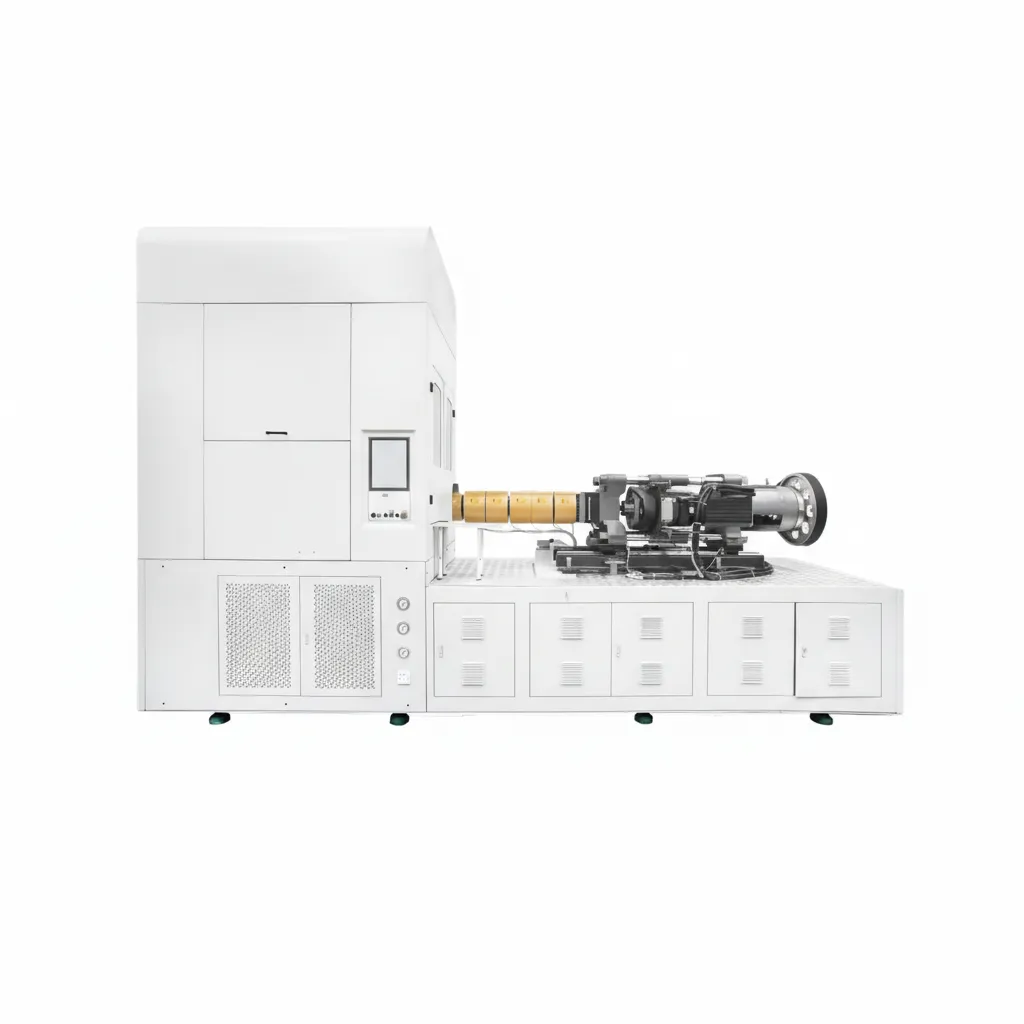
HGYS150-V4-EV — Fully Servo Four-Station ISBM for Clinical Trial Vial Production
For clinical trial IMP vial production combining Phase I small-batch capability (500-unit minimum batches with full pharmaceutical GMP documentation) with Phase III commercial-scale transition (multi-cavity production up to commercial volumes from the same validated process recipe), the HGYS150-V4-EV fully servo four-station one-step ISBM machine provides the clinical trial ISBM platform of choice. The fully servo-electric architecture eliminates hydraulic oil from the production environment — directly relevant for clinical trial vial production where contamination prevention requirements are most stringent. Servo control provides ±0.1% process parameter repeatability cycle-to-cycle — the production consistency that enables small batches to be produced with identical container quality regardless of batch size, and that enables multi-year clinical trial supply campaigns (Phase I through Phase III) to produce containers from the same validated process recipe without parameter drift that could affect the container specification. PLC data logging with audit-trail protection generates the per-batch process records meeting PIC/S GMP Annex 13 requirements for IMP production documentation. Single-cavity tooling for Phase I minimum batches; scalable to 4-cavity for Phase III production. Pharmacopoeial-grade PET and PETG processing across oral liquid, injectable, topical, and ophthalmic IMP vial formats from 1ml through 100ml clinical supply volumes.