The Household Chemical Packaging Brief: High Volume, Low Margin, Zero Tolerance for Failure
Household cleaning products — floor cleaners, bathroom disinfectants, kitchen degreasers, laundry liquid, fabric softener, dishwashing detergent, and toilet bowl cleaners — occupy one of the most competitive retail environments in Australian supermarkets. Shelf prices are visible and compared, brands are numerous, and the category is mature enough that product reformulation alone rarely drives consumer switching. In this context, packaging efficiency and quality are commercial levers rather than just engineering concerns: a bottle that fails in use damages brand reputation directly, and a production cost that exceeds the category norm squeezes margin on products that already trade at thin returns.
The injection stretch blow molding machine addresses the household chemical packaging brief through a combination of high production throughput, dimensional precision for closure reliability, material versatility for diverse chemical formulations, and the lightweighting capability that drives per-unit material cost down toward the minimum the structural requirement allows. For high-volume household chemical SKUs at 10–50 million bottles per year, the economic case for ISBM investment is among the strongest in the plastic packaging industry.
Australia Ever-Power Injection Stretch Blow Moulding Machine Co., Ltd, based in Condell Park NSW 2200, works with household cleaning product manufacturers and packaging converters across Australia and the Asia-Pacific region. This article covers the specific technical, regulatory, and commercial requirements of household chemical bottle production and how ISBM addresses each.

Chemical Compatibility in Household Cleaning Product Packaging
Household cleaning formulations span a broader pH range than almost any other consumer product category — from strongly acidic toilet bowl cleaners (pH 1–2) through neutral dish soap (pH 6–7) to concentrated alkaline oven cleaners and bleach-based bathroom products (pH 11–13). Material selection for household chemical bottles must therefore be based on the specific product’s chemistry, not on general compatibility statements about the container material class.
PET Performance Across the Household Chemical pH Spectrum
Standard PET provides excellent chemical resistance from pH 2 through approximately pH 10 — covering the vast majority of household cleaning products including all acid-based descalers, neutral multipurpose cleaners, mild alkaline glass cleaners, laundry liquids, and fabric softeners. In this pH range, PET shows no measurable degradation of mechanical properties, no surface etching, and no contamination of the product through extractable migration at levels that affect product safety or performance. For strongly alkaline products (concentrated bleach, oven cleaner, concentrated ammonia solutions) at pH above 11, PET shows increasing susceptibility to surface saponification at elevated temperatures — a hydrolysis reaction that slightly degrades the surface clarity and can eventually affect seal surface geometry. PETG, with its modified polymer structure, provides better alkaline resistance than standard PET and is the preferred ISBM material for pH 10–13 household cleaning formulations. The specific choice between standard PET and PETG should always be confirmed through a formal compatibility study at the product’s pH and storage temperature before commercial production adoption.
Household Chemical Compatibility Quick Reference
| Product Category | Typical pH | Recommended Material | Key Consideration |
|---|---|---|---|
| Toilet bowl cleaner (acid) | pH 1–3 | PET — excellent | Validate HCl or HNO₃ content individually |
| Dish soap / multipurpose | pH 6–8 | PET — excellent | Standard PET fully adequate |
| Laundry liquid | pH 8–10 | PET — good | 60°C/6 week validation recommended |
| Fabric softener | pH 3–5 | PET — excellent | Cationic surfactants — full PET compatibility |
| Bleach-based cleaner | pH 11–13 | PETG preferred | Oxidising environment requires validation |
| Concentrated oven cleaner | pH 12–14 | PETG or HDPE | Individual product assessment essential |
| Glass / surface cleaner (IPA-based) | pH 7–9 | PET — excellent | IPA ≤ 40%: standard PET fully adequate |
Closure System Reliability: The Most Critical Quality Requirement for Household Cleaning Bottles
A household cleaning product bottle that leaks in the consumer’s cupboard destroys brand trust more effectively than almost any other product failure mode. The leak — whether from a poorly engaging screw cap, a trigger spray that drips when not in use, or a flip-top closure that does not seal fully after dispensing — is discovered in the consumer’s home, in direct contact with their possessions, and immediately attributed to the brand rather than to any external cause. Closure system reliability is therefore the single most commercially important quality attribute of household chemical bottle production, and it is the attribute that ISBM’s injection-formed neck finish is uniquely positioned to deliver.
Why Injection-Formed Neck Finishes Prevent Household Chemical Leaks
The mechanism of household chemical bottle leakage through the closure is almost always one of two dimensional failures: the neck finish is out-of-round (ovality) so the closure sealing surface does not contact the bottle sealing surface uniformly around the full circumference, leaving a gap through which liquid seeps; or the thread depth or thread diameter is outside the closure manufacturer’s tolerance range, causing the closure to either not engage fully (leaving a visible thread gap and direct leak path) or to engage so tightly that the consumer cannot achieve proper sealing without damaging the closure thread. Both failures trace directly to the dimensional inconsistency of the bottle neck finish — and both are prevented by ISBM’s injection-formed neck, which reproduces the closure designer’s intended dimensions with ±0.08mm ovality and ±0.10mm thread diameter tolerances as a production standard, not as a 100% inspection target.
Common Household Chemical Closure Systems and ISBM Neck Compatibility
28/410 Screw Cap
Standard for detergent and cleaner bottles 250ml–2L. ISBM thread tolerances ±0.08mm deliver consistent hand-tighten engagement. Widely used with dispensing inserts and dosing caps for laundry products.
28/410 Trigger Spray
Dominant closure for spray cleaners, glass cleaner, bathroom spray. Trigger head engagement requires ±0.08mm neck roundness for positive thread lock and dip tube seal performance across bottle’s full use life.
Flip-Top / Snap Cap
Used for dish soap, fabric softener, and hand soap. Snap-cap engagement relies on a defined transfer bead height (±0.10mm) on the bottle neck to provide the tactile engagement click and positive seal. ISBM injection forming delivers this consistency reliably.
Child-Resistant Closure
Required for many concentrated cleaning products and disinfectants. CRC press-and-turn or squeeze-and-turn mechanisms require finish diameter within ±0.10mm across all production cavities. ISBM’s injection neck provides the cross-cavity consistency that multi-cavity CRC qualification demands.
High-Volume Production Economics for Household Chemical Bottles
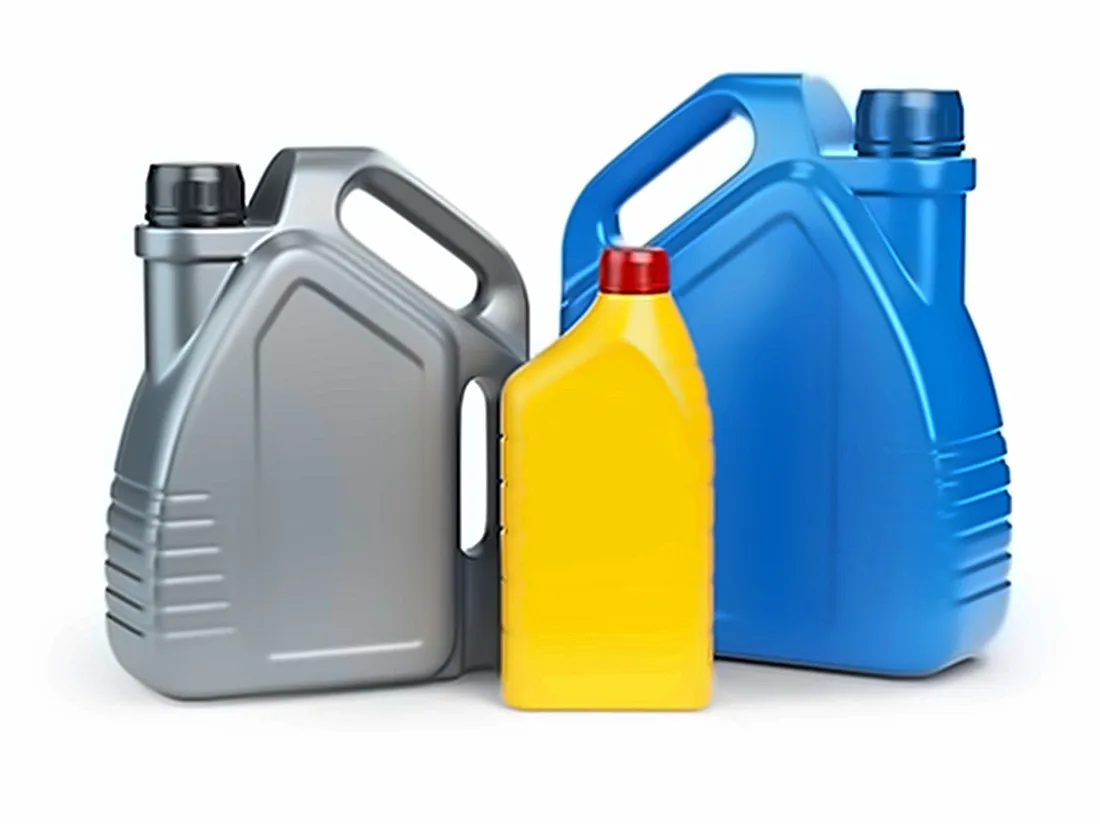
Household cleaning product manufacturers typically operate with SKU volumes that dwarf most other packaging categories — a major Australian laundry detergent brand may produce 20–60 million 2L bottles per year from a single production facility. At these volumes, even fractional cost improvements per bottle translate into very significant annual savings. The economic case for ISBM in household chemical packaging rests on three compounding advantages: material lightweighting, production throughput from multi-cavity operation, and the supply chain cost elimination achievable through local production.
Versus HDPE EBM at equivalent structural performance for standard 750ml household cleaner format
Typical 4-cavity ISBM output on 750ml–1L household cleaning bottle formats with optimised cycle time
Local ISBM production eliminates freight, customs, 8–14 week lead times and currency exposure on offshore bottle supply
For a household chemical manufacturer producing 30 million 2L laundry bottles per year, the combined saving from a 12% lightweighting programme (from 52g to 46g preform weight) at current PET resin pricing represents a direct annual material saving of over AUD 180,000 from one SKU alone. Across a 15-SKU household cleaning product range, the aggregate lightweighting and supply chain saving from ISBM production regularly exceeds AUD 500,000–800,000 per year at commercial volumes — a return that justifies machine investment within 18–30 months in most cases.
Label Panel Engineering for Household Chemical Compliance and Shelf Impact
Household cleaning product labelling in Australia carries mandatory requirements under the Industrial Chemicals Act 2019 and, for products classified as hazardous goods under GHS, the associated label element requirements (signal words, hazard pictograms, precautionary statements, and emergency contact information). These mandatory elements must be present, legible, and durably adhered throughout the product’s shelf life and in-home use period. The label panel geometry on the bottle directly determines whether these requirements are technically achievable on the specific container design — and ISBM’s label panel dimensional consistency is the foundation of compliant labelling across millions of production units.
Flatness Tolerance for Automated Label Application
High-speed household chemical filling lines apply labels at rates of 15,000–40,000 bottles per hour on rotary labelling machines. At these speeds, a label panel with ±1mm flatness variation causes systematic label lifting at the panel edges — a defect that is particularly serious for GHS hazard labels, which are mandatory elements with no alternative placement if the primary label is partially detached. ISBM’s label panel tolerance (±0.20mm flatness, ±0.30mm panel width) is within the operating range of all commercial rotary label application systems, and is maintained consistently across all production cavities without individual bottle inspection or selection.
Wrap-Around Label and Shrink Sleeve Compatibility
Beyond pressure-sensitive panel labels, household cleaning products increasingly use wrap-around labels (paper or film applied around the full bottle circumference) and heat-shrink sleeve labels (which conform to complex bottle shapes including the shoulder and base zones). Both formats require different label panel dimensional tolerances: wrap-around labels require consistent body circumference (±0.5mm at the label application zone), while shrink sleeves require a bottle body that does not have undercut geometry preventing the sleeve from travelling down during the heat shrink process. Both requirements are addressable through ISBM bottle design and tooling specification — the consistent body circumference is a direct output of consistent process parameters, and the shrink sleeve compatibility geometry is a design requirement addressed at the tooling stage before production tooling is manufactured.
Lightweighting Household Chemical Bottles: Engineering the Cost-Performance Optimum
Household chemical bottles are among the highest-priority targets for packaging lightweighting programmes because they combine high volume (amplifying the per-gram saving), relatively simple geometry (making the structural minimum calculation straightforward), and a supply chain that tolerates — and in the sustainability-focused retail environment increasingly encourages — demonstrable packaging weight reduction. The biaxial orientation achieved through the ISBM process is the fundamental enabler of lightweighting beyond what unoriented alternatives can achieve at equivalent structural performance.
Current-State Wall Thickness Mapping
Measure wall thickness at 12–16 defined points across a representative sample of current production bottles. Map thickness against the structural requirement for each zone (shoulder, label panel, grip zone, base). Zones with thickness significantly above the structural minimum are candidates for material reduction.
Structural Minimum Calculation
Calculate the minimum wall thickness required at each zone based on top-load, drop, squeeze (for dosing bottles), and thread engagement structural criteria. This becomes the target wall profile for the lightweighted preform design — not thinner than needed, not thicker than justified.
Preform Modification and Trial
Modify the preform tooling (or design a new preform) targeting the calculated wall profile. Run a trial batch at the modified weight and validate: top-load performance (≥ specification at current stack height), drop test (1.2m base-down on concrete, 100% pass at target fill level), label adhesion, and closure engagement retention after drop.
Commercial Release and Claim
Document the weight reduction from the original specification. Quantify the annual material saving and the embodied carbon reduction. These become the basis for on-pack sustainability claims (“X% less plastic than previous packaging”) that meet ACCC substantiation requirements for environmental marketing claims in Australia.
Sustainability in Household Chemical Packaging: Meeting Retailer Requirements Through ISBM
Woolworths and Coles have both published packaging sustainability targets that require suppliers to meet defined recycled content, recyclability, and packaging weight reduction standards by 2025 and 2030. For household cleaning product brands dependent on major supermarket distribution channels, these targets are effectively supply chain requirements rather than aspirational commitments — brands that cannot demonstrate progress against them face ranging pressure. ISBM PET provides a credible path to meeting all three categories of requirement.
Recyclability: standard clear and lightly tinted PET ISBM household chemical bottles are classified as kerbside-recyclable under APCO guidelines, providing the “recyclable at kerbside” on-pack claim that retailer sustainability scorecards recognise. Recycled content: certified food-grade or industrial-grade rPET at 25–30% is processable in ISBM with maintained dimensional and chemical performance for household cleaning applications — enabling a documented, verifiable on-pack recycled content claim. Packaging weight reduction: a formal lightweighting programme targeting 10–20% preform weight reduction from the current bottle specification provides the third pillar of the sustainability compliance case, with before-and-after weight documentation that satisfies ACCC substantiation requirements.
The combination of all three sustainability credentials — documented through the ISBM production quality management system — provides the household cleaning product brand with a sustainability packaging story that is factually based, specifically quantifiable, and auditable by retailer sustainability teams. Contact Australia Ever-Power at [email protected] to discuss the sustainability packaging transition for your household chemical product range.
OEE and Scrap Management for High-Volume Household Chemical ISBM Operations
At the production volumes typical of household cleaning product manufacturing — 5,000–15,000 bottles per hour on a multi-cavity ISBM system — even fractional OEE improvements and scrap rate reductions have disproportionate financial impact. A 1% reduction in scrap rate at 10,000 BPH on a 1-shift operation (8 hours) saves 800 bottles per day — approximately 200,000 bottles per year from one shift on one machine. At an average variable production cost of AUD 0.12–0.18 per bottle, this scrap reduction alone represents AUD 24,000–36,000 in annual savings from one machine.
The most effective OEE improvement approach for household chemical ISBM operations combines three elements: automated cavity-by-cavity weight monitoring (detecting shot weight deviations that lead to dimensional defects before they accumulate into a quality hold), in-process visual inspection every 30 minutes under calibrated spot lighting (catching surface and neck defects that weight monitoring alone will not detect), and a structured loss accounting system that records every unplanned stoppage by reason code, enabling Pareto analysis that directs maintenance effort to the highest-impact loss categories.
For household chemical ISBM operations running three shifts, a structured OEE improvement programme typically identifies 10–18% additional usable production time within the existing machine and shift structure — recoverable through targeted maintenance and process improvement rather than capital investment. At commercial household chemical volumes, this recovered production time is the equivalent of one additional production shift per week from the same capital asset.
Colour and Branding in Household Chemical Packaging: ISBM Production Capabilities
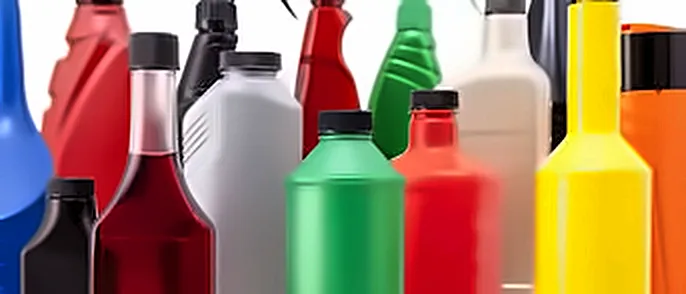
Colour coding is a fundamental navigation tool in household chemical retail — consumers use bottle colour to identify product type (blue for glass cleaner, yellow for kitchen, green for bathroom, red for disinfectant) and brand tier (lighter colours for budget, deeper or more saturated for premium). ISBM’s masterbatch colour processing produces consistent, repeatable colour from batch to batch when colour is specified in CIE L*a*b* notation and validated through spectrophotometric batch measurement against the approved standard (ΔE ≤ 2.0 for standard commercial applications, ΔE ≤ 1.5 for premium brand applications).
Translucent tinted bottles — where the product’s own colour is visible through the slightly tinted wall — are particularly effective for household cleaning products where the product colour is a visual product identifier (blue disinfectant, pink fabric conditioner, green floor cleaner). This visual effect, unique to transparent or semi-transparent containers, is only achievable through ISBM PET or PETG production — HDPE EBM cannot produce the optical transparency needed for translucent product display.
Proprietary bottle silhouettes — developed through custom ISBM blow mould tooling — create the immediately recognisable brand form that household cleaning product marketing teams use as a point-of-sale differentiator. Once the tooling is made and the form is registered as a three-dimensional trade mark or design mark, the proprietary form is a protected brand asset that competitors cannot replicate without legal exposure and the 16–20 week tooling lead time that their own custom development would require.
Ever-Power’s Household Chemical ISBM Support Programme
Australia Ever-Power Injection Stretch Blow Moulding Machine Co., Ltd provides household chemical packaging operations with the complete ISBM support package that high-volume production requires: machine specification matched to the specific format range and volume profile, tooling development for chemical-specific performance requirements, commissioning with production qualification that includes closure engagement testing and labelling machine trials, operator training, and ongoing process support that maintains the production quality and efficiency the commercial context demands.
For household chemical manufacturers currently importing bottles from offshore suppliers, Ever-Power’s pre-investment feasibility analysis produces a full total cost of supply comparison — including all supply chain overhead components — that provides the accurate financial basis for an ISBM investment decision. In most cases for operations above the 5 million bottles per year threshold, this analysis confirms that local ISBM production is economically competitive with imported bottles when all costs are included.
Contact [email protected] or visit the contact page to arrange a no-cost feasibility consultation for your household chemical packaging production requirements.
Recommended Machine
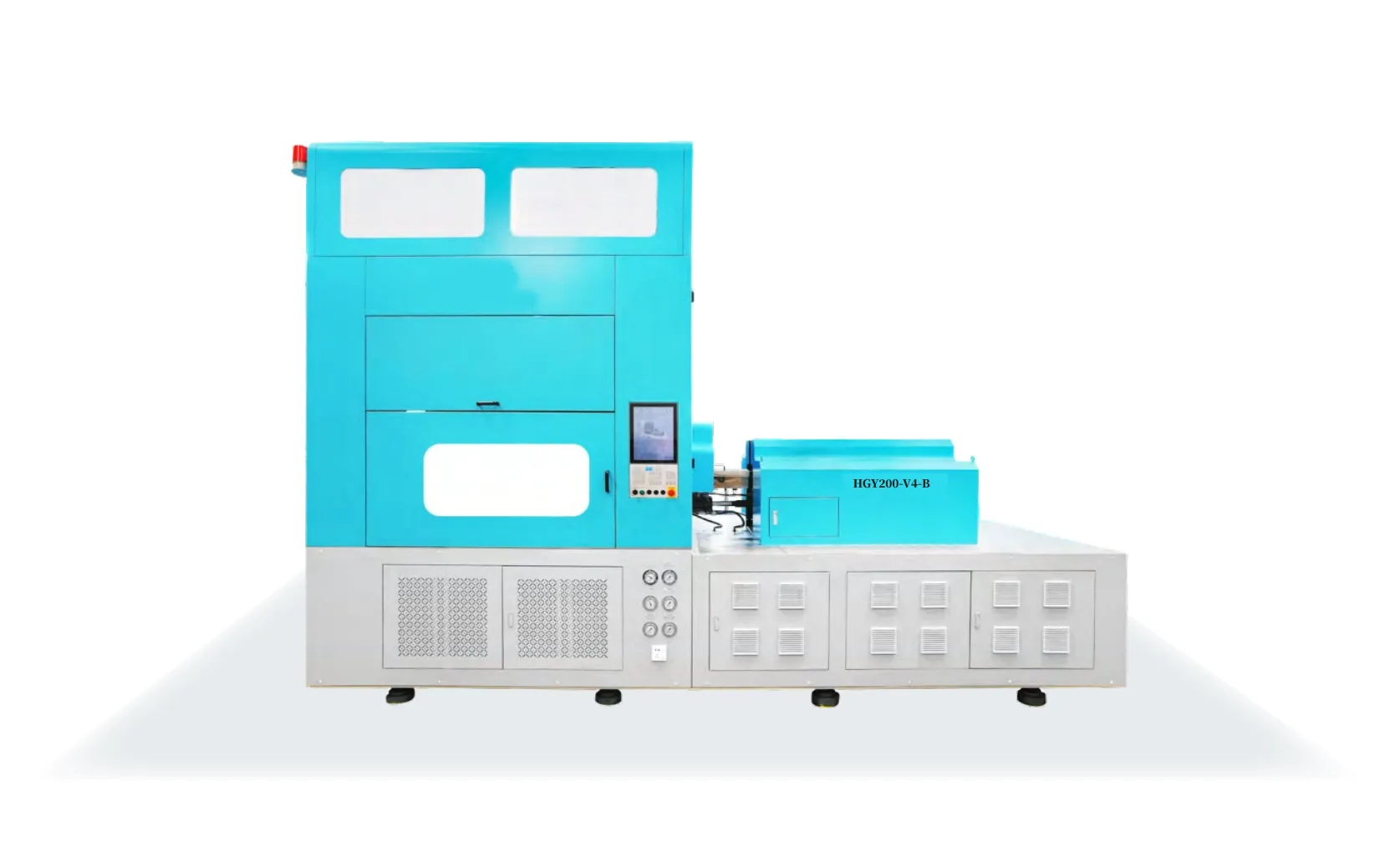
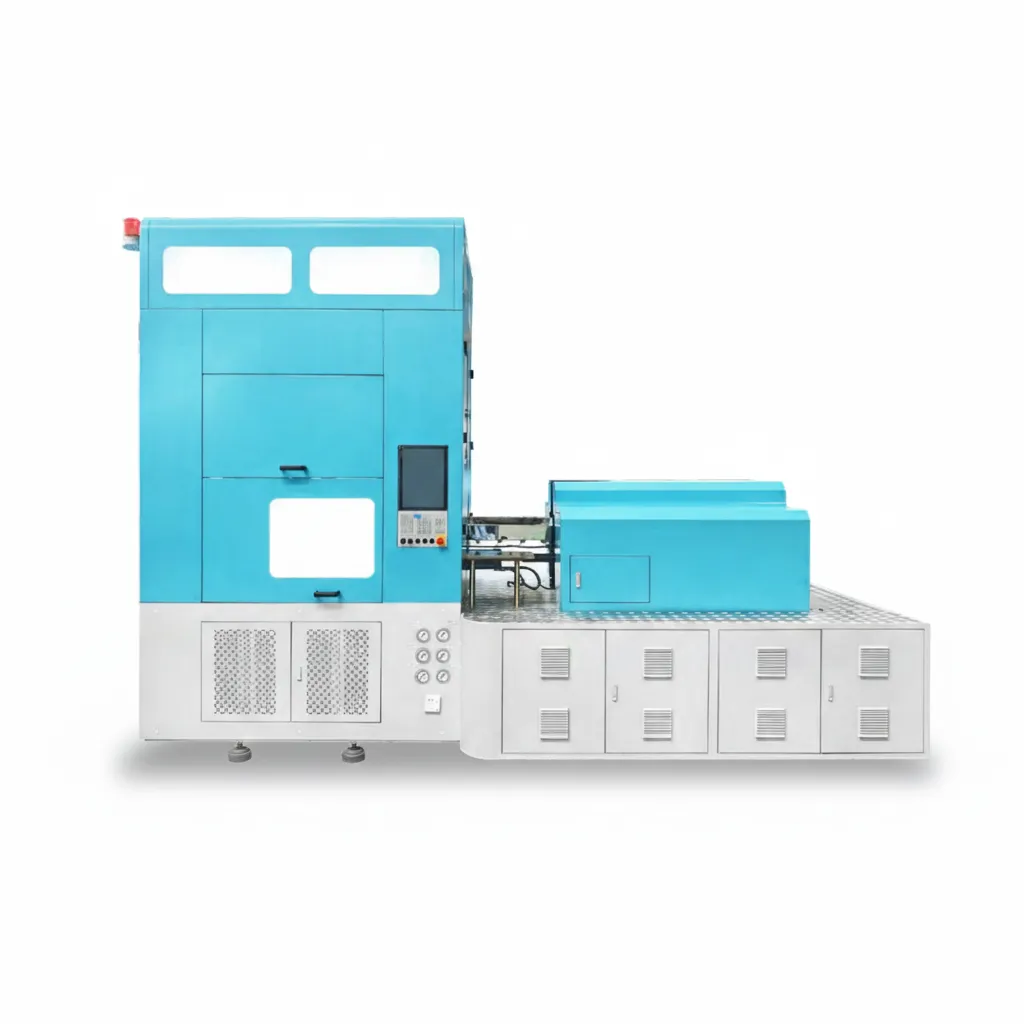
HGYS280-V6 — Six-Station High-Output ISBM Machine for Household Chemical Production
For household chemical packaging operations producing at the highest volumes — major laundry, cleaning, and detergent brands at 20–60 million bottles per year — the HGYS280-V6 six-station one-step ISBM machine provides the throughput capacity, process stability, and multi-cavity precision that high-volume household chemical production demands. The six-station rotary architecture delivers higher output per machine footprint than four-station alternatives, making it the preferred platform for dedicated high-volume SKU production where a single machine is assigned to one format. The machine’s robust injection system handles the full range of household chemical PET and PETG formulations, and its PLC-based process data logging supports the production traceability required for GHS-compliant packaging quality systems. Configurable for 4–6 cavities depending on bottle volume, it covers the 250ml–2L range that dominates household cleaning product retail formats.