
The Juice Packaging Challenge: Why This Category Demands More From Its Production Technology
Juice packaging presents a convergence of technical demands that no other major beverage category fully replicates. A juice bottle must simultaneously deliver the optical clarity that allows consumers to assess product colour and perceive freshness, the thermal stability required to survive hot-fill processing at 85–92°C without deformation, the oxygen barrier performance that protects sensitive vitamins and flavour compounds across the product’s shelf life, and the structural integrity to withstand the compressive stresses of palletised distribution without panelling or collapsing. Meeting all four requirements in a single lightweight PET container — produced consistently across millions of production cycles at commercial cost — defines the central engineering challenge of juice bottle packaging, and it is precisely this multi-dimensional challenge that injection stretch blow molding addresses with an architecture uniquely suited to it.
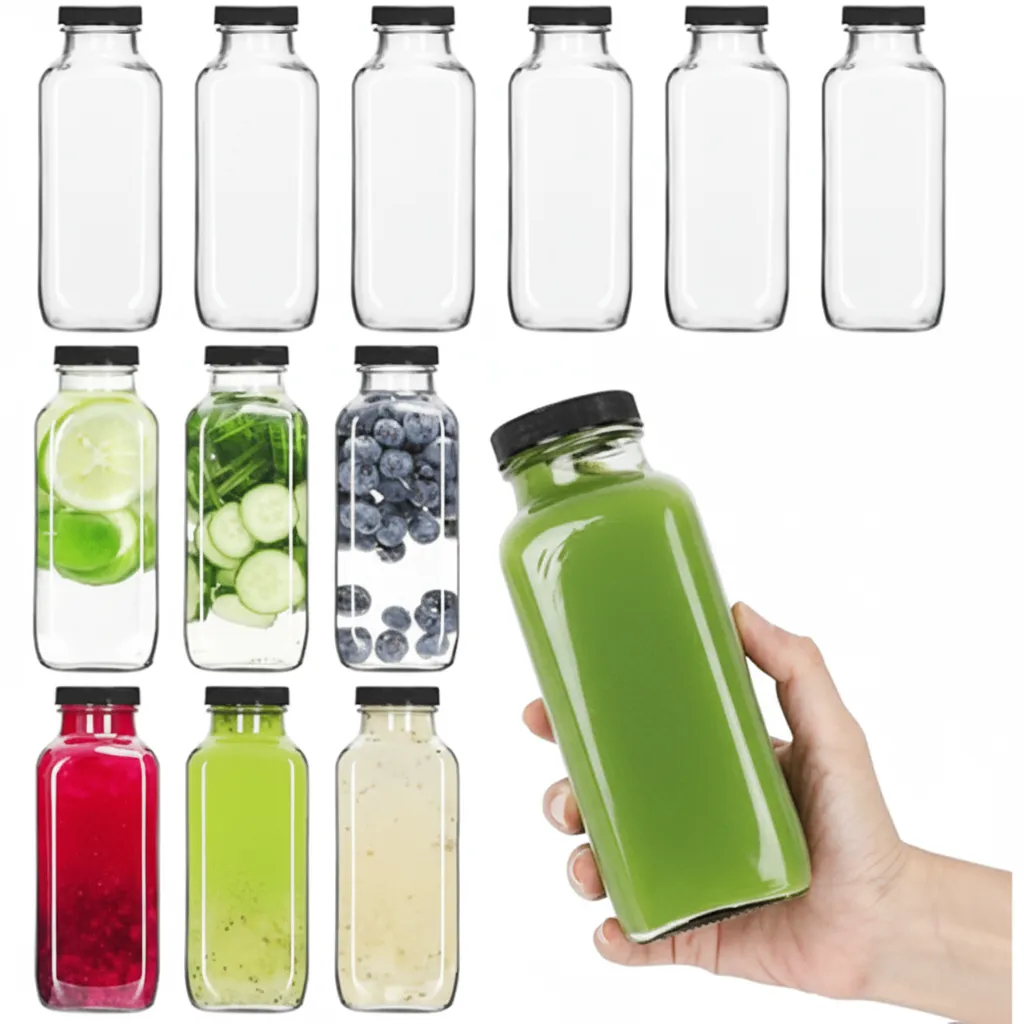
The global juice packaging market has been moving steadily away from glass and carton formats and toward premium PET bottles over the past decade. Consumer research consistently shows that the transparency of a PET bottle — allowing direct visual contact with the product — builds purchase confidence in ways that opaque carton packaging cannot achieve, particularly in premium, functional, and cold-pressed juice categories where product colour and visual texture communicate quality before a label is read. For juice brands building their retail position on visible product appeal, the container is as important as any labelling element, and the ISBM process is the production technology that delivers the optical quality and geometric design freedom to make that visual strategy manufacturable at scale.
Australia Ever-Power Injection Stretch Blow Moulding Machine Co., Ltd, based in Condell Park NSW, works with juice producers and beverage co-packers across Australia and the Asia-Pacific region to specify, commission, and optimise injection stretch blow molding machine installations for the full range of juice packaging applications — from ambient-fill still juice through hot-fill pasteurised products to high-pressure-processed premium cold-press formats. This article examines in depth why ISBM has earned and sustained its position as the first-choice technology for juice bottle production.
What Makes ISBM the Superior Technology for Hot-Fill Juice Bottles
Hot-fill juice processing — where the product is heated to 85–92°C to achieve commercial sterility and then filled directly into the bottle at or near that temperature before capping — is the dominant pasteurisation and filling method for premium shelf-stable juice products globally. It is also the most technically demanding juice filling application from a packaging engineering perspective, because the bottle must withstand the thermal and mechanical stresses of hot-fill processing without deforming in ways that compromise its structural integrity, appearance, or filling line compatibility.
The Physics of Hot-Fill Deformation and How ISBM Solves It
Standard PET bottles produced without thermal treatment undergo significant deformation when filled with hot product. As the hot juice contacts the bottle wall, it transfers heat that raises the PET temperature back toward its glass transition point (approximately 75–80°C), causing the molecular structure to relax from its oriented state. This relaxation allows the bottle to deform under the internal pressure of the hot liquid — typically producing outward panelling in the body panels and base distortion that results in an unstable bottle unable to stand flat. After capping and cooling, the internal pressure drops as the product contracts, adding inward compressive stress that amplifies the deformation. The result, in an unmodified PET bottle, is a visually unacceptable product that communicates poor quality to the retail buyer and the consumer regardless of the juice quality inside.
Heat-Set ISBM: The Technical Solution
The injection stretch blow molding process addresses hot-fill deformation through a modified production variant called heat-set ISBM. In the heat-set process, after the bottle has been fully inflated to its final geometry in the blow mould, the mould temperature is elevated — typically to 120–150°C — rather than immediately cooled. This elevated mould temperature induces further crystallisation of the oriented PET structure, increasing the degree of crystallinity from the 20–25% typical of standard ISBM bottles to 35–40% in heat-set variants. This higher crystallinity level raises the bottle’s effective heat deflection temperature to well above the hot-fill range (85–92°C), allowing the bottle to maintain its geometry under hot-fill conditions without deformation. The heat-set ISBM process is the engineering foundation of every commercially successful hot-fill juice bottle production operation globally — there is no equivalent alternative that delivers the combination of optical clarity, thermal stability, and commercial production efficiency that heat-set ISBM provides.
Vacuum Compensation Panels in ISBM Juice Bottles
As a hot-filled bottle cools after capping, the contraction of the juice creates an internal vacuum that generates inward compressive stresses on the bottle walls. A bottle designed without vacuum compensation will deform asymmetrically and unpredictably under these stresses — creating the dimpled, panelled appearance that indicates a poorly engineered or incorrectly specified hot-fill bottle. ISBM-produced juice bottles incorporate engineered vacuum compensation panels — specifically designed inward-flexible zones in the bottle body geometry — that absorb the vacuum deformation in a controlled, aesthetically acceptable manner. These panels are incorporated into the blow mould cavity design and reproduced with high fidelity by the ISBM process on every bottle. Their engineering requires close collaboration between bottle designer, ISBM tooling engineer, and the juice producer’s filling team to ensure that the panel dimensions, placement, and flexibility characteristics match the specific juice product’s fill temperature and volume contraction behaviour.
Oxygen Barrier Performance: The Critical Quality Parameter for Juice Shelf Life
Oxygen ingress through the bottle wall is the primary mechanism by which juice quality degrades during storage. Vitamin C (ascorbic acid) — the most commercially significant nutritional claim in most juice categories — is directly oxidised by oxygen, with losses that begin immediately upon filling and accumulate throughout the product’s shelf life. Flavour compounds, colour stability, and aroma also degrade through oxidative reactions, producing the stale, cooked, or flat flavour profile that distinguishes a juice bottle that has been stored for several months from one that has been freshly filled. The oxygen barrier performance of the bottle wall is therefore not merely a packaging specification — it is a direct determinant of the nutritional and sensory quality of the product when the consumer opens it.
How Biaxial Orientation Improves PET Oxygen Barrier
The biaxial molecular orientation produced by the injection stretch blow molding process significantly reduces the oxygen permeability of PET compared to unoriented PET of equivalent wall thickness. When PET polymer chains are aligned in the biaxial network structure that ISBM’s stretching and blowing creates, oxygen molecules attempting to diffuse through the wall face a more tortuous path — forced to navigate around the densely packed, ordered polymer chains rather than finding the relatively open pathways available in amorphous, unoriented material. The reduction in oxygen transmission rate (OTR) achievable through biaxial orientation alone — without any additional barrier treatment — is meaningful for most ambient-fill juice applications, providing shelf-life protection adequate for 3–6 month ambient-temperature storage in standard configurations.
Extended Barrier Solutions for Premium Juice Applications
For premium juice products requiring shelf lives beyond 6 months, or for cold-pressed, HPP, and minimally processed juices where nutritional integrity is the central brand claim, additional barrier enhancement can be incorporated into the ISBM-produced bottle through several approaches. Passive oxygen scavenger additives compounded into the PET resin — typically monolayer additives that chemically consume oxygen diffusing through the wall — extend the effective shelf life without adding production complexity. Active barrier coatings applied inline after blow (silicon oxide or amorphous carbon deposited by plasma-enhanced chemical vapour deposition) reduce OTR by 3–10× compared to standard PET, enabling 12–18 month ambient shelf-life targets that previously required glass. Multi-layer preform structures incorporating a dedicated barrier layer between two PET layers are producible in modified ISBM injection stations and provide a discrete, consistent barrier function that is not degraded by the blow process. The choice between these options depends on the specific juice product, shelf-life target, and cost envelope, and is a product development decision that Ever-Power’s technical team can assist with during the bottle and machine specification process.
Juice Bottle Design and Visual Brand Strategy: Where ISBM’s Geometric Freedom Delivers Competitive Advantage
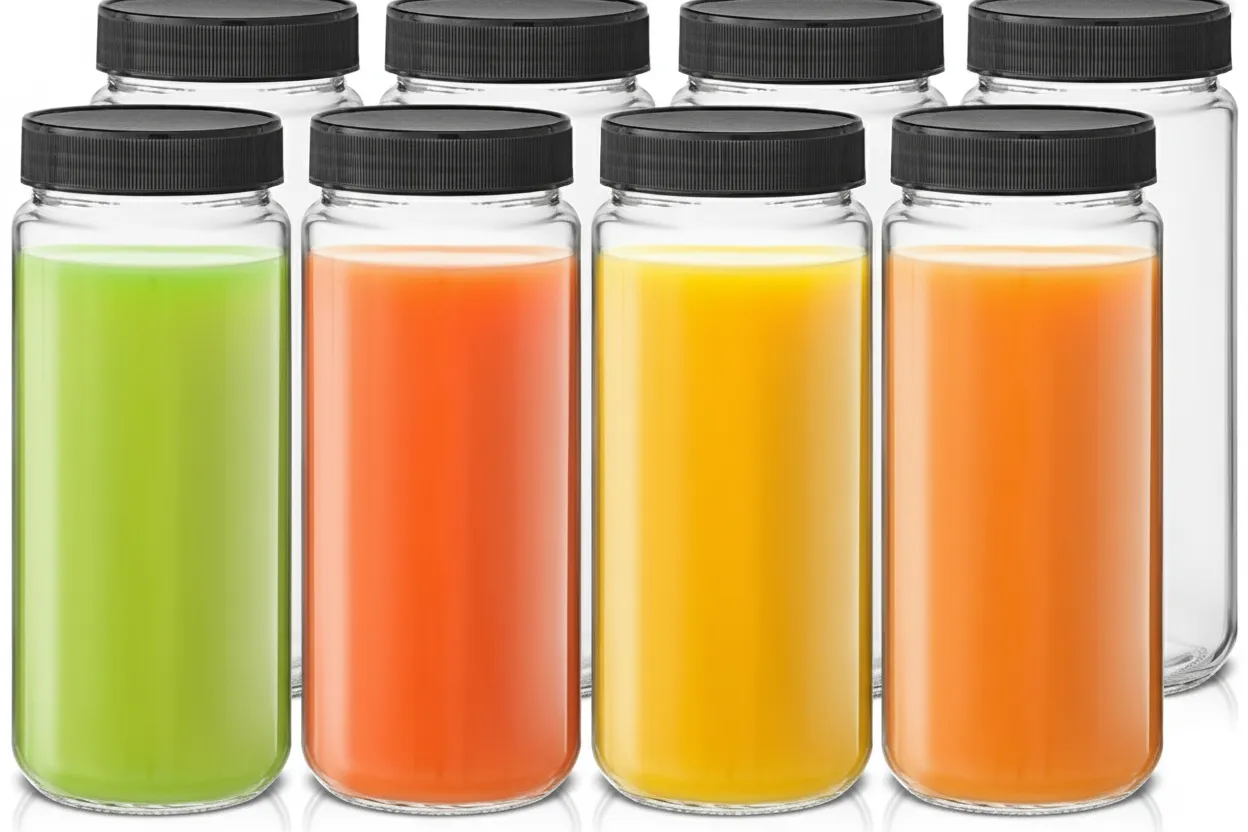
Premium juice is among the highest-margin segments of the ambient beverage retail category, and packaging design is a primary driver of perceived premium value. Consumers browsing the juice aisle make purchase decisions partly on product visibility (the colour and texture of the juice itself, visible through the bottle wall), partly on bottle shape and label panel design, and partly on the tactile quality signal communicated by the bottle’s wall thickness and base stability when lifted from the shelf. ISBM’s ability to produce complex bottle geometries with dimensional precision and glass-like optical clarity makes it the only production technology capable of delivering all three visual and tactile cues at commercial production scale.
Wide-Mouth Juice Bottles and ISBM’s Neck Freedom Advantage
Wide-mouth juice bottles — with neck openings of 38mm, 48mm, or larger — are increasingly demanded by premium juice brands for their premium appearance (resembling glass juice bottles), their consumer-perceived freshness signal (wide mouth = more product visible = fresher appearance), and their suitability for chunky-particle juice products (smoothies, cold-press with visible pulp) that cannot be dispensed through standard narrow neck openings. Wide-mouth neck designs present significant challenges for two-step blow moulding systems, where the preform transport and reheat oven equipment is typically designed around standard narrow necks and cannot easily handle wider neck formats without equipment modification. One-step ISBM has no such constraint — the neck finish is formed by injection at the exact dimensions specified in the tooling design, kept on the blow core throughout the process, and never subjected to transport handling that could distort it. Any commercially viable neck finish can be produced in one-step ISBM without process modification.
Label Panel Geometry and On-Shelf Brand Impact
The label panel is the primary communication surface of a juice bottle, and its geometry — flatness, panel width, transition rib sharpness, and panel height — directly determines how label graphics appear on the shelf. ISBM tooling design can incorporate precisely specified flat label panels with sharp-radiused ribs at the transitions to the curved bottle body, creating a clean frame for label application that maximises graphic fidelity and gives the overall package a structured, premium appearance. For shrink sleeve label formats — which are particularly popular in premium juice categories for their 360-degree graphic coverage — the bottle’s three-dimensional profile can be designed to work harmoniously with the sleeve’s shrink behaviour, ensuring that graphics print and register correctly across the full bottle surface. These design details are specified in the mould tooling at the outset and reproduced identically on every bottle across the machine’s operational life, providing the label geometry consistency that high-speed automatic label application equipment requires.
ISBM vs. Alternative Technologies for Juice Bottle Production: A Direct Technical Comparison
Juice packaging buyers who have not recently conducted a structured technology evaluation sometimes operate under assumptions about alternative packaging options that have been overtaken by developments in ISBM capability. The comparison below addresses the most commonly considered alternatives to ISBM PET for juice bottle packaging, assessed against the performance dimensions that actually matter in the juice category.
| Performance Criterion | ISBM PET | Glass | Carton / Aseptic | HDPE Bottle |
|---|---|---|---|---|
| Product Visibility | ⭐⭐⭐⭐⭐ Crystal clear | ⭐⭐⭐⭐⭐ Crystal clear | ⭐ Opaque | ⭐⭐ Translucent |
| Hot-Fill Compatibility | ✅ Heat-set ISBM | ✅ Native capability | ✅ Aseptic fill | ⚠️ Limited grades |
| Pack Weight (500ml) | 20–30g | 250–450g | 30–40g | 25–35g |
| Breakage Risk | None | High throughout chain | None | None |
| Design Freedom | ⭐⭐⭐⭐⭐ Widest | ⭐⭐⭐⭐ High | ⭐⭐ Brickpack limited | ⭐⭐⭐ Moderate |
| Recyclability (AU) | ✅ Kerbside + CDS | ✅ Kerbside | ⚠️ Limited in AU | ✅ Kerbside |
| Per-Unit Cost (500ml) | Low–moderate | High | Low–moderate | Нізкі |
| rPET Compatible | ✅ 25–50%+ | ✅ High recycled content | ⚠️ Complex multilayer | ✅ PCR HDPE |
The table above confirms what juice packaging specialists have observed in practice: no alternative to ISBM PET matches its combination of optical clarity, design freedom, hot-fill capability, weight advantage, recyclability, and rPET compatibility in a single production platform. Glass achieves equivalent clarity but at a weight, cost, and breakage risk penalty that makes it viable only in the highest-premium tier. Carton packaging’s opacity disqualifies it from transparency-driven premium positioning strategies. HDPE bottles lack the optical quality for premium applications. ISBM PET occupies the unique position of delivering premium packaging performance at mass-production economics — which is precisely why it has become the first choice for commercially ambitious juice brands globally.
The Commercial Case for In-House ISBM Juice Bottle Production
For juice producers currently purchasing PET bottles from external suppliers, the financial and strategic case for transitioning to in-house injection stretch blow molding machine production is typically more compelling than intuition suggests — particularly in the Australian market, where geographic isolation amplifies both the cost and the risk of external bottle supply chains. The commercial analysis below covers the primary value drivers that determine whether in-house ISBM investment makes sense for a specific juice operation.
Per-Bottle Cost Reduction at Commercial Volumes
The per-bottle in-house ISBM production cost — comprising PET resin, energy, machine amortisation, labour, and maintenance — is consistently lower than the externally purchased equivalent at volumes above approximately 8–12 million bottles per year in Australian market conditions. The margin between in-house cost and external purchase price varies with bottle specification, PET resin price, and energy tariff, but typically ranges from 15–35% in favour of in-house production. For a juice operation producing 20 million bottles per year, this saving compounds into a very meaningful annual financial benefit that provides the primary financial return on the ISBM capital investment. The payback period — typically 2–4 years for Australian juice operations at these volumes — is followed by a decade or more of ongoing cost advantage that directly improves the operation’s competitive position on price.
Supply Security for Perishable Product Operations
Juice production is particularly exposed to bottle supply disruptions compared to ambient beverage categories, because the product itself is perishable. A juice operation that has raw product ready to process but cannot fill it due to a bottle shortage faces a uniquely damaging combination of wasted raw material, lost revenue, and potential customer fulfilment failure — a scenario that the post-2020 global supply chain environment has shown is not hypothetical. In-house ISBM production converts this supply chain risk into a resin supply risk — PET resin is a globally traded commodity with diversified supply and multiple substitutable sources — dramatically reducing the operational vulnerability that external bottle dependency creates for juice producers operating on narrow processing windows and perishable ingredient schedules.
Just-in-Time Production Matching Juice Processing Schedules
Juice production runs are typically scheduled against seasonal raw material availability — citrus crush seasons, berry harvest windows, tropical fruit availability periods — that create concentrated, time-pressured production windows followed by longer ambient-fill periods. An ISBM machine produces bottles at the rate the filling line requires, without the lead-time and minimum-order constraints that external bottle suppliers typically impose. This just-in-time production flexibility allows juice operations to respond to changing seasonal schedules, unexpected raw material availability (when a particular fruit variety is unexpectedly abundant and must be processed quickly), and promotional volume spikes without the inventory management complexity and working capital burden of maintaining large bottle buffer stocks.
Key Process Parameters for High-Quality Juice Bottle Production on an ISBM Machine
Producing juice bottles consistently within their quality specification requires active management of a specific set of ISBM process parameters. For juice applications — particularly hot-fill variants — the process window is tighter than for still water bottles, and the consequence of parameter drift is more severe because the thermal and vacuum stresses of hot-fill processing amplify any structural weakness in the bottle.
Heat-Set Mould Temperature
For hot-fill juice bottles, the heat-set mould temperature is the most critical single process parameter. Target range: 120–150°C depending on the specific hot-fill temperature requirement. Too low and the bottle lacks sufficient crystallinity for hot-fill stability; too high and the bottle wall develops surface crystallisation that reduces optical clarity. Independent zone control on the base insert is critical because the base requires higher heat-setting than the body panels.
Crystallinity Level Verification
Target crystallinity for hot-fill juice bottles: 32–40% measured by density gradient column or DSC analysis on body panel samples. Routine crystallinity monitoring — minimum once per shift and at every process recipe change — is the process control that confirms the heat-set process is delivering the thermal stability that the hot-fill specification requires. Crystallinity below 30% is a warning indicator requiring immediate process review.
Stretch Ratio for Juice Bottles
Hot-fill juice bottles typically require slightly lower stretch ratios (axial 2.5:1 to 3.0:1, hoop 3.0:1 to 3.8:1) than carbonated bottles, because the heat-setting process at the mould wall replaces some of the mechanical strengthening function that orientation provides in cold-fill applications. Maintaining consistency within ±5% of the target stretch ratio prevents the localised thin zones that fail during hot-fill deformation testing.
Vacuum Panel Geometry Verification
Vacuum compensation panel dimensions must be verified against drawing specifications at commissioning and at each mould maintenance interval. Panel walls that are too thick resist controlled inward deformation under vacuum and cause unpredictable panelling elsewhere on the bottle. Panels that are too thin may deform excessively and distort label panel geometry. A dedicated hot-fill simulation test (filling with water at target fill temperature and monitoring deformation through cooling cycle) should be conducted at every process qualification.
PET Grade Selection for Juice
Juice ISBM applications require PET grades with IV of 0.80–0.84 dL/g (higher than still water grades) to ensure adequate molecular weight for hot-fill performance. Low AA (acetaldehyde) grades are mandatory for juice applications — AA migration into the juice produces off-flavours detectable even at ppb concentrations. Food-contact certification and AA scavenger content should be verified on every resin batch incoming certificate of analysis before processing.
Top-Load Strength for Distribution
Juice bottles are typically stacked 4–6 pallet layers high during distribution, creating significant axial compressive loads on the bottle. The top-load strength of a hot-fill juice bottle under fill pressure must be sufficient to resist column buckling through the distribution cycle. This is verified by top-load testing at specified internal vacuum level (simulating the vacuum after hot-fill cooling) and at elevated temperature (simulating summer distribution conditions). ISBM process optimisation that increases biaxial orientation in the bottle wall directly increases top-load resistance.
Australian Juice Market Context: Why Local ISBM Production Delivers Specific Strategic Advantages
The Australian premium juice market has grown significantly over the past decade, driven by consumer health consciousness, the proliferation of cold-pressed and functional juice formats, and the premiumisation trend that has seen glass-comparable PET bottles displace cartons in the premium segment. This market evolution has specific implications for Australian juice producers evaluating ISBM investment, because the competitive dynamics of the Australian juice market amplify several of ISBM’s advantages in ways that generic global analysis may not fully capture.
Australia’s Container Deposit Schemes (CDS), operating across all states and territories with a 10-cent deposit on eligible PET bottles, provide a significant collection and consumer engagement incentive that is specific to the Australian market. PET juice bottles that qualify for CDS deposits provide their brand owners with a consumer sustainability narrative — the bottle has tangible return value — that cartons and HDPE bottles cannot offer. For juice brands competing on health and sustainability credentials simultaneously, this CDS eligibility of PET juice bottles is a meaningful retail differentiation point that makes ISBM-produced PET packaging the preferred format for brand owners who understand how to leverage it.
The geographic concentration of Australia’s juice processing industry — predominantly in Queensland (tropical and sub-tropical fruit), Victoria (citrus and stone fruit processing), and Western Australia (various fruit categories) — means that ISBM machine installations serving these regions benefit from concentrated technical support access from a Sydney-based supplier like Ever-Power. Being able to dispatch an engineer from Condell Park NSW to any major Australian juice production facility within the same day or following day is a practical support advantage that international ISBM machine suppliers cannot replicate, and that translates directly into faster resolution of commissioning and production issues.
Juice Bottle Development Process: From Brand Brief to Production-Qualified ISBM Tooling
Developing a new juice bottle for ISBM production follows a structured sequence that must account for the specific functional requirements of juice packaging — hot-fill stability, vacuum compensation, barrier performance — in addition to the visual and brand requirements that apply across all beverage categories. Understanding this sequence helps juice brand teams set realistic development timelines and identify the decisions that must be made early to avoid expensive corrections later.
Define the Functional Specification
Document the fill temperature (ambient, warm-fill, or hot-fill), product characteristics (pH, sugar content, pulp particle size), required shelf life and storage temperature, filling line neck finish and gripper compatibility, and maximum acceptable deformation levels under hot-fill and vacuum conditions. These functional requirements drive tooling design decisions that cannot be reversed after steel is cut.
3D Design with Thermal Simulation
The bottle geometry is designed in 3D CAD incorporating vacuum compensation panel placement and dimensions, label panel geometry, and neck finish specification. For hot-fill applications, finite element analysis (FEA) of the bottle geometry under simulated hot-fill and vacuum loading conditions validates the vacuum panel design before tooling is manufactured — identifying panel placement or geometry changes needed to achieve acceptable deformation behaviour.
Preform Design and Mould Flow Simulation
Preform geometry is designed for the ISBM process — weight, wall thickness profile, gate design, and neck finish — with mould flow simulation validating that the target wall thickness distribution in the final bottle will be achieved. For hot-fill juice bottles, the preform design must account for the slightly different material distribution behaviour of heat-set ISBM compared to standard cold-mould blowing.
Prototype Production and Hot-Fill Testing
Single-cavity prototype bottles are produced for full hot-fill qualification testing: fill at target temperature, cap and invert per line protocol, monitor deformation through the cooling cycle, test top-load at fill vacuum level, and assess appearance. Prototype testing reveals any vacuum panel design issues that simulation did not capture, allowing tooling revisions before full production tooling is committed.
Production Tooling Manufacture and Process Qualification
Production blow mould tooling is manufactured with the heat-set capable mould configuration (heated platens, independent base zone, high-temperature cooling fluid circuits). Process qualification on the full production machine confirms that all cavities produce bottles within the hot-fill specification across an extended production run, with crystallinity, deformation, top-load, and appearance all verified at production rate before commercial approval.
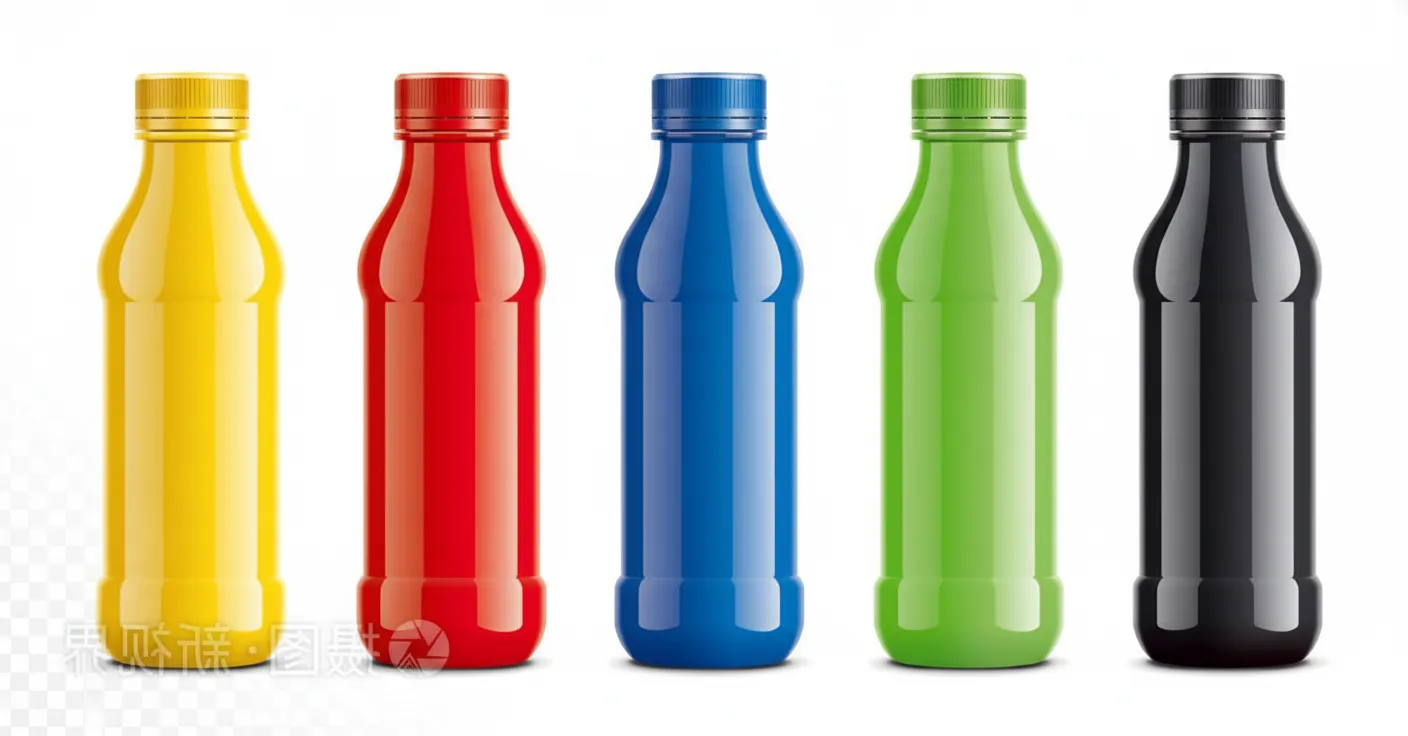
Juice Category Trends Strengthening the Case for ISBM Investment
Several concurrent market trends in the premium juice category are independently driving increased demand for the specific capabilities that ISBM delivers — suggesting that an ISBM investment made today will serve market requirements that are growing, not shrinking, across the next decade.
Cold-pressed and HPP (high-pressure processing) juice formats, which avoid thermal pasteurisation by using ultra-high water pressure to achieve microbial safety at ambient temperature, are the fastest-growing premium juice segment globally. These products require bottles with exceptional clarity (to showcase the product’s natural colour and opacity cues that communicate freshness), wide-mouth formats (for chunky fruit and vegetable ingredients), and in many cases reduced oxygen transmission rates to protect nutritional content. Standard ISBM bottles with mirror-finish cavities and careful OTR optimisation address all three requirements simultaneously. HPP-compatible PET bottles specifically designed for pressure-process use are producible through ISBM with appropriate wall thickness and geometry specifications.
The functional beverage segment — adding vitamins, probiotics, collagen, adaptogens, and other active ingredients to juice-based products — is growing rapidly in Australia and internationally. These products command premium retail prices that justify premium packaging investment, and their active ingredient sensitivity (oxidation, light sensitivity, flavour migration) creates barrier requirements that ISBM’s biaxial orientation and optional barrier enhancement addresses effectively. Juice brands expanding into functional beverage adjacencies find that their existing ISBM machine investment supports the new product category without process platform changes — only tooling and PET grade adaptation is required.
Retail sustainability requirements — particularly the major Australian supermarkets’ commitments to recycled content minimums and recyclable packaging mandates — are adding compliance pressure that ISBM PET meets more completely than any alternative. rPET integration at 25–30% is achievable on current ISBM machines with appropriate process specification, and CDS recyclability is already fully established for PET juice bottles. These compliance advantages, combined with the per-bottle cost and supply security arguments already documented above, make the case for ISBM investment in the juice category more compelling in 2025–2026 than it has been at any previous point.
How Ever-Power Supports Australian Juice Producers Through the Entire ISBM Journey
Australia Ever-Power Injection Stretch Blow Moulding Machine Co., Ltd provides Australian juice producers with a complete package of technical and commercial support that covers every phase of the ISBM journey — from the initial feasibility assessment through machine specification, tooling development, installation, commissioning, process optimisation, and ongoing operational support. This integrated support model is designed to minimise the technical risk of a juice-specific ISBM investment and maximise the speed at which the production operation reaches sustained commercial performance.
The pre-investment phase begins with a no-obligation production feasibility assessment that examines the juice producer’s filling line parameters, bottle range, annual volume, hot-fill temperature requirements, and site infrastructure to produce a machine configuration recommendation and a financial model comparing in-house ISBM production cost against the current external supply cost. This assessment gives the juice producer the verified, site-specific financial analysis needed to make a confident investment decision — rather than relying on supplier claims or generic industry benchmarks.
Post-commissioning, Ever-Power’s ongoing support programme covers process reviews that identify efficiency improvement opportunities as the production team’s experience deepens, product development assistance for new juice bottle formats or barrier specifications, and rapid technical response for production issues that the internal team cannot diagnose independently. The practical accessibility of the Condell Park NSW engineering team — reachable by phone and on-site within 24 hours for Australian customers — distinguishes Ever-Power’s support model from that of international ISBM machine suppliers and makes the ongoing partnership relationship genuinely functional rather than nominally available.
Explore ISBM Solutions for Your Juice Bottle Production
Australia Ever-Power’s engineering team in Condell Park NSW provides juice producers with no-obligation feasibility assessments covering machine specification, hot-fill capability, financial modelling, and site infrastructure requirements.
Request Your Juice Production Assessment →
[email protected] | Condell Park NSW 2200, Australia | isbm-technology.com
Featured Product
One-Step Injection Stretch Blow Molding Machine — Four-Station HGYS200-V4-B
For juice producers requiring a production platform optimised for hot-fill applications alongside ambient-fill juice and water bottle formats, the HGYS200-V4-B four-station one-step injection stretch blow molding machine from Australia Ever-Power provides the balanced specification that juice operations demand. The four-station architecture delivers production throughputs suitable for mid-to-large Australian juice operations, while the machine’s servo-assisted drive systems, independent conditioning zone control, and mould temperature management capability provide the precise process control that heat-set ISBM juice bottle production requires. The HGYS200-V4-B is compatible with both virgin PET and food-grade rPET blends, supports the low-AA PET grade processing that juice food-contact requirements mandate, and is configurable for the full range of juice bottle formats from 100ml premium single-serve to 2L family containers. Detailed technical specifications and application configuration guidance are available at isbm-technology.com. Contact [email protected] to discuss hot-fill capability configuration for your specific juice application.