Infusion Container Systems: Clinical Stakes and Packaging Engineering Requirements
Intravenous fluid administration is one of the most common clinical interventions in hospital medicine — an estimated 60–80% of hospitalised patients receive IV fluids during their admission. The container that holds the IV fluid — whether normal saline, dextrose, Ringer’s lactate, or compounded pharmacy preparation — is in direct contact with the sterile solution throughout storage and administration, and its integrity and cleanliness are patient safety prerequisites, not manufacturing quality preferences. A contaminated infusion or one delivered through a container that fails structurally under administration pressure has direct clinical consequences for the patient receiving it.
The transition from glass infusion bottles (the historical standard) and PVC infusion bags (the dominant format since the 1970s) to PET ISBM infusion containers is driven by a confluence of practical advantages: PET provides transparency comparable to glass for visual particulate inspection, rigidity and structural integrity that enables pressure-assisted infusion administration without collapse, chemical inertness superior to PVC (PVC leaches plasticisers — DEHP and others — into IV fluid solutions, a pharmacological and toxicological concern that has driven clinical and regulatory moves away from PVC in many applications), and the production economics of large-volume ISBM production that glass bottles and custom PVC bag manufacturing cannot match. The injection stretch blow molding machine is the production platform that makes this transition commercially viable at the volumes the hospital supply chain requires.
Australia Ever-Power Injection Stretch Blow Moulding Machine Co., Ltd, operating from Condell Park NSW 2200, supports IV fluid manufacturers and hospital pharmacy operations with ISBM machine technology and pharmaceutical validation support configured for the Australian TGA sterile product manufacturing environment.

Structural Integrity Under Infusion Pressure: Wall Thickness Engineering for IV Applications
Intravenous fluid administration in clinical settings includes both gravity-drip infusion (operating at the hydrostatic pressure of the fluid column height above the patient’s venous access site, typically 0.05–0.20 bar) and pressure-assisted infusion (using pressurised infusion cuffs at 200–300 mmHg / 0.27–0.40 bar for rapid volume replacement in emergency resuscitation). The infusion container must maintain its structural integrity — no wall collapse, no closure breach — at the administration pressures encountered in both modes of clinical use, without deforming in a way that affects the infusion rate accuracy or alerts the clinical team to a container failure.
Rigid vs Semi-Rigid PET Infusion Containers
Rigid PET ISBM infusion containers (wall thickness sufficient that the container maintains its shape under gravity infusion without the air inlet required by glass bottles) are used for gravity infusion applications where the clinician’s preference for a rigid container, improved visual particulate inspection, and the elimination of the air inlet contamination pathway (rigid containers collapse as fluid is withdrawn — PVC bags do not need an air inlet either, which is their primary historical advantage over glass) are the key requirements. The wall thickness for rigid PET infusion containers must provide sufficient hoop stiffness to resist deformation under the negative pressure of fluid withdrawal — a 500ml rigid PET infusion bottle collapsing as the fluid level falls, without needing an air inlet, requires a minimum hoop stiffness that translates to a minimum body wall thickness of approximately 0.5–0.8mm at the design bottle diameter. ISBM’s preform design engineering targets this wall thickness range with ±0.05mm consistency across the production batch.
Pressure Infusion Qualification Testing
PET ISBM infusion containers must be pressure-tested at the maximum intended administration pressure to confirm that neither the container body nor the closure system fails under these conditions. The qualification protocol for pressure infusion compatibility involves: filling the container with water to the nominal fill volume, applying the maximum intended administration pressure (300 mmHg / 0.40 bar) through the infusion port for a sustained period of minimum 60 minutes, then inspecting the container and closure for any deformation, wall distortion, or closure breach. The test is conducted on a minimum of 30 containers from the commercial production lot, and all must pass the inspection criteria. For containers that will be used in emergency resuscitation settings where pressure infusion is applied at the highest clinical pressures, additional testing at 1.5× the maximum intended pressure provides a safety margin confirmation that is appropriate for a clinical device with patient safety implications.
Hanger Design and Pole Suspension Stability
IV infusion containers are hung from IV poles during administration — the container must remain stably suspended throughout the infusion, including during patient movement and repositioning that causes the IV pole to be moved. The hanger system (an integral formed feature in the base of the inverted-hanging infusion bottle, or a separate hanger component clipped to the container) must support the weight of the full container (up to 1.1kg for a 1L infusion) without deforming the container attachment zone. ISBM’s base zone wall thickness and geometry can be designed to provide the structural integrity for an integral base hanger — the base panel at the hanger attachment point must maintain its structural rigidity under both static hanging load and the dynamic loads from pole movement.
Sterility Requirements for Infusion Containers: The Highest Standard in Pharmaceutical Packaging
Intravenous fluids administered directly into the bloodstream are subject to the strictest sterility requirements in pharmaceutical manufacturing. A sterility failure in an oral pharmaceutical product causes a quality hold and a patient safety concern. A sterility failure in an IV fluid product administered to a patient causes sepsis — a life-threatening systemic infection that carries a 20–30% mortality rate in immunocompromised patients. The sterility assurance level (SAL) for terminally sterilised IV fluid products is 10⁻⁶ — one in one million containers may have a viable microorganism — and this SAL must be maintained across every container in every batch throughout the product’s shelf life.
Terminal Sterilisation by Autoclave: The PET Limitation
The standard terminal sterilisation method for IV fluids is steam autoclave sterilisation at 121°C for 15 minutes (F₀ ≥ 8 minutes for overkill sterilisation). This is the most robust and widely validated sterilisation method for aqueous parenteral products, and is the preferred approach from both the TGA regulatory and clinical safety perspectives. However, PET softens at temperatures approaching its glass transition temperature (Tg ≈ 75–80°C), making steam autoclave sterilisation at 121°C incompatible with standard PET infusion containers — the containers would distort irreversibly during the autoclave cycle. This is the most significant technical limitation of PET ISBM for primary IV fluid infusion container applications, and is the reason why glass bottles (autoclave-compatible) and flexible PVC bags (sterilised by gamma irradiation or filtered aseptic filling) remain the dominant formats for large-volume IV fluid containers in hospital pharmacy.
Gamma Irradiation and Aseptic Filling: The PET ISBM Pathway for IV Containers
PET ISBM infusion containers can be terminally sterilised by gamma irradiation (25 kGy minimum absorbed dose, ISO 11137) — a validated, pharmacopoeially acceptable sterilisation method for aqueous sterile products. However, gamma irradiation of aqueous solutions produces radiolysis products (primarily hydrogen peroxide from water radiolysis) that may affect product stability. For simple IV solutions (normal saline, dextrose), radiolysis at the standard gamma dose is manageable, and the radiolysis product profile is within the accepted limits for the product. For complex compounded preparations or protein-containing solutions, radiolysis damage to the active pharmaceutical ingredient is a primary concern that may preclude gamma irradiation as the sterilisation method. The alternative pathway — aseptic filling of pre-sterilised PET ISBM containers — is the approach used for compounded IV preparations in hospital pharmacy settings where the complexity or protein content of the preparation precludes terminal sterilisation.
Hospital Pharmacy Compounding Applications
Hospital pharmacy IV compounding — the preparation of patient-specific IV formulations (chemotherapy, parenteral nutrition, antibiotic infusions, electrolyte mixtures) under aseptic conditions in the hospital pharmacy clean room — represents a growing application for PET ISBM containers. Compounded IV preparations are typically prepared in small batches (1–10 units per patient per day) under ISO Class 5 laminar flow conditions in a hospital pharmacy clean room, then administered within 24–48 hours. PET ISBM containers for hospital pharmacy compounding must be: pre-sterilised (gamma irradiation or EtO sterilisation at the container manufacturer), sealed with a rubber stopper system accessed by a compounding needle, compatible with the formulation matrix (standard IV fluids, amino acids for parenteral nutrition, chemotherapy agents at the relevant concentrations), and visually clear for particulate inspection before and after compounding. These requirements are achievable with pharmacopoeial-grade PET ISBM containers produced in a clean-room environment with validated gamma irradiation sterilisation.
PVC-Free Infusion Containers: The Clinical Safety Case for PET
The clinical case for transitioning from PVC infusion bags to PET ISBM containers is supported by a growing body of evidence on the toxicological significance of PVC plasticiser leaching into IV fluids. DEHP (di(2-ethylhexyl) phthalate) — the primary plasticiser in standard PVC infusion bags — is classified as a reproductive toxin under EU CLP regulation and is restricted in medical devices that come into prolonged contact with blood, blood products, or lipid emulsions under EU MDR Directive 2017/745. The TGA has noted DEHP leaching from PVC bags as a safety concern in its medical device safety communications, particularly for neonatal patients and adult patients receiving prolonged IV nutrition through fat emulsions (which extract DEHP from PVC bags at particularly high rates).
PET ISBM infusion containers contain no plasticiser — PET is a rigid polymer that does not require plasticiser addition to achieve its physical properties, unlike PVC. The extractable profile of PET in contact with IV fluid matrices is principally acetaldehyde (controlled through pharmacopoeial-grade resin and validated ISBM process parameters) and trace amounts of ethylene glycol and terephthalic acid at concentrations well below clinical significance levels. The absence of phthalate plasticisers in PET infusion containers is a direct toxicological advantage over PVC bags, particularly for the patient populations most vulnerable to DEHP exposure: neonates receiving parenteral nutrition, ICU patients receiving prolonged fat emulsion nutrition support, and patients undergoing chemotherapy with lipophilic cytotoxic agents.
For Australian hospitals with stated commitments to DEHP-free IV administration for high-risk patient populations, PET ISBM containers provide the combination of visual transparency (enabling particulate inspection), structural rigidity (enabling pressure infusion without collapse), and DEHP-free material composition that the clinical requirement demands — with a regulatory pathway through the TGA that is supported by an established body of pharmacopoeial compliance and E&L data for PET in parenteral applications.
Particulate Matter Control: The Critical Quality Attribute for IV Fluid Containers
Particulate matter in IV fluids is the most clinically significant quality defect in parenteral product manufacturing — particles infused intravenously can cause pulmonary microembolism, phlebitis, immune reactions, and, for particles entering the microcirculation, ischaemic damage to organs including the brain, heart, and kidneys. The pharmacopoeial limits for sub-visible particles in large-volume parenterals (Ph.Eur. 2.9.19 / USP <788>) require less than 6,000 particles per container at ≥10 µm and less than 600 particles per container at ≥25 µm — limits that must be met by the finished product in the filled and sealed container, including any particle contribution from the container material.
Container Contribution to Sub-Visible Particulate Counts
PET ISBM containers can contribute sub-visible particles to IV fluid products through two mechanisms: polymer fragments shed from the container interior surface during filling and through shaking during transport (particularly from any surface imperfections in the body interior from mould texture or contamination), and particles generated at the closure interface during rubber stopper insertion or needle penetration. Controlling container-origin particles requires: mirror-polish interior surface specification (Ra ≤ 0.06 µm on the internal body wall, confirmed through reverse-image profilometry on production samples); verification that the container interior has no flash, tool marks, or contamination before filling; and washing of containers with filtered water before use if the sub-visible particulate contribution exceeds the acceptable level for the specific product. The rubber stopper system for IV infusion container closure is the primary source of particulate at the closure zone — selecting a low-particle-shedding stopper formulation and conducting coring and shedding tests with the specific production container and needle combination during qualification confirms that the combined particulate contribution remains within the Ph.Eur. limits.
Visual Inspection for Infusion Container Quality Release
100% visual inspection of filled infusion containers — mandated by TGA GMP for all sterile parenteral products — requires the container to provide an unobstructed, optically clear view of the entire solution volume. PET ISBM containers with haze ≤ 2.0% (confirmed by production hazemeter measurement) and a mirror-polished body interior and exterior provide the optical conditions needed for reliable visual inspection of particles ≥ 100 µm at the mandated inspection lighting intensity and exposure time. The visual inspection programme for IV infusion products must define the inspection lighting conditions, the inspector qualification and defect detection limits, and the inspection criteria — all of which are documented in the sterile product manufacturing quality system and are verified during TGA GMP inspection of the manufacturing facility.
Closure Systems for IV Infusion Containers: Stopper, Port, and Additive Access Design
IV infusion container closure systems must accomplish three simultaneous functions: maintaining sterile barrier integrity from manufacture through administration, providing access for the IV administration set spike that delivers fluid to the patient, and providing access for drug additions (medications added to the IV fluid immediately before or during administration). These three functions drive a container closure design with defined port zones — each with specific dimensional and functional requirements that ISBM’s injection-formed neck and body geometry must meet precisely.
Administration Set Spike Port
The administration set spike port must accept the IV spike (a 4.0–4.5mm diameter hollow spike from the administration set) with a defined insertion force (2–15N for reliable clinical insertion while preventing accidental penetration) and must self-seal after spike removal (for containers with a partial-use hold period). The rubber stopper or elastomeric membrane covering the spike port must be dimensionally compatible with the ISBM container’s port geometry — the stopper diameter provides the compression sealing against the port bore, and the ISBM bore dimensions (±0.10mm on inside diameter) set the stopper compression percentage that determines both sealing reliability and spike insertion force.
Additive Injection Port
The additive injection port allows healthcare professionals and hospital pharmacists to inject additional medications into the IV container immediately before or during infusion. It must accept a standard IV needle (18–23 gauge) for injection, self-seal after needle withdrawal to prevent further contamination, and be visually distinguishable from the administration spike port to prevent clinical error (inadvertent connection of the administration set to the additive port). The ISBM container’s additive port geometry — a smaller diameter rubber membrane in a defined position relative to the spike port — must provide reliable needle penetration self-sealing, confirmed through a needle insertion and withdrawal test analogous to the rubber stopper penetrability test for vials.
Tamper-Evidence for Hospital Distribution
IV infusion containers distributed through hospital pharmacy systems must provide clear tamper-evidence at both the spike port and the additive port — confirming to the nursing staff that neither port has been accessed between manufacture and administration. Overwrap heat-sealed polypropylene film covers (removed immediately before spike insertion at the bedside) provide the primary tamper-evidence for spike ports; breakaway plastic overcaps provide tamper-evidence for additive ports. The ISBM container’s port geometry must accommodate these tamper-evidence components in a way that is visually clear, easily removed by nursing staff under clinical conditions, and sufficiently robust to remain intact through normal hospital distribution handling.
Extractables Profile for Large-Volume Parenteral PET Containers
Large-volume parenteral (LVP) products — IV fluids administered at volumes of 100ml–1,000ml per dose — require the most rigorous extractables assessment of any pharmaceutical application because the total extractable exposure per dose is directly proportional to the administered volume. A compound present at 10 µg/L in an IV fluid reaches a patient exposure of 10 µg if delivered in a 1L infusion — the same concentration in a 5ml oral dose reaches only 0.05 µg of exposure. This volume-dependent exposure means that the TTC for IV fluid container extractables is significantly lower than for oral pharmaceutical containers: compounds acceptable in oral contact applications may require explicit safety assessment at the higher exposure from IV fluid contact.
For PET ISBM LVP containers, the extractables programme must address: acetaldehyde (controlled through pharmacopoeial-grade resin and validated process parameters — target AA below 3 µg/L in the filled product); antimony (from polymerisation catalyst — below 10 µg/L in aqueous extracts from pharmacopoeial-grade PET); diethylene glycol (a trace impurity from PET hydrolysis — below 5 µg/L at normal storage conditions); and any masterbatch additive extractables specific to the amber or tinted container version of the product. The extraction conditions for LVP extractables studies must be representative of the most aggressive conditions in the product’s intended use — typically water extract at 60°C for 24 hours as a stressed accelerated study, plus real-time extract at 40°C for 6 months as the stability-representative study.
Acetaldehyde at concentrations above 10 µg/L in IV fluids may cause an organoleptic change in the product (slight fruity odour) that is detectable by clinical staff during IV administration and represents a quality defect even if the concentration is below clinical toxicological significance. For IV fluid applications where the primary solution is a simple electrolyte or dextrose solution with no strong flavour or odour masking, AA levels below 5 µg/L are the practical target rather than the pharmacopoeial limit alone. Contact [email protected] to discuss AA management in ISBM production for your specific IV fluid application.
Infusion Container Formats and Production Configuration
IV infusion containers span a wide volume range from 50ml minibags (used for short-course antibiotic infusions and parenteral nutrition components) through 500ml standard bags (the dominant format for normal saline, dextrose, and Ringer’s lactate infusion) to 1,000ml large-volume bags (for fluid resuscitation and maintenance infusion). ISBM machines configured for infusion container production require larger-frame machines and heavier preform specifications than standard pharmaceutical or consumer packaging ISBM, reflecting the need for the thicker walls that provide rigidity and pressure resistance at these larger bottle volumes.
| Format | Volume | Preform Weight | Min. Wall | ISBM Machine |
|---|---|---|---|---|
| Minibag / admixture | 50ml – 100ml | 12–20g | 0.40mm | HGYS200-V4-B |
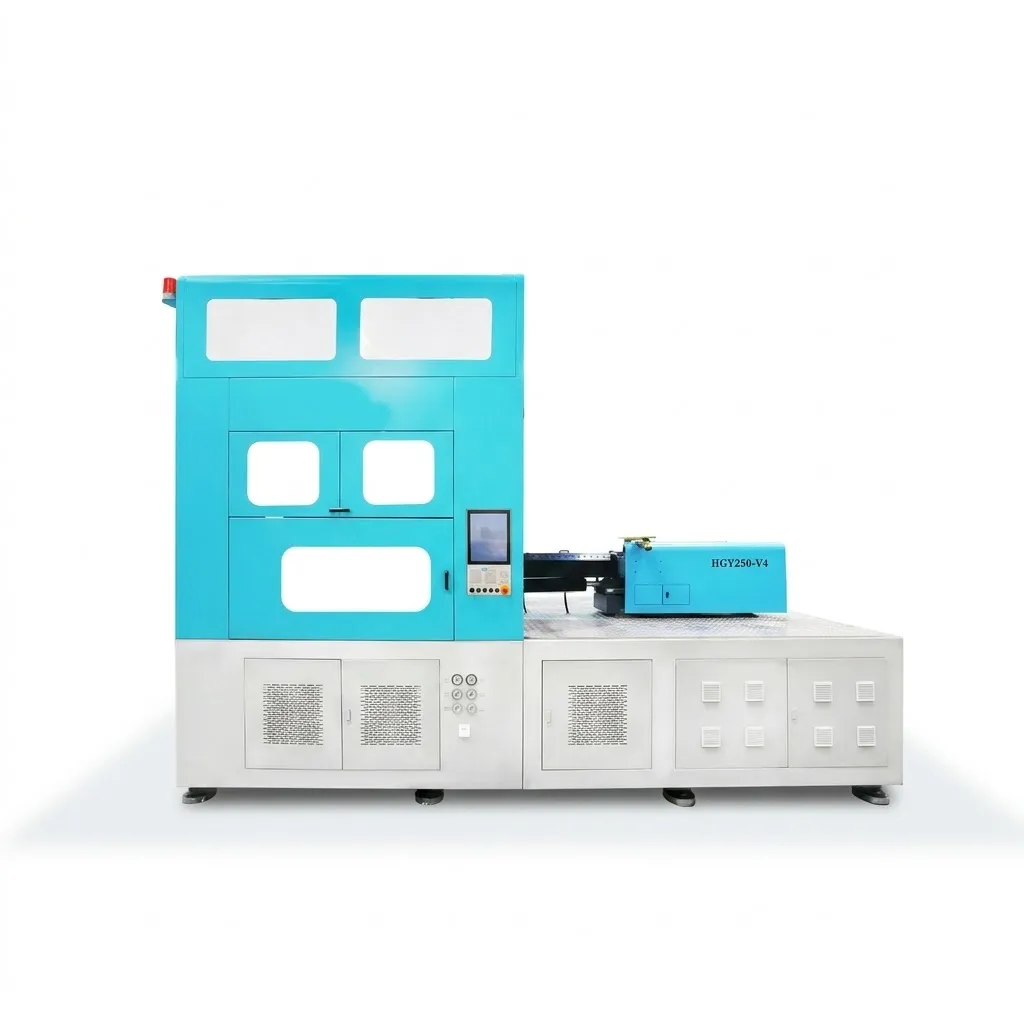
| Standard infusion | 250ml – 500ml | 30–60g | 0.50–0.70mm | HGY250-V4 |
| Large volume infusion | 500ml – 1,000ml | 55–100g | 0.60–0.80mm | HGY650-V4 |
| Parenteral nutrition | 500ml – 2,000ml | 60–160g | 0.65–0.90mm | HGY650-V4 / HGYS500-V3 |
These preform weight and wall thickness specifications are indicative — the actual specification for any given IV infusion container must be determined through the preform design and pressure qualification programme for the specific container geometry and intended administration conditions. Contact [email protected] for machine and tooling specification guidance for your specific infusion container format and volume.
Australian Clinical and Regulatory Context for PET Infusion Containers
The regulatory pathway for PET ISBM IV fluid containers in Australia operates under the TGA’s Registered Therapeutic Goods framework for sterile pharmaceutical products. IV fluid products registered on the Australian Register of Therapeutic Goods (ARTG) must include the container-closure system specification in the registration dossier, and changes to the container (including material changes from glass or PVC to PET) require a TGA variation. The variation category for a container material change from glass or PVC to PET will typically be Level 2 (requiring clinical, pharmaceutical, and toxicological data supporting the change) because the change involves a different material class with a different extractable profile from the registered container.
Hospital pharmacy compounded IV preparations in Australia operate under the TGA’s exemption for hospital compounding, which allows hospital pharmacies to prepare IV admixtures for their own patients without ARTG registration, subject to compliance with Australian Pharmaceutical Advisory Council (APAC) guidelines and TGA GMP guidance for hospital pharmacy. PET ISBM containers used for hospital pharmacy compounding must meet the same pharmacopoeial purity and extractable requirements as registered IV fluid containers, and must be sourced from a supplier with documented pharmaceutical GMP compliance (even though the hospital pharmacy itself is operating under the hospital compounding exemption).
Australia Ever-Power supports IV fluid manufacturers and hospital pharmacy operations navigating the TGA regulatory pathway for PET ISBM infusion containers — providing the container specification documentation, E&L data packages, and validation records that TGA variation submissions and hospital pharmacy supplier qualification programmes require. Contact the team at [email protected] to begin the infusion container ISBM development and regulatory support conversation.
Ever-Power’s ISBM Support for Australian IV Fluid and Hospital Pharmacy Operations
Australia Ever-Power provides IV fluid manufacturers and hospital pharmacy compounding operations with ISBM machine technology, tooling engineering for infusion container formats, and the pharmaceutical regulatory documentation support that TGA sterile product compliance requires. The infusion container support programme includes: infusion container preform design for pressure resistance and wall thickness optimisation; closure system engineering for administration spike port, additive injection port, and tamper-evidence systems; clean-room production integration design; gamma irradiation sterilisation validation programme support; particulate control programme design; and the IQ/OQ/PQ validation documentation package for TGA GMP compliance.
For Australian hospitals and IV fluid manufacturers evaluating PET ISBM as a DEHP-free, glass-competitive alternative for their infusion container supply chain, Ever-Power’s technical pre-investment analysis provides a realistic assessment of the regulatory pathway timeline, validation investment, and production cost economics — including the comparison against current glass bottle or PVC bag supply chain total cost. The local Condell Park NSW engineering team provides the rapid on-site support that sterile product manufacturing operations require when production quality issues arise.
Visit isbm-technology.com/contact-us to arrange an infusion container ISBM feasibility consultation with Australia’s local pharmaceutical packaging ISBM specialist.
Recommended Machine
HGY250-V4 — Four-Station ISBM for Mid-Volume Infusion Containers
For IV infusion container production in the 100ml–500ml standard infusion format range — the highest-volume infusion formats in Australian hospital supply — the HGY250-V4 four-station one-step ISBM machine provides the preform capacity (handling 30–80g preform weights for thick-wall infusion containers), process stability (consistent cavity-to-cavity wall thickness distribution critical for pressure resistance uniformity across all production cavities), and pharmaceutical documentation capability (PLC process logging for GMP batch records) that large-volume parenteral container production requires. The four-station design delivers production rates appropriate for hospital pharmacy contract manufacturing volumes (500K–5M units/year), with multi-cavity tooling options for production volume scaling. The machine’s robust injection system handles the heavier PET preforms that 0.5–0.7mm infusion container walls require, with the mould cooling capacity to achieve appropriate cycle times for these larger container formats. GMP documentation suite includes cycle-by-cycle process parameter logging and audit-trail recipe management for TGA sterile product inspection readiness.