Emergency Medicine Packaging: When Seconds Determine Outcomes
Emergency medicine containers are used in high-pressure, time-critical situations where the packaging’s performance can directly determine whether a patient receives timely treatment. A first responder retrieving adrenaline from an emergency kit during anaphylactic shock cannot spend precious seconds struggling with a closure system designed for casual consumer use. A workplace first-aider administering an eyewash solution to a chemical splash victim needs a container that opens instantly, delivers a controlled flush, and communicates its contents unambiguously under stress. A military medic dispensing haemostatic agent in a field trauma scenario needs packaging that survives extreme environmental conditions and operates reliably with gloved hands in poor visibility. These are not the same requirements as standard pharmaceutical packaging, and they drive container design decisions that differ meaningfully from the rest of the pharmaceutical packaging domain.
The injection stretch blow molding machine contributes to emergency medicine container performance through rapid-access closure systems with injection-precision neck geometry, high-impact-resistance biaxially oriented PET that survives the rough handling of emergency kit environments, and the pharmacopoeial material compliance that TGA-registered emergency pharmaceutical products require regardless of their intended use context.
Australia Ever-Power Injection Stretch Blow Moulding Machine Co., Ltd, Condell Park NSW 2200, works with emergency pharmaceutical manufacturers, occupational health product developers, and defence medical supply operations on ISBM container solutions for the emergency medicine packaging sector.
Rapid-Access Closure Systems for Emergency Pharmaceutical Products
The closure system of an emergency medicine container must resolve a genuine design conflict: the product must be inaccessible to unauthorised use under normal circumstances (preventing misuse, contamination, and the psychological harm of discovering a damaged or depleted emergency supply in a real emergency), yet instantly accessible to an authorised user under time pressure, possibly with gloved hands, in poor lighting, and while simultaneously managing an emergency patient. This conflict cannot be fully resolved — every increase in access security reduces access speed, and every increase in access speed reduces security. The designer’s task is to find the optimal position on this trade-off curve for the specific emergency product and use context.
Flip-Top and Snap-Cap Closures for Rapid Oral Access
Oral emergency medicines — activated charcoal suspension, oral rehydration salts, emergency contraception — use flip-top or snap-cap closures that open in a single upward motion without rotation, enabling one-handed opening with minimal dexterity requirement. The flip-top’s snap engagement relies on the ISBM bottle’s transfer bead height (±0.10mm) providing the correct snap engagement force — sufficient that the closure does not open from vibration or pressure during kit transport, but not so tight that a stressed user in an emergency scenario cannot open it immediately. ISBM’s injection-formed neck provides this bead height with ±0.10mm consistency across all production output.
Squeeze Bottle Formats for Eyewash and Wound Irrigation
Emergency eyewash and wound irrigation products use squeeze bottle formats where the saline or irrigation solution is delivered by squeezing the flexible bottle body through a defined nozzle. The ISBM bottle’s squeeze compliance must be calibrated to provide adequate flow rate for the clinical irrigation requirement (typically 100–500ml/minute for eyewash) without requiring excessive force that a user with hand injury or stress-impaired coordination cannot generate. The nozzle geometry — aperture diameter, exit angle, and flow-directing geometry — determines whether the irrigation stream reaches the target anatomy (the eye’s lower conjunctival sac, or the wound bed) from the user’s hand position. ISBM’s injection-formed nozzle reproduces this critical geometry with ±0.03mm orifice diameter tolerance — ensuring the irrigation stream direction and flow rate are as designed.
Break-Open Ampoule Formats for Single-Use Emergency Doses
Single-use ampoule-format containers — small ISBM bottles with a twist-off or score-break tip that opens in a single action with no loose cap to manage — are used for emergency single-dose products including ammonia inhalants, antidote solutions, and concentrated glucose solutions for hypoglycaemia management. The twist-off or snap-break opening mechanism requires a defined break force (typically 4–10N for single-action opening with minimal user dexterity, but sufficiently high to prevent accidental opening from normal kit handling) and a clean fracture that does not create sharp edges at the opening. ISBM’s injection neck provides the fracture score geometry (defined by the injection neck insert tooling) that determines the break force — reproducing it with ±5% consistency across production cavities and batches.
Visual Identification: Rapid Recognition Under Emergency Conditions
Emergency medicine containers must be identifiable in a fraction of the time available for routine pharmaceutical identification — a first responder opening a first-aid kit under adrenaline-mediated stress will not systematically read every label in the kit to find the adrenaline auto-injector companion container or the oral glucose gel. Emergency containers use multiple parallel visual identification systems to enable rapid, error-resistant product identification: colour coding by product category (red for cardiovascular/adrenaline, yellow for glucose/metabolic, blue for respiratory), large-format product name printing, tactile differentiation between containers, and physical container form that maps to the product category.
Colour Coding Systems for Emergency Kit Organisation
ISBM’s masterbatch colour processing produces highly saturated, vivid container colours that maintain their intensity across the product’s shelf life without UV-induced fading (provided UV-stabiliser additive is included in the masterbatch formulation for kit containers with potential light exposure during storage or deployment). For emergency kit products, the colour specification must be more precise than for standard consumer pharmaceutical products — a “red” emergency container that has faded to orange after two years of storage-cupboard UV exposure no longer provides the intended rapid identification signal. UV stabiliser loading specified to maintain ΔE ≤ 3.0 against the initial colour standard over the product’s approved shelf life addresses this requirement.
High-Contrast Label Panel for Stress-Reading
Under emergency stress conditions, users show characteristic perceptual changes — tunnel focus on the immediate task, reduced peripheral processing, degraded fine discrimination. Emergency medicine labels designed for stress-condition reading prioritise: very large product name (minimum 24-point type for the primary identification, versus the 8-point minimum for standard pharmaceutical labels); high contrast between text and label background (black on white, or white on the container’s colour); and a single dominant colour on the label that matches the container body colour to reinforce the colour-identification system. ISBM’s label panel flatness (±0.20mm) ensures that large-format high-contrast labels adhere completely without edge lifting that would distort the label’s visual presentation under emergency viewing conditions.
Tactile Product Differentiation
For emergency kits where visual identification might fail (darkness, smoke, goggles obscuring vision), tactile differentiation between containers — different body shapes (tall-and-narrow versus short-and-wide), different surface textures (smooth versus ribbed), different nozzle geometries — provides a secondary identification pathway that does not require visual processing. ISBM tooling design can incorporate defined body ribs, waist profiles, or base shapes that are tactilely distinctive between different emergency medicine container types within a kit — providing a haptic identification system that emergency first responders can learn and rely on when visual identification fails.
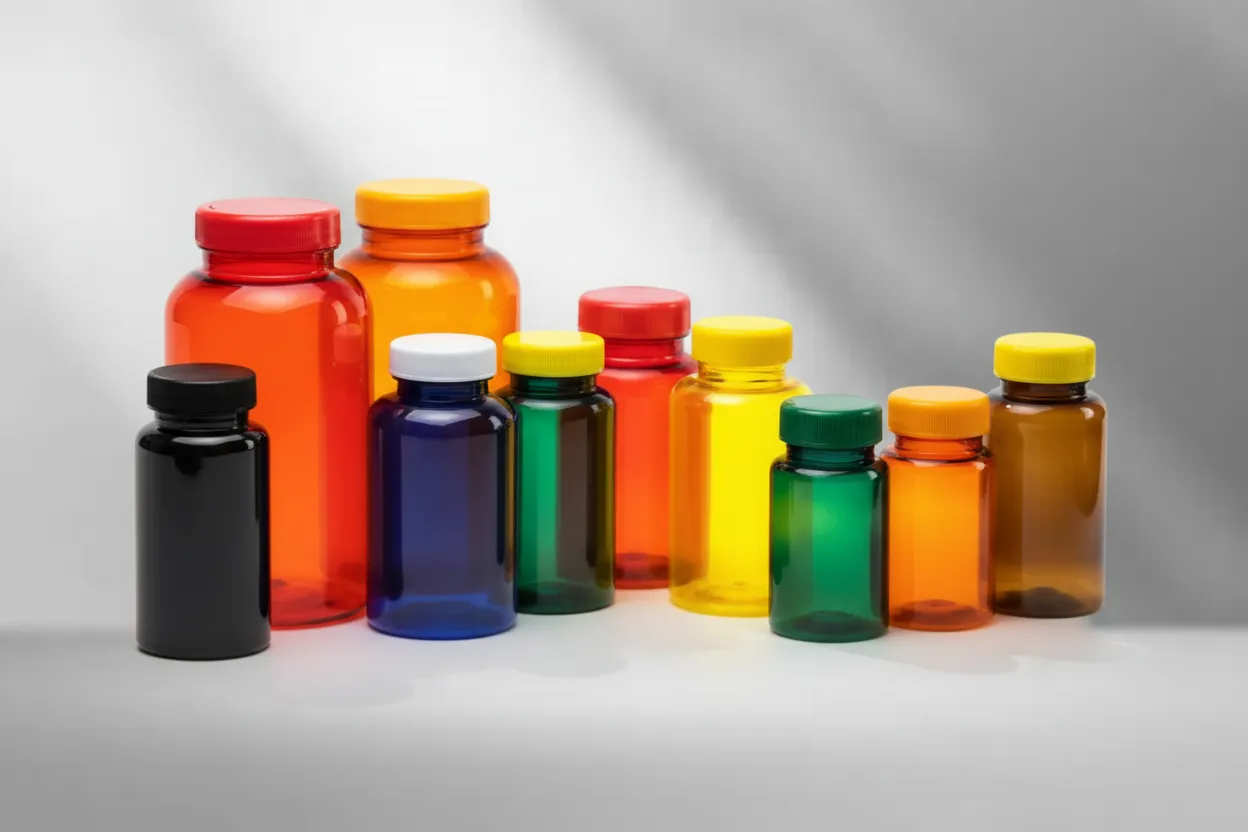
Structural Robustness for Emergency Kit Environments
Emergency medicine containers are stored in first-aid kits, emergency response bags, vehicle first-aid compartments, workplace safety stations, and military medical packs — all environments where the container is subjected to mechanical stresses beyond those of standard pharmaceutical storage. A workplace first-aid kit stored in a manufacturing environment vibrates continuously, experiences temperature cycling from cold nights to warm working days, and is periodically inspected, stacked, and restacked. A military medical kit is subjected to drop from vehicles, compression under loads, and temperature extremes from −20°C in cold regions to +60°C in desert deployment. Emergency medicine containers must survive these environments with their structural integrity, sterile barrier, and product quality unaffected.
Drop Resistance and Impact Performance
ISBM PET’s biaxial orientation-enhanced impact resistance gives emergency medicine containers significantly better drop resistance than unoriented plastics at equivalent wall thickness. For standard first-aid kit applications, a 1.2m drop test (from the height of a standard first-aid kit shelf or vehicle first-aid storage position) onto concrete from all six orientations, with no leakage or closure compromise, is the standard drop test specification — passed by all ISBM PET containers with standard pharmaceutical wall thickness specifications. For military and high-mobility emergency kit applications requiring greater confidence, drop testing at 2.0m onto hard surfaces (representing vehicle deployment scenarios) may be specified, achievable through increased preform weight and optimised orientation parameters.
Temperature Range Performance
Emergency kit environments range from below freezing (vehicle first-aid kits in cold-climate facilities, winter outdoor sporting event medical kits) through standard ambient (office and industrial first-aid stations) to elevated temperatures (outdoor event medical supplies in summer, vehicle kits in Australian summer where vehicle interior temperatures can exceed 70°C). For PET ISBM emergency medicine containers, performance across this range must be confirmed: at −20°C, biaxially oriented PET retains adequate impact resistance for standard drop tests (confirming the container will not shatter if dropped during cold-climate emergency response); at +50°C (maximum recommended storage temperature for most pharmaceutical products), the container must maintain dimensional stability and closure performance without softening or warping. Product stability at the elevated temperature end is governed by the pharmaceutical formulation’s stability specification — not the container alone — and the container’s temperature performance must be matched to the product’s storage requirements.
Compression Resistance for Stacked Emergency Kit Storage
Emergency medicine containers stored in kits are subjected to compression from overlying kit contents — other containers, equipment, and the weight of the kit itself. The container’s top-load performance (resistance to axial compression through the bottle’s vertical axis) must be sufficient to withstand this stacking load without permanent deformation that would distort the label or compromise the closure system. ISBM containers with standard pharmaceutical wall thickness specifications provide top-load performance significantly above the stacking loads encountered in standard first-aid kit configurations — but for very heavy stacked loads (military kit compression under vehicle loads), the top-load specification should be confirmed through testing at the specific load and orientation combination the container will experience in its intended kit.
Emergency Product Categories and Their ISBM Container Requirements
Emergency medicine products span a wide range of formulation types and administration routes, each with distinct container design and regulatory requirements. Understanding the specific requirements of the most common emergency medicine product categories defines the ISBM container design brief for each application.
Oral Glucose / Glucose Gel
For hypoglycaemia management in diabetic emergencies. Thick glucose gel or concentrated solution in a squeeze tube or bottle requiring no reconstitution. Immediate single-handed opening, 15–25g glucose dose. PET squeeze bottle with flip-top or screw cap, bright orange colour standard for glucose emergency products in Australian first-aid protocols.
Emergency Eyewash Solution
Sterile normal saline (0.9% NaCl) for emergency irrigation of chemical or particulate contamination of the eyes. 250ml–500ml squeeze bottle with directed nozzle providing adequate flow rate for eye flushing at arm’s length. TGA registered as a medical device. Sterile single-use format with tamper-evident closure.
Wound Irrigation Saline
Sterile normal saline for wound cleansing and irrigation in first-aid wound management. 50ml–200ml squeeze bottle with soft-end nozzle for atraumatic wound delivery. TGA Class IIa medical device for sterile surgical use formats. Single-use with induction seal or snap-break tip.
Activated Charcoal Suspension
Oral adsorbent for acute poisoning management. 50g activated charcoal in pre-mixed suspension or powder-for-suspension format. 250ml bottle with wide-mouth screw cap or flip-top. Black container colour (matching the product) for immediate product identification. TGA Schedule 3 oral pharmaceutical.
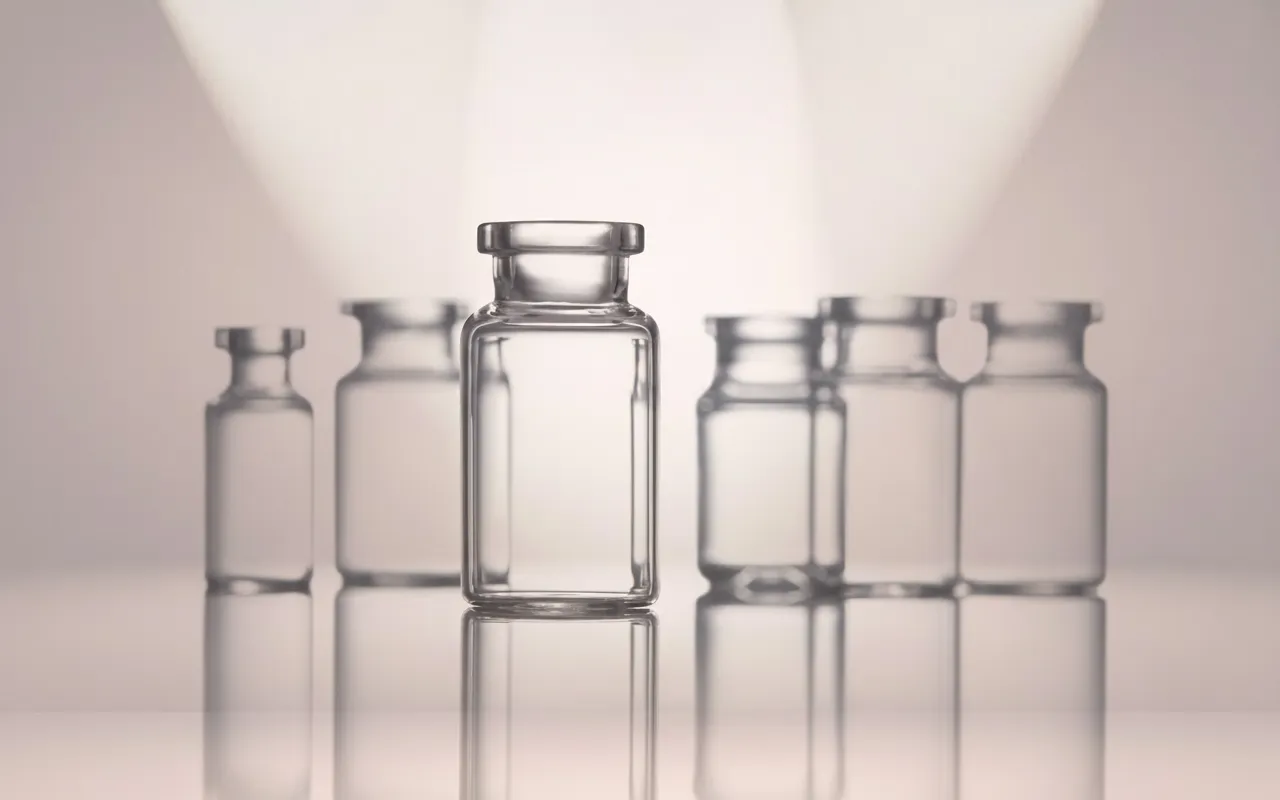
Shelf Life and Stability Engineering for Emergency Kit Medicines
Emergency kit medicines have specific shelf life requirements that differ from standard pharmaceutical retail products. First-aid kits in workplace and community settings are typically inspected annually or biannually, meaning a product placed in a kit at any point must remain within specification until the next inspection — driving the minimum practical emergency product shelf life to 24 months from date of supply to the kit. Military and defence medical kits may have much longer deployment periods between resupply, requiring 3–5 year shelf lives with storage at temperatures ranging from −20°C to +60°C.
The ISBM container contributes to emergency product shelf life through two mechanisms: physical product protection (maintaining sterile barrier integrity for sterile products like eyewash and wound irrigation saline, and preventing evaporative loss of aqueous products over the shelf life) and chemical product protection (preventing UV-induced degradation of photosensitive APIs, and maintaining a low-oxygen headspace for oxidation-sensitive formulations). For eyewash and wound irrigation sterile saline — the highest-volume emergency kit pharmaceutical products — the container must maintain its sterile barrier across the full shelf life at the storage temperature extremes of the kit environment, confirmed through shelf life stability testing that includes temperature cycling and the product’s full approved shelf life period at the highest intended storage temperature.
For extended-shelf-life emergency pharmaceutical products targeting 3–5 year approved shelf lives, accelerated stability testing (ASTM F1980 for the container, ICH Q1A for the drug product in the container) must confirm stability across the target shelf life. PET ISBM containers with induction foil seals provide the hermetic barrier and low MVTR that enables extended shelf life for aqueous pharmaceutical emergency products when the formulation stability is also confirmed over the target period. Contact [email protected] for shelf life engineering guidance for emergency pharmaceutical products.
Regulatory Requirements for Australian Emergency Pharmaceutical Products
Emergency pharmaceutical products in Australia are regulated under the same TGA framework as all therapeutic goods — the emergency use context does not create a separate or simplified regulatory category. Products supplied for emergency use are registered or listed medicines on the ARTG (for pharmaceutical products) or registered medical devices (for sterile medical devices like eyewash and wound irrigation saline), and their containers must meet the same pharmacopoeial material, stability, and container-closure system standards as any other pharmaceutical or medical device.
Safe Work Australia’s Model Work Health and Safety Regulations (adopted as state and territory legislation) specify first-aid kit contents requirements for workplaces, including the types of medicines and medical devices that must be supplied, but these requirements specify product categories rather than container specifications. The container specification is determined by the TGA registration or listing requirements for the specific product, and the workplace safety requirement is to have a product from the approved category — not to have a specific container design. Emergency medicine manufacturers should ensure their TGA registration or listing specifies the complete container-closure system description so that any container change requires a TGA variation and cannot be made without maintaining compliance with the product’s approval.
For emergency pharmaceutical products that are CRC-exempt — some emergency-use products qualify for an exemption from the standard CRC requirement when rapid access is demonstrated to be a genuine medical necessity that a CRC closure would impede — the manufacturer must apply for and obtain an exemption from the TGA before supplying the product in non-CRC packaging. The exemption application requires evidence that the product cannot be used effectively with CRC packaging in the emergency context and that alternative access restrictions (restricted supply channels, professional user only) mitigate the child access risk that CRC packaging normally addresses.
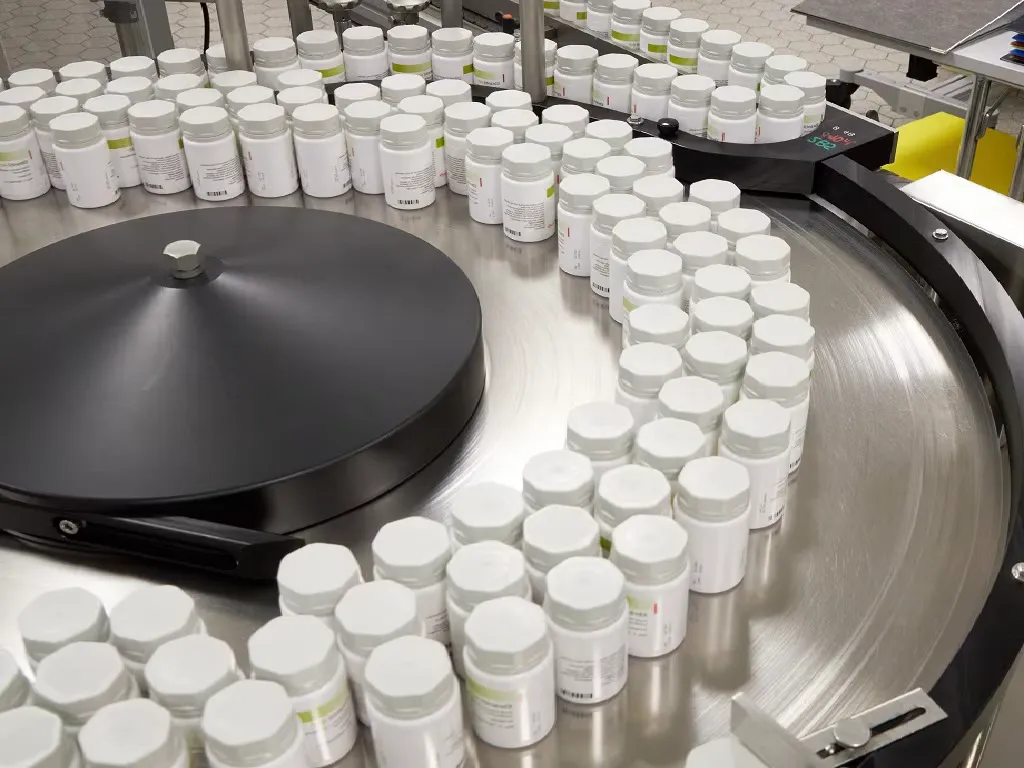
Specialised Emergency Applications: Defence, Remote Area, and Mass Casualty
Beyond standard workplace and consumer first-aid applications, emergency pharmaceutical containers serve several specialist sectors with elevated performance requirements. Each of these sectors has specific features that go beyond standard first-aid packaging and require targeted ISBM container design.
Australian Defence Force Medical Supplies
Defence medical supplies for ADF deployment must operate across the full range of climate zones encountered in Australian and regional operations — from the cold highlands of Papua New Guinea through tropical Queensland to desert environments reaching +50°C ambient. Container requirements include: confirmed dimensional integrity at both −20°C and +60°C (the storage temperature extremes of defence deployment); drop performance at 2.0m onto hard surfaces (representing tactical vehicle deployment); compatibility with defence medical kit storage formats (standard compartment sizes and stack configurations); and shelf life of 3–5 years to match defence medical supply rotations. PET ISBM containers with appropriate wall thickness and orientation level meet these requirements — confirmed through the specific defence medical equipment testing protocols that ADF medical supply procurement requires.
Remote Area and Mining Industry Medical Kits
Australian remote area operations — mining sites, offshore platforms, remote tourism, and long-haul transport — require emergency medical kits designed for extended autonomy: resupply may be days or weeks away, and the medical kit must contain everything needed to manage emergencies until evacuation or professional medical response can be arranged. Emergency medicine containers for remote area kits must survive the storage conditions of the remote site (potentially extreme heat in Western Australian Pilbara mining camps, or tropical humidity in Northern Queensland), maintain their approved shelf life without refrigeration, and be immediately accessible to non-medically trained personnel following simple first-aid protocols. The ISBM container’s design brief for remote area emergency products emphasises visual and tactile identification (for personnel who may have received only basic first-aid training) and extended shelf life stability under non-ambient storage conditions.
Mass Casualty and Disaster Response Deployment
Mass casualty events — bushfires (a regular Australian emergency context), transport accidents, industrial incidents — require emergency pharmaceutical supply from stockpiles that may have been in storage for extended periods. Stockpiled emergency pharmaceutical containers must maintain their full performance specification across their approved shelf life without specific monitoring or attention — the container quality at the point of emergency deployment reflects the quality at the point of manufacture, stored without pharmaceutical handling care. ISBM containers with induction seals, UV-stabilised colour coding, and validated shelf life profiles designed specifically for long-term stockpile conditions provide the assurance that emergency pharmaceutical products deployed from stockpile are fully functional at the moment they are needed most.
Production and Supply Chain Considerations for Emergency Medicine Containers
Emergency medicine container production has distinctive supply chain characteristics that ISBM’s local Australian production capability directly addresses. Emergency pharmaceutical products are often produced in relatively small batches — a workplace first-aid product may sell 50,000–200,000 units per year across all SKUs — with the supply chain demanding 100% availability: a stockout of an emergency pharmaceutical means workplaces have incomplete first-aid kits, which is both a regulatory non-compliance and a genuine health and safety risk. The combination of relatively small batches and 100% availability requirement creates an inventory management challenge that offshore-sourced containers (with 8–14 week lead times and minimum batch size constraints) exacerbate rather than resolve.
Local ISBM production of emergency medicine containers eliminates the offshore supply chain vulnerability: when demand spikes following a major emergency event (bushfires, floods, industrial incidents generating acute demand for eyewash, wound irrigation, and oral pharmaceutical first-aid products), Australian manufacturers with local ISBM production can respond within weeks rather than the 12–16 weeks that offshore sourcing requires. This supply agility is a genuine commercial and public health advantage that local ISBM production provides over offshore procurement models for emergency pharmaceutical containers.
The pharmaceutical GMP production documentation requirements for emergency pharmaceutical containers are identical to those for standard pharmaceutical packaging — the emergency use context creates no regulatory allowance for reduced documentation quality. Batch records, resin CoCs, in-process inspection records, and CRC/closure qualification certificates are all required for every production batch of emergency medicine containers that are destined for TGA-registered emergency pharmaceutical products. Ever-Power’s pharmaceutical documentation support covers all of these requirements as part of the ISBM commissioning and ongoing quality support programme.
Ever-Power’s Emergency Medicine ISBM Development Support
Australia Ever-Power provides emergency pharmaceutical manufacturers and first-aid product developers with ISBM container development support that addresses the unique intersection of rapid-access design, structural robustness, extended shelf life, and TGA pharmaceutical compliance that emergency medicine packaging requires. The development programme covers: rapid-access closure qualification (snap-open force, flip-top engagement, break-open tip fracture force); drop and temperature performance testing protocol design; UV-stable colour coding specification and shelf life colour maintenance validation; and the full pharmaceutical quality documentation (IQ/OQ/PQ, CRC qualification if required, E&L assessment, stability programme) needed for TGA registration or listing of the emergency product.
For ADF medical supply applications, Ever-Power can work within the Australian Commonwealth procurement framework to support defence medical supply qualification programmes — providing the container specification documentation and performance testing data that defence procurement processes require for medical supply validation.
Visit isbm-technology.com/contact-us or contact the team at [email protected] to discuss your emergency medicine container ISBM development requirements.
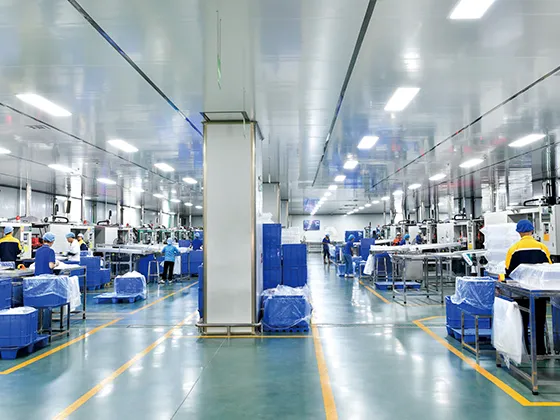
Recommended Machine
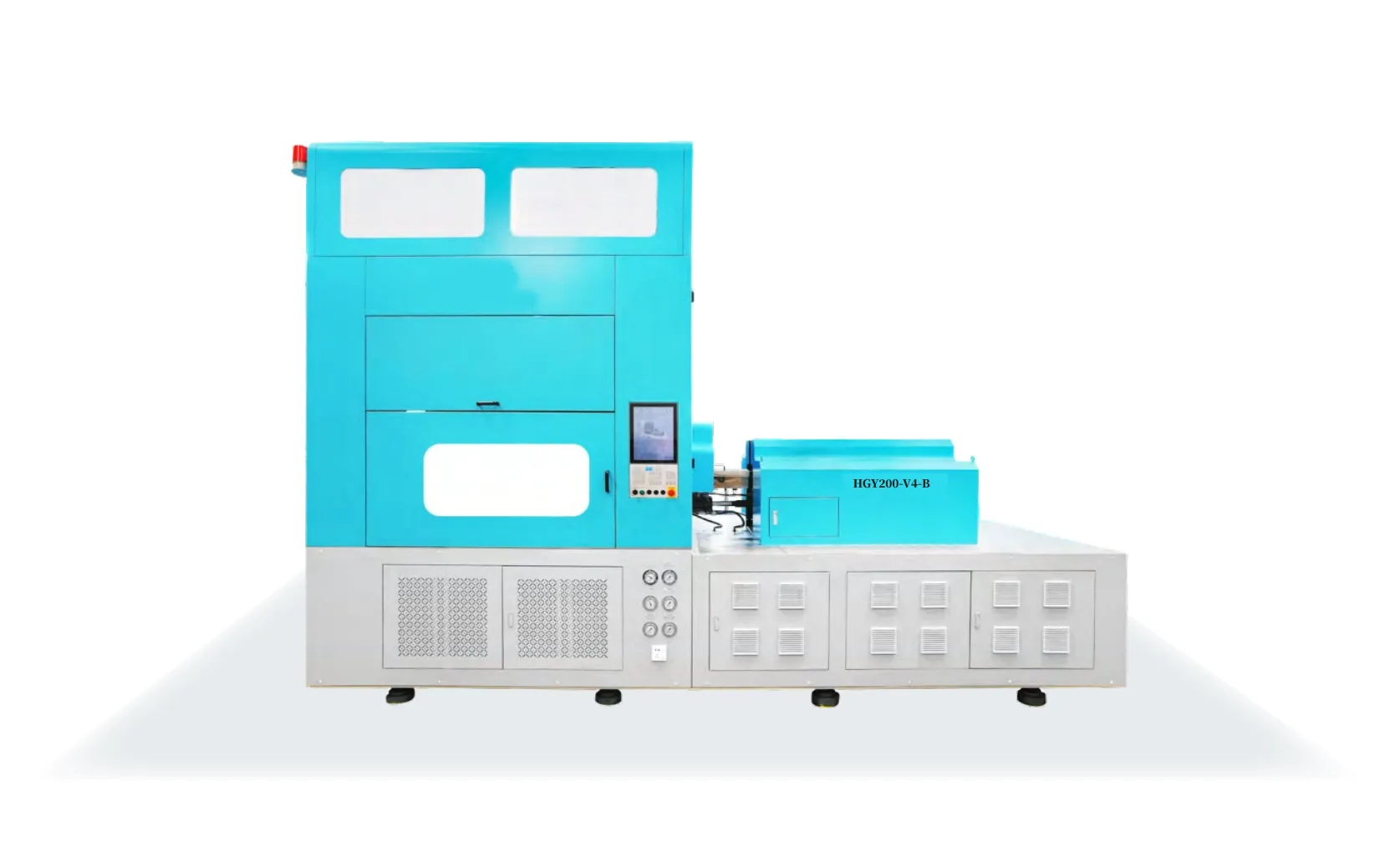
HGYS200-V4-B — Four-Station ISBM for Emergency Medicine Container Production
For emergency pharmaceutical and first-aid container production across eyewash, wound irrigation, glucose emergency, and oral pharmaceutical formats in the 30ml–500ml range, the HGYS200-V4-B four-station one-step ISBM machine provides the production flexibility and pharmaceutical compliance capability that the emergency medicine packaging sector requires. The four-station design delivers consistent cavity-to-cavity neck finish precision for rapid-access closure systems — snap-top engagement force and flip-open geometry are reproduced identically on all four cavities, ensuring consistent opening performance across all production output. UV-stable masterbatch colour processing maintains the vivid emergency identification colours specified for colour-coded first-aid protocols over the product’s extended shelf life — confirmed through UV exposure testing during container development. PLC process data logging supports pharmaceutical GMP batch records for TGA-registered emergency products. Rapid mould changeover (90–150 minutes) enables a multi-SKU emergency medicine container range to be produced from a single machine platform — appropriate for the relatively small annual volumes of specialist emergency products that do not justify dedicated single-product machine investment.