Furniture care products sit at a rare convergence point: the chemistry inside the bottle is often complex and solvent-active, while the bottle’s exterior must communicate a level of craft and premium quality that justifies a retail price far above commodity cleaning products. Wood conditioning oils, paste wax emulsions, leather treatment serums, and spray polishes all require packaging that resists their chemical activity over a shelf life of 24–36 months — yet must simultaneously present the visual finish and structural elegance that earns them a facing in lifestyle homewares retail. Χύτευση με έγχυση, τέντωμα και εμφύσηση is the manufacturing process that resolves this tension: biaxially oriented PET delivers solvent-barrier performance that unoriented packaging cannot approach, while the injection-precision of the ISBM process produces surface quality and dimensional accuracy capable of carrying premium brand identities from production line to living room shelf.
The Furniture Care Category: Retail Complexity and Chemical Diversity
Three Distinct Consumer Contexts in One Category
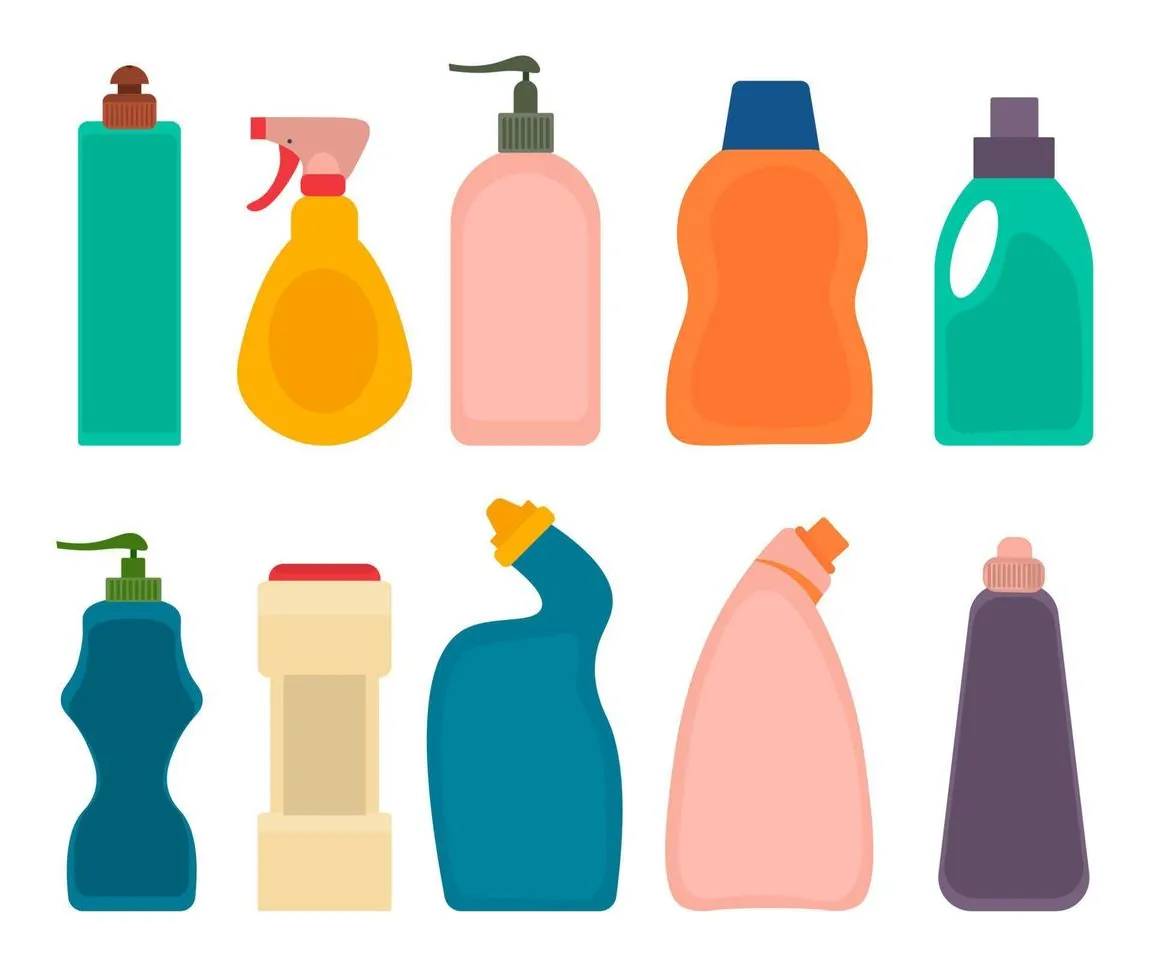
Furniture care packaging is produced for three fundamentally different retail contexts, each placing distinct demands on the container. The first is the mass-market grocery and hardware channel, where aerosol-replacement pump polishes and trigger-spray wood cleaners compete on price and convenience — here the packaging must deliver dependable function, clear fill-level visibility, and a shelf presence that reads well from two metres. The second is the specialist timber and leather care trade — restoration oils, penetrating waxes, and conditioning serums sold in timber merchants, furniture retailers, and heritage conservation suppliers — where the packaging must communicate expert-grade product quality and durability across repeated opening and resealing cycles. The third and fastest-growing context is premium homeware retail, where a furniture polish or beeswax conditioner is as much an interior design accessory as a functional product — and the bottle is evaluated as part of the living room aesthetic. Χύτευση με έγχυση, τέντωμα και εμφύσηση is the only packaging process capable of producing bottles that serve all three contexts from a single production platform through tooling configuration.
The Dispensing System Diversity Challenge
Furniture care products are dispensed through more applicator system types than almost any other home maintenance category. Pump dispensers with long dip tubes serve conditioning oils and liquid polishes. Trigger sprays are dominant in quick-polish and surface cleaner formats. Flip-top orifice caps with metered openings control concentrated polish and wax application rates. Wide-mouth snap-cap or screw-top containers serve wax pastes applied with cloths. And reed-diffuser-style open-neck vessels are emerging in the premium home fragrance positioning end of the wood care segment. Each dispensing system demands a specific neck finish geometry, and each neck geometry demands a dimensional precision that only the injection-formed neck of an ISBM bottle can deliver at production volume without secondary machining operations.
Australian Market Conditions and Sustainability Pressure
Australia’s furniture care market is dominated by established international brands and a growing cohort of premium Australian-made specialists targeting the growing consumer interest in natural and traditional finishing methods — timber oils, beeswax polishes, and leather tallow conditioners. These Australian specialists are under strong pressure from retail buyers and direct consumers to demonstrate packaging sustainability credentials: verified recycled content, recyclability design compliance with APCO’s 2025 standards, and measurable lightweighting commitments. ISBM PET satisfies all three: PET Type 1 is collected in kerbside recycling at higher rates than HDPE; rPET at 25–30% inclusion can be processed without tooling changes; and ISBM’s wall-thickness precision enables 18–25% weight reductions versus HDPE alternatives at equivalent structural performance.
Chemical Compatibility Across the Furniture Care Formulation Spectrum
Mineral Oil Polishes and Wax-in-Water Emulsions
Paraffinic mineral oil, the formulation backbone of most grocery-market furniture polishes, shows negligible affinity for PET’s aromatic polyester structure. At commercial polish concentrations — typically 15–40% mineral oil in water-continuous emulsion — there is no measurable stress-cracking risk, permeation loss, or surface degradation in biaxially oriented ISBM PET across a 36-month shelf life at standard storage conditions. Carnauba wax, beeswax, and synthetic wax emulsions in aqueous carrier present an equally benign compatibility profile. For this formulation tier, the value proposition of ISBM over HDPE is not chemical performance but commercial quality: clarity, weight, neck precision, and surface finish — attributes that translate directly into retail positioning and price-per-unit rather than technical compliance margin.
Plant-Derived Oils and Carrier Solvent Systems
Premium woodcare formulations increasingly use plant-derived drying oils — linseed, tung, danish oil blends — sometimes carried in co-solvent systems containing white spirit, isopropanol, or d-limonene. Biaxially oriented ISBM PET handles white spirit at up to 20% concentration and isopropanol at up to 30% without measurable dimensional change over 28-day immersion at 40 °C. D-limonene is the most chemically active terpene solvent commonly encountered in natural furniture care products, and its behaviour in PET is concentration-dependent: below 5% contact concentration, biaxially oriented ISBM PET shows minor weight change that remains within commercial tolerance; above 10%, a formal compatibility test at 40 °C for 42 days is warranted before production commitment. For specialty high-terpene products, a copolymer PET with modified ester linkage chemistry or a PEN-blend resin may be the appropriate specification — a material decision made during formulation compatibility testing rather than in production.
Silicone Emulsions and Spray Polish Formats
Silicone-based spray polishes are chemically inert toward PET — polydimethylsiloxane at commercial concentrations presents no interaction risk with the bottle wall across any standard storage condition. The more relevant consideration for silicone spray formats is aesthetic: the hydrophobic silicone film that coats the interior bottle wall over time creates a visible internal surface haze in high-clarity transparent containers. For premium furniture polish brands where bottle clarity is a brand attribute, this can be managed through a light frosted mold finish (Ra 0.8–1.6 µm) that renders the internal coating invisible against the textured wall, or through a light warm tint that provides both UV management and internal-coating concealment simultaneously. These are mold design decisions made at the tooling stage and involve no per-unit cost impact in production — demonstrating the practical flexibility advantage of ISBM over processes where surface finish is fixed by resin and die geometry rather than programmable mold polishing.
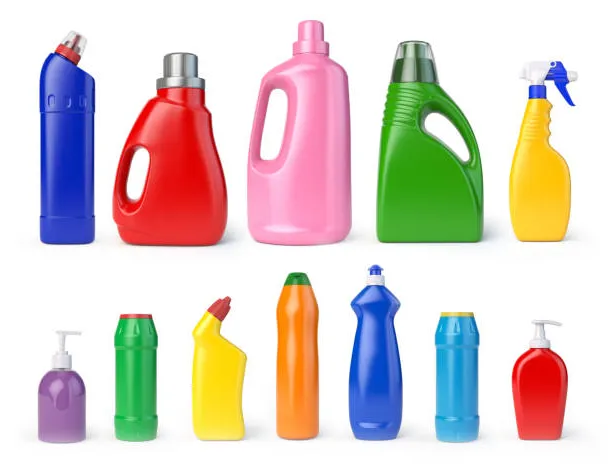
How the One-Step ISBM Process Produces Furniture Care Bottles
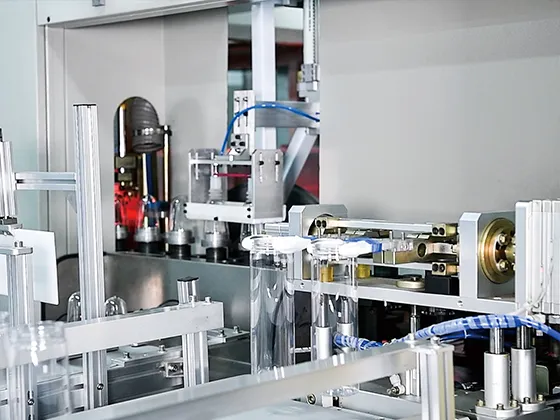
The one-step ISBM process is particularly well-matched to furniture care bottle production because the thermal continuity from injection to blowing — no full cooling and reheating between stages — produces a more uniform biaxial crystalline structure. For premium furniture care bottles where optical clarity and surface finish are primary quality attributes, this process consistency is essential: any thermal non-uniformity during stretch-blow manifests as visible wall-thickness striations that compromise the glass-like clarity premium brands require.
Resin & Masterbatch Preparation
Cosmetic or bottle-grade PET (IV 0.76–0.82 dL/g) is dried to below 35 ppm moisture — tighter than standard beverage production — because furniture care bottles are often thinner-walled and smaller-volume than beverage containers, leaving less total wall mass to absorb minor IV degradation before it manifests as surface micro-haze. Warm amber, cognac, frosted-white, or clear specifications are set at the hopper via masterbatch blending before the first shot of each production campaign.
Precision Preform Injection
At 265–282 °C, molten PET fills precision preform cavities whose wall distribution profile is engineered to produce the target bottle wall map after stretching and blowing. For furniture care bottles with non-standard cross-sections — oval, D-profile, or faceted — the preform wall profile is modelled via FEA to confirm uniform material distribution to all external geometry features before tooling is cut, eliminating the expensive iteration loops common in non-simulation-based development.
Θερμικός κλιματισμός
The preform body is conditioned to 95–110 °C; the neck finish zone is held below 72 °C. For non-circular furniture care bottle cross-sections, the conditioning station uses zoned infrared or contact-heating to apply higher heat input to the minor-axis walls of oval or rectangular preforms — compensating for the greater stretch required to fill the wider dimension of the mold cavity, preventing the thin panels and residual stress concentrations that would otherwise appear at the corners of non-circular body profiles.
Axial Stretch
Servo stretch rods achieve 2.5–3.4× axial ratios tuned to each bottle format’s aspect ratio. Squat wide-body wax paste formats (height-to-diameter ratio below 1.8) require lower axial stretch (2.5–2.8×) to avoid over-distributing material to the base at the expense of sidewall coverage. Tall conditioning oil dispensers with 3:1 height-to-diameter ratios run higher axial ratios (3.0–3.4×), building maximum tensile strength in the direction of greatest hydrostatic load from a full column of dense oil.
Premium-Finish Blow Molding
Air at 28–38 bar inflates the oriented preform against mold cavities polished to the surface specification agreed at the design stage: mirror (Ra ≤ 0.2 µm) for clear conditioning oil bottles, fine satin (Ra 0.4–0.8 µm) for the premium spray polishes that photograph well in e-commerce product imagery, or matte (Ra 1.6–3.2 µm) for contemporary soft-touch home fragrance-adjacent lines. Embossed timber-grain textures, brand logos, and usage icons machined into the cavity at 0.25 mm relief depth reproduce on every bottle at zero per-unit decoration cost.
Cosmetic Ejection Inspection
Furniture care bottles receive a cosmetic inspection layer beyond standard dimensional QC: vision systems assess embossed feature definition, gate surface quality, label panel flatness (±0.25 mm for pressure-sensitive labels, ±0.40 mm for sleeve labels), base planarity (±0.30 mm for stable free-standing), and neck seating surface flatness (±0.10 mm for pump dip-tube compatibility). Premium ISBM furniture care lines routinely achieve cosmetic pass rates of 99.0–99.5% in stable production.
Brand Design Options Achievable Through ISBM Tooling
Warm Amber Woodcare
Amber, cognac, and honey tints produced through pigment masterbatch at 0.2–0.6% loading communicate timber craft and natural ingredient provenance. The warm tint also provides incidental UV protection for photosensitive plant-oil active ingredients — a dual-function design element at zero tooling cost increment.
Frosted Leather Care
A satin mold finish (Ra 0.8–1.6 µm) gives leather conditioner and cleaner bottles the soft tactile quality that communicates premium care. Pair with a contrasting dark closure and minimal embossed logo for a retail presentation that requires no secondary label to command a shelf-premium price point.
Opaque Trade Formats
High-loading titanium dioxide or carbon black masterbatch produces fully opaque white, grey, or black bottles for trade-channel woodcare concentrates. These formats communicate professional utility over consumer aesthetics and are typically specified with CRC closures and volume graduation embossing for accurate dosing in the field.
Natural rPET with Visible Content
For brands where recycled content is a primary communication, a naturally translucent rPET bottle with visible bottle content allows the product’s natural amber oil or warm wax colour to do the visual work. At 25% rPET, slight warmth in the natural tint is acceptable and often enhances the organic product narrative.
Furniture Care Format Reference: ISBM Production Specifications
| Product Type | Volume | Neck Finish | Preferred Finish | Key ISBM Benefit |
|---|---|---|---|---|
| Spray wood polish | 200–500 mL | 28/400 trigger | Satin Ra 0.4–0.8 | Clarity + pump seal |
| Conditioning oil dispenser | 100–300 mL | 24/410, 28/410 | Mirror Ra ≤ 0.2 | Oil-colour clarity |
| Wax paste container | 100–250 mL | Wide mouth 45–63 | Amber tint | Wide-neck precision |
| Leather conditioner | 100–300 mL | 24/410 pump | Frosted Ra 0.8–1.6 | Premium tactile quality |
| Trade woodcare concentrate | 500 mL – 2 L | 38/400 CRC | Opaque white/grey | Stack-load rigidity |
Μετρήσεις απόδοσης παραγωγής
Benchmarks for a four-station ISBM machine on a 300 mL trigger-spray wood polish bottle in warm amber PET, satin Ra 0.6 µm mold finish, 28/400 neck tooling.
Quality Control for Premium Furniture Care Packaging
🧪 Solvent Immersion Compatibility Testing
Bottles filled with the target formulation are stored at 40 °C for 28 days. Post-immersion checks record dimensional change at four body points (max ±0.4 mm), fill-weight loss (max 0.5% per year equivalent), neck outer-diameter retention, pump torque change, and visual inspection for stress-cracking or clarity degradation. For d-limonene-containing formulations, immersion at 50 °C for 14 days is an additional stress screen that confirms suitability before full stability study commitment.
📐 Label Panel Flatness Measurement
Premium furniture care brands frequently invest in high-resolution label print that requires panel flatness tighter than commodity packaging standards. Optical flatness measurement on every 25th bottle confirms panel deviation within ±0.25 mm for pressure-sensitive labels, ±0.40 mm for heat-shrink sleeve labels. Panels exceeding tolerance trigger a mold temperature and blow pressure review — the two process parameters most directly governing body dimensional stability in the blown bottle.
🔧 Pump Dip-Tube Seat Torque and Sealing Test
For conditioning oil and polish bottles with pump dispensers, the neck finish seating surface perpendicularity (±0.10 mm) governs pump gasket sealing force. Every batch undergoes pump seating torque measurement — application torque at 0.8–1.2 N·m, removal torque measured after 72-hour dwell. Vacuum leak testing at 0.15 bar for 60 seconds confirms zero leakage at the pump-to-bottle interface. Batches with pump seating failure rates above 0.3% trigger immediate neck tooling inspection.
🎨 Colour Consistency Measurement (ΔE Monitoring)
For amber-tinted and frosted-finish furniture care bottles, every 100th bottle is measured on a colour spectrophotometer against the agreed master standard. Colour variation (ΔE) above 1.5 against standard triggers masterbatch dosing review. For brands where the warm amber tint is a core visual identity element — as it is for many premium Australian woodcare specialists — ΔE monitoring provides the production evidence needed to defend label colour consistency claims to retail buyers conducting annual supplier quality audits.

Recommended Equipment: HGYS150-V4-B for Furniture Care Bottle Production
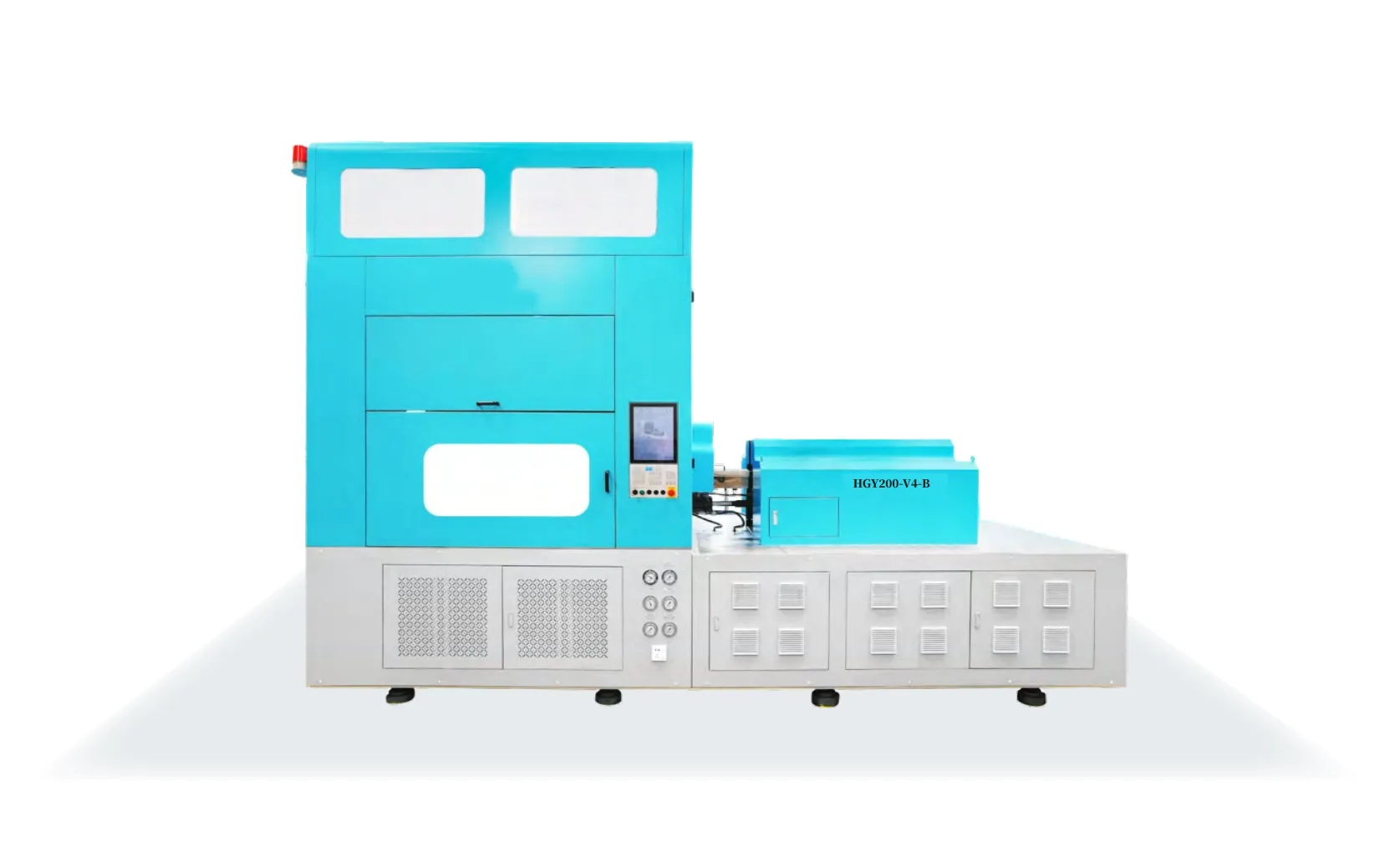
HGYS150-V4-B One-Step Injection Stretch Blow Molding Machine
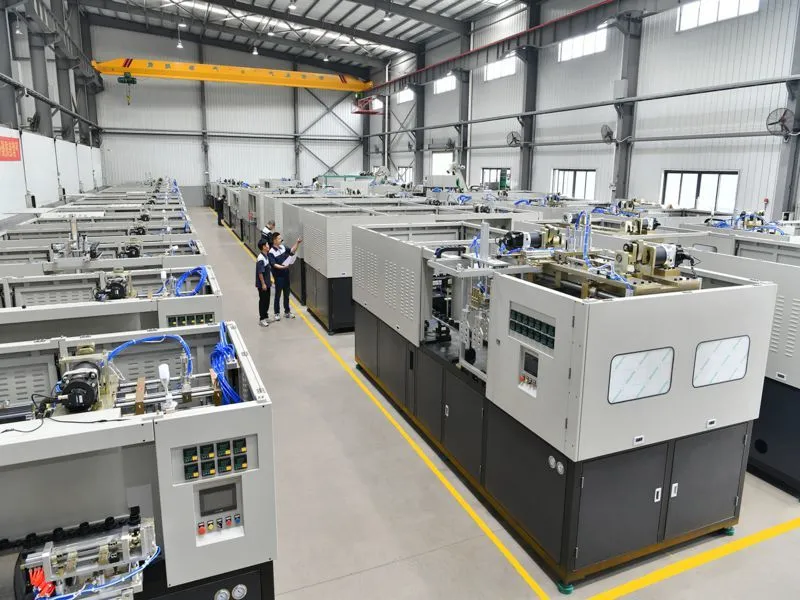
For furniture care and premium home maintenance bottle producers managing small-to-medium format ranges — from 100 mL leather conditioner dispensers through to 500 mL trigger-spray polishes — the HGYS150-V4-B one-step injection stretch blow molding machine delivers the cosmetic-grade process precision and format flexibility that premium packaging quality demands. Its four-station indexed design maintains complete thermal continuity from injection through blowing — the process condition that produces the optical clarity and surface uniformity that premium furniture care brands require. Rapid tooling changeovers between pump, trigger, and wide-mouth formats make it well-suited to multi-SKU furniture care portfolio production.
- Output: up to 4,000+ bottles/hr (300 mL format)
- Volume range: 50 mL – 800 mL
- Neck finish range: 15–38 mm diameter
- Mold surface finish: down to Ra ≤ 0.2 µm
- Cosmetic-grade PET, tinted, frosted, and rPET compatible
- CE certified; compliant with Australian WHS standards