Why Custom Packaging Is a Revenue Strategy, Not Just a Design Decision
Skincare brand founders who have experienced the transition from catalogue-sourced generic packaging to custom ISBM-produced proprietary bottles consistently report the same observation: the revenue impact of the packaging change exceeds what they anticipated, and it comes from directions they did not fully expect. The most obvious effect — improved conversion at retail from better shelf presence — is real but not the whole story. The less obvious effects include improved average selling price (consumers apply higher value to a product in a clearly proprietary bottle than the same product in a recognisable standard container), improved retailer ranging enthusiasm (buyers preferentially list products that will differentiate their assortment from competitors), higher social media engagement rates (distinctive packaging generates unprompted sharing that commodity packaging does not), and increased lifetime customer value (proprietary packaging builds brand recognition that makes repeat purchase less dependent on in-store prompting).
The injection stretch blow molding process is the production technology that makes these commercial outcomes achievable at a cost structure that is viable for skincare brands across the volume spectrum — from boutique producers launching at 20,000 units per year through established mid-market brands competing for mass retail shelf space at multi-million unit annual volumes. Understanding how ISBM’s specific capabilities translate into commercial opportunity is the practical intelligence that skincare packaging decisions should be built on.
Australia Ever-Power Injection Stretch Blow Moulding Machine Co., Ltd provides Australian skincare packaging operations and brand-owned manufacturing facilities with the injection stretch blow molding machine technology and technical development partnership to convert packaging vision into commercial production reality. This article examines the specific commercial opportunities that custom ISBM skincare bottle production creates.
The Commercial Opportunity Map: Where Custom ISBM Packaging Creates Advantage
Custom ISBM skincare packaging creates commercial advantages across six specific dimensions, each of which translates into a measurable business outcome. Skincare brand teams that understand these mechanisms can design their packaging investment to maximise the commercial return rather than treating bottle development as a cost of production.
Retail Ranging Advantage
Category buyers for major Australian retailers (Myer, Priceline, Chemist Warehouse, Woolworths Beauty) see hundreds of skincare submissions per ranging cycle. Products in recognisably custom, proprietary packaging signal brand investment and market commitment that catalogue-packaged competitors cannot claim. Proprietary bottle design is an evidence point for the long-term brand positioning that retailers want when deciding which brands to build shelf space for.
Price Architecture Defence
A brand’s pricing architecture — the price points it charges across its range — is far easier to defend and extend upward when products are in distinctive proprietary packaging than when they are in generic containers recognisable to the consumer as standard commodity formats. A moisturiser in a unique custom ISBM bottle with embossed brand mark and frosted finish can sustain a $65 price point where the same formulation in a standard round jar faces competitive pressure at $35.
Social Media and UGC Amplification
User-generated content (UGC) — consumer Instagram posts, TikTok unboxing videos, and beauty blogger reviews — is disproportionately generated by packaging that is visually distinctive. Custom ISBM skincare bottles with glass-like clarity, unusual forms, or distinctive textures generate organic social sharing that brands with commodity packaging must pay influencers to replicate. This UGC is simultaneously the most credible and the most cost-effective marketing channel for premium skincare.
Export Market Access
Australian skincare brands entering the significant and growing Asian export markets — particularly South Korea, Japan, China, and Southeast Asia, where Australian natural skincare has strong provenance appeal — require packaging that can compete visually with the high standards of K-beauty and J-beauty packaging that these markets set as the visual benchmark. Custom ISBM packaging developed to international premium skincare visual standards is a market access prerequisite for export ambitions, not an optional enhancement.
Competitor Barrier Creation
Custom ISBM tooling is a proprietary capital asset owned by the brand. Competitors cannot replicate the specific bottle design without commissioning their own tooling (a 14–20 week investment), and in markets where the bottle shape or form has been registered as a three-dimensional trade mark or design registration, replication creates intellectual property infringement exposure. The tooling investment creates a competitive moat that grows in value as the brand’s design becomes consumer-recognised.
Sustainability Story Ownership
Custom ISBM packaging gives skincare brands the ability to specify rPET content, weight reduction from a documented baseline, and CDS eligibility as specific, brand-controlled on-pack claims. Generic catalogue packaging with unknown provenance and unverified material content cannot support these claims. The sustainability narrative is increasingly a purchase driver for the premium skincare consumer, and custom ISBM packaging is what makes that narrative ownable and verifiable.
Skincare Category-Specific Design Briefs: What ISBM Can Deliver for Each Segment
Different skincare product categories carry different consumer expectations for packaging form, material character, and visual positioning. Understanding the packaging brief for each skincare segment — and mapping it to what ISBM specifically delivers — allows brand teams to develop targeted packaging strategies rather than generic premium packaging approaches.
Facial Serum and Active Treatment Packaging
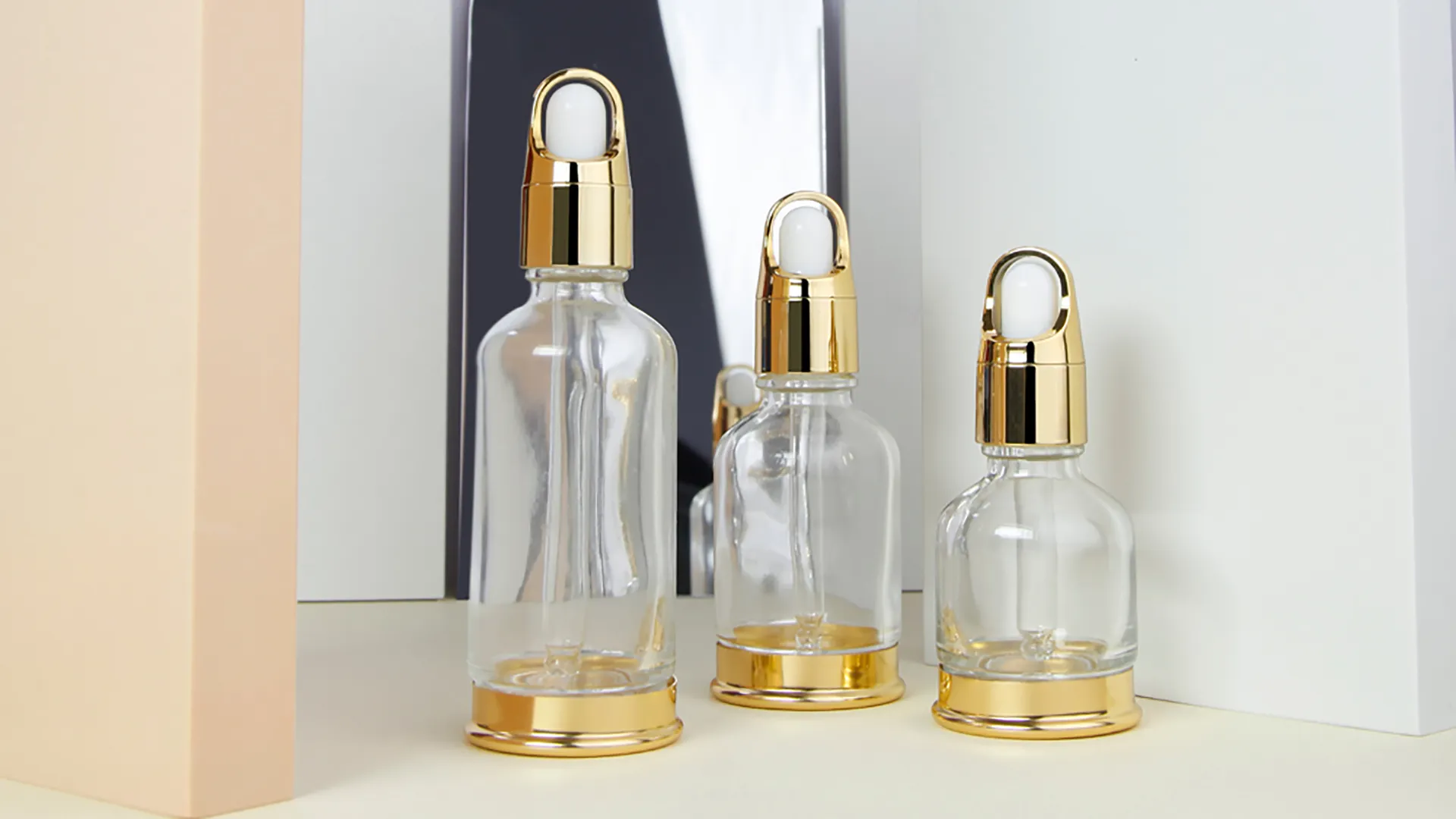
Facial serums are the highest-value segment of the skincare market on a per-millilitre basis, and their packaging brief reflects this value positioning. The bottle must communicate active ingredient potency through its visual form — typically through clarity (transparent PETG showing the serum’s colour and texture as a direct formulation quality signal), proportion (narrow, tall formats that concentrate brand presence in a small footprint and suggest precious, concentrated content), and precision engineering (sharp-radius detail, embossed brand mark, dropper neck for measured dosing). ISBM with premium PETG and mirror-polish tooling produces the glass-comparable clarity and complex narrow-body proportions that serum packaging demands. Dropper neck finishes with ±0.05mm inside diameter precision ensure consistent dropper bulb and tube engagement for accurate dose delivery — a functional specification that directly supports the clinical efficacy narrative the brand builds around the product.
Moisturiser and Day/Night Cream Packaging
Premium moisturiser packaging must communicate nurturing, indulgence, and daily ritual — packaging values that translate into bottle form as generous proportions, tactile quality surfaces, and colour warmth or coolness that signals the product’s sensory positioning. ISBM delivers on all three: generous volume formats (50ml–150ml) with deliberate wall weight that communicates material substance rather than lightness; frosted or soft-texture surfaces that invite touch and communicate intimacy; and the full range of brand colour tones from warm rose-gold-tinted PETG through sage green to deep navy. Airless pump neck formats — requiring precise internal diameter for piston-seal compatibility — benefit from ISBM’s injection-formed neck precision that other production technologies cannot reliably match.
Eye Cream and Targeted Treatment Packaging
Eye cream packaging operates in the prestige segment where small volume (10–15ml), high visual complexity, and exceptional tactile quality are the brief. ISBM’s ability to produce small-format bottles with thick walls (creating significant visual weight relative to the small body dimensions), precision embossed detail at fine scales, and glass-equivalent clarity makes it well-suited for eye cream formats where the packaging must communicate luxury in a very compact form. The wide-mouth neck finish used for eye cream spatula or finger dispensing requires a clean, rounded rim that ISBM’s injection-formed finish produces with the cosmetic quality that consumers encounter directly during use.
Body Care and Body Oil Packaging
Body care bottles (150ml–500ml) have the most visual real estate of any skincare format and the most opportunity for proprietary design to build brand recognition. The ISBM bottle body — 100–200mm of continuous surface — provides the canvas for complex geometric forms, embossed brand storytelling across the bottle body, zone-differentiated finishes that create visual interest at different angles, and colour gradients that communicate product sensory character. For body oil products — where the product’s colour and consistency is visible through a clear or translucent bottle — ISBM’s optical performance is particularly commercially significant: a golden jojoba and vitamin E body oil visible through a clear PETG bottle with a mirror-polished surface communicates luxury before the label is read.
Building a Skincare Packaging Range Architecture Through ISBM
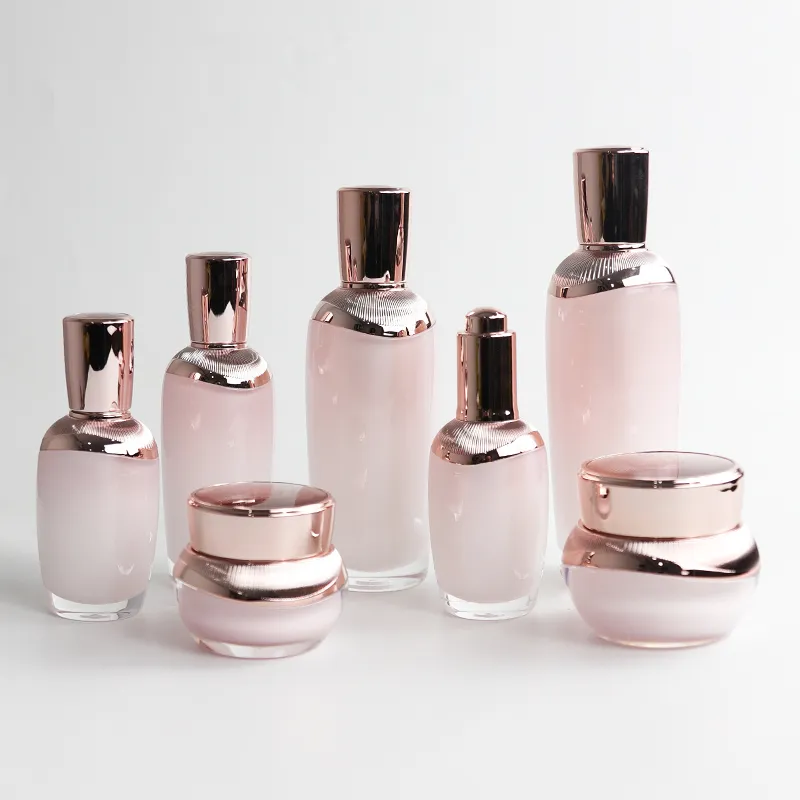
The most commercially sophisticated skincare packaging strategies are not designed bottle-by-bottle but as a cohesive range architecture — a family of containers that share design DNA while serving different product types within the brand’s portfolio. ISBM’s modular tooling system makes range architecture a practical production reality rather than an aspiration limited by tooling cost.
Shared Body Family With Variable Height and Volume
A range family can be built from a single blow mould body geometry — with defined cross-section profile, shoulder curve, and base form — that is produced in different heights through preform weight adjustment and stretch rod travel modification, without a new blow mould design. A 30ml serum format, a 50ml serum format, and a 100ml treatment bottle can share the same proportion language and base geometry from a single mould body investment, producing a visually coherent range where the relationship between the three sizes is immediately apparent to the consumer — communicating brand system, not accidental packaging decisions. The neck finish may differ between sizes (30ml dropper, 50ml pump, 100ml wide pump) through interchangeable neck inserts that work with the shared body mould.
Colour Family Architecture for Range Navigation
Skincare ranges with multiple product types (cleanser, toner, serum, moisturiser, eye cream, SPF) use colour coding to help consumers navigate the product system — identifying which product belongs to which step in the routine. ISBM’s masterbatch colour processing allows the brand to develop a palette of range colours that are consistent across bottle sizes and product types, applied through the same production process and controlled to the same spectrophotometric ΔE tolerance. A skincare range with five defined step-colours — warm blush for cleansing, pale gold for toning, clear crystal for serum, soft sage for moisturiser, deep plum for night treatment — can be produced entirely through ISBM on a single machine platform with a colour-only changeover between production campaigns. The colour system becomes a brand identity asset as recognisable as the logo.
Limited Edition and Seasonal Range Extensions
An established skincare brand with ISBM production capability can respond to seasonal and trend-driven limited edition opportunities at a commercial speed that catalogue-package sourcing cannot match. A Christmas gift set requiring a unique bottle colour (limited edition rose gold, champagne, or deep forest green applied to the existing range forms) can be produced through a colour masterbatch change without any tooling modification — with a lead time of 3–4 weeks from colour approval to bottles on filling line, versus 12–16 weeks for sourcing a new custom glass design from an offshore supplier. This agility allows skincare brands to participate in high-value limited edition retail moments that catalogue-packaging competitors cannot access at equivalent speed and minimum order flexibility.
The Skincare Packaging Briefs That ISBM Handles Best — and How to Communicate Them
Cosmetic packaging designers sometimes approach ISBM development with briefs that are optimised for glass or injection-moulded acrylic and are then disappointed when direct translation proves challenging. Reformulating the brief in terms of ISBM-native capabilities — what this process does best, rather than what it does differently from glass — typically reveals that the intended commercial outcome is achievable through a slightly different design route that delivers equal or superior results. Below are the five most commercially valuable skincare packaging briefs and how ISBM addresses each.
“We want it to look exactly like glass”
ISBM approach: Premium optical-grade PETG, mirror-polish cavity (Ra ≤ 0.04 µm), thick wall (0.8–1.5mm body panels), water-white resin grade with zero AA additives. Under display lighting, a well-produced PETG bottle using these specifications is visually indistinguishable from glass to 90% of consumers. The 10% who can distinguish it would need to pick up both bottles simultaneously — the weight difference is the primary discriminator, which can be managed through bottle wall design and bottom insert weighting where brand standards require it.
“We want something that feels premium without being glass”
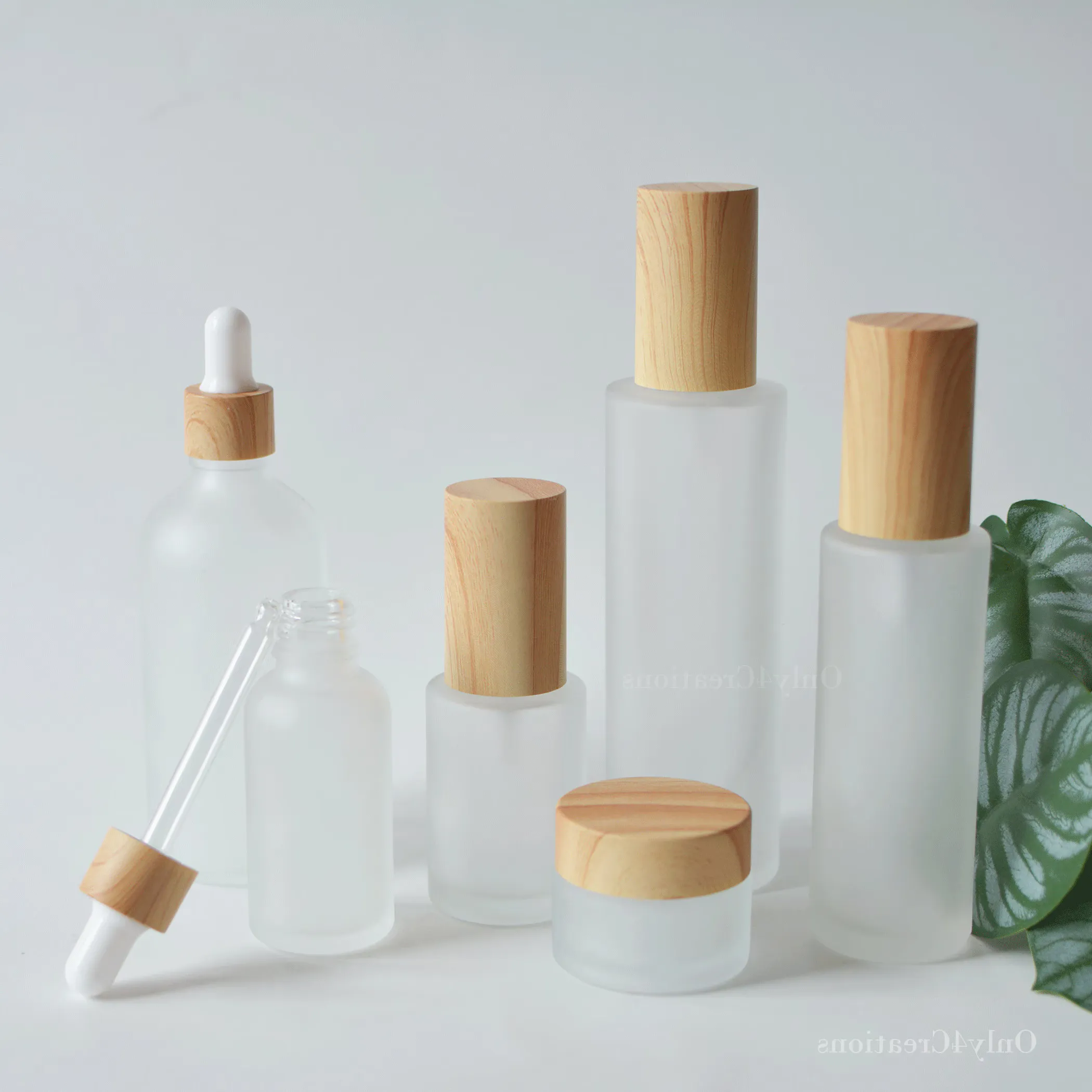
ISBM approach: Frosted or satin-textured PETG with deliberate wall weight, in a brand colour. The satin surface communicates contemporary premium without the glass illusion aspiration — it is explicitly not-glass and is premium for precisely that reason. This brief is well served by the growing K-beauty and clean beauty aesthetic, where matte, restrained finishes communicate sophistication that mirror-polish does not. Fingertip-engraved brand texture and embossed detail add visual complexity at zero per-unit cost.
“We want to lead on sustainability but not compromise on aesthetics”
ISBM approach: Natural-tone tint PETG (soft sage, ecru, pale stone) incorporating 25–30% certified food-grade rPET, CDS-eligible bottle format, with documented lightweighting from the baseline. The natural colour tones communicate sustainability visually while the rPET content, weight reduction percentage, and CDS eligibility provide the specific, ACCC-compliant on-pack claims that turn the visual signal into a verifiable brand claim. This brief is achievable with no optical quality compromise at the rPET content levels that sustainability targets typically require.
“We want our bottle to be instantly recognisable from across a room”
ISBM approach: Proprietary silhouette with a distinctive proportional signature — a characteristic waist ratio, shoulder curve, or base form — that is unlike any competitor bottle in the target retail environment. The most effective “recognisable across the room” designs are typically achieved through distinctive form proportion rather than surface detail, because shape reads at distance while detail reads only at close range. ISBM’s geometric design freedom makes almost any proportional signature manufacturable.
“We need premium packaging but our volumes are too small for glass”
ISBM approach: Single-cavity prototype tooling for initial runs as low as 3,000–5,000 units from a design that is already engineered for scale-up to multi-cavity production tooling when volumes justify it. The design, preform specification, and process parameters established in the single-cavity prototype tooling are directly transferable to multi-cavity production tooling — no redesign is required as volume grows. This scalability path is particularly valuable for skincare startups that need to launch with minimum capital commitment while protecting their ability to scale.
Regulatory and Compliance Considerations for Custom ISBM Skincare Bottles in Australia
Custom skincare bottle development in Australia operates within a regulatory framework that spans product safety, packaging material compliance, and marketing claim substantiation. Navigating this framework correctly from the outset of bottle development avoids the delays and redesign costs that compliance issues discovered at the end of the development process create.
TGA Classification and Packaging Requirements
Skincare products may be regulated as cosmetics (under the ACCC’s product safety framework and industry codes) or as therapeutic goods (regulated by the Therapeutic Goods Administration) depending on the claims made and the active ingredient profile. The packaging material requirements differ between these classifications: cosmetic skincare packaging must avoid ingredients that could migrate into the product at concentrations that could cause consumer harm (no specific positive list requirement, but extractable/leachable assessment is best practice), while therapeutic skincare packaging may require more formally documented compatibility assessment and may be subject to specific container closure integrity requirements. PET/PETG ISBM bottles are generally appropriate for both classifications, but the documentation pathway differs and should be confirmed with a regulatory consultant during the development process for any product with active therapeutic claims.
APCO Recyclability Compliance
All packaging placed on the Australian market must be compatible with Australia’s recycling infrastructure under the National Packaging Targets and APCO’s recyclability guidelines. Standard clear or lightly tinted PET ISBM skincare bottles — without metallised coatings, multi-material laminates, or non-PET components that cannot be separated at the source — are fully recyclable through Australian kerbside infrastructure and are classified as “recyclable at kerbside” under APCO guidelines. Metallic secondary decorations (applied after blow) should be assessed for recyclability impact — some metallising processes add contamination to the PET recycling stream and may affect recyclability classification. APCO’s REDcycle and Collect for Containers (CDS) eligibility assessment tools are the reference point for confirming recyclability classification before on-pack claims are finalised.
ACCC Guidelines for Environmental and Sustainability Claims
The ACCC’s 2023 guidance on environmental and sustainability claims applies directly to skincare brand on-pack messaging and advertising. The key requirements that custom ISBM packaging production enables compliance with: specific, verifiable rPET content percentage (substantiated by supplier certificates and production records); specific, measured weight reduction from a documented baseline (substantiated by weight records); and “recyclable through kerbside” or CDS deposit claim (substantiated by APCO classification or CDS scheme registration). Claims that cannot be specifically substantiated — “eco-friendly bottle,” “sustainable packaging,” “environmentally responsible” without specific backing — are non-compliant under the guidance and should be replaced with specific factual claims that ISBM production data supports.
The Financial Case for Custom ISBM Investment in Skincare Packaging
Skincare brands evaluating custom ISBM packaging investment typically approach the decision as a cost question: what is the tooling investment, and how does it amortise over the expected production volume? This is the right question to start with, but it is not the complete financial analysis. The complete analysis should include the revenue-side effects of packaging customisation — specifically, the average selling price premium sustainable with proprietary packaging versus catalogue packaging, and the ranging and distribution access that proprietary packaging enables. When these revenue effects are included, the financial return on custom ISBM packaging investment is typically higher, and achieved faster, than the cost-side analysis alone suggests.
A practical financial framework for a skincare brand evaluating custom ISBM packaging: (1) Estimate the current purchase price of catalogue packaging per unit; (2) Estimate the per-unit ISBM production cost with tooling amortisation at target annual volume; (3) Calculate the per-unit cost difference (typically close to zero at volumes above 50,000 units per year, or a modest premium at lower volumes); (4) Estimate the average selling price premium achievable with custom packaging versus catalogue packaging for the specific product category and retail channel — industry experience suggests 15–30% for premium skincare; (5) Calculate the revenue contribution of the ASP premium at the expected annual sales volume; (6) Subtract the tooling investment and any per-unit packaging cost premium to arrive at the net financial return. In most cases for premium skincare at volumes above 30,000 units per year, the revenue contribution of the ASP premium exceeds the tooling investment within the first production run — making custom ISBM packaging a revenue investment rather than a cost one.
For skincare brands that have not built a detailed custom packaging financial model, Ever-Power provides a structured feasibility analysis that walks through the cost and revenue inputs for your specific product, volume, and retail channel situation — arriving at a net financial return estimate that gives the brand team the commercial basis for a confident packaging investment decision. Contact [email protected] to commission this analysis at no charge.
Protecting Your Custom Skincare Bottle as a Brand Intellectual Property Asset
Custom ISBM skincare packaging represents a dual investment: the capital cost of tooling manufacture, and the brand equity value of the design itself. Protecting both requires attention to intellectual property strategy from the outset of the development project — not as an afterthought after the bottle has been in production for two years and a competitor produces a similar design.
In Australia, a distinctive bottle form can be registered as a three-dimensional trade mark (protecting the shape as a brand identifier) or as a registered design (protecting the specific visual appearance). Three-dimensional trade mark registration requires that the shape functions as a distinctive identifier of source — consumers associate the shape with the brand, not with the product category in general. This typically requires that the shape has been in use for a period sufficient to build consumer recognition. Registered design protection is available at or before commercial launch and protects the specific visual appearance (including surface texture, surface ornamentation, and form) from the filing date for up to 10 years.
The tooling ownership agreement with the ISBM machine operator (for brands that manufacture through contract producers) or the tooling manufacturer (for vertically integrated operations) must explicitly vest ownership of the tooling and the design intellectual property in the brand. Standard manufacturing agreements may contain provisions that give the manufacturer rights over tooling they have made — these provisions should be reviewed and, if necessary, negotiated before tooling manufacture commences, not discovered when a brand seeks to move production to a different supplier and finds its tooling is legally retained by the incumbent producer.
Working With Ever-Power on Custom Skincare Bottle Development
Australia Ever-Power’s Condell Park NSW engineering and commercial team provides skincare brands with the full development support needed to translate a packaging vision into a commercially viable, production-qualified ISBM bottle — from the initial commercial and technical feasibility conversation through to the first commercial production run and beyond.
The development engagement begins with a packaging strategy conversation — not a tooling cost estimate. Ever-Power’s team wants to understand the brand’s commercial objectives (retail channel, price point architecture, competitor set, sustainability commitments, and launch timeline) before discussing tooling specification, because the packaging investment makes commercial sense only if the bottle design and production specification is aligned with the brand’s commercial strategy. A bottle designed for a premium department store channel has different specifications than one designed for pharmacy self-select, and the ISBM specification that delivers optimum commercial return differs accordingly.
From the commercial brief, Ever-Power’s engineering team develops the bottle design in 3D CAD with manufacturability review, preform specification with mould flow simulation, material recommendation (PET versus PETG, virgin versus rPET blend, optional barrier treatments), and surface finish specification — then produces a documented development schedule with cost estimate and timeline for brand team approval before any capital is committed. This front-end investment protection ensures that skincare brands commit tooling investment to a thoroughly validated specification rather than discovering material issues after the mould is cut. Contact [email protected] to begin your skincare bottle development conversation.
Market Trends Expanding Custom Skincare ISBM Packaging Opportunity
The commercial opportunity for custom ISBM skincare packaging in Australia is being expanded by several concurrent market trends. The growth of the Australian premium skincare export market — with Australian natural, clean, and reef-safe skincare building significant brand equity in key Asian markets — is creating demand for packaging that competes visually with the highest international premium skincare standards. The proliferation of brand-direct (DTC) skincare e-commerce channels is increasing the revenue proportion of the skincare business that flows through unboxing-centric purchase occasions, where packaging premium is directly rewarded. The acceleration of Korean and Japanese beauty aesthetic influence is raising the visual complexity standard that Australian consumers apply to premium skincare packaging — a complexity that custom ISBM uniquely delivers at mass market economics.
The personalisation trend — custom-filled skincare products adjusted for individual skin type, microbiome profile, or specific active ingredient combinations — is creating new demand for packaging systems that can accommodate small-batch production flexibility with full label personalisation. ISBM’s minimum batch flexibility (producing as few as 500–1,000 bottles from a single production campaign on single-cavity tooling) makes it compatible with personalised skincare production programmes where individual SKU volumes may be too small for conventional production minimum quantities.
The growth of refillable skincare formats — where a primary bottle is designed for 3–5 year consumer possession as a permanent brand touchpoint while product is repurchased in refill sachets or cartridges — creates demand for ISBM bottles designed with superior durability (higher PETG crystallinity for scratch resistance, thicker walls for physical resilience) rather than minimum material efficiency. The economics of refillable primary packaging are fundamentally different from single-use economics: a $40 primary bottle that sits on a consumer’s bathroom shelf for five years and drives five annual refill purchases at $35 each delivers $175 in refill revenue at a different customer acquisition cost than acquiring five separate first-time buyers at standard customer acquisition costs. Custom ISBM is well-positioned for this refillable model.
Turn Your Skincare Packaging Vision Into a Commercial Advantage
Australia Ever-Power’s commercial and engineering team in Condell Park NSW provides skincare brands with feasibility assessments, packaging strategy consultation, and custom ISBM development support that aligns packaging investment with commercial brand objectives.
Start Your Skincare Packaging Conversation →
[email protected] | Condell Park NSW 2200, Αυστραλία | isbm-technology.com
Προτεινόμενο προϊόν
One-Step Injection Stretch Blow Molding Machine — Four-Station HGYS150-V4
For skincare bottle production operations launching or expanding their custom ISBM production capability with an emphasis on premium small-to-mid-volume formats — 20ml–200ml serum, treatment, and moisturiser bottles — the HGYS150-V4 four-station one-step injection stretch blow molding machine from Australia Ever-Power provides the production platform optimised for the skincare packaging market’s requirements. The four-station rotary architecture delivers the per-cavity cycle time control critical for PETG small-format skincare bottles, where the conditioning temperature precision and cooling time management that optical quality demands are more sensitive to process variation than in larger-volume formats. The HGYS150-V4 processes both PET and PETG, accommodates preform weights from 3g to 50g covering the full skincare bottle volume range, and supports the wide range of neck finish specifications — from 13mm dropper necks through 24/410 serum pump necks to 28/410 lotion dispensers — that a skincare product range requires. Its compact footprint makes it appropriate for brand-owned small-scale production operations where floor space is at a premium. Full technical specifications and application range details are available at isbm-technology.com. Contact [email protected] to discuss your skincare bottle production requirements.