Personal Care Packaging Requirements: Where Ergonomics, Aesthetics, and Production Economics Converge
Personal care product packaging — shampoo, conditioner, body wash, hair treatment, and styling products — occupies a uniquely demanding brief in the plastic packaging industry. The bottle must be gripped confidently by wet, soap-coated hands in a shower at elevated temperature. It must dispense viscous liquid consistently through pump or flip-top closures without air lock or drool. It must communicate brand positioning on a retail shelf competing with dozens of near-identical products at similar price points. And it must survive being knocked from shower shelves, stored upside-down, and transported in luggage without leaking or deforming. All of these requirements must be met simultaneously, within a production cost envelope that the competitive personal care retail market enforces.
The injection stretch blow molding machine addresses this convergent brief more completely than any alternative production technology. Its combination of ergonomic design freedom, dimensional neck finish precision, material versatility, and production efficiency makes it the preferred production platform for the full range of shampoo and hair care bottle formats — from mass-market high-volume through premium salon brands.
Australia Ever-Power Injection Stretch Blow Moulding Machine Co., Ltd, based in Condell Park NSW 2200, provides hair care brand manufacturers and personal care contract packaging operations with ISBM machine technology calibrated for the specific requirements of personal care bottle production. This article examines the technical and commercial dimensions of ISBM for shampoo, body wash, and hair care packaging.

Ergonomic Design Engineering for Shampoo and Body Wash Bottles
Shampoo bottle ergonomics is a genuine engineering discipline. The grip requirements of a 400ml shampoo bottle used with wet, conditioner-coated hands in a 40°C shower differ meaningfully from the grip requirements of any other consumer product package, and the design choices that optimise shower-condition grip are different from those that maximise dry-hand retail shelf appeal. The ISBM process addresses both because it reproduces complex three-dimensional bottle geometries with precision, and surface texture can be engineered directly into the blow mould tooling at no incremental per-unit cost.
Waist and Grip Zone Geometry
The waist zone of a shampoo bottle — the narrowed section typically in the lower third of the body — provides both a natural hand placement indicator and a mechanical stop against axial slipping. ISBM can produce waist geometries with defined minimum diameter, waist width, and transition radius, reproduced to ±0.3mm consistency on every bottle from a qualified mould. The waist geometry is formed in the blow mould cavity and requires no secondary operation — it is produced in the same cycle as the rest of the bottle.
Surface Texture for Wet-Hand Grip Performance
A mirror-polished PET surface (Ra ≤ 0.05 µm) provides minimal friction against a wet palm — the water film acts as a near-frictionless lubricant. Introducing a controlled micro-texture in the grip zones (Ra 0.3–0.8 µm through cavity acid-etching or bead-blasting) interrupts the water film and maintains meaningful friction in wet conditions. The optimal wet-grip texture depth of Ra 0.4–0.6 µm is fine enough to produce a pleasant satin appearance while maintaining friction comparable to rubber-coated surfaces at normal grip pressures. This texture is engineered into the cavity surface and reproduced on every bottle automatically.
Controlled Wall Flexibility for Squeeze Dispensing
Many shampoo formats dispense through direct body squeeze, where the consumer compresses the bottle to force viscous shampoo through the neck. The required squeeze force — typically 8–20N for a 400ml format — is controlled through wall thickness distribution and orientation level in the ISBM process. A well-designed ISBM shampoo bottle achieves the target squeeze force through preform design and process parameter optimisation without relying on stiffening ribs that add visual complexity the brand may not want.
Pump and Closure Compatibility for Personal Care Dispensing Systems
The most commercially damaging quality failure in personal care bottle production is closure incompatibility — the neck finish does not engage the pump correctly, causing leaking, improper sealing, or pump engagement failure. ISBM’s injection-formed neck finish is the most reliable route to the dimensional consistency that prevents this failure mode, because the neck is formed by injection tooling to the same tolerances as an injection-moulded component.
24/410 Lotion Pump
Standard for 200ml–500ml personal care bottles. Thread major diameter ±0.08mm, finish roundness ±0.06mm required for consistent pump engagement and sealing across filling line speeds of 10,000–20,000 BPH.
28/410 Flip-Top
Most common for shampoo and conditioner. Flip-top hinge engagement relies on transfer bead height (±0.10mm) for tactile click and positive seal. ISBM injection neck delivers this consistently across all production cavities.
Inverted Dispensing Neck
Growing in premium hair care — bottle stored cap-down so product gravity-feeds to the dispenser. More stringent sealing demands under constant head pressure; ISBM injection precision provides the sealing reliability inverted formats require.
Dip Tube Compatibility
Pump dip tubes must reach the bottle base within ±3mm for complete product draw. ISBM internal bottle height reproducibility (±1mm) ensures consistent dip tube fit across all production batches without individual length adjustment.

Brand Differentiation Through ISBM: Visual and Tactile Design for Personal Care
The personal care category presents one of retail’s most visually competitive shelf environments. Shampoo aisles in Australian supermarkets and pharmacies display dozens of brands within a narrow price band, where packaging colour, form, and finish are the primary visual discriminators that stop a shopper’s eye. ISBM’s versatile colour processing and surface finish capability gives personal care brands the visual toolkit to create bottles that stand out while maintaining the production economics that competitive pricing requires.
| Visual Effect | ISBM Production Method | Brand Signal | Typical Category |
|---|---|---|---|
| Vivid solid colour | High-loading opaque masterbatch in PET | Energy, freshness, category clarity | Mass-market, everyday cleansing |
| Translucent pearl | Semi-transparent tint + pearlescent additive | Softness, luxury, femininity | Moisturising, keratin, colour-protect |
| Clear transparency | Unfilled PET/PETG, mirror-polish cavity | Purity, ingredient confidence, clinical | Scalp treatments, trichology, premium |
| Frosted / matte | Satin cavity Ra 0.3–0.6 µm | Premium restraint, minimal aesthetic | Salon, prestige, natural beauty |
| Deep dark tones | Low-loading dark masterbatch, semi-opaque | Professional authority, men’s grooming | Anti-dandruff, men’s, professional |
| Natural / earthy | rPET natural tint or bio-based PET | Sustainability, botanical, clean beauty | Organic, eco, natural hair care |
Personal Care Chemical Compatibility: Shampoo Formulations in PET Containers
Standard shampoo and conditioner formulations — aqueous bases with surfactants (SLS, SLES, cocamidopropyl betaine), conditioning agents (cationic polymers, silicones), and fragrance at 0.5–2.0% — are fully compatible with standard PET at normal storage temperatures across the standard product shelf life of 24–36 months. This covers the vast majority of retail shampoo and conditioner SKUs and means that standard shampoo products do not require individual formulation-specific stability studies for PET packaging — though a brief 6-week ambient stability check at product launch remains good practice regardless of expected outcome.
Several formulation types do require specific validation. High essential oil concentrations (above 2–3% total) in premium natural hair care can produce minor PET plasticisation over extended high-temperature storage above 35°C. Alcoholic styling products and trichology treatments at high alcohol levels (above 40% ethanol) require PETG rather than standard PET for extended compatibility assurance. High-pH formulations (above pH 9.0) relevant to some permanent wave and colour processing products can cause surface etching on PET over time. For each of these cases, a 40°C/12-week accelerated stability study with the production formulation and bottle combination provides the validation required.
For standard pH shampoos (pH 4.5–7.0) at normal alcohol levels, PET compatibility is well-established and does not require individual product testing. The industry practice of running a standard 6-week ambient stability check at each product launch remains recommended as confirmatory quality assurance regardless of the expected outcome — it costs little and protects the brand from the rare exception that general compatibility data does not predict.
Production Efficiency for Personal Care Bottle Manufacturing at Australian Scale
Australian hair care and personal care operations producing 5–30 million bottles per year must maintain tight per-bottle economics to compete on shelf price while funding the marketing investment that brand building requires. ISBM delivers production efficiency through mechanisms that compound into a meaningful cost-per-bottle advantage.
One-Step Process Integration
One-step ISBM combines injection, conditioning, stretch-blow, and ejection in a single continuous cycle. No intermediate preform storage, transport, or reheating. For personal care production, this reduces floor space requirements and eliminates preform inventory management overhead.
Multi-Cavity High Output
4-cavity ISBM on 250–500ml personal care formats: 3,000–8,000 BPH. A single machine with changeover capability can service a full shampoo and conditioner range from one platform, reducing capital versus separate dedicated lines per SKU.
Lightweighting Efficiency
Biaxial orientation allows 20–35% lighter walls than unoriented alternatives at equivalent structural performance. For a 400ml shampoo bottle, a 6–12g weight saving per bottle at 5M annual units represents 30–60 tonnes of PET resin saved per year — a direct, quantifiable cost reduction.
Rapid SKU Changeover
Mould changes between shampoo SKUs: 90–180 minutes with stored process recipe recall. Colour changeovers: 15–30 minutes. For a 10–15 SKU personal care range on a single machine, bi-weekly changeover schedules are commercially viable with good production planning.
Sustainability Credentials for Australian Personal Care Brands
Retailer sustainability requirements for personal care packaging are tightening steadily, driven by Woolworths and Coles sustainability programmes and the National Packaging Targets. For shampoo brands selling through major Australian retail channels, demonstrable recycled content, recyclability, and reduced material weight are increasingly prerequisites for ranging rather than differentiating features.
ISBM PET shampoo bottles are CDS-eligible in all participating Australian states, providing both a consumer recycling incentive and a source of high-quality post-consumer PET that can be processed into certified rPET for new personal care bottle production. The “bottle-to-bottle” circular loop — CDS-collected shampoo bottles recycled into certified rPET and reprocessed through ISBM into new shampoo bottles — is achievable today and represents the most credible sustainability narrative available in the Australian personal care packaging market.
Lightweighting programmes targeting 10–15% preform weight reduction are achievable for most standard shampoo formats through ISBM process optimisation without tooling replacement. At 5 million bottles per year, a 10% weight reduction in a 30g bottle saves 15 tonnes of PET resin annually — a quantifiable, reportable sustainability achievement that meets ACCC substantiation standards for on-pack claims.
Developing a Custom Personal Care Bottle Through ISBM: From Brief to Production
Developing a new custom personal care bottle through ISBM follows a structured process that, managed efficiently, delivers a production-qualified bottle in 12–16 weeks from initial brief.
Functional and Brand Specification
Document volume(s), closure type and neck finish, formulation type and pH, fill method, label format, colour and surface finish, sustainability targets, and retail channel requirements. Clarity at this stage prevents costly rework from undocumented requirements discovered at prototype review.
3D Design and Ergonomic Review
3D CAD incorporating grip zone geometry, surface texture zones, label panel, and neck finish specification. Ergonomic grip simulation reviewing waist diameter, width, and centre-of-gravity. Manufacturability review. Renders for brand approval before tooling commitment.
Preform Design and Simulation
Preform engineering targeting wall thickness distribution in grip zone, label panel, shoulder, and base. Mould flow simulation validates filling and cooling. Squeeze-force modelling confirms target dispensing force range. rPET IV and moisture sensitivity factored in if applicable.
Prototype and Physical Approval
Single-cavity prototype produces physical bottles for brand, closure compatibility, and grip evaluation. Pump and closure engagement verified against supplier drawing. Wet-hand grip testing. Squeeze force measured at 50%, 25%, and 10% fill levels. Stability fill test initiated.
Production Qualification and Commercial Release
Production mould tooling qualified through extended run with full quality inspection: dimensions, surface Ra, colour ΔE, squeeze force, closure engagement. Process recipe stored. Operator training completed. Commercial release signed off following quality hold review.
Personal Care Market Trends Driving ISBM Packaging Innovation
The personal care packaging market is undergoing concurrent shifts that expand ISBM’s relevance. Refillable shampoo formats — where brands sell a premium primary bottle designed for 50+ refill cycles alongside lower-cost refill pouches — require ISBM bottles with heavier walls, higher crystallinity, and superior scratch resistance. ISBM handles these thicker-wall, higher-durability designs using the same one-step process with modified preform weight and stretch ratio specifications.
The growth of salon-direct e-commerce — products shipped directly from brand to consumer — changes the drop-resistance requirement for shampoo bottles. Bottles now face courier parcel handling stresses significantly higher than retail shelf environments. ISBM’s biaxial orientation-enhanced impact resistance gives PET shampoo bottles a structural advantage over unoriented alternatives in this distribution context, adjustable through wall thickness and orientation parameters for e-commerce-specific requirements.
Concentrated shampoo formats (higher active concentration per bottle, smaller volumes per wash equivalent) are creating demand for premium small-format bottles (100–150ml) that communicate brand positioning in a much smaller package. ISBM’s ability to produce glass-equivalent optical quality in small formats with appropriate ergonomic grip design positions it well for this concentrated format trend — a trend that HDPE EBM cannot serve at equivalent visual quality.
Ever-Power’s Support for Australian Personal Care ISBM Operations
Australia Ever-Power’s Condell Park NSW team provides personal care and hair care packaging operations with the complete ISBM support framework: machine specification matched to format range and volume, tooling development for ergonomic and aesthetic design requirements, commissioning with pump compatibility qualification and wet-grip testing, operator training, and the ongoing process support that maintains quality as the operation matures.
For Australian personal care brands currently purchasing shampoo bottles from offshore suppliers, Ever-Power’s pre-investment analysis identifies the combination of per-unit cost saving (eliminating import margin and logistics cost), supply chain risk reduction (local just-in-time production), and design agility improvement (new designs without intercontinental tooling lead times) that together build the financial and strategic case for in-house ISBM investment.
Contact [email protected] to begin your personal care packaging ISBM feasibility conversation.
Recommended Machine
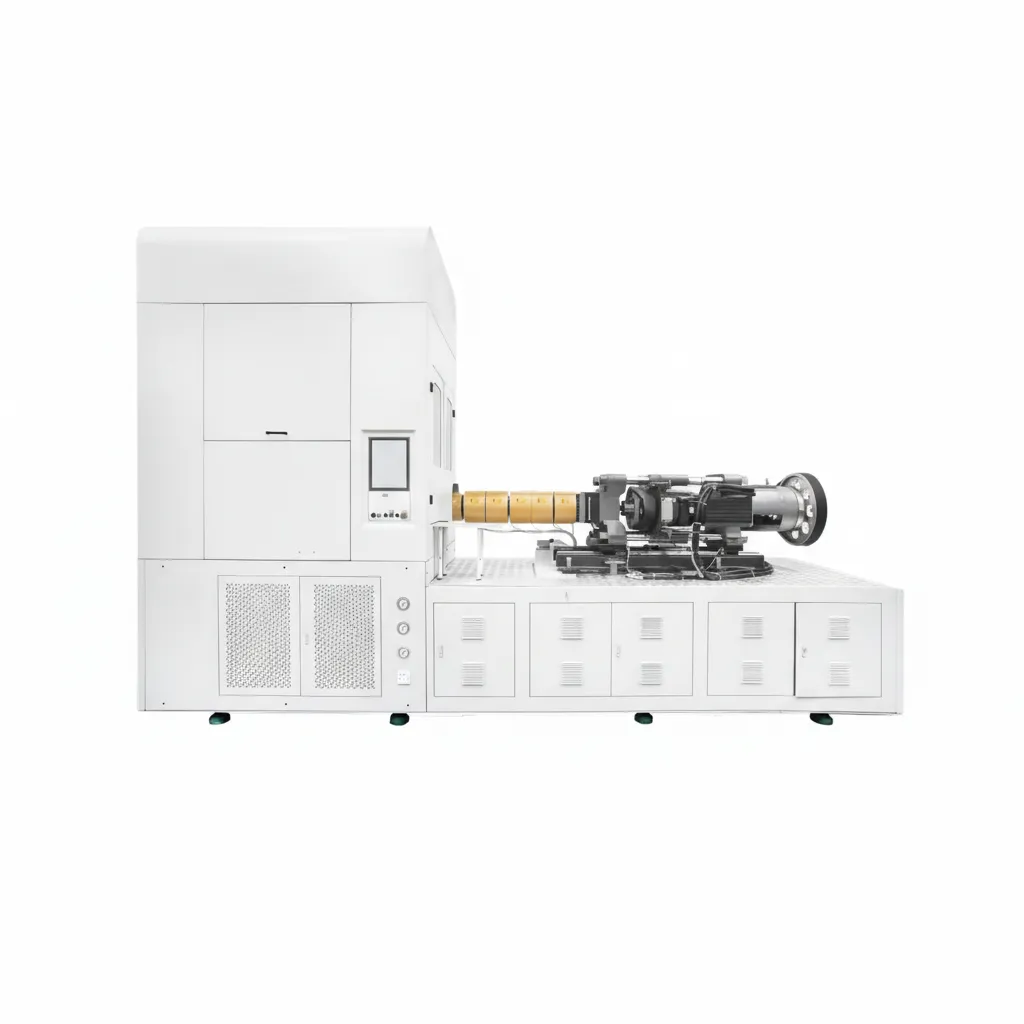
HGYS150-V4-EV — Fully Servo Four-Station ISBM for Personal Care
For personal care and hair care bottle production requiring the optical precision, conditioning temperature control, and clean production environment that premium shampoo and body wash brands demand, the HGYS150-V4-EV fully servo four-station ISBM machine is the optimal platform. Its fully servo-electric architecture eliminates hydraulic oil (preventing contamination events in personal care production environments), achieves ±0.5°C conditioning temperature uniformity (preventing the banding defects visible in transparent or translucent personal care bottles), and delivers ±0.5mm stretch rod position repeatability (ensuring consistent wall thickness and squeeze-force performance across all production cavities). It processes PET and PETG across the 30ml–500ml personal care volume range, accommodating the full neck finish range for shampoo and body wash dispensing systems. rPET blends at 25–30% are supported with adaptive injection profiling.