Why Pharmaceutical Packaging Demands More Than Commercial-Grade Blow Moulding
Pharmaceutical and medical packaging occupies the most regulated segment of the plastic container industry. Every dimension, every material extractable, every closure engagement, and every production parameter that affects product integrity must be documented, validated, and maintained under a quality management system that satisfies the TGA (Therapeutic Goods Administration), TGA-recognised international pharmacopoeial standards (USP, Ph.Eur., BP), and, for export markets, FDA and EMA requirements. A single undefined dimension or undocumented process deviation that causes a packaging failure is not a commercial quality complaint — it is a potential patient safety event, a regulatory non-compliance, and a drug product recall risk.
The injection stretch blow molding machine addresses the pharmaceutical packaging brief through capabilities that few competing technologies can match simultaneously: injection-precision neck finishes for child-resistant and tamper-evident closure systems, extractables-controlled PET from pharmacopoeial-grade resin, oil-free all-electric production for contamination-free cleanroom-compatible manufacture, and PLC-based process data logging that generates the per-batch production records that pharmaceutical quality management systems require. Understanding exactly how each of these capabilities translates into pharmaceutical compliance is the foundation of evaluating ISBM for healthcare packaging applications.
Australia Ever-Power Injection Stretch Blow Moulding Machine Co., Ltd, operating from Condell Park NSW 2200, provides pharmaceutical packaging operations with ISBM machine technology and technical support specifically configured for the regulatory and quality requirements of the healthcare sector. This article covers the specific technical, regulatory, and production quality requirements of pharmaceutical and medical bottle production in Australia, and the role that ISBM plays in meeting them.
Material Purity Requirements: Pharmacopoeial-Grade PET for Healthcare Packaging
PET used in direct-contact pharmaceutical packaging must meet the material purity requirements of the relevant pharmacopoeia — most commonly USP <661> Plastic Packaging Systems and Their Materials of Construction, or the equivalent Ph.Eur. 3.1.15 standard. These standards specify tests for extractables (substances that can be extracted from the packaging material into the pharmaceutical product under defined conditions), pH of extracts, light absorption, and heavy metal content — all intended to confirm that the packaging material will not contaminate the pharmaceutical product with substances that could affect product safety, efficacy, or stability.
Acetaldehyde Control in Pharmaceutical PET
Acetaldehyde (AA), the primary degradation product of PET during melt processing, is the most commercially significant extractable concern in pharmaceutical PET packaging. While AA is classified as GRAS (Generally Recognized As Safe) at the concentrations encountered in food-grade PET packaging, pharmaceutical products have more stringent extractable limits than food products, and some pharmaceutical formulations (particularly those with reactive amine groups or aldehyde-sensitive API structures) require demonstrably low AA levels in their container-closure system. In ISBM pharmaceutical production, AA is controlled through: pharmacopoeial-grade PET resin with proven low-AA generation characteristics, AA-scavenger additive incorporation where lower AA levels are required, controlled barrel temperature profiles within the resin manufacturer’s specification, and barrel residence time management that prevents extended melt hold that generates AA through chain scission. The production process parameters that control AA are documented during process qualification and maintained within validated limits in every subsequent production run.
Extractables and Leachables Assessment for Pharmaceutical Applications
Beyond AA, the extractables and leachables (E&L) assessment programme for a pharmaceutical PET container-closure system covers the full spectrum of potential migrating substances: residual monomers (terephthalic acid, ethylene glycol), catalyst residues (antimony or titanium depending on the polymerisation catalyst used), additive systems (antioxidants, UV stabilisers, AA scavengers), and degradation products formed during processing. The E&L assessment follows the PQRI (Product Quality Research Institute) guidance and ICH Q3E framework: an extractables study (exhaustive extraction under stressed conditions to identify all potential leachables) followed by a leachables study (migration at use conditions over the product’s shelf life) to confirm that no individual substance exceeds its threshold of toxicological concern (TTC) in the drug product.
Colour and Clarity Requirements for Pharmaceutical Containers
Pharmaceutical liquid containers are classified under the pharmacopoeias as either transparent (Type I, II, or III glass equivalent requirements for clarity) or amber (providing UV protection for photosensitive pharmaceutical products). ISBM PET can produce both: clear containers meeting the pharmacopoeial light transmission specifications for Type II plastic containers, and amber-tinted containers (typically 0.5–1.5% amber masterbatch loading) providing equivalent UV protection to amber glass for photosensitive oral liquid products. The specific masterbatch colourant used in amber pharmaceutical containers must be evaluated as part of the E&L study — the extractable profile of the colourant system must be confirmed to not introduce substances with toxicological concern into the pharmaceutical product at normal storage conditions.
Child-Resistant and Tamper-Evident Closure Systems for Pharmaceutical Containers
Australian pharmaceutical packaging is subject to mandatory child-resistant packaging requirements under the Therapeutic Goods (Standard for Child-Resistant Packaging) Order 2021 for products containing substances listed in Schedule 1 of that order — which includes most oral pharmaceutical liquids, tablets, and capsules supplied in consumer packaging. The CRC system for pharmaceutical containers must pass the ISO 8317 child-resistant packaging test as a container-closure combination, conducted by an accredited testing laboratory.
ISBM Neck Finish Precision for Pharmaceutical CRC Systems
The critical dimensional requirements for pharmaceutical CRC container systems are more stringent than for standard consumer packaging CRC, because pharmaceutical regulatory submissions include the specific container dimensions and CRC system specifications as part of the registered container-closure system — meaning any dimensional variation outside the registered range is technically a change to the approved drug product that may require regulatory notification or variation. ISBM’s injection-formed neck finish, with dimensional tolerances of ±0.08–0.10mm on critical CRC dimensions, provides the cross-cavity and batch-to-batch consistency that pharmaceutical CRC qualification demands. The qualification protocol for a pharmaceutical CRC system must include testing on containers from all production cavities simultaneously, with dimensional records retained as part of the container-closure system qualification documentation.
Tamper-Evident Systems for Pharmaceutical Retail and Hospital Supply
Pharmaceutical products supplied through retail pharmacy channels require tamper-evident packaging that provides visible evidence of interference before dispensing to the patient. For oral liquid pharmaceutical products in PET ISBM containers, tamper-evidence is typically provided through a breakaway neck ring on the closure, an induction heat-sealed foil liner inside the closure, or both. The induction foil liner is the most commonly used system for Australian oral liquid pharmaceuticals — the foil is heat-bonded to the bottle neck sealing surface by an induction sealing unit on the filling line, creating a hermetic seal that must be deliberately broken to access the product. The dimensional requirement for induction seal performance is the neck sealing surface flatness and width (typically ±0.15mm flatness tolerance and ±0.20mm width tolerance) — both achievable through ISBM injection neck forming and maintained through scheduled tooling maintenance.
GMP-Compliant Production: How ISBM Machine Architecture Supports Pharmaceutical Quality Systems
Pharmaceutical packaging production in Australia is conducted under Good Manufacturing Practice (GMP) as defined in the TGA’s Code of GMP for Medicinal Products, which aligns with the PIC/S Guide to GMP for Medicinal Products. For packaging component manufacturers supplying directly to TGA-licensed pharmaceutical manufacturers, GMP compliance is typically required as a condition of the supply relationship — and the ISBM machine platform’s capabilities directly support the GMP documentation, traceability, and process control requirements of this regulatory framework.
Oil-Free Production Environment
Fully servo-electric ISBM machines eliminate hydraulic oil entirely from the production environment. Pharmaceutical GMP requirements prohibit lubricant contamination of medicinal product containers — the oil-free architecture of servo ISBM machines is a prerequisite for GMP-compliant pharmaceutical packaging production, not an optional enhancement.
Process Data Logging and Batch Records
PLC-based process data logging records injection pressure, barrel temperature zones, conditioning settings, and stretch rod parameters on a cycle-by-cycle basis. Batch records generated from this data log provide the production traceability documentation that pharmaceutical batch record requirements and regulatory inspections demand — linking every container produced to the specific process parameters under which it was made.
Alarm Management and Out-of-Spec Detection
The machine’s control system flags process parameter deviations outside validated limits in real time, allowing immediate isolation of suspect production output before it enters the quality-inspected product stream. This alarm-based deviation detection is the automated equivalent of the in-process monitoring that GMP pharmaceutical manufacturing SOPs require — and it generates the documented evidence that quality reviews and regulatory inspections examine.
Access Control and Recipe Management
Electronic recipe management with user access controls ensures that validated process parameters can only be modified by authorised personnel, and that changes are audit-trailed. This meets the 21 CFR Part 11 equivalent requirements for electronic records in pharmaceutical manufacturing systems and prevents unauthorised process changes that could affect container quality without documentation.
Pharmaceutical Container-Closure System Qualification: The ISBM Pathway
The container-closure system (CCS) qualification for a pharmaceutical drug product is a structured programme that confirms the packaging does not adversely affect the drug product and that the packaging performs its intended protective function over the product’s approved shelf life. For a new oral liquid pharmaceutical product in a PET ISBM container, the CCS qualification programme follows the ICH Q1A (Stability Testing) framework and covers compatibility, extractables/leachables, moisture vapour transmission, and closure performance — each with specific requirements that must be met before the packaging can be included in a TGA submission.
Extractables Study
Exhaustive extraction of the container-closure system using multiple solvents (aqueous, acidic, basic, and organic) under stressed conditions (elevated temperature, extended contact). Identifies the full population of potential leachable substances and their extractable concentrations. Conducted on containers produced under the validated production process using the approved resin and masterbatch.
Compatibility and Leachables Study
Drug product in the production container stored under ICH stability conditions (25°C/60%RH long-term, 40°C/75%RH accelerated) for the full stability programme duration. Samples analysed at each time point for leachable substances at use-condition concentrations. Confirms no substance exceeds its threshold of toxicological concern in the drug product.
Moisture Vapour Transmission Rate (MVTR)
Water vapour transmission through the container wall measured over the product’s shelf life. For moisture-sensitive oral liquid pharmaceuticals, MVTR must be below the level that would cause significant evaporative concentration over the approved shelf life. ISBM PET’s orientation-enhanced barrier properties provide lower MVTR than unoriented alternatives at equivalent wall thickness.
Closure Performance and Functionality
CRC engagement force, removal torque, and ISO 8317 child-resistant packaging test. Induction seal integrity at ambient and post-storage conditions. Drop test (1.2m) with CRC closure engaged and post-drop seal verification. All conducted on containers from all production cavities as representative qualification samples.
Pharmaceutical Bottle Formats and ISBM Production Capability
The pharmaceutical packaging sector uses ISBM for a range of bottle formats and applications, each with specific design requirements that translate into precise ISBM production parameters.
| Pharmaceutical Application | Format Range | Key Design Requirements | Neck Finish |
|---|---|---|---|
| Oral liquid medicine (syrup) | 50ml – 500ml | CRC, induction seal, amber or clear, dosing cup seat | 28mm – 38mm CRC |
| Mouthwash and oral rinse | 250ml – 1L | Measuring cap seat, clear or blue tint, CRC for CTC products | 28mm – 33mm |
| Nutritional supplement liquid | 30ml – 250ml | Dropper neck or pump neck, amber for photosensitive formulas | 18mm – 24mm dropper |
| Topical solution / disinfectant | 100ml – 500ml | Trigger spray or flip-top, chemical compatibility with IPA/ethanol | 28/410 trigger or flip |
| Eye wash and saline solution | 100ml – 500ml | Sterile-fill compatible, low extractables, induction seal | 28mm – 38mm flat seal |
| OTC tablet/capsule count bottle | 30ml – 250ml | Wide-mouth CRC, desiccant insert compatibility, moisture barrier | 33mm – 45mm wide |
Process Validation for Pharmaceutical ISBM Packaging: IQ, OQ, PQ Framework
The production process for a pharmaceutical packaging component must be validated under the Installation Qualification (IQ), Operational Qualification (OQ), and Performance Qualification (PQ) framework that GMP requires. This validation programme confirms that the production equipment is correctly installed and operating as intended (IQ/OQ), and that the process consistently produces containers within the approved container-closure system specification under normal operating conditions (PQ). For ISBM pharmaceutical packaging, the validation programme is structured as follows:
IQ (Installation Qualification) confirms that the ISBM machine is installed according to the manufacturer’s specification, that all utilities (electrical, pneumatic, compressed air, cooling water) are connected within the specified ranges, and that the machine’s documentation package (calibration certificates, maintenance records, instrument specifications) is complete and current. IQ is conducted once at machine installation and repeated after any significant machine relocation or rebuild.
OQ (Operational Qualification) confirms that the machine operates correctly through its full operational range — that all sensors, control loops, alarms, and interlocks function as designed — and establishes the process parameter ranges within which the machine can produce containers meeting the approved specification. The OQ defines the validated operating ranges for key parameters: barrel temperature zones (±3°C of setpoint), conditioning temperature (±2°C), cooling water temperature (±1°C), stretch rod speed (±5%), and blow pressure (±2 bar).
PQ (Performance Qualification) confirms that the validated process consistently produces containers meeting the approved specification across a minimum of three consecutive production batches under normal operating conditions. PQ containers are subjected to the full container specification test battery: critical neck finish dimensions, body wall thickness distribution, top-load performance, drop test, CRC engagement, and induction seal performance. Statistical analysis of the PQ results confirms process capability indices (Cpk ≥ 1.33 for critical pharmaceutical packaging dimensions) that demonstrate the process is in statistical control and capable of consistently meeting specification.
Medical Device and Diagnostic Packaging: ISBM Beyond Pharma
Beyond direct pharmaceutical products, ISBM serves a range of medical device and diagnostic packaging applications where the optical clarity, dimensional precision, and material purity of PET provide advantages over alternative production approaches. Medical consumable containers — specimen collection bottles, reagent bottles for diagnostic analysers, and sample diluent containers — share many of the technical requirements of pharmaceutical packaging while operating under the slightly different regulatory framework of the TGA’s Medical Device regulations and the ISO 13485 quality management system standard for medical device manufacturers.
Specimen collection bottles in PET ISBM are used for urine collection (both standard mid-stream collection and 24-hour urine collection containers), throat swab transport media containers, and general biological sample transport. The key requirements are: microbiologically clean production (ISBM’s oil-free production environment is critical here), dimensional consistency for automated cap engagement in laboratory processing equipment, and material extractable profiles that do not interfere with the analytical methods used to analyse the collected specimens. PET’s known extractable profile and its absence of compounds known to interfere with standard urinalysis or microbiological culture methods makes it the standard production material for these applications.
Reagent bottles for automated clinical chemistry and haematology analysers represent a growing ISBM application driven by the replacement of glass reagent containers with PET equivalents for safety and logistics reasons. Laboratory automation systems are designed to interface with defined container geometries — the ISBM container must be dimensionally identical to the glass predecessor in every dimension that the analyser interfaces with (barcode label zone, cap engagement geometry, reagent probe entry neck) while providing the safety advantage of a shatter-resistant container in a laboratory environment where dropped containers create hazardous waste and safety incidents.
Sustainability in Pharmaceutical Packaging: A Carefully Bounded Opportunity
Pharmaceutical packaging sustainability presents a more constrained opportunity than consumer goods packaging sustainability, because the regulatory framework governing pharmaceutical packaging changes — specifically, the requirement to notify or vary an approved product registration when the container-closure system changes — creates a significant barrier to switching from established packaging materials and formats to more sustainable alternatives. Changes to the container-closure system of a registered drug product require at minimum a Level 2 variation to the TGA registration, which involves stability data supporting the change and regulatory review — a process that takes months and requires a stability programme running in parallel with the existing packaging to demonstrate the change has no adverse effect on drug product quality.
Within these constraints, pharmaceutical packaging sustainability is most practically addressed through lightweighting within the approved container-closure system specification (reducing preform weight without changing the registered container geometry or material specification, which falls within normal manufacturing variation rather than requiring a variation), and through new product development that incorporates sustainability specifications from the outset — new drug product registrations can specify rPET content and lighter container specifications in their initial TGA submission, avoiding the variation pathway entirely.
Contact [email protected] to discuss the specific sustainability pathway available for your pharmaceutical packaging programme within the TGA regulatory framework.
Ever-Power’s Technical Support for Pharmaceutical ISBM Production
Australia Ever-Power provides pharmaceutical packaging operations with a complete technical support framework that extends from IQ/OQ/PQ qualification protocol development through machine supply and commissioning, validation support, and ongoing process maintenance that sustains GMP compliance across the machine’s service life. The Condell Park NSW location provides same-day or next-day on-site response for production issues — a critical support characteristic for pharmaceutical operations where production stoppages have product release and supply chain implications that extend well beyond the immediate manufacturing cost.
For pharmaceutical manufacturers considering ISBM investment for a new drug product packaging line, Ever-Power provides a pre-investment technical assessment covering: machine specification for the specific container formats and volumes, E&L study planning guidance, CCS qualification protocol development, and GMP documentation package development. This front-end investment in alignment protects both the project timeline and the regulatory submission quality by ensuring that the production platform is correctly specified from the outset.
Visit isbm-technology.com/contact-us or email [email protected] to begin the pharmaceutical packaging ISBM assessment process.
Recommended Machine
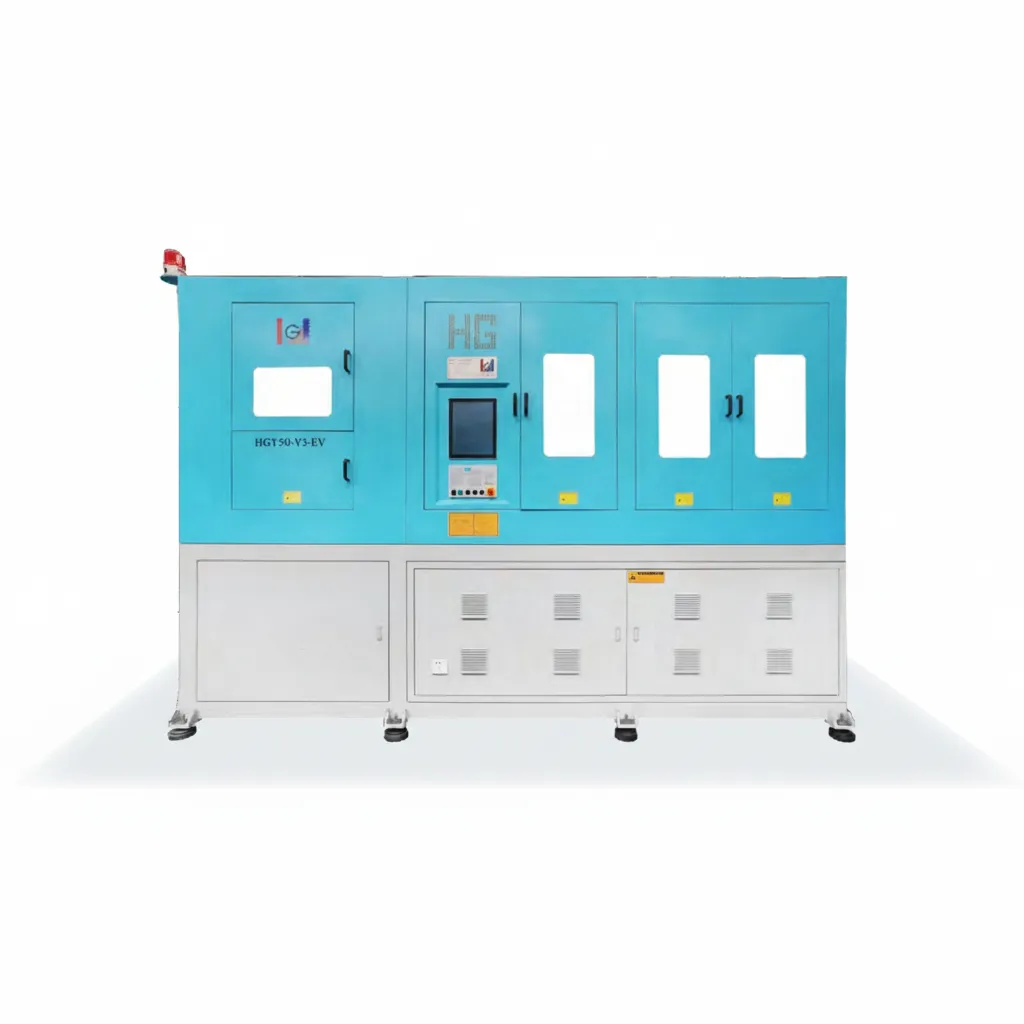
HGYS150-V4-EV — Fully Servo Four-Station ISBM for Pharmaceutical Production
For pharmaceutical and medical packaging operations requiring GMP-compliant production with oil-free architecture, comprehensive process data logging, and the dimensional precision that pharmaceutical CRC and induction seal systems demand, the HGYS150-V4-EV fully servo four-station ISBM machine is the correct platform. Its fully servo-electric architecture eliminates hydraulic oil from the production environment — mandatory for pharmaceutical GMP compliance. Process data logging with alarm-managed deviation detection generates the batch record documentation that TGA inspection readiness requires. Servo conditioning temperature control (±0.5°C uniformity) eliminates the banding and haze variation that would be unacceptable in pharmaceutical amber or clear containers. The machine processes pharmacopoeial-grade PET and PETG, accommodates the full range of pharmaceutical closure neck finishes (CRC 28mm–45mm, dropper 13mm–24mm, wide-mouth 38mm–45mm), and supports the complete IQ/OQ/PQ validation programme through its documented calibration and qualification infrastructure.