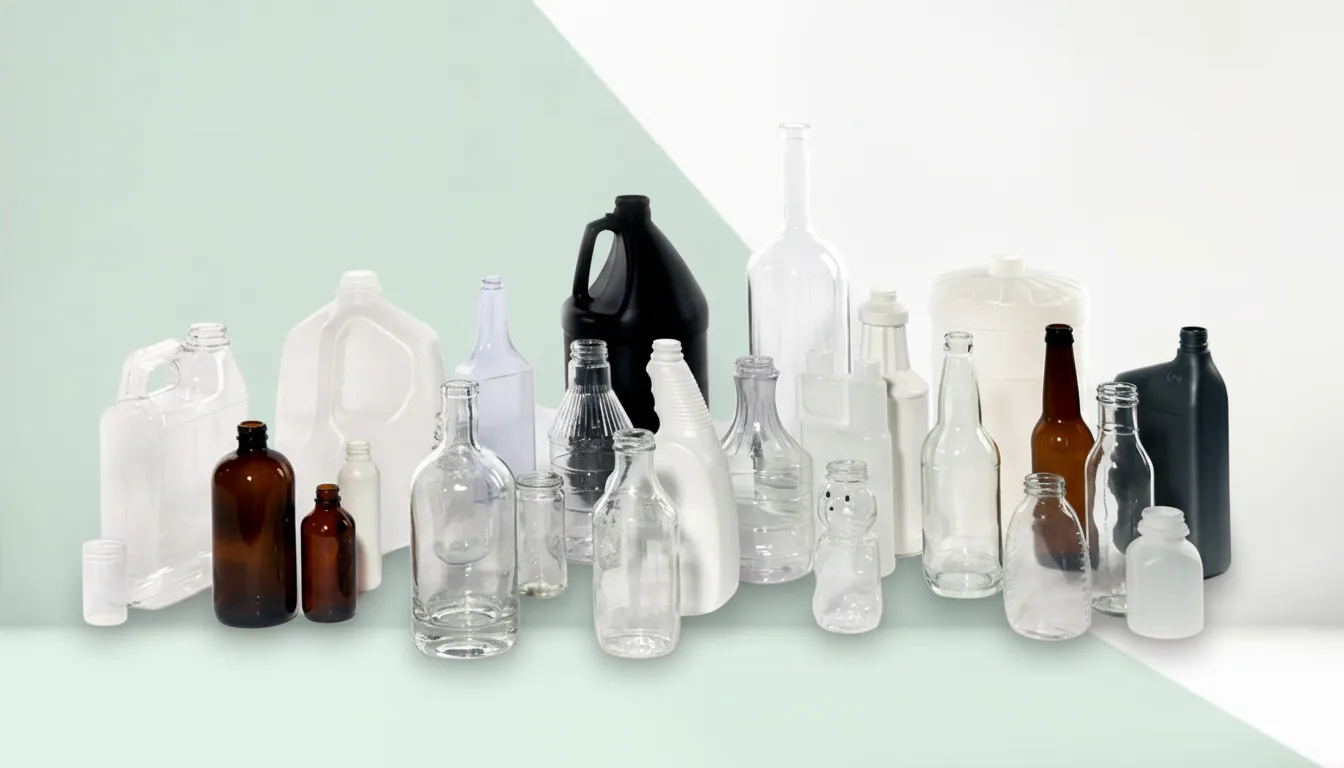
Car interior cleaning products occupy a unique position in the automotive aftermarket: they are simultaneously a functional maintenance chemical and a consumer lifestyle product. A dashboard cleaner, fabric upholstery spray, leather conditioner or multi-surface detailing spray must perform a specific cleaning function on a specific substrate — vinyl, leather, fabric, rubber, glass — without streaking, leaving residue or damaging surface treatments. But it also sits on a garage shelf, in a detailing bag or photographed on an Instagram grid where its packaging visual quality communicates the brand’s market positioning as clearly as any advertising. This dual functional-aesthetic requirement converges on a packaging specification that injection stretch blow molding fulfils more completely than any alternative production method: the optical clarity and surface quality to command premium shelf and screen presence, the neck precision to support reliable trigger spray application at high filling-line throughput, and the lightweight PET construction that the growing e-commerce distribution of car care products demands for cost-effective postal delivery.
The Car Interior Cleaner Market: Rapid Growth Across Multiple Substrates
The Australian car interior detailing market has expanded substantially since 2020, driven by three structural trends: the rise of automotive detailing as a skilled hobby with dedicated enthusiast communities generating demand for professional-grade interior products; the post-pandemic hygiene consciousness that established regular interior sanitising and deep-cleaning as a normalised vehicle maintenance behaviour across a broader consumer base; and the rapid growth of automotive accessory e-commerce, which enabled niche detailing brands to reach national audiences without retail distribution costs, creating demand for premium-packaged interior care products across price points from $8 to $45 per unit.
The product substrate diversity of the car interior cleaner category creates a packaging brief that is more demanding than standard automotive maintenance chemicals. A complete interior detailing range may include: alkaline all-purpose cleaner (APC) for fabric upholstery and plastic trim (pH 9–12); pH-neutral glass cleaner for windscreen and window glass (streak-sensitive formulation requiring streak-free evaporation); leather-specific cleaner and conditioner (pH 5–7, emollient-based); rubber and trim protectant (silicone or water-based polymer); and antibacterial multi-surface spray for hard interior surfaces. Each product type involves different surfactant systems, active chemicals and fragrance profiles — yet a coordinated range demands a consistent bottle silhouette to communicate product family identity across all SKUs at retail, a uniformity that ISBM injection blow molding achieves through its dimensional repeatability.
Chemical Compatibility Across Interior Cleaner Formulation Types
Alkaline All-Purpose Cleaners (APC)
Alkaline all-purpose cleaners at pH 9–12 — the workhorses of car interior deep cleaning — present the highest pH exposure that standard PET encounters in automotive care packaging. At pH up to 10, standard bottle-grade PET (IV 0.76–0.82 dL/g) maintains acceptable chemical resistance across normal retail storage temperatures up to 40°C, with no measurable hydrolytic degradation in 30-day immersion testing. Above pH 11 — the range of concentrated APC products diluted by the consumer before use — the rate of alkaline hydrolysis of PET’s ester linkages accelerates, potentially causing measurable IV reduction in the bottle wall and surface attack after extended contact periods. For concentrated APC concentrate bottles (pH 11–12) with 12–24 month shelf lives, the packaging specification should include extended 60-day immersion testing at 50°C and wall gauge adjustment to provide adequate material reserve above the minimum mechanical performance threshold even after the hydrolytic IV loss that sustained high-pH contact produces.
pH-Neutral Glass and Multi-Surface Cleaners
pH-neutral interior cleaners (pH 6–8) are the most PET-compatible products in the interior cleaning range — their near-neutral chemistry places minimal stress on the packaging polymer, and the surfactant and alcohol co-solvent systems at typical use concentrations (IPA 5–15%, non-ionic surfactants 1–3%) fall well within PET’s demonstrated compatibility envelope. The critical performance requirement for glass cleaner packaging specifically is that the bottle must remain dimensionally stable and surface-mark-free under the repeated wipe-down contact that the user applies to the bottle exterior while cleaning glass surfaces — a scenario where the bottle exterior contacts IPA-based cleaning product through the wiping cloth. Standard ISBM PET body surface shows no surface attack from IPA contact at typical glass cleaner concentrations in ambient-temperature conditions.
Leather Cleaners and Conditioners
Leather cleaner and conditioner formulations — mildly acidic (pH 5–7), emollient-rich with plant-extract actives, lanolin or synthetic polymer conditioners — represent the most chemically benign products in the interior care category from a PET compatibility standpoint. Their combination of near-neutral pH, water as the dominant carrier and low organic solvent loading produces no meaningful compatibility risk with standard bottle-grade PET across extended shelf-life periods. The packaging engineering challenge for leather care products is primarily aesthetic: the emollient and conditioning agents in these products can leave visible residue on the bottle exterior if the dispensing geometry allows product drip-back onto the label area, creating a used-product appearance that undermines premium positioning. ISBM’s precision pour-lip geometry and the controlled break-point of the trigger spray nozzle attachment — both determined by the accuracy of the injection-formed neck finish — minimise drip-back by ensuring the spray-nozzle seal prevents reverse flow and the trigger resting position does not allow residual product to seep out at the nozzle tip.

Trigger Sprayer Compatibility and Neck Finish Precision
The trigger sprayer is the defining dispensing format for car interior cleaner products — virtually every retail SKU in the 250ml–750ml range uses a 28mm trigger sprayer assembly. The functional performance of the trigger sprayer across the product’s service life depends critically on the dimensional accuracy of the bottle neck: the 28/400 or 28/410 thread profile must be held within ±0.10mm on pitch diameter to prevent the two failure modes that define trigger sprayer quality problems in the automotive care category. The first failure mode is inadequate sealing under repeated trigger actuation, where a loosely threaded sprayer rocks on the neck during use and allows product to migrate upward between the thread faces, causing contamination of the cap collar and product drip from the neck-collar junction. The second is over-tight thread engagement, where dimensional variability above nominal causes the trigger collar to bind on the bottle threads during consumer removal, often resulting in cross-threading that strips the thread form and renders the bottle non-resealable.
Χύτευση με έγχυση, τέντωμα και εμφύσηση eliminates both failure modes through its injection-stage neck formation: the 28/400 or 28/410 thread pitch diameter is formed during injection moulding with the same dimensional accuracy as a standalone injection-moulded component — ±0.08–0.10mm across all cavities in multi-cavity tooling — providing the thread engagement consistency that high-speed trigger sprayer assembly at 200+ bottles per minute demands without any increase in sorting rejection rate from thread non-conformance. This neck precision advantage directly reduces the filling line downtime from trigger sprayer jamming events that affects operations running more variable-geometry blow-moulded bottle formats.
Premium Aesthetics for Detailing Brand Positioning
Brand Coherence Across a Multi-SKU Interior Care Range
Car interior cleaner brands that target the enthusiast detailing market — where consumers invest $100–$400 per detail session and actively compare product portfolios across specialist forums, YouTube reviews and Instagram content — compete primarily on brand aesthetic coherence and perceived quality of both the product and its packaging. A detailing range where the dashboard cleaner, leather conditioner, glass spray and fabric protector share a common bottle silhouette with consistent shoulder form, label panel geometry and surface treatment creates the coordinated product family appearance that positions a brand at the premium tier regardless of the individual unit price. ISBM’s dimensional consistency — body height variation within ±0.5mm, shoulder form deviation within ±0.4mm across all production cavities — enables this silhouette coherence across the range without the inter-bottle geometric variation that undermines range coherence in extrusion blow-moulded alternative formats.
Surface Quality, Embossing and Label Panel for Detailing Brands
Interior detailing brands in the premium tier use bottle embossing — the brand logo, a product category icon, or a decorative panel pattern — as a differentiator that signals premium production quality over generic label-only competitors. ISBM’s high-pressure blow contact (32–40 bar) against glass-polished tooling reproduces embossed features at 0.05–0.8mm depth with the sharpness that brand marks and logotype embossing require for visual clarity under the varied lighting conditions of retail shelf, e-commerce photography and garage detailing environments. Label panel flatness within ±0.2mm is required for clean adhesion of the premium pressure-sensitive labels that interior detailing brands typically specify — larger format, full-colour printed labels with matte or gloss laminate finishes that are a significant component of the brand’s visual identity and require the dimensional consistency of ISBM to adhere correctly across the production run.
ISBM Production Workflow for Car Interior Cleaner Bottles
Interior detailing bottle production on ISBM equipment combines the precision quality standards of premium packaging with the output efficiency that competitive car care product unit costs require — a combination that no alternative bottle production method delivers simultaneously.
① Resin and Masterbatch Preparation
PET at IV 0.76–0.82 dL/g is dried to below 50 ppm moisture at 160–170°C for 4–6 hours. For ranges with coordinated colour — common in professional detailing lines where each substrate cleaner has a distinctive brand colour (blue for glass, green for all-purpose, tan for leather) — the colour masterbatch per SKU is documented, pre-dried and blended gravimetrically at ±0.05% to achieve the ΔE ≤0.8 within-run consistency that coordinated range display at retail demands.
② Precision 28mm Neck Injection
The 28/400 or 28/410 trigger sprayer neck is formed during injection at ±0.08–0.10mm pitch diameter tolerance. Injection velocity profiling is optimised for streak-free tinted preform fill across all cavities in the production tool. For interior cleaner ranges where all SKU colours share the same bottle mould, the injection stage’s colour changeover protocol — purge, colour switch, confirm-and-continue — is executed with minimal colour bleed between SKUs to maintain labelling run efficiency across the product range schedule.
③ Conditioning for Balanced Body Properties
Body conditioning at 104–112°C achieves the balance between adequate wall stiffness for trigger sprayer actuation resistance and the surface quality that the polished blow mould cavity transfers to the bottle exterior. For premium detailing brands specifying embossed logos at depths of 0.3–0.6mm, conditioning temperature is confirmed at the upper range of 108–112°C to ensure the PET has sufficient plasticity to drive completely into the embossed cavity features at blow pressure without the incomplete feature fill that cooler conditioning produces on deep-embossed brand geometry.
④ High-Pressure Blow for Surface and Embossing
High-pressure blow at 32–40 bar against glass-polished tooling (Ra 0.05–0.10µm) with dwell of 3.5–5 seconds achieves the surface gloss (88–96 GU at 60°) and embossing sharpness that premium interior detailing brand packaging requires. The mould cooling at 8–14°C freezes biaxial orientation — locking in the surfactant and IPA barrier performance that prevents concentration change and label delamination from IPA contact on the bottle exterior during consumer use.
⑤ Vision Inspection and Range Colour Verification
Inline vision inspection screens for haze patches, colour streaks, embossing voids and label panel flatness deviation. For multi-SKU interior cleaner ranges running sequential colour campaigns on the same tool, spectrophotometer colour verification confirms the target ΔE ≤0.8 standard across the full range’s colour set — essential when the brand’s retail shelf display depends on the colour-coded range communication being visually consistent across all SKUs presented simultaneously in a planogram fixture.
Machine Parameters for Interior Cleaner Bottle Production
| Parameter | Interior Cleaner Range | Effect on Detailing Bottle Quality |
|---|---|---|
| Injection barrel temp | 270–288°C | Streak-free colour dispersion; neck form accuracy |
| Masterbatch dosing | ±0.05% gravimetric | Range colour coding ΔE ≤0.8 — planogram coherence |
| Body conditioning temp | 104–112°C | Embossing feature fill; spray-actuation stiffness |
| High-pressure blow | 32–40 bar | Gloss 88–96 GU; embossing sharpness; panel flatness |
| Mould cavity finish | Ra 0.05–0.10µm (clear/tinted) / Ra 0.8–1.5µm (frosted) | Premium visual quality for retail and e-commerce photography |
| Cycle time (500ml, 4-cav) | 15–22 seconds | Output 3,600–5,760 bottles/hr; competitive unit cost |
The 500ml interior cleaner bottle format — the dominant retail SKU for spray-application car care products — achieves output rates of 3,600–5,760 bottles per hour in 4-cavity ISBM configurations, which supports the production economics that competitive car care pricing requires. At these rates, a single ISBM machine running two shifts can supply a substantial portion of a mid-size Australian automotive care brand’s annual volume requirements for a single SKU, while the four-station architecture’s independent conditioning station allows rapid format switching between different interior cleaner product sizes — 250ml travel format, 500ml standard retail, 750ml value format — through preform tooling exchange and parameter recipe recall without full machine teardown. This scheduling flexibility supports the multi-SKU product launch programmes that growing automotive care brands execute as they expand their interior cleaning range.
E-Commerce Packaging Design for Automotive Detailing Brands
The rise of direct-to-consumer automotive care e-commerce — through brands’ own websites, Amazon Australia and specialist detailing platforms — has altered the packaging brief for interior cleaner bottles in ways that benefit ISBM’s capabilities specifically. E-commerce product listing photography requires the bottle to read sharply against a pure white background, with the product colour and any embossed brand elements visible at 1,000 × 1,000 pixel resolution — a photographic bar that the high-gloss, glass-like clarity of ISBM PET passes easily while the haze, surface roughness and colour saturation limits of HDPE extrusion alternatives make them visually inferior options at equivalent production cost.
Transport durability for postal delivery places ISBM PET ahead of glass alternatives in a category that has traditionally borrowed premium aesthetic cues from fine fragrance glass bottles. A 500ml interior cleaner bottle shipped in an e-commerce carton sustains multi-axis impact loads at drop heights of 0.5–1.0m from postal handling conveyor systems — loads that glass packaging fails with a meaningful frequency rate, creating product returns, customer satisfaction failures and fulfilment cost impacts. ISBM PET’s biaxially oriented molecular structure provides the impact resistance to survive postal distribution without the weight and breakage liability that glass imposes, while delivering the optical quality and premium surface character that distinguishes premium detailing brands from the mass-market commodity products sold in automotive chains. This combination of postal-safe durability and premium aesthetics is the packaging engineering case that has driven the rapid adoption of ISBM PET in the Australian automotive e-commerce detailing sector over the past four years.
Sustainability, Concentrate Refill and Circular Economy for Interior Care
The car interior cleaner category is well-positioned to participate in the refill economy model that Australian consumers and retailers are increasingly receptive to. Concentrate-and-dilute formats — where a premium durable spray bottle is sold once and refilled from a small concentrate pouch or refill bottle — reduce single-use plastic consumption by 60–80% per cleaning session while maintaining the premium brand experience that detailing consumers expect. ISBM’s neck finish precision (±0.08–0.10mm on thread diameter) is essential for the refill interface: the concentrate’s dispensing nozzle must mate reliably with the spray bottle’s trigger sprayer connection without the fitment variability that would cause spillage during consumer refill operations, particularly in the garage environment where the consequences of product drip are immediately visible on floor surfaces and vehicle paintwork.
Car care bottle packaging recyclability is supported by ISBM PET’s mono-material construction. Interior cleaner bottles with polyolefin trigger sprayers (which can remain attached for kerbside collection according to ARL guidelines for recoverable closure materials), water-soluble label adhesive and no metal components are eligible for ARL ‘Recycle’ designation and are accepted by Australian kerbside MRF NIR optical sorters without pre-sortation. For APCO annual reporting, the combination of lightweighted PET bottle, recyclable mono-material construction and concentrate-format reduced volume per cleaning event provides the packaging sustainability narrative that positions premium interior care brands ahead of standard automotive chemical competitors on retail sustainability scorecards and in consumer category purchasing research.