Medical-Grade Disinfectants: The Most Chemically Aggressive Healthcare Container Application
Medical disinfectants used in hospital and clinical settings differ fundamentally from the consumer hand sanitiser and surface spray products addressed in the earlier hospital disinfectant chapter — they are higher-concentration, more potent formulations used for specific clinical purposes that consumer products cannot serve. Operating theatre disinfectants, instrument reprocessing solutions, endoscope high-level disinfectants, surgical site preparation agents, and centralised decontamination unit cleaning solutions are formulated at concentrations and with biocide classes that require container materials demonstrating chemical resistance that goes significantly beyond standard PET’s compatibility range. The container for a medical-grade disinfectant must maintain its structural integrity, closure seal, and contents purity for the product’s entire approved shelf life and specified in-use period — because a leaking or degraded container of concentrated glutaraldehyde in an endoscope reprocessing area creates an occupational health hazard, not merely a product quality concern.
Le machine de moulage par injection-étirage-soufflage serves medical disinfectant container production for the specific concentration ranges and formulation types where PET’s performance envelope — chemical resistance, physical durability, and closure precision — provides an appropriate container solution. This guide maps those applications, identifies the concentration boundaries that determine PET applicability versus alternative material selection, and provides the specific technical requirements for ISBM containers in medical disinfectant service.
Australia Ever-Power Injection Stretch Blow Moulding Machine Co., Ltd, Condell Park NSW 2200, supports medical disinfectant manufacturers and hospital infection control supply operations with ISBM container solutions calibrated for the specific chemical resistance and regulatory compliance requirements of medical-grade disinfectant applications.
Medical Disinfectant Formulation Types and PET Applicability Assessment
Medical disinfectants span a wide range of biocide classes with substantially different container material compatibility requirements. Understanding where PET ISBM is appropriate — and where it is not — is the foundation of responsible medical disinfectant container selection.
Quaternary Ammonium Medical Disinfectants: PET Compatible
Medical-grade quaternary ammonium disinfectants (benzalkonium chloride at 0.05–2.0%, didecyldimethylammonium chloride, and combination quat/alcohol formulations) are the most widely used surface and environmental disinfectants in Australian hospitals. At clinical use concentrations, quat disinfectants are compatible with PET ISBM containers — the cationic quaternary ammonium compounds do not attack the PET ester backbone, and the adsorption of quat onto PET surfaces is manageable (confirmed by concentration stability studies to be within the active ingredient specification over the approved shelf life). For concentrated quat formulations supplied for dilution before use (5–20% quat concentrate), PETG provides better chemical resistance than standard PET at these high concentrations, and formal compatibility testing at the specific concentrate concentration and temperature is required. Ready-to-use quat spray and wipe solutions (0.1–0.5% quat) are fully compatible with standard PET ISBM containers at standard storage conditions.
Chlorhexidine-Based Clinical Disinfectants: PET Compatible with Monitoring
Chlorhexidine gluconate (CHG) medical disinfectants — 0.5% CHG in 70% alcohol for skin antisepsis, 2% CHG aqueous for wound irrigation antisepsis, 4% CHG surgical scrub solution — present a moderate adsorption challenge for PET as described in the earlier hospital disinfectant chapter. CHG adsorption onto PET at clinical concentrations is manageable for products with 12–24 month shelf lives, confirmed through stability studies measuring CHG concentration by HPLC at defined time points. For CHG products requiring extended shelf lives (emergency kit applications targeting 3–5 year shelf lives), the cumulative CHG adsorption over the extended period must be specifically confirmed in a real-time stability study rather than extrapolated from shorter accelerated data. CHG in 70% alcohol (the standard pre-surgical skin antisepsis formulation) requires assessment of both the CHG adsorption and the high-alcohol PET interaction described in the earlier chapter — PETG is recommended for CHG/alcohol combination products at 70% alcohol concentrations with shelf lives exceeding 12 months.
Low-Concentration Hydrogen Peroxide and Peracetic Acid: PET with Conditions
Accelerated hydrogen peroxide (AHP) disinfectants at 0.5–3% H₂O₂ — used for environmental surface decontamination in hospital infection control and for wound irrigation — are compatible with PET at ambient storage temperatures for 12-month shelf lives, with formal stability confirmation required. Above 3% H₂O₂, PETG is preferred over standard PET. Peracetic acid (PAA) disinfectants — used for instrument reprocessing at 0.1–0.2% peracetic acid — are more aggressive oxidisers than H₂O₂ at equivalent concentrations due to PAA’s higher oxidation potential. For PAA disinfectants at clinical reprocessing concentrations, PETG may be adequate for single-use or short-term storage containers (the instrument reprocessing concentrate is typically prepared fresh and used within 24 hours); for PAA formulations requiring multi-week storage, HDPE is a more chemically conservative choice that avoids the PET oxidation stability questions entirely.
High-Concentration Formulations: Where PET is NOT Appropriate
Certain medical disinfectant formulations are outside PET’s compatibility envelope and require alternative container materials: glutaraldehyde 2% (alkaline activated) — the classical high-level disinfectant for endoscopes — is incompatible with PET due to the alkaline pH (pH 8.0–9.0 after activation) and the aldehyde chemistry that can react with PET surface groups over the product’s in-use period; use HDPE or polypropylene. Isopropanol ≥70% as pure alcohol preparations — while short-term PET exposure is acceptable, long-term storage of IPA at ≥70% causes progressive PET surface interaction; use HDPE. Phenol-based disinfectants above 1% — phenol compounds are effective PET swelling agents at medical disinfectant concentrations; use HDPE. Sodium hypochlorite (bleach) above 1% active chlorine — at hospital strength (5,000–10,000 ppm available chlorine), oxidative attack on PET is a concern for extended storage; HDPE is preferred for concentrated hypochlorite solutions. Ever-Power provides material selection guidance for all medical disinfectant formulations — contact [email protected] for a specific compatibility assessment.
Anti-Leak Closure Engineering for Medical Disinfectant Bottles
Medical disinfectant leakage is an occupational health incident as well as a product quality failure — a leaking bottle of concentrated chlorhexidine in a clinical storage area creates skin sensitisation and irritation risk for clinical staff, and a leaking hospital surface disinfectant creates slippery floor hazards and chemical exposure risks that trigger workplace health and safety reporting obligations under Safe Work Australia’s WHS regulations. The anti-leak requirement for medical disinfectant containers is therefore more stringent than for food or standard consumer products — zero tolerance for any form of liquid leakage under all foreseeable storage and use conditions.
Trigger Spray Closure Anti-Leak Design
Trigger spray closures on medical surface disinfectant bottles must prevent liquid leakage both when stored upright (liquid head pressure on the valve seal) and when stored or transported on their sides (liquid covering the valve from an unintended angle). The trigger spray’s ball check valve must seat reliably against a precision-machined valve seat in the spray head to prevent drip when not actuated. The ISBM bottle’s neck thread engagement with the trigger spray connector must be sufficiently tight and deep (±0.08mm thread profile consistency across all production cavities) to prevent the gradual loosening under thermal cycling that can develop in spray bottles stored in temperature-variable hospital supply rooms. For medical disinfectant spray applications, thread engagement torque testing on production containers from all cavities confirms that the trigger spray engagement is within the anti-leak specification under the torque limits applied by hospital supply staff during spray head installation and removal.
Pump Closure Drip Prevention for Dispenser Bottles
Medical hand hygiene pump dispensers — wall-mounted ABHR dispensers, bedside CHG pump bottles, and portable clinical soap dispensers — must not drip between actuations, as drips of concentrated clinical disinfectant onto floors, patient bed surfaces, or clinical equipment create both safety hazards and contamination concerns. The ISBM bottle’s neck finish must engage the pump’s anti-drip valve mechanism reliably — specifically, the neck bore’s roundness (±0.06mm ovality specification) provides the circular seal interface that the pump’s stem O-ring requires for anti-drip performance. A non-round (oval) neck bore compromises the O-ring seal on the minor diameter axis, creating a potential drip pathway that the pump manufacturer’s anti-drip design cannot compensate for. ISBM’s injection-formed neck bore achieves ±0.06mm roundness consistently across all production cavities — the dimensional basis for reliable pump anti-drip performance at all fill levels and after all actuations.
Tamper-Evident Features for Clinical Authentication
Medical disinfectants in hospital supply chains are subject to authentication requirements — the clinical staff must be confident that the product in a refill bottle has not been diluted, substituted, or tampered with between the manufacturer and point of use. This is a genuine concern in healthcare facilities that have experienced cleaning product adulteration events (substitution of water or diluted product for the stated disinfectant in the container), which have directly contributed to healthcare-associated infection outbreaks. Induction foil tamper-evidence seals on medical disinfectant bottles provide the visible tamper-evidence that clinical staff rely on as authentication at point of use — an intact foil seal before first use confirms the product has not been accessed since manufacturer filling and sealing. The ISBM bottle’s induction seal surface specifications (flatness ±0.10mm, sealing land width ±0.15mm) provide the dimensional consistency that reliable induction seal formation requires at the medical disinfectant filling line’s operating speed and the clinical authentication standard the product requires.

High-Temperature Durability for Medical Disinfectant Applications
Medical disinfectant containers are used in environments where temperature exposures above standard ambient conditions occur regularly — autoclaving areas (where steam and residual heat affect the ambient temperature), centralised sterile services departments (CSSD) with elevated ambient temperatures from sterilisation equipment, outdoor chemical stores in Australian summer conditions reaching 40–50°C, and vehicle-transported clinical supply kits in which vehicle interior temperatures can reach 70°C in direct summer sun. These temperature exposures create specific durability requirements for the container material.
For PET ISBM medical disinfectant containers in standard hospital storage environments (maximum ambient 40°C), the temperature durability is adequate with dimensional stability confirmation through the stability programme at 40°C/75%RH accelerated conditions. At 40°C, standard PET remains rigid and dimensionally stable — the container body does not creep or distort under the liquid head pressure of the filled container. For disinfectant containers stored in outdoor chemical stores at 50°C in extreme Australian summer conditions, heat-set PET (produced in ISBM with elevated mould temperature during the blow cycle) provides the additional thermal stability margin that approaches the product’s temperature stability limit (most chemical disinfectants have reduced efficacy stability above 30°C) rather than the container’s limit. For disinfectant containers that may be briefly exposed to temperatures above 60°C (vehicle kit storage in direct summer sun), PETG’s higher softening temperature than standard PET provides additional margin — but the discussion with the manufacturer should also address whether the disinfectant’s own stability at >60°C is acceptable, as most disinfectant products have maximum storage temperature limits well below 60°C regardless of container material.
The container’s high-temperature durability specification should be written to match the product’s approved storage temperature label — not to the theoretical maximum the material can withstand. If the approved storage condition is “below 30°C,” the container needs to perform at 30°C, not at 70°C — designing and testing to 30°C (with a 10°C safety margin taking the design limit to 40°C) is the appropriate engineering approach. Contact [email protected] for temperature durability specification for your specific medical disinfectant application and storage conditions.
Long-Term Use Durability for Medical Disinfectant Bottles
Unlike consumer disinfectant products where a bottle is purchased, used within weeks, and discarded, medical disinfectant containers in hospital settings are often in active use for extended periods — a 5L surface disinfectant bottle in a CSSD may be in use for 2–4 weeks as the bottle is progressively depleted; a 1L CHG handwash dispenser is refilled repeatedly over months before being retired; a clinical antiseptic in a storage cabinet may sit partly used for 1–3 months between access events. Long-term use durability means the container must maintain its physical integrity and closure performance not just through a standard shelf life period in sealed condition, but through the extended active use period including repeated opening and reclosing, mechanical handling, and the chemical exposure from residual product on the exterior of the container neck and bottle body.
The long-term chemical exposure from external disinfectant residue on the bottle exterior is a distinct durability challenge from the internal chemical exposure through the bulk formulation. When disinfectant is dispensed from a spray or pump bottle, droplets of the product may land on the bottle’s exterior surface — concentrated relative to the bulk formulation if the droplets partially evaporate before they are wiped or rinsed. These evaporation-concentrated disinfectant residues on the exterior surface produce higher-concentration chemical contact than the internal bulk formulation, and over repeated dispensing events over weeks, they can cause surface effects (haze, tackiness, label adhesion loss) that would not occur from the bulk formulation contact alone. ISBM PET’s chemical resistance extends to the exterior surface exposure — the biaxially oriented PET wall provides the same chemical resistance on both interior and exterior surfaces. For medical disinfectant containers in extended use environments, specifying a minimum wall thickness in the body zone (0.6–0.8mm for 250–500ml containers) provides a sufficient chemical resistance depth to prevent through-wall degradation from the combined interior and exterior exposure over the in-use period.
The closure system’s long-term durability is the second critical long-term use requirement — a trigger spray head that functions correctly at the first use must function equally well at the 200th use 4 weeks later. ISBM’s neck thread dimensional consistency (±0.08mm thread profile) ensures that the trigger spray’s engagement thread does not loosen from repeated installation and removal of the spray head over the bottle’s use life, and that the pump closure’s neck engagement maintains its anti-drip sealing performance across the full use life. Long-term closure performance testing (50–200 actuation cycles on production samples followed by leak test and visual inspection confirming no degraded performance) is the qualification protocol that confirms the closure system meets the long-term use durability requirement for medical disinfectant applications.
Regulatory Framework for Medical Disinfectant Containers in Australia
Medical disinfectants in Australia are regulated under a dual TGA-APVMA framework depending on the product’s intended use and the nature of the active ingredient.
TGA — Listed or Registered Medicines
Medical disinfectants making therapeutic claims about specific disease prevention or wound antisepsis (surgical skin preparation, wound disinfection) are regulated as listed or registered medicines on the ARTG. Container documentation requirements: material compliance, stability evidence, CRC qualification if required. GMP manufacturing obligation.
APVMA — Agricultural and Veterinary Chemicals
Environmental disinfectants and surface disinfectants making claims about microbial kill on surfaces (not human therapeutic claims) may fall under APVMA regulation for biocidal products. The APVMA container requirements specify chemical resistance, label requirements, and CRC for scheduled active ingredients in the agricultural/veterinary chemical regulatory framework.
Industrial Chemicals Act 2019 (AICIS)
Industrial-use disinfectants and surface decontaminants without therapeutic claims or agricultural use designations fall under AICIS. GHS hazard labelling mandatory for classified hazardous chemicals. Container requirements: chemical resistance, GHS-compliant label panel, CRC for scheduled substances, safe work documentation.
Medical Device Regulation (TGA)
Medical device reprocessing products (instrument disinfectants, endoscope high-level disinfectants when regulated as accessories to medical devices) may be classified as medical device accessories under the TGA Medical Devices framework. ISO 10993 biocompatibility (for residue contact) and ISO 11135 sterilisation compatibility assessment may apply.
Medical Disinfectant Container Format Range
Medical disinfectant products in hospital and clinical settings are packaged across a range of formats serving different clinical use contexts, each with specific container design requirements.
| Format | Volume | Clinical Application | Closure / Dispensing |
|---|---|---|---|
| Skin antiseptic spray | 100ml – 250ml | Pre-surgical skin preparation, IV site disinfection | Fine mist trigger spray |
| Surface disinfectant spray | 500ml – 750ml | Clinical surface decontamination (beds, trolleys) | Standard trigger spray 28/410 |
| CHG / antiseptic pump bottle | 250ml – 500ml | Surgical scrub, patient bathing, hand antisepsis | Lotion pump 24/410 or 28/410 |
| Concentrated disinfectant for dilution | 1L – 5L | CSSD floor cleaning, environmental disinfection | Screw cap + induction seal |
| Single-use disinfectant wipe solution | 50ml – 150ml | Point-of-care equipment cleaning | Flip-top or snap-break tip |
GHS Hazard Labelling and Safe Storage Requirements
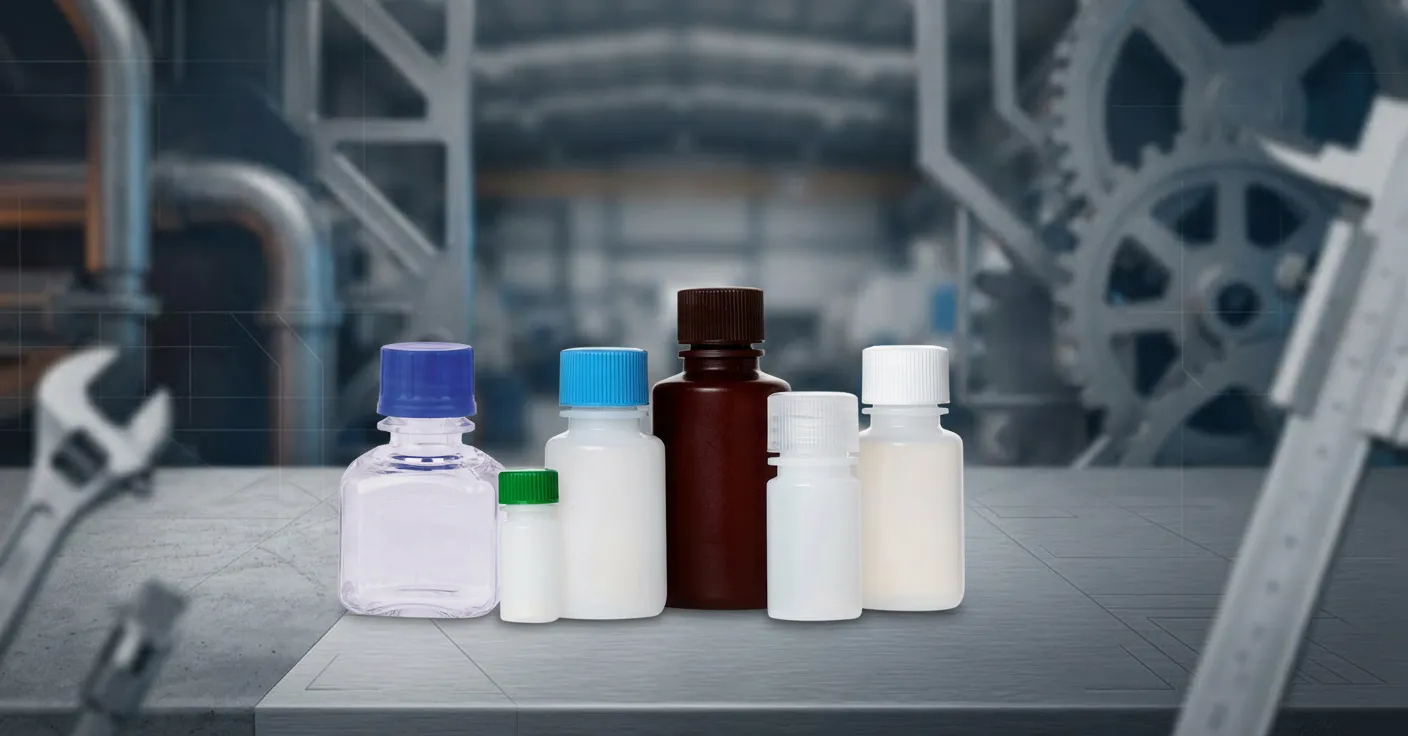
Medical disinfectants classified as hazardous chemicals under the WHS Regulations (Hazardous Chemicals Code) — which includes the majority of hospital cleaning products and clinical disinfectants — require GHS-compliant labels on all workplace supply containers and must be accompanied by Safety Data Sheets (SDS) accessible to all workers who may handle the products. The ISBM container’s label panel must accommodate the GHS mandatory label elements at the minimum legible font size, with particular attention to the pictogram zone (which must be sufficient to display the required GHS pictograms at the minimum 15mm minimum dimension specified in the GHS standards) and the signal word and product identification (which must be the most prominent elements on the label by font size hierarchy).
Medical-grade disinfectants typically carry more hazard classes than consumer cleaning products — a concentrated quaternary ammonium disinfectant may carry Acute Toxicity Category 4 (Oral), Skin Corrosion/Irritation Category 2, Eye Damage Category 1, and Aquatic Toxicity Category 3 simultaneously — requiring the corrosion, exclamation mark, and environment pictograms plus their associated hazard and precautionary statements. This multi-pictogram labelling requirement for a 250ml trigger spray bottle is non-trivial — the ISBM bottle body must provide a label panel sufficiently large for all GHS elements at the specified minimum dimensions. ISBM’s custom body geometry capability allows the label panel area to be maximised in the bottle design brief, trading off body aesthetics for regulatory compliance where the GHS label requirements require a larger panel than a compact cylindrical body would provide.
For hospital and clinical buyers under Commonwealth and state government procurement frameworks, Safe Work Australia compliance documentation — including GHS labelling compliance certification and SDS — is a mandatory supplier qualification requirement. ISBM container manufacturers supplying medical disinfectant brands must be able to provide container GHS label panel area calculations and dimensional drawings confirming that the container geometry accommodates the required GHS label at the minimum standardised element dimensions. Contact [email protected] for GHS label panel engineering support for medical disinfectant ISBM containers.
Supply Chain and Production Considerations for Medical Disinfectant Containers
Medical disinfectant products have supply chain characteristics that make local ISBM production commercially attractive — high essential-use consumption in healthcare facilities, occasional acute demand surges from infection outbreaks or pandemic response, and the chemical nature of the products that makes offshore procurement more complex (hazardous chemical shipping regulations, customs documentation, shelf-life concerns during extended transit). For Australian medical disinfectant manufacturers, local ISBM container production eliminates all of these offshore supply chain complexities while providing the supply chain agility to respond to acute demand surges within days rather than weeks.
The COVID-19 pandemic’s impact on hospital disinfectant supply chains demonstrated the vulnerability of offshore-dependent container sourcing — when global demand for disinfectant products surged simultaneously in 2020, container supply from offshore manufacturers became unreliable or unavailable. Australian medical disinfectant manufacturers with local ISBM container production maintained supply continuity while offshore-dependent competitors experienced container shortages that limited their ability to produce and supply the healthcare facilities that needed product most urgently. This supply chain resilience argument is now a formal component of hospital supply chain security planning in Australian healthcare procurement — local manufacturing for critical infection control products is valued not just for day-to-day economics but for national health system resilience.
Production quality requirements for medical disinfectant ISBM containers — GHS label panel geometry, chemical resistance validation, anti-leak closure qualification, and GMP documentation for TGA-regulated products — are managed within Ever-Power’s pharmaceutical-grade quality management system. For medical disinfectant manufacturers requiring a complete supply chain security package (local production, GMP documentation, chemical resistance data, GHS label panel compliance), Ever-Power’s integrated ISBM development and supply programme provides the single-partner solution. Contact [email protected] for a medical disinfectant supply chain security programme consultation.
Ever-Power’s Medical Disinfectant ISBM Development and Supply Support
Australia Ever-Power provides medical disinfectant manufacturers, hospital supply companies, and infection control product developers with ISBM machine technology and application engineering support for the full medical disinfectant container range. The medical disinfectant support programme covers: formulation-specific chemical resistance assessment and material selection (PET vs PETG vs alternative materials for specific biocide formulations); anti-leak closure qualification (trigger spray thread engagement, pump anti-drip O-ring seal, induction foil integrity); high-temperature durability testing at storage temperature extremes; GHS label panel geometry engineering for regulatory compliance; and long-term use durability testing (200+ actuation cycle performance confirmation).
For TGA-regulated medical disinfectant products (listed or registered medicines under the ARTG), Ever-Power provides the pharmaceutical GMP documentation — IQ/OQ/PQ validation, material compliance certificates, batch records — that satisfies both TGA and hospital procurement qualification requirements. For APVMA-regulated and industrial chemical disinfectants, the GHS labelling compliance documentation and chemical resistance validation data support Safe Work Australia compliance certification.
Visit isbm-technology.com/contact-us or contact [email protected] to discuss your medical disinfectant container ISBM development and supply requirements.
Recommended Machine
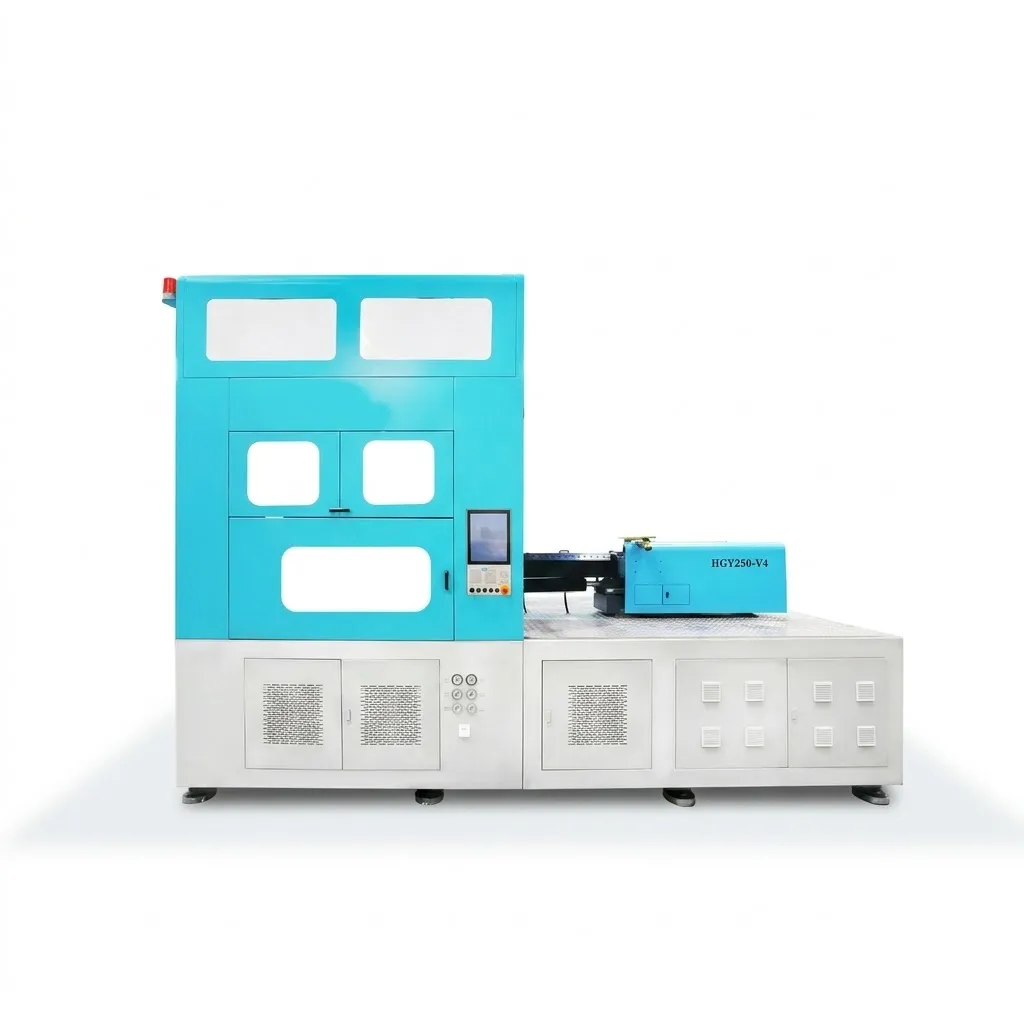
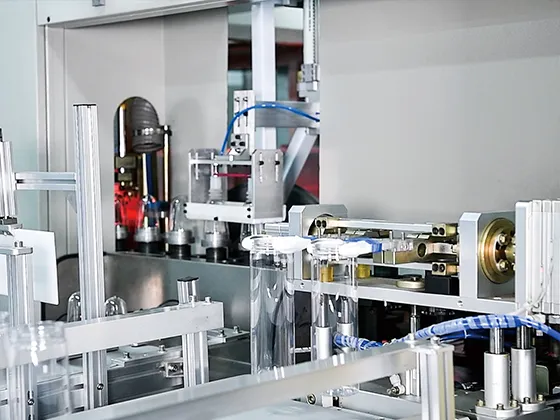
HGY250-V4 — Four-Station ISBM for Medical Disinfectant Container Production
For medical disinfectant container production spanning skin antiseptic sprays, surface disinfectant trigger spray bottles, CHG pump dispensers, and concentrated disinfectant formats in the 100ml–5L volume range, the HGY250-V4 four-station one-step ISBM machine provides the chemical-resistant container production capability that hospital-grade disinfectant packaging requires. The four-station design delivers consistent neck thread profile dimensions (±0.08mm) for anti-leak trigger spray and pump engagement across all production cavities — the dimensional foundation that zero-tolerance disinfectant leak performance requires. Both standard PET (for quat and low-concentration CHG applications) and PETG (for high-alcohol, high-concentration, or alkaline formulations) are processed with equal production capability, providing the material flexibility to serve the full medical disinfectant formulation range. GHS label panel geometry engineering is incorporated into the tooling design for each container format, ensuring mandatory GHS element dimensions are accommodated at the required minimum sizes. UV-stable masterbatch systems maintain colour coding for medical disinfectant category identification over extended hospital storage periods. PLC process data logging supports GMP batch documentation for TGA-regulated medical disinfectant products and GHS compliance documentation for APVMA and industrial chemical applications. The machine’s rapid changeover capability (90–150 minutes) enables a multi-format medical disinfectant container range to be served from a single platform with scheduled production campaigns.