The Cosmetic Packaging Imperative: Why Bottles Must Work as Hard as the Products Inside
In cosmetic retail, the bottle is never merely a container. It is the first and most persistent physical expression of the brand — the object a consumer picks up, holds, turns over, and reads before they interact with the product itself. In the compressed decision window of a department store beauty counter, a pharmacy shelf, or an online unboxing moment, the bottle’s optical quality, tactile weight, dimensional precision, and structural elegance communicate the brand’s quality positioning before any ingredient list or marketing claim is processed. Research across cosmetic categories consistently confirms that packaging drives purchase intent disproportionately to its functional role — consumers buying a premium facial serum or a prestige body lotion make their initial assessment of product value primarily through the packaging experience, not the product experience, because they have not yet opened the bottle.
These packaging performance demands — glass-like optical clarity, complex three-dimensional form, tactile premium weight, surface finish precision, dimensional consistency at high production volumes — converge precisely on the capabilities that the injection stretch blow molding process delivers. ISBM has become the production technology of choice for cosmetic bottle packaging not through marketing positioning but through demonstrated performance: it produces, consistently and at commercial scale, the optical and structural quality that cosmetic brands require at a production economics that makes the quality commercially viable rather than aspirationally expensive.
Australia Ever-Power Injection Stretch Blow Moulding Machine Co., Ltd, based in Condell Park NSW, provides cosmetic bottle producers and brand-owned packaging operations with the injection stretch blow molding machine technology and technical support needed to produce packaging that meets the most demanding cosmetic brand specifications. This article examines in depth why ISBM has earned its position as the cosmetic packaging industry standard.
The Physics of Cosmetic Bottle Clarity: How ISBM Achieves Glass-Like Optical Performance
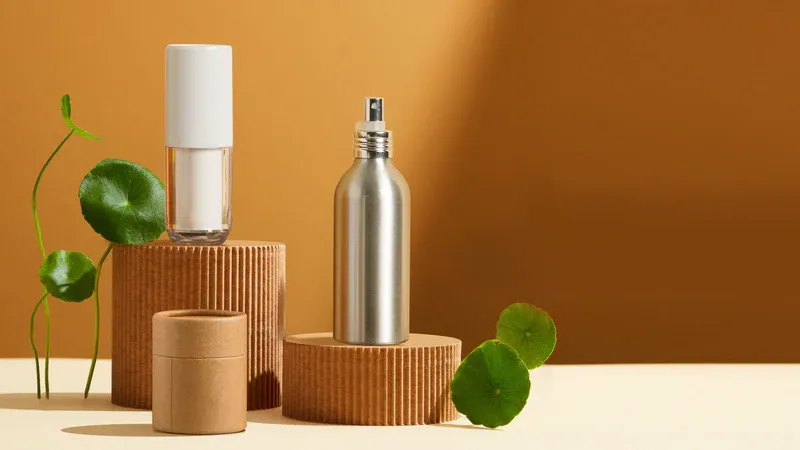
The optical performance that distinguishes a premium cosmetic bottle from a commodity personal care container is measurable: it begins with the haze value (the percentage of transmitted light that is scattered rather than transmitted directionally) and extends to the surface reflectivity, the depth effect visible through the bottle wall, and the luminosity of the product inside under display lighting. These optical properties are not incidental — they are the direct result of specific choices in material, process parameters, and tooling specification that must be actively engineered rather than passively produced.
PETG: The Premium Material for Cosmetic ISBM
While standard PET produces excellent clarity for beverage applications, the most demanding cosmetic packaging specifications — those requiring glass-comparable optical quality, enhanced impact resistance, and the ability to process thick-wall “glass-replica” designs — are best served by PETG (polyethylene terephthalate glycol-modified). PETG is a copolymer that modifies the standard PET structure to reduce its tendency toward thermally induced crystallisation, preserving the fully amorphous, water-clear state that maximises optical clarity. Because PETG resists the haze-inducing crystallisation that can occur in standard PET at borderline processing temperatures, it provides a wider processing window and more consistent optical results across extended production runs — particularly important for cosmetic operations where the brand’s visual standard requires zero-defect optical quality on every single bottle. ISBM machines capable of processing both PET and PETG — available in Ever-Power’s product range — give cosmetic bottle producers the material flexibility to select the most appropriate polymer for each packaging specification.
Cavity Surface Polish and Its Optical Effect
The optical quality of an ISBM cosmetic bottle is a joint product of material quality and mould cavity surface quality. A mirror-polished cavity (Ra ≤ 0.04–0.05 µm) transfers its surface quality to the bottle through the high-pressure contact of the blown material against the mould wall, producing a bottle surface that acts as a near-perfect optical interface. Under the directional lighting typical of cosmetic retail display environments — spotlights, LED downlighters, case lighting — a mirror-surface ISBM bottle appears liquid, luminous, and glass-equivalent. A cavity with even minor surface degradation (Ra 0.10–0.20 µm from erosion or inadequate maintenance) produces a bottle surface with micro-scale irregularities that scatter display lighting into a diffuse, slightly matte appearance that immediately signals a quality step-down. For cosmetic brands where packaging quality is a brand equity investment, cavity surface maintenance is a product quality programme with direct brand impact.
Thick-Wall Cosmetic Bottles: Creating Visual Weight and Glass Illusion
Premium cosmetic bottles — particularly facial serums, prestige moisturisers, and luxury fragrance-adjacent body care products — are frequently designed with deliberately thick walls (0.8–2.0mm in body panel zones) that create the visual weight and optical depth effect associated with glass. This thick-wall design signals material substance and product value, creating the impression that the consumer is holding a significant object rather than a lightweight plastic container. ISBM achieves thick-wall cosmetic bottles through heavier preforms and modified stretch ratios that distribute more material into the bottle wall while maintaining the biaxial orientation needed for clarity and impact resistance. The one-step ISBM process is particularly suited to thick-wall applications because the preform retains heat through the transition to blow station, ensuring that the heavier preform wall is sufficiently conditioned for uniform stretch without the energy penalty of a full reheat cycle.
Design Freedom in Cosmetic Bottle Geometry: ISBM’s Structural Advantage Over Alternatives
Cosmetic bottle design pushes packaging geometry into territory that few production technologies can reliably handle at commercial scale. Narrow waists, organic flowing curves, flat oval cross-sections, integrated shoulders, embossed or debossed surface detail, and asymmetric forms are all commonly specified in premium cosmetic packaging briefs — and all present specific manufacturing challenges that the injection stretch blow molding process addresses with a combination of design freedom and dimensional precision that alternative production methods cannot match.
What ISBM Can Achieve for Cosmetic Designers
The ISBM blow mould can produce virtually any container shape that can be designed within the constraints of mould open/close direction (the container must release cleanly as the mould halves separate) and blow ratio compatibility with the preform geometry. Within those constraints, the design latitude is remarkable: oval and rectangular cross-sections, pronounced taper profiles, integrated grip depressions, panel structures, shoulder transitions of almost any geometry, and surface details at resolutions down to 0.1–0.2mm (sufficient to reproduce fine brand logos, tactile texture patterns, and decorative rib structures). For cosmetic brands that invest in proprietary bottle designs as physical brand trademarks — designs that competitors cannot replicate without their own tooling investment — ISBM provides the production platform that makes those proprietary designs manufacturable at scale.
Neck Finish Precision for Cosmetic Closures
Cosmetic closures — caps, pumps, droppers, and airless dispensers — are precision components whose fit and function depend on the bottle neck finish matching their dimensional specification to tolerances of ±0.1mm or better on critical dimensions. In ISBM, the neck finish is formed during the injection phase of the process and held on the blow core throughout — it is never subjected to the temperature cycling, transport contact, or reheater exposure that can distort neck geometry in two-step processes. The result is injection-precision neck dimensions on every bottle, produced with the same tooling and the same shot-to-shot consistency as an injection moulded component. For cosmetic pump dispensers where thread runout, finish roundness, and transfer bead height all affect pump engagement and delivery consistency, this neck finish precision is functionally critical — not merely an aesthetic specification.
Embossed Branding and Surface Detail Reproduction
Brand logos, product names, and decorative patterns embossed or debossed into the bottle wall are permanently part of every bottle produced from ISBM tooling incorporating these features — at zero per-unit cost after the tooling investment. The high-pressure contact of the blown material against the cavity surface during the blow phase reproduces surface details at resolutions that match what the cavity can be machined to — typically 0.1–0.3mm feature resolution for embossed text and logos. For cosmetic brands seeking packaging that communicates permanence and craftsmanship, an embossed brand mark in the bottle wall carries more visual authority than any printed or labelled alternative, because it is part of the container itself rather than an applied decoration that could be damaged, removed, or misaligned.
ISBM vs. Alternative Technologies for Cosmetic Bottle Production
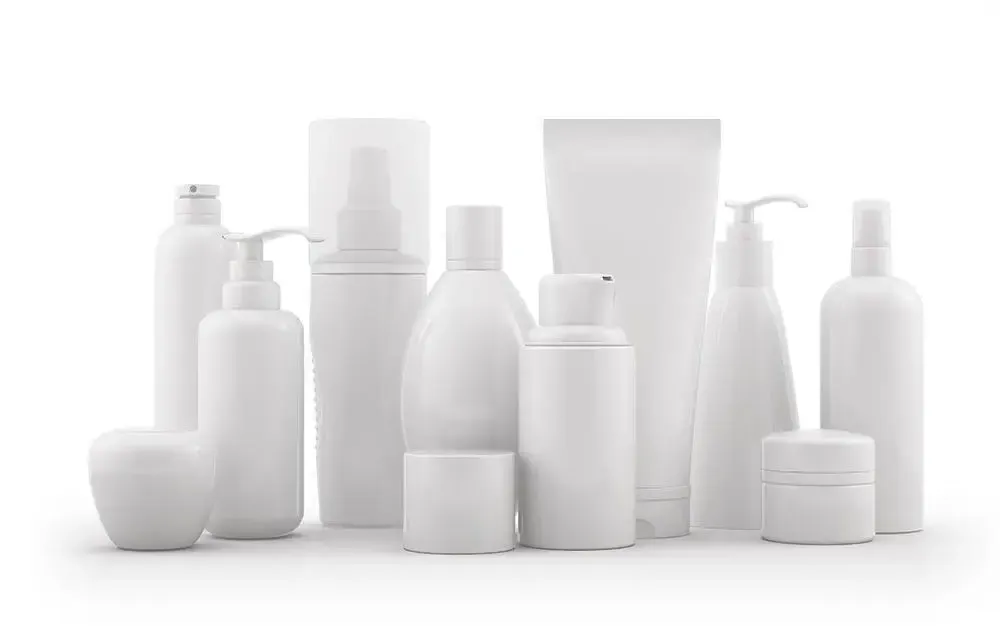
Cosmetic packaging procurement teams evaluating production technology choices should understand how ISBM compares against the principal alternatives — glass, acrylic (PMMA), extrusion blow moulding (EBM), and injection moulding of thick-wall containers — across the performance dimensions that define cosmetic packaging quality. The comparison below reflects the practical realities of each technology in cosmetic applications, not theoretical capabilities.
| Performance Criterion | ISBM (PET/PETG) | Glass | Acrylic (PMMA) | EBM Plastic |
|---|---|---|---|---|
| Optical Clarity | ⭐⭐⭐⭐⭐ Glass-equivalent | ⭐⭐⭐⭐⭐ Glass | ⭐⭐⭐⭐ Very good | ⭐⭐ Limited clarity |
| Design Freedom | ⭐⭐⭐⭐⭐ Widest | ⭐⭐⭐⭐ High | ⭐⭐⭐ Moderate | ⭐⭐⭐ Moderate |
| Breakage Risk | None | High throughout chain | Low — shatter-resistant | None |
| Neck Finish Precision | ⭐⭐⭐⭐⭐ Injection-formed | ⭐⭐⭐ Fire-formed | ⭐⭐⭐⭐ Injection-moulded | ⭐⭐⭐ Trimmed |
| Weight (50ml bottle) | 10–35g (variable) | 80–200g | 15–50g | 15–40g |
| Production Volume Flexibility | 1,000–30,000+ BPH | Moderate — high MOQ | Limited speed | Medium volumes |
| rPET / Sustainability | ✅ 25–50% rPET capable | ✅ Recycled glass | ❌ Limited recyclability | ⚠️ Depends on grade |
| Per-Unit Cost Range | Low–moderate | High + breakage loss | High | Low–moderate |
The table reveals why ISBM has established itself as the dominant technology for the cosmetic packaging market segment that sits between mass-market commodity containers (where cost is the primary driver and clarity requirements are modest) and ultra-premium glass packaging (where the glass material itself is the luxury signal). ISBM with PETG occupies a uniquely competitive position: glass-equivalent clarity, superior design freedom, no breakage risk, manufacturing flexibility from small to large volumes, and rPET compatibility for sustainability programmes — at a per-unit cost substantially below glass. For cosmetic brands building their packaging strategy around premiumisation without the fragility and weight penalty of glass, ISBM is the rational and dominant choice.
Chemical Compatibility and Product Safety: Why ISBM PET/PETG Is Right for Cosmetic Formulations
Cosmetic formulations interact with their packaging in ways that differ significantly from beverage products, and these interactions must be managed carefully to prevent product degradation, container failure, and regulatory compliance issues. The range of cosmetic ingredients that can present packaging compatibility challenges includes high-concentration alcohols and ethanol (in perfumes, toners, and hand sanitisers), oils and emollients (in moisturisers and serums), high-concentration surfactants (in cleansers and body washes), and active ingredients such as retinoids, AHAs, BHAs, and antioxidants that may interact with packaging through pH-mediated mechanisms or direct solvent activity.
PET and PETG Compatibility Across Cosmetic Formulation Types
Standard PET and PETG demonstrate excellent compatibility with the majority of cosmetic formulations in common use. Water-based formulations including aqueous serums, toners, micellar waters, and water-continuous emulsions present no compatibility concerns for PET or PETG under normal storage conditions. Oil-in-water emulsions (the most common moisturiser base type) are fully compatible at the oil concentrations typical of cosmetic products. Alcohol-based formulations require careful evaluation — pure or high-concentration ethanol (above 40–50% by volume) can cause slight plasticisation of PET over extended contact, and for high-alcohol products such as perfumes and high-proof toners, PETG may be preferred for its better alcohol resistance at elevated concentrations. Compatibility evaluation for specific formulations should always include a 3–6 month stability study under accelerated conditions (elevated temperature, inverted storage orientation) before commercial adoption of any new formulation-packaging combination.
Migration and Extractables Compliance
Cosmetic regulatory frameworks in Australia (governed by the Therapeutic Goods Administration for therapeutic products and the ACCC for cosmetics under the Australian Consumer Law), the European Union, and the United States set requirements around extractable and leachable substances from packaging that can migrate into the cosmetic product. PET and PETG are recognised as generally suitable for cosmetic contact under these frameworks, with the same materials certified for food contact use under stricter migration standards than cosmetics typically require. ISBM-produced PET/PETG bottles processed from food-contact-grade resin meet cosmetic regulatory requirements in all major markets without additional testing in most cases — a compliance pathway that more complex multi-material packaging (multi-layer bottles, acrylic over-wrapped designs) cannot always claim so straightforwardly.
Oil-Free Production for Sensitive Cosmetic Applications
Fully servo-electric ISBM machines eliminate hydraulic oil from the production system entirely, removing the contamination risk that hydraulic leaks create in any production environment where cosmetic bottles are being produced. For prestige cosmetic brands where product integrity and production environment cleanliness are non-negotiable quality standards, an oil-free ISBM machine operating in a controlled environment is the appropriate production platform. Ever-Power’s fully servo ISBM machines — including the HGY50-V3-EV referenced in the product range — are designed specifically for this cleanroom-compatible, oil-free production requirement that pharmaceutical and prestige cosmetic packaging demands.
Cosmetic Bottle Colour, Finish, and Special Effect Capabilities in ISBM Production
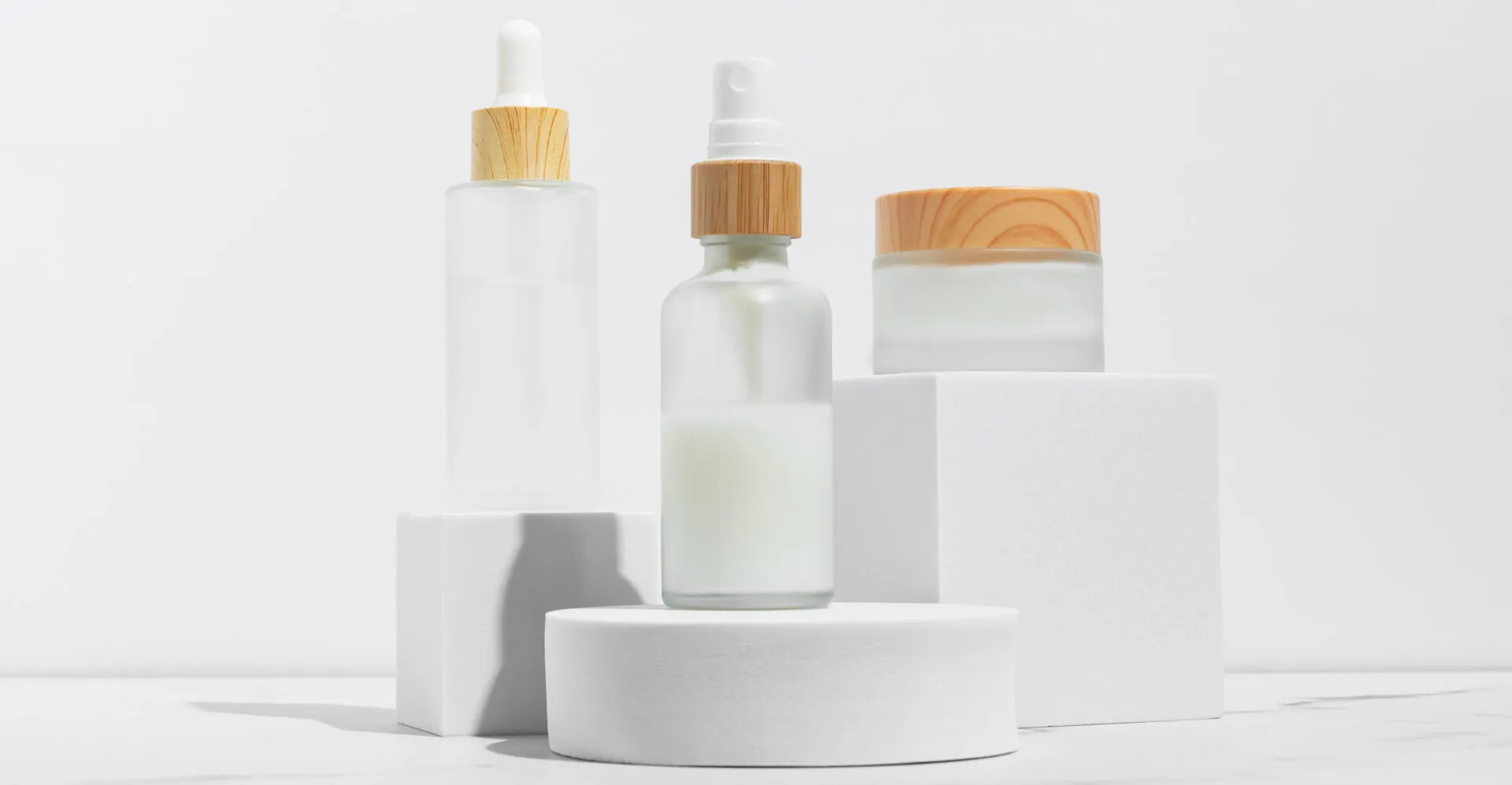
The visual vocabulary available for ISBM cosmetic bottles extends well beyond clear PET into a rich range of colour, surface finish, and optical effect options that cosmetic brand designers can use to build distinct visual identities and communicate specific brand values. Understanding what is achievable through ISBM production — and the design and process requirements for each effect — helps brand teams develop packaging briefs that translate accurately into production-feasible specifications.
Water-White Clarity
Zero-additive PETG in premium grades achieves the water-white transparency that communicates purity and ingredient confidence — particularly powerful for serum, essence, and active ingredient products where the product’s colour and texture communicate quality. Requires strict resin drying, low-AA grades, and closed-loop temperature conditioning control to maintain consistency batch-to-batch.
Tinted and Coloured PET/PETG
Soft blush tints, pale lilac, sage green, warm amber, and custom brand colours communicate product category and brand personality. Masterbatch colourants are incorporated into PET/PETG during injection. Even colour distribution requires consistent dosing precision and melt temperature uniformity — visible colour banding in the bottle wall is a defect specific to inconsistent colourant dispersion in ISBM processing.
Pearlescent and Shimmer Effects
Mica-based or synthetic pearlescent additives produce the shimmering, light-catching surface appearance that communicates luxury in premium skincare and body care packaging. Particle size selection is critical — particles that are too large or too variable create uneven sparkle distribution visible as texture irregularity. Works particularly well in slightly curved bottle bodies where changing viewpoint angles maximise the shimmer effect.
Frosted / Satin Surface
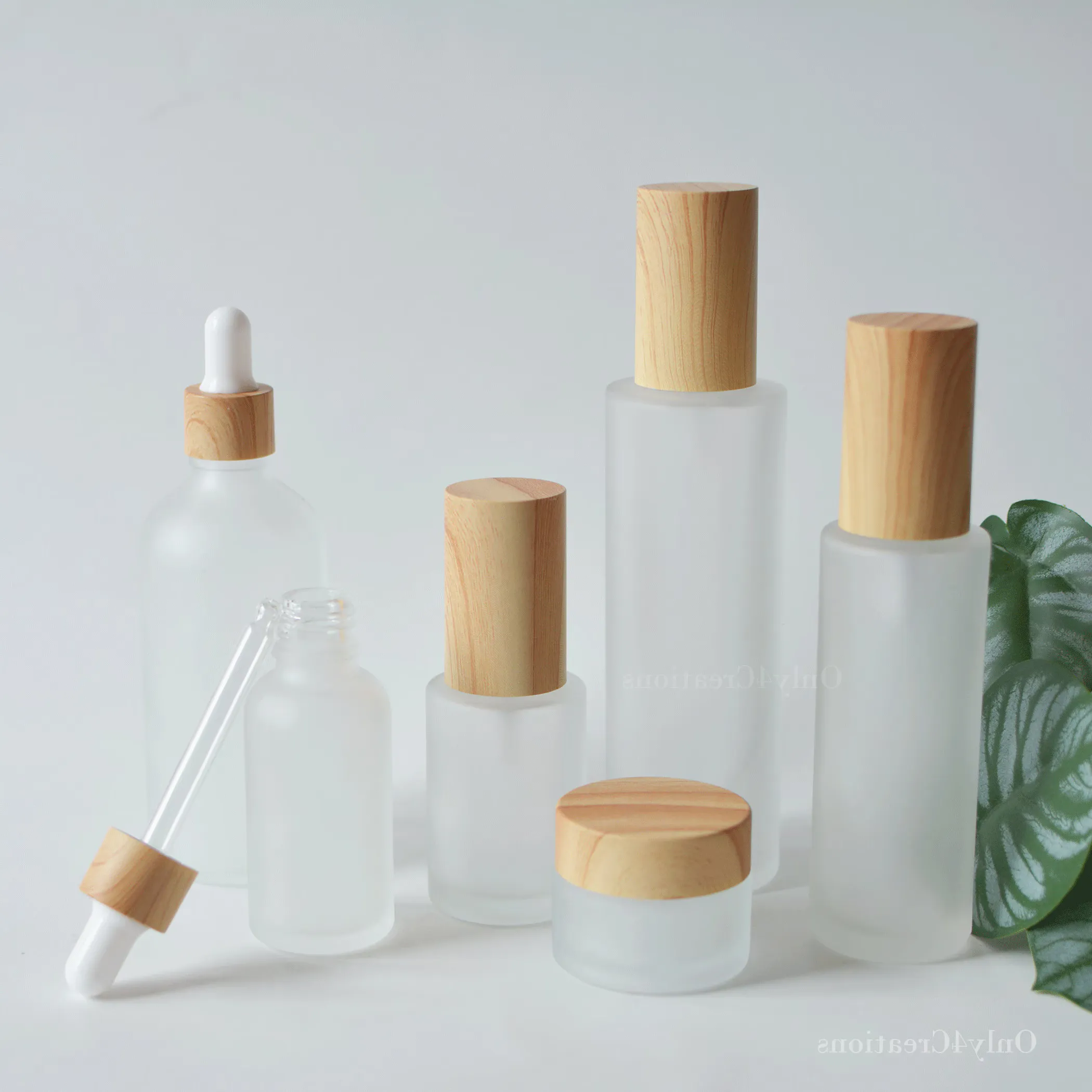
A controlled micro-texture on the cavity surface produces a frosted or satin finish that diffuses light beautifully and gives the bottle a premium tactile quality — less slippery than mirror-finish bottles, fingerprint-resistant, and evocative of acid-etched glass in higher-end product categories. Works across price points from contemporary clean beauty to luxury prestige.
Deep Opaque Colours
Opaque or near-opaque versions — black, deep navy, forest green, burgundy — provide UV protection for light-sensitive actives while communicating a contemporary, editorial brand aesthetic popular in luxury skincare and men’s grooming categories. Achieved through high-loading masterbatch; cavity surface finish and polish level still determines the gloss or matte character of the opaque surface.
Bio-Resin and rPET Clarity Parity
Premium food-grade rPET and bio-attributed PET (made from bio-based feedstocks) can achieve clarity performance comparable to virgin PET for most cosmetic applications. For brands where sustainability credentials are a brand pillar — “made with X% recycled content” — these materials provide the environmental substance behind the claim without visual compromise on the shelf.
Production Scalability: From Indie Brand Minimums to Multinational Volume
One of ISBM’s most commercially valuable characteristics for cosmetic bottle production is its scalability across the full range of production volumes encountered in the cosmetic industry — from emerging independent brands producing 10,000 units per year through mid-scale private label manufacturers producing hundreds of millions of units across global markets. No other production technology platform offers equivalent optical quality at both small and large production scales without technology platform changes as volume grows.
Small-Volume ISBM for Indie and Prestige Cosmetic Brands
For emerging cosmetic brands entering the market with annual volumes of 20,000–100,000 units per SKU, the primary ISBM advantage is access to a production technology that can produce premium optical quality at low minimum tooling investment per design iteration. A single-cavity ISBM blow mould for a cosmetic bottle can be produced at significantly lower tooling cost than glass moulds or multi-cavity injection moulds, and the one-step ISBM process can produce small batches from a single machine run without the minimum batch size constraints that large-scale glass or injection moulding suppliers impose. For indie brands developing their packaging identity through iterative design evolution, ISBM’s lower tooling cost per design iteration and flexible batch size are significant strategic advantages.
Commercial Scale Production for Volume Cosmetic Lines
As cosmetic brands scale to commercial volumes — 500,000 units per year and above — ISBM’s multi-cavity production capability delivers the throughput efficiency needed for cost-competitive high-volume production. A 6-cavity ISBM machine running a cosmetic bottle cycle time of 6–8 seconds produces 2,700–3,600 bottles per hour (BPH) — volumes that, across extended production runs, can supply a substantial cosmetic product range from a single machine installation. For brands producing a portfolio of cosmetic bottles across different sizes and shapes, ISBM’s tooling changeover flexibility — a mould set change in 90–180 minutes with validated recipe recall — allows one machine to serve multiple SKUs without the dedicated single-product line commitment that other high-volume production technologies require.
Sustainability Credentials: ISBM PET/PETG in the Context of Cosmetic Industry ESG Requirements
The cosmetic industry is under increasing pressure from consumers, investors, and regulators to demonstrate credible environmental progress on packaging sustainability. In Australia, the National Packaging Targets and the increasing enforcement of ACCC guidelines on environmental claims create a compliance and reputational context where packaging material and production process choices must be defensible, not merely aspirational. ISBM-produced PET/PETG bottles address this context comprehensively across the three sustainability dimensions that matter most for cosmetic packaging.
First, recyclability: PET cosmetic bottles are accepted in Australian kerbside recycling and in Container Deposit Schemes where eligible. Unlike multilayer acrylic, mixed-material cosmetic containers, or cosmetic packaging with incompatible labelling materials, standard clear PET cosmetic bottles sort cleanly in optical sorting systems and are processed in the established PET recycling stream — providing a genuine, infrastructure-supported recyclability claim rather than a theoretical one.
Second, recycled content: rPET content of 25–50% is achievable in most cosmetic bottle applications using certified cosmetic-grade rPET that meets extractables and leachables specifications for cosmetic contact. Some prestige cosmetic brands have demonstrated 100% rPET capability in specific non-contact or indirect-contact packaging components. The sustainability on-pack claim “Made with X% recycled content” is fully substantiatable through rPET supplier certificates and production records, meeting ACCC substantiation requirements.
Third, production energy efficiency: all-electric servo ISBM machines consume 20–35% less energy than hydraulic equivalents and are compatible with renewable energy supply, enabling cosmetic brands to incorporate packaging production energy footprint into their Scope 3 emissions reduction reporting. The elimination of hydraulic oil also removes a hazardous waste stream from the production environment — a clean manufacturing credential that prestige cosmetic brands value for their supply chain due diligence programmes.
Key Quality Standards for ISBM Cosmetic Bottle Production
Cosmetic bottle quality standards differ from beverage bottle standards in their emphasis on optical and surface appearance, dimensional precision for closure fit, and chemical resistance testing that is specific to cosmetic formulation types. The quality programme for an ISBM cosmetic bottle operation should cover the following standards as a minimum.
🔍 Optical Haze Measurement
Body panel haze ≤ 2.5% for premium clear PETG; ≤ 3.5% for standard PET. Measured by hazemeter on flat body panel samples. Frequency: minimum one measurement per cavity per production shift. Drift above specification triggers conditioning temperature review and cavity surface inspection.
📏 Neck Finish Dimensional Control
Thread major/minor diameter, finish roundness, transfer bead height, and neck height measured against closure supplier drawing tolerances. Sample size: minimum 5 bottles per cavity per batch. Out-of-tolerance neck dimensions cause closure engagement failure in the filling and capping line — the most commercially visible quality failure mode in cosmetic production.
⚗️ Compatibility / Stability Testing
Fill with actual cosmetic formulation, cap, condition at 40°C/75% RH for 12 weeks. Inspect for: bottle deformation, colour change, haze increase, product colour or pH change, closure torque change. Any change outside specification requires bottle-formulation compatibility review before commercial launch.
🎨 Visual Appearance Under Display Lighting
Inspect sample bottles under LED cool-white spotlight at 45-degree angle (simulating retail display conditions). Check for surface marks, haze patches, gate vestige irregularity, colour banding (if tinted), and embossed detail sharpness. Visual inspection under simulated retail lighting catches defects that standard laboratory lighting conditions miss.
The Cosmetic Industry’s Future Direction and ISBM’s Continued Relevance
The cosmetic packaging industry is evolving along several trajectories that reinforce rather than challenge ISBM’s central position. The accelerating growth of premium “masstige” skincare — products positioned between mass-market and luxury that command $30–80 price points in Australian retail — demands packaging that communicates glass-equivalent quality at economics that glass cannot deliver. ISBM with PETG is precisely positioned for this segment, combining optical credibility with production flexibility.
The rapid expansion of Korean beauty (K-beauty) and its emphasis on elaborate, visually complex packaging forms — multi-layer container designs, unusual geometric forms, and extensive surface detail — has moved cosmetic packaging design into complexity territory where ISBM’s design latitude is its most decisive advantage. K-beauty packaging trends that originated in South Korea and have become global cosmetic trends are practically impossible to replicate in glass or injection moulded acrylic at reasonable cost — ISBM is the production technology that makes the complexity manufacturable.
Digital-to-physical cosmetic brands — those that launched online and are now moving into physical retail — face a packaging design brief where the “unboxing moment” is as important as the in-store shelf presence. ISBM bottles, with their optical quality, tactile weight, and surface detail, deliver equally to both contexts. As these brands grow and their packaging investment scales from small startup runs to commercial volumes, ISBM provides the technology platform that scales with them without quality compromise or supplier relationship changes.
Why Australian Cosmetic Brands Should Partner With a Local ISBM Specialist
Australian cosmetic brands sourcing packaging from offshore bottle suppliers face the same supply chain vulnerabilities that affect all importers — currency exposure, shipping lead times, minimum order quantity constraints, and the inability to make rapid design iterations without intercontinental tooling freight and lead time cycles. The cosmetic industry’s trend toward faster product development cycles, smaller launch quantities for limited edition and seasonal products, and increasing demand for packaging that supports local provenance brand positioning all create commercial pressures that favour local ISBM production capability over offshore sourcing.
Australia Ever-Power Injection Stretch Blow Moulding Machine Co., Ltd provides Australian cosmetic packaging operations with the technical expertise and machine platform to develop and produce premium cosmetic bottles locally — reducing lead times, eliminating import cost components, enabling rapid design iteration, and supporting the “Australian-made” brand positioning that an increasing proportion of Australian premium cosmetic brands are building their differentiation around. A locally produced ISBM cosmetic bottle, made in Australia from locally sourced or verified-origin resin, is a tangible and communicable component of an Australian brand’s authentic local manufacturing story.
Ever-Power’s Condell Park NSW engineering team provides pre-investment feasibility assessment, bottle and tooling development support, machine commissioning and operator training, and ongoing technical advisory engagement for cosmetic bottle producers across the full range of brand scales — from emerging independent cosmetic brands entering their first ISBM production run through established cosmetic manufacturers managing multi-line, multi-SKU production operations. Contact the Ever-Power team at [email protected] to begin a conversation about your cosmetic bottle production requirements.
Elevate Your Cosmetic Bottle Packaging With ISBM
Australia Ever-Power’s engineering team in Condell Park NSW works with cosmetic brands from first bottle concept through production-qualified tooling and commercial ISBM production — delivering glass-quality clarity and premium design at plastic economics.
Request a Cosmetic Bottle Consultation →
[email protected] | कॉन्डेल पार्क एनएसडब्ल्यू 2200, ऑस्ट्रेलिया | isbm-technology.com
विशेष उत्पाद
Fully Servo One-Step Injection Stretch Blow Molding Machine (HGY50-V3-EV)
For cosmetic bottle producers requiring the highest-specification production platform — glass-like PETG clarity, oil-free operation for cleanroom-compatible production, and the precision servo-electric control that demanding cosmetic neck finish tolerances require — the HGY50-V3-EV fully servo one-step injection stretch blow molding machine is Ever-Power’s definitive cosmetic packaging production solution. Operating with five Inovance/MIRLE servo systems across a three-station rotary architecture, the HGY50-V3-EV delivers micron-level positional repeatability in every movement cycle — from turntable indexing to stretch rod travel to blow core seating. The complete elimination of hydraulic oil makes it the gold standard for cleanroom-grade cosmetic bottle production. It processes PET and PETG, handles bottles from 100ml to 2,500ml (single cavity), and produces the wall thickness uniformity and surface quality that prestige cosmetic brands specify. The machine has been refined specifically for the pharmaceutical and high-end cosmetic packaging sectors where zero-contamination production and glass-like container clarity are non-negotiable. Full technical specifications are available at isbm-technology.com. Contact [email protected] to discuss cosmetic application configuration.