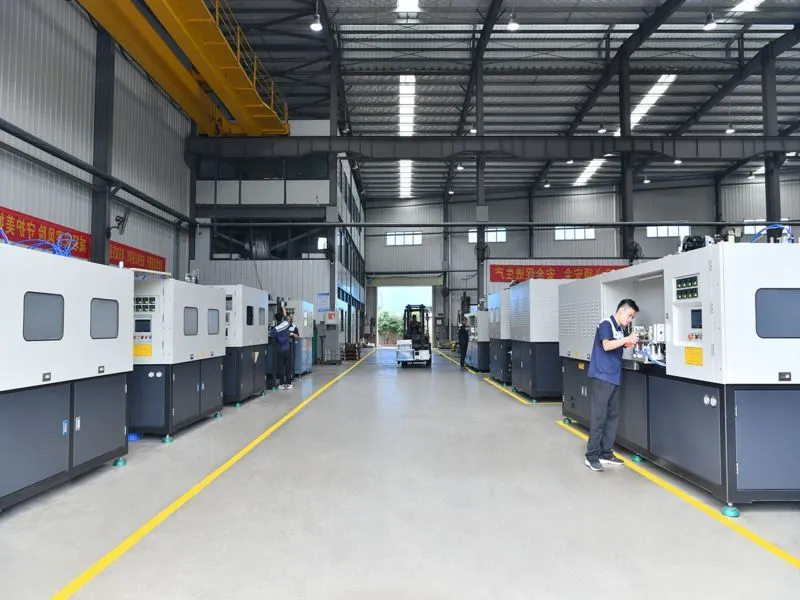
Descalers and limescale removers are among the most chemically aggressive products sold in retail and trade channels. Citric acid, sulphamic acid, hydrochloric acid, and formic acid—often at concentrations of 10–30%—must be contained safely throughout transport, storage, and repeated consumer use. The packaging vessel is the last line of defence. When that vessel is produced through injection stretch blow molding, the chemistry of biaxial orientation works in the manufacturer’s favour: oriented PET offers a molecular barrier architecture that resists permeation and stress cracking far more effectively than competing packaging polymers. This article examines precisely how the ISBM process maps onto the real-world demands of descaler and limescale remover bottle manufacturing.
The Descaler Market and Its Unique Packaging Challenges
A Category Driven by Formulation Aggressiveness
The global descaler and limescale remover market spans domestic appliance care—kettles, coffee machines, dishwashers, and showerheads—through to industrial-scale applications in boiler maintenance, heat exchanger cleaning, and municipal water-treatment facility upkeep. What unifies these segments is formulation aggression: effective limescale removal requires acids capable of dissolving calcium carbonate and magnesium scale deposits rapidly, often at elevated application temperatures of 40–70 °C. Packaging a low-pH liquid concentrate in a vessel that weakens, permeates, or distorts over an 18–24 month shelf life creates significant downstream liability—leakage claims, corroded secondary packaging, and regulatory compliance failures.
Retail and Trade Channel Requirements
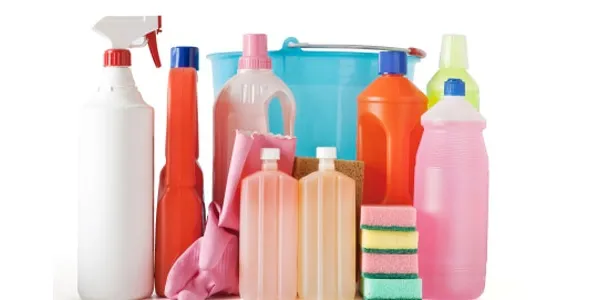
Retail descalers are typically sold in 250 mL to 1 L formats with trigger-spray or screw-cap closures, while trade and institutional concentrates run from 1 L to 5 L. In both segments, shelf presentation matters. Clarity allows the consumer to assess liquid purity and colour—a visual cue that signals formula quality—while dimensional stability across temperature cycles (warehouse to ambient retail to heated storage cupboard) ensures bottles retain their planographic label panels throughout. HDPE can handle the chemistry but sacrifices the clarity premium; standard injection blow molded bottles struggle with wall thickness uniformity at large volumes. Injection stretch blow molding addresses all three constraints simultaneously.
Australian Regulatory Context
In Australia, descalers containing acids above threshold concentrations are classified as Dangerous Goods under the ADG Code (Class 8 corrosives) and may fall under scheduling requirements of the Poisons Standard administered by the TGA. Packaging must meet UN-certified performance standards for chemical containment—including drop testing, stack-load certification, and compatibility declarations. ISBM-produced PET bottles, when validated through the relevant UN protocols, satisfy these requirements across the 250 mL to 2 L retail range, making them a compliant and commercially attractive choice for Australian formulators and contract packers.
Chemical Compatibility: Why Biaxially Oriented PET Outperforms Alternatives
Molecular Architecture of ISBM-Processed PET
When PET is stretched biaxially—axially by the stretch rod and hoop-wise by blowing pressure—its amorphous polymer chains align into a tightly organised, strain-crystallised network. This network dramatically reduces the free volume available for small molecules (water, acid ions, volatiles) to diffuse through the wall. The oxygen transmission rate of biaxially oriented PET is approximately 20–30 times lower than that of unoriented amorphous PET, and the barrier to aqueous acid permeation follows a comparable improvement. For a 1 L citric acid descaler at 10% concentration, this means the container wall remains chemically inert and structurally sound across the bottle’s full intended service life without the plasticiser migration risk associated with PVC or the environmental stress-cracking risk of unoriented polycarbonate.
Comparative Performance Against HDPE and PP
High-density polyethylene is the historical default for corrosive liquid packaging because of its broad chemical resistance. However, HDPE has several limitations in the descaler context: it is translucent at best (opaque at practical wall thicknesses), it absorbs trace surfactants that can affect formula efficacy over time, and its high ESCR (environmental stress cracking resistance) requirements demand heavier walls—adding cost and weight. Polypropylene offers better optical performance but lacks the tensile strength and dimensional stability of oriented PET, particularly in the shoulder region under top-load. ISBM-processed PET delivers superior tensile strength (typically 130–170 MPa after orientation), better barrier, and far greater clarity, at wall weights 20–30% lower than equivalent HDPE constructions.
pH Range and Temperature Resistance
Descaling formulations span a wide pH range: citric-acid-based products typically run pH 2–3, sulphamic acid concentrates drop to pH 1 in some industrial formats, while some phosphate-based descalers for coffee machines operate at pH 4–5. ISBM PET maintains structural integrity across pH 1–11 when assessed against standard ASTM D543 immersion protocols at 23 °C. At elevated temperatures (40 °C), the oriented PET structure remains dimensionally stable, though wall design must account for the slight softening that occurs near 60 °C—a threshold not typically reached in normal retail or storage conditions but relevant for hot-fill descaler concentrates, where a modified resin grade or increased wall thickness may be specified.
The One-Step ISBM Process Applied to Descaler Bottle Production
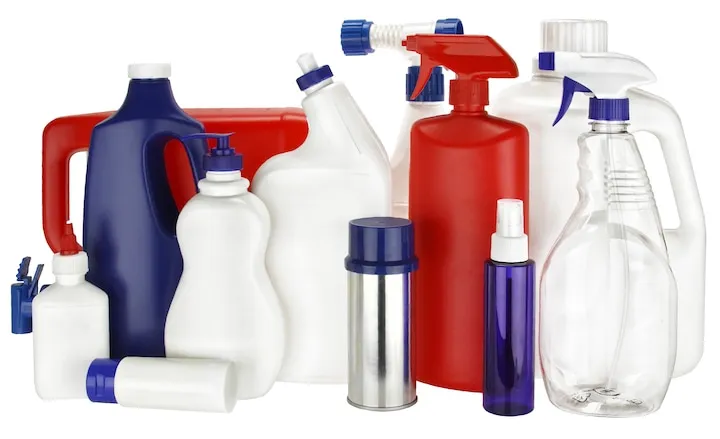
The one-step injection stretch blow molding process is fundamentally better suited to descaler bottle production than the two-step reheat-blow variant, because thermal continuity—retaining the preform’s injection heat through to the blow stage—yields a more uniform crystalline structure. For acid-containing bottles where any wall weakness is a containment risk, this process consistency is not a convenience but a technical necessity.
Resin Selection & Drying
Bottle-grade PET with IV 0.76–0.82 dL/g is selected for standard acid-resistance applications. Resin is dried to below 50 ppm moisture at 160–170 °C for 5–6 hours. For highly concentrated mineral acid descalers, an acid-stabilised PET grade or PEN-blend may be specified after compatibility testing, and the drying protocol adjusted accordingly.
Precision Preform Injection
Molten PET is injected at 265–285 °C into preform cavities designed with heavier base and shoulder walls—typically 30–40% heavier than a standard beverage preform—to ensure adequate material reserves at the stress-concentration zones that corrosive liquids exploit through cyclic pressure loading.
Thermal Conditioning
The preform body is conditioned to a stretch-optimal window of 95–115 °C while the neck finish zone is chilled below 75 °C to lock in the injection-precise neck dimensions. Uniform temperature distribution at this stage is the single greatest determinant of consistent wall thickness in the blown bottle—critical for descaler containers where any thin spot is a potential leak point.
Axial Stretch
Servo-driven stretch rods extend at programmed velocity profiles to achieve axial stretch ratios of 2.8–3.6×. For descaler bottle profiles—often taller and narrower than beverage bottles to minimise footprint during dispensing—a higher axial ratio concentrates orientation in the sidewall, delivering maximum tensile strength in the vertical direction most exposed to hydrostatic pressure from a full column of dense acid liquid.
High-Pressure Blow Molding
Air at 30–40 bar inflates the oriented preform against a temperature-controlled mold wall (chilled to 10–15 °C). Rapid cooling freezes the biaxial crystalline structure, locking in barrier performance and dimensional precision. Hoop stretch ratios for descaler bottles are typically programmed at 2.8–3.4× to balance body rigidity with the orientation-driven acid barrier.
Ejection & Inline QC
Bottles eject through automated conveyance to vision inspection stations that check wall thickness, neck geometry, base integrity, and surface clarity. Statistical process control charts flag process drift before it propagates to off-spec production. Validated ISBM lines for descaler bottles routinely achieve scrap rates below 0.8%—significantly better than EBM alternatives run at comparable acid-container specifications.
Tooling Design Considerations for Descaler Bottles
Neck Finish Selection for Corrosive Contents
Descaler bottles commonly use either trigger-spray necks (28/400, 28/410) or tamper-evident screw caps (38/400, 38/415) depending on the end-user application. Because corrosive liquids can degrade standard polyethylene valve components over time, some premium-market descalers use induction-seal liners under the cap—requiring the neck finish to maintain a perfectly flat sealing surface with a perpendicularity tolerance of ±0.15 mm. ISBM delivers this precision because the neck is injection-formed and never subjected to blow pressure; it is the most dimensionally repeatable region of the bottle. In trigger-spray applications, the neck must also withstand the torque applied by the spray head actuator without micro-cracking—another area where biaxially oriented PET’s superior fatigue resistance pays dividends.
Shoulder and Base Radius Engineering
Stress concentrations in blow-molded bottles occur at geometric discontinuities—the shoulder-to-body transition, the body-to-base transition, and any embossed panel edges. For acid-filled descaler bottles, where internal pressure from vapour headspace can build measurably in warm storage, these transitions must be designed with generous radii (minimum 5–8 mm for the shoulder, 3–5 mm for the base juncture). ISBM mold designers typically use finite element analysis to map stress distributions at 1.5× working pressure, verifying that wall thickness at every critical transition remains above the minimum specified value across the expected temperature range. This level of simulation-guided tooling design is rarely applied to EBM-produced chemical bottles but is standard practice for ISBM production where the design-to-reality fidelity justifies the modelling investment.
Embossing, Grip Features, and Volume Graduation
Many descaler formats include volume-graduation markings on the body—either embossed into the mold or applied via IML panels—to facilitate accurate dosing. ISBM molds replicate embossed detail faithfully down to 0.25 mm character depth, with the sharp edges that make graduation lines readable. Grip indentations, which help consumers hold and invert the bottle during kettle dosing, can be deep-drawn into the mold cavity without the blow-out risk that shallow grip geometries sometimes present in less-controlled EBM production. This level of surface feature reproduction adds meaningful commercial value while imposing no additional process complexity in the ISBM workflow.
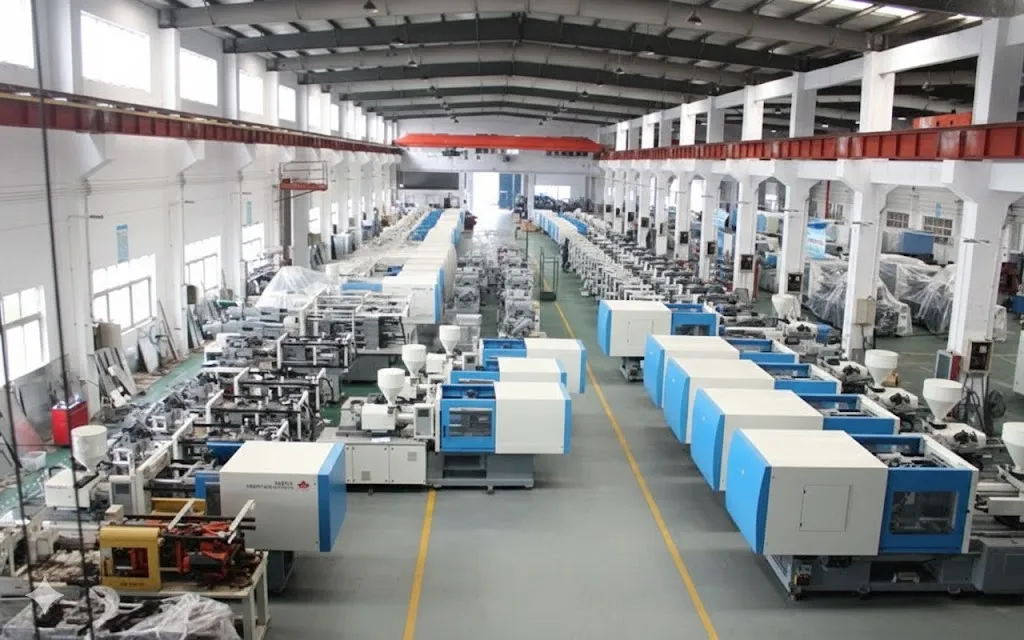
Production Performance Benchmarks for Descaler Bottle Lines
The following metrics represent achievable benchmarks on a four-station ISBM machine running a 500 mL descaler bottle format with standard bottle-grade PET. Actual figures will vary by bottle geometry, tooling cavity count, and facility OEE targets.
Quality Assurance Protocols Specific to Chemical Bottle Production
🧫 Accelerated Chemical Immersion Testing
Filled bottles are stored at 40 °C for 28–42 days with the target formulation. Post-immersion measurements record weight change (permeation indicator), dimensional shift at the body mid-point, neck-finish diameter, and surface haze. A weight change of more than 0.5% per year equivalent triggers a wall thickness or resin-grade review. This test is the primary compatibility gate before any new descaler formulation is approved for production.
📐 Drop and Impact Resistance Testing
Descaler bottles filled to 95% capacity are subject to free-fall drop tests from 1.2 m onto a rigid surface—a protocol derived from UN 3H1 and 3H2 standards for chemical packaging. Both face-down and corner-impact orientations are tested. ISBM-produced PET bottles consistently pass these tests at the minimum wall thicknesses achievable through the process, confirming that orientation-hardened PET provides an impact resistance margin well above HDPE or unoriented PP equivalents at comparable wall weights.
💧 Leak Torque and Induction-Seal Integrity
For screw-cap descaler bottles, the closure application torque is calibrated to the ISBM neck’s thread dimensions. Post-application, each production batch undergoes vacuum leak testing—bottles submerged under 0.15 bar vacuum for 60 seconds—to confirm seal integrity. Where induction-sealing is specified, the neck sealing surface flatness (measured at ±0.10 mm) determines induction-seal adhesion quality. ISBM neck finish repeatability routinely delivers pass rates above 99.5% on these tests, reducing the downstream leakage claims that cost chemical distributors significant margin.
📊 Wall Thickness SPC Monitoring
Every 50th bottle sampled undergoes 12-point ultrasonic wall thickness mapping. Data feeds into real-time SPC charts with control limits set to flag a ±15% deviation from the nominal wall thickness specification. Because acid-containing bottles have zero tolerance for thin-wall defects, the control chart trigger is tighter than for beverage containers—and the one-step ISBM process’s inherent thermal consistency means the process rarely approaches those limits during a well-set production run.
Sustainability in Descaler Bottle Manufacturing
Lightweighting Without Compromising Chemical Containment
The high strength-to-weight ratio of biaxially oriented PET allows descaler bottle walls to be thinned by 15–22% versus HDPE equivalents at equal or better drop-test and stack-load performance. For a 500 mL descaler bottle, this translates from a typical HDPE weight of 35–40 g down to 24–28 g in ISBM PET—a reduction of 10–12 g per unit. At production volumes of 10 million bottles annually, this represents approximately 100–120 tonnes of polymer saved per year, with proportional reductions in resin cost, transport energy, and carbon footprint per unit. The Australian Packaging Covenant Organisation’s (APCO) 2025 lightweighting commitments make this not simply a cost saving but a compliance metric that brands must demonstrate to major retail partners.
Recyclability and rPET Integration
PET type-1 is the most widely collected and recycled polymer in Australia’s kerbside stream. A descaler bottle produced through the ISBM process carries a clear Type 1 recyclability identity and—provided the label is designed to separate cleanly in the wash float process—meets the end-of-life recyclability standard required by APCO’s 2025 packaging design guidelines. Some descaler formulators are now specifying rPET content at 25–30% in their bottles; ISBM machines handle this grade without tooling changes, requiring only adjusted drying protocols and minor IV-management modifications at the injection stage. The sustainability narrative this enables—quantified recycled content, verified recyclability, reduced weight—has measurable commercial value in retail buyer negotiations.
Servo-Driven Energy Efficiency
Modern ISBM machines equipped with full servo drive systems eliminate the hydraulic power packs that dominated older machine architectures. The energy saving is substantial: servo-driven ISBM machines consume approximately 35–45% less electricity per bottle produced than their hydraulic equivalents. For descaler bottle manufacturers running multi-shift operations, this translates to significant reductions in kWh per unit of output—improvements that are reportable against Scope 2 greenhouse gas emission targets and increasingly required by multinational brand owners as part of their supplier sustainability audits.

Recommended Equipment: HGYS200-V4-B for Chemical Bottle Production
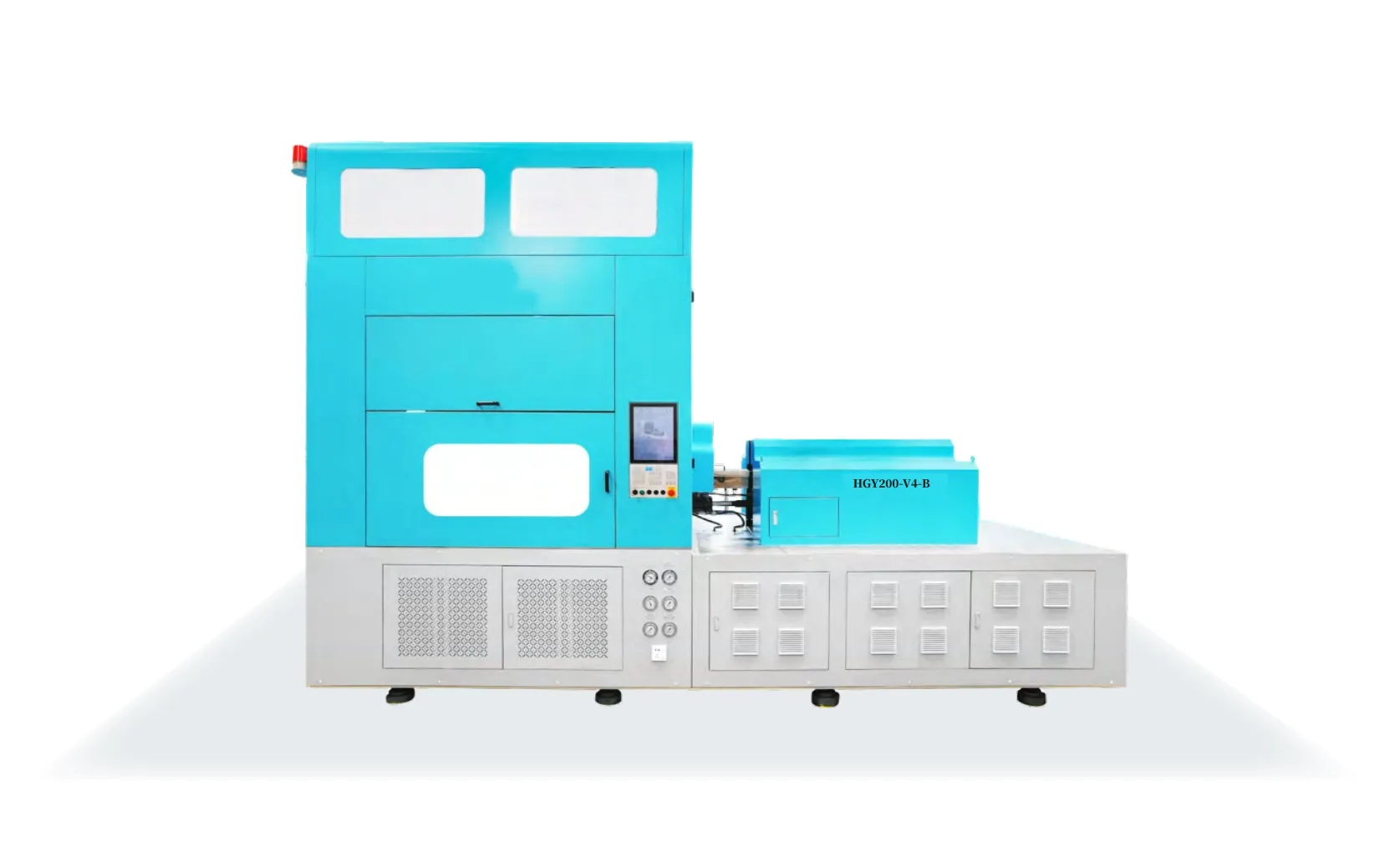
HGYS200-V4-B One-Step Injection Stretch Blow Molding Machine
For descaler and chemical bottle producers requiring both precision neck finish control and robust acid-service performance, the HGYS200-V4-B one-step injection stretch blow molding machine delivers the combination of clamping rigidity, servo-precision, and multi-cavity flexibility demanded by this sector. Its four-station indexed design ensures all process stages—injection, conditioning, blow, ejection—run simultaneously, maximising throughput without sacrificing the thermal consistency that chemical-grade PET bottle production requires. The machine accommodates bottle volumes from 100 mL to 2,000 mL and supports both virgin and rPET resin inputs.
- Output: up to 3,800 bottles/hr (500 mL descaler format)
- Bottle range: 100 mL – 2,000 mL
- Neck diameter range: 20–45 mm
- Servo clamping: consistent force across all four stations
- Chemical-service PET and rPET compatible
- CE certified; meets Australian WHS electrical standards