Why Pharmaceutical Bottle Packaging Demands a Different Production Standard
Pharmaceutical bottle production occupies a fundamentally different risk category from any other plastic packaging application. A closure that leaks on a shampoo bottle creates a consumer complaint. A closure that leaks on a pharmaceutical product — or a container that degrades into the drug product through poorly controlled extractables — creates a patient safety event, a regulatory non-compliance, and potentially a product recall with reputational and financial consequences that vastly exceed the cost of the packaging failure itself. This asymmetry of consequence is why pharmaceutical packaging specifications are written in pharmacopoeial language, validated through GMP-compliant processes, and maintained under change-control systems that require regulatory notification even for minor production modifications.
The ներարկման ձգվող փչող ձուլման մեքենա addresses the pharmaceutical packaging brief through capabilities that are genuinely differentiated from standard packaging production technology: injection-precision neck finishes that reproduce the container-closure system specification to ±0.05–0.10mm tolerances across every bottle in a production batch; pharmacopoeial-grade PET processed through validated, data-logged production sequences; oil-free servo-electric machine architecture that eliminates the contamination pathways that hydraulic machine designs create; and process data logging that generates the batch record documentation that TGA GMP compliance demands.
Australia Ever-Power Injection Stretch Blow Moulding Machine Co., Ltd, operating from Condell Park NSW 2200, provides pharmaceutical packaging operations with ISBM machine technology and validation support configured specifically for the TGA regulatory environment. This article covers the technical and compliance requirements of pharmaceutical pill and oral medicine bottle production in detail, establishing the connection between ISBM process capability and regulatory compliance outcomes.

Pharmacopoeial Material Standards for Pharmaceutical PET Packaging
Every pharmaceutical container that directly contacts a drug product must meet the material purity standards defined in the relevant pharmacopoeia. For Australian pharmaceutical manufacturers, the applicable standards are USP <661> Plastic Packaging Systems and Their Materials of Construction, Ph.Eur. 3.1.15 Polyethylene Terephthalate for Containers, and TGA guidance on container-closure systems for therapeutic goods. These standards are not aspirational quality targets — they are regulatory requirements, and failure to meet them means the container cannot be included in a TGA product registration without remediation.
Acetaldehyde: The Critical Pharmaceutical PET Extractable
Acetaldehyde (AA) is the primary extractable concern in pharmaceutical PET applications. AA is generated during PET melt processing through thermal chain scission, and migrates from the container wall into the pharmaceutical product in contact with it. While AA is classified as GRAS for food contact applications, pharmaceutical products have lower tolerable limits than food, and some API structures — particularly those with reactive amine or carbonyl groups — can interact with AA directly, affecting drug product stability. The TGA-aligned approach to AA control in ISBM pharmaceutical production covers four mechanisms operating in parallel: pharmacopoeial-grade resin with low intrinsic AA generation, AA scavenger additive at an appropriate loading for the container application, barrel temperature profile maintained at the lower end of the processing window to minimise thermal chain scission, and barrel residence time management through purge procedures during any planned or unplanned production stoppage longer than 10 minutes.
Overall Migration and Specific Migration Compliance
Beyond AA, the extractables and leachables (E&L) profile of a pharmaceutical PET container covers all substances capable of migrating from the packaging material into the drug product under use conditions. The E&L programme for a new pharmaceutical container follows the PQRI guidance and ICH Q3E framework: an extractables study using exhaustive extraction under stressed conditions to identify the full extractable inventory, followed by a leachables study confirming that no individual compound exceeds its Threshold of Toxicological Concern (TTC) in the drug product at use conditions. PET produced from certified food/pharmaceutical-contact-grade resin, processed within the validated ISBM process parameter range, has an established E&L profile that supports TGA submission requirements for most standard oral pharmaceutical applications without individual product reformulation of the study approach.
Resin Grade Selection and Certificate Requirements
The PET resin specification for pharmaceutical ISBM production should include: food/pharmaceutical contact grade certification from the resin manufacturer (with specific USP or Ph.Eur. compliance statement), intrinsic viscosity within 0.72–0.80 dL/g (supporting adequate melt viscosity for preform dimensional integrity), certified low AA generation (AA content below 2 ppm in the injection-moulded preform for most oral pharmaceutical applications), and a fully documented material safety data sheet and regulatory support package. Certificates of Compliance (CoC) for each resin delivery batch must be retained as part of the GMP batch record documentation — any resin lot used in pharmaceutical ISBM production that lacks a CoC traceable to the approved resin specification is technically a material nonconformance that must be resolved before release of the production batch.
Pharmaceutical Bottle Formats and Their Specific ISBM Production Requirements
The pharmaceutical bottle category encompasses a wide range of formats — each with specific dimensional, material, and functional requirements that translate into precise ISBM production parameters. Understanding the specific requirements of the formats most commonly produced through ISBM is essential for production engineers and quality systems teams responsible for pharmaceutical packaging qualification.
Solid Dose Pill & Tablet Bottles
30ml–250ml wide-mouth formats with 33–45mm CRC closures. Critical requirements: neck finish roundness ±0.08mm for CRC engagement across the full circumference; wide-mouth interior bore diameter ±0.15mm for desiccant insert compatibility; top-load performance ≥150N for 6-high pallet stacking; induction seal seating surface flatness ±0.12mm. Wall thickness in the body zone is secondary to neck and base precision for this application.
Oral Liquid & Syrup Bottles
50ml–500ml narrow-neck and medium-mouth formats with 28–38mm CRC closures. The dosing cup seat geometry — a defined exterior shoulder diameter and stop surface that positions the measuring cup at the correct height — must be reproduced to ±0.15mm for accurate dose calibration. Induction foil liner sealing requires neck sealing surface Ra ≤ 0.40 µm and flatness ±0.12mm. AA levels must be controlled below the relevant pharmacopoeial limit for aqueous liquid contact.
Amber UV-Protective Bottles
Used for photosensitive drug products (vitamins, certain antibiotics, cardiac medications). Amber masterbatch at 0.5–1.5% loading must provide light transmission below 10% at wavelengths below 450nm through the body wall at nominal thickness — verified by spectrophotometric transmission measurement during production qualification. Masterbatch colourant system must be included in the E&L extractables study to confirm no TTC-relevant substances migrate into the drug product.
Nutritional Supplement Bottles
Vitamins, minerals, and dietary supplement capsule and tablet containers regulated as complementary medicines under TGA. While not subject to full pharmaceutical GMP for the packaging itself, many major supplement brands voluntarily apply pharmaceutical-grade specifications to their container production. The food-contact-grade ISBM PET specification satisfies FSANZ and TGA complementary medicine packaging requirements, and the CRC closure precision requirements are identical to pharmaceutical counterparts where CRC is mandated.

Child-Resistant Closure Engineering for Australian Pharmaceutical Bottles
Child-resistant packaging for pharmaceutical products in Australia is mandated under the Therapeutic Goods (Standard for Child-Resistant Packaging) Order 2021 for a wide range of medicines including virtually all scheduled oral solid and liquid pharmaceuticals supplied in consumer packaging. The CRC system’s performance is a combined property of the bottle neck finish dimensions and the closure’s internal locking geometry — and the bottle is the variable element in this combination whose dimensional consistency must be controlled to maintain CRC performance across every bottle in a commercial production run.
Critical CRC Neck Finish Dimensions and ISBM Tolerances
For a push-and-turn CRC system operating on a pharmaceutical bottle, the performance-critical neck dimensions are: finish outside diameter at the CRC engagement zone (the dimension the closure locking element bears against — typically ±0.10mm required), finish roundness/ovality (a non-round finish creates an asymmetric engagement where the lock engages on the major diameter but clears on the minor diameter — ovality must be ±0.08mm or less for reliable 360° engagement), and finish height (which positions the closure’s internal geometry at the correct relationship to the thread — ±0.10mm required). ISBM’s injection-formed neck produces all three dimensions from tooling geometry, not from the stretch-blow process, and maintains them at ±0.05–0.08mm in practice with well-maintained injection neck inserts. This is the dimensional basis of the claim that ISBM is the preferred production technology for pharmaceutical CRC packaging.
CRC Qualification Protocol: What ISO 8317 Requires
The ISO 8317 child-resistant packaging test requires the container-closure combination to be tested on a child panel (age 42–51 months) and an adult panel (age 50–70 years). The container samples used in the ISO test must be representative of commercial production — sampled from all production cavities, not from a single selected cavity. A qualification submission that presents ISO 8317 test results from one cavity’s output while commercial production uses a 4-cavity tool is not representative and will not withstand TGA regulatory scrutiny. The dimensional records from the multi-cavity CRC qualification test must confirm that all cavities produce neck finishes within the CRC tolerance range — and that the composite dimensional population from all cavities together is within the closure manufacturer’s specified engagement range. Ever-Power’s pharmaceutical application engineering team provides multi-cavity CRC qualification protocol support as part of the machine commissioning programme.
GMP-Compliant ISBM Production: Machine Architecture and Process Controls
Pharmaceutical packaging production under Australian GMP (aligned with PIC/S Guide PE 009) requires production equipment to be qualified, calibrated, and operated under documented procedures that prevent contamination and ensure product quality. The ISBM machine architecture and control system capabilities that support GMP compliance are not incidental features — they are the production infrastructure that determines whether the facility can operate within a TGA-licenced pharmaceutical packaging environment.
Oil-Free Servo-Electric Architecture
Pharmaceutical GMP categorically prohibits lubricant contamination of medicinal product containers. Fully servo-electric ISBM machines have no hydraulic oil circuits anywhere in the drive system — the clamp, injection, stretch rod, and all ancillary motions are driven by servo motors through enclosed mechanical transmissions. This eliminates the hydraulic oil leak pathways that exist in hydraulic machine designs and removes the most significant contamination risk in pharmaceutical container production environments.
Cycle-by-Cycle Process Data Logging
PLC-based process data logging records injection pressure, fill and hold time, barrel temperature zone values, conditioning temperature setpoints and actual, stretch rod parameters, and blow pressure profile — on a cycle-by-cycle basis throughout the production run. This data constitutes the process section of the pharmaceutical packaging batch record, linking every container produced to the specific production conditions under which it was made. The data log must be retained as a controlled GMP record for the product’s shelf life plus a defined retention period.
Validated Recipe Management with Access Control
Electronic recipe management with role-based access control ensures that validated production parameters can only be modified by authorised Quality personnel, with all modifications audit-trailed (user ID, date/time, old value, new value, reason code). This meets the GMP requirement for controlled process change and the electronic records equivalent of 21 CFR Part 11, and prevents unauthorised parameter changes that could affect container quality without documentation in the change control system.
Out-of-Range Alarm and Suspect Lot Isolation
Process parameter deviation alarms with automatic flagging of cycles where any critical parameter falls outside the validated operating range allow immediate isolation of suspect output before it enters the inspected product stream. The alarm event is automatically recorded in the batch data log with timestamp and parameter identity, providing the documented evidence for deviation investigation reports — a mandatory element of the GMP quality management system for pharmaceutical packaging production.

Container-Closure System Qualification: The Complete IQ/OQ/PQ Pathway
Qualifying a new pharmaceutical container-closure system for TGA product registration follows the IQ/OQ/PQ validation framework that GMP requires for all production equipment and processes. Each phase produces specific documentation that becomes part of both the internal quality system record and the TGA submission dossier. The timeline for a complete qualification programme — from tooling manufacture through PQ completion and initial stability data — is typically 14–20 weeks before the submission-ready documentation package is available.
| Validation Phase | Key Activities | Duration | Output Documents |
|---|---|---|---|
| IQ | Machine installation verification, utility connection confirmation, instrument calibration, documentation completeness | 1–2 weeks | IQ Protocol, IQ Report, calibration certificates |
| OQ | Operational range confirmation, alarm function verification, recipe management testing, process range mapping | 2–3 weeks | OQ Protocol, OQ Report, validated parameter ranges |
| PQ | 3× consecutive production batches at validated parameters — full container specification testing, Cpk ≥ 1.33 confirmation | 3–4 weeks | PQ Protocol, PQ Report, container spec test data |
| CCS Qualification | Extractables study, CRC ISO 8317 test, MVTR, induction seal integrity, initial stability samples preparation | 8–12 weeks (concurrent from PQ output) | E&L report, CRC test certificate, MVTR data, stability initiation records |
The complete validation documentation package — IQ/OQ/PQ reports, container specification drawing with tolerances, resin CoC, and CCS qualification data — forms the pharmaceutical packaging section of the TGA product registration submission. Any post-registration change to the container specification (dimensions, material, closure system) requires a TGA variation process, making the up-front investment in thorough qualification documentation a long-term protection of the product registration against later validation gaps.
Moisture Barrier Performance: Protecting Solid Dose Pharmaceuticals
Moisture ingress is the dominant stability failure mechanism for solid dose pharmaceutical products — tablets and capsules that absorb moisture soften, agglomerate, or chemically degrade at rates that depend on the moisture vapour transmission rate (MVTR) of the container-closure system and the water activity gradient between the product inside and the ambient storage environment. PET containers produced through ISBM have intrinsically low MVTR — biaxial orientation from the stretch-blow process creates a denser polymer structure with reduced water vapour permeation compared to unoriented alternatives — but the specific MVTR value for a pharmaceutical container must be measured and documented against the drug product’s validated moisture uptake specification.
For moisture-sensitive solid dose products (many antibiotics, aspirin, certain vitamins), a desiccant insert placed inside the bottle provides an additional active moisture control layer. The interior dimensions of the solid dose bottle must accommodate the specified desiccant size without interference — a requirement that translates into a minimum internal bore diameter specification that is confirmed during container design and validated during PQ testing. ISBM’s injection-formed neck and controlled wall thickness distribution provide the internal bore dimensional consistency (±0.15mm) that desiccant compatibility requires across all production cavities.
The MVTR specification for a pharmaceutical solid dose container is typically expressed as a maximum moisture uptake rate per container per day at defined temperature and relative humidity conditions, and is tested using the gravimetric method per ASTM E96 or USP <661> relevant test procedures. The MVTR result from PQ production containers, compared against the drug product’s validated moisture sensitivity specification, confirms whether the chosen container provides adequate moisture protection over the approved shelf life. Ever-Power provides MVTR testing programme guidance as part of pharmaceutical container development support.

Production Quality Management for Pharmaceutical ISBM Operations
Pharmaceutical ISBM packaging quality management requires a structured programme that addresses all critical quality attributes of the container from incoming material receipt through finished container release, with documentation sufficient to reconstruct the complete production history of any container batch in response to a TGA inspection or product quality event. The quality programme elements below represent the minimum standard for a TGA GMP-compliant pharmaceutical packaging ISBM operation.
🔬 Incoming Material Release
Each PET resin batch: IV verification, CoC review against approved resin specification, moisture content confirmation ≤ 20 ppm before processing. Masterbatch lots: CoC review, colour L*a*b* verification ≤ ΔE 1.0 against approved standard. Hold all incoming material pending QA release sign-off. No material enters production without documented QA release.
📏 In-Process Dimensional Inspection
First 10 bottles per cavity at production start: neck finish OD, roundness, height, induction seal surface dimensions — all measured against specification with results recorded. Hourly sample: 1 bottle per cavity for neck OD trending. Any result outside specification triggers machine hold and investigation before production resumes. Records retained as part of batch record.
👁️ Visual Quality Inspection
100% visual inspection under calibrated inspection lighting at the production line exit. AQL-based sampling plan for bottle surface defects (black specks, contamination, surface cracks). For pharmaceutical applications, defect classification must be aligned with the product’s risk profile — a black speck in a pharma container is a critical defect requiring investigation, not a minor cosmetic issue.
📋 Batch Record and Release
Each production batch: completed batch record including material CoCs, machine process data log, in-process inspection results, and final container specification test certificate. QA review and release sign-off against approved specifications before bottles are released to pharmaceutical filling operations. Batch records retained per GMP retention requirements (typically product shelf life + 1 year minimum).
Induction Sealing for Pharmaceutical Tamper-Evidence and Hermetic Seal
Induction heat sealing — where an aluminium foil liner inside the closure is heat-bonded to the bottle neck sealing surface by an electromagnetic induction heater on the filling line — is the standard tamper-evidence and hermetic sealing method for Australian retail pharmaceutical products. The induction seal provides both a tamper-evident barrier visible to the pharmacist and consumer at dispensing, and a hermetic seal that protects the drug product from moisture, oxygen, and contamination between manufacture and opening.
The induction seal’s performance depends on two bottle neck dimensions: the sealing surface flatness (Ra ≤ 0.40 µm and flatness ±0.12mm at the sealing land zone) and the sealing surface width (the annular contact area between the foil liner and the bottle neck — must be within ±0.15mm of the foil liner’s sealing land width specification). ISBM’s injection-formed neck sealing surface reproduces both dimensions from tooling geometry with the required consistency. Any surface contamination, roughness variation, or dimensional deviation in the sealing zone produces either a failed seal (incomplete foil bonding) or a weak seal (passes initial seal test but fails during distribution — the most commercially dangerous failure mode because it creates product integrity risk that is not detected until the product is in the distribution chain or at the patient).
Induction seal qualification for a pharmaceutical ISBM container requires testing the seal integrity at 100% of production output through a non-destructive vacuum or pressure leak test on the filling line (confirming no immediate seal defects) plus destructive peel-strength testing on a statistical production sample (confirming adequate seal bond strength for tamper-evidence across the expected shelf life conditions). Both tests and their acceptance criteria must be specified in the container-closure system qualification protocol and included in ongoing production monitoring procedures.
Ever-Power’s Pharmaceutical ISBM Support for Australian Operations
Australia Ever-Power Injection Stretch Blow Moulding Machine Co., Ltd, based in Condell Park NSW 2200, provides pharmaceutical packaging operations with the complete technical and regulatory support framework that pharmaceutical ISBM investment requires. The pharmaceutical support programme extends from pre-investment TGA compliance readiness assessment, through machine specification and fully-servo machine supply, IQ/OQ/PQ protocol development and execution, CCS qualification technical support, and ongoing process maintenance that sustains GMP compliance across the machine’s operational life.
For pharmaceutical manufacturers considering in-house ISBM investment versus contract pharmaceutical packaging procurement, Ever-Power’s pre-investment analysis produces a complete commercial case covering: per-unit production cost against current procurement price (with all supply chain components), quality control cost comparison (in-house QC versus supplier audit and testing costs), regulatory risk assessment (supply chain vulnerability to supplier GMP status changes), and the capability advantages of integrated production under the manufacturer’s own quality management system. In many cases, the regulatory risk and quality control arguments for in-house production are as commercially compelling as the direct cost comparison.
Կապ [email protected] կամ այցելեք isbm-technology.com/contact-us to begin the pharmaceutical packaging ISBM assessment process with our Condell Park NSW team.
Recommended Machine
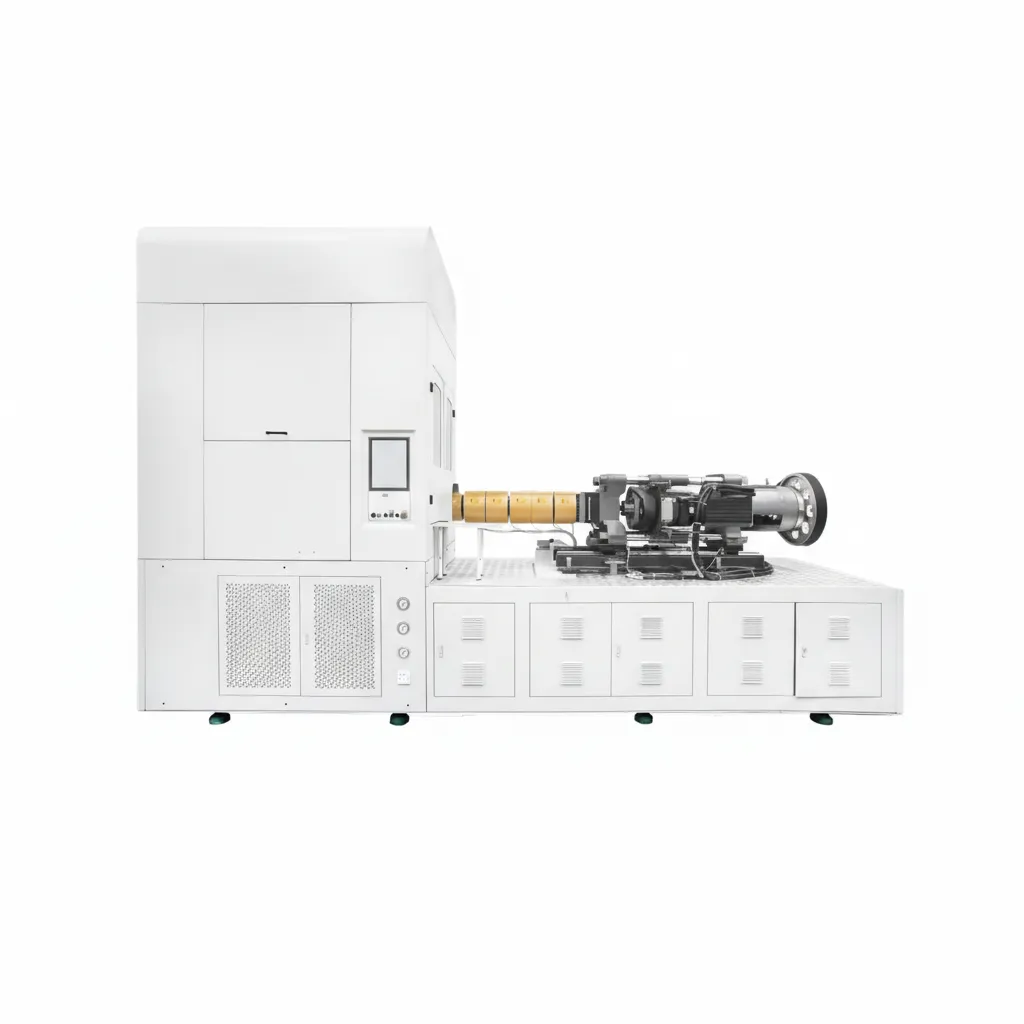
HGYS150-V4-EV — Fully Servo Four-Station ISBM for Pharmaceutical Production
For pharmaceutical pill and oral medicine bottle production requiring the strictest GMP compliance — oil-free production environment, precision conditioning control, and comprehensive process data logging — the HGYS150-V4-EV fully servo four-station ISBM machine is the correct platform for TGA-regulated pharmaceutical packaging operations. Its fully servo-electric architecture eliminates hydraulic oil from the production environment — mandatory for pharmaceutical GMP. Servo-controlled conditioning temperature achieves ±0.5°C circumferential uniformity, preventing the banding that would be visible in clear pharmaceutical bottles and ensuring consistent biaxial orientation for predictable MVTR performance. Servo stretch rod positioning to ±0.5mm repeatability delivers consistent wall thickness distribution and desiccant bore consistency across all production cavities. PLC process data logging with audit-trail recipe management supports the batch record and change control documentation that TGA inspection readiness requires. Processes pharmacopoeial-grade PET and PETG across pharmaceutical bottle volumes from 30ml solid dose formats through 500ml oral liquid bottles.