1. Why Pharmaceutical Containers Demand a Fundamentally Different Approach to ISBM
Pharmaceutical primary packaging — containers in direct contact with a drug product — operates under an entirely different regulatory and technical framework from food, beverage or cosmetic packaging. In Australia, the Therapeutic Goods Administration (TGA) requires that primary packaging materials comply with the relevant sections of the Australian Register of Therapeutic Goods (ARTG) registration, that extractables and leachables from container materials are characterised within ICH Q3E guideline limits for the drug product’s route of administration, and that the manufacturing process for primary packaging components is operated under a documented quality management system consistent with PIC/S GMP Guide PE 009. For ISBM container manufacturers, this means the machine, tooling, resin and every process parameter are elements of a validated manufacturing process — not simply inputs to a production operation.
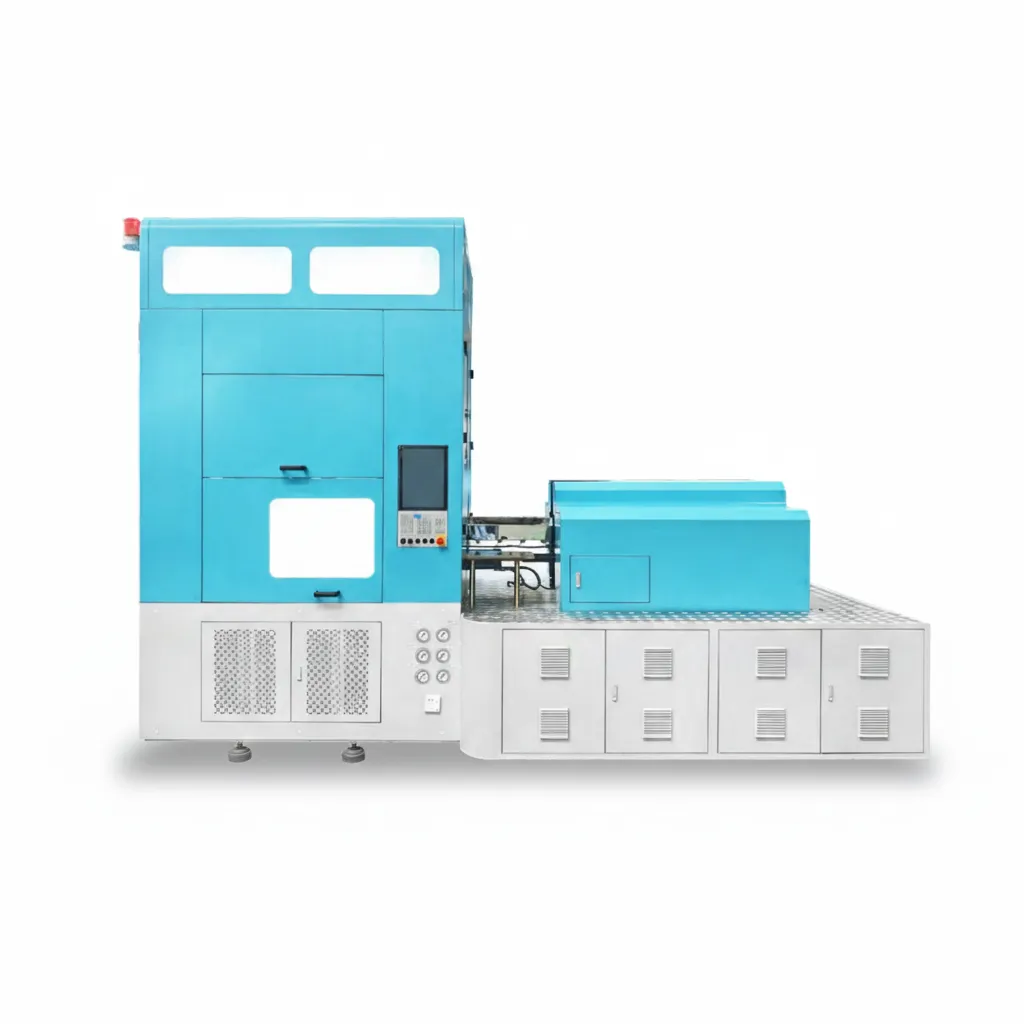
The automatic blow moulding machine architecture of one-step ISBM offers a structural hygiene advantage over two-step alternatives that is architecturally significant for pharmaceutical applications: the closed-loop process — resin melted, formed into a preform, conditioned, stretched, blown and ejected in a single integrated machine with no intermediate atmospheric exposure — eliminates the preform handling, storage and transfer steps where microbial and particulate contamination can enter the container interior. This is not an incremental process improvement. It is an architectural difference that simplifies the contamination control programme, reduces the environmental monitoring burden and aligns directly with the GMP preference for process designs that minimise human intervention and open container exposure.
This guide addresses pharmaceutical ISBM across five angles: resin and material qualification; machine and tooling qualification under the IQ/OQ/PQ framework; validated process parameter settings and their engineering rationale; container quality testing programme; and regulatory documentation package. Each section identifies what distinguishes pharmaceutical ISBM from beverage or cosmetic production and explains the technical basis for every additional requirement.
2. Resin Qualification: Pharmacopoeial Compliance and Acetaldehyde Control
2.1 Pharmacopoeial Compliance Requirements
PET resin for pharmaceutical primary packaging must comply with the requirements of multiple pharmacopoeial plastic container specifications referenced in the TGA’s regulatory framework. For Australian pharmaceutical manufacturers, the primary reference documents are the United States Pharmacopeia USP <661> Plastic Packaging Systems and Their Materials of Construction, European Pharmacopoeia Ph. Eur. 3.1.15 for PET containers, and ICH Q3E Guidelines for Extractables and Leachables. These references collectively require: biological reactivity tests (cytotoxicity testing per USP <87> or <88> appropriate to the intended route of administration), physicochemical tests (light absorption, non-volatile residue, heavy metals), and extractables characterisation covering volatile organic compounds, semi-volatile compounds and inorganic extractables under conditions that simulate drug product contact. The resin must be supplied with a Certificate of Compliance referencing the specific pharmacopoeial standards met, and this certificate forms part of the container material dossier submitted to the TGA with the drug product registration application.
2.2 Acetaldehyde Control: The Primary Process-Related Impurity
Acetaldehyde (AA) is generated as a natural by-product of PET thermal processing and migrates from the container wall into the drug product. While AA is a regulatory concern in food packaging primarily through beverage taste threshold effects, in pharmaceutical applications the ICH Q3E threshold for AA as a process-related impurity in oral drug products is 22 ppm in the finished drug — but the migration rate from the container must be characterised and demonstrated to remain below this limit across the full intended shelf life, not merely at the time of manufacture. Every 10 °C reduction in melt processing temperature reduces AA generation by approximately 30–40%. Australia Ever-Power’s fully servo PET շշերի փչող մեքենա EV series maintains barrel melt temperature within ±2 °C across all zones through closed-loop servo-controlled heating and active barrel cooling — the thermal management precision that pharmaceutical AA specifications demand and that conventional temperature controllers cannot reliably deliver across a full production shift.
3. Machine and Tooling Qualification: The IQ/OQ/PQ Framework
GMP pharmaceutical manufacturing requires that all equipment used in or adjacent to the manufacturing process is qualified under a three-phase validation protocol before it is used in production. For a one-step ISBM machine producing pharmaceutical primary packaging components, this protocol covers the machine, the mould tooling and all in-process inspection equipment.
IQ — Installation
Verifies machine installed correctly, all utilities meet spec, all instrument calibration certificates current and NATA-traceable. Documents serial number, as-built configuration and electrical protection testing.
OQ — Operational
Demonstrates machine operates within validated parameter ranges. Establishes upper and lower limits for all critical process parameters with documented engineering rationale for each limit.
PQ — Performance
Three consecutive production batches of ≥1,000 containers each, all meeting quality specification. Cpk ≥ 1.33 for weight and wall thickness. AA content within validated limit throughout.
3.1 OQ Validated Process Parameter Ranges
The table below defines representative OQ validated process parameter ranges for a standard 100 mL PET oral liquid bottle produced on an Australia Ever-Power four-station full servo machine. Parameters for other container formats — ophthalmic solutions, oral solid dispensing bottles, parenteral supplement containers — are established individually during the OQ protocol for each product-machine-tooling combination.
| Process Parameter | Nominal Set Point | Validated Range | Monitoring Frequency | Quality Impact if Out of Range |
|---|---|---|---|---|
| Barrel melt temp — zones 1–4 | 275 °C | 270–280 °C | Continuous | ↑ AA generation; thermal degradation |
| Preform conditioning temp | 100 °C | 97–103 °C | Continuous | Wall thickness non-uniformity; haze |
| Blow pressure — main | 3.0 MPa | 2.9–3.1 MPa | Continuous | Volume deviation; base deformation |
| Machine cycle time | 18 s | 17–19 s | Per cycle | Insufficient cooling; dimensional drift |
| Cooling water temperature | 12 °C | 10–14 °C | Every 30 min | Shrinkage; neck finish deviation |
| Injection shot weight | 12.0 g | 11.8–12.2 g | 100% inline | Wall thickness Cpk failure |
4. In-Process Quality Control: Three-Level Programme
Pharmaceutical container production requires a more structured and fully documented in-process quality control programme than any other ISBM application. The three-level programme below is the minimum required framework under PIC/S GMP; individual drug product registrations may impose additional or more stringent requirements depending on the product’s route of administration and the risk classification assigned to the container in the ARTG submission.
Level 1 — Automated 100% Inline Inspection
Level 2 — Periodic Operator Sampling Inspection
Level 3 — Batch Release Laboratory Testing
Batch release testing by the quality laboratory covers the full pharmacopoeial container specification: biological reactivity per USP <87>, physicochemical tests (non-volatile residue, heavy metals, light transmission), and AA content measurement. This batch release programme mirrors the qualification testing that established the validated parameter ranges, ensuring ongoing comparability between each production batch and the qualification baseline required for TGA audit traceability over the product’s registered shelf life.
5. Pharmaceutical Container Formats and Format-Specific Parameter Considerations
Pharmaceutical containers produced on Australia Ever-Power one-step ISBM equipment span four primary formats, each with distinct preform design, stretch ratio and quality control requirements that must be individually documented in the validated process for that format.
Oral Liquid Bottles — 50 to 500 mL
Syrups, suspensions and elixirs. PCO neck finish for tamper-evident closure compatibility. AA target below 10 µg/L for oral route. Amber tint option for light-sensitive formulations including most antibiotic suspensions.
Oral Solid Dispensing Bottles — 60 to 1,000 mL
Tablets, capsules and vitamin supplements. Wide-mouth neck finish for automated packaging line compatibility and child-resistant closure systems. Desiccant canister integration compatibility for hygroscopic formulations.
Ophthalmic Solution Bottles — 5 to 30 mL
Eye drops with integral dropper tip. Requires ISO Class 7 cleanroom production environment. Tightest contamination control specification across all pharmaceutical packaging categories — microbial bioburden limit below 10 CFU per container.
Parenteral Supplement Bottles — 100 to 500 mL
Nutritional preparations for parenteral administration. Highest extractables and leachables characterisation requirements. ICH Q3E toxicological risk assessment mandatory for all identified extractables above reporting threshold.
6. Cleanroom Integration and Environmental Control Requirements
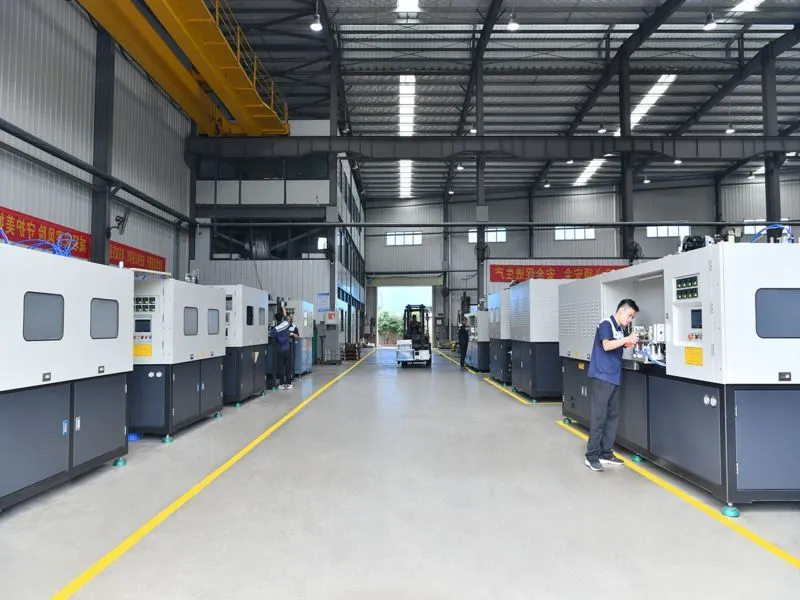
Pharmaceutical ISBM container production increasingly requires environmental control consistent with ISO 14644-1 cleanroom standards — particularly for parenteral supplement containers and ophthalmic solutions where contamination specifications are most stringent. Australia Ever-Power’s pharmaceutical-configured machines are designed for installation in ISO Class 7 or ISO Class 8 cleanroom environments with the following standard features: all external machine surfaces are smooth, crevice-free stainless steel or equivalent hygienic grade materials with no horizontal ledge surfaces where particulate can accumulate; the full servo motor drive system eliminates hydraulic oil entirely from the production environment — removing both a potential particulate contamination source and a microbial growth substrate; and the control cabinet is sealed to IP54 rating with a filtered positive-pressure air purge to prevent particulate ingress from the room environment even during door-open maintenance events.
The automatic blow moulding machine EV series includes an optional ionised air knife at the container ejection station that neutralises static charge accumulated during the blowing process and removes loose particulate from container surfaces immediately before transfer to the downstream inspection and secondary packaging systems. Static charge accumulation on PET containers is the primary mechanism by which airborne particulate adheres to container inner surfaces after ejection — the ionised air knife addresses this at the point where it matters most, before containers reach any open-air environment.
Blow air quality for pharmaceutical applications must meet ISO 8573-1 Class 1.2.1 minimum: particulate Class 1 (≤0.1 µm particles ≤20,000/m³; ≤0.5 µm ≤400/m³), humidity Class 2 (pressure dew point ≤−40 °C), and oil Class 1 (≤0.01 mg/m³). The blow air quality certificate forms part of the IQ documentation package and is re-verified at each annual machine qualification review.
7. Regulatory Documentation Package and TGA Audit Support
The regulatory documentation package for pharmaceutical ISBM containers is substantially more extensive than for food or cosmetic packaging, and must be in place before the first commercial production batch is released. Australia Ever-Power provides the following documentation with every pharmaceutical machine installation, structured to directly support the customer’s TGA Drug Master File or ARTG registration submission.
📄
🧪
🔬
💻
📋
8. Common Non-Conformances, Root Cause Analysis and CAPA Requirements
Pharmaceutical container non-conformances require corrective and preventive action (CAPA) documentation and a formal root cause investigation under GMP — they cannot be resolved by simply adjusting machine parameters and restarting production without a documented assessment. The three most frequently encountered non-conformances in pharmaceutical ISBM production, their validated root causes and their documented corrective actions are as follows.