Single-Use Medical Packaging: The Zero-Tolerance Standard for Sterility and Dimensional Integrity
Single-use medical containers — syringe outer shells, unit-dose dispensers, prefillable system components, and single-use accessory packaging — operate under the strictest packaging quality standard in the healthcare supply chain. A single contaminated syringe, a closure that fails during transport to a clinical setting, or a dimensional nonconformance that prevents a prefillable device from engaging its drive mechanism correctly is not a packaging defect with commercial consequences — it is a patient safety event with clinical, legal, and regulatory implications that no quality management system can fully insulate against after the fact. Prevention through correct specification, validated production, and rigorous quality control is the only appropriate approach.
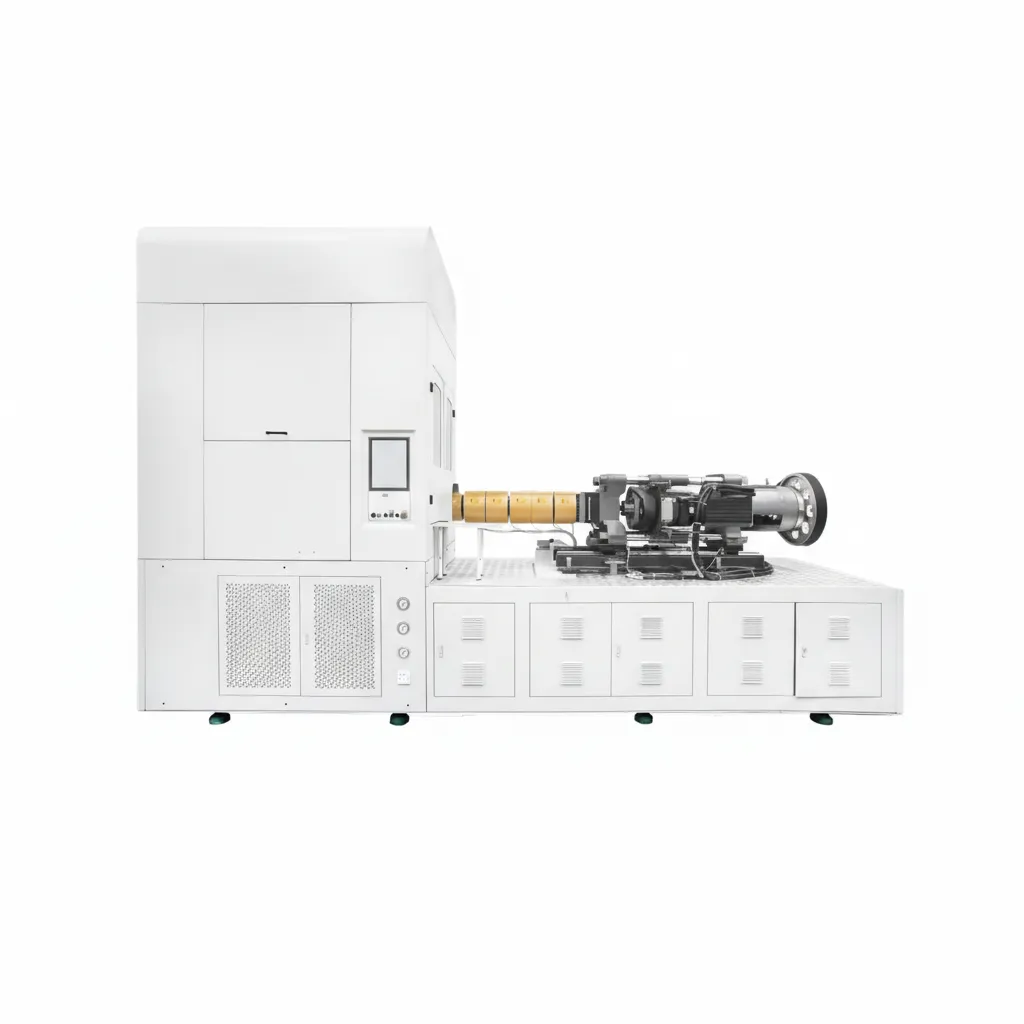
The ເຄື່ອງສີດພົ່ນແມ່ພິມຍືດ contributes to this prevention standard through its precise, reproducible geometry — the injection-formed neck and controlled blow-mould body geometry reproduce the dimensional specification of syringe system components to tolerances that the medical device design requires, consistently across every unit in a commercial production batch. The oil-free servo-electric machine architecture eliminates the contamination pathways that hydraulic production equipment creates, and the cycle-by-cycle process data logging provides the production history documentation that TGA medical device conformity assessment demands.
Australia Ever-Power Injection Stretch Blow Moulding Machine Co., Ltd, Condell Park NSW 2200, provides medical device packaging manufacturers with ISBM technology and validation support tailored to the TGA Class I, II, and III medical device regulatory framework. This article addresses the specific requirements of syringe outer shell and single-dose medical container production in detail.

Syringe Packaging System Architecture and ISBM’s Role
The outer packaging for pre-filled syringes, syringe assemblies, and single-use injection devices serves multiple functions simultaneously: physical protection of the device during storage and distribution, sterile barrier maintenance from the point of sterilisation to the point of use, tamper-evidence confirmation that the device has not been accessed before the clinical user opens it, and compatibility with automated filling and packaging line equipment. Each of these functions imposes specific dimensional and material requirements that the ISBM container must meet.
Sterile Barrier Containers for Syringe Components
ISBM PET containers used as outer sterile barrier packaging for syringe components (plungers, needles, barrel components prior to assembly) must maintain their sterile interior from the point of sterilisation through the entire distribution and storage period to the point of use opening. The sterile barrier requirement drives the closure system design toward hermetic seals — typically induction-bonded foil liners or peel-seal laminate membranes — that provide both the hermetic vapour barrier and the tamper-evident peel track that confirms the package has not been opened. The neck sealing surface dimensions (flatness ±0.12mm, Ra ≤ 0.40 µm, width ±0.15mm) must meet the induction seal or peel-seal supplier’s specification precisely — and the ISBM injection-formed neck provides these consistently across all production cavities from a single production batch.
Unit-Dose Oral Dispensers: Precision Fill Volume and Dosing
Unit-dose oral dispensers — single-use containers pre-filled with an exact therapeutic dose of oral liquid medicine, administered directly from the container and then discarded — require the container to define the dose volume precisely. The container’s nominal fill volume at the production fill level must be within ±2% of the labelled dose to meet standard pharmaceutical dose accuracy requirements. For a 5ml unit-dose dispenser, ±2% represents ±0.10ml — achievable through ISBM’s controlled internal volume consistency (±1% fill capacity variation from the specified preform weight and blow parameters), but requiring validation through fill volume accuracy testing on production containers from all cavities as part of the container qualification programme.
Prefillable Container Systems: ISBM as Part of a Drug-Device Combination
Drug-device combination products — where a pharmaceutical drug product is packaged in a device that is integral to its delivery (prefillable injectors, nasal spray devices, oral dose dispensers with metered pumps) — are regulated under both the TGA’s therapeutic goods framework for the drug component and the medical devices framework for the device component. The ISBM container that is integral to a drug-device combination product is subject to both frameworks simultaneously, and must meet the container-closure system requirements of the drug registration (E&L, stability, compatibility) and the design history file requirements of the device registration (dimensional specification, materials specification, performance testing). The engineering and regulatory management of this dual compliance pathway requires specific expertise that Ever-Power’s pharmaceutical application engineering team can support.
Material Requirements for Single-Use Medical ISBM Containers
Single-use medical containers made from PET through ISBM must meet material standards that address both the pharmacopoeial requirements for pharmaceutical contact and the biocompatibility requirements for medical device contact. These two frameworks overlap but are not identical, and for containers that function in both capacities (a prefillable oral drug-device combination outer shell that contacts the drug product), both must be addressed.
ISO 10993 Biocompatibility
Medical device primary packaging in direct contact with a patient-use device must demonstrate biocompatibility under the ISO 10993 series. For PET ISBM containers, the relevant tests are cytotoxicity (ISO 10993-5), sensitisation (ISO 10993-10), and irritation/skin sensitisation. Pharmacopoeial-grade PET from established food/pharma resin grades has well-characterised biocompatibility data that typically supports ISO 10993 compliance without new testing.
USP <661> / Ph.Eur. 3.1.15
Pharmacopoeial compliance for drug-contact containers requires meeting plastic packaging standards including pH of water extract, turbidity, UV absorption, and heavy metal content. Pharmacopoeial-grade PET resin processed within validated ISBM parameters satisfies these requirements. The specific test results for the production container (not just resin data) must be included in the product registration submission.
Extractables & Leachables
E&L for single-use medical containers must address the full contact scenario — single contact in a clinical use event, not extended storage contact. The E&L risk assessment framework for single-use containers follows the PQRI and ICH Q3E approach but focuses on the single-contact extractable profile at the relevant clinical exposure conditions, rather than the extended storage leachables study required for long-shelf-life pharmaceutical products.
Gamma Irradiation Compatibility
Single-use medical containers are typically terminally sterilised by gamma irradiation at 25 kGy minimum absorbed dose (ISO 11137). PET is compatible with gamma irradiation at this dose level with minor, characterised property changes (slight haze increase, marginal colour change). Post-irradiation dimensional and mechanical testing confirms that the container continues to meet all specification requirements after the sterilisation process.
Dimensional Precision for Medical Device Assembly Compatibility
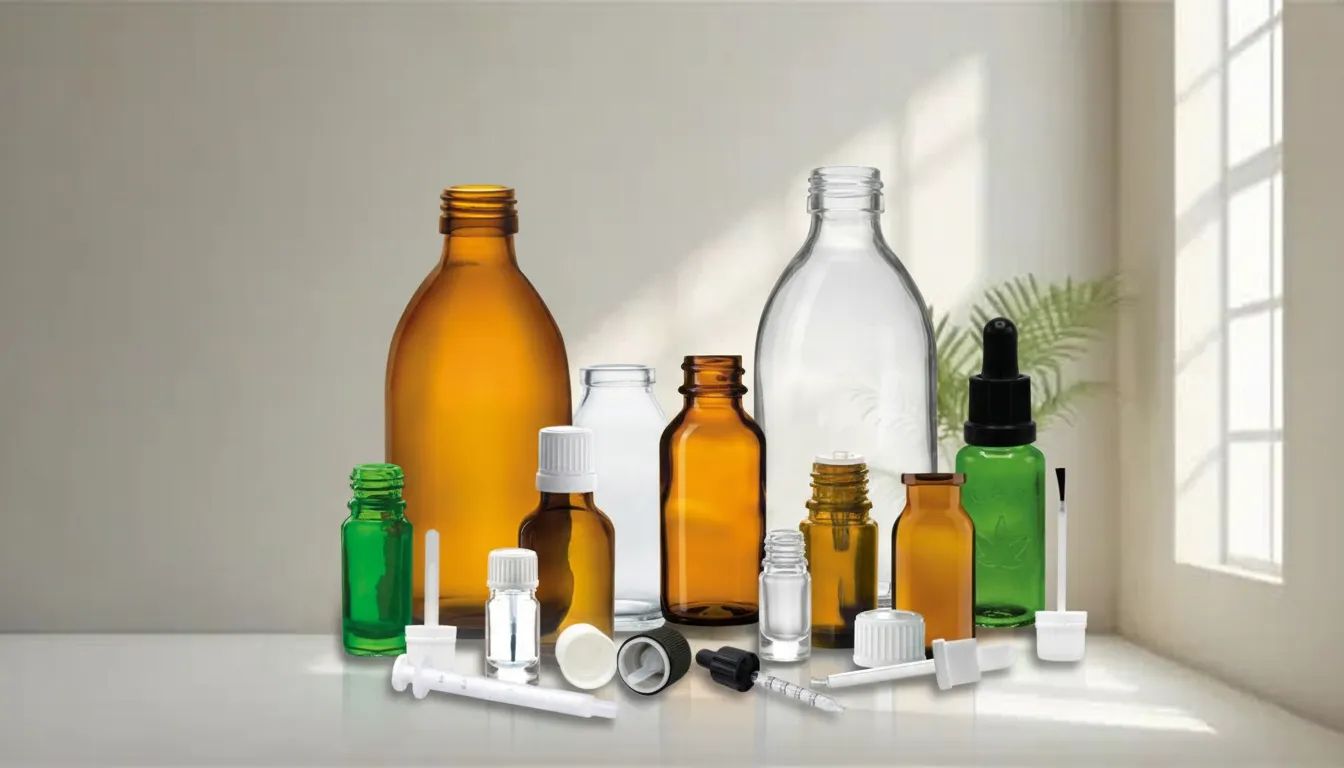
Medical devices that incorporate ISBM containers as functional components — oral dose dispensers with metered pumps, syringe accessory shells with defined engagement geometries, single-dose ophthalmic containers with twist-off tips — require container dimensions to be within the mechanical tolerance of the device’s assembly or engagement system. Unlike consumer packaging closures where a ±0.3mm tolerance on neck dimensions produces a functional but imprecise closure, medical device components require tolerances of ±0.05–0.15mm on critical engagement dimensions because the device’s functional performance (dose accuracy, engagement force, leak-free closure) depends on the dimension being within a defined mechanical specification.
Oral Dose Dispenser Neck Geometry
For single-use oral dose dispensers used in paediatric and geriatric medicine administration — products like unit-dose oral syringes, oral liquid dispensing systems for hospital pharmacy, and single-dose liquid ampoule-style containers with twist-off tips — the neck finish geometry determines both the seal integrity before use and the break-open force required at the clinical point of administration. ISBM’s injection neck provides the dimensional repeatability (±0.05mm on bore diameter, ±0.08mm on roundness) that ensures the twist-off tip breaks at the defined force range (calibrated to be accessible for all user populations including patients with reduced hand strength, while being tamper-resistant under normal handling forces) and provides a flow aperture of defined geometry for dose administration. These functional performance requirements must be validated on production containers from all production cavities — single-cavity validation samples are not representative of the commercial multi-cavity production population’s dimensional distribution.
Automated Assembly Line Compatibility
Syringe packaging and unit-dose container filling lines run at speeds of 6,000–20,000 units per hour on rotary filling platforms. At these speeds, a container body diameter variation of ±0.50mm (acceptable for consumer packaging) creates sporadic jamming and misfeed events that stop the filling line and require manual clearance — generating product waste, production downtime, and the risk of contamination events when the filling line is opened for manual intervention. ISBM’s body diameter consistency (±0.15–0.20mm across multi-cavity production tooling) is within the operating tolerance of pharmaceutical filling line container handling systems and eliminates the misfeed events that dimensional outliers create. Confirming this dimensional consistency requires measuring the outside diameter at multiple body heights on containers from all production cavities — not just the neck, which is the most commonly measured dimension in pharmaceutical container QC programmes.
Sterility Assurance: Production Environment and Terminal Sterilisation
For single-use medical containers supplied to aseptic pharmaceutical filling operations, the sterility assurance level (SAL) of the container at the point of fill initiation must meet the programme requirements of the filling operation — typically SAL 10⁻³ or better for containers sterilised by gamma irradiation before filling, or a bioburden specification for containers washed and rinsed immediately before filling on an aseptic line. The approach depends on the specific filling operation’s validated process, and the ISBM container must be specified to meet the bioburden or SAL requirement of that process.
Production Environment Bioburden Control
ISBM production of single-use medical containers requires a controlled environment that limits bioburden accumulation on the container interior between production and either sterilisation or filling. The ISBM production process itself provides a thermal bioburden reduction step — the preform injection phase at 270–290°C and the conditioning phase at 95–115°C both constitute a significant thermal treatment of the container material. However, the post-blow handling environment (container conveyors, inspection stations, counting and packing equipment) can reintroduce environmental microorganisms that accumulate as bioburden on the container interior. ISO Class 7 or ISO Class 8 clean-room production environments with HEPA-filtered air supply and appropriate personnel and material gowning controls are required for medical container ISBM operations targeting bioburden specifications that support pharmaceutical filling operations.
Gamma Irradiation Sterilisation: Dose Setting and Validation
The gamma irradiation dose for terminal sterilisation of single-use medical containers must be validated under ISO 11137-2 (the method B validation approach is most commonly used for container applications) using the production container’s measured bioburden as the starting parameter. The validated minimum dose is calculated to achieve a SAL of 10⁻⁶ for the measured bioburden population — and must be re-validated whenever the container manufacturing process, the production environment classification, or the container design changes in a way that could affect the container’s bioburden at the point of sterilisation. The production container’s dose mapping (confirming that the minimum dose point within the irradiation container receives at least the validated minimum absorbed dose) must be conducted at the geometry and density of the commercial production shipping configuration — not on individual containers in isolation.
TGA Medical Device Design History File: ISBM Container Documentation Requirements
Medical devices supplied in the Australian market under TGA regulation require a Design History File (DHF) that documents the complete development history of the device — from initial design specification through design verification, design validation, and clinical risk management. For ISBM containers that are part of a medical device or drug-device combination product, the DHF must include the container’s design documentation, which covers all engineering decisions, test results, and validation data that demonstrate the container meets its design requirements.
Design Input Specification
Container dimensional drawing with tolerances; material specification (resin grade, pharmacopoeial compliance, biocompatibility test data); sterilisation compatibility specification (gamma dose range and validated minimum dose); closure system specification including induction seal or peel-seal dimension requirements and seal integrity performance specification.
Design Verification Testing
Dimensional CMM measurement confirming all critical dimensions against specification; seal integrity testing (dye ingress or pressure decay leak test confirming hermetic barrier); mechanical performance (drop test, top-load, twist-off force, fill line compatibility); material testing (pharmacopoeial extracts, biocompatibility, gamma compatibility characterisation).
Design Validation
Simulated use testing (clinical administration scenario testing using the actual device assembly with the ISBM container under representative clinical conditions); shelf life validation confirming sterile barrier integrity and dimensional performance after accelerated ageing (typically ASTM F1980 accelerated ageing equivalent to the product’s claimed shelf life); real-time shelf life confirmation programme ongoing.
Production Process Qualification
IQ/OQ/PQ validation of the ISBM production process confirming statistical process capability (Cpk ≥ 1.33) for all critical container dimensions; bioburden testing of production containers before sterilisation confirming the bioburden is within the validated dose-setting bioburden specification; batch records linked to each production lot through PLC process data logging.
Accelerated Shelf Life Testing for Single-Use Medical Containers
The sterile barrier of a single-use medical container must be demonstrated to remain intact throughout the product’s labelled shelf life under the specified storage conditions. For single-use medical packaging claiming a 2–5 year shelf life, waiting for real-time data to accumulate before market launch is commercially impractical — accelerated ageing testing (AAT) using the ASTM F1980 protocol provides the early data that supports initial product launch while real-time ageing data continues to accumulate.
For PET ISBM single-use medical containers, AAT at 55°C (the standard ASTM F1980 temperature for 5:1 acceleration factor relative to +23°C ambient storage) produces a dimensional condition that must be assessed carefully — PET approaches its glass transition temperature (Tg ≈ 75–80°C) as temperatures rise above 55°C, and extended storage at 55°C may cause very gradual dimensional relaxation in the container body and neck that would not be detectable at ambient temperature but becomes visible after extended AAT at higher temperatures. The AAT temperature for PET ISBM medical containers should be limited to ≤55°C (a conservative approach relative to the ASTM standard) with simultaneous real-time ageing confirmation, to avoid the risk that AAT at higher temperatures produces artefactual dimensional changes that do not accurately represent the container’s real-time shelf life performance.
The AAT test battery for sterile barrier evaluation includes: dye ingress test (confirming no penetration of methylene blue dye through the peel-seal or induction-sealed closure under defined dye exposure conditions), microbial challenge test (confirming the closed container prevents penetration of a defined microbial aerosol challenge), and physical integrity inspection (confirming no visible damage, delamination, or deformation of the container or seal after the AAT period). All three tests must be conducted on representative samples from the commercial production configuration (container + closure + sterilisation method) — not on container material or closure component specimens in isolation.

Risk Management for ISBM Single-Use Medical Containers Under ISO 14971
ISO 14971 (Application of Risk Management to Medical Devices) is the mandatory risk management standard for all TGA-regulated medical devices, including single-use packaging that is an integral part of a medical device or drug-device combination product. For ISBM single-use medical containers, the risk management process identifies the hazards associated with the container, estimates the probability and severity of harm from each hazard, and confirms that control measures are in place to reduce risks to acceptable levels.
The principal hazards associated with ISBM single-use medical containers include: dimensional nonconformance leading to device assembly failure or dose inaccuracy (controlled through validated production with statistical process capability confirmation); contamination through extractable migration into the drug product (controlled through pharmacopoeial-grade resin specification and E&L study); sterile barrier failure leading to patient exposure to non-sterile drug or device (controlled through validated sterilisation process and sterile barrier design verification and validation); and UV-induced drug degradation through inadequate light protection (controlled through amber masterbatch specification with validated UV transmission confirmation). Each of these hazards must be documented in the Risk Management File with its associated probability estimation, severity assessment, risk control measures, and residual risk evaluation.
Contact [email protected] for technical support in developing the risk management file elements related to the ISBM container component of your medical device product — an area where Ever-Power’s pharmaceutical application engineering team provides specialist guidance as part of the medical device packaging development support programme.
Production Configuration and Capacity Planning for Medical Container ISBM
Single-use medical container production differs from standard pharmaceutical packaging production in its volume profile — medical devices often have lower individual SKU volumes but very high regulatory documentation and quality system overhead per SKU. The production economics therefore favour a configuration that handles multiple medical container SKUs on a single machine platform, with rigorous changeover protocols and recipe management that maintain GMP compliance during transitions between different products.
| ແອັບພລິເຄຊັນ | Volume Range | Annual Volume | Recommended Config |
|---|---|---|---|
| Unit-dose oral dispensers | 1ml – 10ml | 50K – 500K | 1–2 cavity, HGYS150-V4-EV |
| Single-dose sterile barrier | 5ml – 50ml | 100K – 2M | 2–4 cavity, HGYS150-V4-EV |
| Prefillable device shells | 10ml – 100ml | 20K – 200K | Single cavity, flexible platform |
| Hospital unit-dose systems | 2ml – 30ml | 500K – 5M | 4 cavity, HGYS150-V4-EV |
Ever-Power’s Medical Container ISBM Support Programme
Australia Ever-Power provides medical device and pharmaceutical companies with a dedicated ISBM support programme for single-use medical container development — from initial design specification alignment with TGA medical device regulatory requirements through IQ/OQ/PQ validation, Design History File documentation support, and the ongoing production quality management that ISO 13485 and TGA GMP compliance requires. The Condell Park NSW engineering team’s same-day on-site response capability is a practical advantage for medical device production operations where unresolved production quality issues have both patient safety and regulatory consequences.
For medical device manufacturers considering ISBM investment for single-use container production, Ever-Power’s pre-investment regulatory readiness assessment reviews the specific TGA device classification, the applicable conformity assessment pathway, and the documentation requirements for the container component — providing an accurate scope of the validation and documentation investment required before capital commitment is made.
Visit isbm-technology.com/contact-us to arrange a medical device container ISBM assessment with Australia Ever-Power’s specialist pharmaceutical engineering team.
Recommended Machine
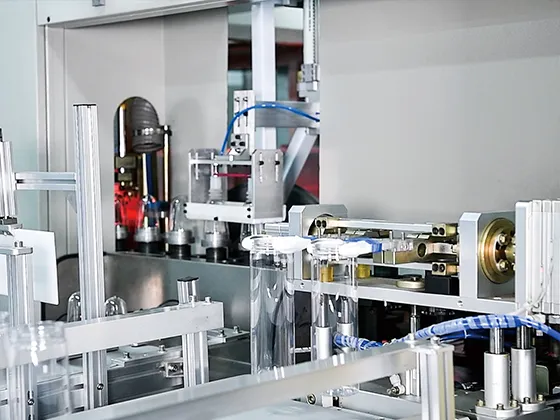
HGYS150-V4-EV — Fully Servo ISBM for Single-Use Medical Production
For single-use medical container production requiring the strictest GMP compliance and dimensional precision — oil-free production environment, servo conditioning accuracy, and comprehensive process data logging — the HGYS150-V4-EV fully servo four-station ISBM machine provides the correct platform for TGA medical device packaging operations. Fully servo-electric architecture eliminates hydraulic oil entirely — mandatory for medical device production under ISO 13485 and TGA GMP. Servo conditioning control achieves ±0.5°C uniformity, eliminating wall thickness variation that affects automated filling line compatibility. Precision injection neck forming to ±0.05mm enables the dimensional tolerance requirements of medical device assembly systems. Cycle-by-cycle process data logging with audit-trail recipe management generates the batch records and change control documentation for Design History File compliance. Processes pharmacopoeial-grade PET for single-use medical container volumes from 1ml unit-dose formats through 100ml medical fluid containers.