Engine oil is the single highest-volume segment in the automotive fluid packaging market, with Australian demand driven by a national vehicle fleet exceeding 20 million registered vehicles. Every oil change — whether performed by a professional workshop, a dealership service centre or an experienced home mechanic — begins with a sealed, accurately dosed container that must protect the lubricant’s additive package, survive the stresses of retail and warehouse distribution, and dispense cleanly under the oily-hand conditions of a workshop floor. Getting the bottle specification wrong in this category does not just create a consumer experience problem; it risks additive concentration drift, viscosity modifier degradation and brand reputation damage in a market where professional buyers make purchasing decisions based on product integrity and packaging confidence equally.
Why Engine Oil Packaging Demands More Than Standard Blow Moulding
The chemistry of engine oil places packaging material under stresses that consumer product bottles rarely encounter. Modern synthetic and semi-synthetic lubricants contain zinc dialkyldithiophosphate (ZDDP) anti-wear packages, viscosity index improvers, detergent-dispersant systems and friction modifiers — a formulation matrix operating at pH ranges and polarity profiles that interact with polymer packaging in ways that water-based personal care or food products do not. At storage temperatures routinely reaching 40–55°C during Australian summer warehouse conditions, these additive systems apply steady chemical stress to bottle walls, closures and label adhesives simultaneously.
The physical demands layer on top. A fully filled 5-litre engine oil bottle weighs approximately 4.7 kg and must survive a 1.5-metre drop test without spilling or fracturing — a test that simultaneously loads the bottle body in burst pressure, the handle in tensile stress and the base in impact. Retail palletisation stacks these containers 4–5 units high, placing cumulative compressive loads on lower-tier bottles throughout distribution cycles that may span weeks of road and sea freight before reaching the point of sale. Standard extrusion blow-moulded HDPE bottles address some of these requirements at the cost of significant wall mass — a weight penalty that adds material cost and reduces the per-pallet density that logistics operations require for cost-efficient distribution.
The ISBM Process Advantage for Automotive Fluid Bottles
One-Step Thermal Continuity
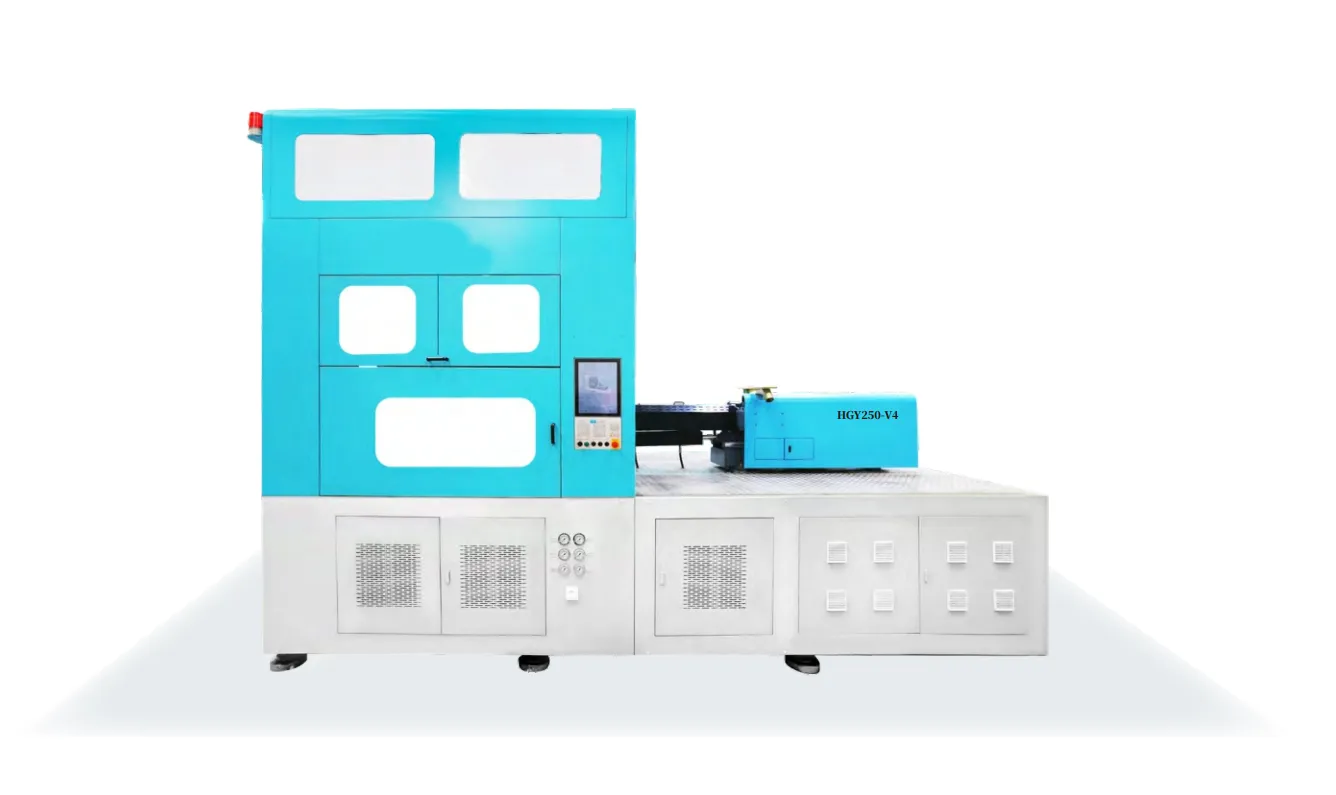
The one-step injection stretch blow molding machine handles the entire production cycle — preform injection, conditioning, stretch-blow and ejection — without the preform ever cooling to ambient temperature between stages. For engine oil bottle production, this thermal continuity is decisive: the PET or HDPE preform retains a precisely programmed temperature gradient through every stage, ensuring the molecular orientation delivered during the stretch-blow phase is controlled and repeatable across every production cavity. This is why ISBM consistently achieves tighter dimensional tolerances on neck finish and body geometry than two-step reheat processes at equivalent output rates.
Biaxial Orientation and Chemical Resistance
When the stretch rod extends axially and high-pressure blow air expands the preform radially, PET chains align simultaneously in both dimensions — a process known as biaxial orientation that has a direct, measurable effect on chemical resistance. The oriented molecular structure reduces the free-volume pathways through which lubricant additives and volatile aromatic components can migrate through the bottle wall, measurably improving barrier performance against hydrocarbon transmission compared to non-oriented alternatives. For chemical resistant plastic bottles carrying premium synthetic engine oils with high aromatic content, this barrier enhancement is not a marginal benefit — it directly affects additive package integrity across a 24–36 month retail shelf life.
Material Selection: PET vs HDPE for Engine Oil Bottle Production
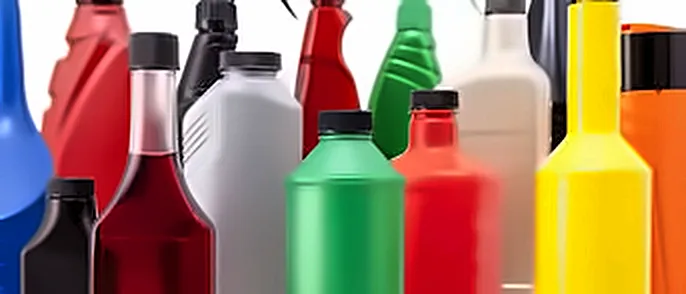
The dominant material question in engine oil packaging is whether to specify PET or HDPE, and the answer depends on bottle volume, product chemistry and distribution channel requirements rather than a universal preference. PET processed through injection stretch blow molding achieves glass-like optical clarity at wall gauges of 0.40–0.65mm in the bottle body — enabling consumers and workshop staff to see product level, colour and clarity directly through the container. This transparency is a genuine commercial differentiator for premium synthetic oils where product colour (typically gold or amber for fully synthetic grades) signals quality to professional buyers.
| Property | ISBM PET | Standard HDPE EBM | Key Impact |
|---|---|---|---|
| Optical Clarity | Haze <2% (glass-like) | Opaque | Product colour visibility, fill-level check |
| Tensile Strength | 40–80% higher (oriented) | Baseline | Lower wall gauge at equivalent strength |
| Neck Finish Tolerance | ±0.08–0.12mm | ±0.20–0.35mm | Cap sealing reliability |
| Hydrocarbon Barrier | High (biaxially oriented) | Moderate (permeation risk) | Additive stability over shelf life |
| Bottle Weight (1L) | 22–28g typical | 32–44g typical | Material cost, pallet density |
| Recyclability (AU kerbside) | PET (01) — high-value stream | HDPE (02) — accepted | APCO / ARL compliance pathway |
HDPE retains relevance in the engine oil category for large-format institutional packs (10L, 20L drum formats) and for formulations with very high aromatic solvent content where PET’s ester backbone faces stress cracking risk under extreme chemical exposure. For the dominant 1L, 4L and 5L retail formats where brand visibility and lightweight distribution are priorities, ISBM PET’s combination of clarity, barrier performance and weight economy presents a compelling case that the Australian automotive aftermarket channel has increasingly recognised over the past five years.
Critical Bottle Design Specifications for Engine Oil Containers
Neck Finish, Cap Sealing and Anti-Glug Geometry
The neck finish on an engine oil bottle governs three separate functional outcomes: the sealing reliability of the foil induction seal (critical for preventing oxidation during retail storage), the thread engagement of the consumer closure (must resist the torque applied by mechanics using oily hands), and the dispensing behaviour during pour-out. Engine oil containers typically use 38mm, 45mm or 48mm wide-mouth neck finishes to accommodate the pour rates required for direct-to-sump filling. ISBM’s injection-formed neck delivers these dimensions with ±0.10mm tolerance on thread outer diameter — ensuring consistent induction seal adhesion across multi-million-unit production runs without the seal voids that variably formed blow-moulded necks produce at excessively tight specification corners.
Integrated Handles and Ergonomic Grip Zones
Engine oil containers in the 4L–5L range must incorporate a handle feature for single-handed carrying and controlled pouring. ISBM blow mould engineering integrates handle loops with internal grip diameters of 38–45mm — comfortable for adult hands in workshop gloves — as blow-moulded features formed during the stretch-blow stage rather than secondary assembly steps. The handle junction radius at the shoulder and base must be specified at ≥8mm to distribute the dynamic load of a filled bottle being lifted and tilted from a shelf, preventing the notch-initiated crack failures that thin-radius handle designs exhibit under drop conditions. Label panels on engine oil bottles must accommodate the viscosity grade declaration (SAE 5W-30, 5W-40, etc.), API/ACEA service classification, volume declaration and the mandatory GHS petroleum product safety labelling — all within the pressure-sensitive label area without overlap or text truncation.
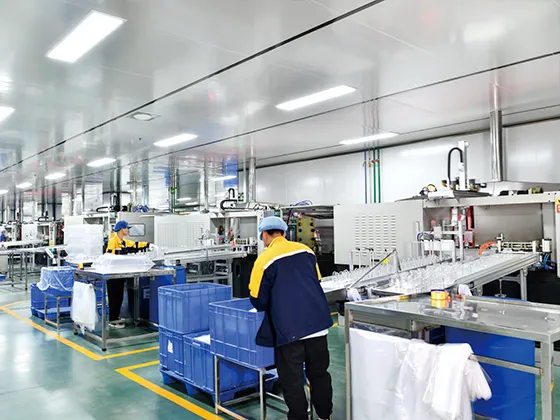
One-Step ISBM Production Workflow for Engine Oil Bottles
The four-station rotary ISBM cycle for engine oil bottle production coordinates injection, conditioning, stretch-blow and ejection in a continuous sequence — each station operating simultaneously to maximise output efficiency while maintaining the process discipline that automotive packaging quality standards require.
① Resin Drying
PET resin with IV 0.76–0.84 dL/g is dried at 160–170°C for 4–6 hours to below 50 ppm moisture. For engine oil bottle grades requiring low acetaldehyde, dew point monitoring at the dryer outlet (target below −40°C) prevents the hydrolytic chain scission that causes haze and reduces impact resistance in automotive packaging that may experience temperature cycling from warehouse to vehicle storage compartment.
② Preform Injection
Dried PET is plasticised at 270–290°C and injected into multi-cavity preform tooling under controlled velocity and hold pressure profiles. The wide-mouth neck finish (38–48mm) for engine oil bottles is formed here with injection-moulding precision — establishing the thread form and induction seal surface geometry that will govern cap torque performance and seal integrity for the entire filled product shelf life.
③ Thermal Conditioning
Independent zone heaters establish the axial temperature gradient that directs material distribution in the blown bottle. For engine oil bottles with integrated handle geometry, the preform zone corresponding to the handle area receives lower conditioning temperature to retain material volume at the handle wall after stretch-blow — preventing the handle wall thinning that compromises grip load capacity on heavy filled containers.
④ Stretch-Blow Moulding
Stretch rod extends at 0.8–1.2 m/s while pre-blow air (6–8 bar) initiates radial expansion. High-pressure blow at 30–40 bar drives full mould contact across handle geometry, body panels, base dome and pour spout profile. Water-cooled tooling at 6–12°C freezes biaxial molecular orientation — locking in the tensile strength, chemical barrier and dimensional accuracy that automotive fluid bottles require to perform through the supply chain.
⑤ Ejection and Inspection
Bottles are ejected onto orientation conveyors for inline vision inspection, weight verification and neck finish gauging. For automotive packaging destined for hazardous goods labelling under Australian Dangerous Goods regulations, batch traceability records linking every production run to process parameters, resin lots and inspection data are maintained to support GHS compliance documentation and product recall capability if required.
Key Machine Parameters for Engine Oil Bottle Production
| Parameter | Typical Range | Impact on Engine Oil Bottles |
|---|---|---|
| Injection barrel temp | 270–292°C | IV retention, neck finish definition, AA level |
| Conditioning temp (body) | 100–116°C | Wall distribution, handle zone retention |
| Stretch rod speed | 0.8–1.2 m/s | Axial orientation, hydrocarbon barrier level |
| High-pressure blow | 30–40 bar | Handle geometry fill, surface definition |
| Mould cooling temp | 6–13°C | Crystallinity, top-load performance, cycle time |
| Cycle time (1L, 4-cav) | 16–24 seconds | Output 3,600–5,400 bottles/hr |
For 4L and 5L engine oil formats, cycle time increases to 28–40 seconds due to the larger preform shot weight and extended blow cooling required for heavier bottle walls. Mould cooling circuit design is proportionally more critical at larger formats: channel pitch must be specified at ≤22mm and inlet temperature variation maintained within ±1°C across all circuits to prevent one-sided thermal gradients that cause label panel curvature and base asymmetry visible in stacked retail shelf displays. Servo-controlled ISBM machines provide the programmable stretch rod velocity and blow valve timing that large-format engine oil bottle programmes require to sustain dimensional consistency across multi-thousand-unit production shifts.
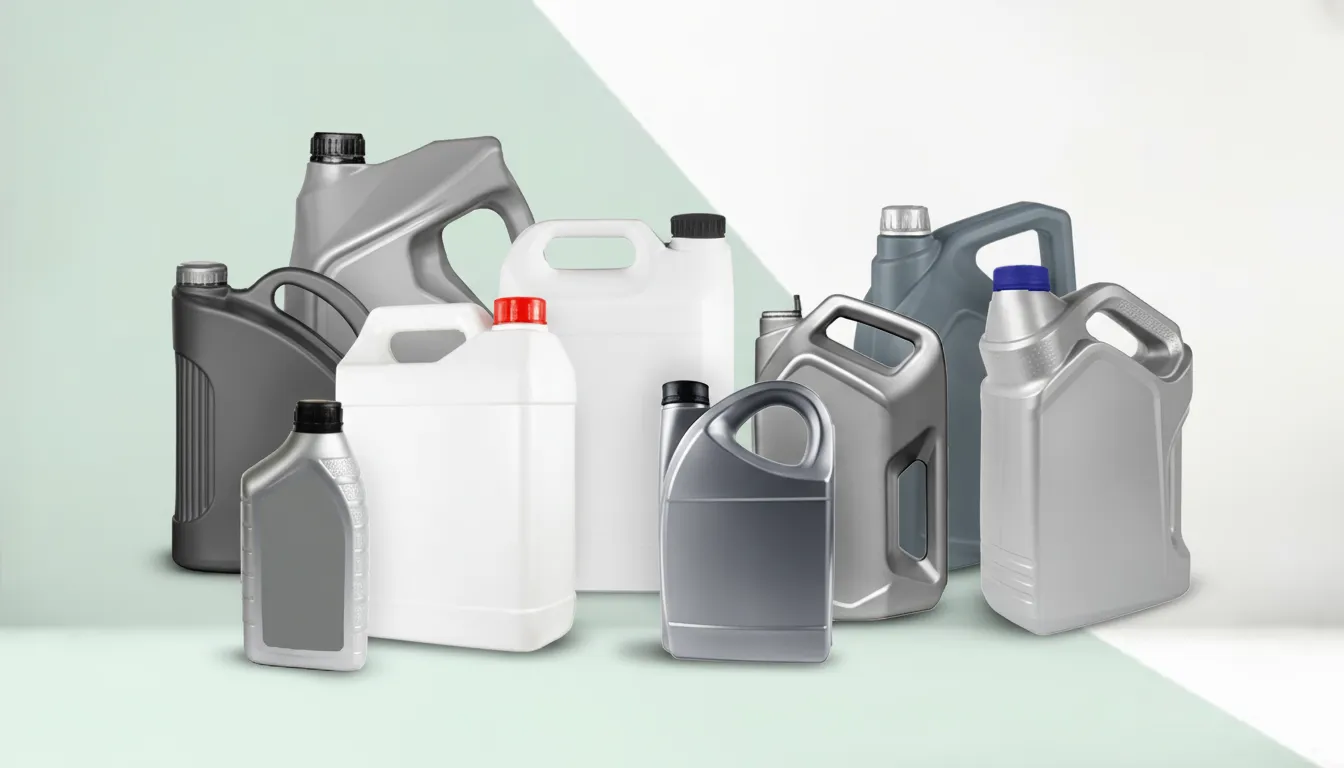
Quality Control and Compliance for Engine Oil Packaging
Engine oil packaging in Australia operates within a multi-layered compliance framework. Australian Consumer Law requires accurate volume declarations; the National Measurement Act governs the metrological accuracy of filled quantity; and Dangerous Goods legislation under the ADG Code classifies petroleum-derived lubricants in Classes 3 and 9 depending on flash point and additive chemistry, triggering GHS-compliant labelling requirements that specify hazard pictograms, signal words and precautionary statements with minimum text sizes. The bottle specification must accommodate all mandatory label content within the usable panel area — a design constraint that packaging engineers must address at the bottle design stage, not after mould steel is committed.
Mechanical testing protocols for engine oil packaging typically encompass top-load compression (simulating 4-high pallet stacking at 40°C warehouse conditions), drop testing from 1.5m onto concrete at both 23°C and −5°C with fully filled bottles, squeeze panel deflection under 20N lateral load, and cap removal torque after accelerated ageing at 50°C for 28 days. Chemical compatibility testing involves 30-day immersion in the target engine oil formulation at 50°C, with post-soak dimensional measurement, weight change and mechanical re-test to confirm no stress cracking, swelling or label adhesion degradation. Bottles specified for synthetic oil formulations containing >10% polyalphaolefin base stock should be validated specifically against this chemistry rather than assuming compatibility from standard mineral oil testing data.
Lightweighting and Sustainability in Engine Oil Bottle Packaging
Australia’s National Packaging Targets and the APCO Australasian Recycling Label programme create commercial pressure on engine oil brands to reduce packaging weight, increase recycled content and improve end-of-life recyclability. ISBM PET addresses all three axes: biaxial orientation allows 15–28% wall gauge reduction relative to non-oriented containers at equivalent mechanical performance, directly reducing PET content per bottle and embedded carbon per unit sold. Mono-material PET construction is kerbside recyclable through the PET (01) stream in all major Australian metropolitan areas, with NIR optical sorters at Material Recovery Facilities reliably routing PET engine oil bottles to high-value regrind streams when label adhesive design does not interfere with the sorting signal.
Incorporating 15–25% post-consumer recycled PET (rPET) from food-contact certified supply chains is achievable for clear engine oil bottles with minimal visual impact. The primary processing consideration is ensuring rPET blend IV remains above 0.74 dL/g and that the combined resin blend is dried below 50 ppm moisture before injection. For coloured engine oil bottles — brand colours such as black, silver and dark blue are common in the premium segment — rPET content can typically be extended to 25–35% without visual quality compromise, because the colour masterbatch masks the slight haze increase associated with higher rPET loading. This combination of lightweighting, recyclability and recycled content positions ISBM PET engine oil packaging as the strongest compliance pathway for brands reporting under APCO’s annual covenant obligations.