
Why Transparency and Visual Appeal Define Commercial Success in Cosmetic Packaging
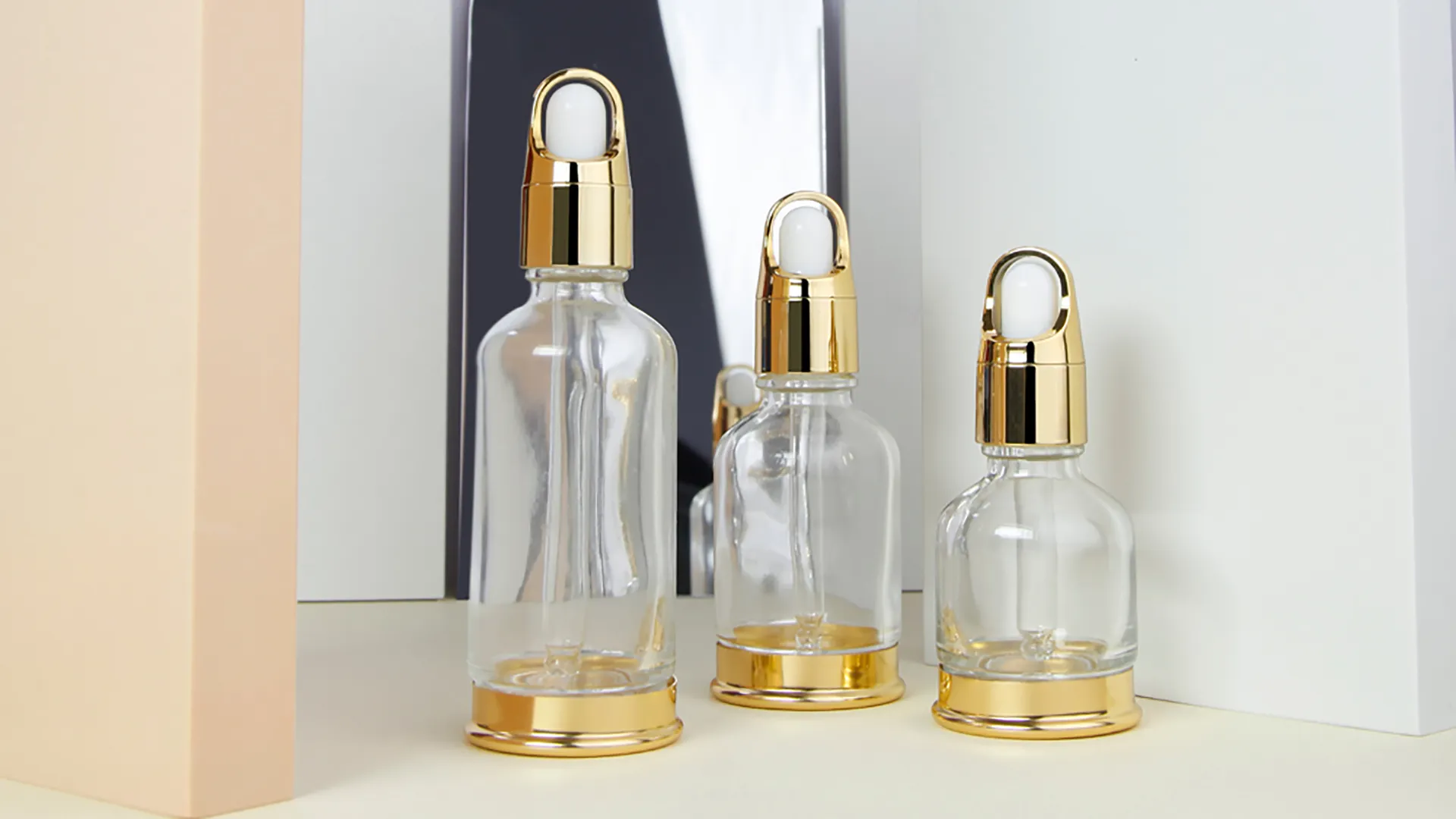
In any product category where the consumer cannot smell, taste, or feel the product before purchase, the package carries the entire burden of communicating what is inside and why it is worth buying. Cosmetics occupy this category with unusual intensity: the formulation is invisible until purchase, the efficacy promise is experiential over weeks and months, and the product’s sensory qualities — the serum’s luminosity, the moisturiser’s creaminess, the perfume mist’s delicacy — can only be communicated indirectly through packaging that evokes those qualities without reproducing them. Transparency and visual appeal are not incidental cosmetic packaging qualities — they are the primary commercial levers that determine shelf conversion, price premiumisation, retail buyer confidence, and consumer loyalty across every cosmetic segment from mass pharmacy through prestige department store.
The injection stretch blow molding process addresses this commercial imperative with a combination of physical and process capabilities that no alternative plastic packaging production technology matches comprehensively. The specific mechanisms by which ISBM creates and sustains optical transparency, surface visual quality, dimensional precision, and the full range of aesthetic effects that cosmetic brands deploy — from water-white glass-comparable clarity through pearlescent shimmer to deeply embossed brand marks — form the technical foundation of this guide.
Australia Ever-Power Injection Stretch Blow Moulding Machine Co., Ltd, based in Condell Park NSW 2200, provides Australian and Asia-Pacific cosmetic packaging operations with injection stretch blow molding machine technology and technical expertise built specifically around the cosmetic industry’s transparency and visual quality standards.
The Physics of Optical Transparency in ISBM PET and PETG Bottles
Understanding what creates optical transparency in an ISBM bottle — and what destroys it — is the essential knowledge base for any production team committed to premium cosmetic packaging quality. Transparency is not a default property of PET or PETG that requires no active management; it is a result that must be engineered and protected throughout the material and production chain.
Amorphous vs. Crystalline Structure: The Root of Clarity
PET and PETG are both polyester polymers that can exist in two structural states: amorphous (where the polymer chains are randomly arranged, producing a transparent, glass-like material) and crystalline (where chains align into regular ordered domains that scatter visible light, producing opacity or haze). The ISBM process for cosmetic bottles must maintain the material in its amorphous state from injection through blow, with the biaxial orientation created by stretch blowing adding mechanical strength without inducing the thermal crystallisation that would compromise clarity. Any process condition that promotes crystallisation — overheating the melt, cooling too slowly, or stretching below the orientation temperature window — produces a permanently degraded optical result that cannot be recovered in downstream processing. Preventing crystallisation is the first and most fundamental requirement of cosmetic ISBM process management.
The Three Optical Properties That Matter for Cosmetic Bottles
Cosmetic bottle optical quality has three measurable components, each corresponding to a specific consumer visual experience. Clarity — the directional transmission of light — determines how sharply the product inside the bottle is visible and how clearly label graphics read through a transparent body. Clarity is measured as the percentage of light transmitted in the forward direction and is maximised by minimising crystallisation and surface imperfections. Haze — diffuse light scattering — is the inverse of clarity; any scatter-inducing structure in the material (micro-crystallites, surface roughness, internal contamination) converts directional transmission into diffuse scatter, producing the milky, cloudy appearance that signals commodity quality in a cosmetic bottle. Haze is measured as the percentage of total transmitted light that deviates more than 2.5 degrees from the incident beam direction; premium cosmetic bottles specify ≤2.0% haze, with prestige applications targeting ≤1.5%. Surface reflectance — the specular reflection of incident light from the bottle exterior surface — creates the luminous, glass-liquid appearance under display lighting that is the primary quality signal in cosmetic retail. Surface reflectance is determined entirely by the cavity polish quality; Ra ≤ 0.04 µm produces the near-mirror reflectance that matches optical glass.
Why PETG Outperforms Standard PET for Cosmetic Transparency
PETG incorporates glycol co-monomer units that disrupt the regular chain packing structure needed for thermal crystallisation. This structural modification gives PETG a significantly wider processing window for transparency — the temperature range over which the material remains in the amorphous, transparent state during processing is broader than for standard PET, making PETG less susceptible to the marginal processing condition variations (conditioning temperature drift, cooling variation between cavities, cycle-to-cycle preform temperature inconsistency) that can produce localised cloudiness in standard PET. For cosmetic applications where zero-defect optical quality on every bottle is the commercial standard — not a statistical quality target — PETG’s wider transparency window is a production reliability advantage that translates directly into reduced scrap, reduced quality holds, and more consistent brand standard compliance across extended production runs.
Mould Cavity Engineering: How Tooling Quality Determines Visual Excellence
The blow mould cavity is the direct determinant of the bottle’s exterior surface quality — every characteristic of the cavity surface is faithfully reproduced on the blown bottle through the high-pressure contact of the polymer with the cavity wall during the blow phase. Understanding what cavity characteristics control which aspects of bottle visual quality allows production teams to specify tooling correctly, maintain it appropriately, and diagnose quality problems accurately.
Mirror Polish — Ra ≤ 0.04 µm
The benchmark for prestige cosmetic packaging. Produces near-optical-glass surface reflectance — the bright, crisp specular highlight that moves across the bottle under display lighting and signals luxury to the consumer before any label copy is processed. Achieved through progressive diamond abrasive polishing stages ending at 0.1–0.05 µm diamond paste, followed by hard anodising for surface protection. Requires profilometer Ra verification at tooling acceptance and at each scheduled maintenance interval.
Satin Texture — Ra 0.15–0.40 µm
The preferred finish for premium-restrained and contemporary clean beauty aesthetics. Diffuse reflectance from a satin texture creates a softly lit, velvety surface appearance that evokes acid-etched glass rather than polished crystal. Fingerprint-resistant and slip-resistant for wet-hand grips. Applied through controlled bead blasting or acid etching to a uniform Ra target. Design zones can combine satin grip areas with mirror-polished label panels on the same bottle.
Embossed / Debossed Detail
Brand logos, product names, and decorative patterns machined into the cavity reproduce on every bottle at zero per-unit cost after tooling investment. Feature resolution down to 0.15mm stroke width and emboss depths of 0.3–1.5mm are achievable through EDM or hand-engraved cavity machining. The visual authority of an embossed brand mark — permanently part of the bottle wall — is consistently higher than applied labels or printed decoration. “Ghost logo” effect in frosted-field bottles is particularly strong in luxury positioning.
Pattern Texture — Ra 0.5–1.5 µm
Geometric patterns (diamond, honeycomb, basket-weave), organic textures (woven fibre, bark, stone), or brand motifs applied across a defined surface zone through laser texturing or chemical etching. Creates tactile engagement that differentiates premium cosmetics from commodity alternatives. Pattern density and depth calibrated to the brand’s tactile positioning — luxuriously dense for premium, subtly hinted for understated prestige. Each pattern is documented photographically for future tooling maintenance comparison.
Zone-Differentiated Finish
A single cavity engineered with different Ra specifications in defined zones — mirror-polished label panel, satin shoulder, textured grip zone, engraved base panel. Produces a multi-material visual impression from a single PETG bottle with no secondary decoration. The transition between finish zones coincides with geometric design features (panel edges, shoulder ribs) making the change appear deliberate and designed. This contrast-finish approach is among the highest-impact visual differentiation strategies in cosmetic ISBM production at minimal incremental tooling cost.
Faceted Geometry
Flat-plane facets machined into the cavity create a cut-crystal visual effect — each flat panel reflects display lighting as a discrete bright zone, creating a dynamic light show as the bottle rotates in the consumer’s hand or under display lighting angle changes. Facet edge radius controls how “sharp” the light cut is: tight radii (≤0.15mm) produce the most dramatic crystal-glass illusion; larger radii produce a softer, more jewel-than-crystal effect. Applied most effectively to clear PETG where the refraction depth adds to the visual complexity.
Process Parameters That Govern ISBM Transparency: A Production Control Guide
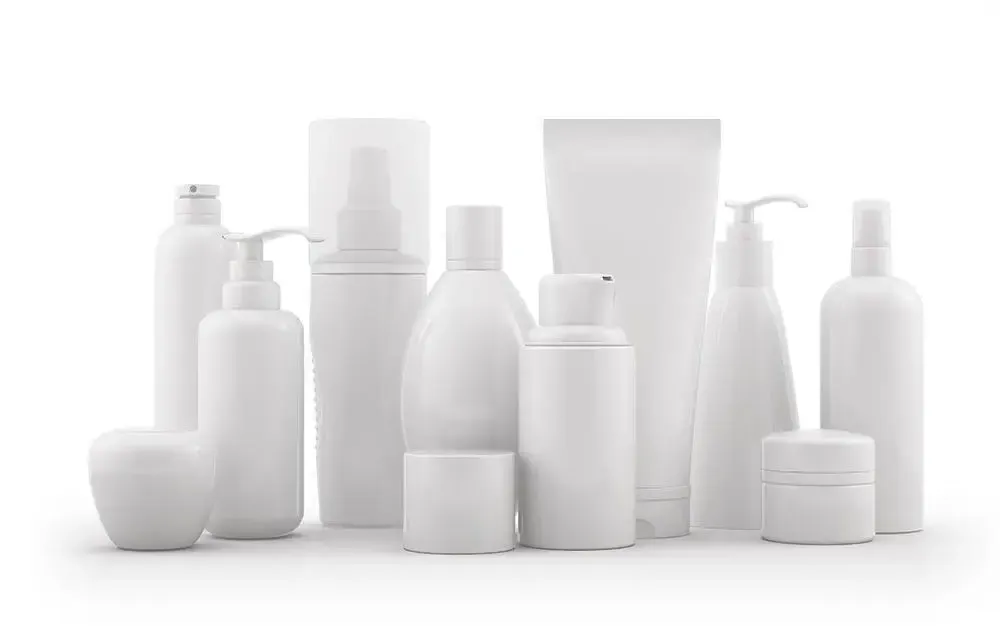
Premium cosmetic bottle transparency is not achieved once and held indefinitely — it is maintained through continuous production discipline applied to the process variables that control optical quality. Each variable below represents a potential transparency loss pathway; managing all of them simultaneously is the discipline that separates consistent premium optical quality from erratic results that require constant quality sorting.
| Process Variable | Target / Specification | Optical Defect if Out of Range | Monitoring Practice |
|---|---|---|---|
| Resin moisture at injection | ≤ 20 ppm (PETG); ≤ 30 ppm (PET) | Hydrolytic chain scission → haze, low IV, AA generation | Dew-point meter log at drier outlet before each run |
| Injection barrel temperature profile | 260–280°C PETG; 270–290°C PET — within ±3°C | High: thermal degradation, yellowing. Low: incomplete melt, streaks | PLC temperature log; alarm limits ±5°C |
| Conditioning temperature uniformity | ±1.5°C circumferential uniformity | Banding — alternating light/dark axial stripes from uneven stretch | IR pyrometer survey; lamp output check monthly |
| Stretch rod speed and travel | ±0.5mm position repeatability; ±2 mm/s speed | Thickness variation; base clarity variation shot-to-shot | Encoder verification quarterly; servo parameter audit |
| Mould cooling temperature | 6–10°C coolant; ≤ ±1°C cavity-to-cavity | Cloudiness from stress relaxation; cavity-to-cavity haze variation | Coolant inlet/outlet temperature; flow rate check quarterly |
| Screw speed and injection rate | Screw tip speed ≤ 0.2 m/s; ramped injection profile | Shear heating → yellowing, turbidity, reduced IV | Injection pressure and filling time logged per cycle |
| Cavity surface Ra condition | Body panel Ra ≤ 0.05 µm (mirror spec) | Micro-surface scatter → loss of specular reflectance, surface dullness | Profilometer Ra measurement every 250,000–500,000 cycles |
Managing all seven variables within their target ranges simultaneously — not just addressing individual variables when problems appear — is the production management approach that delivers consistent premium cosmetic optical quality. Statistical process control applied to the key response metrics (cavity-by-cavity haze readings, spectrophotometric colour checks for tinted bottles, and periodic wall thickness grid maps) provides the early-warning capability that prevents quality events from reaching the filling line.
Colour and Tint Engineering: Aesthetics With Commercial Precision
Colour in cosmetic packaging is a brand asset with commercial value — specific colour shades communicate product category, brand tier, and product efficacy associations that are built into the consumer’s expectation of the brand before they engage with any product claim. Managing colour in ISBM cosmetic bottles with the precision that brand standards require is both a material science task (selecting and verifying masterbatch colourant systems) and a process control task (maintaining the production parameters that produce consistent colour appearance across batches).
Masterbatch Colour Development and Approval
A custom brand colour for a cosmetic ISBM bottle is developed through a masterbatch formulation process specific to the PETG or PET grade being used, the bottle’s nominal wall thickness, and the ISBM machine’s injection and conditioning parameters. The colour specification should always be provided in CIE L*a*b* notation, measured at the nominal wall thickness in the D65 illuminant at 2° observer geometry — this is the objective, measurable specification that both the masterbatch supplier and the production QC team can verify independently. The development process produces 3–5 colourant loading variants that bracket the target, from which the brand team selects the approved formula at physical sample review. The approved formula (loading percentage in the specific masterbatch grade plus the validated process recipe) is documented and becomes the production reference for all subsequent batches.
Wall Thickness Effect on Apparent Colour Depth
A physical characteristic that every cosmetic ISBM colour development process must account for: the apparent colour depth of a tinted bottle is proportional to the wall thickness at the point of observation, because the total light absorption is a product of colourant concentration and light path length through the material. A 1.0mm wall in pale rose PETG appears noticeably deeper rose than a 0.4mm wall with the same colourant loading — the longer light path absorbs more at the rose-family wavelengths. This means that bottles with significant wall thickness variation (thicker base and shoulder, thinner body panel mid-section) display a colour gradient from the thick zones to the thin zones that was not visible in the flat-panel colour approval renders. Cosmetic brand teams should always evaluate colour approval samples in physical bottle form under the actual retail lighting conditions, not from flat colour chips or screen renders, and the colourant loading should be calibrated to achieve the target L*a*b* at the body panel nominal wall thickness where the consumer primarily reads the bottle colour.
Special Optical Effects: Pearl, Shimmer, and Metallic
Beyond solid tints, ISBM cosmetic bottles can incorporate several special optical effects through additive systems processed in the injection phase. Pearlescent effects — produced by mica-based platelets that reflect and interfere light to produce an iridescent shimmer — create the shifting, multi-tonal visual quality associated with luxury personal care and cosmetics packaging. The particle size distribution of the pearlescent additive determines the effect character: fine particles (5–10 µm) produce a silky satin shimmer; coarser particles (30–60 µm) produce a more dramatic sparkle. Metallic-effect additives create a warmer, more opaque shimmer that evokes precious metal rather than pearl. All of these effects behave differently on curved versus flat surfaces — curved surfaces rotate the viewing angle as the bottle is turned, producing a moving shimmer effect; flat-panel surfaces produce a more static, even reflectance. The bottle’s three-dimensional form design should account for how these effects will animate in use when incorporating special optical effect additives into the brief.

ISBM vs. Alternative Cosmetic Bottle Production Technologies: Visual Quality Comparison
The cosmetic industry draws from multiple production technologies for bottle packaging — glass, injection moulding of PMMA/acrylic, extrusion blow moulding (EBM), and ISBM PET/PETG. Understanding how ISBM’s visual quality compares to each alternative technology helps brand teams and packaging procurement professionals make production technology decisions grounded in the specific optical and aesthetic requirements of their cosmetic products.
ISBM PET/PETG vs. Glass
Premium PETG ISBM matches glass optical clarity and surface reflectance under display conditions to within consumer-perceptible difference. Glass remains unsurpassed for refractive index depth effect in very thick walls (above 3mm). ISBM’s advantages: no breakage, 85–90% weight reduction, rPET capability, 4× faster design iteration, 30–55% lower tooling cost, and production flexibility from 3,000 to 30M+ units without technology platform change.
ISBM PETG vs. Injection-Moulded Acrylic (PMMA)
PMMA offers slightly higher refractive index (1.49 vs PETG’s 1.57 — PETG is actually higher), making PETG optically equivalent or superior to acrylic in refraction depth. ISBM’s blow process enables complex three-dimensional forms that injection moulding of solid acrylic cannot produce; acrylic has no recycling pathway in Australian kerbside; acrylic is significantly more expensive per unit at equivalent optical quality. ISBM PETG is the superior choice across all commercial dimensions except very small injection-moulded items (caps, inner components).
ISBM PET/PETG vs. EBM (HDPE/PP)
Extrusion blow moulding in HDPE or PP produces opaque or translucent bottles — neither HDPE nor PP achieves the water-white optical transparency of PETG. EBM also produces variable wall thickness, parting line flash, and neck finish tolerances 2–3× wider than ISBM, all reducing visual quality for cosmetic applications. For any cosmetic application where transparency or premium visual quality is required, ISBM PET/PETG is unambiguously superior to EBM HDPE/PP.
Maintaining Visual Quality Over Extended Production Runs: The Tooling Maintenance Programme
The single most common failure pattern in cosmetic ISBM visual quality is not a sudden catastrophic defect event but a gradual, imperceptible-in-isolation drift from premium optical quality that becomes visible over months of production as tooling wears and process parameters drift. Production teams that do not have an active visual quality monitoring and tooling maintenance programme typically discover this drift when a quality-conscious retailer or brand audit team reviews bottles from the current production run against the originally approved quality standard and identifies a visible gap. Preventing this outcome requires a proactive maintenance approach built on measurement rather than reactive repair.
Cavity Surface Maintenance Schedule
Blow mould cavity surface maintenance for cosmetic applications should be scheduled based on production cycle count rather than calendar time, because surface erosion is driven by the number of high-pressure blow cycles rather than elapsed time. The recommended maintenance interval for mirror-polished cosmetic cavities is every 250,000–400,000 cycles, with Ra measurement at each interval using a portable profilometer. The trigger for re-polishing is Ra exceeding the specification limit (typically Re-polish at Ra 0.10 µm for a Ra ≤ 0.05 µm mirror specification) rather than a fixed calendar schedule. Re-polishing at the trigger point requires minimal material removal and maintains the cavity geometry to drawing dimensions — re-polishing after extended neglect (Ra 0.25–0.50 µm) requires more material removal and may require dimensional re-verification to confirm that cavity geometry is within tolerance after the correction. Preventive re-polishing at the trigger point is always more economical than corrective re-polishing after the optical defects have already entered the production stream.
Conditioning System Maintenance for Sustained Optical Quality
The conditioning station — where the injected preform is brought to the optimal temperature for stretch blowing — is the second most important source of optical quality drift in ISBM cosmetic production. Individual IR conditioning lamps degrade in output at different rates over their service life, and reflector surfaces accumulate dust and contamination that reduces effective lamp power. Both effects produce increasing circumferential temperature non-uniformity over time, which manifests as the banding defect (alternating light and dark axial stripes) that is immediately visible in clear PETG cosmetic bottles under display lighting. Quarterly lamp output checks using a calibrated power meter, quarterly reflector cleaning with approved solvents, and annual pyrometer calibration against a blackbody reference maintain the conditioning uniformity that cosmetic optical quality requires.
Cooling System Maintenance
Mould cooling channel fouling — mineral scale deposition in hard-water areas, biological growth in inadequately treated cooling circuits, or particulate accumulation from poorly filtered cooling water — reduces cooling efficiency over time in a way that produces gradually increasing cycle-time requirements for equivalent cooling performance, and eventually produces visible bottle quality differences between cavities with different degrees of fouling in their cooling channels. Annual cooling channel chemical descaling and flow rate verification (measured at individual cavity inlet/outlet branches) maintains the cooling uniformity that prevents cavity-to-cavity optical quality variation in multi-cavity cosmetic production. The inspection cost is minimal relative to the scrap and quality hold costs that undetected cooling degradation produces over a production year.

Visual Quality Inspection Systems for Cosmetic ISBM Production
The inspection system for cosmetic ISBM visual quality must be designed for the inspection task — detecting aesthetic defects under the lighting conditions that the consumer will encounter, not under general factory lighting that will mask most cosmetic visual defects. The gap between factory inspection performance and retail display performance is the source of most cosmetic packaging quality complaints that reach brand teams and retailer QA departments.
Spot-Light Display Simulation Inspection
A dedicated inspection lightbox or tunnel fitted with LED cool-white directional spot lights at 30–45 degree incidence (mimicking department store or pharmacy beauty counter display lighting). The inspector rotates the bottle under this lighting and assesses: surface quality (marks, scratches, mould traces), reflectance uniformity (banding, zone finish variation), emboss clarity and sharpness, and overall luminosity matching the approved quality standard sample. This is the primary visual inspection tool for premium cosmetic ISBM production — defects that are invisible under overhead factory fluorescent lighting are fully visible under this inspection setup.
Backlight Haze and Thickness Distribution Assessment
A diffuse white backlight panel behind the bottle reveals wall thickness variation (visible as shadow pattern) and haze variations (visible as cloudiness against the uniform backlight). This inspection catches the banding defect caused by conditioning non-uniformity and the localised haze patches caused by temperature excursions in the preform injection phase. All clear PETG cosmetic bottles should be back-lit inspected at start-of-run and at each hourly sample pull throughout the production shift.
Spectrophotometric Colour Measurement
For tinted and coloured cosmetic ISBM bottles, spectrophotometric L*a*b* measurement against the approved colour standard (with ΔE tolerance ≤ 1.5 for prestige applications, ≤ 2.0 for standard commercial) is conducted on a representative sample from each production batch. Colour measurement records are retained and trended to detect systematic drift from batch to batch that is too slow to be caught in within-batch visual comparison. Any batch exceeding the ΔE limit is quarantined and flagged for brand team review before release to filling.
Hazemeter Measurement
Objective haze measurement (% haze by ASTM D1003) on flat body panel specimens cut from production bottles, conducted at minimum once per shift per cavity. Target: ≤ 2.0% for premium cosmetic; ≤ 1.5% for prestige. Results logged with cavity number, time, and resin batch reference. Trending analysis detects the gradual haze increase that precedes visible quality events — a haze value drifting from 1.2% to 1.8% over 3 production shifts is a process alert signal; the same drift from 1.8% to 2.5% is a quality failure that has already entered the production stream.
The Role of Machine Architecture in Cosmetic Visual Quality
The ISBM machine platform itself — its drive architecture, conditioning system design, and process control capabilities — sets a ceiling on the optical and visual quality achievable in cosmetic bottle production. Premium cosmetic visual standards require machine capabilities that commodity packaging production does not demand, and specifying a machine platform based on its cosmetic application capability rather than its general production rate capability is the investment decision framework that produces the best commercial outcome for cosmetic ISBM operations.
All-electric servo ISBM machines provide three specific capability advantages for cosmetic production. First, conditioning temperature control precision: servo-controlled IR lamp power output per zone achieves ±0.5°C circumferential temperature uniformity, compared to ±3–5°C typical of on/off-controlled lamp systems — the difference between zero banding and visible banding in PETG cosmetic bottles. Second, stretch rod position precision: encoder-verified servo positioning of the stretch rod to ±0.5mm repeatability versus open-loop pneumatic actuation at ±1–2mm — directly affecting shot-to-shot wall thickness distribution consistency. Third, oil-free operation: elimination of hydraulic oil removes the contamination risk that hydraulic leaks create, a non-negotiable requirement for prestige cosmetic production environments where any contamination of bottles is a brand-damaging quality event.
Australia Ever-Power’s machine range includes fully servo-electric models specifically configured for the cosmetic and pharmaceutical packaging sectors, combining the process precision that premium optical quality demands with the oil-free clean production environment that prestige cosmetic brand production programmes require. Contact [email protected] for a machine specification consultation tailored to your cosmetic packaging optical quality requirements.
Emerging Visual Technologies for Cosmetic ISBM Bottles
The cosmetic packaging visual technology landscape is evolving, with several emerging capabilities expanding what is achievable through the ISBM process. Photochromic additive systems — materials that change colour reversibly under UV light exposure — are being adopted for limited edition and interactive packaging concepts where the bottle changes its visual appearance in sunlight, creating a “reveal” experience that drives social media sharing. Bio-based PETG grades — PETG manufactured from bio-attributed feedstocks rather than petrochemical sources — provide chemical and optical equivalence to conventional PETG while enabling a bio-based material origin claim that appeals to natural and sustainable beauty brand positioning without any compromise to optical quality.
Digital printing technology advances are making ultra-short-run direct bottle printing (UV inkjet applied to the blown bottle exterior) commercially viable at volumes down to 500 units — opening personalisation programmes (consumer’s name printed on their serum bottle) and micro-limited editions at volumes previously requiring label-based personalisation. The base ISBM bottle, produced in standard clear or tinted PETG with premium surface quality, becomes the canvas for digital personalisation overlay — combining the manufacturing excellence of ISBM with the flexibility of digital print.
Smart packaging integration — embedding Near-Field Communication (NFC) inlays or QR codes into cosmetic bottle labels or direct printing — is creating new consumer engagement pathways that extend the bottle’s brand communication role beyond visual appeal into interactive digital experience. The ISBM bottle’s clean surface and precise dimensional consistency provide the ideal substrate for smart packaging implementation, as the consistent bottle geometry and surface quality needed for reliable NFC read performance and camera-scan QR code detection are inherent production characteristics rather than additional quality requirements.
How Ever-Power Supports Cosmetic Visual Quality Achievement in ISBM Production
Australia Ever-Power Injection Stretch Blow Moulding Machine Co., Ltd’s technical support for cosmetic ISBM clients goes beyond machine supply to encompass the complete production quality programme that premium cosmetic visual standards require. At the project commissioning stage, Ever-Power’s engineers establish the optical quality baselines — process parameter targets for the specific PETG grade and bottle design, haze and colour measurement standards, and the visual inspection protocols for the brand’s specific quality standard — and validate them through a series of optical confirmation tests before commercial production is released.
The ongoing technical support programme covers quarterly process review visits for cosmetic clients, during which optical quality trends are analysed from production data, tooling surface condition is assessed against the Ra records from previous visits, and conditioning system calibration is verified. This programme is specifically designed to catch the gradual drift from premium optical quality that unmonitored production inevitably produces — maintaining the standards established at commissioning across the full production lifecycle.
For cosmetic packaging operations evaluating ISBM investment for the first time, Ever-Power’s pre-investment feasibility service includes an optical quality capability assessment for the specific bottle designs under consideration — confirming what transparency and visual quality standards are achievable with the specified material and tooling approach, and what production quality programme is required to sustain those standards at commercial scale. Contact [email protected] to begin this conversation.
Achieve and Sustain Premium Optical Quality in Your Cosmetic Bottles
Australia Ever-Power’s Condell Park NSW team provides cosmetic ISBM operations with the machine technology, tooling specification, process setup, and ongoing support programme that premium cosmetic visual standards require.
Request a Visual Quality Consultation →
[email protected] | Condell Park NSW 2200, Australia | isbm-technology.com
Featured Product
Fully Servo One-Step Injection Stretch Blow Molding Machine — Four-Station HGYS150-V4-EV
For cosmetic packaging operations where optical transparency and surface visual quality are the primary production objectives, the HGYS150-V4-EV fully servo four-station one-step injection stretch blow molding machine delivers the process precision that premium PETG cosmetic bottle standards demand. Operating with fully servo-electric drive across all motion axes — turntable indexing, blow core seating, stretch rod travel, and mould clamping — the HGYS150-V4-EV achieves the conditioning temperature uniformity (±0.5°C circumferential precision through servo-controlled lamp power management) and stretch rod position repeatability (±0.5mm servo encoder verification) that eliminate the banding and haze variation defects that are immediately visible in clear PETG cosmetic bottles. Oil-free operation from the all-electric architecture creates the contamination-free production environment required for prestige cosmetic brand supply chain standards. It processes PET and PETG across cosmetic bottle volumes from 15ml serum formats through 200ml lotion formats, with precision neck finishes for pumps, droppers, and airless dispensers. Full technical and PETG application specifications are available at isbm-technology.com. Contact [email protected] for a cosmetic application capability discussion.