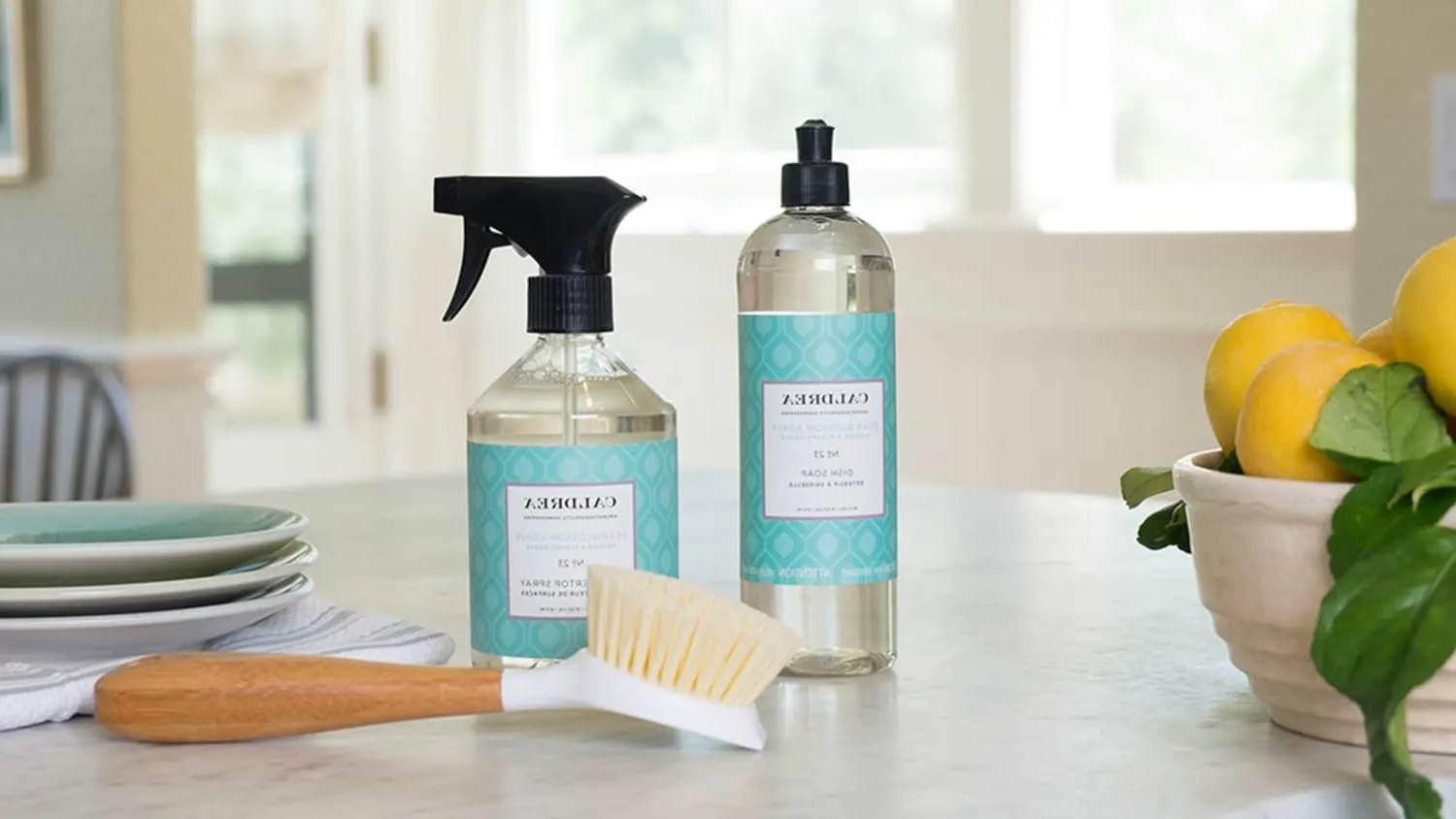
Dish soap bottles are handled dozens of times each day in kitchens across the globe. Despite their familiar appearance, the engineering requirements behind them are demanding: the container must resist chemical attack from surfactants and alkaline formulations, maintain structural rigidity so it can stand upright on a wet sink edge, and deliver a controlled, consistent dosage when squeezed. At the same time, the packaging must be visually appealing—displaying the product’s colour through clear walls and accepting labels, embossing, and custom finishes that support brand identity. Injection stretch blow molding has proven itself the most capable single-process solution for meeting these requirements simultaneously, all while keeping per-unit costs competitive at production volumes that range from tens of thousands to hundreds of millions of units annually.
The Market Forces Behind Dish Soap Bottle Innovation
The global dish soap sector sits within the broader household cleaning products category, which exceeded USD 30 billion in annual sales and continues to grow driven by hygiene awareness, e-commerce expansion, and the rise of premium formulations. Retailers from Sydney to São Paulo now demand that packaging performs a dual role: physical protection of the contents and a silent marketing vehicle on the shelf. Private-label manufacturers feel this pressure acutely—they must supply bottles indistinguishable from branded counterparts in material quality and appearance, yet at lower cost. Conventional extrusion blow molding cannot easily achieve the optical clarity or wall-thickness uniformity that crystal-clear formulas and coloured gels require. Two-step reheat blow molding adds warehouse space and logistics complexity that smaller producers cannot justify. Injection stretch blow molding fills this gap, offering wall distribution control, material efficiency, and the visual quality that drives purchase decisions.
Australian manufacturers supplying major supermarket chains face additional pressure: packaging must comply with ACCC labelling standards, Australian Packaging Covenant targets on recyclability, and retailer requirements for a minimum percentage of recycled content. Choosing the right bottle-forming technology is, therefore, a compliance decision as much as a commercial one. PET, the primary material processed by ISBM systems, is fully recyclable within existing kerbside programs, making it the default choice for environmentally committed brands.
Why Injection Stretch Blow Molding Outperforms Conventional Bottle-Making Methods
Three characteristics set injection stretch blow molding apart from competing processes when applied to dish soap bottle production. First, the preform is injection-moulded to exacting dimensions before it is stretched and blown—this means gate placement, neck geometry, and material distribution are all fixed at the injection stage rather than depending on extrudate behaviour. Second, biaxial orientation during the stretch-blow step aligns polymer chains in both the axial and hoop directions, producing mechanical properties that far exceed those of non-oriented containers of the same weight. Third, because the system forms a closed loop between injection and blowing, there is no intermediate reheating cycle, which eliminates the energy penalty and process variability inherent in two-step reheat-stretch-blow systems.
Wall Thickness Uniformity
ISBM delivers wall variation within ±0.05 mm across the bottle body. This precision prevents weak spots that can split under pressure from surfactant-heavy formulations and avoids excess material that inflates cost.
Optical Clarity
PET containers from ISBM machines achieve haze values below 2%, which is essential when formulators want consumers to see a vibrant green or translucent amber gel through the bottle wall at point of sale.
Neck Finish Accuracy
Because the neck is formed in the injection phase, thread profiles and sealing surfaces are dimensionally stable. Pumps, flip-caps, and dispensing closures seat correctly every time without the torque variation seen with extrusion-blown necks.
Technical Requirements Specific to Dish Soap Bottle Engineering
Chemical Resistance and Material Compatibility
Dish soap formulations contain anionic and non-ionic surfactants, fragrances, preservatives, and pH modifiers that can migrate into incompatible packaging materials over time. PET is widely recognized as chemically inert to these compounds at ambient temperatures, making it the standard resin for dish soap containers ranging from 200 ml personal-use sizes to 5-litre bulk formats. When processing PET through the ISBM process, resin IV (intrinsic viscosity) selection matters: higher IV grades—typically 0.78–0.84 dl/g—are preferred for dish soap containers because the wall stresses imposed by squeezing require good melt strength and post-orientation toughness. Sub-optimal IV leads to stress-whitening or cracking at the shoulder and base, both of which are unacceptable for consumer-facing products.
Structural Integrity Under Squeeze and Drop Conditions
A dish soap bottle is squeezed repeatedly throughout its service life, which imposes cyclic hoop stress on the container body. Biaxial orientation achieved in ISBM—typical stretch ratios of 2.5–3.0 axially and 3.0–4.0 in the hoop direction—raises the tensile strength of PET from roughly 55 MPa (amorphous) to 150–180 MPa in the oriented state. This means the bottle wall can flex and return without stress-cracking, a failure mode that occurs readily in non-oriented HDPE containers of equivalent weight. Drop-test performance is equally improved: oriented PET absorbs impact energy through deformation rather than brittle fracture, which is why ISBM-produced containers consistently pass 1.5 m drop tests onto concrete that extrusion-blown alternatives fail.
The One-Step ISBM Process: How Dish Soap Bottles Are Actually Made
The one-step ISBM process integrates preform injection, temperature conditioning, stretching, and blow moulding into a single continuous machine cycle. This eliminates the manual handling and reheating energy associated with two-step systems. Understanding each stage clarifies why the process produces containers with such consistent quality and why it scales efficiently from niche runs of 100,000 units to mass production exceeding 10 million bottles per year.
Resin Drying & Plasticisation
PET pellets are dried to below 50 ppm moisture in a desiccant hopper dryer (4–6 h at 160°C) before entering the injection barrel. Undried PET hydrolyses during melting, reducing molecular weight and causing haze in finished bottles.
Preform Injection
Molten PET is injected into precision preform cavities at 270–285°C. The gate, neck finish, and wall thickness are determined here. Accurate gate placement avoids weld lines that create stress-concentration points in the final bottle.
Condiționarea temperaturii
The preform is indexed to a conditioning station where its temperature profile is adjusted to the optimum stretch-blow window (90–110°C for PET). Zoned heating ensures body and base reach target temperatures without overheating the neck.
Axial Stretch
A stretch rod extends through the preform at a controlled velocity, elongating the material axially before blow pressure is applied. This controls molecular orientation along the bottle length and sets the base geometry of the final container.
Biaxial Blow & Cooling
High-pressure air (25–40 bar) inflates the preform radially against the mould cavity wall. The mould is cooled (typically 8–15°C) to set the final shape rapidly. The short cooling cycle is a primary contributor to the machine’s output rate.
Ejection & Downstream
Finished bottles are ejected and conveyed directly to filling, labelling, or packing lines without further preparation. No preform warehousing, no reheating oven, no inter-process quality risk. The bottle exits the machine ready for immediate use.
Material Selection for Dish Soap Bottle Manufacturing
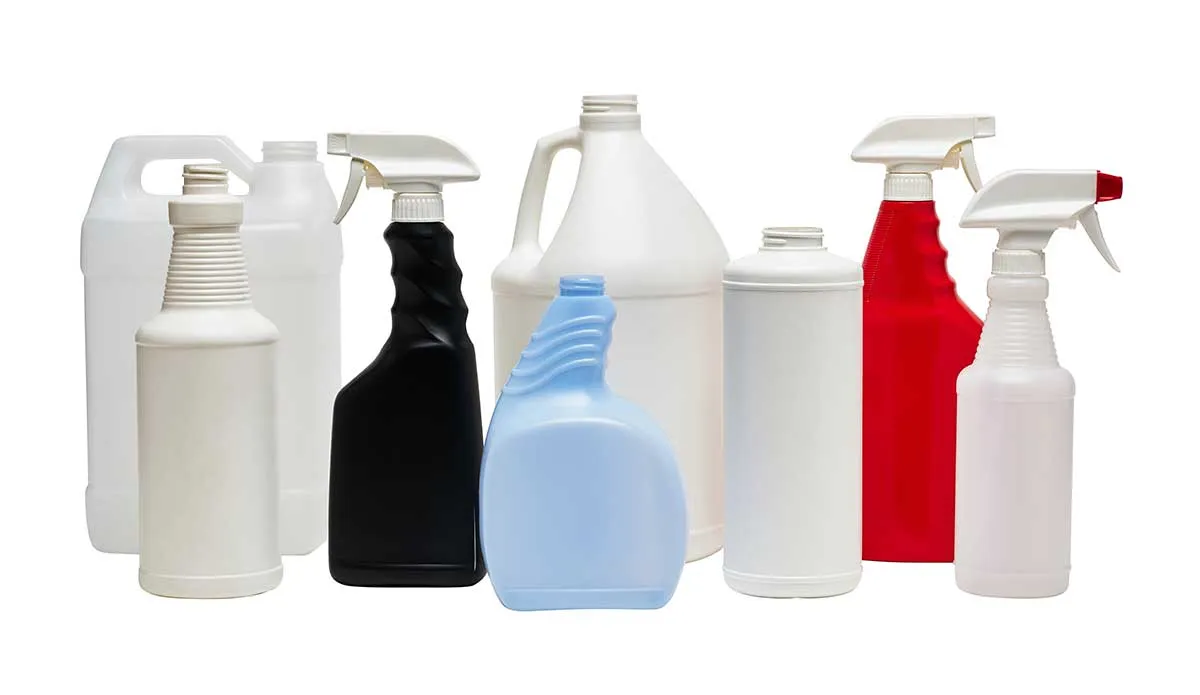
PET dominates PET bottle production for dish soap applications processed through ISBM equipment, but other resins can also be run depending on end-use requirements. The table below summarises the most common material choices and their trade-offs for this specific application.
For the majority of dish soap applications, food-contact-grade PET with an IV of 0.80 dl/g is the optimal balance of processability, aesthetics, and regulatory compliance. Where brand sustainability commitments require recycled content, 25–50% rPET blends can be processed on modern ISBM machines with minor process parameter adjustments to account for the slightly lower IV of post-consumer material.
Mold and Tooling Design for Ergonomic Dish Soap Packaging
Bottle Shape, Grip Zone, and Label Panel Engineering
Dish soap bottles sold through modern retail channels almost universally feature a grip indentation, waist taper, or textured zone that assists single-handed pouring. Designing these features for ISBM production requires close collaboration between the bottle designer and the tooling engineer. Deep undercuts are impossible in standard blow moulds, so grip forms must be achievable through progressive depth in the mould cavity. The preform stretch ratio must be modelled to ensure sufficient material reaches the grip zone without thinning the opposite panel below the minimum wall thickness—typically 0.25 mm for dish soap containers. Finite element analysis of stretch behaviour is standard practice at manufacturers like Australia Ever-Power, ensuring that mould designs are production-proven before steel is cut.
Neck Finish Standards and Closure Compatibility
The neck finish of a dish soap bottle must be compatible with the dispensing closure—whether that is a screw cap, a flip-top, or a pump mechanism. ISBM produces the neck as part of the injection-moulded preform, so thread geometry is held to the same tolerances as in injection moulding. Common neck standards for dish soap containers in the Australian and Asia-Pacific markets include PCO-28, SP-410 (28 mm), and 38 mm neck finishes for larger pump bottles. For private-label projects, matching the neck geometry to an existing closure supply chain avoids tooling costs on the closure side and accelerates market entry. Machine suppliers with tooling design capability, such as Australia Ever-Power’s engineering team, can work from a closure sample and produce a preform mould specification within weeks.
Quality Control Protocols for Dish Soap Bottle Production Lines
Wall Thickness and Weight Monitoring
In a high-volume dish soap bottle line, continuous weight sampling is the primary in-process quality tool. Statistical process control (SPC) charts track bottle weight every 15–30 minutes, with control limits typically set at ±1.5% of the target weight. Any shift in average weight indicates drift in preform shot weight or in stretch-blow parameters and triggers an operator review before a full lot is affected. Ultrasonic wall-thickness gauges are used at line setup and after mould changes to confirm that material distribution across the shoulder, body, base, and heel matches the design specification.
Pressure Testing, Torque, and Visual Inspection
Dish soap bottles must not leak when filled, capped, and stored on their sides during distribution. Pressure decay leak testing—where bottles are pressurised to 1.0–1.5 bar and held for 5–10 seconds—is a standard audit test conducted on every batch. Visual cameras inspect for haze, gate blemishes, weld lines, and neck ovality at full production speed. Cap-application torque is tested at intervals to confirm that neck finish dimensions have not drifted due to mould wear. These protocols, when applied consistently, maintain a defect rate well below 0.1% for a properly maintained ISBM line.
Production Efficiency and Output Benchmarks for Dish Soap Bottle Lines
Production economics depend on matching machine configuration to the target bottle size and annual volume. A four-station injection stretch blow molding machine in the 150–200 tonne clamping force class typically produces 500 ml dish soap bottles at 3,000–4,500 units per hour depending on cycle time settings. Running 20 hours per day, 300 days per year, that equates to 18–27 million bottles annually from a single machine—enough to supply a substantial private-label programme or a regional branded product line.
Energy consumption is a frequently overlooked cost component. Fully servo-driven ISBM machines reduce electrical consumption by 30–45% compared to hydraulic equivalents at the same output rate. Over a full year of operation, that gap is substantial—and it will likely widen as industrial electricity prices in Australia continue to track upward. Manufacturers considering capital investment should factor running costs over a 10-year horizon, not just the headline purchase price of the equipment.
Customisation Options That Support Brand Differentiation
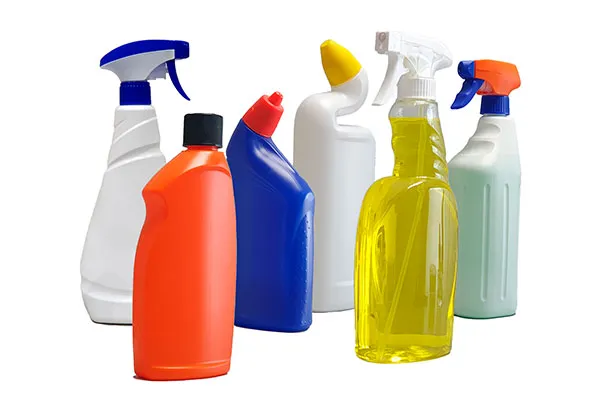
Dish soap is a commodity product in terms of chemistry, but packaging is the primary differentiator at point of sale. ISBM systems allow a wide range of customisation options that help brands stand apart on crowded supermarket shelves, and these options do not necessarily require long tooling lead times or large minimum order quantities.
🎨 Custom Bottle Profiles
ISBM moulds are machined to any customer-approved 3D design. Hourglass shapes, faceted panels, oval cross-sections, and asymmetric forms are all achievable. Mould lead times run 6–10 weeks from approved design to production-ready tooling.
🖊️ Embossing and Debossing
Brand logos, legal text, recycling symbols, and tactile grip patterns can be incorporated directly into the blow mould cavity. Unlike printed labels, moulded-in text survives immersion in water and contact with concentrated dish soap without lifting or fading.
🌈 Colour and Opacity
Masterbatch can be introduced at the injection stage to produce bottles in any colour or opacity level, from fully transparent to opaque. Pearlescent and metallic effects are achievable for premium product lines. Colour changeover is rapid—typically one to two hours on a modern machine.
♻️ Recycled Content
Up to 50% rPET content is processable on ISBM machines with appropriate parameter tuning. This supports Australian Packaging Covenant targets without requiring a change of machine platform, making compliance straightforward for brands seeking third-party sustainability certification.
Sustainability Considerations in ISBM Dish Soap Bottle Manufacturing
Sustainability is no longer a marketing preference for dish soap brands—it is a procurement requirement at major retail groups. The ISBM process contributes to sustainability targets in three concrete ways. First, precise material distribution minimises resin use per bottle; a well-optimised 500 ml dish soap bottle can be produced in PET at 22–26 grams—significantly lighter than extrusion-blown equivalents of comparable strength. Lightweighting this single SKU across millions of annual units reduces raw material consumption and transport emissions proportionally.
Second, PET is the most widely collected and recycled plastic in Australia’s kerbside system. Bottles produced from virgin or recycled PET through ISBM carry a No.1 resin identification code and are accepted at all major materials recovery facilities, supporting the circular economy goals embedded in Australia’s National Plastics Plan. Third, as noted above, fully servo-electric drive systems reduce energy consumption by up to 45% per unit compared to older hydraulic ISBM designs, lowering the carbon intensity of every bottle produced.
For manufacturers supplying retailers with published science-based targets, this combination—lower material weight, recyclable resin, and lower production energy—provides a quantifiable sustainability story that can be used in supplier assessment questionnaires and environmental product declarations (EPDs).
Recommended Equipment: HGYS200-V4 Four-Station ISBM Machine
Recommended for Dish Soap Bottle Production
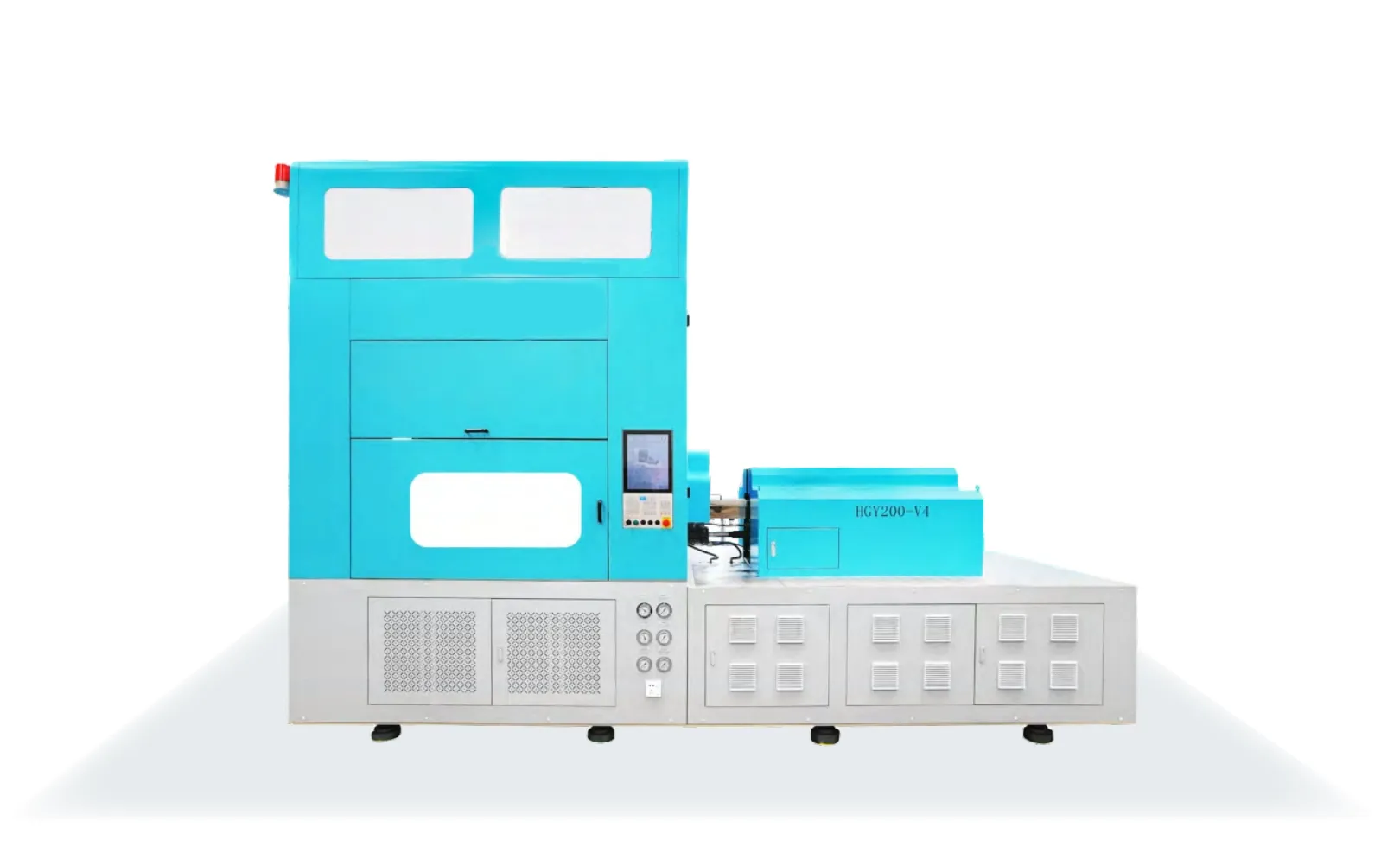
HGYS200-V4 One-Step Four-Station ISBM Machine
The HGYS200-V4 injection stretch blow molding machine is engineered for stable, high-output production of 100 ml–1,000 ml household bottles including dish soap containers. With a 200-tonne clamping force, four-station rotary configuration, and servo-assisted platen movement, it delivers consistent wall distribution across long production runs.
- Clamping force: 200 tonnes
- Configuration: Four-station rotary
- Compatible resins: PET, PP, PEN
- Neck finish range: 18–63 mm
- Output: up to 4,800 bottles/hour (500 ml)
- Controls: Touchscreen HMI with SPC data logging
Frequently Asked Questions
Australia Ever-Power Injection Stretch Blow Moulding Machine Co., Ltd
Condell Park NSW 2200, Australia | [email protected] | Despre noi | Contactaţi-ne