Descriere
Introduction to the ZQ40 Injection Blow Molding Machine
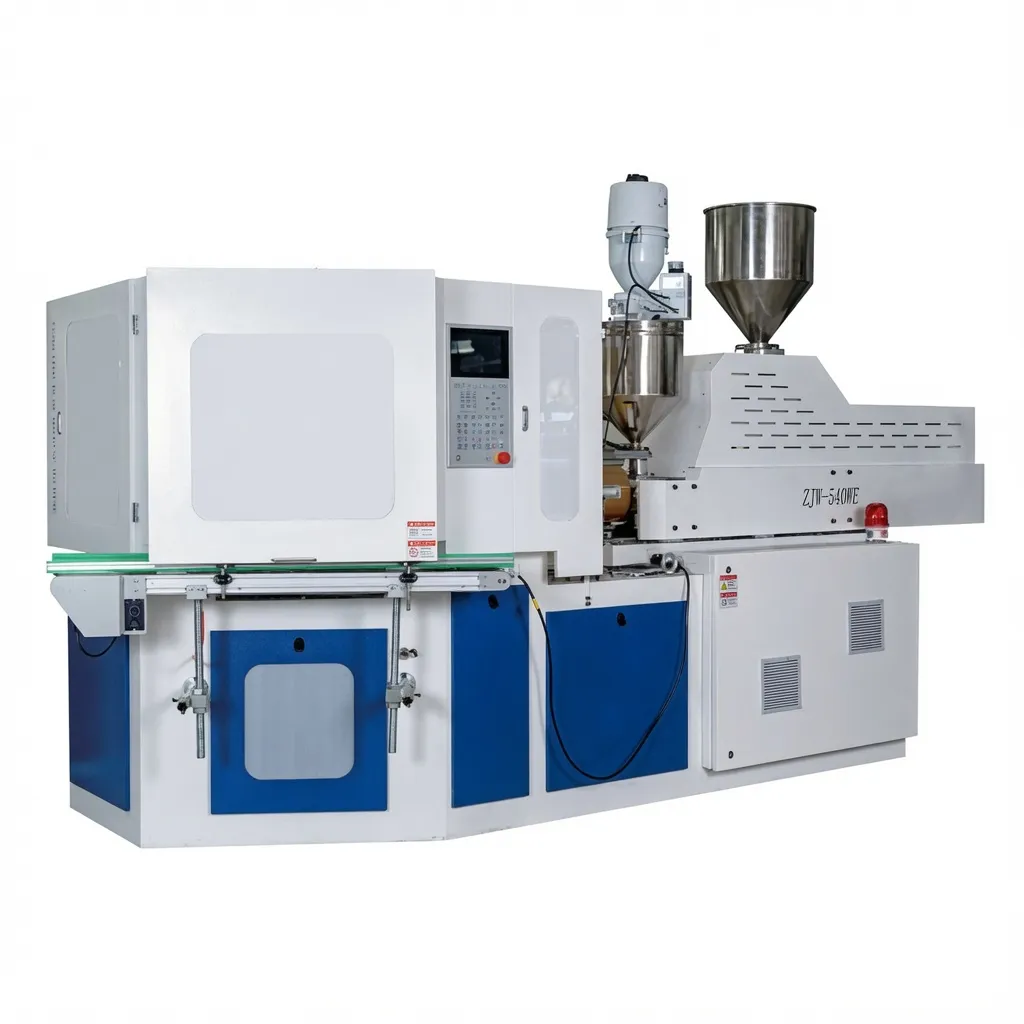
The ZQ40 is a European-style injection blow molding machine built around a rotary table architecture, purpose-designed for manufacturing hollow plastic containers ranging from small pharmaceutical vials to mid-capacity beverage bottles. Manufactured under the ZI-QIANG brand and distributed through Australia Ever-Power Injection Stretch Blow Moulding Machine Co., Ltd in Sydney, this model occupies a critical middle ground in the production spectrum — compact enough for lean factory floors, yet robust enough to deliver industrial-grade output around the clock. Its European-style frame carries a 400 KN injection clamping force, which sits 20% to 30% above comparable machines in its class, giving manufacturers a measurable edge in wall uniformity and neck-finish accuracy. Throughout this article, we will walk through the full technical specification sheet, explain the mechanical advantages of its clamping and hydraulic systems, outline mould cavitation options, and clarify where the ZQ40 fits within a broader PET bottle production workflow.
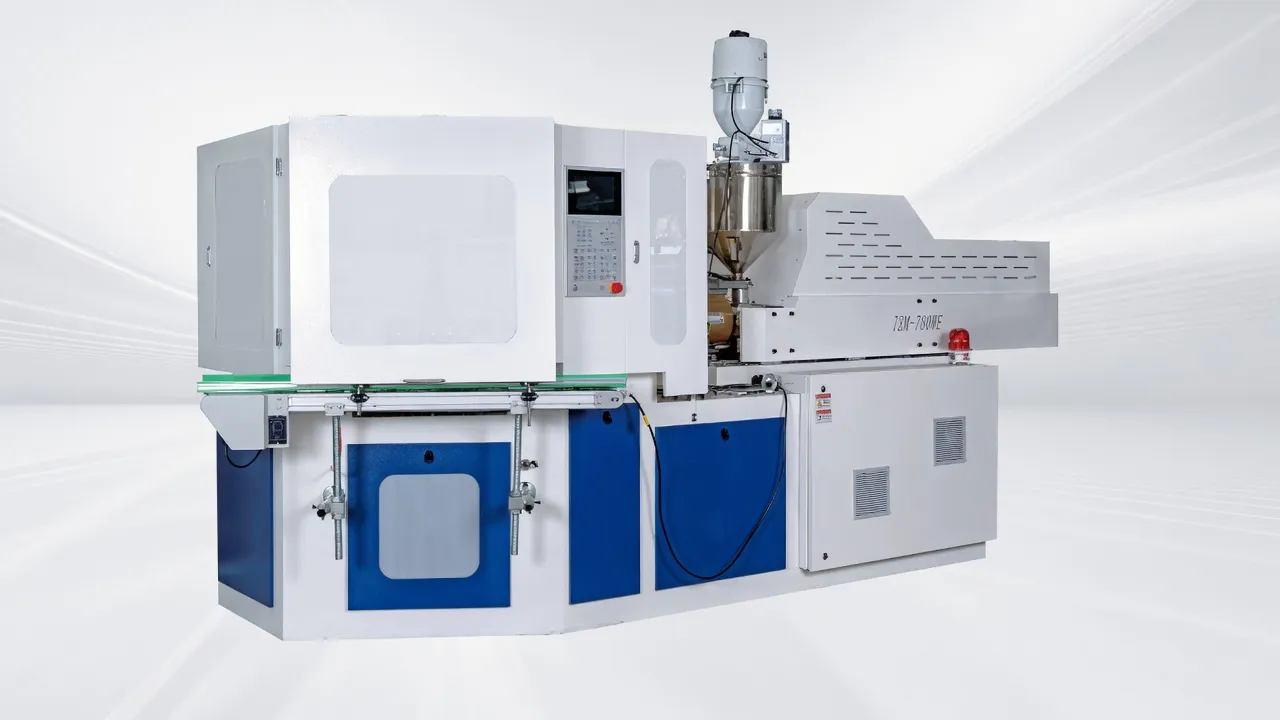
ZQ40 European Injection Blow Molding Machine — Full European-style frame structure
Full Technical Specifications of the ZQ40
Every purchasing decision starts with numbers. Below is the complete parameter sheet for the ZQ40 injection blow molding machine, extracted directly from the manufacturer data sheet. These values cover the injection system, clamping mechanism, mould dimensions, hydraulic circuit, and auxiliary requirements. Understanding each parameter helps production engineers match the machine to their exact container geometry and throughput targets.
| Category | Parameter | Unit | ZQ40 Value |
|---|---|---|---|
| Injection System | Screw Diameter | mm | 40 / 45 |
| Screw L/D Ratio | – | 22:1 | |
| Injection Weight | g | 190 / 260 | |
| Heating Power | KW | 7.5 | |
| Barrel Zones | – | 3 + N | |
| Injection Stroke | mm | 120 | |
| Clamping System | Injection Clamping Force | KN | 400 |
| Injection Opening Stroke | mm | 165 | |
| Blowing Clamping Force | KN | 60 | |
| Blowing Opening Stroke | mm | 140 | |
| Rotary Table Lift Height | mm | 70 | |
| Mould | Max Platen Size (L x W) | mm | 480 x 340 |
| Mold Thickness | mm | 180 | |
| Max Bottle Diameter | mm | 120 | |
| Max Bottle Height | mm | 220 | |
| Suitable Bottle Capacity | ml | 1 – 1500 | |
| Stripping Stroke | mm | 220 | |
| Hydraulic System | Hydraulic Pressure | MPa | 14 |
| Motor Power | KW | 11 | |
| Dry Cycle | s | 3.5 | |
| Total Power | KW | 20 | |
| Operating Efficiency | % | 52 – 70 | |
| Auxiliary | Min Air Pressure | MPa | 0.7 – 1.2 |
| Compressed Air Capacity | m³/min | 0.7 | |
| Water Flowage | m³/h | 3.5 | |
| Cooling Water Pressure | MPa | 0.3 – 0.4 | |
| Machine Dimensions (L x W x H) | m | 3.5 x 1.3 x 1.7 | |
| Net Weight | Ton | 3.8 |
The dual screw diameter option (40 mm and 45 mm) is worth highlighting. A 40 mm screw suits lighter containers in the 10 ml to 100 ml range, where precise shot weight control is paramount. Switching to the 45 mm barrel accommodates heavier preforms up to 260 g, opening the door to larger-volume containers without requiring a separate machine. The 22:1 length-to-diameter ratio ensures thorough resin plasticization across both barrel sizes, reducing the risk of unmelted granules reaching the mould cavity.
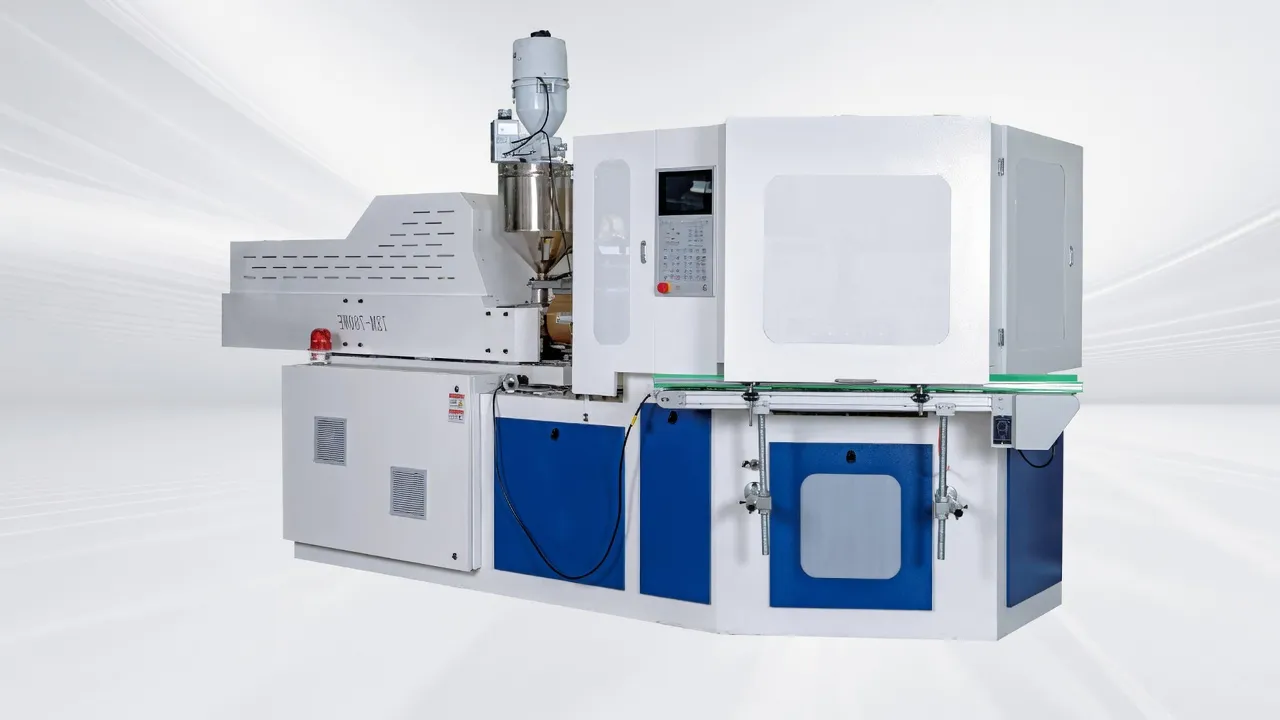
ZQ40 operating on a factory floor — compact footprint of just 3.5 m x 1.3 m
European-Style Clamping System: Why It Matters
The clamping unit is arguably the most consequential subsystem on any injection blow molding machine. It determines whether parting lines remain invisible, whether flash is controlled, and whether the mould halves mate with enough force to resist the internal blowing pressure. The ZQ40 takes a distinctly European approach to this challenge, and the mechanical differences are measurable.
400 KN Injection Clamping Force
At 400 KN, the injection-side clamping force of the ZQ40 exceeds comparable machines in the same tonnage class by 20% to 30%. This surplus force is not about brute strength — it is about maintaining consistent cavity pressure throughout the entire injection and holding phase. When the mould halves are pressed together with greater force, the molten resin cannot push them apart, even at higher injection velocities. The practical result is tighter dimensional tolerances on the preform, which directly translates into more uniform wall thickness after the blowing stage.
Pressurised Clamping Architecture
A unique engineering detail on the ZQ40 is its pressurised clamping structure. In conventional designs, the booster cylinder participates in both the mould-closing stroke and the mould-opening stroke. On the ZQ40, the booster cylinder is isolated from the open-close motion entirely. It engages only during the high-pressure lock phase. This separation has two concrete benefits: first, the open-close cycle runs faster because it moves less hydraulic oil; second, total energy consumption drops by 10% to 20% compared to machines where the booster participates in every stroke. Over a 24-hour production run, that translates directly to lower electricity bills and reduced heat generation in the hydraulic oil, extending oil service intervals.
Mould Cavitation and Bottle Size Flexibility
One of the defining strengths of the ZQ40 ISBM machine is the range of container volumes it handles on a single frame. The platen size of 480 mm x 340 mm supports moulds from micro-volume pharmaceutical vials all the way up to 1000 ml bottles. Cavitation counts vary inversely with container volume — the smaller the bottle, the more cavities the platen can accommodate, and the higher the output per cycle. Below is the reference cavitation chart provided by the manufacturer.
For pharmaceutical and cosmetics manufacturers producing 10 ml to 60 ml containers, the ZQ40 can run 6 to 9 cavities per cycle, yielding high volumes on a machine that only draws 20 KW of total power. Mid-range beverage producers working with 250 ml or 500 ml formats still achieve 2 to 3 cavities — more than sufficient for regional distribution or specialty product lines. The 120 mm maximum bottle diameter and 220 mm maximum bottle height cover the vast majority of personal care, household chemical, and small-format food packaging geometries, making this a genuinely versatile blow molding equipment platform.
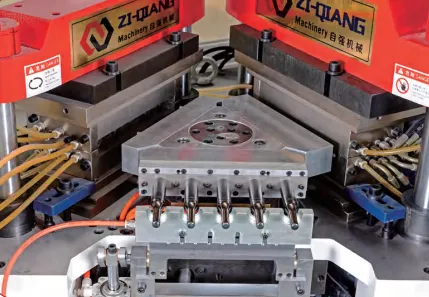
Operating principle of the injection blow molding process — from injection to stripping
Energy Efficiency and Hydraulic Performance
Energy cost is one of the largest recurring expenses in plastic container manufacturing, often exceeding raw material cost over the lifetime of a machine. The ZQ40 addresses this with three interlocking engineering decisions that compound into substantial savings at scale.
Low Total Power Draw
The machine pulls a total of 20 KW across all subsystems — injection heating (7.5 KW), main motor (11 KW), and controls. At an operating efficiency range of 52% to 70%, the real-world power draw during a typical production cycle falls between roughly 10.4 KW and 14 KW. For a facility running a single ZQ40 for 8,000 hours per year, the annual electricity consumption falls between 83,200 kWh and 112,000 kWh. At an industrial electricity rate of AUD 0.15 per kWh (a reasonable estimate for New South Wales), this translates to an annual power cost between AUD 12,480 and AUD 16,800 — a fraction of what higher-tonnage machines demand.
Hydraulic Circuit Design
The 14 MPa hydraulic system operates at a moderate pressure ceiling, which reduces wear on seals and valves compared to machines running at 17 MPa or above. Lower system pressure also means less heat generated in the hydraulic oil during each cycle. The cooling water requirement of 3.5 m³/h at 0.3 to 0.4 MPa is modest, and the compressed air demand of 0.7 m³/min can be supplied by a small screw-type compressor. These auxiliary specifications are deliberately conservative, making the ZQ40 straightforward to integrate into facilities with limited utility infrastructure.
Production Line Integration and Auxiliary Equipment
No injection blow molding machine operates in isolation. The ZQ40 is designed as the centrepiece of a complete bottling production line, and understanding the upstream and downstream equipment it pairs with is essential for effective factory planning. Australia Ever-Power offers a range of auxiliary systems that integrate directly with the ZQ40 frame.
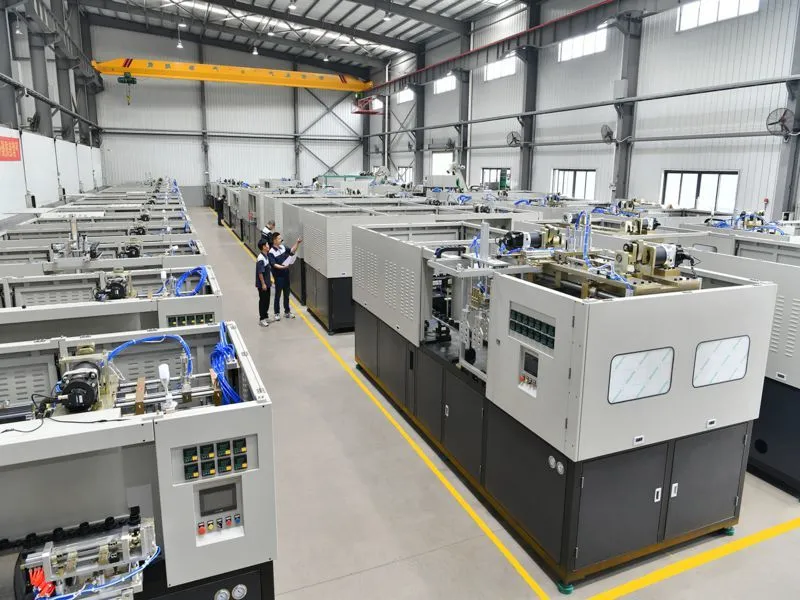
Australia Ever-Power manufacturing facility — where ZQ-series machines are assembled and tested
Industry Applications for the ZQ40
The ZQ40 is not limited to a single sector. Its broad cavitation range, moderate clamping tonnage, and ability to process multiple resin types make it relevant across several high-demand packaging verticals. Each application leverages a different aspect of the ZQ40 specification sheet.
Pharmaceutical and Health Care
Small-volume pharmaceutical bottles (10 ml to 100 ml) for syrups, eye drops, and tablet containers benefit from the ZQ40 in two ways. First, the high cavitation count (up to 9 cavities at 10 ml) delivers the volume pharmacological packaging lines demand. Second, the injection blow molding process produces containers with no parting-line seam on the base — a critical requirement for tamper-evident pharmaceutical packaging where surface irregularities can compromise labelling adhesion. The 400 KN clamping force ensures that neck-finish tolerances remain tight enough for child-resistant closures and dropper inserts.
Cosmetics and Personal Care
Lotion bottles, serum containers, and travel-size shampoo packaging in the 30 ml to 250 ml range are ideal candidates for the ZQ40. The 120 mm maximum diameter and 220 mm bottle height accommodate the tall, slender profiles that cosmetics brands prefer. Optical clarity is another advantage — the single-stage injection-blow process avoids the reheating step that can introduce haze in clear PET or PETG. For brands requiring frosted, coloured, or pearlescent finishes, the ZQ40 processes masterbatch-blended resins without modification.
Food, Beverage, and Household Chemicals
Condiment bottles, small-format juice containers, and household cleaning product bottles in the 250 ml to 1000 ml range can be produced on the ZQ40 at 1 to 3 cavities per cycle. While the throughput at these volumes is lower than on a dedicated high-speed one-step injection stretch blow molding machine, the ZQ40 excels for short-run production, prototype validation, and contract manufacturers who switch between container formats multiple times per week. Its 3.5-second dry cycle keeps changeover downtime minimal.
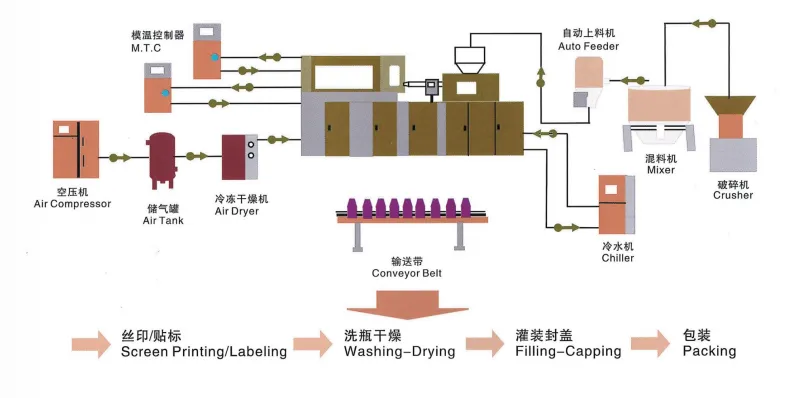
Complete production line configuration — from resin feeding to finished bottle packing
Why Source Your ISBM Machine from Australia Ever-Power
Australia Ever-Power Injection Stretch Blow Moulding Machine Co., Ltd operates from Condell Park, NSW 2200, providing local technical support, spare parts warehousing, and commissioning services for customers across Australia, New Zealand, and the broader Asia-Pacific region. Unlike purchasing directly from overseas manufacturers — where lead times for parts and after-sales engineering visits can stretch into weeks — working with a Sydney-based distributor means same-week response on critical components and on-site troubleshooting by engineers who understand both the machinery and the local regulatory environment. The ZQ40 is backed by full documentation, operator training programmes, and mould-design consultation to help buyers achieve optimal cavitation layouts for their specific container geometry. For enquiries, reach the team at [email protected] or through the contact page.
Recommended Product: Fully Servo HGYS150-V4-EV
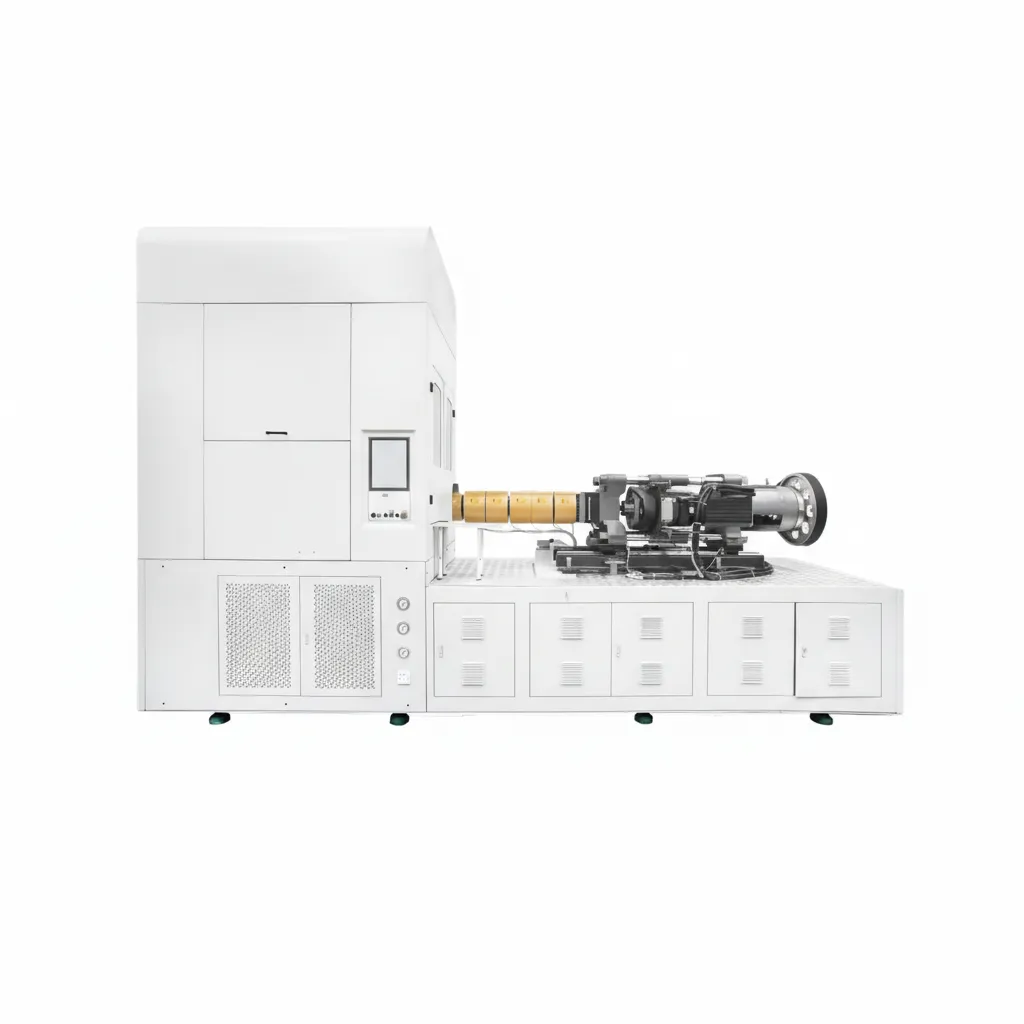
HGYS150-V4-EV: Four-Station Fully Servo ISBM
If your production requirements extend beyond the ZQ40 into high-volume PET bottle production with tight energy budgets, the fully servo ISBM machine HGYS150-V4-EV is the logical next step. This four-station system replaces hydraulic drives with servo motors on every axis, cutting energy consumption by up to 40% compared to conventional hydraulic platforms. The one-step process — injection, stretching, blowing, and ejection on a single machine — eliminates preform storage and reheating, compressing the production chain and reducing floor-space requirements. It is particularly well-suited for PET beverage bottles, wide-mouth jars, and pharmaceutical containers where optical transparency and dimensional precision are non-negotiable.
Frequently Asked Questions
Australia Ever-Power Injection Stretch Blow Moulding Machine Co., Ltd
Condell Park, NSW 2200, Sydney, Australia
Email: [email protected]