Biological Products: The Most Demanding Pharmaceutical Container Application
Biological products — vaccines, monoclonal antibodies, Fc-fusion proteins, recombinant enzymes, gene therapies, cell therapies, and blood-derived products — represent the fastest-growing and most clinically transformative segment of pharmaceutical medicine. Unlike small-molecule drugs whose chemical structure remains stable across a wide range of conditions, biological products are complex macromolecules whose therapeutic activity depends on the precise maintenance of their three-dimensional structure, aggregation state, and biochemical integrity. A biological product whose structure is compromised by container interaction, temperature excursion, or contamination from packaging degradation products may fail therapeutically or, in the worst case, trigger an immune response that harms the patient. The container for a biological product is therefore not merely a vessel — it is an active participant in maintaining the biology of the product from manufacturing through to patient administration.
The машина для лиття під тиском з розтягуванням produces biological product containers for the specific applications where PET ISBM’s advantages — glass delamination elimination, shatter resistance, weight reduction, and DEHP-free composition — provide clear clinical and commercial benefits over the glass alternatives traditionally used for biologics. This guide maps those applications, addresses the unique technical requirements of biologic container development, and provides the regulatory framework for biological product PET ISBM containers under the TGA’s biological medicines registration pathway. Australia Ever-Power Injection Stretch Blow Moulding Machine Co., Ltd, Condell Park NSW 2200, supports Australian biologics manufacturers and international biopharmaceutical companies with ISBM container technology for biological product primary packaging.
Biological Activity Preservation: The Central Technical Challenge
The primary technical challenge distinguishing biological product container development from standard pharmaceutical container development is biological activity preservation — ensuring that the active molecule (antibody, antigen, enzyme, nucleic acid) retains its intended three-dimensional structure and functional activity throughout the product’s shelf life in the primary container. Three container-related mechanisms can compromise biological activity.
Protein Adsorption and Activity Loss
Protein adsorption onto container surfaces depletes the active biological molecule from the formulation solution — directly reducing the available therapeutic dose. For monoclonal antibodies at therapeutic concentrations (1–50 mg/mL), adsorption losses are typically negligible in percentage terms because the protein concentration is high relative to the container surface area (SA:V ratio). However, for very low-concentration biological formulations — early-stage biologics at Phase I concentrations, enzyme preparations at microgram-per-millilitre concentrations, or potent biologic drugs at nanomolar therapeutic concentrations — even small absolute adsorption amounts represent significant percentage depletion. PET ISBM’s intermediate surface energy (lower than polyolefins, comparable to uncoated glass) combined with standard biologic formulation surfactant content (polysorbate 20 or 80 at 0.01–0.1%) provides protein adsorption performance adequate for most therapeutic-concentration biologics. Product-specific adsorption studies using the actual formulation at the actual therapeutic concentration confirm compatibility for each biologic product.
Surface-Mediated Protein Aggregation
Protein aggregation — the formation of protein oligomers, aggregates, and particles from partially or fully unfolded protein molecules — is the primary immunogenicity risk in biologic product quality. Aggregated biologic molecules are more immunogenic than monomeric molecules, because the repetitive epitope display of aggregated structures activates B-cell responses that the monomer does not trigger. Container surfaces can nucleate protein aggregation through a mechanism where protein molecules adsorbed onto the surface partially unfold (exposing hydrophobic residues normally buried in the protein’s core), and these surface-unfolded protein molecules then seed aggregation of protein molecules from the bulk solution. PET’s surface energy and surface chemistry — intermediate between hydrophilic glass and hydrophobic HDPE — creates a moderate aggregation nucleation potential that must be evaluated for each specific biologic product. SEC-HPLC aggregate formation monitoring and micro-flow imaging (MFI) particulate characterisation at each stability time point confirms whether the specific biologic-PET surface combination produces clinically significant aggregation over the approved shelf life.
Extractable-Mediated Biological Activity Interference
Extractable compounds from the PET ISBM container can compromise biological activity through two mechanisms: direct chemical modification of the biological molecule (for example, acetaldehyde — PET’s principal extractable — can react with lysine residues in proteins through Schiff base formation, modifying the protein’s charge profile and potentially its biological function); and indirect destabilisation through formulation pH change (if extractable acidic compounds change the formulation’s pH away from the optimal stability pH for the biologic). The extractable assessment for biological product PET containers must specifically address biological activity at the measured extractable concentrations — confirming that the specific protein’s activity is not affected by the extractable compound load in the production container at stability end-point conditions. For well-characterised extractables from pharmacopoeial-grade PET below the parenteral TTC, the biological activity risk is typically negligible — but this must be confirmed rather than assumed for novel biologic products with unique sensitivity profiles.
Cold Chain Performance for Biological Products
The majority of biological products require continuous cold-chain storage throughout their distribution and administration supply chain — vaccine antigens and protein biologics typically at 2–8°C; some highly heat-labile biologics and viral vectors at −20°C; and some cell therapies and live viral vaccines at −80°C or below (ultra-low temperature, ULT). PET ISBM containers serve the 2–8°C and −20°C cold chain tiers effectively; the ULT −80°C tier requires careful evaluation of PET’s low-temperature impact performance before specifying PET for this application.
Refrigerated Cold Chain (2–8°C)
Standard PET ISBM performs excellently at 2–8°C — dimensional stability confirmed, closure performance maintained through thermal cycling, label adhesion through condensation events confirmed. The biological product’s stability at refrigerated conditions depends on the formulation, not the container. PET ISBM serves this tier without modification for most biological product types.
Standard Frozen (−20°C)
Biaxially oriented PET maintains adequate mechanical performance at −20°C for standard frozen biologics storage. Impact resistance is reduced but adequate for standard frozen handling (no dropping from height; biological vials removed carefully from freezer storage). Drop testing at −20°C confirms performance. Closure seal integrity through freeze-thaw cycling confirmed by CCI testing.
Ultra-Low Temperature (−80°C)
At −80°C, standard PET approaches the brittle fracture temperature range — increased risk of vial fracture from handling impacts. ULT biological product containers require specific low-temperature performance testing and may require PETG or alternative materials. ULT is currently standard for mRNA vaccines and some cell therapies. Consult Ever-Power for ULT-specific container assessment before specification.
Freeze-Thaw Cycle Performance
Biologics stored frozen are typically thawed for single-use administration — repeated freeze-thaw cycling is not standard practice for most biologics (it compromises protein stability). Container freeze-thaw CCI testing confirms that the seal integrity is maintained after freeze-thaw cycling, which is relevant for biologics that may experience inadvertent temperature excursions during distribution.
Contamination Prevention for Biological Product Containers
Contamination prevention for biological product containers operates at several levels simultaneously — microbial contamination (which would cause patient infection), particulate contamination (which causes infusion reactions and potential immunogenicity from foreign body particles), and chemical contamination from the container itself (which can modify the biological molecule). All three contamination pathways must be addressed through the container design, production environment, sterilisation pathway, and closure system.
Sterility Assurance for Biologic Product Containers
Biological products are administered parenterally (intravenous, subcutaneous, intramuscular) and therefore require sterile primary containers. The sterility programme for biological product PET ISBM containers follows the same framework as other injectable containers: ISO Class 7 production environment with environmental monitoring, bioburden testing on production containers, gamma irradiation sterilisation at 25 kGy validated per ISO 11137, and ISO 11607-qualified sterile barrier packaging. The biological product itself is then aseptically filled into the pre-sterilised container under ISO Class 5 conditions, with media fill validation confirming the aseptic fill process maintains sterility. Container closure integrity testing (helium headspace analysis or pressure decay method) at 100% of filled vials confirms hermetic closure.
Particulate Control in Biological Product Vials
Sub-visible particle control in biological product containers is more complex than for standard injectable pharmaceuticals because biological products themselves contribute to the sub-visible particle population through protein aggregation — distinguishing container-origin particles from protein aggregates is essential for interpreting sub-visible particle data. Container-origin particles are characterised by micro-flow imaging (MFI) as highly reflective, regular-shaped particles (polymer fragments or glass equivalent particles), while protein aggregates appear as translucent, irregular-shaped particles. For biological product container qualification, the sub-visible particle assessment should use particle characterisation (MFI morphology analysis) as well as count data — confirming that any particles detected within the Ph.Eur. 2.9.29 limits are predominantly protein aggregates rather than container-origin fragments. Mirror-polish ISBM cavity interior (Ra ≤ 0.05 µm) minimises container-origin particle generation.
DEHP-Free Composition for Sensitive Biologics
PVC bags and tubing — historical components of parenteral administration systems — contain DEHP (di(2-ethylhexyl) phthalate) as a plasticiser, which leaches into biological drug products in contact with PVC at clinically significant concentrations. DEHP is a reproductive toxicant (Category 1B) with adverse effects on male reproductive development at systemic exposure levels that contact with DEHP-containing PVC administration systems can approach in vulnerable populations (neonates, immunocompromised patients). PET ISBM vials are inherently DEHP-free — the PET polymer does not require phthalate plasticiser — providing a primary container material for biologics that eliminates the DEHP exposure pathway from the primary container. When combined with DEHP-free administration tubing, the biological product delivery system can be made entirely phthalate-free — a regulatory expectation that is increasingly formalised in TGA and EMA regulatory guidance for biological medicines administered to vulnerable populations.
Vaccine Applications for ISBM PET Vials
Vaccines represent the most commercially significant volume application for biological product containers globally — billions of vaccine doses are administered annually, and the container supply chain for vaccines is a critical component of global public health infrastructure. PET ISBM vials are particularly well-suited to vaccine applications for several reasons that align with the unique operational requirements of vaccine distribution and administration.
Shatter resistance in field deployment is the most clinically compelling advantage: vaccines are administered in healthcare settings ranging from hospital vaccination clinics through mobile vaccination units, community health centres, and field healthcare operations in resource-limited environments. In all of these settings, glass vials pose a breakage risk that creates both product loss and biological hazard from blood-contaminated glass fragments. PET vials eliminate both risks — they do not shatter under the mechanical stresses of field healthcare handling, and even if a PET vial is physically deformed by impact, it does not create sharp fragments. For mass vaccination campaigns in lower-resource settings (a population health priority for Australian DFAT-funded health development programmes in the Pacific), PET ISBM vaccine vials reduce vaccine wastage from breakage, eliminate the glass fragment safety incidents that occur in glass-bottled vaccine field administration, and reduce the cold-chain logistics weight that limits the efficiency of remote vaccination operations.
WHO prequalification of vaccine products specifies primary container requirements that include dimensional compatibility with standard vaccine administration systems (needle penetration of the rubber stopper for multi-dose vials, standardised vial sizes for cold-chain tray compatibility). PET ISBM vaccine vials designed to ISO 8471 neck dimensions and using ISO 8362-2 compatible rubber stoppers are compatible with WHO-standard vaccine administration equipment without modification — enabling PET ISBM to serve as a drop-in alternative to glass in WHO prequalified vaccine presentations. Australian biologics and vaccine manufacturers seeking WHO prequalification for global health markets (including the Pacific, Africa, and Southeast Asia) should engage with WHO prequalification early in the PET vial development programme to confirm that the specific PET container design meets the WHO prequalification technical expectations.
Контакти [email protected] for vaccine ISBM vial development support including WHO prequalification technical requirements and the TGA biologics registration dossier CCS data package for vaccine presentations.
Monoclonal Antibody and Recombinant Protein Biologic Containers
Monoclonal antibodies (mAbs) — the dominant commercial segment of the biologics market, representing drugs like bevacizumab, trastuzumab, adalimumab, and the new generation of immuno-oncology antibodies — are produced by CSL Behring and other Australian biologics manufacturers and by international companies supplying the Australian market. The container requirements for mAb products reflect the molecules’ specific physical chemistry: large molecular weight (approximately 150 kDa) creating high viscosity at therapeutic concentrations; amphiphilic surface chemistry providing moderate surface interaction potential; and complex aggregation behaviour sensitive to surface energy, temperature, pH excursions, and agitation.
For mAb products where glass delamination is a documented or theoretical concern — alkaline pH formulations (pH 5.5–7.5 for most therapeutic antibodies, approaching the glass delamination risk range for some formulations), antibodies formulated with histidine buffer (which modifies the glass surface), and antibodies in high ionic strength formulations — PET ISBM vials provide a definitive solution to the glass delamination risk. No PET ISBM vial has produced a glass delamination incident because PET does not delaminate — it is a compositionally homogeneous material without the differentiated surface layer that causes glass lamella formation. For mAb product lifecycle management teams managing recurring glass delamination events in commercial production (a known issue affecting multiple commercial antibody products globally), transitioning to PET ISBM vials is a technically sound and commercially justified container change that eliminates the root cause of the delamination failure mode.
The container change from glass to PET ISBM for a commercial mAb product requires a TGA Level 2 variation with a comprehensive data package: comparative extractables/leachables assessment, protein compatibility and aggregation studies comparing glass and PET at all stability time points, and biological activity assays confirming no loss of potency. The variation data generation timeline is 12–18 months — but the commercial value of eliminating glass delamination incidents (each of which triggers product recalls, customer notifications, regulatory reporting, and potential contract penalties) justifies this development investment many times over for affected antibody products.
Advanced Therapy Medicinal Products: Gene Therapies and Cell Therapies
Advanced therapy medicinal products (ATMPs) — gene therapies (viral vector-based, non-viral DNA/RNA), cell therapies (CAR-T, NK cell, dendritic cell), and tissue-engineered products — are the emerging frontier of biologic medicine and present the most complex primary container requirements in the biological product landscape. For these products, the container’s role extends beyond physical protection to active participation in maintaining the viability, transduction efficiency, and engraftment potential of living biological materials.
Gene therapy viral vectors (AAV, lentivirus, adenovirus) are particularly sensitive to container surface interactions — viral particles can aggregate onto surfaces through electrostatic and hydrophobic interactions, reducing the effective titre (transducing units per millilitre) delivered to the patient. PET surfaces at neutral to slightly acidic pH are intermediate in viral vector adsorption potential — less adsorptive than uncoated hydrophobic plastics, but PET surface-specific adsorption studies using the viral vector at the formulation pH and buffer composition remain essential for confirming adequate titre recovery after storage in the production container. Coating strategies (surface silanisation, PEG-coating of the container interior) that reduce adsorption further are being developed for viral vector containers but are not yet standard commercial practice — PET’s uncoated surface performance must be characterised through product-specific studies rather than assumed from general material compatibility data.
Cell therapy products packaged in ISBM containers face the additional challenge of maintaining cell viability — living cells require oxygen exchange and specific surface properties that standard pharmaceutical containers are not designed to provide. For cryopreserved cell therapy products (stored in liquid nitrogen or −196°C vapour phase), the container must survive thermal shock from liquid nitrogen temperatures — an application that PET ISBM cannot currently support. For non-cryopreserved cell therapy products with limited shelf lives (24–72 hours), specialised cell culture-compatible containers may be appropriate for some applications. Contact [email protected] to discuss the specific ATMP container requirements and assess ISBM applicability for your specific ATMP product type and formulation.
TGA Biological Medicines Regulatory Pathway for PET ISBM Containers
Biological medicines in Australia are regulated under the Therapeutic Goods Act 1989 as a distinct category from chemical medicines — their review is conducted by the TGA Office of Medicines Authorisation under a specific biological medicines assessment framework that reflects the greater complexity, heterogeneity, and immunogenicity risk of biological products compared to small-molecule drugs. The container-closure system for a biological medicine is subject to the most extensive regulatory scrutiny of any pharmaceutical product category.
The TGA data package for a biological medicine CTD submission includes a container-closure system module (Module 3.2.P.7) requiring: container and closure material specifications with pharmacopoeial compliance data; extractables and leachables assessment at the parenteral route TTC values with specific biological activity assays; protein compatibility data (adsorption, aggregation, biological potency) over the full approved shelf life; container closure integrity testing; and process validation data from the ISBM production process. For biological medicines, an additional immunogenicity risk assessment for container-origin extractable compounds is required — addressing whether any extractable compound at the concentrations present in the drug product could act as a hapten or adjuvant that enhances immunogenicity of the biological product when administered to patients. This is unique to biological medicines and is not required for small-molecule drug containers.
Pre-submission engagement with TGA’s Office of Medicines Authorisation is strongly recommended before committing to the full data generation programme for a novel PET ISBM biological product container — the TGA’s questions and data expectations for this novel container type are best understood through dialogue rather than inferred from published guidance alone. Visit isbm-technology.com/contact-us for a regulatory pathway scoping discussion.
Biologic Product Container Standards and Compliance Requirements
Biological product containers must meet a comprehensive set of standards that goes beyond the pharmacopoeial material requirements applicable to standard pharmaceutical containers. Understanding these standards is essential for developing a compliant ISBM biologic container programme.
| Standard | Scope | ISBM Container Application |
|---|---|---|
| USP <661> / Ph.Eur. 3.1.15 | Plastic packaging systems — pharmaceutical material compliance | Foundational pharmacopoeial compliance for all biologic containers |
| ICH Q3E | Extractables and leachables for biological medicines | E&L assessment with biological activity endpoints and immunogenicity risk |
| ISO 11137 | Gamma irradiation sterilisation of healthcare products | Empty container sterilisation for aseptic biologic fill |
| ISO 8471/8362 | Vial neck dimensions / rubber stopper and crimp cap | Compatible neck dimensions for standard biologic closure systems |
| ICH Q1A / WHO stability | Stability requirements for biological products | Long-term and accelerated stability including biological activity endpoints |
| PIC/S GMP Annexes 1 and 2 | GMP for sterile products and biologicals | Production environment, qualification, batch documentation |
Ever-Power’s Biological Product ISBM Development Programme
Australia Ever-Power provides biological medicines manufacturers, vaccine developers, and biopharmaceutical packaging engineers with ISBM machine technology and biologics-specific application engineering support. The biological product programme covers: protein compatibility study design (adsorption, aggregation, biological activity — using the actual biologic product formulation at therapeutic concentration); extractables assessment with immunogenicity risk analysis; cold chain performance validation across the approved storage temperature range; sterility programme design (ISO Class 7 production, ISO 11137 gamma irradiation, ISO 11607 sterile barrier); container closure integrity qualification; and the full TGA biological medicines regulatory dossier data package including the novel immunogenicity risk assessment for container-origin extractables.
For vaccine manufacturers and biologics companies developing PET ISBM container programmes for WHO prequalification submissions — serving global health markets through DFAT, GAVI, and CEPI-funded health programmes — Ever-Power provides WHO prequalification technical guidance alongside the TGA registration support, enabling Australian biologics manufacturers to pursue both domestic and global market access from a single container development programme.
Contact the team at [email protected] or visit isbm-technology.com/contact-us to begin your biological product ISBM container development programme.

Recommended Machine
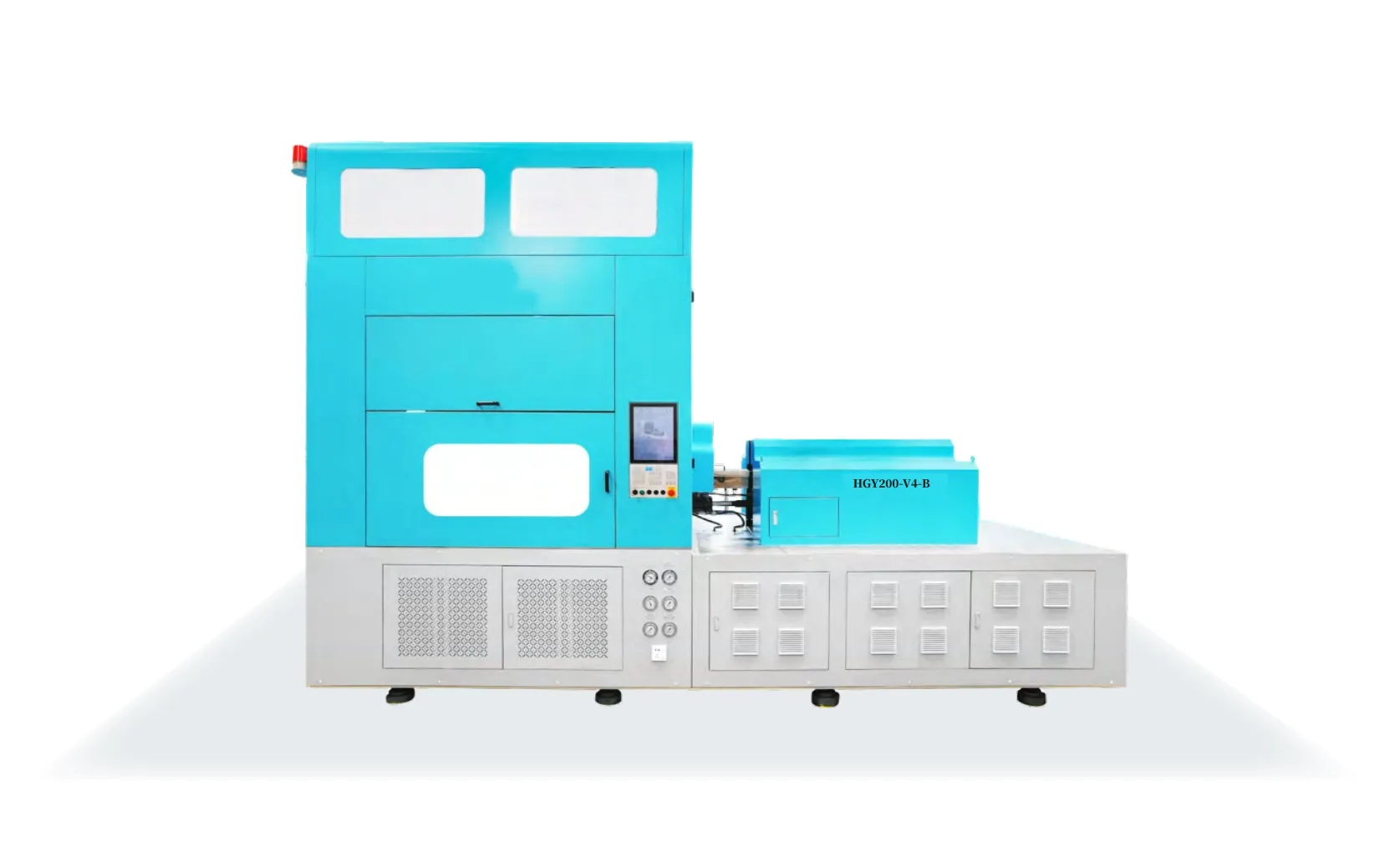
HGYS200-V4-B — Four-Station ISBM for Biological Product Container Development
For biological product container development and production across vaccine vials, monoclonal antibody formulation containers, and recombinant protein presentations in the 1ml–100ml volume range, the HGYS200-V4-B four-station one-step ISBM machine provides the pharmaceutical precision and biologics GMP documentation capability that biological medicines container programmes require. Neck bore tolerance of ±0.05mm and retaining bead height consistency of ±0.08mm meet ISO 8471/8362 injectable vial dimensional standards for rubber stopper and crimp cap compatibility with standard biologic closure systems. The machine’s oil-free servo-electric upgrade option eliminates hydraulic oil from the ISO Class 7 biologic container production environment. Process data logging with audit-trail recipe management generates the IQ/OQ/PQ-compliant batch records supporting TGA biological medicines dossier submissions and PIC/S GMP Annexes 1 and 2 compliance. The four-station architecture provides consistent multi-cavity production for biological vial scale-up from Phase I clinical supply through Phase III and commercial production from the same validated tooling and process recipe, supporting the biological product container continuity strategy that minimises regulatory data bridging requirements across clinical and commercial phases.