Hospital and Healthcare Disinfectant Packaging: Where Infection Control Meets Container Engineering
Hospital disinfectants and hand hygiene products are the frontline tools of healthcare-associated infection (HAI) prevention — arguably the most important infection control measure in modern hospitals. Australia’s National Hand Hygiene Initiative, coordinated by the Australian Commission on Safety and Quality in Health Care (ACSQHC) and modelled on the WHO’s Five Moments for Hand Hygiene, prescribes alcohol-based handrub (ABHR) as the primary hand hygiene agent for clinical environments. ABHR is delivered from bedside wall-mounted dispensers, portable pump bottles carried by clinical staff, and patient-accessible sink-station bottles — three distinct container formats with distinct engineering and regulatory requirements.
Beyond ABHR, hospital hygiene product portfolios include surface disinfectant sprays (quaternary ammonium, chlorine-releasing, and alcohol-based formulations), skin antiseptic solutions (chlorhexidine, povidone-iodine, isopropyl alcohol), surgical site preparation products, and instrument disinfectants. Each of these products has distinct formulation chemistry, dispensing format, and packaging chemical resistance requirements that the ISBM container must address through specific design and material specification. The машина для лиття під тиском з розтягуванням provides the production platform for the full hospital disinfectant container range — from small 60ml pocket ABHR bottles through 500ml clinical workstation dispensers to 5L bulk supply containers for refilling dispensers.
Australia Ever-Power Injection Stretch Blow Moulding Machine Co., Ltd, based in Condell Park NSW 2200, works with hospital hygiene product manufacturers and healthcare contract packaging operations on ISBM container solutions for the hospital disinfectant and hand hygiene product sector.
Chemical Resistance for Disinfectant Formulations: The Technical Foundation
Hospital disinfectant formulations present some of the most chemically challenging compatibility requirements in the healthcare packaging sector — typically combining biocidal active ingredients at high concentrations with co-solvents, surfactants, and buffering systems that each interact with container materials through different mechanisms. Material selection and compatibility validation are the most critical early decisions in disinfectant container development.
Alcohol-Based Hand Rub (ABHR): The Dominant Hospital Hygiene Product
WHO-formulated ABHR contains 80% v/v ethanol or 75% v/v isopropanol as the primary biocidal agent, with glycerol (1.45%), hydrogen peroxide (0.125%), and sterile water as excipients. At these alcohol concentrations, standard PET shows gradual surface interaction — ethanol at 80% causes minor plasticisation of the PET surface layer over extended storage, potentially leading to very slight surface haze development and trace AA generation from the plasticised surface zone. For short-term ABHR applications (hotel and office hand sanitiser with 3–6 month use cycles), this surface interaction is inconsequential. For hospital ABHR with 12–24 month shelf life in pump dispensers that are regularly refilled, PETG provides better performance than standard PET at these high alcohol concentrations. The compatibility assessment for ABHR in ISBM containers should include a 40°C/6-week stability study with the specific ABHR formulation in the production container, measuring container dimensional changes, clarity changes, and alcohol concentration by GC to confirm no significant active ingredient loss from evaporation or container absorption.
Quaternary Ammonium Surface Disinfectants (Quat-Based)
Quaternary ammonium compound (quat) disinfectants — benzalkonium chloride (BAC) and didecyldimethylammonium chloride (DDAC) being the most widely used hospital surface disinfectants in Australia — are cationic surfactants in aqueous solution at typical use concentrations (0.1–0.5% active quat). PET is compatible with quat solutions at clinical use concentrations across standard storage conditions — cationic surfactants do not attack the PET ester backbone at these concentrations. The primary consideration for quat surface disinfectants in PET containers is adsorption of the quat onto the PET surface during storage — quat cations can interact with PET’s slightly charged surface through electrostatic and hydrophobic mechanisms, potentially depleting the active concentration in the solution. The concentration depletion must be confirmed through a stability study monitoring active quat concentration by HPLC or titration at defined time points during the product’s approved shelf life. For ready-to-use quat surface disinfectants with well-established PET compatibility in the market, this confirmation may reference existing published data; for new formulations or concentrated products for dilution, product-specific testing is required.
Chlorhexidine-Based Antiseptic Solutions
Chlorhexidine gluconate (CHG) antiseptic solutions — 2% CHG for surgical hand preparation, 4% CHG for whole-body washing in pre-surgical preparation, 0.5% CHG in alcohol for skin antisepsis — are widely used in Australian hospitals for infection prevention. CHG in PET containers shows minor adsorption to the PET surface (chlorhexidine is a cationic molecule that shows moderate polymer surface adsorption), and the 2% and 4% aqueous formulations have been used commercially in PET containers with formal stability confirmation. CHG concentration must be monitored at each stability time point during the product qualification programme, as concentration depletion from adsorption at the clinical use concentration determines efficacy margin — a 10% reduction from 2% to 1.8% CHG remains within the effective concentration range for most clinical applications, while a 20% reduction to 1.6% may approach the minimum effective concentration for some surgical applications. Contact [email protected] for CHG container compatibility protocol design for your specific CHG concentration and formulation.
Hydrogen Peroxide-Based Disinfectants
Accelerated hydrogen peroxide (AHP) disinfectants — used for hospital surface decontamination at 0.5–3% H₂O₂ — present an oxidising compatibility challenge for PET containers. Standard PET at hydrogen peroxide concentrations below 3% in aqueous solution is generally compatible for 12-month shelf lives, but higher concentrations or combined H₂O₂/surfactant systems require individual validation. PETG provides better oxidative stability than standard PET and is preferred for H₂O₂-based disinfectant containers at concentrations above 3%. For concentrated hydrogen peroxide products (6–30% H₂O₂ for dilution before use), HDPE is typically the preferred container material over PET or PETG due to HDPE’s superior oxidative resistance at these concentrations.
Dispensing System Engineering for Hospital Hygiene Products
The dispensing system for a hospital disinfectant product must deliver the correct dose in the correct physical form (liquid stream, foam, or spray) consistently and reliably under clinical use conditions — healthcare workers applying ABHR between patient contacts are completing 60–100 hand hygiene events per shift, and a pump that dispenses inconsistently or drips after actuation reduces clinical compliance with the hand hygiene protocol.
Lotion Pump for ABHR and Liquid Antiseptic
24/410 or 28/410 lotion pump delivering 1.0–1.5ml per stroke for ABHR, calibrated to the WHO recommended minimum dose (3ml for WHO Formulation 1 or 2). ISBM neck finish tolerance ±0.08mm for consistent pump engagement and anti-drip sealing. Pump material must be alcohol-compatible (polypropylene pump components for ABHR formulations).
Foam Pump for Foaming Hand Hygiene
Foam pump systems aerate the liquid soap or ABHR formulation to produce foam — improving user sensory experience and potentially improving hand coverage. The ISBM bottle’s neck finish must engage the foamer’s dip tube and pump housing. Formulations must be specifically adapted for foam production — standard ABHR formulations do not produce foam without specific formulation adjustments.
Trigger Spray for Surface Disinfectants
28/410 trigger spray for quat and chlorhexidine surface disinfectant products. Trigger head must be alcohol-compatible for formulations with alcohol co-solvents. ISBM neck finish roundness ±0.06mm prevents the thread engagement gaps that cause dripping under the liquid head pressure of a full bottle stored upright. Dip tube length compatibility confirmed during filling line trials.
Flip-Top and Screw Cap for Bulk Containers
5L bulk refill containers for ABHR wall-mount dispenser refilling use robust screw cap or push-down flip-top closures. Heavy-duty neck finish (33mm or 38mm) with CRC requirement for products containing scheduled disinfectant active ingredients under Australian Poisons Standard. ISBM injection neck consistency ensures reliable cap engagement even after repeated handling by clinical staff.

UV Stability for Hospital Disinfectant Products
Hospital and community disinfectant products are stored in diverse environments that include window-lit clinical areas, sunlit outdoor premises (GP surgery exterior handwash stations, outdoor event medical stations, school handwash installations), and vehicle-mounted first-aid and hygiene supply kits where direct sun exposure can be intense. Disinfectant containers exposed to UV radiation face two distinct degradation pathways: UV-induced degradation of the PET container itself (yellowing, embrittlement, surface chalking over extended UV exposure) and UV-induced degradation of the disinfectant formulation through photolysis of UV-sensitive active ingredients or co-solvents.
For ABHR and most aqueous disinfectants, the primary UV concern is the PET container’s appearance degradation (yellowing and haze increase from UV exposure) rather than formulation photodegradation — ethanol, isopropanol, chlorhexidine, and quaternary ammonium compounds are relatively UV-stable at the UV exposures encountered in clinical settings. However, hydrogen peroxide-containing disinfectants are photosensitised — UV exposure accelerates H₂O₂ decomposition to water and oxygen, reducing active ingredient concentration and potentially generating free radicals that affect formulation stability. For H₂O₂-based disinfectants, amber or opaque containers with specific UV protection are the appropriate specification.
ISBM containers for outdoor-deployed hospital disinfectants and community hand hygiene products should include UV stabiliser additive (benzotriazole UV absorbers at appropriate loading, confirmed through xenon arc accelerated weathering testing) to maintain container appearance and structural integrity over the approved shelf life under the expected UV exposure conditions. The specific UV stabiliser loading is calibrated during container development through accelerated weathering testing — confirming that the container’s colour, clarity, and mechanical properties remain within specification after a defined xenon arc exposure equivalent to the product’s approved shelf life outdoors at Australian UV intensities.
Regulatory Framework for Hospital and Consumer Disinfectant Products in Australia
Australian disinfectant products are regulated under multiple overlapping frameworks depending on the product’s intended use, active ingredient schedule classification, and marketing claims. Understanding the regulatory landscape is essential for ISBM container design because the applicable framework determines the labelling requirements, container safety specifications (CRC vs non-CRC), and product registration or listing obligations.
| Product Category | Regulatory Framework | CRC Required? | Container Key Req. |
|---|---|---|---|
| ABHR (≥70% alcohol), hospital supply | TGA Listed Medicine (artg.tga.gov.au) | Yes — Schedule 2 ethanol | CRC, alcohol-compatible PET/PETG, GHS label |
| Consumer hand sanitiser (≥60% alcohol) | TGA Listed Medicine | Yes — Schedule 2 ethanol | CRC, FSANZ food-safe aesthetics, branding |
| Hospital surface disinfectant (quat) | APVMA (agricultural/veterinary) or TGA Listed | Depends on schedule | GHS label, chemical resistance, trigger spray |
| Chlorhexidine surgical scrub (Schedule 3) | TGA Listed Medicine | Yes — Schedule 3 | CRC, CHG-compatible PET, pump dispensing |
| Povidone-iodine antiseptic | TGA Listed Medicine | May be required | Amber container, PVP-I compatible PET |
| Industrial disinfectant (concentrated) | Industrial Chemicals Act 2019 / APVMA | Yes for scheduled substances | GHS label, CRC, chemical resistance validated |
Hand Sanitiser Market in Australia: COVID-19 Legacy and Sustained Demand
The COVID-19 pandemic produced a structural, permanent shift in Australian hand hygiene behaviour and hand sanitiser consumption. Pre-COVID, hand sanitiser was primarily a hospital and healthcare professional product. Post-COVID, hand sanitiser is a mainstream consumer product stocked in Australian homes, offices, schools, hospitality venues, retail premises, and public transport — a structural market expansion that has permanently elevated base consumption above pre-2020 levels even as the acute pandemic-era demand spike has subsided. This structural market shift created a permanent commercial opportunity for Australian ISBM producers to serve a hand sanitiser container market that previously did not exist at the volumes now sustained.
The post-COVID hand sanitiser market in Australia has consolidated into three commercial tiers: premium branded consumer hand sanitiser (positioned as a skincare product with moisturising and sensory-appeal formulations, sold through pharmacy and premium grocery at $8–15/unit), standard consumer hand sanitiser (functional alcohol-based formulations in standard pack sizes, sold through supermarkets and variety retailers at $3–6/unit), and institutional/commercial hand hygiene supply (large-format pump dispensers and bulk refill containers for workplaces, healthcare, and hospitality under institutional supply contracts). ISBM containers serve all three tiers with different design and commercial requirements — premium branded containers with custom bottle design and premium surface finish for the consumer tier, value-efficient standard formats for the supermarket tier, and durable large-format containers for the institutional tier.
For Australian hand sanitiser brands that emerged or grew significantly during the COVID-19 period, ISBM investment for local container production creates competitive advantages that offshore container procurement cannot provide: rapid response to demand spikes from new public health events or seasonal drivers, full control over container quality and regulatory compliance, and the ability to develop proprietary bottle designs that create retailer shelf differentiation.
GHS Hazard Labelling for Disinfectant ISBM Containers
Hospital and consumer disinfectants classified as hazardous chemicals under the GHS (Globally Harmonised System of Classification and Labelling of Chemicals, adopted in Australia through Safe Work Australia’s Model Work Health and Safety Regulations) require GHS-compliant hazard labels on all workplace supply containers. The mandatory GHS label elements — signal word, hazard pictograms, hazard statements, precautionary statements, and supplier information — must be present, legible, and durable throughout the container’s use life. For ABHR products classified as Flammable Liquid Category 2 (due to the ≥60% ethanol content), the GHS flame pictogram and “DANGER” signal word are mandatory on workplace supply containers, while ISBM’s label panel geometry must accommodate these mandatory GHS elements at a legible font size.
The label panel area required for a compliant GHS label on a disinfectant container depends on the number of hazard classes the product carries — a single-hazard ABHR (Flammable Liquid only) needs less label area than a combined flammable/corrosive surface disinfectant with multiple pictograms and extended precautionary statement text. ISBM blow mould tooling design should specify the label panel dimensions to accommodate the full GHS label text at the minimum font size required for legibility under normal workplace viewing conditions — minimum 7-point type for standard GHS label text, with the signal word and product identifier at minimum 12-point. Container designs that cannot accommodate the mandatory GHS label text at a legible size are a regulatory compliance risk that the manufacturer cannot resolve after tooling is manufactured.
GHS label durability on disinfectant containers — the label must remain legible and adherent throughout the container’s use life, including exposure to the disinfectant product itself during dispensing and handling — is addressed through both the label adhesive specification (pressure-sensitive adhesive rated for the specific container material and the product’s chemical exposure profile) and the ISBM label panel surface specification (Ra ≤ 0.40 µm and flatness ±0.20mm for consistent, complete label adhesion). For spray disinfectant containers where the product is applied by trigger spraying in the direction of the label, the label adhesive must resist the specific disinfectant formulation chemistry — confirmed through label adhesion testing using the commercial formulation as the label exposure medium.
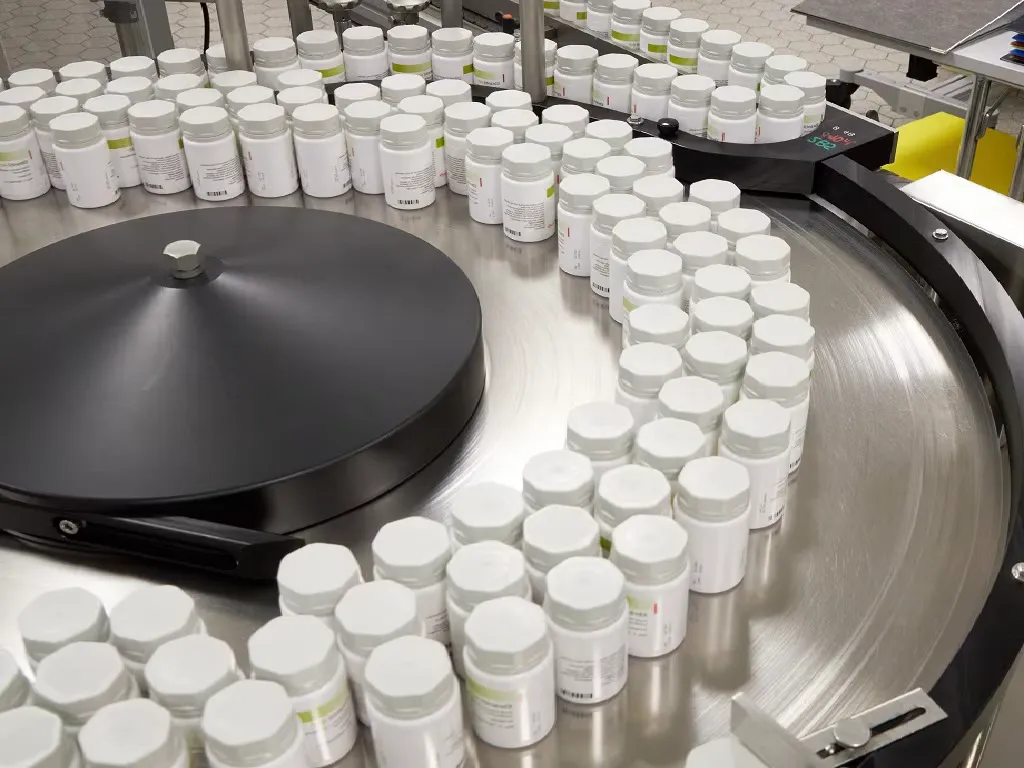
Production Economics for Australian Disinfectant Container Manufacturing
The Australian disinfectant and hand hygiene product market — estimated at AUD 400–600 million annually across hospital, institutional, and consumer channels in the post-COVID stabilised market — represents a substantial commercial opportunity for local ISBM container production. The market’s supply chain characteristics make local production particularly attractive: disinfectant products have a seasonal demand component (respiratory illness season drives consumer hand sanitiser volumes), are subject to acute demand spikes from public health events, and are produced by a mix of large multinationals (Dettol/Reckitt, Hands-On/3M, hospital supply specialists) and growing Australian-owned brands (particularly in the premium consumer tier).
For major Australian hand sanitiser and disinfectant brands producing 5–30 million containers per year, the total cost analysis for local ISBM production versus offshore container procurement typically confirms economic competitiveness at these volumes when all supply chain cost components are included. The specific advantage of local ISBM production for disinfectant products is supply chain agility — a demand spike from a new public health event (respiratory illness outbreak, pandemic early response, natural disaster emergency response) can be served within 1–2 weeks from local ISBM production versus the 10–14 week lead time of offshore container procurement. During the COVID-19 period, manufacturers with local ISBM production for hand sanitiser containers captured substantial market share from competitors who could not source offshore containers fast enough to meet the demand surge.
ISBM production for disinfectant containers at typical Australian commercial volumes is achievable with 2–4 cavity production tooling on a standard four-station ISBM machine, producing 4,000–10,000 BPH for standard 60–500ml pump disinfectant formats. A well-configured ISBM operation producing across a 10–15 SKU hand hygiene and disinfectant product range can serve annual volumes of 10–30 million units from a single machine with a 2–3 production shift schedule, enabling a mid-scale Australian disinfectant manufacturer to supply both retail and institutional channels from a single production platform with local supply chain agility. Contact [email protected] to discuss production economics for your specific disinfectant container range.
Sustainability in Disinfectant Container Packaging
Disinfectant and hand hygiene container sustainability is a genuine commercial opportunity for Australian brands — particularly in the consumer premium tier where sustainability credentials are purchasing decision factors for the consumer demographic most likely to pay a premium for premium hand sanitiser. PET ISBM disinfectant containers are kerbside recyclable in all Australian states (resin identification code 1 — PET), eligible for Container Deposit Scheme participation where bottle size meets scheme criteria, and achievable at 25–30% rPET content for disinfectant formulations where rPET compatibility is confirmed through stability testing.
The challenge of rPET in disinfectant container applications is the chemical contact compatibility of rPET with high-alcohol ABHR formulations — at 60–80% ethanol concentrations, the wider NIAS variability of rPET versus virgin PET may introduce extractable compounds that interact with the alcohol solvent or affect the formulation’s sensory properties. A 40°C/6-week compatibility stability study with the specific rPET lot and the commercial formulation is the appropriate approach — confirming no unacceptable appearance change, no change in active ingredient concentration, and no perceptible fragrance or sensory change from extractable compound contribution before commercial adoption of rPET for high-alcohol disinfectant containers.
Lightweighting programmes for disinfectant containers — targeting 10–15% preform weight reduction through ISBM process optimisation — are achievable for most standard disinfectant bottle formats without structural performance compromise, providing the quantifiable material saving and embodied carbon reduction that sustainability reporting and on-pack claims require. For Australian disinfectant brands with retail distribution through Woolworths or Coles, the retailers’ packaging sustainability requirements (APCO targets, Australian Packaging Covenant obligations) make documented packaging sustainability improvement commercially valuable in the trading relationship.
Ever-Power’s Disinfectant ISBM Development and Production Support
Australia Ever-Power provides hospital hygiene product manufacturers, hand sanitiser brands, and institutional disinfectant producers with ISBM machine technology and application engineering support for the full disinfectant container range. The disinfectant ISBM support programme covers: chemical compatibility assessment protocol design for the specific formulation chemistry (ABHR, quat, CHG, H₂O₂, PVP-I); dispensing system qualification (pump stroke volume, trigger spray flow rate, foam consistency); UV stabilisation specification for outdoor-deployed products; GHS label panel geometry engineering for regulatory compliance; CRC qualification for scheduled disinfectant products; and the production quality documentation (IQ/OQ/PQ, stability programme, batch records) for TGA listed medicine and APVMA product registration requirements.
For Australian disinfectant brands evaluating ISBM investment as part of a supply chain resilience strategy — the COVID-19 experience having demonstrated the vulnerability of offshore-dependent supply chains to unexpected demand spikes — Ever-Power’s pre-investment analysis provides the production economics and supply chain risk assessment that supports an informed capital investment decision. The Condell Park NSW location provides same-day response capability for production issues that demand immediate resolution — the supply chain agility advantage of local production is only fully realised if local engineering support matches local production availability.
Visit isbm-technology.com/contact-us or contact the team at [email protected] to discuss your disinfectant container ISBM development and production requirements.
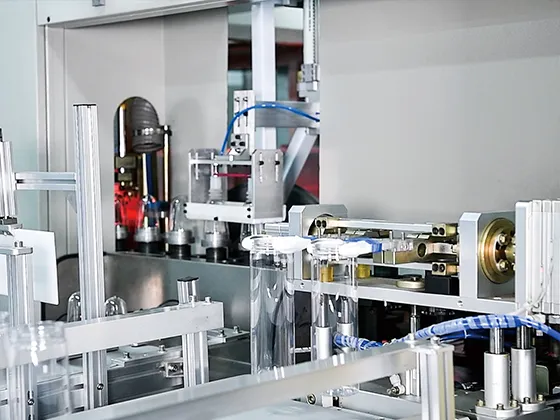
Recommended Machine
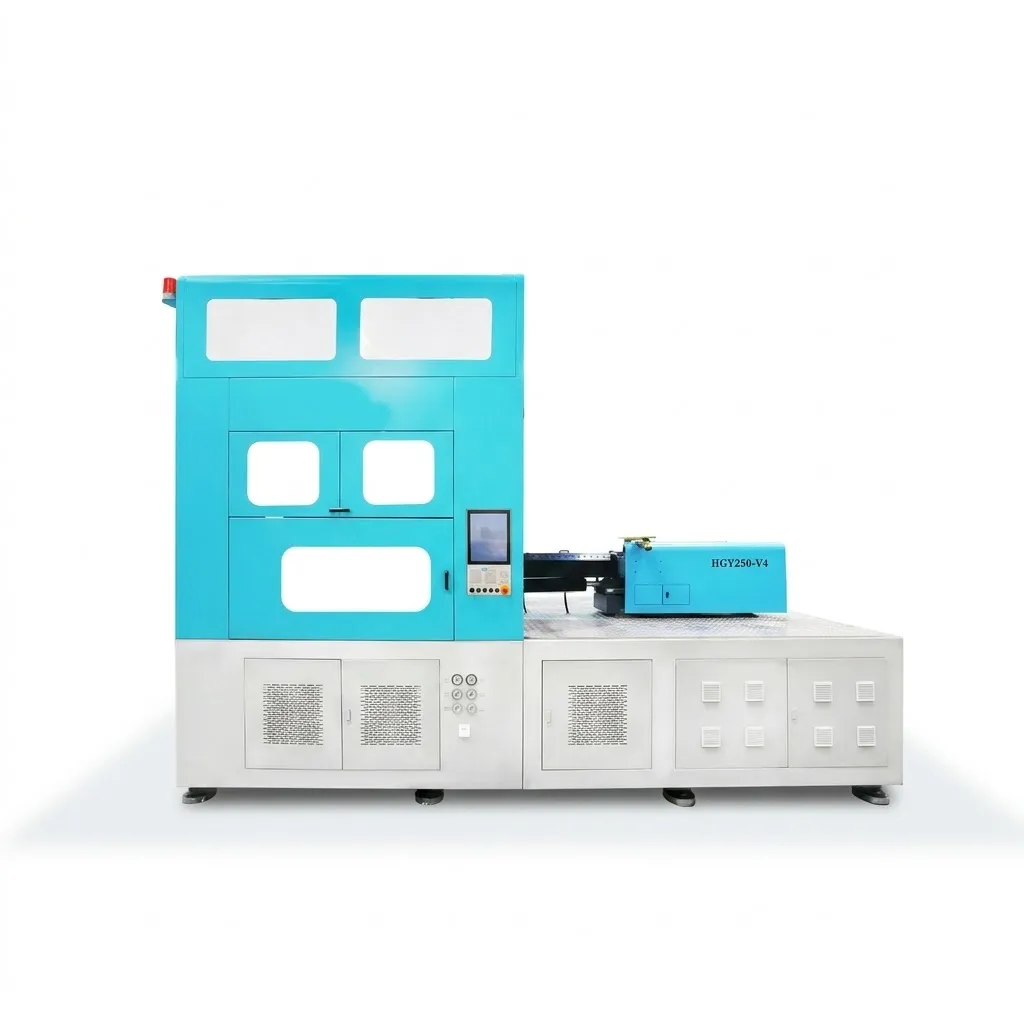
HGY250-V4 — Four-Station ISBM for Disinfectant Container Production
For disinfectant and hand hygiene container production across 60ml pocket ABHR through 500ml hospital workstation pump dispensers and 5L bulk refill formats, the HGY250-V4 four-station one-step ISBM machine provides the production flexibility and chemical packaging capability that the hospital disinfectant sector requires. The four-station design delivers consistent pump neck finish dimensions (±0.08mm roundness) across all production cavities — the critical tolerance for pump engagement anti-drip performance under the full bottle liquid head pressure. The machine processes both standard PET and PETG with equal capability, providing the material flexibility to serve both lower-alcohol disinfectant formulations (standard PET) and high-concentration ABHR (PETG preferred). UV-stable masterbatch processing for outdoor-deployed product containers is supported through the standard masterbatch injection system. PLC process data logging with audit-trail recipe management provides the production records for TGA listed medicine batch documentation. CRC-compatible neck insert tooling options accommodate the scheduled substance CRC requirements for ABHR and chlorhexidine products. Rapid mould changeover (90–150 minutes format change) enables the multi-SKU disinfectant production schedules that cover ABHR, surface disinfectant, and antiseptic product ranges from a single machine platform.