Rust remover is one of the most chemically aggressive products in the automotive maintenance and industrial repair sectors. Whether formulated as a phosphoric acid converter that chemically transforms iron oxide into stable iron phosphate, a hydrochloric acid gel for heavy industrial descaling, or a chelating-agent solution (EDTA, citric acid) for gentler surface treatment, rust removers impose material demands on their packaging that expose poorly specified bottles within weeks of filling. The packaging must resist the corrosive chemistry of the active system, prevent permeation losses that would concentrate the formulation over its shelf life, deliver controlled pour or spray dispensing under conditions where the user’s hands are in contact with the product, and carry the GHS hazard communication required by Australian workplace chemical safety legislation. Injection stretch blow molding addresses each of these requirements through the combination of acid-resistant biaxially oriented PET, injection-precision neck geometry and the production efficiency that the automotive maintenance chemical market’s competitive cost structure demands.
Rust Remover Chemistry and Its Packaging Compatibility Demands
Phosphoric Acid Converters: The Mainstream Rust Treatment
Phosphoric acid-based rust converters — the dominant chemistry in Australian automotive DIY and trade rust treatment products — operate at H₃PO₄ concentrations of 15–30% by weight in water, occasionally combined with tannic acid, zinc compounds or polymer binders that crosslink the converted iron phosphate layer into a stable primer surface. At these concentrations, phosphoric acid presents pH values of 1.0–1.8 — acidity sufficient to damage skin, corrode metals and attack susceptible polymers, but within the compatibility range that PET handles effectively under standard ambient storage conditions. The key compatibility variable for phosphoric acid rust remover packaging is temperature: phosphoric acid solutions above 25°C show measurably higher interaction rates with packaging polymers than ambient storage conditions, making temperature exposure during distribution and retail storage a factor in the package specification rather than a negligible variable.
Hydrochloric and Sulphamic Acid Formulations: Higher-Risk Profiles
Professional-grade rust removers for heavy industrial descaling — marine hardware, agricultural equipment, structural steel — use hydrochloric acid (HCl) at 5–15% or sulphamic acid at 10–20% concentrations. HCl generates significant acid vapour pressure at these concentrations, creating a vapour containment requirement for the closure system that exceeds what standard personal care or food product sealing addresses. The HCl vapour also attacks metals and degrades organic surface coatings throughout the supply chain if it escapes through a bottle seal failure — making the precision neck finish and foil induction seal that ISBM injection-moulded necks enable a safety and commercial necessity, not merely a quality preference.
Chelating Agent Formulations: Gentler Chemistry, Different Risks
EDTA and citric acid-based rust removers at pH 2–4 represent the growing “safer chemistry” segment of the Australian rust treatment market — products positioned as less hazardous alternatives to mineral acid converters for DIY automotive use and light workshop applications. These formulations are broadly compatible with PET packaging across their working concentration range, but the typically higher water activity of chelating agent solutions (compared to organic-solvent-based rust removers) increases the relevance of moisture vapour management in the bottle closure system to prevent concentration changes in the sealed product over its shelf life. The slower corrosion reaction rate of chelating agents also means these products are used in longer contact-time applications — soaking bolts, brackets or panels overnight — where the bottle dispensing geometry must support accurate measured pour into a soak container rather than direct spray application.
How Injection Stretch Blow Molding Serves Rust Remover Packaging
Acid Barrier Through Biaxial Orientation
The biaxial molecular orientation produced during injection stretch blow molding reduces the free-volume pathways through which acid molecules and associated vapour can permeate through the PET bottle wall. For phosphoric acid rust converter packaging, this permeation reduction matters over a 12–24 month retail shelf life because acid concentration change from permeative loss — even small losses of the order of 0.3–0.5% — shifts the H₃PO₄/water ratio toward higher concentration in the bottle residual, potentially affecting the product’s reaction rate and pH at point of use. Biaxially oriented PET achieves acid vapour transmission rates significantly lower than non-oriented PET at equivalent wall gauge, and multiple orders of magnitude lower than HDPE — the material whose hydrocarbon affinity makes it a poor barrier to the organic co-solvents sometimes present in gel-format rust removers.
Neck Precision for Acid Vapour Containment
For HCl and phosphoric acid rust removers with meaningful vapour pressure, the neck-closure interface is the highest-risk leakage pathway in the sealed bottle. ISBM’s injection-formed neck achieves ±0.10mm tolerance on thread outer diameter and ±0.05mm on the induction seal surface flatness — enabling the foil induction seal applied at filling to achieve uniform adhesion across the full 360° sealing circumference without the void zones that variable-formation blow-moulded necks create. A foil seal void as small as 2mm² on a phosphoric acid rust remover bottle can allow sufficient acid vapour release to cause secondary packaging corrosion in pallet-stacked transit — a supply chain contamination event that triggers product returns and retailer complaints far in excess of the value of the individual failed bottle.
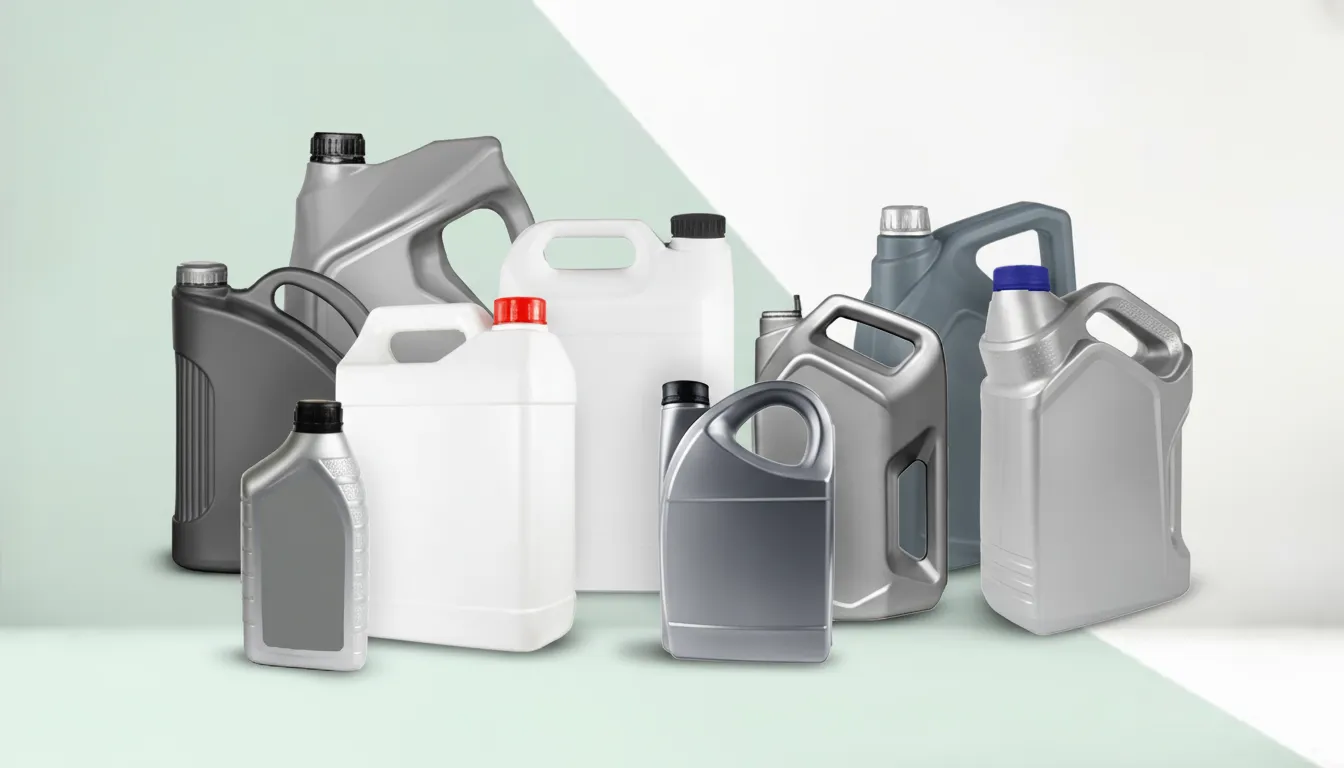
Bottle Volume Formats and Dispensing Design for Rust Treatment
Spray Application Formats: 250ml to 750ml
Spray-application rust converter and rust remover products in the 250–750ml range are the dominant retail format for DIY automotive use in Australia. These products are applied to rust-affected surfaces by direct spray, allowed to dwell for 5–30 minutes depending on the depth of rust, then wiped or rinsed away — a usage pattern that requires a reliable, acid-resistant trigger sprayer on a bottle with enough body rigidity to resist the repeated compression of spray actuation without deforming under the user’s grip. ISBM PET delivers the side-wall rigidity that repeated trigger sprayer actuation requires at body wall gauges of 0.35–0.50mm through biaxially oriented molecular structure, without the wall gauge increase that would raise material cost and bottle weight above what the price-sensitive DIY automotive chemical market accepts.
Pour Application Formats: 500ml to 2L
Pour-application rust removers — used for bolt soaking, panel submersion and direct-pour onto horizontal surfaces — are sold in 500ml to 2-litre formats with wide-mouth screw necks of 38–48mm that allow controlled pour into small-diameter containers (bolt jars, trays, degreaser baths) without spillage. The wide-mouth format requires the pouring angle and base centre-of-gravity stability to prevent the fully filled bottle from tipping when positioned at the steep pour angle needed to direct fluid into a narrow container — a geometry consideration that ISBM blow mould engineering addresses through base footprint width and heel radius specification rather than assumption. Custom automotive bottles in this format increasingly incorporate graduated scale markings moulded into the bottle body at 50–100ml intervals, allowing the user to measure the dispensed volume for diluted application without a separate measuring cup — a feature that ISBM’s high-pressure blow contact with the mould cavity produces at 0.1–0.4mm embossed depth with the consistency required for legibility throughout the product’s service life.
Material Compatibility Matrix for Rust Remover Packaging
Not all rust remover chemistries are equal in their compatibility with PET, and the packaging engineer’s first task in any rust remover bottle development programme is a systematic compatibility assessment against the specific formulation. The matrix below summarises compatibility guidance for the principal rust remover chemistry types encountered in the Australian automotive market, based on standard immersion testing at ambient and accelerated temperature conditions.
| Rust Remover Type | Active Chemistry | PET Compatibility | Recommended Test |
|---|---|---|---|
| Phosphoric acid converter | H₃PO₄ 15–30% | ✅ Good | 30 days @ 40°C |
| Citric/oxalic acid chelate | Citric/EDTA pH 2–4 | ✅ Excellent | 30 days @ 40°C |
| Tannic acid blend | Tannic + H₃PO₄ | ✅ Good | 30 days @ 40°C |
| Sulphamic acid | NH₂SO₃H 10–20% | ✅ Good | 60 days @ 40°C |
| Hydrochloric acid gel | HCl 5–12% | ⚠️ Verify — vapour sealing critical | 60 days @ 40°C + vapour test |
| Solvent-blend rust dissolvers | Ketone/ester carriers | ⚠️ Carrier-specific — verify ESC | ESC test + 60-day immersion |
The solvent-blend rust dissolver category — products that combine acid actives with ketone or ester carrier solvents for improved penetration into tight rust corrosion — represents the highest compatibility risk for PET packaging. Methyl ethyl ketone (MEK) and acetone at concentrations above 10% can cause significant PET swelling and stress cracking under sustained contact, and their presence must be confirmed and concentration-verified against published PET compatibility data before PET packaging is specified. Where solvent content creates compatibility uncertainty, ISBM-produced HDPE bottles (in two-step processing with HDPE preforms) or coextruded barrier bottles represent the fallback options — but the ISBM process itself remains relevant because the precision neck finish and barrier enhancement from biaxial orientation provide value even in non-PET material combinations that ISBM processes can accommodate on certain machine configurations.
ISBM Production Workflow for Rust Remover Bottles
Rust remover bottle production requires the process discipline appropriate to packaging a corrosive hazardous chemical — every stage from resin preparation through ejection directly affects the chemical barrier, seal integrity and regulatory compliance of the finished container.
① High-IV Resin Drying
For corrosive chemical bottles, PET at IV 0.80–0.86 dL/g is specified to maximise acid resistance and impact performance. Drying to below 40 ppm moisture at 165°C for 5–6 hours with dew point monitoring at −45°C preserves this IV through the injection stage, ensuring the oriented bottle wall achieves its designed acid barrier and mechanical strength without the IV reduction that moisture-contaminated plasticisation causes.
② Neck Finish and Seal Surface Injection
The acid-rated closure neck (24/410 spray format or 38–48mm wide-mouth pour format) is formed during injection at ±0.10mm tolerance on thread diameter and ±0.05mm on the induction seal surface flatness. Injection velocity profiling prevents gate blush at the narrow preform gate — a surface defect that creates a stress concentration site susceptible to acid-initiated crack propagation under the low-pH contact conditions of the filled product in ambient storage.
③ High-Temperature Conditioning for Barrier
Body zone conditioning at 110–118°C — toward the upper workable range — maximises biaxial orientation during stretch-blow, producing the dense chain packing that minimises acid permeation through the bottle wall. For spray-format rust remover bottles, body conditioning achieves the balance between orientation density for barrier and moderate squeeze compliance for trigger sprayer actuation under the light hand grip of a user working in an outdoor body repair environment.
④ Stretch-Blow with Extended Dwell
Stretch rod at 1.0–1.2 m/s initiates axial orientation before pre-blow air opens radial expansion. High-pressure blow at 32–40 bar with extended dwell of 4–6 seconds drives maximum crystallinity at the mould cooling temperature of 6–12°C — locking in the acid barrier performance, dimensional stability and drop-impact resistance that corrosive chemical packaging requires under both retail storage and field-use handling conditions typical of workshop and construction site environments.
⑤ Seal Integrity Verification
Foil seal surface flatness is gauged by contact profilometry on statistical samples from each production batch. Nitrogen pressure leak testing on a sample set confirms closure seal integrity at the filled bottle’s rated internal pressure before commercial release. Batch traceability records linking every production run to resin lot, process parameters and quality inspection data are maintained to support the GHS Safety Data Sheet packaging specification documentation and product recall capability that the Australian HCIS framework requires for corrosive chemical products.
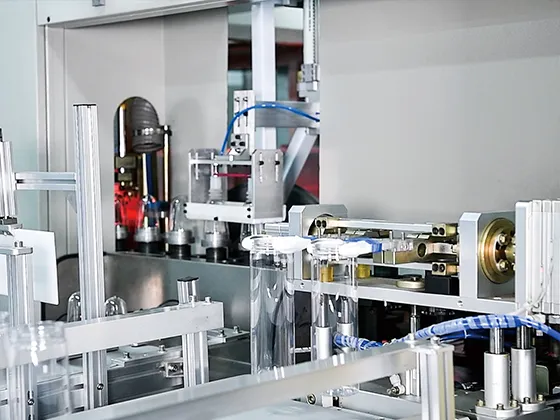
Key Machine Parameters for Rust Remover Bottle Production
| Parameter | Rust Remover Target | Effect on Corrosive Chemical Bottle Performance |
|---|---|---|
| PET IV specification | 0.80–0.86 dL/g | Acid resistance, drop-impact compliance for corrosive liquid |
| Injection barrel temp | 272–286°C | IV preservation; gate zone defect prevention |
| Body conditioning temp | 110–118°C | Maximum orientation density → acid barrier |
| Stretch rod speed | 1.0–1.2 m/s | Axial chain alignment; permeation pathway reduction |
| Blow dwell time | 4–6 seconds | Max crystallinity → acid resistance + drop impact |
| Seal surface flatness | ±0.05mm maximum | Void-free foil induction seal for acid vapour containment |
Extended blow dwell time is the most distinctive parameter in rust remover bottle production compared to personal care or food packaging on the same ISBM equipment. Where fragrance bottles target dwell times of 3.5–5 seconds for aesthetic crystallinity, rust remover bottles push toward the 5–6 second dwell end of the machine capability range specifically to maximise the crystalline fraction in the bottle wall — the structural state that provides both acid resistance and the impact toughness that corrosive liquid packaging must sustain under field handling conditions. The marginal cycle time cost of extended dwell — approximately 1–2 seconds per cycle — is amply justified by the quality margin it provides above the minimum mechanical performance required for corrosive chemical packaging compliance, reducing the probability of field failures that generate hazardous acid spill incidents and their associated liability consequences.
GHS Compliance and Safe Work Australia Requirements
Phosphoric acid rust converter at concentrations above 10% is classified under the Australian HCIS as Corrosive to Skin Category 1 and Corrosive to Eyes Category 1, requiring the corrosion hazard pictogram, Danger signal word, H314 and H318 hazard statements, and comprehensive P-statement precautionary text including PPE requirements, first aid for skin/eye contact and disposal instructions. The retail label on a 500ml spray rust remover must accommodate all of this mandatory GHS content alongside the product name, application instructions, active ingredient declaration, manufacturer contact, emergency phone number (13 11 26 Poisons Information Centre) and batch code — within the flat label panel area that the ISBM blow mould design must provide from the outset.
Rust remover products sold at retail — particularly those available without restriction to general consumers including minors — may trigger child-resistant closure requirements under the Poisons Standard (SUSMP) where the corrosive classification places them within Schedule 6 or Schedule 7 provisions. The neck finish specification must be compatible with the selected child-resistant cap design, validated in accordance with AS/NZS ISO 8317 or equivalent protocol, and the ISBM injection preform tooling neck geometry must accommodate the push-down-and-turn or squeeze-and-turn cap engagement mechanism without requiring cap application torque exceeding 5 N·m — above which production capping failures increase significantly on high-speed filling lines.
Lightweighting and Sustainability for Rust Remover Packaging
ISBM PET’s weight advantage over HDPE EBM in the rust remover category — typically 20–30% lighter bottle at equivalent mechanical specification — delivers both direct material cost savings and reduced embedded carbon per unit that APCO Australasian Recycling Label programme participants can document in annual sustainability reporting. For brands that sell rust remover in retail and trade channels where packaging weight reduction contributes to carbon intensity metrics, this lightweighting advantage is a genuine commercial differentiator as Australian retailers increase the sustainability KPI weighting in their supplier scorecards.
Mono-material PET rust remover bottles carrying the PETE (01) resin identification code are technically kerbside-recyclable, but the practical recyclability of chemically contaminated bottles requires consumer rinsing before bin placement — a step that is achievable for dilute phosphoric acid products but more challenging for gel-format HCl rust removers where residual acid concentration and viscosity make rinsing ineffective without neutralisation. Bottle design features that support safe rinsing — wide-mouth necks that allow full water entry and drainage, body geometry without internal recesses that trap residual gel, and label adhesive that does not interfere with rPET sorting — are design choices that improve the practical end-of-life recyclability of rust remover bottles without requiring the consumer to do anything beyond their normal recycling preparation behaviour.