Vaccine Packaging: The Most Demanding Intersection of Cold Chain, Purity, and Seal Integrity
Vaccine packaging failure has consequences that extend far beyond the individual drug product — a vaccine that loses potency during distribution because its container was breached, or that is contaminated through a closure failure during the cold chain, affects public health outcomes that no commercial quality system can adequately value in monetary terms. The packaging for vaccine products must therefore be specified and validated to the strictest standards across all failure modes: contamination through material extractables, physical breach through mechanical failure during cold-chain handling, potency loss through inadequate UV protection, and seal failure through dimensional incompatibility between the container and the stopper or closure system.
While traditional vaccine primary packaging uses glass vials and rubber stoppers — a combination with decades of safety data and well-established regulatory precedent — the limitations of glass in high-volume vaccine distribution (weight, breakage risk during cold-chain transport, significant embedded CO₂ from glass manufacturing) have driven growing interest in PET alternatives for certain vaccine applications. The injection stretch blow molding machine produces PET vaccine containers that address glass’s specific limitations while meeting the vaccine application’s demanding performance requirements — under the appropriate regulatory pathway and with the supporting validation data that the TGA requires for biologics container systems.
Australia Ever-Power Injection Stretch Blow Moulding Machine Co., Ltd operates from Condell Park NSW 2200, providing pharmaceutical and biologics packaging operations with ISBM machine technology and technical support focused on the specific requirements of vaccine and cold-chain pharmaceutical container production.

Temperature Cycling and Cold Chain Performance: Engineering PET for Vaccine Conditions
Vaccines are among the most temperature-sensitive biological products in healthcare — most live attenuated viral vaccines (MMR, varicella, oral polio) lose potency irreversibly if exposed to temperatures above +8°C for extended periods, while many adjuvanted vaccines require storage between +2°C and +8°C continuously. The cold chain from manufacturer to patient can span multiple temperature excursions — ambient warehouse loading and unloading, vehicle transport at varying ambient temperatures, and healthcare facility storage variations. The container must maintain its physical and seal integrity throughout this entire temperature history, including repeated cycling between cold storage and brief ambient handling periods.
PET Behaviour at Cold-Chain Temperatures
Biaxially oriented PET from ISBM maintains excellent mechanical performance across the cold-chain temperature range of -20°C to +40°C — the upper end of cold-chain excursion and the lower end of cold-pack frozen storage. PET’s glass transition temperature (Tg ≈ 75°C) means it remains well below its softening point at all cold-chain temperatures, and the biaxial orientation provides the impact resistance that prevents brittle fracture at low temperatures that some unoriented plastics exhibit. Cold-chain thermal cycling — the repeated transition between refrigerated storage (+2–8°C) and brief ambient handling periods (+15–25°C) — does not cause measurable dimensional change in ISBM PET containers because the biaxial orientation-induced residual stress in the container wall is well below the yield threshold at these temperature levels. This dimensional stability is the property that ensures stopper or closure seal integrity is maintained through repeated thermal cycling without progressive loss of sealing force.
Freeze-Thaw Stability for Cold-Pack Vaccine Transport
Vaccines transported with frozen cold-packs may be in direct contact with ice or frozen gel packs at temperatures below 0°C during transit. While most vaccines should not be frozen (freezing damages the adjuvant-antigen complex in many formulations), the container must be able to withstand incidental contact with frozen packs without cracking or crazing. PET ISBM containers maintain their physical integrity at temperatures down to approximately -40°C — well below any realistic cold-chain scenario — and do not exhibit the stress-cracking or embrittlement that some other plastics show under repeated cold shock. The freeze-thaw cycle qualification for a vaccine PET container should include a minimum of 5 cycles from -20°C to +25°C, with physical inspection and seal integrity testing after the final cycle to confirm no degradation of the container’s performance characteristics.
Dimensional Stability Under Vacuum: Lyophilised Vaccine Applications
Lyophilised (freeze-dried) vaccines — including many meningococcal, rabies, and yellow fever vaccines — are filled as liquid into the primary container, then freeze-dried under vacuum to produce the stable powder cake that is reconstituted immediately before administration. The primary container for a lyophilised vaccine must maintain its dimensional integrity under the vacuum applied during the lyophilisation process (typically 0.05–0.3 mbar absolute pressure). PET ISBM containers are not typically used for lyophilisation applications because the vacuum causes wall collapse in containers that lack the rigid side wall geometry needed to resist external atmospheric pressure at these vacuum levels. Glass vials or rigid-wall moulded PET vials (not blow-moulded) remain the preferred container for lyophilised biologics. This is an important constraint to understand when evaluating PET ISBM for vaccine packaging — it is appropriate for liquid vaccine formats but not for lyophilised presentations.
UV Protection for Photosensitive Vaccines: ISBM Amber and Dark-Tint PET Solutions
Many vaccines and biological products are sensitive to UV and visible light exposure, particularly in the 300–450nm range where photochemical degradation of protein antigens, nucleic acid-based components, and adjuvant systems can occur. The packaging requirement for photosensitive vaccines is to limit UV transmission through the container wall to levels below which measurable degradation occurs over the product’s approved shelf life — typically expressed as a maximum light transmission of ≤10% at 280nm and ≤20% at 350nm through the body wall at nominal thickness, consistent with the Ph.Eur. standard for amber glass equivalence.
Amber Masterbatch for Pharmacopoeial Light Protection
Amber tinting in ISBM PET vaccine containers is achieved through a specifically formulated amber masterbatch incorporating UV-absorbing chromophores calibrated to produce the required light transmission profile through the production wall thickness. The masterbatch loading — typically 0.5–1.5% depending on wall thickness and target light transmission — is established during development by measuring spectrophotometric transmission at multiple wavelengths through body panel specimens at the production wall thickness, confirming that the transmission specification is met across the full wavelength range specified for the vaccine product. The amber masterbatch must be included in the E&L extractables study for the vaccine container — the chromophore system must be confirmed to not introduce substances above TTC at the vaccine product conditions. Pharmaceutical-grade amber masterbatch systems specifically designed for extractable compliance in parenteral and vaccine container applications are available from specialty masterbatch suppliers.
Dark Tint and Opaque Alternatives for Maximum UV Blocking
For vaccine products with the most stringent light sensitivity requirements — where even residual UV transmission through an amber container presents a degradation risk over a long shelf life — opaque secondary packaging (carton or foil overwrap) combined with a lightly tinted primary PET container provides complete UV protection without requiring heavy primary container tinting that could affect the operator’s ability to visually inspect the liquid vaccine for particulate matter before administration. This two-layer protection approach is standard for many parenteral biologic products and is the recommended design for ISBM PET vaccine containers where both particulate inspection and UV protection are required simultaneously. The outer packaging contribution to UV protection must be quantified and included in the container-closure system light protection validation.

Hermetic Sealing Systems for Vaccine Containers: Stoppers, Crimp Closures, and Snap Caps
The hermetic seal of a vaccine container is the primary defence against microbial contamination and product potency loss during cold-chain transit and storage. Unlike standard pharmaceutical oral containers where an induction foil liner provides the hermetic seal and is routinely broken by the prescriber during dispensing, vaccine containers must maintain their hermetic seal integrity throughout the entire cold chain, be openable by the healthcare worker in a clinical setting without specialised equipment, and then be disposable safely after single use. These requirements drive vaccine container seal system design toward either rubber stopper systems (for multi-dose vials accessed by syringe needle) or plastic snap-cap systems (for single-dose oral or intranasal administration formats).
Rubber Stopper Integration for Multi-Dose Vaccine Vials
Multi-dose vaccine vials (MDVs) used in mass vaccination programmes — where a single container holds 5–20 doses accessed sequentially by needle and syringe — require a rubber stopper seated in the bottle neck that maintains a hermetic seal while allowing repeated needle penetration and self-healing between accesses. For PET ISBM multi-dose vaccine containers, the bottle neck geometry must be designed to receive and retain the rubber stopper with a defined seating force, a defined stopper compression (the dimensional interference between the bottle neck inside diameter and the stopper’s outside diameter that creates the sealing force), and a defined over-crimp geometry if an aluminium crimp cap is used to retain the stopper. The ISBM injection-formed neck allows these dimensions to be specified precisely and reproduced with the ±0.05–0.10mm tolerance that rubber stopper seating performance requires — tighter dimensional control than any stretch-forming or fire-forming neck process can achieve.
Single-Dose Oral Vaccine Containers: Twist-Off and Snap-Cap Systems
Single-dose oral polio vaccine (OPV) and other single-dose oral vaccine formats use plastic snap-cap or twist-off neck systems that provide tamper-evidence (the neck finish shows visible breakage when opened) and hermetic closure for cold-chain integrity. ISBM produces the bottle neck finish for these closure systems to the same injection precision as all other pharmaceutical applications, with the specific dimensional requirements determined by the snap-cap or twist-off closure manufacturer’s specification. The critical performance criterion for single-dose oral vaccine containers is that the neck finish provides a hermetic seal from filling through the entire cold chain, and then allows clean, audible single-use opening at the point of administration with visual tamper-evidence confirmation. Cold-chain compatibility of the closure material (brittleness at low temperatures, dimensional change through thermal cycling) must be validated in combination with the ISBM container as a complete container-closure system.
Sterility and Contamination Prevention in Vaccine Container Production
Vaccine primary containers must be free of microbial contamination at the time of filling — the sterility of the container and its closure components is the starting point for the aseptic filling process that maintains the sterility of the drug product through to the patient. For PET ISBM vaccine containers, sterility assurance requires both a controlled production environment that minimises bioburden on containers leaving the machine, and a terminal sterilisation or aseptic filling process that reduces any residual bioburden to zero before or during the filling operation.
Bioburden Control in ISBM Production
ISBM containers for vaccine and biologics applications are produced in controlled environments where bioburden accumulation on the container interior surfaces before filling is minimised. The ISBM process itself is a thermal treatment — the preform injection phase at 270–290°C and the conditioning phase at 95–115°C both expose the material to temperatures well above the thermal death points of most vegetative bacteria and many bacterial spores. However, post-blow handling — conveying, counting, stacking, and transport to the filling facility — introduces environmental bioburden that accumulates on container surfaces if controls are not in place. Clean-room ISBM production (ISO Class 7 or 8 for container production) with downstream sealed packing directly to the filling facility minimises this post-blow bioburden accumulation.
Terminal Sterilisation Options for PET Vaccine Containers
Terminal sterilisation of PET ISBM vaccine containers is achievable through gamma irradiation (typically 25 kGy minimum for a Sterility Assurance Level of 10⁻⁶) — PET is compatible with gamma irradiation at these doses without significant degradation of mechanical properties, transparency, or dimensional stability. Ethylene oxide (EtO) gas sterilisation is also applicable to PET containers, though EtO residual outgassing from the PET wall after sterilisation must be confirmed below the acceptable residue limits for biologics contact applications before the sterilised containers can be released for use. Steam autoclaving at 121°C exceeds the heat deflection temperature of PET and is not applicable — this is an important limitation to understand when designing vaccine container sterilisation pathways, and is one reason why glass vials remain the preferred primary container for autoclaved parenteral vaccine formulations.
Regulatory Pathway for Vaccine PET ISBM Containers: TGA and WHO Requirements
The regulatory pathway for approving PET ISBM containers for vaccine applications involves both the TGA’s biologics and vaccines product registration requirements and, for vaccines supplied to international health programmes, the WHO Prequalification Programme for medicines. Both regulatory frameworks require comprehensive container-closure system (CCS) documentation that demonstrates the container does not adversely affect product quality, safety, or efficacy, and that the production process consistently delivers containers meeting the approved specification.
TGA Biologics Registration Requirements for PET Primary Containers
TGA registration of a biological vaccine product in a PET primary container requires the CCS section of the CTD dossier (Module 3, Section 3.2.P.7) to include: container and closure specifications with drawings and tolerances; materials of construction with pharmacopoeial compliance statements; a extractables and leachables risk assessment covering all container and closure components; stability data supporting the proposed shelf life and storage conditions in the specific container-closure combination; and, for new PET container types replacing an established glass standard, a comparability study demonstrating equivalence of product quality attributes between the PET and glass container-closure systems over the stability programme duration.
WHO Prequalification for Global Vaccine Supply
Vaccines supplied to UNICEF, PAHO, Gavi, and other global health procurement agencies must be WHO prequalified — a process that includes evaluation of the container-closure system as part of the vaccine product quality review. WHO’s guidelines on plastic primary containers for vaccines and biologics (e.g., WHO Technical Report Series No. 1010) require demonstration of cold-chain compatibility, CCS integrity over the approved shelf life, extractables and leachables acceptability at biologics contact standards, and manufacturing quality under WHO GMP. Australian vaccine manufacturers pursuing WHO prequalification for PET-packaged vaccines can leverage TGA GMP status as the foundation of the manufacturing quality component, but the WHO-specific container-closure technical package requirements must be addressed specifically for the WHO submission.
Vaccine Container Design Principles for ISBM Production
Designing a vaccine container for ISBM production requires balancing the functional requirements of the vaccine application (stopper seating geometry, UV protection, visual inspection window) with the production constraints of the ISBM process (minimum draft angles, preform-to-bottle stretch ratios, wall thickness distribution achievability). The design principles below reflect best practice for vaccine ISBM container development derived from clinical packaging engineering and pharmaceutical regulatory practice.
Neck Geometry for Stopper Seating
The bottle neck bore must be designed to the stopper manufacturer’s seating specification — typically a defined inside diameter at the seating zone (producing the required percentage compression of the stopper for sealing force) and a defined transition from the neck bore to the bottle shoulder. ISBM’s injection-formed neck provides the inside diameter tolerance (±0.05mm) that stopper seating compression requires. Minimum draft angles of 0.5° on the bore wall facilitate stopper insertion during filling line operation. Never design the neck bore below the functional minimum for the stopper specification — a bore that is too tight prevents stopper insertion during filling.
Visual Inspection Window
Parenteral and multi-dose vaccine containers require a clear visual inspection window on the body — typically a defined panel zone with mirror-polish surface finish (Ra ≤ 0.05 µm) and minimum haze (≤ 1.5% body panel target for biologics visual inspection). This clear window zone can co-exist with amber UV protection on the remainder of the body — the design uses zone-differentiated tinting or UV-protective carton overwrap to provide UV protection without compromising the inspection window clarity.
Volume Dose Accuracy
Multi-dose vaccine containers must provide accurate dose extraction when accessed by syringe — the container geometry must leave no significant dead volume that retains usable vaccine after the specified number of doses are withdrawn. This means the bottle base must be designed without excessive base push-up geometry that would trap residual liquid, and the body taper must allow complete liquid drainage toward the base and neck. ISBM’s controllable wall thickness distribution allows the base zone to be designed for minimal residual volume without compromising structural performance.
Cold-Chain Drop Resistance
Vaccine containers in clinical settings are frequently handled by healthcare workers wearing gloves in low-temperature environments — cold, gloved hands are less dexterous than warm bare hands, and drop incidents are more common in cold-chain clinical settings than in retail pharmacy. The ISBM body wall must provide adequate impact energy absorption to prevent container failure from a 1.0m gloved-hand drop onto a clinic floor at +5°C storage temperature. Biaxially oriented PET’s excellent low-temperature impact resistance provides this protection at the wall thicknesses used in vaccine containers.
The Sustainability Case for PET Vaccine Containers
Glass vials are produced from silica sand at furnace temperatures of 1,500°C, with a carbon-intensive energy profile that generates approximately 650–750g CO₂e per kilogram of glass produced. PET resin, produced at lower processing temperatures from petrochemical feedstocks, generates approximately 2,800g CO₂e per kilogram of virgin PET — significantly more than glass on a mass basis. However, PET vaccine containers at equivalent fill volume are typically 70–85% lighter than glass vials — a 2ml vaccine container in PET weighs approximately 3–5g versus 12–18g for a glass equivalent. This weight advantage means that the per-container carbon footprint of PET, on a comparative mass basis, is competitive with or lower than glass for smaller vaccine formats.
For vaccine supply chain sustainability, the weight advantage of PET provides additional benefits beyond the container carbon footprint: reduced cold-chain logistics carbon (lighter containers reduce the total shipment weight, reducing fuel consumption and cold-chain energy demand per dose), reduced breakage waste (glass vial breakage in vaccine distribution causes product loss and increased cold-chain waste that PET containers largely eliminate), and reduced packaging materials for cold-pack insulation (lighter containers can be packed more efficiently in cold-chain containers, increasing vaccine doses per cold box and reducing the cold-chain packaging volume per dose delivered).
For Australian vaccine manufacturers with sustainability commitments and WHO supply programmes targeting carbon reduction in global vaccine delivery, PET ISBM containers represent a technically viable pathway to meaningful carbon reduction in the vaccine supply chain — provided the regulatory pathway is managed correctly and the technical performance equivalence to glass is established through the required validation programme. Contact Australia Ever-Power at [email protected] to discuss the specific sustainability and regulatory pathway for your vaccine packaging transition programme.
Vaccine Container Production Economics: ISBM Versus Glass Vial Procurement
The economic case for in-house PET ISBM vaccine container production versus procurement of glass vials from specialist pharmaceutical glass manufacturers requires a full total-cost-of-supply comparison that includes the supply chain components beyond unit cost. Glass vial procurement for vaccine manufacturers involves minimum order quantities (typically 50,000–100,000 vials per SKU), 10–16 week lead times from offshore glass manufacturers, significant breakage during transport (typically 1–3% breakage in transit before filling), and the supply chain vulnerability of dependence on a small number of specialist pharmaceutical glass manufacturers worldwide — a vulnerability that became commercially critical during the COVID-19 pandemic when glass vial supply was severely constrained relative to demand.
In-house PET ISBM production of vaccine containers provides: local production on demand (no lead time dependent on offshore manufacturing cycles), minimum batches as low as 3,000–5,000 from single-cavity tooling (supporting clinical trial packaging and limited market launches), zero transport breakage from production facility to filling, and full production traceability through the GMP data logging system. The capital investment in ISBM equipment and validation is amortised across the production lifetime, and the per-unit production cost at commercial vaccine volumes (above 1 million containers per year) is typically competitive with imported glass vial procurement when all supply chain cost components are properly accounted.
Ever-Power provides a site-specific total cost of supply analysis — incorporating machine capital, production cost, validation amortisation, and supply chain savings — for vaccine manufacturers evaluating ISBM investment. Contact [email protected] to arrange this analysis at no charge.
Ever-Power’s Technical Partnership for Vaccine Container ISBM Development
Australia Ever-Power Injection Stretch Blow Moulding Machine Co., Ltd works with vaccine manufacturers and biologics packaging operations as a technical partner — providing not just machine supply but the deep pharmaceutical application engineering support that vaccine packaging development requires. This includes cold-chain performance testing programme design, stopper seating geometry engineering from rubber stopper supplier specifications, UV protection validation protocol development, sterility programme design (clean-room integration, gamma irradiation compatibility testing), and the IQ/OQ/PQ validation documentation package that TGA and WHO regulatory submissions require.
The Condell Park NSW location provides Australian vaccine manufacturers with the same-day or next-day on-site engineering response that biologics production operations require — the inability to access rapid local technical support for a pharmaceutical-grade production issue is a production risk that Ever-Power’s local presence directly mitigates compared to international ISBM machine suppliers.
Visit isbm-technology.com/contact-us or contact the team at [email protected] to begin the vaccine packaging ISBM development conversation with Australia’s local ISBM manufacturing specialist.
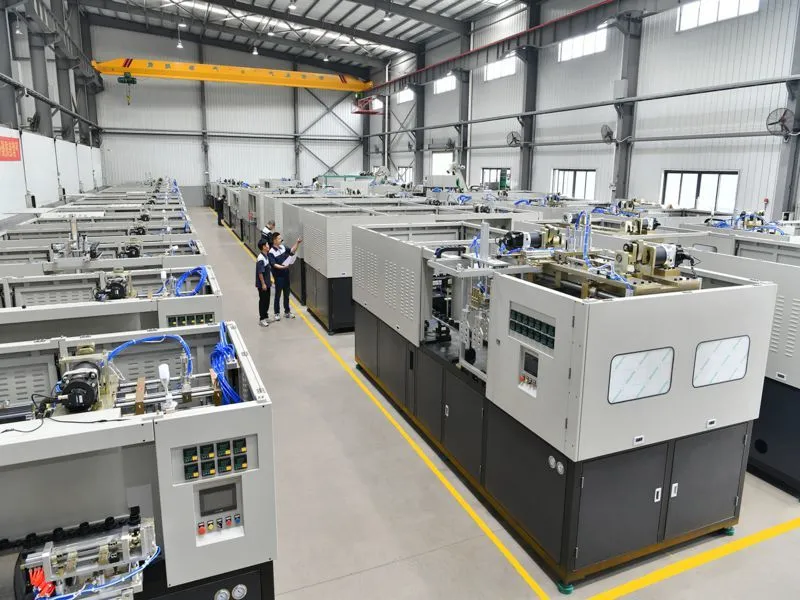
Recommended Machine
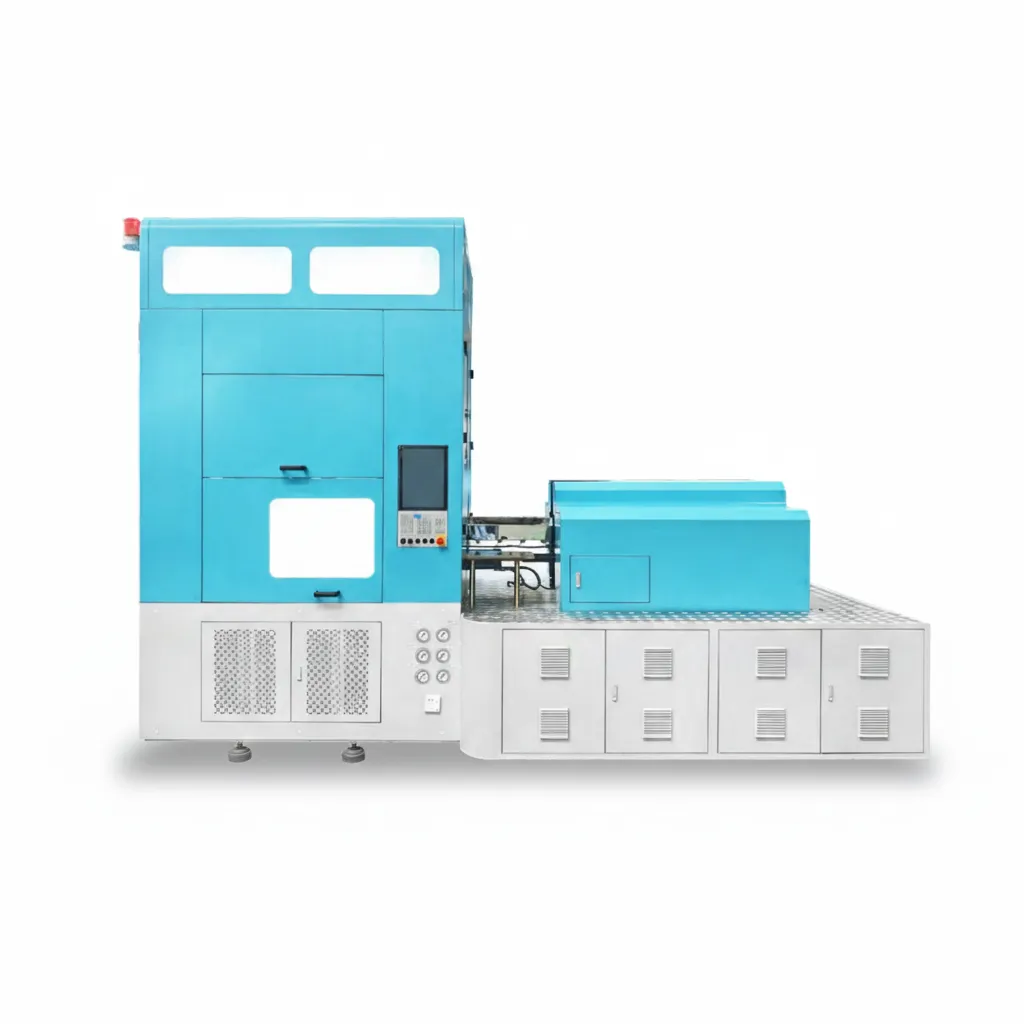
HGYS150-V4 — Four-Station ISBM Machine for Vaccine Container Production
For vaccine and biologics container production operations requiring the precision neck forming and process consistency that cold-chain pharmaceutical applications demand, the HGYS150-V4 four-station one-step ISBM machine provides the production platform appropriate for the vaccine packaging sector. The four-station rotary design delivers consistent cycle-to-cycle process uniformity across all production cavities — critical for vaccine container CCS qualification where all cavities must simultaneously demonstrate dimensional compliance with the stopper seating specification. The machine’s injection neck insert system achieves ±0.05–0.08mm tolerance on stopper bore and seating dimensions across the full production run, providing the dimensional consistency that rubber stopper seating force and seal integrity require at cold-chain temperatures. Processes pharmacopoeial-grade PET and PETG with UV-protective amber masterbatch, accommodates the full range of vaccine vial neck sizes from 13mm dropper formats through 32mm multi-dose vial necks, and supports IQ/OQ/PQ validation through PLC process data logging with recipe management. Available in servo-electric upgrade configuration for pharmaceutical operations requiring oil-free architecture.