Custom Packaging as Strategic Necessity in the Cosmetic Industry
Cosmetic packaging customisation is no longer a premium option reserved for heritage luxury houses. The contemporary cosmetic market — characterised by a proliferation of independent brands, the mainstreaming of K-beauty and J-beauty design aesthetics, and the rise of brand-direct e-commerce channels where unboxing quality drives consumer advocacy — has made proprietary packaging design a competitive baseline rather than a differentiating luxury. Brands that use standard, catalogue-sourced containers are increasingly perceived as commodity products regardless of their formulation quality, while brands that invest in proprietary, purpose-designed bottles build a physical brand identity that persists in the consumer’s bathroom shelf long after the advertising campaign that drove the initial purchase has faded from memory.
The injection stretch blow molding process is the production technology that makes comprehensive packaging customisation commercially feasible for cosmetic brands across the full volume spectrum — from emerging indie labels launching with 10,000 units per SKU through to established mid-market brands managing multi-SKU portfolios at annual volumes of tens of millions of units. ISBM’s combination of design freedom, tooling flexibility, precision manufacturing, and material versatility allows cosmetic brand teams to translate virtually any packaging vision into a production-grade bottle without the volume commitments, lead time constraints, and breakage risks associated with glass — the previous standard for premium custom cosmetic packaging.
This article provides a detailed, practical account of how ISBM specifically addresses the most common custom packaging requirements in the cosmetic industry — from complex geometric forms and surface detail through speciality materials and finishes to the development process that takes a packaging brief from sketch to production-qualified tooling. Australia Ever-Power Injection Stretch Blow Moulding Machine Co., Ltd provides Australian cosmetic packaging operations with the injection stretch blow molding machine technology and development support to bring these custom packaging capabilities to life.
Translating Brand Vision into Manufacturable Geometry: The ISBM Design Envelope
Cosmetic packaging designers working with ISBM for the first time often encounter two surprises: the first is that ISBM can produce almost everything they have sketched; the second is that the handful of constraints it does impose can be addressed through design modifications that are invisible in the final bottle. Understanding the boundaries of the ISBM design envelope — and the specific constraints that must be respected — allows designers to brief packaging development confidently and avoid the late-stage redesign that occurs when a packaging concept developed without manufacturing knowledge arrives at the tooling stage and proves impractical.
Geometric Forms That ISBM Handles Natively
The following geometric characteristics are producible through ISBM with standard tooling design and no special process accommodations: oval, rectangular, and polygonal cross-sections (as well as circular); pronounced bottle taper from wide shoulder to narrow base or wide base to narrow shoulder; curved or straight sidewalls with any blend between them; flat panel zones for label application or direct print registration; pronounced shoulder radius changes from wide neck to body; base indentation and ring-foot designs for stable standing; and integrated ribbing, channelling, or groove structures in the bottle body. All of these can be specified by the designer and are reproduced with dimensional precision by the ISBM process on every bottle produced from the qualified tooling.
Geometric Features That Require Specific Design Attention
Some geometric features require specific design attention during the mould design phase but are achievable with thoughtful tooling engineering: undercuts (features that prevent clean mould separation in the primary open/close direction) can often be accommodated through collapsible core tooling design or redesigned as apparent undercuts that achieve the same visual result without true mechanical undercut; extreme aspect ratios (very narrow, very tall bottles) require careful stretch ratio management to ensure adequate material reaches the base; complex surface texture patterns must be specified to a resolution that the EDM machining or acid-etching process used to create them in the cavity can reliably reproduce; and very deep embossed features (logo depths exceeding 1.5–2.0mm) may require specific cavity venting design to prevent trapped air marks at the deepest point of the emboss.
The Neck-Body Relationship in Custom Cosmetic ISBM Bottles
One of ISBM’s most commercially valuable design characteristics for cosmetic bottles is the complete independence of neck finish geometry from body geometry. Because the neck is formed by injection (not blow), it can be specified with wide-mouth, offset, or unusually proportioned designs that would create transport handling challenges in two-step processes — where preforms must be conveyed, oriented, and presented to a reheat oven through a standard neck presentation system. For cosmetic brands developing wide-mouth jars, skincare containers with oversized caps, or unusual neck-to-body proportion relationships that create a distinctive silhouette, one-step ISBM is the most direct path from design intent to production-feasible reality.
Surface Detail and Texture Engineering: Bringing Fine Cosmetic Design Elements to Production
Surface detail and texture are among the most powerful visual and tactile brand communication tools available through ISBM cosmetic bottle production. Unlike labelling or secondary decoration processes that add cost and complexity, surface effects engineered into the mould cavity are reproduced at zero incremental per-unit cost on every bottle — making them among the most cost-efficient investments in cosmetic packaging premium.
Embossed and Debossed Branding Elements
Brand logos, product names, taglines, and decorative pattern elements embossed (raised above the bottle surface) or debossed (pressed into the bottle surface) in the blow mould cavity are reproduced on every bottle with the clarity and consistency of the mould tooling. Emboss depths of 0.3–1.5mm and feature widths of 0.15mm and above are achievable with EDM-machined or hand-engraved cavity tooling, covering everything from fine italic typography to bold geometric brand marks. For prestige cosmetic brands, the combination of an embossed brand mark with a frosted bottle surface creates a premium “ghost logo” effect — the logo visible only through the texture difference between the matte field and the polished relief — that communicates both restraint and quality simultaneously.
Geometric and Organic Texture Patterns
Texture patterns across the bottle body — diamond quilting, geometric scales, woven or mesh effects, floral patterns, honeycomb structures, or organic flowing forms — are applied to the cavity surface through chemical etching, laser texture, or EDM machining and reproduced on the blown bottle at the resolution of the applied technique. These textures serve multiple purposes: tactile grip improvement (reducing slip in wet handling conditions — relevant for shower and bath products), fingerprint masking (textured surfaces show fingermarks less visibly than mirror-polished equivalents), visual complexity (creating a bottle that rewards close examination), and brand identity differentiation (a distinctive texture pattern is as much a proprietary brand asset as a shape). The selection of texture depth and pattern scale affects the bottle’s interaction with different label formats, and this interaction should be considered during the bottle design phase to ensure label adhesion and registration are not compromised by surface texture in the label application zone.
Zone-Differentiated Surface Finish
ISBM allows different surface finishes to be applied to different zones of the same bottle within a single blow mould — a capability that opens sophisticated visual design options. A common cosmetic design approach is the “contrast finish” bottle: a mirror-polished label panel zone (maximising label graphic clarity and visual depth) combined with a satin or frosted texture in the body grip zones (improving tactile security and reducing fingerprint visibility). Another application is a polished lower body with a deliberately matte shoulder and neck transition, evoking the aesthetic of frosted glass-meets-clear glass in premium perfume bottle design. These zone-differentiated finish effects are specified in the mould cavity machining brief and add no per-unit cost once the tooling is manufactured.
Custom Colour, Tint, and Special Material Effects for Cosmetic Branding
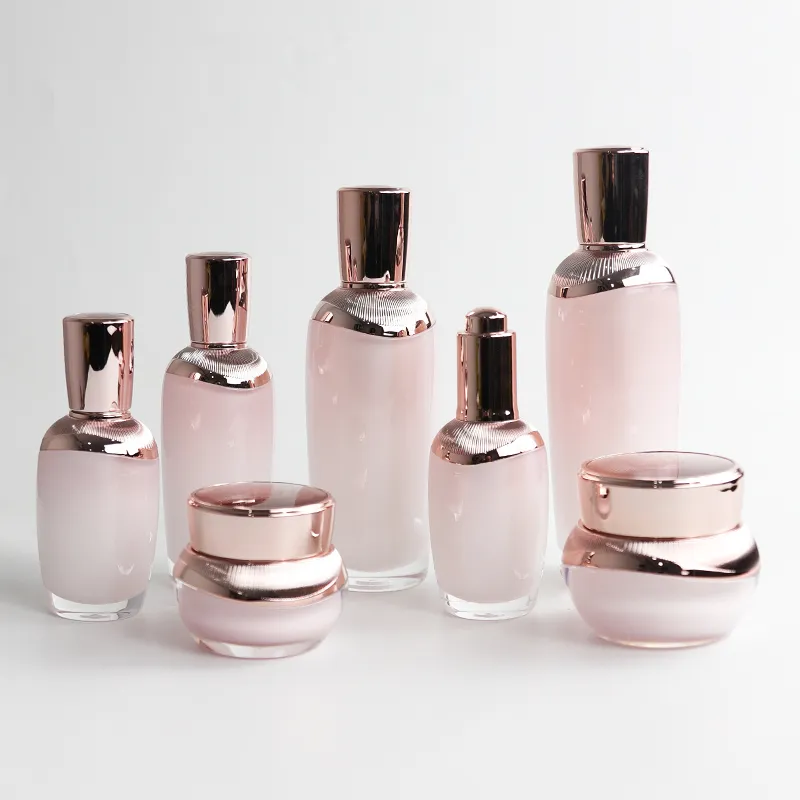
Colour and material effects are the most direct route to immediate visual brand differentiation in cosmetic packaging. ISBM’s ability to process custom colourant systems within the PET/PETG matrix — rather than requiring separate secondary decorating processes — gives cosmetic brand teams a cost-efficient and production-consistent route to the colour and effect palette that their brand identity requires.
Custom Brand Colour Development and Consistency
Custom brand colours in PET/PETG are achieved through masterbatch colourant systems developed to the brand’s colour specification — typically matched to the Pantone reference or the brand’s existing packaging colour standard using spectrophotometric measurement. The masterbatch is developed and tested in the specific PET/PETG grade and ISBM machine configuration being used, because colour appearance in a blown bottle wall is affected by the wall thickness (thicker walls appear deeper in colour) and the stretch ratio (higher stretch can lighten the apparent colour through material thinning). Initial colour matching trials produce sample bottles for brand approval, followed by a documented batch formula that ensures colour consistency across production batches — critical for cosmetic brands where packaging colour is a brand trademark that must match exactly across label printing, component colours, and the bottle itself.
Special Effects: Gradient, Duo-Tone, and Iridescent Finishes
Beyond solid tints, several speciality optical effects are achievable through ISBM PET/PETG processing that create high visual impact packaging at modest incremental cost. Gradient colour effects — where the bottle transitions from a deeper colour concentration at the base to a lighter concentration at the shoulder — are achievable in ISBM through layered colourant programming in the injection unit, creating a depth-of-colour effect that mimics artisan glass blowing without glass’s production constraints. Iridescent effects, produced through the interaction of fine pearlescent particles and the bottle’s curved geometry, create a shifting colour appearance under changing light angles — particularly striking for prestige body care and fragrance-adjacent products. Metallic effects using vacuum metallising applied as a secondary process after ISBM blow, or through in-mould metallic foil transfer, extend the visual range into the chrome-finish and gold-finish aesthetic that premium cosmetic packaging commonly employs.
UV-Protective Tints for Active Cosmetic Formulations
For cosmetic products containing light-sensitive active ingredients — retinoids, vitamin C derivatives, certain botanical antioxidants, and natural oil-based formulations with unsaturated fatty acid oxidation risk — UV-absorbing colourant systems incorporated into the PET/PETG during ISBM processing provide meaningful protection across the UV spectrum without visibly affecting the bottle’s appearance in the visible range. A pale amber tint with UV-absorber additive, for example, provides substantial UV-A and UV-B protection while remaining visually compatible with natural and clean beauty brand positioning. This approach avoids the cost and complexity of secondary UV barrier coatings applied after blow production, delivering UV protection through the base material specification in the ISBM process recipe.
The Custom Cosmetic Bottle Development Journey: A Step-by-Step Process
The path from a cosmetic packaging brief to a production-qualified custom bottle through ISBM follows a structured development sequence that, when managed well, delivers a qualified production-ready bottle in 14–20 weeks. Each phase has specific deliverables and decision gates that, when completed properly, prevent the costly rework that occurs when design decisions are deferred to stages where they are expensive to change.
Packaging Brief and Technical Specification
Document the complete packaging requirement: bottle volume(s), closure type and neck finish specification (thread, bayonet, friction-fit), fill process (ambient, warm-fill), formulation type (for compatibility assessment), surface finish requirement, colour specification, emboss/texture detail, and brand approval process. A thorough brief at this stage prevents the most common development delays caused by mid-project specification changes.
3D Design and Manufacturability Review
3D CAD model development incorporating all brand design intent, followed by a formal manufacturability review against ISBM constraints — draft angles, blow ratio compatibility, parting line placement, surface feature resolution feasibility, and closure clearance verification. Minor design adjustments resolved at this stage typically require one sketch revision; the same adjustments discovered after tooling manufacture require 3–6 weeks of rework. Renders for brand approval are produced from the reviewed CAD model.
Preform Design and Mould Flow Simulation
Preform geometry is engineered to deliver the target bottle wall thickness distribution and surface quality. Mould flow simulation validates filling uniformity, wall thickness prediction, cooling behaviour, and gate zone quality before tooling manufacture. For complex cosmetic geometries with unusual wall thickness requirements (thick base, thin body, or deliberate thickness gradient), simulation prevents the most common first-shot defects — material starvation in the shoulder, excess material pooling at the base, or inconsistent surface quality in curved zones.
Prototype Tooling and Physical Brand Approval
Single-cavity prototype tooling produces physical sample bottles in the target material (PET or PETG) with the specified surface finish. Physical samples are evaluated under actual retail display lighting conditions — not studio photography — to confirm that optical clarity, emboss definition, colour, and surface texture meet the brand’s approval criteria. Prototype review typically generates minor adjustments (emboss depth, surface texture density, finish Ra value) that are incorporated before production tooling is commissioned.
Production Tooling Manufacture
Production blow mould tooling is manufactured to the final specification incorporating all prototype approval adjustments. Surface finish is verified against Ra specification using profilometer measurement before tooling acceptance. Cooling channel flow rates are pressure-tested and documented. For cavity surface textures and embossed elements, photographic documentation of the cavity detail against the specification drawing enables comparison at future maintenance intervals to detect surface degradation before it manifests as visible bottle quality issues.
Process Qualification and Commercial Sign-Off
Process qualification runs the production machine with the approved tooling, optimises process parameters using DoE methodology, and produces a statistically meaningful sample for final quality inspection — optical clarity, dimensional check against all critical dimensions, closure engagement verification, compatibility test fill, and visual appearance under retail lighting. A validated process recipe is stored in the machine’s memory. Commercial approval is granted when all samples within the qualification run meet specification. Documentation handover includes the process recipe, tooling drawings, quality inspection criteria, and maintenance schedule for the new bottle.
Customisation for Specific Cosmetic Product Categories
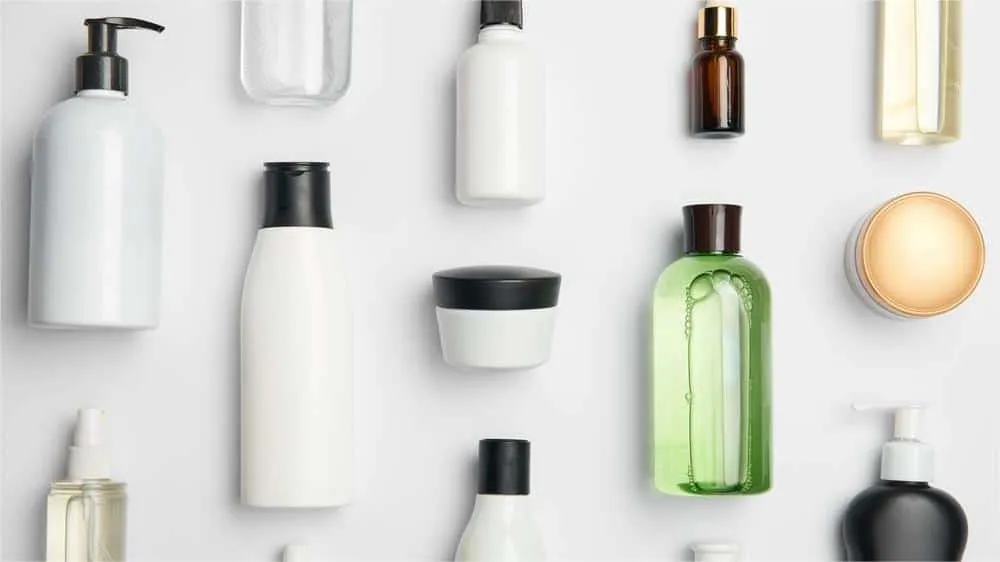
Different cosmetic product categories carry different packaging performance expectations and brand aesthetic conventions. ISBM’s customisation capabilities apply differently across these categories, and understanding the category-specific packaging logic helps brand teams develop more focused design briefs that meet both aesthetic and functional requirements from the outset.
Facial Serum and Essence
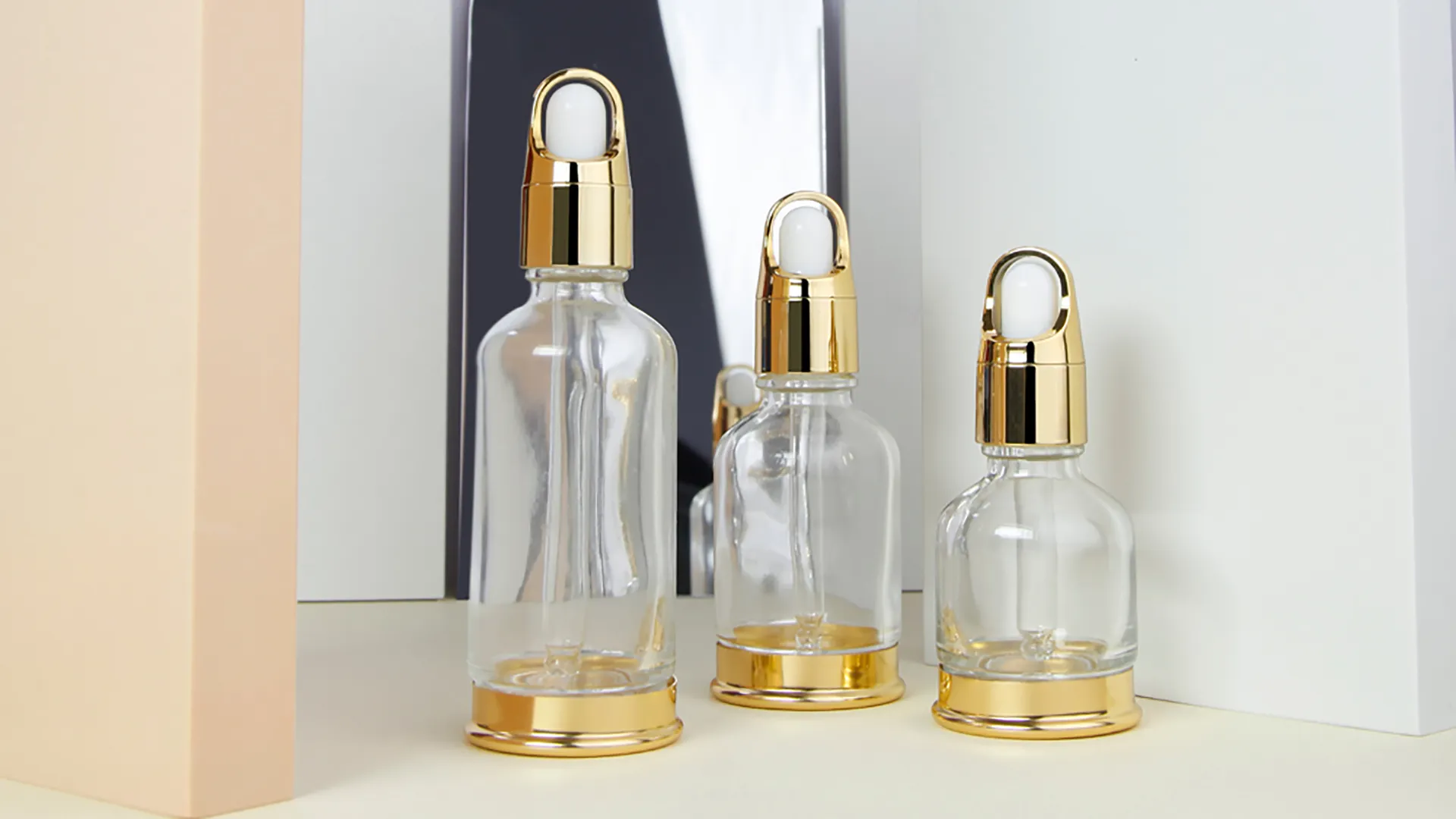
Typically 20–50ml, narrow-bodied, dropper or pump neck. Premium PETG, water-white clarity to showcase the serum’s colour and translucency. Thick walls (0.8–1.5mm) for glass-comparable optical depth. Embossed brand mark at base or shoulder. Mirror-polished cavity. Wide-mouth variants for gel serums. Key customisation: proprietary silhouette and neck-body proportion that is recognisable on a crowded beauty counter.
Moisturiser and Lotion
Typically 50–200ml, wider body, pump or disc cap neck. Brand colour or soft tint to communicate product category. Flat label panels for major graphic area; textured grip zones for ergonomic use in wet hands. Vacuum panel if hot-filled or aseptically filled. Key customisation: label panel geometry that flatters the label graphics and the product colour behind it, and a pump neck specified to exact pump supplier tolerances.
Body Wash and Shower Gel
Typically 200–500ml, ergonomic body form for wet-hand grip, pump or flip-top neck. Strong brand colour statement; pearlescent or shimmer for premium positioning. Geometric grip texture that provides secure handling under shower conditions. Wide base for stable shelf standing when wet. Key customisation: tactile grip texture and body form that communicates the product’s sensory positioning (luxurious versus functional versus sustainable).
Toner and Mist Spray
Typically 100–200ml, slender cylindrical or oval body, pump-mist neck. Water-white or very light tint; mirror polish for luminous appearance. Narrow body for elegant hand silhouette when spraying. Spray pump neck specification requires precise internal diameter for pump dip tube seating. Key customisation: elegant proportion and optical luminosity that communicates the product’s skin-refining positioning.
Natural and Clean Beauty
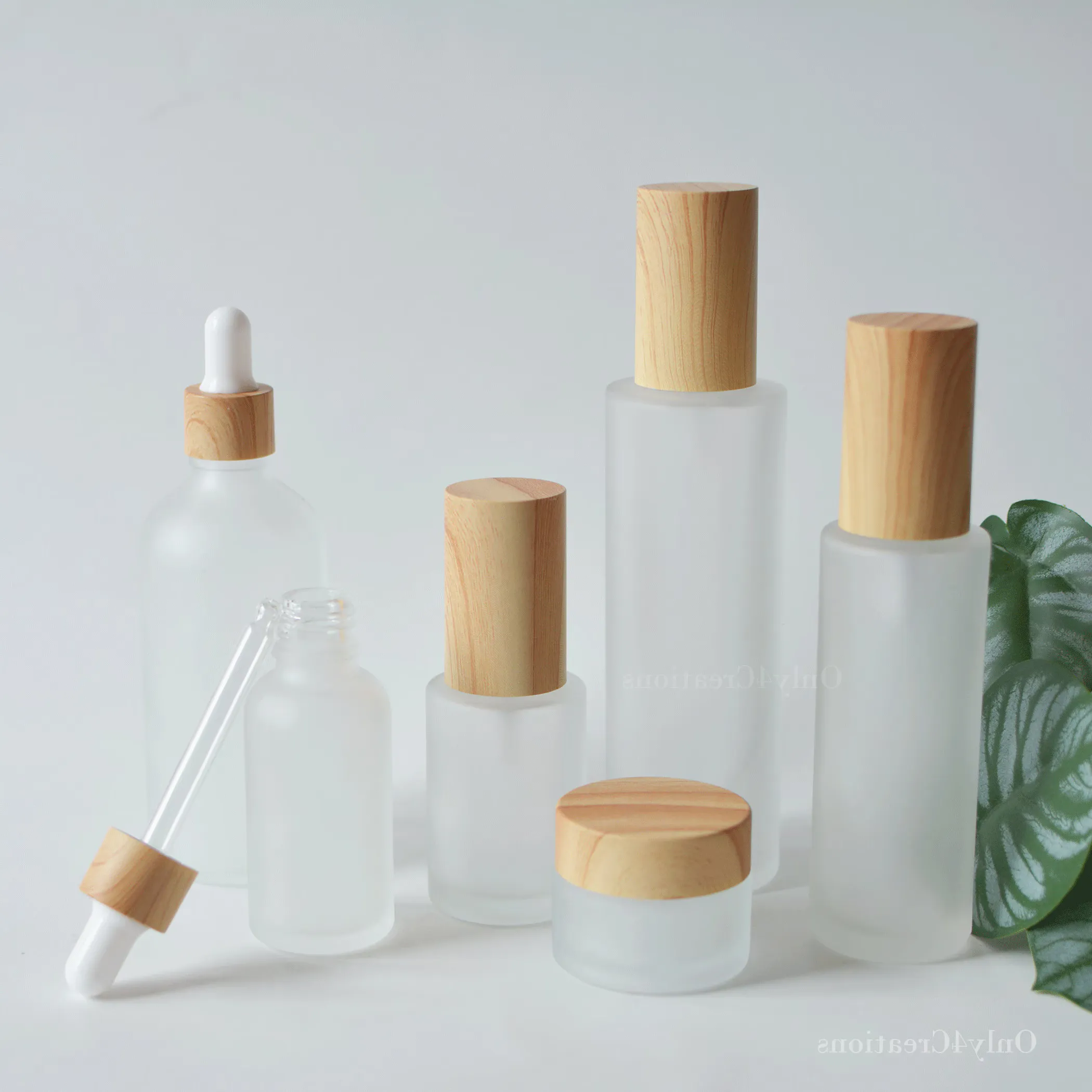
Any volume, often with deliberate “less-is-more” design restraint. Frosted or satin finishes, natural-tone soft tints (sage, ecru, stone), rPET content for sustainability credential communication. Minimal surface detail (clean lines over emboss complexity). CDS-eligible formats where applicable. Key customisation: the bottle communicates authenticity through material honesty — the design restraint itself is the brand signal.
Men’s Grooming
Typically 100–300ml, solid architecture, bold geometry, dark or neutral tones. Angular cross-sections, strong geometric ribbing, matte or satin surfaces rather than mirror polish. Robust structural form that communicates durability rather than delicacy. Key customisation: geometric authority in the bottle architecture and surface discipline that communicates confidence and quality to a consumer base that reads packaging through structural vocabulary rather than decorative complexity.
Tooling Investment Strategy for Custom Cosmetic ISBM Production
Custom cosmetic bottle tooling is a capital investment that must be planned to maximise value across the full range of volumes, design iterations, and product SKUs that a cosmetic brand’s portfolio will require. Understanding tooling investment strategy — how to structure tooling to balance initial cost against long-term flexibility — is one of the most commercially valuable insights that an experienced ISBM supplier can provide at the packaging development stage.
Shared Tooling Architecture: One Body, Multiple Volumes
A well-designed cosmetic ISBM tooling system can accommodate multiple bottle sizes within a single body design through modular insert architecture. A bottle body mould with a fixed shoulder, label panel zone, and base can be paired with different height-extension inserts to produce 30ml, 50ml, and 100ml variants from a family of related tooling components — at lower total tooling investment than fully independent tooling per size. Similarly, a neck insert system that allows the same body mould to accept different neck finish inserts (24/410, 28/410, 28/415) enables neck standardisation across a product range without full tooling duplication. Designing the tooling architecture for range flexibility at the outset — rather than treating each volume as an isolated tooling project — is the practice that delivers the best long-term tooling cost-efficiency for cosmetic brand portfolios.
Tooling Protection and Longevity Investment
Cosmetic bottle tooling investment is protected by two practices: material selection (hard-anodised aluminium alloy 7075 for cavity bodies, with beryllium-copper inserts in zones requiring high heat extraction) and maintenance scheduling (cycle-count-based rather than calendar-based, with documented Ra measurement at each maintenance interval). These practices extend tooling life from the 500,000–800,000 cycles that poorly maintained tooling achieves to the 2–5 million cycles that well-maintained tooling can deliver — a 4–10× difference in amortised tooling cost per bottle that makes a substantial difference to the economics of a cosmetic ISBM operation over time.
Tooling Ownership and IP Protection
Cosmetic brands that commission ISBM tooling should ensure that the tooling ownership agreement explicitly vests the tooling intellectual property and physical assets in the brand owner rather than the tooling manufacturer or production supplier. Custom cosmetic bottle tooling is a proprietary asset — it defines a bottle that the brand owns and that competitors cannot replicate without their own tooling investment. This IP protection applies not just to the shape (which may be registrable as a three-dimensional trade mark or design registration) but to the specific tooling dimensions that, if in a supplier’s possession, could theoretically be used to produce bottles for a competitor after a brand relationship ends. Clear tooling ownership provisions in the initial contract protect this asset.
Managing Custom Cosmetic Bottle Production Quality: Standards and Systems
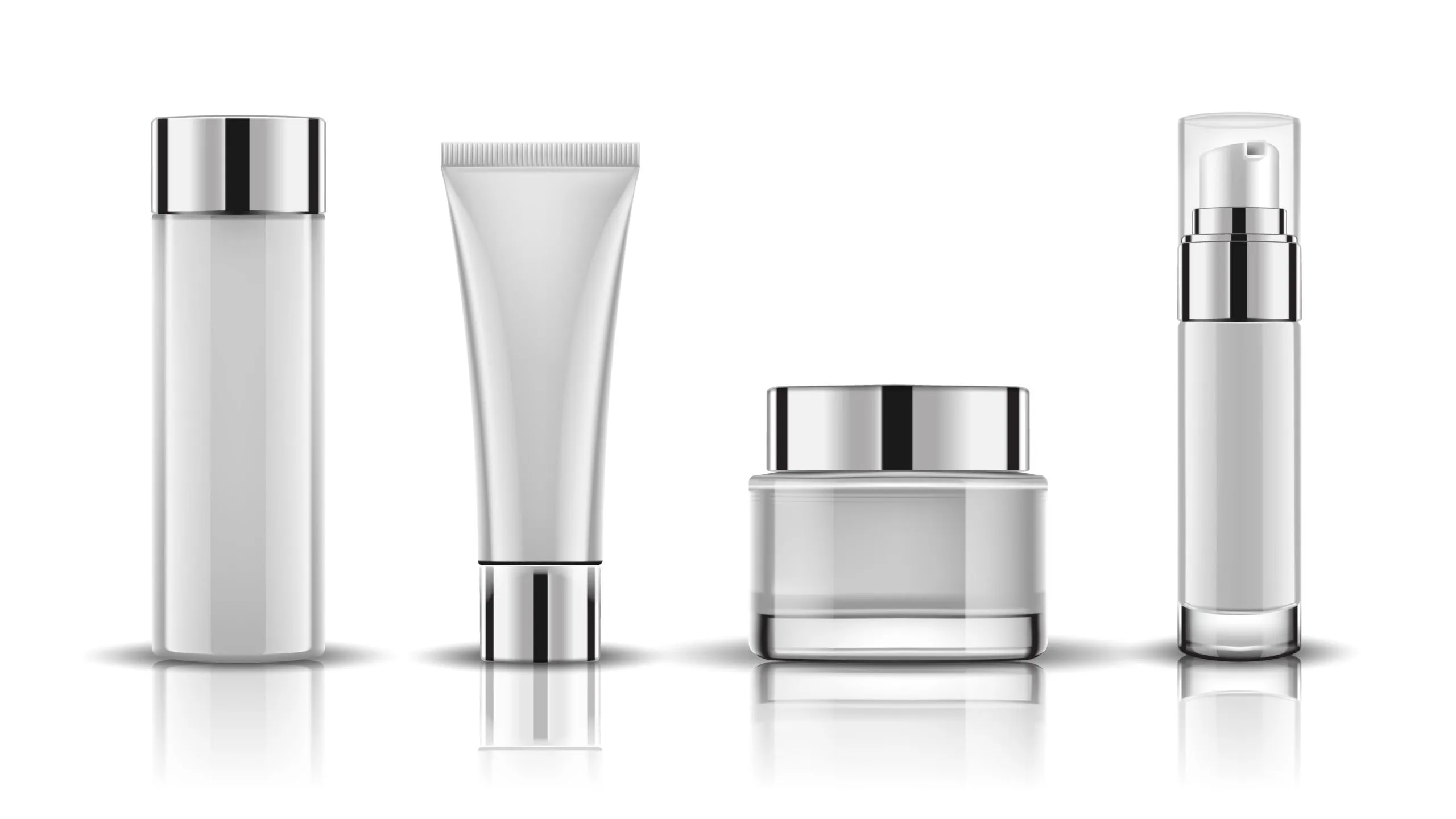
Custom cosmetic bottle production quality management differs from standard beverage bottle quality management in two important respects: the inspection criteria are primarily optical and aesthetic (not primarily structural or barrier-related), and the consequence of a quality failure is more visible to the end consumer because the bottle is displayed and handled directly rather than obscured behind a label on a shelf. The quality system for custom cosmetic ISBM production must be built around these specifics.
The primary quality inspection for custom cosmetic bottles should be conducted under calibrated retail display lighting conditions — not under general factory lighting. A lightbox or inspection tunnel fitted with LED cool-white spots at 45-degree angles simulating high-end retail display illumination reveals optical defects, surface marks, emboss clarity issues, and colour consistency variations that standard overhead lighting conditions mask. Every cosmetic ISBM operation should have a dedicated visual inspection station equipped for this purpose, and the brand’s optical standard samples (approved from prototype) should be physically present at that station as the production comparison reference.
For custom tinted or pearlescent bottles, colour consistency across production batches requires spectrophotometric measurement (CIE L*a*b* or ΔE measurement) against the approved colour standard, not visual assessment alone. The human eye adapts to colour shifts in a way that makes batch-to-batch colour drift imperceptible until the bottles from two different batches are placed side by side in retail — at which point even a ΔE of 2.0 may be visible. Maintaining batch colour consistency records and flagging any batch with ΔE above 1.5 for brand team review protects cosmetic brands from the retail presentation problems that inconsistent bottle colour creates.
Working With Ever-Power on Custom Cosmetic Bottle Development
Australia Ever-Power’s Condell Park NSW engineering team provides cosmetic brands with a complete development partnership for custom ISBM bottle production — from initial brief discussion through 3D design review, prototype production, tooling manufacture specification, and process qualification. The team’s experience across premium cosmetic, pharmaceutical, and personal care bottle applications gives cosmetic brand teams access to practical insights about what works in production that design-only consultancies cannot provide.
The development process begins with a no-charge briefing session where the brand team presents their packaging vision and Ever-Power’s engineers provide real-time feedback on manufacturability, material selection, surface finish achievability, and timeline implications. This upfront alignment prevents the most common and costly cosmetic packaging development failure mode: a design that looks perfect in renders but requires significant modification after tooling is already manufactured. The outcome of the briefing is an agreed design brief that the brand team can take with confidence that the tooling and production phases will deliver against it.
Post-qualification, Ever-Power’s ongoing support programme covers production troubleshooting for optical quality issues, formulation compatibility review when new product launches require assessment against the existing bottle tooling, tooling maintenance scheduling and execution, and product development support for range extensions that leverage the existing tooling architecture. This comprehensive development-to-production partnership is the model that delivers the best commercial outcomes for Australian cosmetic brands investing in proprietary ISBM bottle packaging. Contact the Ever-Power team at [email protected] to begin your custom cosmetic bottle development conversation.
Future Directions in Custom Cosmetic ISBM Packaging
The custom cosmetic packaging landscape is evolving in directions that reinforce ISBM’s relevance and expand its capability envelope. Three trends are particularly significant for cosmetic brands planning their packaging development programmes over the next five years.
Digital commerce has shifted a growing proportion of cosmetic purchase decisions to an unboxing context where the packaging is first experienced in hand (not on a shelf) and in a relatively intimate setting (at home, under warm domestic lighting) rather than under retail display conditions. This shift rewards packaging design that delivers its aesthetic and tactile quality signal through touch and handling — weight, surface texture, and material quality — rather than through the visual drama that retail display lighting creates. ISBM bottles designed specifically for the unboxing context prioritise tactile premium (thick walls, deliberate surface texture, significant weight) over the mirror-gloss visual drama optimised for retail spotlighting. Both contexts can be served from the same tooling through careful design balancing, and the experience of managing both is something Ever-Power’s team can advise on from multiple cosmetic brand development projects.
The expansion of refillable cosmetic packaging — particularly for premium skincare where the outer bottle becomes a permanent keeper piece and the product is purchased in refill pouches, cartridges, or refill bottles — creates a new ISBM brief: primary bottles designed for decades of use rather than single product life cycles. These refillable primary containers can be produced through ISBM with thicker walls, higher-crystallinity PETG for superior scratch resistance, and surface finishes that age gracefully rather than showing wear quickly. The tooling investment for a bottle designed to serve as a refillable keeper piece is amortised over a much longer product life than single-use packaging, changing the economics of premium tooling investment substantially in the brand’s favour.
Begin Your Custom Cosmetic Bottle Development
Australia Ever-Power’s engineering and design team provides cosmetic brands with no-charge design brief reviews, manufacturability assessments, and development timeline estimates for custom ISBM cosmetic bottle projects of any scale.
Start Your Custom Bottle Brief →
[email protected] | Condell Park NSW 2200, Australia | isbm-technology.com
Featured Product
One-Step Injection Stretch Blow Molding Machine — Four-Station HGY250-V4
For cosmetic packaging operations producing custom bottle designs across a range of sizes and geometries, the HGY250-V4 four-station one-step injection stretch blow molding machine provides the production platform that balances throughput capability, geometric versatility, and process control precision that demanding cosmetic applications require. The four-station architecture delivers the cycle time performance needed for commercial cosmetic bottle production across both standard and complex geometries, while the machine’s servo-assisted drive systems and multi-zone conditioning control provide the temperature precision that PETG optical quality in thick-wall cosmetic bottle designs depends on. The HGY250-V4 handles the full range of cosmetic bottle volumes from small-volume premium serums through standard body care formats, accommodates the wide neck finishes required for pump dispensers and wide-mouth cosmetic jars, and is compatible with PET, PETG, and other polymer grades applicable to cosmetic packaging. Its tooling interface is designed for flexibility — accommodating modular neck insert changes and the range of surface finish specifications from mirror-polished to fine-textured satin that cosmetic brand portfolios require. Full technical specifications, cavity configuration options, and application compatibility details are available at isbm-technology.com. Contact [email protected] to discuss your custom cosmetic bottle production requirements.