1. Why Australia’s Premium Beauty Industry Is Rethinking Its Packaging Substrate
For the better part of a decade, glass and PMMA acrylic dominated premium skincare packaging across Australia’s retail landscape. Both materials share three structural liabilities that are becoming commercially untenable in 2025: fragmented supply chains, prohibitive transport weight, and incompatibility with APCO 2025 recyclability requirements. Woolworths, Coles and Chemist Warehouse have embedded APCO packaging scores into annual supplier reviews, and any material that fails recyclability testing faces delisting risk — a consequence that concentrates minds far more effectively than regulatory guidance alone.
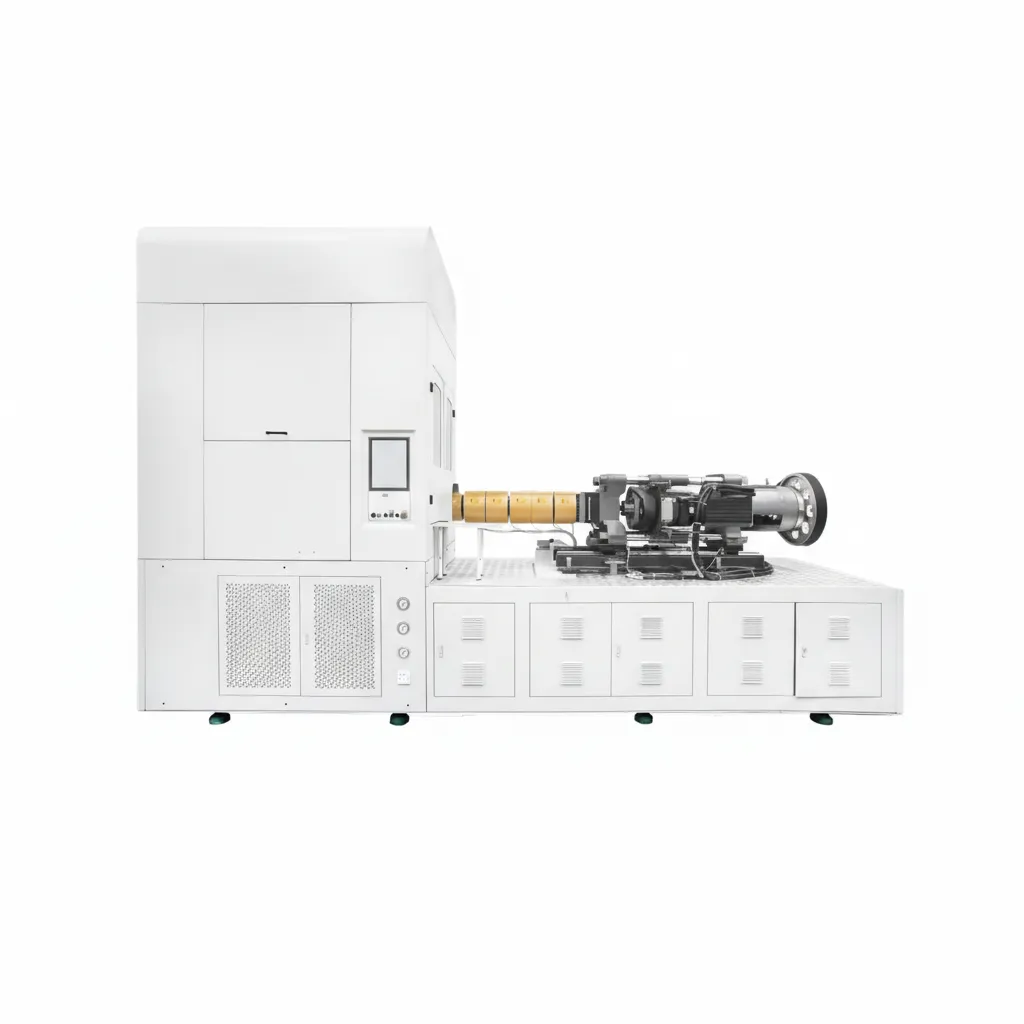
PETG (glycol-modified polyethylene terephthalate) has a refractive index of 1.57, nearly identical to glass at 1.52, which gives PETG containers an optical depth and edge clarity that standard PET, PP and HDPE simply cannot replicate. Combined with the biaxial molecular orientation produced at the stretch-blow station of an automatic blow moulding machine, PETG containers achieve wall thickness uniformity within ±5%, stress-free surfaces that accept hot-stamping, silk-screen and UV ink decoration without corona pre-treatment, and drop-impact resistance that passes the tests which disqualify glass from high-speed automated filling lines.
For cosmetic contract manufacturers and brand owners evaluating packaging platforms, the practical question is not whether PETG one-step ISBM is technically superior — it demonstrably is across most premium applications. The real question is: which container geometries, decoration requirements, fill chemistries and production volumes make it the commercially optimal choice, and what does the process demand in terms of machine specification, tooling design and quality control to deliver consistently?
2. PETG Material Properties: The Technical Case for Premium Cosmetic Containers
2.1 Optical Performance — The Glass-Parity Claim Examined
PETG achieves its exceptional clarity because the glycol modification disrupts the regular crystalline structure that forms during PET cooling, keeping the material in an amorphous state that transmits light with minimal scattering. This is the physical basis for haze values below 1% that PETG containers routinely achieve, compared with 2–5% for standard PET under the same processing conditions. On shelf, the effect is striking: a PETG face cream jar appears to float its contents in space, with no visible wall boundary between the product and the consumer’s eye — precisely the visual premium that justifies a higher retail price point and makes it a preferred choice in David Jones Beauty and specialty skincare boutiques across Sydney and Melbourne.
2.2 Chemical Compatibility with Cosmetic Formulations
Cosmetic formulations present a broader chemical compatibility challenge than beverage or pharmaceutical applications. Alcohol-based serums, fragrance concentrates with terpene content, AHA and BHA exfoliants, silicone emulsions and oil-in-water cream matrices each attack packaging materials differently. PETG demonstrates excellent resistance across the majority of cosmetic raw materials at ambient storage temperature: pH 3–9 formulations, alcohols up to 30% concentration and common surfactant systems all fall within PETG’s documented compatibility range. For the mainstream premium skincare and haircare categories that represent the bulk of Australian cosmetic contract manufacturing volume, PETG passes standard cosmetic-contact migration protocols that brand owners reference as their voluntary compliance benchmark — giving regulatory confidence alongside the visual performance.
2.3 PETG vs Acrylic vs Glass — Side-by-Side Comparison
| Property | PETG (ISBM) | Acrylic (Injection) | Glass |
|---|---|---|---|
| Haze Value | <1% | <1% | <0.5% |
| Drop Impact Resistance | Excellent | Poor | Poor |
| Weight vs Glass | −75% | −60% | Baseline |
| Mono-Material Recyclability (AU) | ✓ PETG stream | ✗ Mixed plastics | ✓ Glass stream |
| Custom Geometry Freedom | High (ISBM tooling) | High (injection) | Limited |
3. The One-Step ISBM Process for PETG: Station-by-Station Engineering
Four-Station Production Flow
Moulding
Conditioning
Blow
Ejection
3.1 Injection Station: PETG Melt Behaviour and Processing Conditions
PETG processes at a melt temperature of 230–260 °C — approximately 30–40 °C below standard PET — which reduces thermal degradation risk and shortens the injection station cooling time, contributing positively to overall machine cycle time. PETG’s amorphous character means it does not require the high injection pressures associated with semi-crystalline polymers; pack pressures of 60–100 MPa are sufficient for most cosmetic container wall thicknesses. The hot-runner manifold must be temperature-controlled to within ±3 °C across all zones: localised shear heating above this tolerance causes streaks and flow marks in transparent PETG that are cosmetically unacceptable and visible on shelf. Australia Ever-Power’s full-servo injection unit delivers multi-stage velocity profiling at 30–80 mm/s, eliminating the flow-front instability that produces visible lines in thick-wall clear containers.
3.2 Conditioning and Stretch-Blow: Optimising Orientation for Clarity
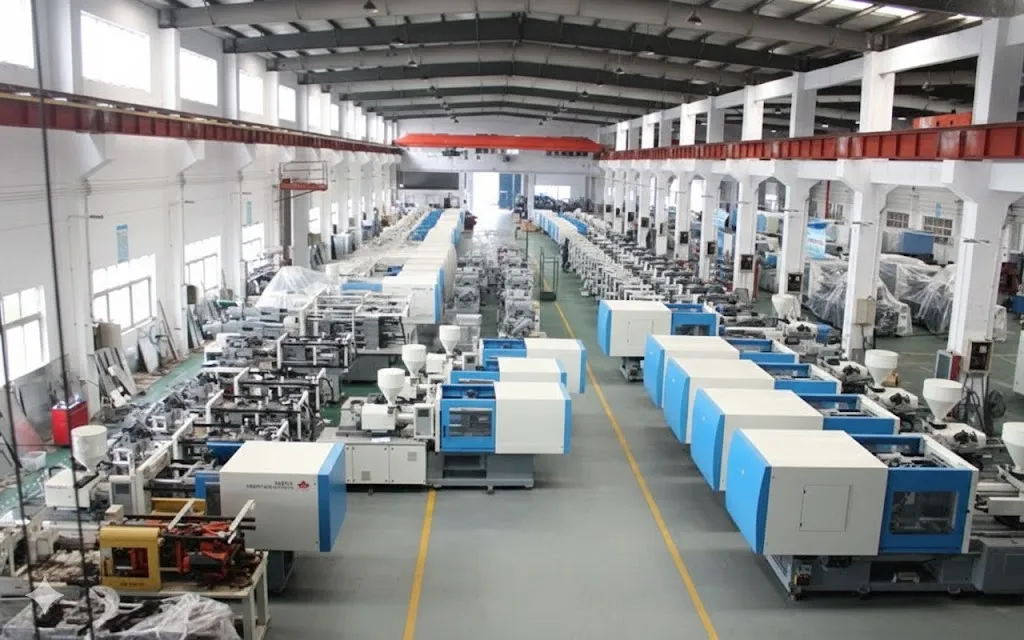
The conditioning station targets a preform body temperature of 80–95 °C for PETG — lower than the 95–110 °C window used for PET — reflecting PETG’s glass transition temperature of approximately 80 °C. The critical process difference in PETG stretch-blow is the stretch ratio specification: PETG’s amorphous character means it orients less aggressively than PET, and over-stretching produces localised stress-whitening rather than the beneficial biaxial crystallisation that PET develops. For cosmetic wide-mouth jar applications, the axial stretch ratio is typically limited to 1.8–2.2× and the radial ratio to 2.5–3.0×, achieving excellent wall uniformity without introducing surface haze from over-orientation. Australia Ever-Power’s fully servo stretch rod supports multi-stage velocity profiling essential for thick-wall cosmetic containers where the temperature gradient between inner and outer preform surfaces is significant.
3.3 Key PETG Process Parameters at a Glance
| Parameter | PETG (Cosmetic) | Standard PET (Beverage) |
|---|---|---|
| Melt Temperature | 230–260 °C | 270–290 °C |
| Conditioning Temp (Body) | 80–95 °C | 95–110 °C |
| Axial Stretch Ratio | 1.8–2.2× | 2.5–3.0× |
| Radial Stretch Ratio | 2.5–3.0× | 3.0–4.0× |
| Blow Pressure | 2.0–3.5 MPa | 2.5–4.0 MPa |
| Mould Temperature | 15–25 °C (±2 °C uniformity) | 10–20 °C |
4. Container Formats: Four Core Applications in Australian Cosmetic Production
The versatility of PETG on a PET bottle blowing machine platform enables a container design library that spans virtually the entire cosmetic packaging typology. The four formats below represent the highest-volume PETG one-step ISBM applications in the Australian market and serve as representative case references for production engineers evaluating the technology.
Wide-Mouth Jars — 30 to 200 mL
Face creams, body butters and hair masks. Wall thickness 2–4 mm delivers premium tactile weight. Compatible with screw-top and press-fit lids. Accepts hot-stamp gold and silver foil decoration without surface pre-treatment.
Narrow-Neck Serum Bottles — 15 to 50 mL
Facial serums, eye treatments and ampoules. High aspect ratio requires careful preform design to ensure base material distribution. Compatible with dropper fitments, pump necks and roll-on applicators.
Pump Dispenser Bodies — 100 to 300 mL
Foundation, moisturiser and hand cream. Four-station machines support oval cross-section. Large smooth body surface provides ample area for brand graphics or heat-shrink sleeve labels.
Fragrance Flacons — 30 to 100 mL
Fine fragrance, body mist and eau de toilette. PETG’s high-gloss surface replicates the visual depth of faceted glass at 75% less weight. Compatible with standard 15 mm crimped fragrance pump fitments.
5. Decoration Capabilities: Hot-Stamping, Silk-Screen and Frosted Finishes
One-step ISBM produces PETG containers with a surface energy of 38–42 mN/m — sufficient for direct UV-cured ink printing and pressure-sensitive label adhesion without corona or flame pre-treatment. Eliminating the pre-treatment step reduces decoration line capital investment, removes the risk of surface damage from corona overdosage, and eliminates a process variable that causes inconsistent ink adhesion across production batches. For Australian cosmetic contract manufacturers running multiple brand customers on a single decoration line, this simplification has measurable scheduling and quality benefits.
Hot-stamping with metallic foil bonds directly to PETG surfaces using standard polyurethane-based transfer foils at stamping temperatures of 120–140 °C and dwell times of 0.3–0.8 seconds. The result is a crisp metallic graphic with edge definition better than 0.1 mm — the precision standard required for fine-line logo work on premium brand packaging. UV silk-screen printing supports up to six colours with registered multi-colour print accuracy of ±0.2 mm across the container circumference. Frosted finishes — increasingly specified by skincare brands seeking a matte luxury aesthetic — are achievable through EDM mould texture on the blow mould cavity surface (Ra 0.4–3.2 µm), transferred directly to every container in the run without any secondary processing step. Australia Ever-Power’s tooling team specifies cavity surface finish to customer requirements across the full range from high-gloss to heavy satin matte.
6. Quality Control Programme for Cosmetic PETG Containers
Cosmetic packaging quality control is fundamentally different from beverage container QC because brand equity is directly tied to visual consistency. A single container with a visible flow mark, slight haze deviation or off-centre gate will be rejected by a quality-conscious retailer even if it passes every functional test. The quality programme for PETG cosmetic containers on a one-step ISBM machine must address five control points that standard beverage programmes do not include:
Transmittance meter full inspection — not sampling — because any localised haze area is immediately visible to the consumer through the filled container.
Ultrasonic gauge measurement at 6 axial positions × 2 angular positions per container confirms orientation uniformity and rules out stress-concentration thin zones.
30-day contact test at 40 °C for every new fill chemistry before full-scale production approval. Required for fragrance concentrates above 30% ethanol equivalent.
Contact angle or surface energy test pen confirms every production batch is within the printability specification before containers are released to the decoration line.
Filled and capped container dropped onto a rigid surface confirms that the combination of PETG grade, wall thickness and base design provides adequate distribution protection.
7. Sustainability Profile: PETG One-Step ISBM and Australia’s APCO 2025 Targets
Australia’s cosmetic industry faces accelerating sustainability pressure from three directions simultaneously: APCO 2025 National Packaging Targets requiring 100% recyclable or reusable packaging, retailer sustainability screening embedded in annual supplier contracts, and mandatory ASRS climate disclosure requirements bringing Scope 2 manufacturing emissions under public reporting for large entities from 2025 and medium entities from 2026. PETG one-step ISBM containers address all three in a single material and process decision.
First, the mono-material architecture is kerbside-recyclable under Australia’s existing collection infrastructure — unlike acrylic (PMMA, a mixed plastics stream with no viable Australian recycling pathway), PETG enters the dedicated hard plastics collection stream. Second, one-step production consumes 20–30% less energy per container than a two-step line producing the same container from a pre-made preform, directly reducing the Scope 2 manufacturing carbon footprint reportable under ASRS. Third, containers that are 60–75% lighter than glass equivalents reduce Scope 3 distribution emissions across the entire supply chain from packaging manufacturer to end retailer — a material contributor to the lifecycle carbon assessments that brand owners must increasingly provide to major retail partners.
Australia Ever-Power provides lifecycle assessment input data — including measured energy consumption per thousand containers from factory acceptance test results — for all machine models, supporting brand owners’ APCO annual packaging reports and voluntary commitments to the Australian Packaging Covenant.
8. Machine Selection for PETG Cosmetic Production: Key Specification Requirements
8.1 Full Servo Drive: Non-Negotiable for Transparent Thick-Wall Applications
Australia Ever-Power’s EV-series full-servo one-step injection stretch blow moulding machine platform is strongly preferred for PETG cosmetic applications. Servo-controlled injection velocity profiling is essential for producing the void-free, streak-free preforms that PETG transparency demands — hydraulic injection systems cannot maintain the low, consistent injection velocities of 30–80 mm/s required to fill complex thick-wall cosmetic preform geometries without jetting or flow-front instability visible in the finished transparent container.
8.2 Mould Temperature Control Precision
The blow mould must be maintained at 15–25 °C with temperature uniformity of ±2 °C across the cavity surface. PETG is particularly sensitive to mould temperature variation: a 5 °C differential across the blow mould surface produces a visible gloss gradient on the container body that is immediately apparent on shelf. Australia Ever-Power’s cosmetic tooling uses conformal cooling channels machined close to the cavity surface, with independent temperature control for the body, shoulder and base zones to achieve the required thermal uniformity throughout the production shift as the machine reaches thermal equilibrium.
8.3 ASB Mould Compatibility and Changeover Efficiency
For brands producing multiple SKUs across the same product family — for example, a skincare range in 30 mL, 50 mL and 100 mL jar formats — the ≤60-minute mould changeover capability of the full Australia Ever-Power range significantly reduces format transition downtime. This enables the flexible short-run scheduling that cosmetic brands require for new product launches and seasonal limited editions. Full ASB mould compatibility across all models means existing Japanese ASB tooling investments migrate directly to Australia Ever-Power equipment without re-cutting mould steel.