Engine coolant and antifreeze products sit at the demanding intersection of thermal chemistry and packaging engineering. Australian vehicles operate across temperature extremes — from sub-zero alpine conditions in Victoria and New South Wales to 50°C+ underbonnet environments during summer driving in Queensland and Western Australia — requiring coolant formulations and their packaging to function reliably across a 100°C+ service temperature range. The ethylene glycol and propylene glycol chemistry that makes coolants effective also creates specific challenges for bottle materials: glycols are hygroscopic, corrosive to many metals, and capable of interacting with certain polymer packaging under sustained thermal exposure. Understanding how injection stretch blow molding addresses these material and engineering challenges is essential for packaging engineers targeting the Australian automotive cooling fluid market.
The Chemical and Thermal Demands of Coolant Bottle Packaging
Automotive coolant formulations contain 30–60% ethylene glycol (EG) or propylene glycol (PG) as the primary freeze-point depressant and boil-point elevator, combined with corrosion inhibitor packages (silicates, carboxylates, phosphates or OAT/HOAT chemistries depending on the vehicle manufacturer’s specification), defoamers, pH buffers and dye colourants that are characteristic of the additive system type. Each of these components has a distinct interaction profile with packaging polymers. Ethylene glycol at 50% concentration in water — the typical pre-diluted consumer format — is a moderate-polarity liquid that interacts more aggressively with packaging materials than water alone: it depresses the glass transition temperature of susceptible amorphous polymers, acts as a mild plasticiser for certain polyolefin grades, and can initiate environmental stress cracking in improperly specified plastics under sustained tensile stress.
The thermal cycling that coolant bottles experience during distribution and consumer storage compounds these chemical demands. A container shipped from a manufacturer’s warehouse at 30°C, stored in a vehicle boot at 65°C during summer, then placed in a cold garage at −5°C the following winter will experience thermal expansion and contraction of both the liquid contents and the bottle wall repeatedly across its service life. This cycling generates cyclic strain at the bottle shoulder, base junction and label zone — areas where wall thickness transitions create stress concentration. Packaging designs that pass static room-temperature tests but fail under real-world thermal cycling conditions represent a genuine product liability risk in the coolant category, where a bottle failure in a vehicle boot can contaminate carpeting, corrode metal fasteners and generate a consumer complaint that damages the brand irreparably.
How ISBM Addresses Coolant Packaging Performance Requirements
Glycol Compatibility of Biaxially Oriented PET
Biaxially oriented PET produced by injection stretch blow molding demonstrates superior glycol resistance compared to non-oriented alternatives at the service conditions encountered in coolant packaging. The biaxial orientation process aligns PET molecular chains in two dimensions, reducing the amorphous free volume through which small molecules including glycol can diffuse — measurably lowering glycol permeation through the bottle wall and reducing the plasticisation risk at the bottle inner surface. At 50% EG/water pre-mixed concentrations (the dominant retail consumer format), standard bottle-grade PET with IV 0.76–0.82 dL/g shows no dimensional change, surface whitening or mechanical degradation in 30-day immersion testing at 50°C — the accelerated protocol equivalent to approximately 18–24 months of ambient warehouse storage.
Thermal Expansion and Seal Integrity at Temperature Extremes
ISBM’s injection-formed neck finish provides the dimensional precision that coolant bottle sealing demands at thermal extremes. As a filled coolant container moves from 0°C winter storage to 50°C summer vehicle-boot conditions, the liquid volume increases by approximately 4.5% — creating internal pressure build-up that must be accommodated by the combined compliance of the bottle body and closure system without generating leakage force at the cap-thread interface. ISBM neck finish tolerances of ±0.10mm on thread outer diameter ensure consistent sealing contact pressure across thermal cycling, preventing the micro-gap leakage that occurs when thermally expanded liquid finds thread engagement inconsistencies caused by poorly formed blow-moulded neck geometry.
Coolant Bottle Volume Formats and Their Design Requirements
1L and 2L Consumer Retail Formats
The 1-litre and 2-litre pre-mixed coolant formats dominate Australian retail channels through supermarkets, automotive aftermarket chains (Repco, Supercheap Auto, Autobarn) and petrol station convenience forecourts. These formats prioritise optical clarity — allowing the characteristic blue, green or pink coolant colour to read through the bottle wall for product identification and adulteration check at the consumer level — combined with a wide-mouth neck of 38–45mm that enables direct top-up into the coolant reservoir without a separate funnel. Retail display requirements demand tight dimensional consistency across production batches so that shelf facings in auto parts stores present a uniform brand appearance — a requirement that ISBM’s injection-formed neck and controlled blow geometry delivers at production rates of 3,000–6,000 bottles per hour in 4-cavity tooling configurations.
5L Workshop and Fleet Service Formats
Workshop and fleet maintenance channels use 5-litre concentrate or pre-mixed coolant containers that require handle integration, measuring scale markings, and neck designs compatible with direct-pour dispensing into a vehicle’s coolant reservoir through the wide filler cap opening. The 5-litre format’s filled weight of approximately 5.3 kg requires a handle tensile strength validated at 5× filled weight (26 kg) for the drop-test loading scenario. ISBM blow mould engineering accommodates integrated handle loops with 38–44mm internal grip diameter in the same tool that produces the bottle body — eliminating the secondary handle assembly step that adds cost and a potential failure interface in the distribution chain. Chemical resistant plastic bottles in this format are assessed for top-load performance under 4-high pallet stacking conditions at 40°C, with pass criteria requiring less than 3mm deflection at the base after 24 hours under load.
Colour Communication and Coolant Type Differentiation
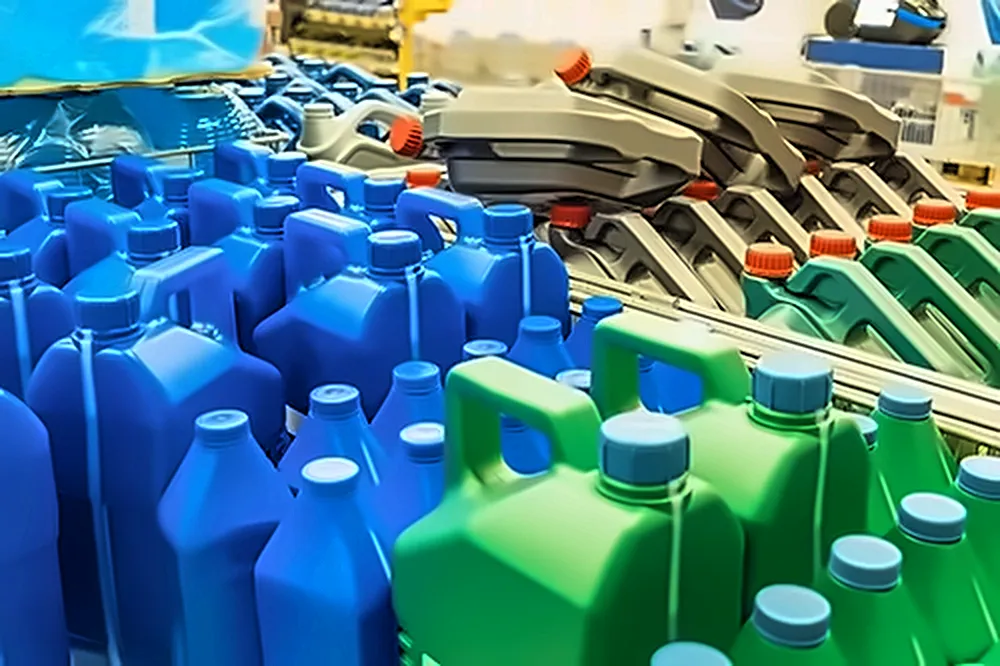
The coolant packaging market uses bottle and product colour as a critical safety and product identification tool. Green coolant (IAT — Inorganic Additive Technology) is the legacy standard compatible with older vehicles; orange/red (OAT — Organic Acid Technology) is specified for modern Japanese, Korean and European vehicles; blue indicates pre-mixed with water; and pink or purple identifies certain carboxylate-technology concentrates. These colour distinctions prevent costly mistakes when a workshop technician or home mechanic selects the wrong coolant type for a vehicle — mistakes that can cause corrosion damage to aluminium radiators, water pumps and heater cores when incompatible inhibitor chemistries are mixed.
ISBM’s injection-stage colour masterbatch system enables precise, batch-to-batch consistent tinting of the bottle body in any colour coordinate required — achieving ΔE colour deviation within 0.8 between production runs when gravimetric masterbatch dosing is employed. For the coolant market, where colour matching between the bottle body, the product inside, and the label colour coding must all align to communicate the product type accurately, this colour consistency is not merely aesthetic — it is a safety-critical specification requirement. Custom automotive bottles in the coolant segment often carry brand-specific colour profiles that distinguish premium OEM-specification products from generic alternatives on the shelf, and ISBM’s colour reproducibility supports these differentiation strategies at commercial production scales without the colour drift that volume dosing systems introduce over production run lengths.
ISBM Production Workflow for Coolant Bottles
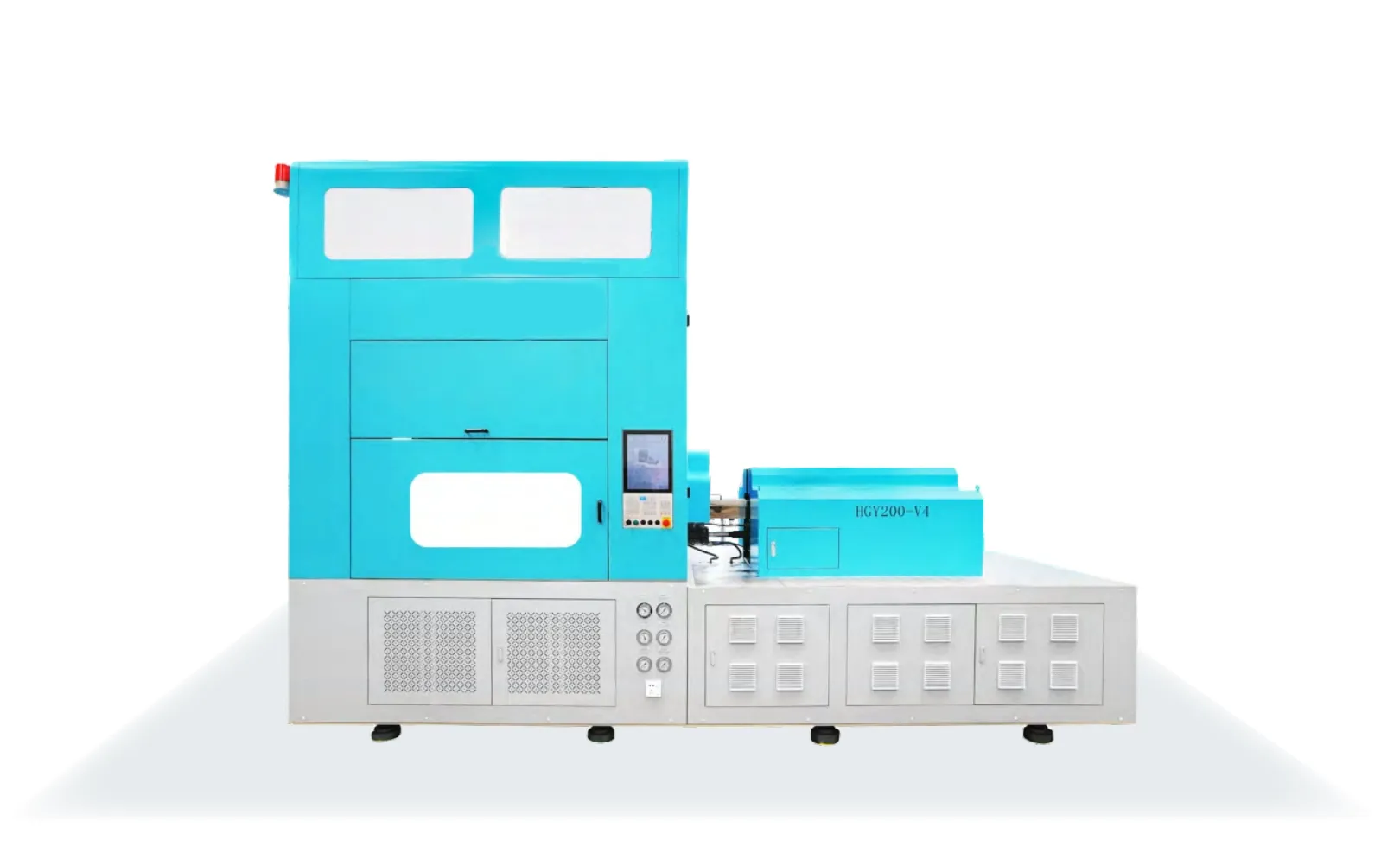
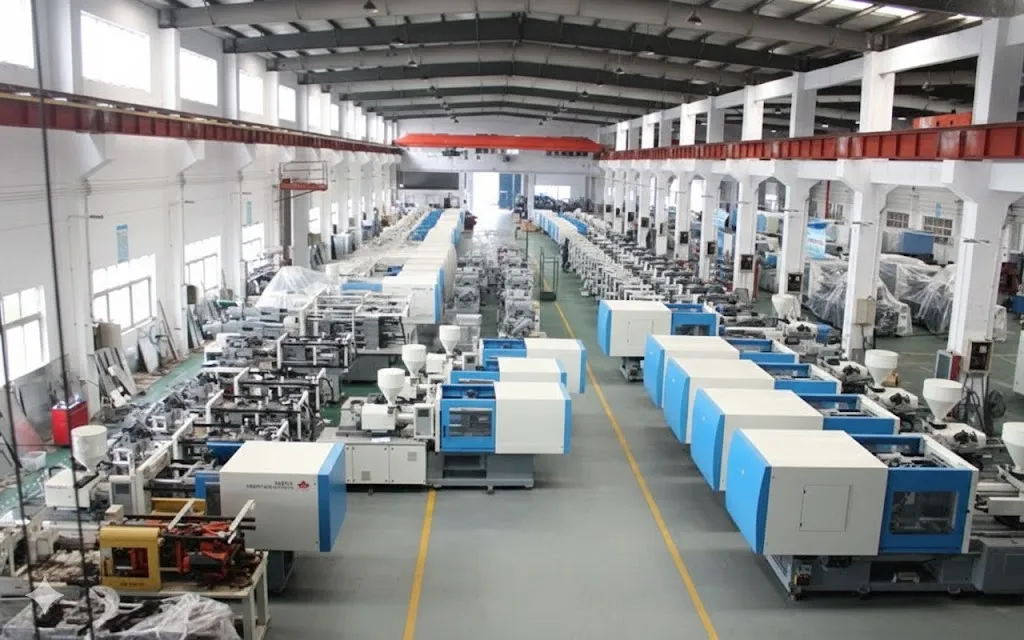
Coolant bottle production on a four-station ISBM platform follows a tightly controlled sequence from resin preparation through ejection. Each stage directly influences the dimensional accuracy, chemical barrier and thermal performance of the finished container.
① Resin Preparation and Drying
For tinted coolant bottles, colour masterbatch is pre-dried separately and blended gravimetrically with the base PET resin at the hopper throat. Base resin is dried to below 50 ppm moisture at 160–170°C for 4–6 hours. Moisture non-uniformity in tinted production causes colour streaking artefacts in the blown bottle that are visible through the translucent body — a quality failure mode that is prevented at the drying stage rather than detectable at ejection. Dew point monitoring below −40°C in the dryer outlet confirms adequate desiccant performance throughout the production run.
② Preform Injection with Colour Control
PET and colour masterbatch are plasticised at 270–288°C under injection velocity profiles designed to achieve laminar melt flow through the gate — turbulent injection causes pigment swirl marks visible in the blown bottle body. The wide-mouth neck (38–48mm) is formed here with injection-moulding accuracy. For tinted pre-mixed coolant containers, the preform body is specified to pre-distribute material toward the bottle shoulder and base to compensate for the differential stretch ratios inherent in short-waisted 5-litre bottle silhouettes.
③ Thermal Conditioning
Multi-zone conditioning heaters establish the axial temperature gradient for controlled biaxial orientation. Coolant bottles with handle geometry require the handle zone preform area to be conditioned 6–10°C cooler than the body to retain material volume at the handle wall after blow. Body zone temperature at 104–112°C provides the material plasticity needed for the uniform radial expansion that tinted coolant bottles require — ensuring colour consistency through the wall thickness across the full bottle height without the thinning artefacts that uneven conditioning produces.
④ Stretch-Blow Moulding
Stretch rod extends at 0.9–1.2 m/s initiating axial orientation before pre-blow air (6–8 bar) begins radial expansion. High-pressure blow at 30–40 bar drives full contact with the blow mould cavity, reproducing graduated scale markings and brand embossing at feature depths of 0.05–0.4mm with the detail fidelity that coolant measurement accuracy requires. Mould cooling at 7–14°C freezes biaxial orientation simultaneously with thermal expansion cycling resistance — the structural property that prevents coolant bottles from permanent deformation during summer vehicle storage conditions.
⑤ Ejection and Colour Verification
Finished bottles are ejected for inline weight check, neck finish gauging and colour verification by spectrophotometer measurement at defined intervals. For coolant packaging programmes, the colour specification is recorded as a target ΔE against the approved production standard, with an acceptance limit of ΔE ≤1.5. Bottles outside this tolerance are segregated before entry into the filling line, preventing mixed-colour batch events that create product type confusion risk downstream in the automotive service channel.
Critical Machine Parameters for Coolant Bottle Production
| Parameter | Typical Range | Coolant-Specific Impact |
|---|---|---|
| Injection barrel temp | 270–288°C | Colour masterbatch dispersion; preform clarity |
| Colour masterbatch dosing | ±0.05% gravimetric | Batch-to-batch colour consistency ΔE ≤0.8 |
| Body conditioning temp | 104–112°C | Uniform colour through wall; glycol barrier |
| High-pressure blow air | 30–40 bar | Scale marking reproduction; handle fill |
| Mould cooling temp | 7–14°C | Thermal expansion cycling resistance |
| Cycle time (2L, 4-cav) | 18–26 seconds | Output ~3,300–5,000 bottles/hr |
Regulatory and Safety Labelling for Coolant Packaging in Australia
Automotive coolant in Australia is classified as a hazardous chemical under Safe Work Australia’s Hazardous Chemicals Information System (HCIS) due to its ethylene glycol content, which carries the GHS acute toxicity designation Oral Category 4 and the specific target organ toxicity designation STOT RE 2. This classification requires GHS-compliant labelling on all retail containers, including the exclamation mark hazard pictogram, the Warning signal word, H302 and H373 hazard statements, and corresponding P-statement precautionary text. The label panel geometry on coolant bottles must accommodate this mandatory GHS content plus the product name, chemical composition declaration, volume, batch code and manufacturer contact details within the legible label area — constraints that the ISBM blow mould design must address with adequate flat panel height and width from the outset.
Coolant containers in Australia’s retail automotive aftermarket are also subject to the Australian Consumer Law requirements for trade measurement accuracy — the declared volume must be present within the tolerance permitted under the National Measurement Act. For pre-mixed coolant sold by volume, this means the bottle’s internal capacity specification must be maintained within ±2% of nominal across the full production run, and the filling line’s fill-height control must be validated to deliver the declared volume at the nominal closure torque. ISBM’s dimensional consistency — capacity variation within ±1.5% across production for well-maintained tooling — supports these trade measurement compliance requirements without the volumetric sorting that wider-tolerance blow-moulded bottle production sometimes requires.
Sustainability and Circular Economy in Coolant Bottle Production
Tinted PET coolant bottles present a specific sustainability navigation challenge: the blue, green and red colourants that convey product type information can affect the quality of the rPET recovered from these bottles if pigment concentrations interfere with NIR sortation accuracy at MRF facilities. Light tints (below 1% masterbatch loading) have minimal effect on sorting accuracy and produce rPET with colour that can be used in grey or dark applications. Heavier tints require co-sorted colour separation streams and produce coloured rPET that has a more limited application range — a recyclability trade-off that packaging designers must evaluate against colour communication requirements for the specific coolant type.
Australia’s car care bottle packaging sustainability trajectory under APCO’s 2025 targets creates commercial incentive for coolant bottle producers to engage with these colour management trade-offs proactively rather than reactively. ISBM PET’s mono-material construction, lightweighting capability (typically 25–35% lower bottle weight than HDPE EBM at equivalent performance) and compatibility with rPET blend integration at 15–25% content without visual compromise represent the three practical levers available to coolant brands pursuing documented sustainability improvements for their APCO annual reporting obligations and retail customer sustainability scorecards.