

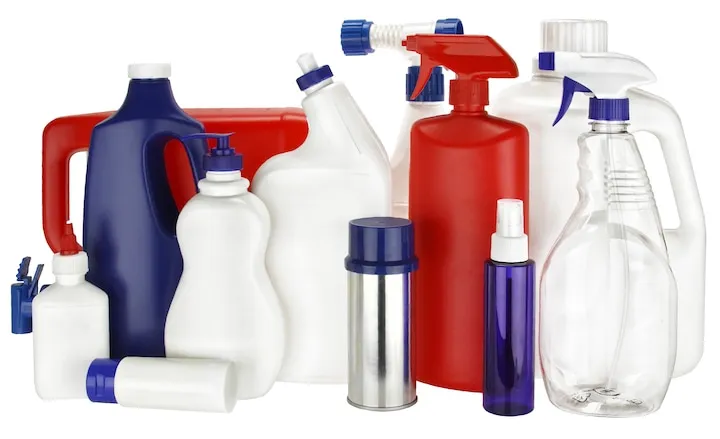
Spray bottles occupy a unique position in household product packaging. Unlike squeezable dispensers, they must maintain their shape under negative pressure as liquid is drawn up through a dip tube with each pump stroke—while also surviving drops from bench height onto tiles, repeated chemical exposure on contact surfaces, and storage periods that can exceed 18 months between the filling line and actual use. The combination of rigid body, precise neck finish for trigger pump seating, and chemical barrier performance needed to contain formulations as varied as ammonia-based glass cleaners and citrus-acid multi-surface sprays makes material and process selection non-trivial. Inspuitstrekblaasvorming has become the production method of choice for spray bottle manufacturing because it meets these structural and chemical demands at competitive per-unit cost, while enabling the visual clarity and custom shapes that differentiate products at retail.
The Spray Bottle Market: Precision Packaging for Chemical-Laden Formulations
The global household cleaning spray market has grown substantially since 2020, with concentrated refill formats and premium multi-surface products driving a shift toward more sophisticated packaging. Spray bottles must accommodate formulations with pH levels ranging from 2 (citric acid cleaners) to 12 (ammonia or hypochlorite based products), ethanol contents up to 70% in surface sanitisers, and fragrances containing terpene compounds that can attack weaker plastics. Bottles shipped in e-commerce channels face a further challenge: they must survive drop, vibration, and compression stresses in cardboard packaging without trigger-pump seal failure or body cracking.
In Australia, the household cleaning category is subject to the APCO’s 2025 packaging targets, which require that packaging is recoverable or recyclable. PET—the primary resin processed by ISBM systems—is the highest-recycled-rate plastic in Australia’s kerbside stream, which places ISBM-produced spray bottles in a strong compliance position compared to multi-layer or composite bottle alternatives. For brand owners and private-label manufacturers seeking to meet both technical and sustainability requirements, the choice of production process has real commercial consequences beyond the factory floor.
Why Injection Stretch Blow Molding Delivers What Spray Bottle Production Demands
Spray bottles require a stiff, dimensionally stable body that does not distort when the trigger pump creates momentary negative pressure during liquid draw-up. Unlike squeezable dish soap bottles, the bottle wall must not flex or buckle under this load cycle. In injection stretch blow molding, biaxial molecular orientation increases the stiffness of PET well beyond that of amorphous material: oriented PET has a tensile modulus of 4–5 GPa compared to roughly 2.8 GPa for amorphous PET, and a wall as thin as 0.35 mm in a 750 ml spray bottle can provide adequate panel resistance without waviness or concavity under pump actuation.
The neck finish accuracy achieved in ISBM is equally critical. Trigger spray pumps seat against the bottle neck with a compression fitting that depends on precise diameters—typically within ±0.15 mm—to maintain a leak-free seal over thousands of pump strokes. Because the neck is formed during the injection phase of the ISBM process cycle, it inherits injection-moulding-grade dimensional control rather than the less consistent geometry produced by the extrusion blow molding method.
Rigid Body Under Vacuum Load
Biaxially oriented PET walls resist the negative pressure generated during trigger-pump actuation without panel deflection, maintaining bottle shape throughout the product’s service life.
Injection-Grade Neck Accuracy
Neck finish formed in the injection stage holds ±0.10–0.15 mm diameter tolerance, ensuring trigger pumps seat and seal reliably across the full production run without assembly rejects.
Broad Chemical Compatibility
PET is inert to the vast majority of cleaning actives including dilute acids, alkalis, surfactants, and ethanol at concentrations used in household spray formulations, eliminating the risk of chemical stress cracking.
Structural Engineering Requirements for Spray Bottle Bodies
Chemical Resistance at the Neck and Body
Chemical resistance in a spray bottle must be considered at two levels: resistance of the PET body to permeation and degradation from the fill formulation, and resistance of the neck and sealing surface to the same compounds. PET has excellent resistance to alcohols, dilute inorganic acids, and most surfactant solutions. However, highly alkaline products (pH above 11) and concentrated ester-based fragrances can interact with PET over extended storage periods, potentially causing hydrolytic chain scission that reduces the molecular weight of the bottle wall and leads to micro-fracturing. For these formulations, formulators typically adjust pH to below 10 before filling, or the bottle manufacturer incorporates a UV-stabiliser package into the masterbatch to slow photochemical degradation during retail shelf life.
Panel Stiffness and Top-Load Performance
Spray bottles are typically stored upright on shelf and stacked in pallets during warehousing and transport. Top-load performance—the axial compressive load the bottle can sustain before buckling—is determined by wall thickness, the stiffness of the base geometry, and the quality of biaxial orientation in the body. A 750 ml PET spray bottle produced via injection stretch blow molding with a body wall of 0.38 mm will typically resist a top load of 120–180 N, sufficient for a four-high pallet stack of filled product. If the production parameters—particularly the stretch rod velocity and pre-blow pressure—drift out of range, orientation is lost locally, and panel stiffness drops sharply. Consistent process monitoring through servo-controlled machines keeps these parameters within specification automatically.
The One-Step ISBM Process Applied to Spray Bottle Manufacturing
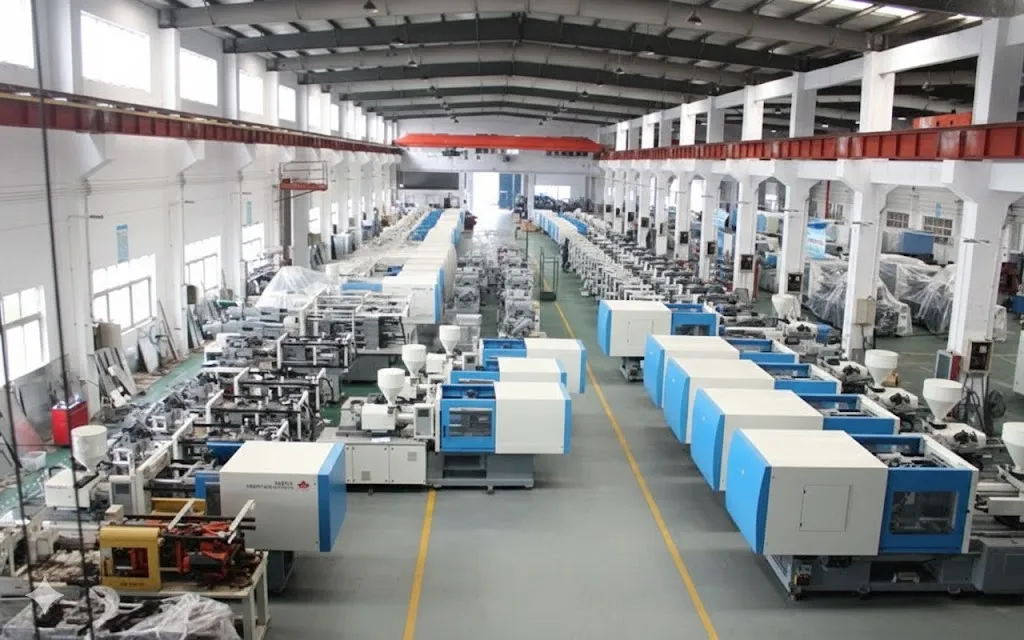
Die ISBM process for spray bottles follows the same fundamental sequence as for any ISBM application, but several parameters are tuned specifically to achieve the rigid body, accurate narrow neck, and precise base geometry that spray bottle performance requires. The flow below illustrates the key technical decisions at each stage of the production cycle.
Resin Selection & Drying
PET resin at IV 0.80–0.84 dl/g is dried to <50 ppm moisture (160°C, 5–6 h desiccant). For chemical-formulation compatibility, UV-stabilised grades or additive masterbatches are introduced at this stage.
Precision Preform Injection
Melt injected at 270–285°C into a multi-cavity preform mould. For spray bottles, the preform weight is closely matched to the target bottle weight to minimise material overage while ensuring full cavity fill at the neck region.
Termiese Kondisionering
Preform body is conditioned to the narrow PET orientation window (90–110°C). Spray bottle preforms often require a steeper temperature gradient toward the base to ensure adequate material migration to the bottom-panel during blow.
Axial Stretch to Length
The stretch rod extends at a controlled velocity (typically 1.2–1.8 m/s) to pre-orient the material axially before radial blow. This step is critical for achieving uniform sidewall thickness distribution in tall spray bottle profiles.
High-Pressure Blow Forming
Air at 30–40 bar inflates the preform radially against the cavity wall. For spray bottles, mould cooling is set at 8–12°C to fix the orientation and prevent post-mould shrinkage that would alter the dip-tube depth calibration.
Ejection & Trigger Pump Assembly
Bottles exit the machine and proceed directly to the filling and pump-insertion line. Neck finish dimensions are within tolerance for immediate trigger pump seating without in-process gauging delays.
Preform Design Considerations for Narrow-Neck Spray Containers
Spray bottles typically carry 28 mm or 38 mm trigger pump neck finishes—smaller than the 48 mm or wider necks common on dispensing or flip-top caps for other household products. This smaller neck diameter constrains the preform body diameter and therefore changes the stretch ratio calculation compared to wide-neck containers of equivalent volume. The axial stretch ratio for a 750 ml narrow-neck spray bottle typically runs 3.2–3.8, higher than a comparable dish soap bottle, which demands careful preform length-to-diameter optimisation to avoid whitening or crystallisation in the shoulder zone.
Preform gate location is particularly important for spray bottle aesthetics. A gate in the base centre produces a small witness mark that is almost invisible in a clear, transparent bottle. Gate marks on the bottle sidewall—a common occurrence in some extrusion blow systems—create visible stress-whitening or optical distortion that looks unprofessional for branded products. The ISBM process forms the gate at the injection stage in a controlled position, delivering gate locations that meet cosmetic standards without secondary trimming operations.
Wall thickness in the preform body must be distributed to account for the higher stretch ratio in the shoulder transition zone—the area where the narrow neck expands into the full bottle body. Excessive material here leads to a thickened shoulder ring that adds unnecessary weight; insufficient material causes stress-whitening and low burst pressure at the shoulder/body transition. ISBM machine manufacturers with in-house preform design capability use simulation tools to balance these trade-offs before committing to preform mould fabrication.
Mould Tooling for Spray Bottle Neck Finishes and Trigger Pump Integration
Neck Finish Standards for Trigger Spray Pumps
Trigger spray pumps are the highest-cost component in a spray bottle assembly and the primary source of consumer complaints when leakage occurs. Pump manufacturers specify bottle neck finishes to DIN 168 or equivalent tolerance standards, with inside diameter, thread pitch, thread form, and sealing ledge geometry all critical. ISBM preform tooling can be machined to any standard or custom neck specification. For Australian manufacturers supplying to retailers who require compliance with AS/NZS packaging standards, neck finish tooling is validated by measurement of 30+ bottles per cavity using a coordinate measuring machine (CMM) before production approval is granted. Common spray pump neck finishes—28/400, 28/410, and 38/400—are all well within the dimensional capability of modern ISBM tooling systems.
Bottle Body Profile, Panel Geometry, and Anti-Drip Base Design
Spray bottle profiles in the modern household cleaning market have moved well beyond the generic cylinder. Ergonomic waist tapers, wide grip panels, and asymmetric front-face profiles are now standard on branded products. These shapes must be manufacturable within the constraints of the blow mould opening direction—undercuts that cannot be formed by straight-pull tooling require side-action inserts, adding cost and cycle time. Good tooling design balances brand design ambitions with manufacturing efficiency. The base of a spray bottle must also incorporate an anti-drip profile—typically a champagne-style punt or a slightly recessed base perimeter—to prevent the bottle from slipping on wet surfaces while allowing stable stacking on pallets.
Quality Control and Testing Protocols for Spray Bottle ISBM Lines
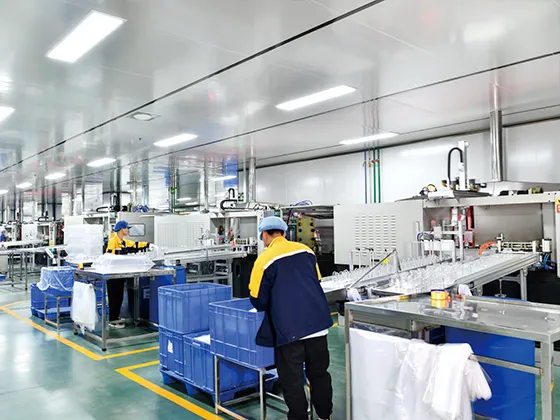
Quality testing for spray bottles covers several dimensions that go beyond the standard weight and visual checks used in beverage bottle production. The sequence below reflects typical factory acceptance tests for a new spray bottle line, as well as ongoing in-process monitoring procedures used by manufacturers supplying major retail brands.
🔍 Dimensional Neck Gauging
Every production batch is sampled for neck finish dimensions at a frequency of one bottle per 500 produced. Outside diameter, thread crest diameter, and sealing ledge height are checked against the pump manufacturer’s specification. Necks outside tolerance are rejected before filling. Trend data from SPC charts triggers mould maintenance before rejects accumulate.
💧 Pump Leak and Torque Testing
Assembled spray bottles (bottle + pump + fill) are pressure-tested at 1.5 bar for 10 seconds and then inverted for 30 minutes to check for drip leakage at the pump stem seal. Application torque for threaded pump heads is verified at ± 15% of the assembly specification, with low-torque assemblies flagged for re-work or rejection.
📏 Wall Thickness Mapping
Ultrasonic wall thickness gauges map 8–12 points on each bottle sample including shoulder, upper body, centre body, lower body, and base ring. For a 750 ml spray bottle, target wall at the centre body is 0.35–0.45 mm; base ring target is 0.55–0.75 mm. Deviations at any single point exceeding ±0.08 mm prompt a process review.
🏋️ Top-Load Compression Test
A sample from each production lot is compression-tested to confirm the top-load failure point exceeds 120 N for a filled 750 ml unit. This test confirms that molecular orientation is being achieved consistently and that the bottle will survive pallet stacking under distribution conditions.
Production Efficiency and Cycle Time Benchmarks for Spray Bottle Lines
Spray bottle cycle times are slightly longer than for equivalent-volume beverage bottles because the longer, narrower preform requires additional time for complete thermal conditioning and a controlled stretch rod extension profile. A 750 ml narrow-neck spray bottle on a four-station injection stretch blow molding machine typically runs at a 10–14 second cycle, producing 2,500–3,600 bottles per hour per machine. Smaller 500 ml formats cycle faster, reaching 3,500–4,200 bottles per hour. For the Australian and Asia-Pacific market, these output rates translate to annual capacity of 15–25 million bottles per machine under standard operating conditions.
The energy footprint of the machine platform matters significantly over a production horizon of five to ten years. Fully servo-electric ISBM machines—which replace traditional hydraulic cylinders with precision servo motors—reduce electrical consumption per bottle by 35–45%. For a facility running two machines at full capacity for 300 days per year, this equates to a substantial reduction in annual electricity spend and a measurable improvement in the facility’s Scope 2 carbon emissions reporting.
Customisation for Private-Label and Branded Spray Products
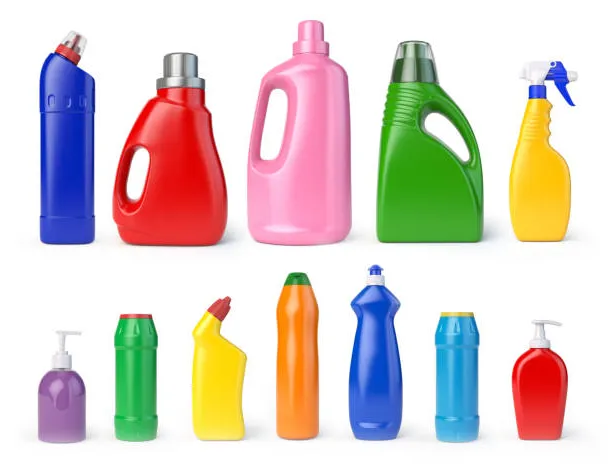
Spray bottle shapes have become a significant vehicle for brand identity in the cleaning products category, with leading brands commissioning bespoke profiles that consumers recognise on shelf without reading the label. ISBM tooling readily accommodates these custom designs, from wide-profile ergonomic triggers to tall slim-format bottles designed for retail shelf space optimisation. The customisation options available through ISBM production are summarised below.
Environmental Footprint of ISBM-Produced Spray Bottles
Sustainability claims in household product packaging are subject to increasing scrutiny from regulators and retailers. The Australian Competition and Consumer Commission (ACCC) has signalled enforcement action against unsubstantiated environmental claims, meaning that the recyclability and material-efficiency advantages of ISBM-produced PET spray bottles must be quantifiable, not aspirational. Three measurable advantages support legitimate sustainability communication for ISBM spray bottles.
Lightweighting
A 750 ml PET spray bottle via ISBM weighs 32–38 g, compared to 48–55 g for HDPE equivalents. Across a million-unit production run, this saves 10–17 tonnes of plastic resin and proportionally reduces transport emissions.
Full Recyclability
PET (resin code 1) is accepted in all major Australian kerbside systems. Spray bottles made from PET can be recycled into food packaging, fibres, and new bottles within established collection infrastructure.
Lower Production Energy
Servo-electric ISBM machines reduce per-bottle energy consumption by up to 45% versus hydraulic systems, contributing to a lower carbon intensity production certificate that can be included in supplier environmental reports.
Recommended Equipment: Fully Servo HGYS150-V4-EV Four-Station ISBM Machine
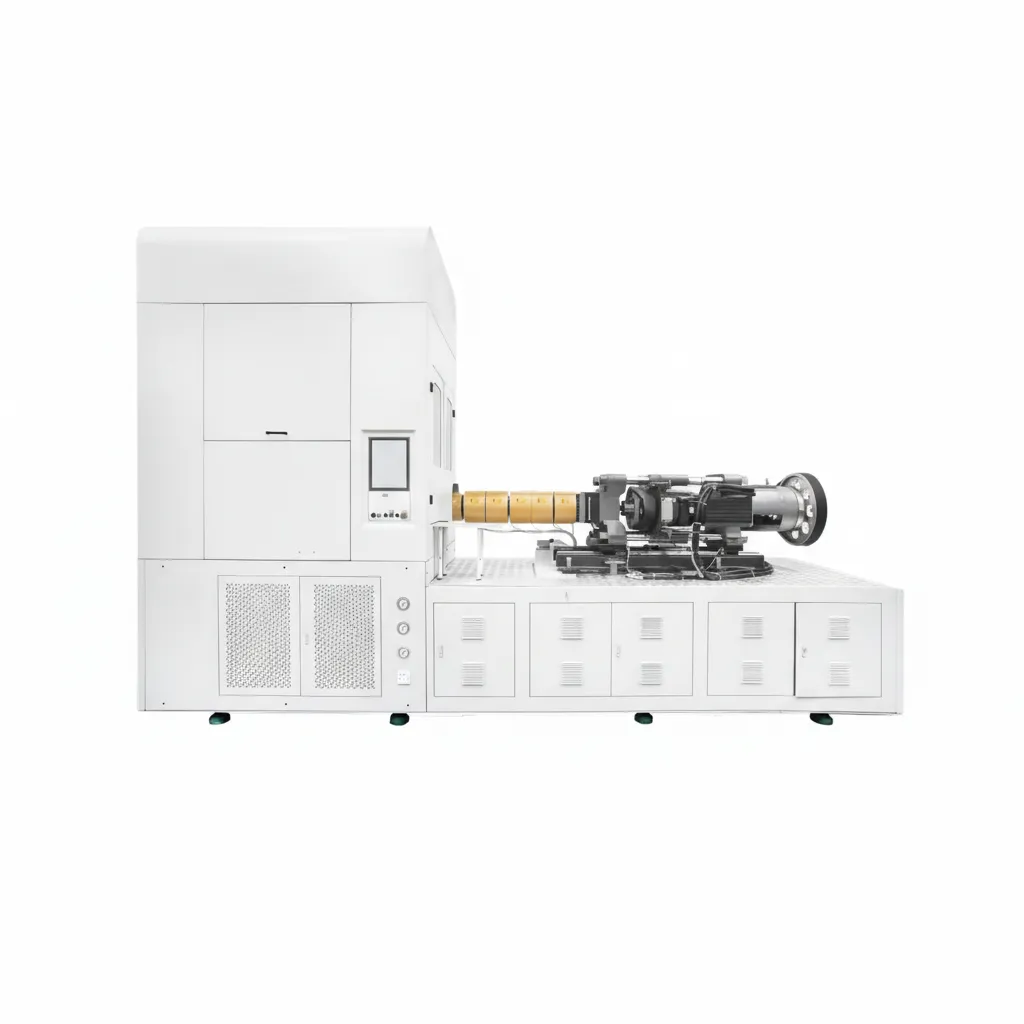
Recommended for Spray Bottle Production
Fully Servo HGYS150-V4-EV One-Step ISBM Machine
Die fully servo one-step injection stretch blow molding machine HGYS150-V4-EV delivers the dimensional repeatability and energy efficiency that narrow-neck spray bottle production demands. Its full servo-electric drive system provides closed-loop control of every motion axis, eliminating the hydraulic drift that leads to neck finish variability in conventional machines.
- Clamping force: 150 tonnes
- Drive: Full servo-electric (all axes)
- Configuration: Four-station rotary
- Neck finish range: 18–55 mm
- Energy saving: up to 45% vs hydraulic
- Bottle volume range: 50 ml – 1,000 ml
Gereelde vrae
Australia Ever-Power Injection Stretch Blow Moulding Machine Co., Ltd
Condell Park NSW 2200, Australia | [email protected] | Oor Ons | Kontak Ons