The Active Beverage Packaging Brief: Performance Under Pressure
Sports drinks, energy drinks, functional water, and electrolyte beverages represent the fastest-growing segment of the Australian beverage market, driven by active consumer lifestyles, the proliferation of gym and fitness culture, and the growing mainstream acceptance of functional hydration beyond plain water. The packaging for these products must perform under conditions that standard still water bottles are not designed to handle: carbonated energy drinks require containers capable of sustaining 3–5 bar internal pressure without creep or dimensional change during the product’s shelf life; high-electrolyte sports drinks require chemical compatibility with concentrated ionic formulations; ergonomic grip formats for on-the-go consumption require specific bottle body geometry; and the high-speed consumption occasions — at the gym, on the run, on the sports field — demand closure systems that open instantly and reseal confidently with one hand.
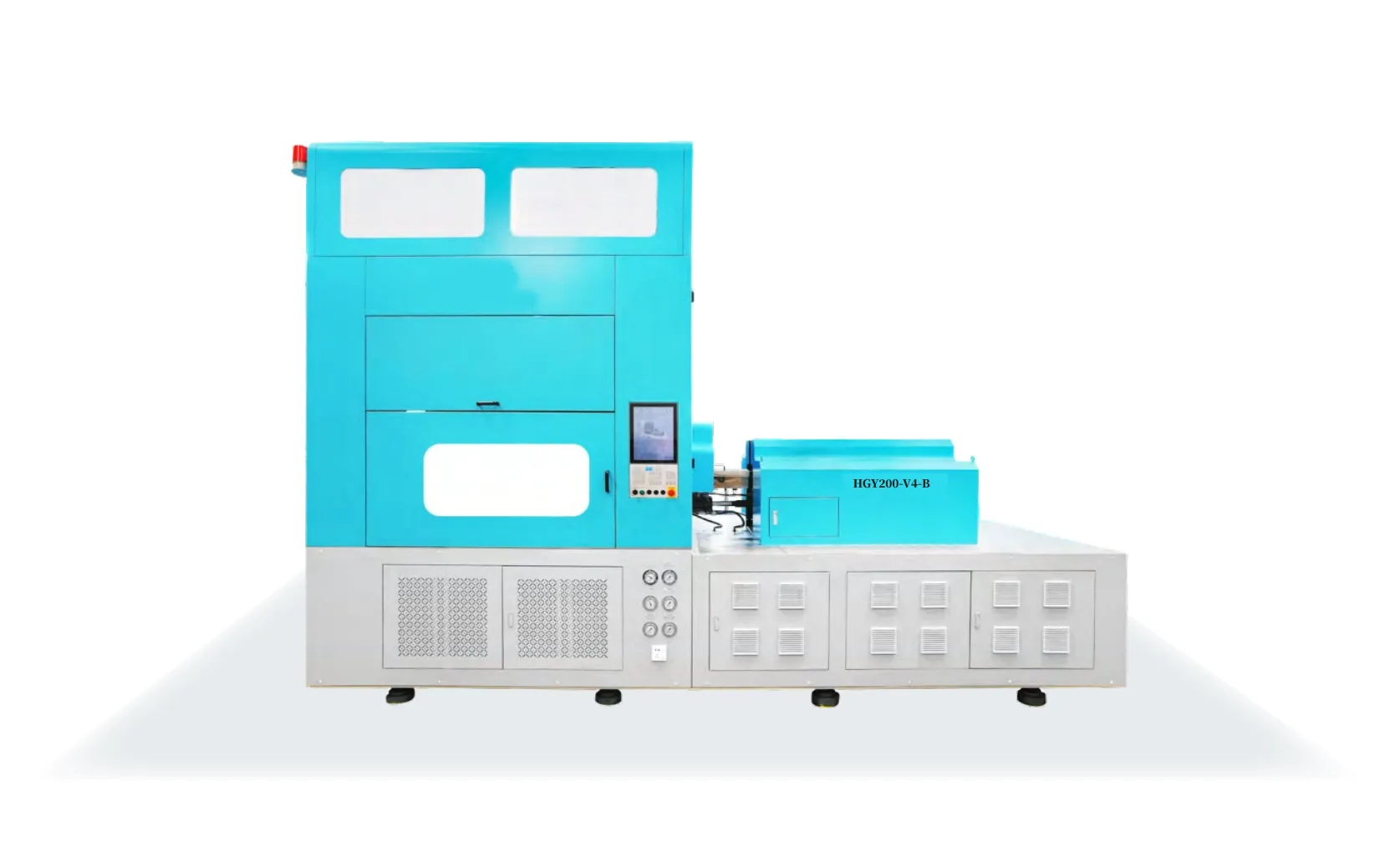
Die injection stretch blow molding machine is the production platform that the active beverage industry has built its plastic bottle supply chain on, precisely because it uniquely combines the CO₂ barrier performance, pressure resistance, design flexibility, and production speed that this demanding category requires. Understanding the technical mechanisms behind each of these performance attributes — and how ISBM production parameters govern them — is the foundation for optimising sports and energy drink bottle production.
Australia Ever-Power Injection Stretch Blow Moulding Machine Co., Ltd, based in Condell Park NSW 2200, serves Australian sports drink manufacturers, energy drink brands, and contract beverage filling operations with ISBM machine technology and technical expertise focused on the active beverage category’s specific performance requirements.
CO₂ Barrier and Carbonation Retention: The Technical Foundation of CSD and Energy Drink Packaging
Carbonated sports and energy drinks require their packaging to maintain the dissolved CO₂ concentration that the consumer expects from first opening to the end of shelf life. CO₂ permeates through PET bottle walls from higher concentration (inside the sealed bottle, where CO₂ is dissolved under pressure) to lower concentration (ambient atmosphere), and this permeation is the primary mechanism of carbonation loss over the product’s shelf life. Biaxially oriented PET from ISBM production provides significantly better CO₂ barrier than unoriented PET or alternative plastic materials — and understanding why, and how to optimise it, is fundamental to sports and energy drink bottle performance.
Biaxial Orientation and CO₂ Permeability
Biaxial orientation from the ISBM stretch-blow process aligns PET polymer chains in both the axial and radial directions, creating a more ordered and denser molecular structure than unoriented PET. This increased density reduces the free volume within the polymer matrix through which CO₂ molecules can permeate — reducing the effective CO₂ permeability coefficient of the biaxially oriented PET wall by 25–35% compared to unoriented PET at equivalent wall thickness. For a 500ml CSD bottle with 3.5 volumes CO₂ targeting 16 weeks of shelf life at 25°C, this barrier improvement translates directly into a lower wall thickness requirement to achieve the same shelf-life carbonation retention — or, at equivalent wall thickness, significantly extended shelf life before the consumer-detectable threshold of CO₂ loss is reached.
Carbonation Pressure Resistance: Petaloid Base Engineering
Carbonated beverage bottles must resist the internal pressure of the dissolved CO₂ without permanent base distortion — the primary failure mode for underpressurised CSD containers is base panel yield, where the internal pressure causes the flat base panels to bulge outward until the bottle can no longer stand upright. The petaloid base design — a five or six-lobe internal structure on the bottle base that distributes the internal pressure across multiple arch-shaped panels — is the universal engineering solution for CSD base pressure resistance, and ISBM tooling reproduces it with the dimensional precision that consistent pressure resistance requires. The petaloid geometry is machined directly into the blow mould base insert and reproduced on every bottle with ±0.3mm dimensional consistency — sufficient to deliver predictable pressure resistance performance across the full production batch.
Wall Thickness Targets for Sports and Energy Drink CSD Formats
| Format | CO₂ Volumes | Min. Body Wall | Base Zone Wall | Shelf Life Target |
|---|---|---|---|---|
| 250ml energy drink | 3.5–4.0 vol | 0.28–0.35mm | 0.60–0.80mm | 18–24 months |
| 500ml sports/energy | 3.0–3.8 vol | 0.30–0.38mm | 0.65–0.85mm | 18–24 months |
| 600ml sports drink | 2.0–3.5 vol | 0.32–0.40mm | 0.70–0.90mm | 12–18 months |
| 1L sports / functional | 0–2.5 vol | 0.30–0.40mm | 0.60–0.80mm | 12–18 months |
Sports Bottle Ergonomics: Engineering for Active Use Occasions
Sports and energy drink packaging is used in active, high-stress contexts — gripped during exercise, squeezed while running, operated one-handed during workouts, carried in tight-fitting gym bag side pockets, and dropped regularly on hard gym floors. The ergonomic and structural requirements of sports drink packaging reflect this active use environment, and ISBM provides the design and material tools to meet each of these requirements.
Grip Geometry for Gloved and Sweaty Hands
Defined grip waist with controlled minimum diameter and textured surface (Ra 0.4–0.6 µm) engineered directly into the blow mould cavity. ISBM reproduces this geometry to ±0.3mm on every bottle — preventing the dimensional variation that makes grip design feel inconsistent between batches.
Drop Impact Resistance at Gym Floors
Biaxially oriented PET absorbs significantly more impact energy than unoriented alternatives before crack propagation — the molecular chain alignment directs crack energy into deformation rather than fracture. At the wall thicknesses used in sports drink bottles, a 1.5m drop onto concrete from any orientation produces no leakage in correctly produced ISBM bottles.
Squeeze Dispensing for Hydration Bottles
Still electrolyte and hydration bottles dispensed by squeezing (sports valves, push-pull closures) require a defined squeeze force range (typically 15–30N for sports hydration). ISBM wall thickness and orientation engineering achieves this target consistently, enabling clean one-hand squeeze dispensing without excessive force or uncontrolled dripping.
Gym Bag Taper Profile
Sports drink bottles are carried in side pockets and equipment bags where space is at a premium. Bottle body taper profiles — slightly narrower at the base than the shoulder, enabling bottles to stack and store efficiently — are specified in the blow mould geometry and reproduced consistently on every bottle, ensuring the product fits the consumer’s bag as designed.
Sports Drink Closure Systems and Neck Finish Specifications
Sports and energy drink closures are among the most functionally demanding in the beverage industry. The consumer expects the closure to: open and reseal rapidly and one-handedly during physical activity; maintain a positive seal against internal carbonation pressure (for CSD energy drinks) without gradual loosening under vibration or repeated handling; not drool or leak when the bottle is inverted in a gym bag; and survive repeated opening and resealing across the product’s use life (which may be extended for refillable/multi-use sports formats).
Standard Sports Drink Neck Finish Formats
The most common sports and energy drink neck finishes in the Australian market are: 28mm PCO-1881 (the global standard for carbonated energy drink closures), 38mm snap-fit sports valve necks (for squeeze-dispense hydration products), and custom short-thread high-seal finishes for premium resealable sports caps. All three formats have specific dimensional requirements that ISBM’s injection-formed neck meets reliably: PCO-1881 thread and sealing surface dimensions are specified to the ISBT tolerance standard and reproduced with ±0.05mm accuracy; snap-fit sports valve necks require a defined retaining bead height (±0.10mm) for the closure’s snap engagement; custom sports caps require whatever proprietary geometry the closure designer specifies, reproduced to the same injection-forming tolerances as standard finishes.
Carbonated Energy Drink Headspace Management
The internal headspace volume of a carbonated energy drink bottle — the gas volume above the liquid fill level — significantly affects the initial internal pressure at filling and therefore the structural load on the bottle. Bottles with excessive headspace (from under-filling or excessive neck-to-base height variation) will have higher initial CO₂ concentration in the headspace and therefore higher pressure, requiring the bottle to withstand elevated pressure versus the specification. ISBM’s fill volume consistency (±1% fill capacity variation across cavities and production batches) ensures that the headspace volume is as designed and that the internal pressure profile is within the bottle design specification. This dimensional fill capacity consistency is a direct result of ISBM’s wall thickness distribution precision — which is governed by preform design and process parameters and maintained through validated production control.
High-Speed Production for Energy Drink Manufacturing: Output Rates and System Configuration
The energy drink and sports beverage market in Australia is served by a mix of major international brands (Red Bull, Monster, V, Mother) operating at very high production volumes, and a growing cohort of Australian-owned functional beverage brands at mid-scale. The production rate requirements across this spectrum range from 3,000 BPH at the smaller craft energy drink producer through to 20,000+ BPH at major contract filling operations serving the national market. ISBM machine configuration — specifically cavity count, station design, and process cycle time — is the lever that sets the production rate within the machine’s mechanical envelope.
For standard 250ml energy drink bottle formats (the dominant convenience retail format in the Australian market), a 4-cavity ISBM system running at the optimal cycle time for the format achieves 8,000–12,000 BPH — a production rate that, on a three-shift 250-day operating schedule, delivers 60–90 million bottles per year from a single machine. For the 500ml format (dominant in gym and convenience retail), 4-cavity production yields 6,000–8,000 BPH, delivering 45–60 million bottles annually. These output rates are sufficient for mid-scale sports beverage operations producing across 2–4 SKUs from a single production platform with scheduled changeovers.
For major contract filling operations at the high end of the volume range, high-speed blow molding technology in the form of six-station ISBM systems with 6 cavities can achieve 15,000–20,000 BPH on 250ml formats, matching the highest output rates that the market requires from a single machine installation.
Functional Beverage Formulation Compatibility: Electrolytes, Vitamins, and Performance Ingredients
The functional beverage category has expanded far beyond simple electrolyte replacement to include vitamin-enhanced sports drinks, amino acid-enriched energy drinks, collagen-infused wellness waters, CBD-infused beverages, and a growing range of adaptogen and nootropic-enhanced functional beverages. Each of these functional ingredient additions can potentially affect the packaging compatibility profile of the beverage and requires consideration in bottle design and material selection.
Standard electrolyte sports drinks (sodium, potassium, magnesium, calcium at typical sports formulation concentrations) are fully compatible with PET at all concentrations encountered in commercial formulations. B-vitamin additions at typical sports drink concentrations are also fully compatible with PET, with no measurable interaction or degradation at normal storage conditions. For more unusual functional ingredients — botanical extracts at high concentration, probiotic cultures, or lipophilic compounds like fat-soluble vitamins and hemp-derived compounds — individual compatibility assessment is required because the partition behaviour and sorption characteristics of these compounds in PET are not as well-characterised as standard electrolyte and vitamin formulations.
pH is the most important compatibility variable for functional sports beverages. Most sports drinks are moderately acidic (pH 3.0–4.5) due to citric acid, malic acid, or tartaric acid used for flavour balance and preservation — this pH range is well within PET’s compatibility envelope. Some alkaline mineral waters (pH 8.0–9.5) require a brief stability check because alkaline pH at elevated temperature can cause marginal PET surface interaction over extended storage — but for standard ambient shelf life (12–18 months) and typical distribution temperatures, alkaline sports beverages are generally compatible with standard PET.
Brand Design for the Sports and Energy Drink Category
Sports and energy drink packaging operates in the most visually competitive segment of the Australian beverage retail market. The energy drink aisle in a 7-Eleven or a convenience display in a gym reception contains dozens of products in similar formats competing for immediate visual attention — and the consumer’s choice is made in under 3 seconds of shelf viewing time. Packaging visual impact is therefore not an aesthetic consideration but a commercial performance metric. ISBM provides the design tools that sports and energy drink brands need to compete effectively in this environment.
Embossed brand marks, textured grip zones, and distinctive bottle silhouettes — all producible through ISBM blow mould tooling — create the shelf differentiation and hand-feel premium that sports brands use to command the $4–6 price premium over commodity water. The visual association between a distinctive bottle form and the brand’s performance positioning is built through consistent packaging across product variants and marketing channels — the ISBM platform’s dimensional consistency ensures that every bottle from every production run reinforces the brand’s visual equity rather than introducing variation that weakens the brand identity.
The growing segment of premium reusable sports bottles — designed for 20–50 use cycles rather than single use, sold at premium price points through sports equipment retailers and gym pro shops — requires the heavier wall specifications and scratch-resistant surface quality that ISBM can deliver with modified process parameters (increased preform weight, modified orientation level) using the same platform as standard single-use production. A brand developing both a single-use retail range and a premium reusable range can design both from the same bottle family, served by the same machine with different tooling and preform specifications.
Sustainability in Sports and Energy Drink Packaging: rPET and Lightweighting
The active beverage consumer is among the most sustainability-conscious consumer demographic in Australia — the sport and fitness community has a strong environmental ethos, and brands that cannot credibly demonstrate packaging sustainability commitment face reputational risk with their core audience. ISBM PET provides the sustainability credentials that active beverage brands require: rPET content at 20–50% for CSD energy drinks (the technical challenge being that rPET with variable IV characteristics must be managed carefully to maintain CO₂ barrier performance in carbonated formats), and lightweighting programmes that reduce preform weight by 10–20% from historical specifications.
Australian Container Deposit Schemes covering beverage bottles in participating states provide sports and energy drink producers with a directly traceable recycling story — the CDS infrastructure is highly visible to the active consumer (25-cent deposits are a tangible consumer engagement mechanism), and the certification that ISBM PET bottles can participate in CDS is a direct requirement of being eligible for the deposit scheme in each state. For sports drink brands with environmental brand positioning, the combination of CDS eligibility, verified rPET content, and on-pack weight reduction claims creates a complete, substantiatable packaging sustainability narrative.
The lightweighting opportunity in sports and energy drink bottles is significant — many legacy bottle designs carry 10–25% more material than current orientation-optimised biaxial PET production requires at equivalent structural and pressure performance. A formal lightweighting engineering programme conducted by Ever-Power’s application team typically identifies a 12–18% preform weight reduction opportunity in sports drink formats that have not been actively lightweighted in the previous 5 years. At 30 million 500ml bottles annually, a 15% weight reduction from 28g to 24g saves 120 tonnes of PET resin per year — directly reducing material cost, embodied carbon, and CDS reverse logistics cost (lighter bottles cost less to transport back through the deposit scheme infrastructure).
ISBM for Non-Carbonated Sports Drinks: Isotonic, Hypotonic, and Enhanced Water Formats
Not all sports drinks are carbonated. Isotonic and hypotonic electrolyte drinks (formulated to absorb at the same or faster rate than blood), enhanced waters (with added electrolytes, vitamins, or functional botanical ingredients), and recovery drinks (protein-enhanced post-workout beverages) are predominantly still (non-carbonated) products that occupy the fastest-growing segment of the Australian sports beverage market. These still sports drink formats have different packaging requirements from CSD energy drinks and can use optimised ISBM specifications that take advantage of the reduced structural requirements for non-pressurised containers.
Without internal carbonation pressure, still sports drink bottles can use lighter-weight preform specifications than CSD equivalents — typically 15–20% less material weight at equivalent format size — reducing per-unit material cost while maintaining the impact resistance and structural stability required for distribution and retail handling. The absence of the petaloid base requirement (which is needed for carbonation pressure resistance) allows still sports drink bases to be designed with flat or shallow-dome geometry that is simpler to produce and uses less material in the base zone. For premium still sports drinks, the cleaner base design also provides an unobstructed base zone for embossed brand marks or decorative base patterns — a design feature that the petaloid base of carbonated equivalents cannot accommodate.
The oxygen sensitivity of some functional ingredients in still sports drinks (vitamin C, polyphenol antioxidants, certain probiotic cultures) may require low-oxygen barrier packaging to achieve the claimed functional ingredient potency at the end of shelf life. For these applications, the same oxygen barrier enhancement options available for food condiment products apply — oxygen scavenger additive, SiOx plasma coating, or nitrogen headspace flushing during filling — and the selection depends on the magnitude of barrier improvement needed and the product’s filling line configuration.
Ever-Power’s ISBM Support for Australian Sports Beverage Operations
Australia Ever-Power provides sports and energy drink packaging operations with machine technology and technical support optimised for the specific performance requirements of the active beverage category. For carbonated energy drink formats, this includes process parameter optimisation for maximum CO₂ barrier performance, petaloid base geometry validation, and PCO-1881 neck finish dimensional qualification against international beverage closure standards. For still sports drink formats, it includes lightweighting programme engineering and oxygen barrier assessment for functional ingredient protection.
For Australian sports beverage brands currently importing bottles from offshore suppliers, Ever-Power’s supply chain transition analysis consistently identifies meaningful total cost advantages from local ISBM production when freight, customs, currency exposure, and 8–14 week lead times are fully costed. For brands that must respond rapidly to retail ranging opportunities or seasonal promotional volumes, the agility advantage of local production is often the decisive factor independent of direct cost comparison.
Kontak [email protected] or visit the contact page to arrange a sports beverage packaging feasibility assessment.
Recommended Machine
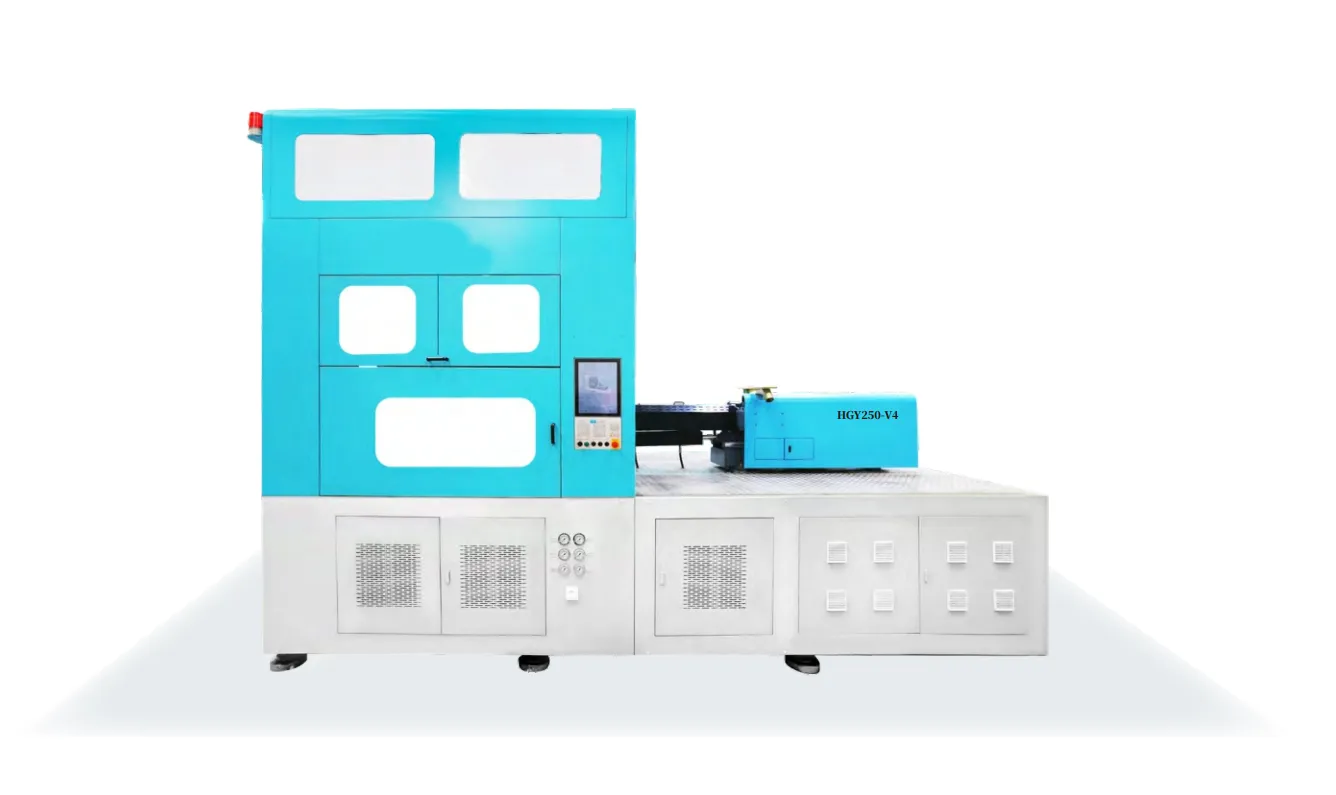
HGYS280-V6 — Six-Station High-Speed ISBM for Energy Drink Production
For sports and energy drink operations producing at the highest volumes — major energy drink brands and contract filling operations at 50–100+ million units annually — the HGYS280-V6 six-station one-step ISBM machine delivers the production throughput that the active beverage market’s highest-volume applications require. The six-station rotary architecture allows higher cavity counts per machine cycle than four-station designs, enabling 15,000–20,000+ BPH on 250ml energy drink formats with 6-cavity tooling. The machine’s process stability at high output rates is crucial for CSD energy drink production, where CO₂ barrier performance and petaloid base dimensional consistency must be maintained across every bottle in a production run of millions. PCO-1881 neck finish precision at ±0.05mm is maintained across all six stations through injection tooling calibration and scheduled dimensional monitoring. The HGYS280-V6 processes both standard PET and rPET blends with the adaptive injection parameters that rPET IV variability management demands at commercial CSD bottle production rates.