Disinfectant wipe solutions and surface sanitisers operate at the frontline of public health infrastructure. Whether filling a refill pouch for hospital-grade surface wipe dispensers, a consumer trigger-spray bottle of quaternary ammonium hard-surface sanitiser, or an institutional 2 L concentrate for commercial cleaning contractors, every container must preserve the active biocide concentration stated on the label — from filling line through distribution chain to the point of use. PET bottle production via injection stretch blow molding addresses this requirement with a combination of biocide-resistant barrier performance, dimensional precision for CRC-grade closures, and production throughput that the post-pandemic hygiene product market has made structurally necessary. This article examines precisely how the injection stretch blow molding machine platform maps onto the chemistry, regulatory compliance, and operational requirements of disinfectant wipe packaging at commercial scale.
The Disinfectant Wipe Solution Market: Volume, Diversity, and Structural Demand
A Market Permanently Reshaped by the Pandemic Period
The global disinfectant and sanitiser market underwent a structural demand shift during 2020–2022 that has not fully reversed. Australian consumers, healthcare facilities, food processing operations, and commercial building managers have maintained hygiene protocols at significantly higher levels than pre-pandemic norms — sustaining demand for surface disinfectant sprays, wipe impregnation solutions, and hand sanitisers that far exceeds the pre-2020 baseline. This elevated structural demand creates a commercial environment where packaging production capacity, not consumer pull, is the binding constraint for many disinfectant manufacturers. The one-step ISBM process — which consolidates preform injection and bottle blowing into a single machine cycle — maximises output from a given production footprint precisely because it eliminates the preform storage, transfer, and reheating stages that reduce throughput in two-step systems. For disinfectant manufacturers expanding capacity to meet sustained demand, one-step ISBM offers both the throughput and the quality consistency that this supply-critical category requires.
Product Format Diversity Across Consumer and Institutional Channels
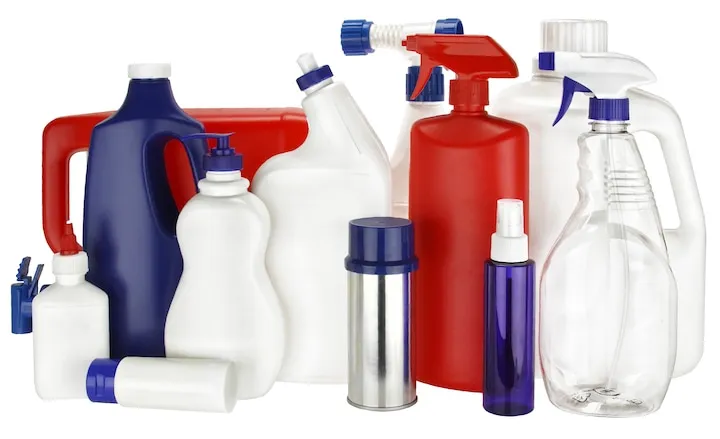
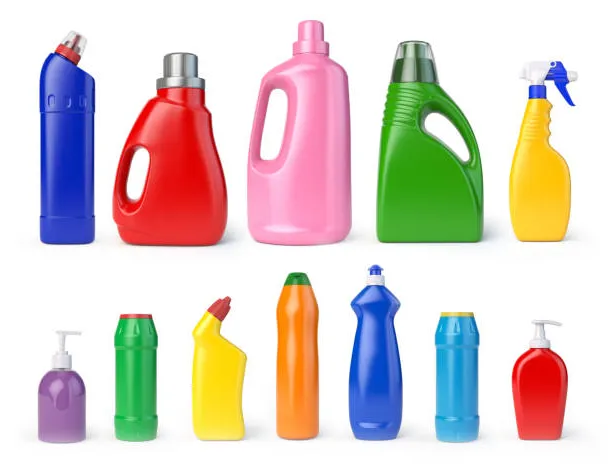
Disinfectant wipe solution packaging spans a wider format range than most home care categories. Consumer retail formats include 100–250 mL flip-top wipe canisters and 250–750 mL trigger-spray surface sanitisers. The institutional and healthcare segment uses 500 mL–2 L pump-dispenser formats for hand sanitiser dispensers, 1–5 L concentrate bottles for dilution into spray dispensers, and purpose-built refill cartridges for branded wall-mount dispenser hardware. Each format demands specific neck finish geometry, dimensional precision, and in many cases regulatory documentation. The capacity to serve all of these formats from a single ISBM platform through tooling changeover — without building separate production infrastructure for each segment — is a core competitive advantage for disinfectant manufacturers managing multi-channel distribution.
TGA, ARTG, and SUSMP Regulatory Intersections
Australian disinfectant products navigate three overlapping regulatory pathways. Products making therapeutic efficacy claims — TGA-listed hospital-grade disinfectants and ARTG-registered hand sanitisers — require packaging specified and validated as part of the registered product dossier, including material compatibility data, closure specification, and fill-weight permeation evidence. Products below the therapeutic claim threshold are subject to ACCC consumer product safety oversight, requiring that label efficacy claims be substantiated and that packaging does not degrade active ingredient concentration during the stated shelf life. Products containing concentrated biocides above SUSMP threshold concentrations require child-resistant closures conforming to AS/NZS 8809. ISBM-produced PET bottles address all three regulatory requirements: injection-formed CRC neck geometry meets AS/NZS 8809 at production-population tolerances; chemical compatibility testing data is generated as standard QMS output; and fill-weight permeation testing for TGA dossier submission is part of the packaging development data package.
Biocide Chemistry and PET Barrier Architecture
Quaternary Ammonium Compounds at Use Concentrations
Quaternary ammonium compounds — benzalkonium chloride (BAC), didecyl dimethyl ammonium chloride (DDAC), and cetrimonium chloride — are the active biocide system in the majority of commercially available wipe impregnation solutions and hard-surface sanitiser sprays. At use concentrations of 0.1–2.0% in aqueous carrier, these cationic surfactants show no interaction with biaxially oriented PET: the aromatic polyester structure is chemically inert to cationic detergents, and the biaxial crystalline network prevents any measurable sorption of BAC or DDAC molecules into the wall across a 24-month shelf life. This compatibility without reservation simplifies the APVMA or TGA dossier compatibility section for quat-based disinfectants — in many cases, literature data from established reference sources suffices, and the formal 28-day immersion study documents confirmation rather than uncertainty.
Isopropanol and Ethanol: The High-Alcohol Challenge
Alcohol-based hand sanitisers at 60–80% isopropanol or ethanol concentration present a more demanding barrier challenge than aqueous quat systems. Ethanol and isopropanol are polar protic solvents with finite interaction with PET’s ester linkages at sustained contact — but the biaxial orientation of ISBM-processed PET substantially attenuates this mechanism by reducing polymer free volume and increasing the crystallinity of the wall. Comparative permeation measurements confirm that a well-optimised ISBM PET hand sanitiser bottle at 70% isopropanol content loses less than 0.4% of fill weight annually — compared to 0.8–1.5% for unoriented HDPE at equivalent wall thickness. For ARTG-registered products where fill-weight compliance must be maintained within ±5% of label claim across the full shelf life, this permeation performance provides a comfortable compliance margin through 24 months of ambient storage, the shelf life period covered by the majority of Australian hand sanitiser registrations.
Hydrogen Peroxide and Chlorine-Based Formulations
Hospital-grade and food-safe disinfectants frequently use hydrogen peroxide (0.5–3%) or sodium hypochlorite (0.1–0.5% available chlorine as use-dilution) as primary or secondary biocide systems. Both are compatible with biaxially oriented ISBM PET at these concentrations across ambient storage conditions. H₂O₂ at 3% shows no measurable chain-end oxidation in PET across 28-day immersion at 40 °C; hypochlorite at 0.5% available chlorine in aqueous solution shows no stress-cracking or dimensional change at the same conditions. The practical operational consideration with hypochlorite is headspace vapour — chlorine gas above the liquid surface — which at concentrated formulations (above 1.5% available chlorine) can create a slightly pressurised headspace in sealed bottles stored in warm conditions. Wall design must account for this with a conservative headspace volume specification and a vent-safe closure system appropriate to the concentration range, rather than any modification to the PET bottle material specification.
One-Step ISBM Production: The Disinfectant Bottle Workflow
High-volume disinfectant bottle production prioritises line uptime and zero-defect neck finish quality above all other process variables. The one-step ISBM process addresses both: thermal continuity from injection to blowing ensures consistent biaxial orientation and barrier performance across the entire production population, while the injection-formed neck finish eliminates the principal source of CRC dimensional variation in competing blow molding processes.
High-IV Resin Selection
For high-alcohol disinfectant bottles (IPA or ethanol above 60%), an elevated IV specification of 0.80–0.84 dL/g is selected. Higher IV means higher molecular weight, which produces a denser biaxial crystalline network during stretch-blow — the primary structural determinant of alcohol barrier performance. Resin is dried to below 50 ppm moisture at 165–170 °C for 5–6 hours before processing to prevent hydrolytic chain scission that would reduce barrier performance and create fatigue-crack initiation points.
CRC Preform Injection
At 268–286 °C, PET fills preform cavities with CRC neck profiles injection-formed to AS/NZS 8809 thread standards. Multi-cavity hot-runner tooling maintains cavity-to-cavity preform weight balance within ±0.5% — essential for consistent wall distribution across the blown bottle population when running at peak disinfectant production rates above 4,000 bottles per hour. White TiO₂ masterbatch or clear specification is set at the hopper for the relevant product range.
Thermal Conditioning
The preform body is conditioned to 98–112 °C; the CRC neck zone is chilled below 72 °C. Thermocouple feedback loops maintain body temperature within ±2 °C of target across full production shifts — critical for achieving consistent biaxial crystallinity in the blown bottle wall that underpins both barrier performance and fatigue resistance against repeated pump-actuation cycles.
Axial Stretch
Servo stretch rods achieve 2.6–3.5× axial ratios. Hand sanitiser bottles (100–250 mL, high aspect ratio) benefit from the higher end of this range (3.0–3.5×) to maximise sidewall tensile orientation — the region most exposed to repeated squeeze-loading during palm-press dispensing. Trigger-spray disinfectant bodies (300–750 mL) run at moderate 2.6–3.0× ratios balancing shoulder material reserves with body barrier orientation.
High-Pressure Blow
Air at 30–40 bar expands the oriented preform against mold cavities chilled to 10–14 °C. The mold surface is polished to Ra ≤ 0.3 µm for clinical-white and transparent formats, delivering the crisp clean appearance that communicates hygienic product quality on retail shelf and in healthcare facility environments. Rapid mold-contact chilling locks the biaxial crystalline structure at maximum orientation density.
Ejection & TGA-Grade QC Logging
Bottles pass through vision inspection — CRC neck geometry, wall thickness, closure torque compatibility, base planarity — with batch traceability data logged to the QMS: cavity ID, production timestamp, resin lot, IV measurement, drying parameters. This data chain supports ARTG dossier maintenance and enables product recall traceability to a specific production window within minutes of any post-market surveillance event initiated by the TGA.
Disinfectant Format Specifications: ISBM Production Reference
| Format | Volume | Active System | CRC | Critical ISBM Feature |
|---|---|---|---|---|
| Hand sanitiser (consumer) | 50–500 mL | 60–80% IPA/EtOH | Yes (SUSMP) | Alcohol barrier + squeeze recovery |
| Wipe impregnation refill | 500 mL – 2 L | Quat / IPA blend | Yes | Wide-mouth CRC accuracy |
| Surface disinfectant spray | 250–750 mL | Quat / H₂O₂ | Situational | Pump fatigue resistance |
| Institutional wall-mount refill | 800 mL – 1.2 L | Proprietary quat | Proprietary | Dispenser fitment precision |
| Concentrate (institutional) | 1 L – 5 L | Quat / hypochlorite | Yes | Stack-load + traceability |
Production Performance Benchmarks
Benchmarks for a four-station ISBM machine running a 500 mL trigger-spray surface disinfectant bottle in clinical-white PET, Ra 0.3 µm mold finish, 28/400 neck tooling.
Quality Assurance for TGA and ARTG Packaging Compliance
🔬 Active Ingredient Stability Protocol
Representative bottles filled with the target formulation are stored at 25 °C (real-time) and 40 °C (accelerated) for the period defined by the product’s ARTG registration dossier. Active ingredient concentration (quat by potentiometric titration, IPA by GC, H₂O₂ by iodometric titration) is measured at 3-month intervals. The complete dataset — concentration versus time at both temperatures — is submitted to the TGA as the primary packaging compatibility evidence supporting the claimed shelf life. This protocol is initiated during product development and constitutes the regulatory gate before commercial launch.
🔒 CRC Engagement Performance Testing
AS/NZS 8809 Go/No-Go gauge verification on every production batch. Random samples of 30 bottles undergo child-resistance panel tests measuring push-and-turn engagement force (15–45 N acceptance range), adult release force (maximum 65 N), and re-torque performance after 5 open-and-reseal cycles — simulating institutional wipe refill containers that are opened and resealed repeatedly during a shift. Batches outside engagement force specification trigger injection process investigation before further production is released.
💧 Vacuum Leak and Pressure Integrity Testing
Filled and capped bottles are submerged at 0.15 bar vacuum for 60 seconds — zero bubble from the neck-closure interface is the acceptance criterion. For institutional concentrate formats in the 1–5 L range, a supplementary hydraulic pressure hold at 1.5× the maximum vapour pressure of the formulation at 50 °C for 30 minutes verifies structural integrity under Australian summer worst-case storage conditions. Batches failing vacuum leak tests trigger immediate neck tooling dimensional inspection.
📊 Fill-Weight Permeation Monitoring
Retained stability samples are weighed at 3-month intervals throughout the stability storage period. Annual permeation loss above 1.0% of fill weight triggers packaging design review. ISBM PET consistently records losses below 0.4% annually for 70% IPA hand sanitisers and below 0.1% for aqueous quat systems — providing a comfortable margin below the ±5% fill-weight tolerance specified in ARTG product registrations and supporting confident 24-month shelf-life claim substantiation without the annual compliance anxiety that higher-permeation packaging creates.
Sustainability Credentials for Disinfectant Packaging
Lightweighting Without Compromising Structural or Regulatory Performance
A 500 mL ISBM PET disinfectant spray bottle typically weighs 20–24 g — compared to 28–34 g for a structurally equivalent HDPE-EBM container. This 8–12 g per-unit saving does not require any sacrifice in top-load, drop-test, or CRC performance; the biaxial tensile strength of oriented PET (130–170 MPa) more than compensates for the lower wall mass versus HDPE (25–35 MPa unoriented). Across a production run of 20 million disinfectant bottles annually, this represents 160–240 tonnes of polymer saved — a measurable and reportable lightweighting contribution to APCO’s 2025 National Packaging Target compliance and a per-unit material cost saving that partially offsets the higher tooling investment of ISBM versus EBM.
rPET in Disinfectant Packaging: Regulatory and Technical Pathway
Post-consumer rPET at 25–30% inclusion can be processed through ISBM machines for disinfectant bottle production without tooling modification. For TGA-registered products, the rPET grade must meet an appropriate chemical purity standard — typically food-contact-equivalent certification, such as compliance with EC 10/2011 or FDA food-contact criteria — to ensure that recycled content does not introduce trace contaminants that would affect the active ingredient’s efficacy or the product’s safety profile. The white-pigmented opaque specification common in institutional disinfectant formats — TiO₂ at 0.8–1.5% loading — effectively masks the colour variation between rPET batches, making this format the practical starting point for disinfectant producers introducing recycled content into their bottle range. Brands carrying TGA-registered products may wish to discuss the rPET grade specification with their regulatory affairs team before production commitment, to ensure dossier consistency.
PET Recyclability and the Hygiene Product End-of-Life Challenge
Consumer hand sanitiser and surface disinfectant bottles — once rinsed by the consumer — are accepted in Australia’s kerbside PET collection stream as Type 1 recyclable containers, provided they carry no TGA-restricted residue requiring special disposal. ISBM PET bottles, designed with pressure-sensitive or sleeve labels using wash-float-compatible adhesive and materials, meet the APCO recyclability design standard and can carry recycled content claims supported by the rPET inclusion data generated by the ISBM production QMS. For institutional channels, waste management programmes for disinfectant concentrate containers — where residual active ingredient may prevent direct kerbside disposal — include the ChemClear and Cleanaway industrial chemical packaging collection services that accept PET as a recoverable material.
Recommended Equipment: HGYS500-V3 for Large-Volume Disinfectant Bottle Production
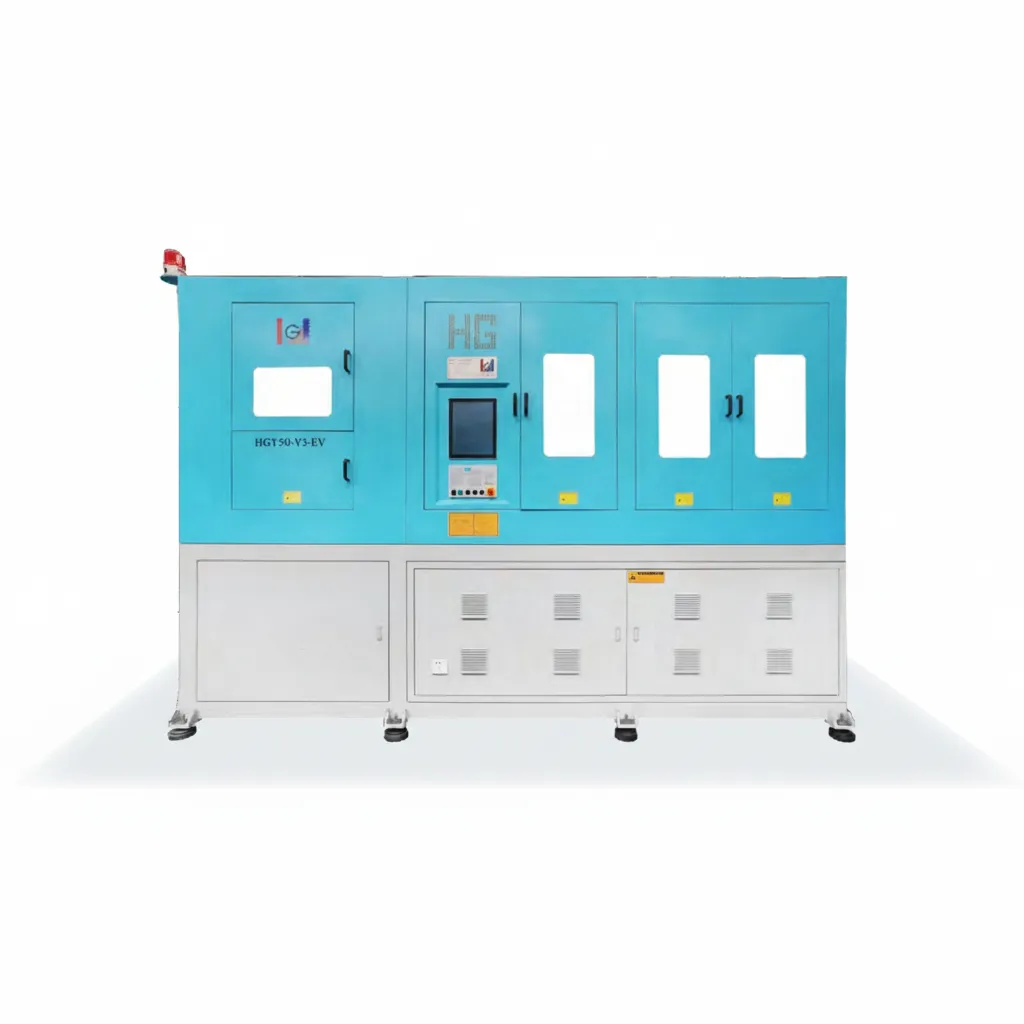
HGYS500-V3 One-Step Injection Stretch Blow Molding Machine
For disinfectant and hygiene product manufacturers targeting the highest production volumes — institutional concentrate formats, national retail supply chain commitments, or export-volume contracts — the HGYS500-V3 one-step injection stretch blow molding machine delivers the clamping force, cavity capacity, and process precision that large-format disinfectant bottle production requires. Its robust three-station design handles bottle volumes up to 5,000 mL, making it particularly suited to the 1–5 L institutional disinfectant concentrate formats where high fill weight and CRC closure compliance are both critical requirements. The machine accommodates clinical-white and clear PET grades, rPET blends, and amber-tinted specifications without platform modification.
- Volume range: 500 mL – 5,000 mL
- High clamping force for wide-body 2–5 L concentrate formats
- CRC neck finish: AS/NZS 8809 compliant tooling available
- TGA-grade batch traceability data output
- Handles clinical-white TiO₂, clear, and rPET-blend PET
- CE certified; compliant with Australian WHS standards