Pharmaceutical manufacturers operate within a cost structure that is simultaneously subject to intense regulatory scrutiny and commercial pressure to reduce per-dose production cost. Every element of the manufacturing value chain — from raw material input to finished goods warehouse — is a target for efficiency improvement, and primary packaging is no exception. The injection stretch blow molding machine platform has emerged over the past two decades as the single most impactful capital equipment choice available to pharmaceutical packaging engineers seeking to improve production efficiency, reduce per-unit container cost, eliminate quality-related waste, and reduce the environmental and operational overhead of their packaging operations. This article provides a comprehensive, evidence-based analysis of the efficiency and cost reduction mechanisms that make the ISBM process the optimal technology choice for modern pharmaceutical packaging facilities.
1. One-Step Integration: The Root Source of ISBM Efficiency Advantages
The efficiency advantages of ISBM over competing container manufacturing technologies are not incremental improvements on the same process architecture — they are structural consequences of the one-step integration that defines the injection stretch blow molding process. To appreciate the magnitude of these efficiency gains, it is necessary to understand precisely what costs and inefficiencies the two-step alternative accumulates and how the one-step ISBM architecture eliminates them category by category.
Elimination of Intermediate Process Steps and Associated Cost Pools
In the two-step RSBM route, a pharmaceutical container is produced through a minimum of four distinct process steps: (1) preform injection moulding, (2) preform inspection and quality sorting, (3) preform storage and transportation to the blow facility, and (4) reheat stretch blow moulding. Each of these steps carries its own labour cost, energy cost, equipment depreciation cost, floor space cost, and quality management overhead. The one-step ISBM process collapses all four steps into a single continuous process cycle on a single machine platform — eliminating three of the four cost centres entirely. For pharmaceutical manufacturers where GMP overhead is applied as a percentage of direct manufacturing cost, this step elimination also reduces the GMP compliance cost allocation per container unit produced.
Material Yield Improvement from Integrated Quality Control
Two-step processes accumulate quality rejects at both the injection and blow stages, with each stage’s reject rate compounding the overall yield loss. In integrated one-step ISBM production, rejection events are identified and isolated within a single cycle — a non-conforming preform is detected and rejected before the blow stage, and a non-conforming container is detected and rejected at ejection, but there is no second process stage to generate an additional independent reject category. The practical result is steady-state yield rates of 98.5–99.5% for pharmaceutical container ISBM production versus combined two-step process yields that typically fall in the 95–98% range — a yield differential that becomes a significant raw material cost advantage at pharmaceutical production volumes.
2. Energy Efficiency: Servo Drive Technology and Per-Container Energy Intensity
Energy cost is a meaningful component of pharmaceutical container manufacturing operating cost, and the evolution from hydraulic to fully servo-driven ISBM machine architecture has delivered substantial and measurable reductions in energy consumption per container produced. For Australian pharmaceutical manufacturers — operating in a high-electricity-cost environment and increasingly subject to corporate sustainability reporting obligations — the energy efficiency of the injection stretch blow molding machine platform is a double-value proposition: it reduces operating cost and demonstrates measurable progress toward Scope 2 emissions reduction targets.
Servo vs Hydraulic Energy Consumption Comparison
Hydraulic ISBM machines drive all motion axes through a centralised hydraulic power unit (HPU) that runs continuously at full pressure regardless of the phase of the machine cycle. During the conditioning and cooling phases — which together constitute 40–60% of the total cycle time — the HPU is generating hydraulic pressure and dissipating heat while performing no productive mechanical work. Fully servo-driven ISBM machines consume electrical energy only when axes are actively moving, dramatically reducing the energy wasted during dwell phases. Energy consumption reductions of 30–45% per container produced are consistently demonstrated in head-to-head comparisons between hydraulic and fully servo ISBM platforms producing equivalent containers at equivalent output rates. At current Australian industrial electricity pricing of AUD 0.12–0.18 per kWh, this energy reduction translates to AUD 15,000–35,000 per year in electricity cost savings for a typical pharmaceutical container ISBM line operating two shifts, five days per week.
Cooling Water and Compressed Air Efficiency
Beyond the direct drive energy savings, servo-driven ISBM machines also reduce auxiliary utility consumption. Elimination of the HPU removes the most significant source of waste heat in hydraulic ISBM machines — heat that was transferred to the cooling water circuit and required chilled water capacity to reject. In facilities where chilled water is provided by an electrically driven refrigeration plant, eliminating HPU heat load reduces chiller electricity consumption proportionally. Compressed air consumption is also reduced in servo-driven machines because the servo system replaces pneumatically actuated clamping, ejection, and indexing mechanisms that consumed compressed air proportionally to their cycle frequency. For pharmaceutical cleanroom facilities where compressed air is provided through oil-free compressors and multi-stage filtration systems at significant capital and operating cost, this compressed air reduction adds a measurable further contribution to the total energy cost saving of the servo-driven ISBM platform.
3. Material Cost Optimisation Through Lightweighting and Weight Control
Pharmaceutical-grade PET resin is a premium material input, typically priced at AUD 3.50–5.50 per kg for pharmaceutical-specification grades with appropriate declarations of conformity and regulatory documentation. Container weight is therefore not merely an environmental metric — it is a direct material cost driver. The stretch blow molding technology embedded in the ISBM process is the most effective available tool for systematic pharmaceutical container lightweighting, because the biaxial orientation mechanism allows material to be distributed at minimum thickness across the container wall while maintaining required mechanical and barrier performance.
Wall Thickness Optimisation Methodology
Container lightweighting through ISBM is not a single-step design decision — it is an iterative engineering process involving preform weight and geometry optimisation, blow process parameter adjustment, and container performance validation against the full applicable test battery. The approach typically begins with finite element analysis (FEA) of the container geometry to identify wall zones where material reduction can be achieved without compromising drop resistance, top-load strength for stacking, or sidewall deflection under the nominal container internal pressure for aerosol or carbonated liquid products. The ISBM process then delivers the wall thickness distribution defined by the optimisation study through controlled stretch rod speed, blow pressure profiling, and conditioning temperature zoning — capabilities that are only fully accessible in servo-driven ISBM platforms with cavity-level temperature and pressure monitoring.
Quantified Material Savings at Production Scale
Systematic lightweighting programmes applied to pharmaceutical container portfolios routinely achieve container weight reductions of 8–15% from the initial container design weight without any reduction in container performance or specification compliance. For a pharmaceutical manufacturer producing 20 million 100ml oral liquid medicine bottles per year at a baseline weight of 24g, a 10% weight reduction to 21.6g reduces annual PET consumption by 48 tonnes. At pharmaceutical-grade PET pricing of AUD 4.50/kg, this represents a material cost saving of AUD 216,000 per year from a single lightweighting initiative on a single container size — an ROI that justifies the engineering investment required to execute the programme and validates the strategic priority of ISBM lightweighting within the pharmaceutical packaging cost reduction programme.

4. Reducing Downtime and Changeover Cost: Operational Efficiency on the Production Floor
Production downtime and changeover time are among the largest hidden costs in pharmaceutical packaging operations. Every hour of planned changeover and every unplanned downtime event consumes engineering resource, generates GMP documentation burden, and displaces production output that may require rescheduling with its associated planning and coordination costs. Modern servo-driven injection stretch blow molding machines address both downtime categories through architectural improvements that directly reduce changeover duration and improve process stability between planned maintenance events.
Recipe Management and Validated Changeover
The HMI of a modern servo ISBM machine stores validated process parameter recipes — typically 50–200 recipes for multi-SKU pharmaceutical operations — allowing operators to call up a pre-validated recipe set and install the corresponding mould set for a container changeover. The process of loading a new recipe, confirming parameter entry against the validated set, and producing the first articles for in-process quality checks can be completed in 45–75 minutes for an experienced operator team. This compares to changeover times of 3–6 hours on older hydraulic ISBM machines where process parameters are set manually using analogue gauges and fine-tuned empirically rather than recalled from a stored validated recipe. For a pharmaceutical packaging operation running 6–8 container size changeovers per month, reducing average changeover time from 4 hours to 1 hour saves 18–24 production hours per month — equivalent to the output of 2–3 production shifts depending on the container size and cavity configuration.
Predictive Maintenance and Unplanned Downtime Reduction
Servo drive systems generate rich diagnostic data — motor current profiles, position tracking error trends, torque demand history — that can be analysed by machine condition monitoring software to predict component wear before it results in a failure event. Servo motor current trending that indicates bearing wear, for example, can trigger a planned maintenance intervention during a scheduled weekend shutdown rather than an unplanned mid-shift failure that disrupts production and requires emergency engineering response. For hydraulic ISBM machines, equivalent predictive capability is not available because hydraulic valve performance degradation does not generate the same granular diagnostic data as servo drive electronics. The transition from hydraulic to servo-driven ISBM thus shifts the maintenance model from reactive and planned-interval to condition-based predictive — a transition that consistently reduces unplanned downtime frequency by 40–60% in pharmaceutical manufacturing environments with mature predictive maintenance programmes.
Quantified Efficiency Gains: Servo ISBM vs Hydraulic ISBM in Pharmaceutical Operations
5. Reducing Quality-Related Waste: Rejection Rate Economics
In pharmaceutical manufacturing, the cost of a rejected container unit is not simply the material and processing cost of that unit — it includes the GMP documentation overhead of the rejection, the potential investigation triggered if rejection rates exceed established alert and action limits, and the downstream cost of supply shortfalls if rejections reduce available container inventory below the fill schedule requirement. Understanding and minimising the drivers of container rejection is therefore a critical operational efficiency objective, and the ISBM process architecture provides a systematic advantage in this area.
Root Cause Analysis of Rejection Categories and ISBM Mitigation
Pharmaceutical container rejection categories at incoming QC include dimensional non-conformances (neck finish out of tolerance, body height deviation, base dome deformation), visual defects (surface scratches, gate vestiges, splay marks, contamination inclusions), and functional failures (CCI failures, child-resistant closure engagement failures). Each of these rejection categories has a root cause traceable to the container manufacturing process, and the ISBM process architecture systematically addresses the most prevalent categories. Dimensional non-conformances are minimised by the injection-moulded neck finish and tight wall thickness control. Visual defects are reduced by the clean enclosed production environment and precise melt temperature control. Functional CCI failures are minimised by neck finish dimensional consistency. The result is that well-maintained, properly validated ISBM machines consistently produce containers with incoming QC rejection rates of 0.5–1.5% — significantly below typical two-step process rejection rates of 2–4% at equivalent specification stringency.
Statistical Process Control and Real-Time Reject Diversion
Modern servo ISBM machines integrate SPC monitoring of key process parameters at cycle frequency, automatically triggering a reject diversion gate when any monitored parameter deviates outside its validated control limit. This real-time reject diversion system prevents non-conforming containers from advancing to downstream inspection and packaging without requiring manual intervention — reducing the risk of non-conforming containers passing through visual inspection into the finished goods stream. The SPC trend data also provides early warning of process drift, enabling corrective action before the process reaches a condition where it is generating containers outside specification, rather than after a rejection event has already occurred. This proactive quality management approach, enabled by the servo ISBM platform’s data architecture, is a practical implementation of the ICH Q10 pharmaceutical quality system principle of continual process improvement through real-time monitoring and analysis.
6. Labour Productivity: Operator Efficiency in GMP Pharmaceutical Environments
Labour cost in Australian pharmaceutical manufacturing is a significant operational cost component — skilled pharmaceutical manufacturing operators and technicians command wages that reflect both the technical complexity of GMP production environments and the competitive labour market for qualified personnel. ISBM machine platforms contribute to labour productivity improvement through automation of routine process monitoring tasks, reduction of manual intervention requirements during steady-state production, and simplification of changeover procedures that reduces the skill level and training time required to execute container size changes reliably.
Automation of Process Monitoring and Documentation
In a GMP pharmaceutical manufacturing environment, operators are required to monitor process parameters at defined intervals and record them in the batch manufacturing record — a requirement that consumes a meaningful fraction of available operator time during container production runs. Servo ISBM machines with automated data capture and electronic batch record integration automate this monitoring and recording function entirely — the machine records every cycle’s process data automatically, eliminating the need for periodic manual readings and manual data entry. This automation not only frees operator time for higher-value activities such as first-article inspection, in-process quality sampling, and container handling, but also eliminates the human transcription error risk that is an inherent characteristic of manual batch record entry and a known source of GMP documentation observations during regulatory inspections.
Operator Staffing Requirements per Production Line
A modern servo ISBM pharmaceutical production line — machine, inline inspection system, and conveyor accumulation — typically requires 1.0–1.5 operator positions per shift for steady-state production monitoring, in-process quality sampling, and container accumulation management. This compares to 2.0–3.0 operator positions per shift required for equivalent output on a two-step RSBM process with separate injection and blow operations, plus the intermediate material handling and quality inspection steps between them. For a pharmaceutical facility operating two production shifts five days per week, the staffing reduction of 0.5–1.5 operators per shift represents an annualised labour cost saving of AUD 75,000–225,000 at current Australian pharmaceutical manufacturing technician wage rates — a figure that makes a compelling contribution to the capital investment payback calculation for a new ISBM line.
7. Supply Chain Cost Reduction: Insourcing Container Production
For pharmaceutical manufacturers currently procuring primary containers from external suppliers, the decision to insource container production using an ISBM machine represents one of the most significant supply chain cost reduction opportunities available. The margin that an external container supplier builds into their pricing — typically 25–40% above variable manufacturing cost for specialty pharmaceutical containers — is a cost that can be eliminated entirely by insourcing, with the investment in ISBM capital equipment generating a positive NPV in most high-volume pharmaceutical container scenarios.
Insourcing Economics at Pharmaceutical Production Volumes
A pharmaceutical manufacturer consuming 5 million 100ml oral liquid medicine bottles per year at a purchased price of AUD 0.28 per unit spends AUD 1.4 million annually on container procurement. The variable cost of producing the same container on an ISBM machine — including resin, energy, and direct labour but excluding machine depreciation — is typically AUD 0.12–0.16 per unit, a variable cost saving of AUD 0.12–0.16 per container or AUD 600,000–800,000 per year in variable cost reduction alone. The fully-loaded cost including machine depreciation over a 15-year productive life typically reduces the insourced container cost to AUD 0.14–0.19 per unit — still significantly below the purchased price, generating a positive NPV at discount rates up to 12–15% for most pharmaceutical container volume scenarios above approximately 3 million units per year.
Supply Chain Resilience and Lead Time Elimination
Beyond the direct cost saving, insourcing container production via ISBM eliminates the lead time between container order placement and delivery — typically 4–8 weeks for specialty pharmaceutical containers from external suppliers — replacing it with production-on-demand in the pharmaceutical manufacturer’s own facility. This lead time elimination reduces working capital tied up in container inventory by typically 60–75%, freeing financial resources for more productive use within the business. It also eliminates the supply disruption risk associated with external supplier capacity constraints, transport delays, or quality incidents at the supplier facility — risks that were starkly demonstrated during the 2020–2022 global supply chain disruption period and that continue to motivate supply chain insourcing investments across the pharmaceutical sector.

8. Ten-Year ROI Model: Building the ISBM Investment Case for Pharmaceutical Packaging
Capital investment decisions for ISBM pharmaceutical container production lines are typically evaluated against a 10–15 year horizon, reflecting the productive lifespan of well-maintained ISBM equipment and the duration over which the full benefits of process validation and tooling amortisation are realised. The ROI model integrates all of the efficiency and cost reduction mechanisms described in this article into a consolidated financial analysis framework.
Typical ROI Model Components for a Pharmaceutical ISBM Line
A representative ROI model for a pharmaceutical manufacturer insourcing 5 million containers per year on a 4-cavity servo ISBM line incorporates the following value streams: (1) procurement price savings from insourcing, typically AUD 600,000–800,000 per year; (2) energy cost savings versus previous outsourced production energy attribution or versus a hydraulic ISBM alternative, typically AUD 15,000–35,000 per year; (3) labour cost savings from automated data capture and reduced operator requirements, typically AUD 75,000–150,000 per year; (4) material cost savings from systematic lightweighting, typically AUD 50,000–150,000 per year once the lightweighting programme is executed; (5) quality cost savings from lower rejection rates and reduced investigation burden, typically AUD 30,000–80,000 per year. Against these value streams, the investment in a fully servo pharmaceutical-grade ISBM machine, tooling, validation, and installation typically falls in the range of AUD 800,000–2,000,000 depending on machine capacity and configuration — generating simple payback periods of 12–24 months for most pharmaceutical container volume scenarios above 3 million units per year.
Strategic Value Beyond Financial Returns
The financial ROI of an ISBM pharmaceutical packaging investment, while compelling on its own terms, does not fully capture the strategic value of the investment. Container design flexibility — the ability to rapidly develop and validate new container geometries for line extensions, reformulations, or new product introductions without the constraints of an external supplier’s standard product catalogue — is a competitive capability that supports faster pharmaceutical product development timelines. Quality ownership — the ability to trace every container’s production history to specific machine parameters and take immediate corrective action when quality concerns emerge — reduces the regulatory risk associated with product recalls and market withdrawals. Supply chain control — independence from external container supplier pricing, allocation decisions, and capacity constraints — provides operational resilience that becomes most valuable precisely when external supply chain pressures are highest. Together, these strategic value elements reinforce the quantified financial ROI in making the investment case for ISBM pharmaceutical packaging compelling across a wide range of production scale scenarios.
9. Digital Manufacturing Integration: Industry 4.0 and Continuous Efficiency Improvement
The pharmaceutical industry’s adoption of Manufacturing Execution Systems (MES), electronic batch records (EBR), and Laboratory Information Management Systems (LIMS) as components of an integrated pharmaceutical quality management system creates a requirement for production equipment that can participate in digital data flows rather than remaining isolated analogue data sources. The servo-driven ISBM machine platform is architecturally suited to this digital integration requirement in ways that older hydraulic platforms cannot be retrofitted to match.
OPC-UA Integration and Real-Time MES Connectivity
Modern ISBM machine PLCs support OPC-UA (OPC Unified Architecture) — the machine-to-machine communication protocol standardised under IEC 62541 and adopted as the pharmaceutical industry’s preferred equipment communication standard by GAMP 5 guidelines. OPC-UA connectivity enables the pharmaceutical MES to read process parameters, production counts, alarm states, and recipe status from the ISBM machine in real time, and to write recipe calls and production orders to the machine from the MES production schedule. This bidirectional connectivity eliminates the manual data transfer steps between machine HMI and manufacturing system records that characterise less-integrated production environments — reducing the transcription error risk that is a persistent source of GMP documentation observations and improving the real-time visibility of production status for planning and scheduling.
Continuous Process Verification and APR Contribution
FDA’s 2011 Process Validation Guidance introduced continuous process verification (CPV) as the third stage of the process validation lifecycle — requiring pharmaceutical manufacturers to demonstrate that their validated processes remain in a state of control throughout commercial production. Container manufacturing process data from the ISBM machine — cycle-level injection pressures, temperatures, and dimensional measurements from inline gauging — provides direct evidence of CPV compliance for the container closure system component of a pharmaceutical product’s validated manufacturing process. This data feeds directly into the Annual Product Review (APR) documentation required under 21 CFR 211.180, supporting the statistical trend analysis of container quality attributes that demonstrates continued process control and identifies any adverse trends requiring investigation before they result in batch failures or market withdrawals.
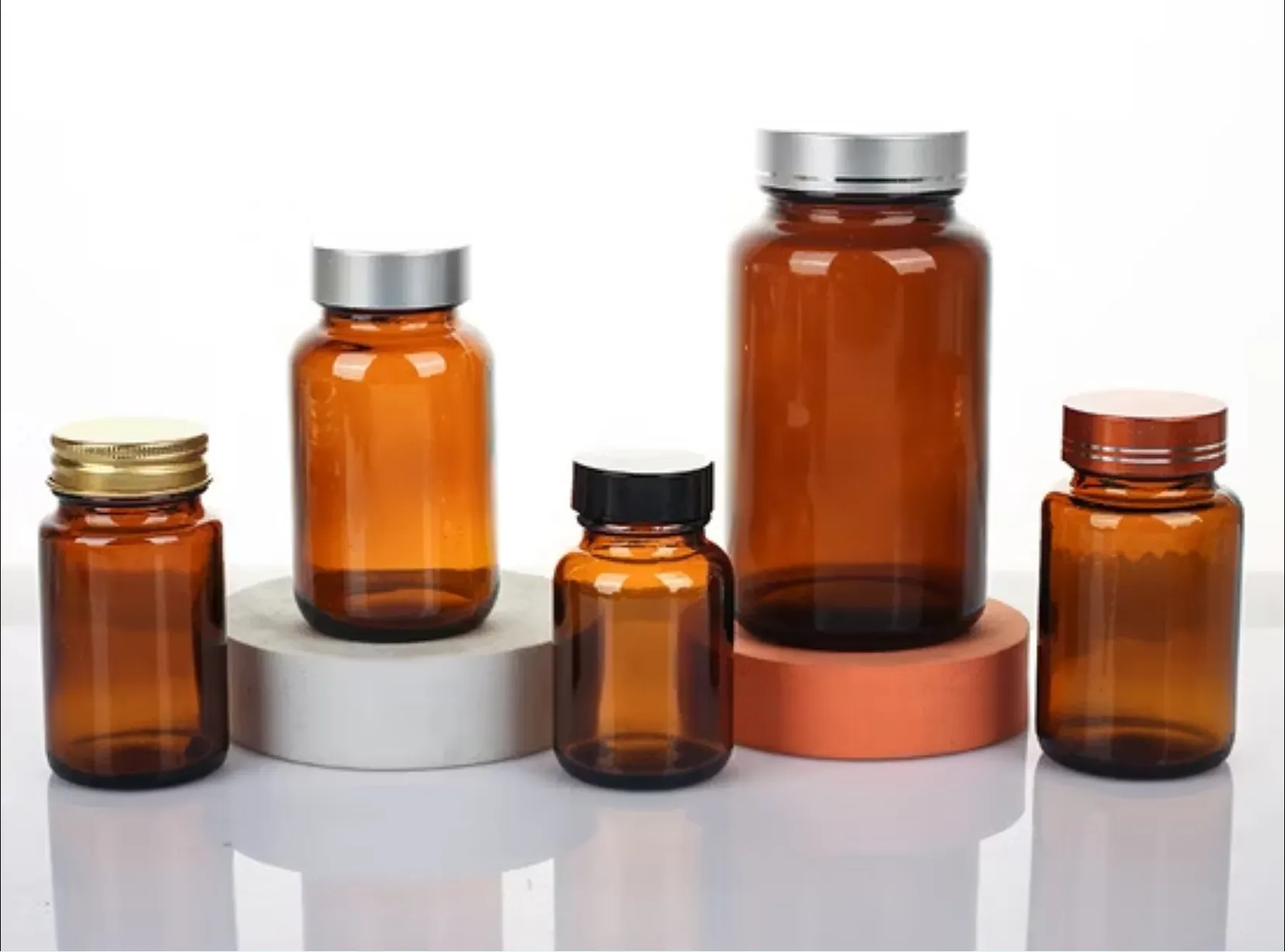
Australia Ever-Power’s pharmaceutical-grade fully servo ISBM machines are engineered to deliver measurable efficiency gains and cost reductions from day one of production. Contact our team for an ROI analysis tailored to your container portfolio and production volumes.
HGYS150-V4-EV Fully Servo Four-Station ISBM Machine
The HGYS150-V4-EV is Australia Ever-Power’s flagship pharmaceutical-grade ISBM machine — delivering all-axis servo drive, recipe management for rapid changeover, OPC-UA MES connectivity, and cycle-level process data capture. It represents the most energy-efficient, operationally productive, and GMP-aligned ISBM platform available for pharmaceutical container production in the Australian market.
With typical OEE achievement of 85–92%, energy consumption 30–45% below hydraulic equivalents, and changeover times of 45–75 minutes versus 3–4 hours on hydraulic machines, the HGYS150-V4-EV delivers the operational and financial performance parameters that pharmaceutical packaging efficiency programmes require.
📈 85–92% OEE achievable
⏱️ 45–75 min changeover via recipe recall
🎯 99%+ production yield rate
🔧 Predictive maintenance via servo diagnostics
📊 OPC-UA MES/EBR connectivity standard
💧 Zero hydraulic oil — dry production environment
🏭 1–8 cavity scalability per station
💰 12–24 month typical payback period
📋 IQ/OQ/PQ validation documentation included