Описание
Technical Specifications & Machine Parameters
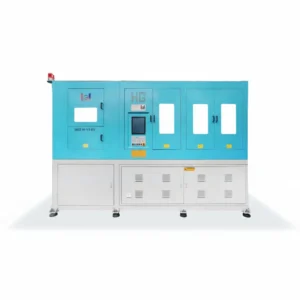
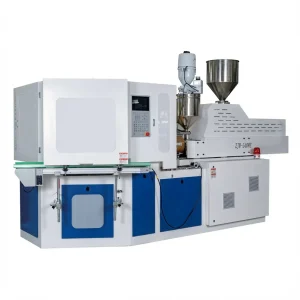
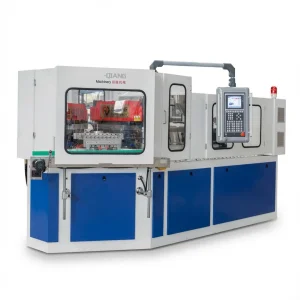
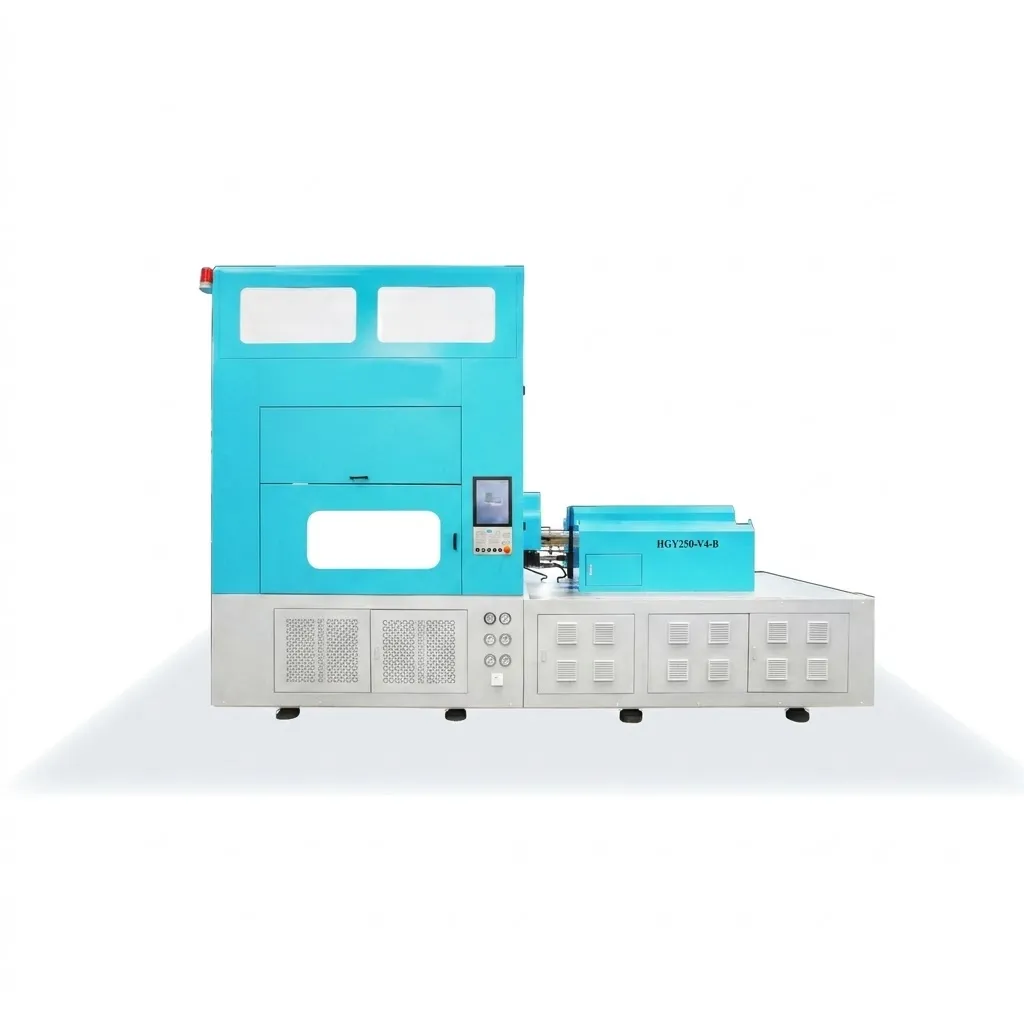
The HGYS150-V4-B is the wide-mouth and heavy-wall variant within the HGYS150 series — engineered specifically for containers with larger neck diameters, thicker walls, and the complex preform geometries demanded by premium cosmetic jars, nutraceutical wide-mouth bottles, and speciality food containers. It shares the same 4-station rotary architecture as the HGYS150-V4 but ships with expanded blow-mould stroke geometry and a clamping interface dimensioned for AOKI-250 legacy tooling, protecting the tooling investments of customers transitioning from AOKI or similar Japanese platforms. All parameters below are drawn directly from factory test and acceptance records for the production-ready configuration.
⚙ Technical Standards
📐 Machine Parameters
📦 Container Output Dimensions by Cavity Count
What Makes the HGYS150-V4-B Different
The “-B” designation is not a minor cosmetic change. It signals a specific set of engineering choices that make the machine genuinely suited to wide-mouth container formats — thick-wall cream jars, wide-neck supplement bottles, premium honey containers — that standard narrow-neck ISBM machines cannot handle reliably. Four concrete advantages separate this platform from both generic competitors and legacy Japanese equipment in this segment.
Zero Parting-Line Surface — Micron-Precision Tooling
Every blow mould on the HGYS150-V4-B is machined on five-axis CNC centres to contact-face flatness tolerances measured in micrometres. Japanese machines in this category leave a raised parting-line seam at the mould interface — a visible ridge that costs time in post-moulding rework and disqualifies containers from high-end retail and pharmacy shelving. The dual-servo motor clamping system with active high-pressure compensation maintains even face contact under 200 kN blowing force throughout the entire blow cycle. The result: containers pass under high-gloss display lighting without any seam artefact — a standard particularly valued for wide-mouth PETG cream jars where the full container body is visible to the consumer from every angle.
50 % More Containers per Cycle vs. Japanese Platforms
A Japanese ASB machine in the 150-class typically produces four containers per cycle. The HGYS150-V4-B reaches six in the same cycle — driven by a high-shear screw at up to 240 RPM and a theoretical injection volume of up to 480 cm³ that keeps the melt chamber fully loaded at cadence. The plasticising architecture melts PET and PETG fast without degrading intrinsic viscosity, which is the specific constraint that prevents most competitors from simply spinning the screw faster. For production managers, the arithmetic is straightforward: same floor space, same mould investment, same headcount — 50 % more containers per shift. Over a twelve-month period at standard production hours, that uplift compounds into a significant reduction in per-unit machine amortisation cost.
15–25 % Lower Energy Draw, Verified at Customer Sites
Five servo systems replace conventional fixed-displacement hydraulic pumps. Power is generated only when and to the degree that each axis demands — idle periods draw next to nothing from the hydraulic circuit. The nano far-infrared heating ring on the barrel (10.4 kW) transfers heat directly into the resin mass with lower surface radiation loss than conventional mica-band heaters at the same barrel temperature setpoint. Combined, these measures produce a 15–25 % reduction in kWh per 1,000 containers versus equivalent-capacity Japanese and European machines — a figure confirmed by on-site metered comparisons at customer facilities in France, Australia, and Southeast Asia across different container weights and resin grades.
Servo-Electric Architecture — Full GMP Option Available
The HGYS150-V4-B systematically replaces pneumatic and hydraulic actuators with servo-electric equivalents. The base-gate trim unit — a pneumatic cylinder on Japanese machines — is replaced with a servo motor running at twice the actuation speed, independent of factory air-line pressure. For pharmaceutical and nutraceutical customers requiring GMP compliance, a fully-electric configuration eliminates every hydraulic oil circuit, producing an oil-free production environment that meets FDA 21 CFR Part 211 and EU GMP Annex 1 without supplementary cleanroom containment. The NSK Japan precision lead screw and Yaskawa-driven turntable deliver the micron-level positioning consistency required for validated pharmaceutical container production.
4-Station Production Process — Pellet to Finished Container
The four-station rotary design runs all process steps simultaneously on different preforms at every turntable index, keeping the machine fully productive throughout every cycle. Critically, the dedicated temperature conditioning station — absent on three-station machines — is what enables the HGYS150-V4-B to handle wide-mouth and heavy-wall container geometries reliably. Here is how a single preform moves through the machine from start to finish.
🔩 Injection Station — Preform Formation
Dried PET or PETG resin is plasticised by the selected screw diameter (40–60 mm) and injected through a hot-runner manifold into the preform cavity under 150 kN injection clamping force. The Inovance/MIRLE PLC manages multi-stage pressure and velocity profiles to prevent weld lines, sink marks, or residual stress around the threaded neck area. Because the HGYS150-V4-B is configured for wide-mouth container geometries, the injection mould and core rod dimensions accommodate larger neck diameters and heavier-wall preforms than standard narrow-neck configurations — maintaining the same cycle-overlap efficiency that keeps the plasticising unit continuously productive throughout indexing.
🌡️ Temperature Conditioning Station
This station is the defining advantage of a four-station machine over three-station alternatives. The preform — still carrying thermal energy from injection — enters a dedicated conditioning zone where the neck is cooled independently to lock thread dimensions, while the body zone is held in the PET stretch window (95–115 °C). The 280 mm conditioning stroke accommodates the full range of preform lengths supported by the AOKI-250-compatible clamping interface. For heavy-wall PETG preforms (common in cosmetic cream jars), this station provides the additional dwell time needed to achieve radial temperature homogeneity before blow — something a single injection-to-blow step cannot deliver at competitive cycle times.
💨 Stretch & Blow Station
The blow mould closes under 200 kN (single side) clamping force via the dual-servo motor system with active high-pressure compensation. A stretch rod descends 100 mm to axially elongate the preform while American Parker valves deliver high-pressure air at 2.0–3.5 MPa through a 60+60 mm blow mould stroke to expand it radially against the cavity walls. Simultaneous axial and radial deformation produces biaxial molecular orientation — the mechanism that delivers measurably superior barrier properties, burst strength, and drop-impact resistance versus injection-blow-only processes at the same resin grade. For wide-mouth containers, the active high-pressure compensation is particularly important: without it, uneven face loading would allow flash between the mould halves at the wide opening perimeter.
📦 Cooling, Servo Trim & Ejection Station
Chilled mould water sets the container geometry before the mould opens. The servo-electric gate-trim unit — running at twice the speed of the pneumatic cylinder equivalents used on Japanese platforms — removes the injection gate vestige from the container base within the cooling window, adding zero net time to cycle duration. The 150 mm take-out mechanism extracts the finished container cleanly and deposits it on the outfeed conveyor without touching the critical sealing surface. Every container exits the machine ready for immediate labelling, filling, or inspection, with no intermediate manual handling in the process chain. The enclosed single-cycle environment means internal container hygiene is maintained from melt through to ejection without any atmospheric exposure.
Material Compatibility & Resin Selection Guide
The HGYS150-V4-B is factory-configured for PET and PETG as primary resins — together covering the widest commercial range of rigid container applications. The machine’s multi-zone temperature control architecture, selectable screw geometry (40–60 mm), and wide clamping-force range support additional engineering polymers when application demands it. Understanding material behaviour within the process window prevents avoidable downtime and accelerates qualification of new container formats on this platform.
🧪 PET (Standard)
Barrel range 265–285 °C, mould cooling 18–22 °C. The high-shear screw retains intrinsic viscosity (IV 0.72–0.84) essential for barrier and burst-pressure performance. Wide-mouth container formats from 100 ml to 2,500 ml fall within the machine’s clamping and stroke envelope. Pre-drying to ≤0.004 % moisture is mandatory; upstream crystalliser/dryer integration is fully supported.
🧪 PETG (Glycol-Modified)
Processed at 240–260 °C for superior optical clarity and chemical resistance. Preferred for luxury cream jars, cosmetic display containers, and confectionery display packaging where glass-like transparency is non-negotiable. The conditioning station’s independent neck-cooling preserves PETG thread geometry while maintaining body temperature in the narrow optimal stretch window.
🧪 PC (Polycarbonate)
With a PC-grade screw profile and extended barrel temperature range (270–310 °C), the HGYS150-V4-B produces laboratory reagent bottles, baby feeding bottles (PC-only formats), and reusable sports containers. PC requires longer drying times and tighter moisture control than PET — the machine’s integrated temperature-control system accommodates these requirements through adjustable zone setpoints.
🧪 rPET (Recycled Content)
rPET blends up to 30 % recycled content are processable in the standard configuration provided material is dried to ≤0.004 % moisture. The Inovance/MIRLE PLC’s continuous per-cycle process logging helps teams detect and compensate for lot-to-lot IV variation in recycled content. This supports ESG procurement targets and EU PPWR recycled-content requirements for non-food-contact container production without machine modification.
The HGYS150-V4-B’s defining compatibility advantage is direct tooling transfer from AOKI-250 mould sets. Customers who have built AOKI mould libraries — including injection mould stacks and blow mould halves — can transfer those tools directly to the HGYS150-V4-B clamping interface without adapter plates. This protects a tooling investment that typically represents USD 60,000–200,000 per product SKU and eliminates the mould re-engineering cost that usually accompanies a platform switch. For customers also holding ASB-12M moulds, compatibility is maintained through a secondary clamping-interface configuration available at the point of order.
Related Product
Fully Servo One-Step ISBM Machine — HGYS150-V4-EV
Need a 100 % oil-free GMP platform in the same 150-class capacity? The HGYS150-V4-EV removes every hydraulic component — delivering the same injection and blow clamping performance in a fully electric configuration that meets FDA 21 CFR Part 211 and EU GMP Annex 1 without any cleanroom adaptation.
Mould Compatibility & Changeover Guide
Mould compatibility is the single most commercially sensitive detail for any customer evaluating a platform switch. A mould set for a 500 ml wide-mouth cosmetic jar can represent USD 80,000–200,000 in engineering and machining cost — an investment that cannot be written off simply because the machine supplier changes. The HGYS150-V4-B was designed with this concern at the centre of its clamping-interface specification.
Supported Tooling Standards
✅ AOKI-250 (Primary)
Direct clamping interface match. Blow mould halves and injection stacks transfer without adapter plates. The most common tooling standard for wide-mouth cosmetic and food jars in the 100–2,500 ml range. No modification required; compatible with AOKI-250 hot-runner manifold electrical connectors via quick-connect fittings on the HGYS150-V4-B.
✅ ASB-12M (Secondary Config)
Available as a secondary clamping-interface configuration at order. ASB-12M tooling is the most common standard in the general ISBM market and covers the majority of narrow-neck and mid-size container formats. Customers holding both AOKI and ASB tooling can specify which interface the machine ships with and convert to the other configuration in the field with a half-day changeover.
✅ Custom Tooling
Australia Ever-Power’s in-house mould engineering team designs and manufactures cavity sets to customer container specifications. Blow mould tolerances are held to the same five-axis CNC standards as production moulds, ensuring direct dimensional compatibility with the machine’s clamping system. Custom mould lead time is typically 6–10 weeks depending on complexity and cavity count.
Mould Changeover Procedure
1
Cool and isolate — Bring injection barrel to safe handling temperature and isolate all power circuits. Verify Parker valve manifold is fully vented before proceeding.
2
Remove blow mould halves — Use the dedicated mould-cart and alignment-pin system. AOKI-250 or ASB-12M blow mould halves unlatch from the clamping frame without special tooling in this configuration.
3
Extract injection mould stack — Hot-runner manifold electrical connections use quick-connect fittings that disengage without tools. The injection stack slides from the platen on the standard guide pillars.
4
Install new mould and load PLC recipe — Connect the manifold and run the PLC’s auto mould-recognition routine, which loads the stored parameter recipe for this mould. Recipes are stored in non-volatile memory; up to 500 product profiles are retained.
5
Quality trial and release — Conduct a minimum five-shot dimensional trial measuring neck diameter, base gate-scar depth, and body wall thickness before releasing to full production. With an existing PLC recipe, this typically takes under 15 minutes.
A trained two-person team completes a full mould change on the HGYS150-V4-B — from last good part of one product to first good part of another — in under 60 minutes. Changeover training and a documented procedure manual are included with every machine at no additional cost.
Industry Applications & Machinery Integration
The HGYS150-V4-B’s wide-mouth clamping configuration, PET/PETG/PC material range, and container size envelope from 100 ml to 2,500 ml position it across several distinct market segments. The following applications represent the primary deployment profiles observed across the installed base of this model.
🌸 Luxury Cosmetics & Personal Care
Wide-mouth PETG cream jars, heavy-base lotion bottles, and serum containers in the 50–500 ml range are the primary application driving the “-B” wide-mouth configuration. The zero parting-line finish satisfies prestige retail QA criteria at Sephora, Boots, and department-store buyers. Neck diameters from 28–100 mm cover the full range of wide-opening jar and pump-closure formats used by leading beauty brands. The machine integrates with tube-filling and capping equipment from Serac, Ronchi, and Bausch + Ströbel for complete inline production lines.
💊 Pharmaceutical & Nutraceutical
Wide-mouth PET tablet jars, eye-drop bottles, and oral solution containers in the 100–1,500 ml range are produced in the full-servo, zero-hydraulic configuration. The enclosed melt-to-bottle process maintains internal sterility without post-moulding sterilisation, and the PLC’s per-cycle data logging supports 21 CFR Part 11 electronic records. Compatible with TGA, EMA, and FDA facility audits. The servo gate trim eliminates a pneumatic process variable from change-control documentation, reducing ongoing validation burden in GMP environments.
🍯 Specialty Food & Condiments
Wide-mouth PET containers for honey, peanut butter, jam, and premium sauce brands require tight neck-seal geometry for induction-seal fitments, robust wall strength under retail stacking loads, and — for unsleeved products — a zero-seam surface finish. The HGYS150-V4-B’s AOKI-250 interface is particularly valued in this segment, as most high-volume food jar tooling in the 300–2,500 ml range was historically cut to AOKI standards. The machine produces food-grade PET containers compliant with FDA 21 CFR 177.1630 and EU Regulation 10/2011 without additional process modification.
🔬 Laboratory & Scientific
High-transparency PC and PETG containers for laboratory reagents, cell culture media, and diagnostic specimen collection are produced with the same dimensional precision and surface quality as cosmetic containers — but with chemistry resistance and autoclave capability requirements that standard PET cannot meet. The HGYS150-V4-B’s PC-compatible screw option and extended barrel temperature range cover PPSU and high-temperature PC grades used in these applications. Graduated markings can be applied via inkjet downstream of the outfeed conveyor integration point.
🍼 Baby Care & Infant Nutrition
BPA-free PC and Tritan wide-mouth baby feeding bottles and weaning jars require the most demanding combination of qualities on this machine: glass-like optical clarity, zero contamination risk in production, chemical resistance to repeated sterilisation cycles, and regulatory compliance with EN 14372 and FDA infant product standards. The full-servo zero-hydraulic configuration satisfies all four requirements simultaneously. Neck diameters up to 100 mm — the widest format in the machine’s output range — cover standard wide-mouth infant feeder geometries used by Philips Avent, Dr. Brown’s, and Tommee Tippee equivalent OEM formats.
🏋️ Sports Nutrition & Wellness
Wide-mouth PET and PETG containers for protein powder, creatine, pre-workout supplements, and superfood blends in the 500–2,500 ml range are a fast-growing application. These containers are typically sold with a branded lid, making neck-seal geometry and lid thread consistency commercially critical. The HGYS150-V4-B’s 150 kN injection clamping maintains thread-form precision across the full weight range (22–130 g) without adjustment between cavities. The zero-seam finish allows brands to position a transparent PET container as a premium alternative to opaque HDPE at the same retail price.
Energy Performance & Operating Cost Analysis
At 45.2 kW total installed power, the HGYS150-V4-B is one of the most energy-efficient machines in its capacity class. Three specific engineering choices account for the 15–25 % electricity saving versus comparable Japanese platforms — and each saving is independently measurable at the grid connection point.
The Three Energy-Saving Mechanisms
Five Servo Systems
Five independent servo-driven systems replace fixed-displacement hydraulic pumps. Each draws power on demand, proportional to load — no continuous idle-circuit energy waste between indexing events.
Nano IR Heating Ring
Far-infrared emission heats the resin mass directly with lower surface radiation losses than conventional mica-band heaters at the same barrel temperature setpoint — measurably reducing heating energy per kilogram of resin processed.
No Secondary Reheat
The one-step process carries injection-phase thermal energy through to blow — eliminating the infrared oven energy cost that two-step reheat SBM lines incur on every preform, typically 30–40 % of total process energy on those platforms.
At an industrial electricity tariff of AU$0.15/kWh and 6,000 annual operating hours, a 20 % reduction on a 45.2 kW machine translates to approximately AU$8,136 saved per year — AU$81,360 over a ten-year machine life before tariff escalation. For facilities in Southeast Asia or the Middle East, the percentage saving holds while the dollar amount varies with local electricity pricing. On-site metered comparisons at customer facilities in France and Australia have returned 17–23 % savings across different container formats and resin grades on this model.
Maintenance Schedule & Component Care Guide
A properly maintained HGYS150-V4-B is engineered for more than 80,000 operating hours of productive service with scheduled consumable replacements. The compact five-servo architecture, NSK precision lead screw, and sealed Inovance drive units reduce unplanned downtime significantly compared with machines relying on large pneumatic solenoid arrays and conventional hydraulic pump assemblies. The schedule below is a recommended baseline; intervals should be adjusted for ambient temperature, resin type, and production shift pattern.
🗓️ Daily — Each Shift Start
Check Inovance servo drive status displays — clear any yellow or red fault codes before starting production. Verify blow air supply pressure at the Parker manifold (2.0–3.5 MPa). Inspect blow mould parting faces and wipe with a non-abrasive cloth to remove any residue from the previous shift. Confirm cooling water inlet pressure and temperature. Check the PLC rolling alarm log for any recurring low-priority faults that may signal a developing issue in a temperature sensor or position encoder.
📅 Weekly
Lubricate all grease points on the turntable bearing, blow-mould guide pillars, and the NSK lead screw using the recommended lithium-complex grease grade. Check TSUNTIEN reducer oil level and top up as required. Inspect the nano-infrared heating ring for surface cracking or discolouration — rings typically approach end-of-life between 18,000 and 24,000 operating hours, so visual inspection frequency should increase from 15,000 hours. Review the PLC alarm log for patterns.
📆 Monthly
Calibrate melt-temperature thermocouples against a traceable reference sensor. Inspect all pneumatic Airtak cylinder fittings for micro-cracking at hose ends. Torque-check all mould clamping bolts and blow-mould guide-pillar lock nuts to specification. Inspect Parker valve seats and dynamic seals — replace if blow-cycle pressure holds deviate more than ±0.1 MPa from setpoint, which indicates seat wear affecting the blow-air waveform. Verify NSK lead screw pre-load — any perceptible axial play indicates the nut assembly requires inspection.
📊 Key Wear Items & Replacement Intervals
Nano far-infrared heating ring: 18,000–24,000 hours. Parker valve dynamic seals: inspect at 12,000 hours, replace on evidence of ±0.1 MPa deviation. Airtak cylinder seals: inspect at 15,000 hours. NSK lead screw nut assembly: inspect at 20,000 hours or on first evidence of axial play. Inovance servo drive capacitors: factory-specified replacement at 35,000 hours for drives in continuous duty. Cooling water hose fittings: inspect annually for corrosion at compression ferrules. All consumable parts are stocked at regional Ever-Power distribution centres in Australia, UAE, and Brazil for fast local dispatch.
Market Price Comparison — Where the HGYS150-V4-B Sits
Capital decisions for wide-mouth ISBM machines in this capacity class involve machine price, output per cycle, energy impact, mould compatibility, and after-sale support cost. The HGYS150-V4-B addresses all five favourably versus Japanese platforms — and does so at a machine price that is consistently one-third or less of the Japanese equivalent for comparable specifications. The table below presents an honest market-range comparison across the three most commonly evaluated alternatives.
* Prices are indicative market ranges based on distributor data and customer procurement records as of early 2026. Exact pricing depends on cavity count, mould specification, and regional import duties. Contact [email protected] for a project-specific quotation.
Sustainability, Regulatory Compliance & Key Markets
Sustainability commitments and regulatory requirements now shape machine procurement as much as technical specifications. The HGYS150-V4-B’s engineering choices — servo-driven hydraulics, far-infrared barrel heating, one-step process integration, and rPET compatibility — align with the direction regulators and major brand owners are moving across each of the machine’s principal markets.
🇦🇺 Australia & New Zealand
Australia’s 2025 National Packaging Targets require measurable resin reduction and post-consumer recycled content pathways. The HGYS150-V4-B’s precise wall-thickness control minimises PET usage per container, supporting lightweighting commitments. rPET blends up to 30 % are processable without machine modification, giving Australian converters a documented pathway to the APCO (Australian Packaging Covenant Organisation) targets.
🇫🇷 France & Western Europe
France’s AGEC law (Anti-Waste for a Circular Economy) and the EU PPWR require packagers to demonstrate measurable recycled content and reusability design by 2025–2030. The machine’s CE documentation package satisfies the EU Machinery Directive, and the energy efficiency data supports Environmental Product Declaration submissions used in public-sector packaging tenders. Several French cosmetics OEMs are among the current HGYS150-V4-B installed base.
🇺🇸 United States
FDA 21 CFR Part 211 GMP requirements for pharmaceutical-grade containers are met by the full-servo configuration. The machine’s PLC data logging supports 21 CFR Part 11 electronic records. Food-contact PET containers produced on this platform comply with FDA 21 CFR 177.1630. California’s SB 270 extended producer responsibility framework is addressed via the machine’s rPET processing capability.
🌏 Southeast Asia & Middle East
Vietnam, Thailand, Indonesia, and the UAE represent fast-growing markets for premium cosmetic, nutraceutical, and specialty food packaging — the core application segments for the HGYS150-V4-B. The machine’s pricing relative to Japanese alternatives makes it financially viable for mid-tier converters in these regions. Local distributors in Bangkok, Ho Chi Minh City, and Dubai carry stocked spare parts and provide commissioning support within standard lead times.
Customer Success Cases
The following three cases represent HGYS150-V4-B deployments across different application segments and geographic markets. Production and financial data are drawn from commissioning reports and post-installation follow-up visits conducted by Australia Ever-Power field engineers.
🌸 Case 1 — Prestige Cosmetics OEM, France
Cosmetics / Premium Packaging
A French cosmetics OEM supplying Sephora-stocked prestige cream brands with wide-mouth PETG jars (200 ml and 500 ml) had been sourcing containers from a third-party mould shop running an AOKI machine, with an average 2.4 % parting-line rejection rate from brand customers. The OEM invested in a HGYS150-V4-B with their existing AOKI-250 blow mould transferred directly. After a two-week process optimisation period using their specific PETG compound, the parting-line rejection rate dropped below 0.1 %. Production was brought fully in-house, eliminating the 8-week minimum order quantity that had constrained limited-edition packaging launches. The payback period on machine capital, calculated at the cost of container imports eliminated, was 22 months.
🍯 Case 2 — Specialty Food Jar Producer, Australia
Food & Condiments
An Australian artisan food producer supplying wide-mouth 400 ml PET honey jars and 900 ml sauce containers to supermarket chains had been importing containers from an offshore converter, incurring 10-week lead times and minimum quantities that tied up working capital. They qualified a HGYS150-V4-B to bring production in-house. Using their existing AOKI-250 mould sets for the 400 ml format and commissioning a new cavity set for the 900 ml container, both products were running within six weeks of delivery. Monthly electricity consumption versus the offshore converter’s declared manufacturing energy fell by 21 %. The supermarket buyer approved the Australian-made production source within the first batch, citing the improved surface finish and neck-seal consistency on induction-seal testing.
💊 Case 3 — Nutraceutical Contract Packer, Vietnam
Nutraceutical / GMP
A Vietnamese contract packaging operation producing 250 ml and 500 ml wide-mouth PET supplement jars for export to Australian and European retail brands invested in a full-servo HGYS150-V4-B configuration to meet the GMP facility certification required by their international customers. The zero-hydraulic production environment satisfied the initial facility audit from both TGA (Australian Therapeutic Goods Administration) and a European notified body on the first inspection, with no cleanroom modification required. Container quality — neck thread form, wall-thickness uniformity, and gate-scar depth — met all specifications within the first week of production. The machine’s PLC data logging was integrated directly into the contract packer’s batch record system, reducing per-batch quality documentation time by approximately 40 %.
Brand Comparison: Ever-Power vs. the Alternatives
The wide-mouth ISBM machine market sits between two positions that neither serves mid-tier converters well: Japanese platforms with exceptional engineering pedigree priced for multinationals, and generic lower-cost alternatives that sacrifice the precision required for prestige container production. The HGYS150-V4-B occupies a third position — AOKI-compatible tooling interface, micron-precision mould machining, and a price point that makes in-house production genuinely viable for small and mid-scale converters.
The Practical Conclusion
When you compare a HGYS150-V4-B producing six containers per cycle — with no parting-line seam, AOKI mould compatibility, and 15–25 % lower electricity draw — against a Japanese platform producing four containers with a visible seam at three times the capital cost, the five-year total cost-of-ownership difference runs into hundreds of thousands of dollars. Australia Ever-Power invites direct factory trials and reference-site visits as part of any serious evaluation. Contact [email protected] to arrange either.
Отзиви от клиенти
“We transferred our AOKI-250 cream jar mould to the HGYS150-V4-B without a single modification. The machine recognised the tooling geometry, we loaded a trial process recipe, and within two days we had qualified production. The parting-line issue that had been causing returns from our Sephora buyer has not reappeared once in four months of production.”
Isabelle D.
Production Engineer · Cosmetics OEM, Lyon, France
“We specifically needed a GMP-certified, oil-free machine for our TGA-registered supplement facility. The full-servo HGYS150-V4-B was the only machine in this price range that met the requirement without any additional cleanroom adaptation. Our TGA audit passed on the first inspection cycle, and the per-jar container cost is now 30 % below what we were paying to import from Europe.”
Andrew K.
Regulatory Affairs Manager · Supplement Brand, Melbourne, Australia
“Our honey jars need a perfect neck seal for induction sealing — any deviation in thread form causes a seal failure at the filling line. The HGYS150-V4-B has held neck diameter tolerance within ±0.08 mm across every batch for seven months straight. The 150 kN injection clamping clearly maintains the thread-form precision we need, which our previous machine on a fixed-pump hydraulic system was never able to deliver consistently.”
Thomas B.
Operations Manager · Artisan Food Producer, Brisbane, Australia
“We produce baby feeding bottles in wide-mouth PC format and the full-servo HGYS150-V4-B satisfied every compliance requirement we had — no oil, no contamination risk, glass-like clarity, and tight dimensional consistency on every batch. The Ever-Power team was on video call for our first full production run and responded immediately when we had a conditioning temperature query. Losing one star only because the initial PLC recipe took three sessions to optimise for our high-viscosity PC grade — worth it in the end.”
Linh N.
Quality Director · Baby Products OEM, Ho Chi Minh City, Vietnam
HGYS150-V4-B Frequently Asked Questions
Technical and procurement guidance for the One-Step Injection Stretch Blow Molding Machine HGYS150-V4-B. For project-specific engineering queries, contact [email protected].
Quality Documentation Available
Machine test certificates, commissioning reports, CE declaration, and component traceability records available on request.
Evaluate the HGYS150-V4-B for Your Container Line
Factory trials with your existing AOKI or ASB moulds, ROI modelling for your energy tariff and output targets, and full technical documentation — all available on request, with no commitment required to start the conversation.
Australia Ever-Power Injection Stretch Blow Moulding Machine Co., Ltd