1. What Is One-Step vs Two-Step Injection Stretch Blow Moulding?
1.1 One-Step ISBM
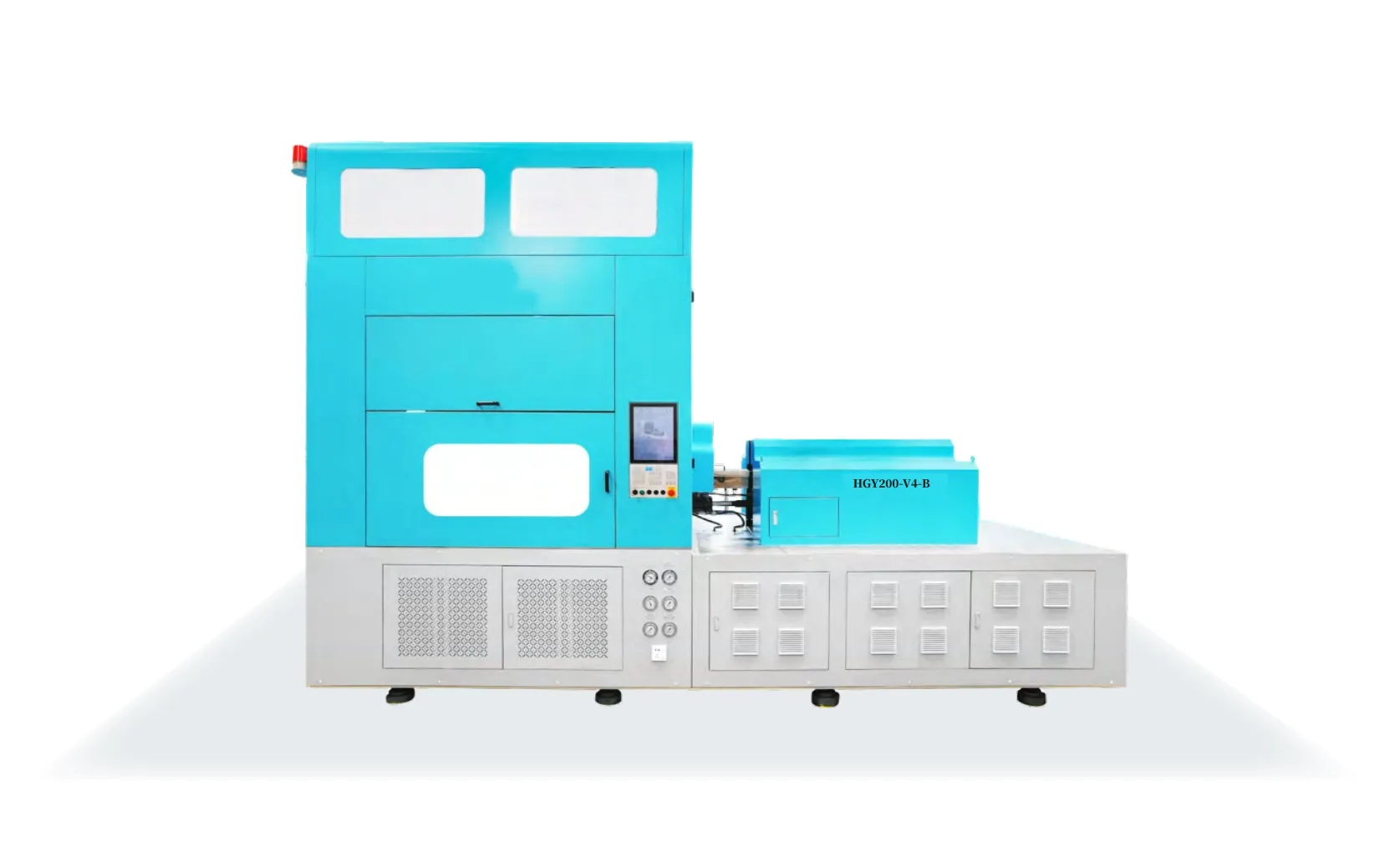
One-step injection stretch blow moulding (ISBM) completes injection moulding, temperature conditioning, stretch-blow, and ejection on a single rotary machine platform in a continuous cycle of just 10–30 seconds. Raw PET resin enters at one end; a finished, precisely dimensioned container exits at the other — with no manual handling, no intermediate storage, and no reheating step in between. This integrated architecture is the defining characteristic of the injection stretch blow molding machine range produced by Australia Ever-Power, from the compact three-station HGY50-V3-EV to the high-output four-station HGYS200-V4. Every model in the range uses servo-driven actuation and full PLC automation, enabling cycle-to-cycle repeatability at the millisecond level that sustains premium container quality across millions of production cycles.
1.2 Two-Step ISBM
Two-step ISBM splits the process across two independent machines. The first machine — an injection moulding press — produces preforms that are cooled to ambient temperature and placed in trays or bins for storage. The second machine — a reheat stretch blow moulder — then reheats those preforms to the stretch temperature window (approximately 95–110 °C for PET) before expanding them into finished bottles. The preform therefore undergoes a complete thermal cycle of heating, cooling, storage, and reheating before it becomes a container. Two-step lines remain competitive for very large-volume, single-SKU production runs measured in hundreds of millions of units per year, but for mid-volume multi-SKU manufacturers — and particularly for hygiene-sensitive categories — the total cost and operational complexity of two-step processing is substantially higher than the headline machine price suggests.
⚡ Core Difference at a Glance
One-Step ISBM
Single machine · No reheating · Compact footprint · High hygiene · Ideal for premium multi-SKU packaging
Two-Step ISBM
Two separate machines · Reheating required · Preform storage costs · Best for single-SKU ultra-high volume
2. How the Four-Station One-Step Process Works
Understanding why one-step technology outperforms two-step on so many metrics requires a station-by-station walkthrough of the process. Using the Australia Ever-Power HGYS150-V4 four-station machine as a reference, each station operates simultaneously as the rotary table indexes — meaning injection, conditioning, blowing, and ejection all happen in parallel during every single cycle, compressing four sequential operations into one machine heartbeat.
Key process parameters: injection pressure in the range of 80–140 MPa; stretch ratio (axial × radial) approximately 2.5 × 3.5; wall thickness uniformity tolerance held within ±5%. The temperature conditioning station is the mechanism that fundamentally separates one-step from two-step technology — it uses the residual thermal energy from injection to maintain the preform within the ideal stretch window, eliminating the cold-to-reheat thermal cycle entirely. This single architectural decision is the primary engineering reason why a one-step automatic blow moulding machine consumes 20–30% less energy than an equivalent two-step line.
Biaxial orientation — the simultaneous axial and radial molecular alignment achieved at Station 3 — is equally important. When PET molecular chains are stretched in two directions simultaneously at the correct temperature, they align and partially crystallise in a way that increases tensile strength by more than 30% compared with unoriented PET, dramatically improves optical clarity, and enhances the CO₂ barrier performance that carbonated and hot-fill beverage applications specifically require. This structural improvement is more consistent in one-step processing because the preform has never been fully cooled and reheated — its thermal history is shorter, more controlled, and therefore more reproducible from cavity to cavity.
3. Seven Core Advantages of One-Step Over Two-Step ISBM
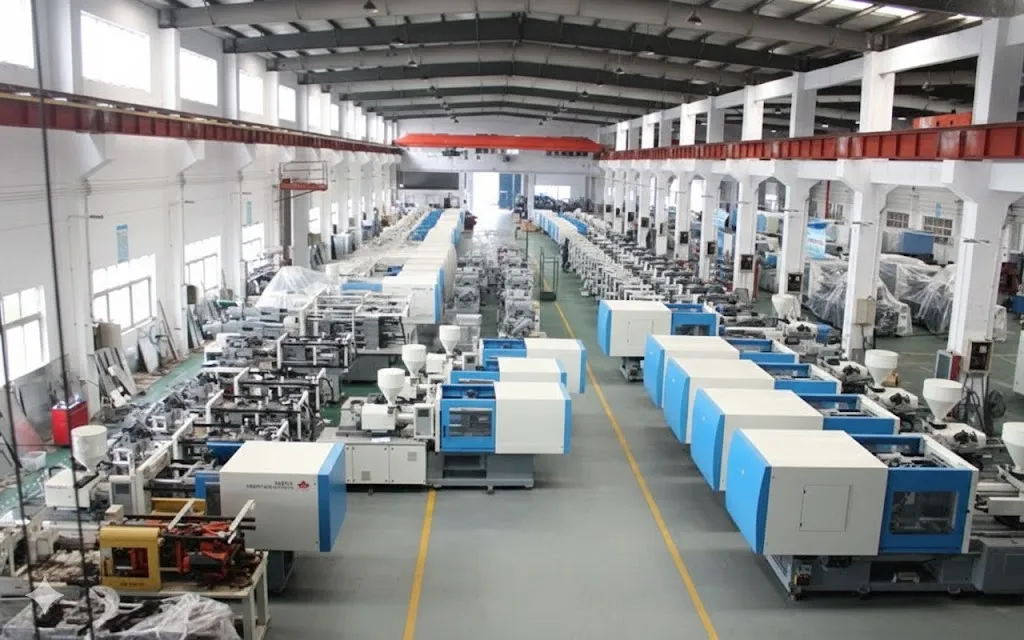
Each of the following advantages is rooted in the engineering mechanics of the one-step process — not marketing claims. Every metric cited is traceable to measurable process physics or documented production data from Australia Ever-Power installations.
Energy Savings of 20–30%: Eliminating the Reheat Penalty
In two-step processing, every preform must be cooled from the injection temperature (around 270 °C melt) to ambient (approximately 25 °C), stored, then reheated to the stretch window (95–110 °C for PET). That cooling-and-reheating thermal cycle consumes energy that produces no useful work — it is pure process waste. One-step ISBM retains the preform at an intermediate temperature through the conditioning station, entirely eliminating this penalty. Based on measured production data from Australia Ever-Power’s fully servo one-step ISBM machine installations, comprehensive power consumption per 10,000 units produced is 20–30% lower than equivalent two-step lines. At Australian industrial electricity tariffs of AUD 0.18–0.26 per kWh, this translates into a meaningful and recurring cost advantage that compounds over every production shift.
Material Utilisation Above 95%: Near-Zero-Waste Precision
The injection stretch blow process delivers a precisely metered quantity of resin directly into each cavity via a hot-runner system with minimal gate vestige. There is no parison trimming waste as in extrusion blow moulding, and the hot-runner design reduces runner scrap to near zero. Material utilisation rates consistently exceed 95%, compared with 85–92% in extrusion blow moulding processes. For manufacturers using recycled PET (rPET) — which commands a premium in Australia’s sustainability-driven supply chain — or specialty resins such as PETG for cosmetic containers, this differential has a direct and significant impact on annual raw material costs. The servo-controlled injection system of an automatic blow moulding machine also maintains shot weight accuracy within ±0.1 g, eliminating the over-injection waste that accumulates when shot weights are set conservatively wide to avoid short shots.
Superior Hygiene: Closed-Loop Process Eliminates Contamination Risk
In two-step manufacturing, injection-moulded preforms are loaded onto trays, passed through quality inspection, transported to a warehouse or inter-factory logistics chain, and then loaded into a reheat stretch blow moulder — every step an opportunity for particulate contamination or microbial exposure. For food-contact packaging regulated under Australia’s Food Standards Code (FSANZ) and pharmaceutical primary packaging governed by the TGA, this open intermediate-product chain represents a compliance liability that is difficult to fully mitigate through incoming inspection alone. One-step ISBM’s closed continuous process — from resin pellets to finished sterile-ready containers with no atmospheric exposure of the internal surface — is architecturally aligned with GMP requirements for both food-grade and pharmaceutical packaging categories, and eliminates the need for preform washing or UV sterilisation steps that some two-step lines require.
Higher Neck Finish Accuracy: Injection-Moulded Thread Geometry Is Never Disturbed
In a one-step injection stretch blow molding machine, the bottle neck and thread finish are formed in the injection station by a precision steel mould tool and are never subsequently exposed to stretch forces or high-pressure blow air — they remain dimensionally stable from injection through to ejection. In two-step processing, even with neck protection fixtures in the reheat blow moulder, the repeated thermal cycling of the neck region introduces incremental dimensional variability that accumulates across production batches. For tamper-evident closures on pharmaceutical syrups, carbonated beverage caps with a CO₂ retention requirement, or childproof closures on household chemicals, neck finish consistency within ±0.1 mm is not merely a quality specification — it is a functional sealing requirement. One-step technology delivers this consistency with a reliability that two-step processing cannot structurally match.
Compact Footprint: One Machine Replaces Two Production Lines
A complete one-step ISBM machine occupies 8–15 m² of floor space depending on model. A two-step installation of equivalent throughput requires an injection moulding press, a preform inspection and storage area, material handling equipment, and a reheat blow moulder — a combined footprint typically three to five times larger. In New South Wales and Victoria, where industrial estate lease rates in metropolitan corridors continue to rise, every square metre of factory floor carries a direct recurring cost. For businesses setting up a new facility or expanding within a leased site, the compact footprint of one-step technology substantially reduces the capital cost of the facility itself, not just the machinery, making the total investment case materially stronger than a machine-versus-machine price comparison suggests.
Fast Mould Changeover: SKU Flexibility in Under 60 Minutes
Modern fully servo one-step ISBM machines are engineered for rapid mould change — the HGYS series achieves a complete injection-and-blow mould swap in under 60 minutes, requiring only a single coordinated changeover rather than the sequential re-qualification of two separate machines in a two-step line. For a contract packager running 250 mL still water bottles in the morning and 500 mL sports drink bottles in the afternoon, this agility translates directly into billable production hours and the ability to accept short-run orders that two-step lines cannot profitably accommodate. Australia Ever-Power’s HGYS series is also fully compatible with existing Japanese ASB machine mould tooling, which means manufacturers already holding an inventory of ASB preform and blow moulds can migrate to one-step technology without scrapping their mould investment — often the single largest capital barrier to platform switching.
Reduced Labour Dependency: Full Automation Cuts Headcount Requirements
A two-step production line requires operators at the injection press, the preform inspection station, the materials handling area, and the reheat blow moulder — typically three to five personnel per shift. A fully automated one-step ISBM machine in steady-state production requires one operator for process monitoring and quality checks, with remote diagnostics enabling engineers at a central facility to monitor satellite plants in real time. In Australia, where the national minimum wage exceeds AUD 24.10 per hour and skilled machine operators command considerably more, the labour cost differential between a one-step and two-step line accumulates into a substantial annual saving that contributes meaningfully to payback period calculations. The automation architecture of a modern automatic blow moulding machine also reduces the risk of operator-induced process variation, improving the statistical process capability (Cpk) of wall thickness and weight measurements across long production runs.
4. One-Step vs Two-Step: Key Performance Parameters
The table below summarises a quantified comparison across nine critical dimensions, benchmarked against an equivalent throughput line producing 5 million × 500 mL PET water bottles annually.
| Parámetro | One-Step ISBM | Two-Step ISBM |
|---|---|---|
| Production Stations | 3–4 stations (single machine) | 2 separate machines |
| Consumo de energía | Baseline −20 to −30% | Baseline (100%) |
| Material Utilisation | ≥ 95% | 85–92% |
| Tensile Strength Increase | > 30% (biaxial orientation) | 20–25% (reheat orientation) |
| Mould Changeover Time | ≤ 60 minutes | 90–180 min (two machines) |
| Hygiene Level | High (closed-loop process) | Medium (preform transfer) |
| Operators per Shift | 1 | 3–5 |
| Optimal Batch Size | Mid-volume, multi-SKU | Ultra-high volume, single SKU |
| Machine Footprint | 8–15 m² (single unit) | 30–60 m² (incl. storage) |
* Data based on equivalent throughput typical configurations. Actual values vary by model, resin grade, and process settings.
5. Which Applications Benefit Most from One-Step ISBM?
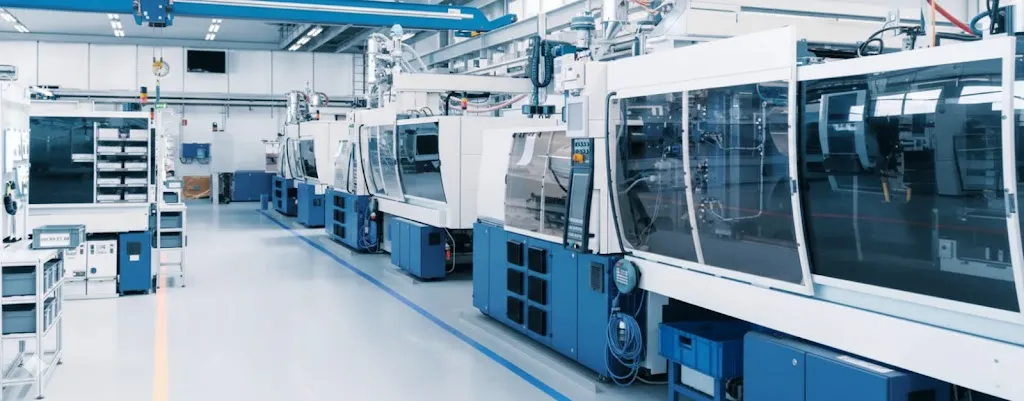
One-step injection stretch blow molding machine technology delivers its greatest competitive advantage in five specific application categories. Understanding the fit between container requirements and process capabilities is essential for making a sound capital investment decision.
🥤 Beverage Packaging
Mineral water, CSD, juices and sports drinks from 5 mL to 20 L. Biaxial orientation delivers the CO₂ barrier required for carbonated lines; lightweight wall design meets Australia’s ongoing drive toward reduced packaging material intensity.
💊 Pharmaceutical & Healthcare
Syrup bottles, oral vials, eye droppers, and supplement containers. Closed-loop process satisfies TGA GMP requirements; precise thread geometry ensures tamper-evident and child-resistant closure integrity.
💄 Cosmetics & Personal Care
PETG thick-wall wide-mouth jars, shampoo and conditioner bottles. Glass-clear transparency, excellent chemical resistance, and support for custom asymmetric shapes that command shelf premium.
🍯 Food & Condiments
Edible oil, honey, sauces, and dressings. Food-grade PET and PP compatibility certified; uniform wall thickness prevents deformation during hot-fill and retort processes common in Australian food manufacturing.
⚠️ When Does Two-Step Remain the Better Choice?
When a single bottle SKU is produced at annual volumes exceeding 300 million units and the line runs 24/7 on that single format without changeover, the distributed architecture of a two-step system — with multiple high-speed reheat blow moulders fed by a single high-output injection press — can achieve a higher raw unit output per capital dollar at that specific scale. Additionally, wide-mouth HDPE and PP containers (such as pump-dispenser personal care bottles or detergent jars) are better served by injection blow moulding (IBM) rather than ISBM, as they do not require the biaxial stretch orientation that ISBM is optimised to deliver.
6. The Australian Market Context: Why One-Step ISBM Is Gaining Ground Locally
Australia’s packaging industry operates under a specific convergence of pressures that make one-step ISBM technology particularly well-suited to the local market in 2025 and beyond. Three structural forces are at play simultaneously: persistently high labour costs driven by Australia’s above-OECD minimum wage settings, tightening sustainability regulation including the national 2025 Packaging Sustainability Strategy targeting 100% recyclable or reusable packaging, and a strategic drive toward domestic manufacturing capability following supply chain disruptions that exposed the vulnerability of pure import dependency.
All three of these forces directly favour one-step technology. High labour costs make the one-operator-per-shift profile of an automatic blow moulding machine economically compelling compared with a two-step line’s staffing requirement. The push toward rPET and lightweighting plays directly to one-step’s strengths in material precision and wall thickness control. And the case for domestic manufacturing capability is served by Australia Ever-Power’s Sydney-based operation at 27 Harley Crescent, Condell Park NSW 2200, which provides the local technical support, spare parts availability, and service response that imported-only equipment suppliers cannot match — a particularly important consideration when an unexpected machine stoppage during harvest season or peak beverage demand carries a disproportionate financial penalty.
For Australian manufacturers with ESG reporting obligations — including ASX-listed companies required to disclose Scope 2 emissions under the ASRS framework — the 20–30% energy reduction achievable by switching to a fully servo one-step ISBM machine from a two-step line can be directly counted toward emissions reduction commitments. Some operations may also be eligible to generate Australian Carbon Credit Units (ACCUs) against verified energy efficiency improvements at the facility level, providing a financial co-benefit alongside the direct operating cost saving.
7. How to Select the Right One-Step ISBM Machine for Your Application
Australia Ever-Power’s product range spans three-station to four-station configurations, clamping forces from 50 to 250 tonnes, and standard servo to full-servo drive systems. Rational machine selection requires evaluating four interdependent dimensions.
7.1 Output Volume and Cavity Count
Annual volumes below 5 million units are well served by a three-station single- or dual-cavity machine such as the HGY50-V3-EV. The 5–20 million unit band suits four-station machines in the HGYS150-V4 or HGYS200-V4 range. Beyond 20 million units, multi-cavity custom configurations should be evaluated with the technical sales team. The marginal cost of moving from single to dual cavity is substantially less than doubling machine investment, and the economics of that step change need to be modelled against your specific production schedule and SKU mix before a specification decision is made.
7.2 Resin Type and Container Geometry
Standard PET beverage bottles are accommodated by any model in the range. High-viscosity engineering resins — PETG for cosmetic jars, PC for baby bottles, Tritan for BPA-free sports containers — and complex asymmetric geometries with long flow paths benefit from the enhanced injection velocity and pressure control of fully servo models (HGYS150-V4-EV and above). The servo injection unit can be programmed with a multi-stage injection profile that manages shear heating and flow front uniformity in ways that conventional hydraulic injection cannot replicate, which is directly reflected in optical clarity and wall thickness consistency of the finished container.
7.3 Existing Mould Tooling Assets
If your operation currently runs Japanese ASB injection stretch blow moulding machines and holds a library of ASB-compatible mould tooling, Australia Ever-Power’s full product range provides direct dimensional compatibility with that tooling. The ability to transfer existing ASB moulds to a new one-step ISBM machine without re-cutting or re-qualifying the tooling removes what is often the single largest hidden cost of platform migration — frequently exceeding the machine purchase price for operations with extensive mould inventories — and typically halves the capital barrier to the upgrade decision.
7.4 Energy Efficiency and ESG Targets
Full-servo drive systems reduce energy consumption by a further 15–25% compared with conventional hydraulic-servo hybrid drives, layered on top of the 20–30% one-step advantage over two-step processing. This compounding effect makes the fully servo models the default choice for operations with firm Scope 2 reduction targets or participation in voluntary carbon markets. The servo motor’s demand-responsive power delivery — outputting only the power required at each point in the machine cycle — also dramatically reduces idle-state and low-load consumption, which is particularly relevant for shift operations where machines spend meaningful time in standby between product changeovers.
8. Frequently Asked Questions
The following questions represent the most common technical and commercial queries received from Australian and international manufacturers evaluating a switch to one-step injection stretch blow moulding technology.