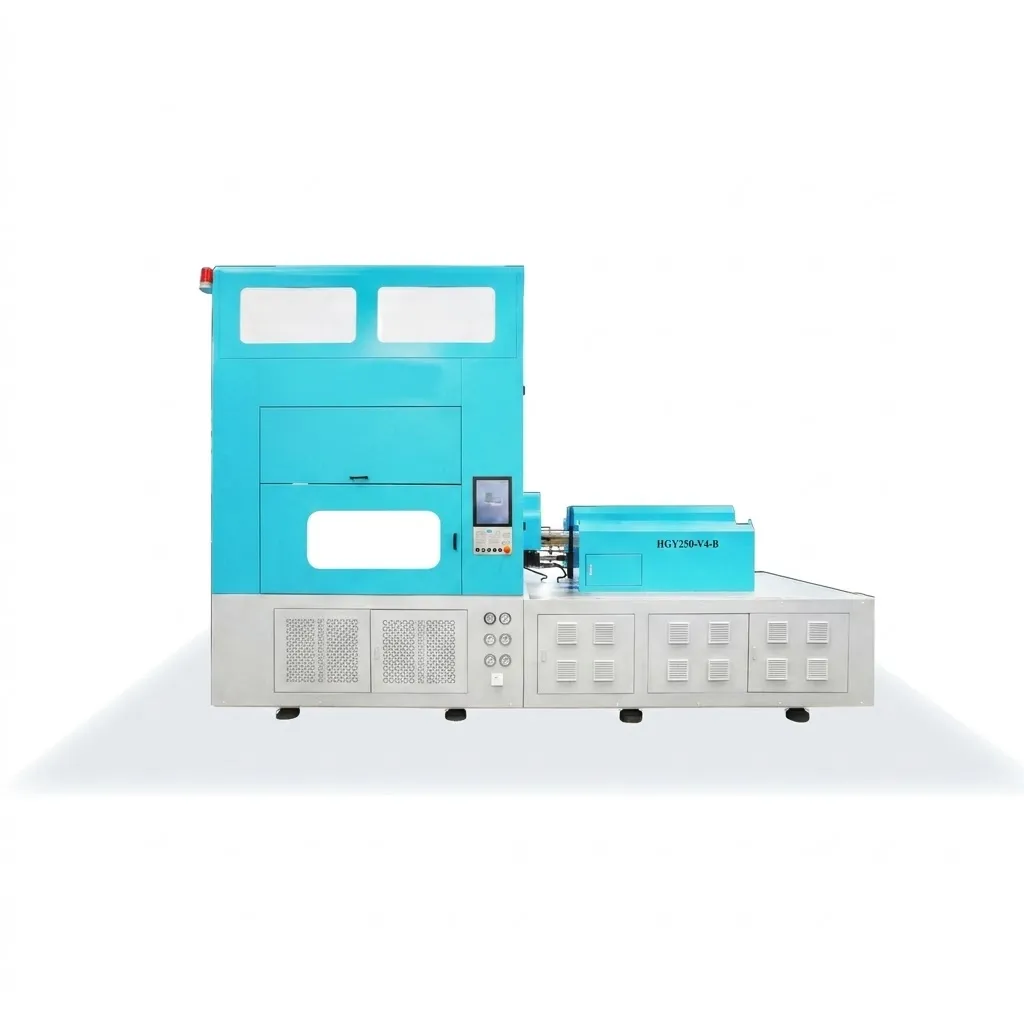
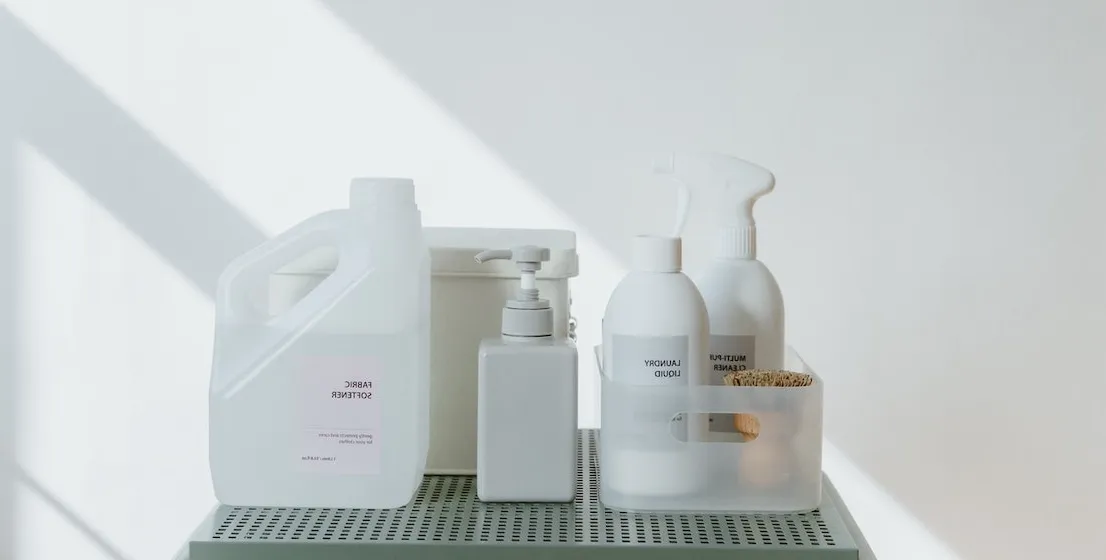
Large-format hand soap containers — spanning the 1L countertop refill, 2L institutional bulk and 5L commercial dispenser formats — are among the fastest-growing packaging segments in the Australian personal care market. Consumer adoption of refill models, combined with cost-efficiency pressures in aged care, hospitality and food service channels, is driving sustained volume growth in bottle formats above 750ml that retail shelf space previously excluded. Plastic bottle manufacturing for these larger formats presents a distinct set of engineering challenges: bottles must be ergonomically manageable when filled, structurally adequate for stack distribution, compatible with both pump and pour dispensing systems, and produced efficiently at the output rates that large retail and institutional supply chain volumes demand. One-step injection stretch blow molding is increasingly the platform of choice for meeting these requirements simultaneously.
The Commercial Case for Large-Format Hand Soap Packaging
The refill model for household hand soap has reached mainstream market penetration in Australia, with major supermarket chains and direct-to-consumer brands offering 1L–2L refill packs across both the grocery and home delivery channels. The sustainability narrative supporting this format is compelling: a single 1L refill pack replacing four 250ml single-use dispensers reduces PET consumption by 35–50% per litre of product, cuts secondary packaging volume by equivalent margins, and reduces transport emissions by consolidating product density. These metrics resonate with Australian consumers increasingly familiar with the packaging hierarchy logic of reduce-reuse-recycle, and with corporate buyers in healthcare and hospitality managing sustainability KPIs under national voluntary commitments.
For bottle manufacturers and brand owners, the commercial dynamics of large-format hand soap production differ from standard retail 250–500ml runs in several important ways. Total bottle count per production run is lower, but material weight per bottle is substantially higher — a 2L hand soap container may use 35–55g of PET compared to 8–15g for a 250ml retail bottle. This shifts the economics of machine selection toward high-clamp-force and large-shot-weight ISBM platforms rather than the compact, high-cavitation machines optimised for small-format PET bottle manufacturing. Understanding these differences guides both machine investment and production planning decisions for large-format hand soap programmes.
ISBM Process Advantages for High-Volume Refill Bottle Manufacturing
One-Step Process Efficiency at Larger Preform Volumes
At larger bottle volumes, the one-step injection stretch blow molding machine architecture retains its fundamental advantage of thermal continuity from injection to blow — and this advantage becomes more significant, not less, as preform weight increases. In two-step processing, a 40g preform for a 2L bottle requires substantially more reheat energy and time than a 10g preform for a 500ml bottle, introducing greater thermal non-uniformity in the reheated preform body that manifests as wall thickness irregularity in the blown container. The one-step process eliminates this reheat step entirely, providing consistent biaxial orientation in the 2L bottle body with the same process repeatability that characterises 500ml production — a significant quality advantage for the thick-walled, high-load distribution conditions that large-format refill containers must withstand.
Ergonomic Handle Integration in ISBM Tooling
Large-format hand soap containers above 1L fill weight require handles to enable single-handed dispensing and pouring without wrist fatigue. ISBM tooling can incorporate integrated handle features into the blow mould geometry — most commonly as a moulded grip recess, pinch-handle or D-loop design — that is formed during the stretch-blow stage without any secondary assembly operation. This is a genuine process distinction from HDPE extrusion blow moulding, which forms handles through parison pinch-off at the parting line, producing a handle that is integral to the bottle but limited in cross-section geometry. ISBM-moulded handles can be designed as fully enclosed loops with defined grip diameter, smooth rounded grip surfaces and label-panel co-planarity that extrusion alternatives cannot achieve. The key design constraint is that the blow stretch ratio into the handle cavity must be compatible with PET’s orientation behaviour — handle geometries requiring stretch ratios below 1.5:1 typically produce poorly oriented, potentially weak handle zones and require preform or process design input from an experienced plastic bottle manufacturing engineer.
PET vs HDPE for Large-Format Hand Soap Containers
The material selection question for large-format hand soap containers is more nuanced than for small retail dispensers, where PET’s clarity advantage is decisive. In the 1L–5L format range, HDPE extrusion blow moulding retains a meaningful share of the market — primarily in institutional bulk formats where appearance matters less and drop impact resistance on warehouse floors is paramount. However, PET’s performance profile increasingly favours ISBM in the retail and semi-professional channels that are driving large-format growth. PET’s biaxially oriented structure provides 40–60% higher tensile strength per unit wall thickness than HDPE at equivalent bottle weight — enabling a 2L PET ISBM bottle at 40g to match the mechanical performance of a 55g HDPE extrusion bottle, delivering a 27% resin saving per unit that compounds to significant cost advantage across high-volume programmes.
Surface clarity is the most visible performance difference. A 2L PET ISBM hand soap refill bottle with standard bottle-grade resin achieves haze values below 3% — presenting an essentially clear container through which product colour, fill level and any suspended particles are visible. This transparency is commercially valuable in retail environments where consumers make refill purchasing decisions based on visual product assessment, and in premium personal care channels where packaging appearance equity is part of the brand value proposition. A 2L HDPE extrusion bottle is opaque and cannot participate in these visual merchandising strategies.
Chemical compatibility considerations for large-format hand soap containers are broadly similar to small retail formats, but storage duration and temperature cycling during distribution deserve additional attention. Large-format containers are typically stored for longer periods between filling and consumer use — including warehouse pallet storage at temperatures up to 40°C in Australian summer conditions — which increases the cumulative thermal exposure of the container-product interface. PET’s low moisture vapour transmission rate protects water-based hand soap formulations from concentration changes during extended storage more effectively than HDPE at equivalent wall gauges. This thermal storage stability advantage of PET is an additional factor supporting ISBM for retail large-format refill programmes where product shelf life declarations of 24–36 months are expected.
Design Engineering for 1L–5L Hand Soap Containers
Integrated Handle Design and Grip Ergonomics
Handle geometry for large-format hand soap bottles must balance structural integrity, user comfort and ISBM process feasibility. A fully enclosed handle loop with an internal grip diameter of 35–45mm accommodates the majority of adult hand sizes comfortably for single-handed pouring; below 30mm internal diameter, arthritic or larger-handed users report grip discomfort that generates consumer complaints and returns. The handle wall gauge after stretch-blow should be maintained at 0.8–1.2mm minimum to provide adequate tensile strength against the combined weight of a fully filled 2L container (approximately 2.1kg) under dynamic drop-test conditions. Handle-to-bottle shoulder junction radius must be ≥8mm to distribute stress under load and prevent crack initiation at the re-entrant corner — a dimension that requires explicit specification in the ISBM blow mould drawing rather than assumption by the mould maker.
Pouring Neck Design and Dispensing Cap Compatibility
Large-format hand soap refill containers use a broader range of dispensing closure formats than small retail bottles. The primary formats are: screw-cap with integral measuring cup for consumer pour-and-measure; flip-top snap-cap for professional dispensing environments; pump overcap for direct-use 1L–1.5L table-service formats; and wide-mouth 63mm–70mm closures for institutional direct-pour into washroom dispenser reservoirs. Each format requires a specific neck finish standard, and the ISBM preform tooling must be specified to the primary dispensing system selected at the packaging design stage. Neck finish transition across a product range — for example, a 1L pump format and a 2L pour refill format sharing the same base bottle — requires either a common neck design or separate preform tooling, a tooling investment trade-off that should be resolved during programme architecture planning before mould design commences.
ISBM Production Workflow for Large-Format Hand Soap Bottles
Large-format ISBM production follows the same fundamental four-stage cycle as small-format bottle manufacturing, but with specific adjustments to accommodate higher preform shot weights, longer cooling requirements and the greater cavity footprint of large-format blow moulds.
① Extended Resin Drying
Large-format preforms require more total drying throughput than small-format production at equivalent output rates. Hopper dryer capacity should be sized for 6–8 hours residence time at the target throughput rate, maintaining PET below 50 ppm moisture. For rPET blend recipes targeted at large-format sustainability commitments, confirm blend moisture across the combined recipe rather than virgin PET alone, as rPET absorbs atmospheric moisture more rapidly during handling due to its higher surface area.
② High-Shot-Weight Preform Injection
Large-format preforms for 1L–5L containers require shot weights of 25–80g depending on bottle size and target wall gauge. Injection fill and hold times are proportionally longer than small-format production, and back-pressure management during screw recovery becomes more critical to avoid IV degradation in the longer plastication dwell. Cavity count per station is typically 1–2 for these formats rather than the 4–8 common in small-format production.
③ Multi-Zone Thermal Conditioning
Large-format preforms require more conditioning zones and longer conditioning dwell to achieve a uniform temperature gradient through the greater wall thickness and body length. Handle zone conditioning is particularly important: the preform material destined for the integrated handle loop must be conditioned to a temperature range that enables controlled blow into the handle cavity without material starvation at the handle wall or stress whitening from overstretching.
④ High-Pressure Stretch-Blow
Stretch rod travel is proportionally longer for large-format bottles — a 2L hand soap bottle may require 200–260mm axial rod extension compared to 80–120mm for a 500ml format. Pre-blow pressure timing is critical to avoid premature material rush before adequate axial orientation; high-pressure blow at 30–40 bar with extended dwell of 4–7 seconds completes full mould contact and ensures handle geometry and base panel dimensions are held consistently across the production run.
⑤ Ejection and Downstream Testing
Large-format bottles are ejected and transferred to orientation and inline inspection systems configured for their greater footprint and weight. Handle load testing — applying a 5× filled weight tensile force to the handle loop for 60 seconds — is performed at programme startup and at defined production intervals to validate handle structural integrity before accumulation of filled product inventory at risk from handle failure during palletisation or retail handling.
ISBM Machine Parameters for Large-Format Hand Soap Container Production
| Parameter | Large-Format Range (1L–5L) | Key Design Consideration |
|---|---|---|
| Shot weight per cavity | 25–80g | Machine injection capacity and screw diameter specification |
| Stretch rod extension | 160–280mm | Machine stroke class selection, handle zone orientation |
| High-pressure blow air | 30–40 bar | Handle cavity fill completeness, base panel stiffness |
| Blow dwell time | 4–8 seconds | Dimensional accuracy and internal volume consistency |
| Mould cooling temperature | 6–12°C | Crystallinity, handle strength, base stability on pallet |
| Cycle time (2L bottle) | 25–40 seconds | Output rate, cooling adequacy for heavy-walled areas |
Cycle time for large-format hand soap containers increases non-linearly with bottle volume because cooling requirements scale with wall thickness and total PET mass rather than simply with bottle surface area. A 2L hand soap container with a 40g preform requires cooling dwell times of 5–8 seconds — compared with 2.5–4 seconds for a 500ml bottle — because the greater wall mass retains heat that must be extracted before bottle ejection without causing post-eject dimensional change. Mould cooling circuit design is consequently a more critical engineering variable in large-format tooling: channel pitch, flow rate and inlet temperature uniformity must be specified and validated during mould design review rather than treated as manufacturing details to be resolved in commissioning.
Cavity count economics also shift significantly in large-format production. Where a 500ml hand soap bottle programme might run 4–8 cavities per station, a 2L programme typically runs 1–2 cavities per station — reducing the output rate per machine but increasing the machine’s ability to produce the handle geometry and shoulder profile complexity that larger formats require. Matching machine clamp force to the larger blow mould projected area is a machine selection prerequisite that should be validated against the specific bottle outline and blow pressure during machine specification, not assumed from general-purpose catalogue data.
Quality Assurance for Large-Format Hand Soap Containers
Quality testing for large-format hand soap containers encompasses all the standard dimensions applicable to smaller formats — neck finish gauging, wall thickness measurement, capacity verification, top-load compression, drop testing — but with specific additions addressing the structural demands of larger filled weights and handle functionality. Handle tensile testing is performed at every production programme startup and at defined in-run sample intervals: a tensile load of five times the filled bottle weight (typically 10–12 kg for a 2L container) is applied to the handle loop through a calibrated gauge for 60 seconds, and bottles exhibiting handle deformation, stress whitening or fracture are rejected. Statistical data from handle tensile testing is maintained to identify processing or material trends before handle performance falls below specification.
Top-load compression performance is particularly important for large-format retail formats that are stacked during palletisation and retail storage. A 2L hand soap bottle in a retail four-high pallet configuration supports approximately 6–8 kg of product weight above it — a cumulative load that, combined with distribution vibration and temperature cycling, can cause creep deformation in bottles with inadequate PET crystallinity or insufficient body wall gauge. Top-load testing at 40°C for 24 hours under a representative stack load, combined with post-test height and volume measurement, validates the bottle’s creep resistance before commercial production. ISBM-produced PET containers with adequate biaxial orientation consistently pass this protocol at bottle weights that extrusion blow-moulded HDPE alternatives cannot match without significant wall gauge — and material cost — increases.
Environmental and Commercial Case for Refill Container Manufacturing
The environmental credentials of large-format hand soap refill packaging are well-supported by lifecycle assessment data. A 2L PET ISBM refill container replacing 8× 250ml single-use retail dispensers reduces total packaging PET by 45–55%, cuts secondary corrugated board use by 60–70%, and reduces transport fuel consumption per litre of product delivered by 25–35% through improved fill density. These reductions translate directly into lower carbon intensity per dispensing event — a metric increasingly required in corporate procurement specifications for institutional hand soap contracts in healthcare, government and education sectors where sustainability reporting is mandatory.
For PET large-format containers, recyclability through Australia’s national kerbside system provides an additional end-of-life benefit that institutional buyers can report in their packaging waste metrics. ISBM-produced PET containers above 750ml are accepted by Australian kerbside programmes and MRF optical sorters in all major metropolitan areas, with recovery rates above 70% in major urban centres. Incorporating 25–30% rPET content in large-format hand soap containers is achievable on ISBM equipment using current commercial rPET supply, providing a certified recycled content statement that supports both voluntary brand sustainability commitments and contractual procurement requirements in institutional hand soap tender documents. The combination of reduced total packaging volume, recyclable material and validated recycled content makes large-format PET ISBM hand soap containers a compelling choice for brands targeting Australia’s leading packaging sustainability frameworks.