1. Why Machine Selection Is More Complex Than It Looks
The Australian packaging machinery market in 2025 offers one-step injection stretch blow moulding equipment from Chinese, Japanese, German, Taiwanese and Italian manufacturers at price points ranging from AUD 85,000 for a basic three-station hydraulic machine to over AUD 650,000 for a fully servo four-station multi-cavity platform. The specification differences between these price points are enormous — but they are not always transparent in sales literature. The consequences of selecting the wrong specification play out over years: insufficient clamping force that produces parting-line flash no process adjustment can fix; an undersized injection unit that limits the container weights you can ever run; a hydraulic drive that costs AUD 25,000 more per year in electricity than the servo equivalent; or a tooling interface incompatible with your existing ASB mould investment that forces a complete re-tooling you had not budgeted for.
This guide structures the selection process around eight evaluation criteria that must be addressed in sequence. Working through them in order prevents the procurement errors that experienced production engineers have seen repeatedly — and that Australia Ever-Power’s 18-year engineering history in the ISBM market has taught us to anticipate and prevent before a machine ships.
Australia Ever-Power (27 Harley Crescent, Condell Park NSW 2200) provides free engineering pre-qualification for every enquiry — specifying the correct machine model before quotation, not after site installation, is a core part of our commercial model. A correct specification on day one is worth more than any discount on the wrong machine.
2. Criterion 1 — Container Specification: Define the Output First
Before a single machine parameter is specified, the complete container specification must be documented and locked. This means: container volume (mL), body diameter (mm), body height (mm), neck finish standard (PCO-1881, 3025, or custom), wall thickness target (mm), base design type (petaloid, champagne push-up, flat or custom), body cross-section geometry (round, oval, square or asymmetric), resin type and grade, and estimated annual production volume broken down by SKU. Every one of these parameters directly constrains at least one machine specification — and ambiguity at this stage leads to a machine selection that cannot be corrected without additional capital expenditure after installation.
Container volume and wall thickness together determine the required injection shot weight and minimum injection unit plasticising capacity. Body diameter and geometry determine the projected blow mould area under internal blow pressure, which sets the minimum clamping force. Annual volume by SKU determines the required output rate, the number of cavities, and the maximum acceptable mould changeover time — a manufacturer running 15 SKUs across one line has radically different requirements from one running a single SKU 24/7, even at identical average daily output.
Australia Ever-Power’s pre-qualification form captures all of these inputs in a structured format. Customers who complete it before initial contact receive a machine recommendation and clamping force calculation within one business day — not a range of models to choose from, but a specific recommendation with documented engineering rationale.
3. Criterion 2 — Clamping Force: The Structural Parameter You Cannot Compromise
Clamping force — measured in kilonewtons or tonnes — is the force with which the blow mould halves are held closed against the internal blow pressure during the blowing cycle. It is determined by multiplying the projected area of the container cross-section at its widest point (in mm²) by the maximum blow pressure (in MPa), then applying a safety factor of at least 1.3. For a standard round 500 mL PET water bottle with a body diameter of 70 mm blown at 3.5 MPa, the separating force is approximately 13.5 kN — well within a 150-tonne machine. For a 3 L oval edible oil bottle with a 110 × 80 mm cross-section blown at the same pressure, the separating force at the major axis exceeds 30 kN, requiring a 300-tonne or larger clamping unit.
Under-specifying clamping force is the single most common and most damaging specification error in ISBM procurement. The result is persistent parting-line flash — a raised seam at the mould split line that cannot be eliminated through process adjustment because it is caused by mould separation under blow pressure, not by a process parameter setting. It requires secondary trimming operations, increases scrap rate, and compromises burst pressure performance by creating localised wall thinning at the seam. No machine setting, no operator skill and no process optimisation project resolves it: the only fix is a larger machine.
Australia Ever-Power’s automatic blow moulding machine range spans 50 to 250 tonnes clamping force. Every quotation includes a clamping force calculation worksheet based on the submitted container drawing, with the calculated separating force, the required safety factor, and the recommended machine model documented — so the buyer has the engineering basis for the selection, not just a model number.
4. Criterion 3 — Drive System: Full Servo vs Hydraulic in the Australian Context
The drive architecture decision — full servo electric versus hydraulic-servo hybrid — is the most consequential technical choice in ISBM specification for operations in Australia, and in 2025 the economic case for full servo is stronger than at any point in the technology’s history. Australian industrial electricity prices of AUD 0.18–0.26/kWh are among the highest in the developed world. Australian minimum wage of AUD 24.10/hour makes labour-intensive processes particularly expensive. And ASRS mandatory Scope 2 emissions disclosure requirements give measurable, verifiable energy reductions a direct financial value beyond the electricity bill itself.
4.1 Energy Cost Advantage — Quantified for Australian Operations
Full servo drive systems eliminate the constant-pressure hydraulic circuit that runs continuously in hydraulic machines regardless of whether any actuator is moving — the single largest source of energy waste in conventional ISBM equipment. The result is a 15–25% reduction in machine electrical consumption compared with servo-hydraulic hybrids, stacked on top of the 20–30% inherent one-step advantage over two-step reheat lines. On a three-shift operation at 80% utilisation running 10 million 500 mL bottles per year, the energy cost differential between full servo and hydraulic one-step at AUD 0.22/kWh is approximately AUD 12,000–20,000 per year. Over a 10-year machine service life, this saving exceeds the full servo purchase price premium — typically AUD 40,000–80,000 depending on model size — within 36 months, and then delivers a net advantage for the remaining 7–8 years.
4.2 Process Precision Advantage — Where Quality Is the Constraint
Servo motors follow a programmed position-velocity-torque profile with repeatability to within 0.01 mm and 1 ms — a precision level that hydraulic actuators, with their inherent pressure variations and flow control tolerances, cannot approach. For applications requiring tight wall thickness tolerances — cosmetic PETG containers, pharmaceutical primary packaging, export-specification carbonated soft drink bottles — servo precision translates directly into tighter statistical process capability (Cpk values above 1.33 at critical wall measurement points), lower defect rates, and reduced material over-use from containers produced above nominal weight to compensate for wall thickness variability. Australia Ever-Power’s EV-series full servo دستگاه دمیدن بطری PET models can be specified with closed-loop wall thickness feedback using inline ultrasonic measurement, enabling automatic process correction without operator intervention.
| Metric | Two-Step Hydraulic | One-Step Servo-Hyd | One-Step Full Servo |
|---|---|---|---|
| Energy / 1,000 × 500 mL PET (kWh) | 18–22 | 13–16 | 10–13 |
| Annual energy cost (10M units, AUD 0.22/kWh) | ~AUD 44,000 | ~AUD 31,000 | ~AUD 24,000 |
| Operators required per shift | ۳–۵ | 1 | 1 |
| Wall thickness Cpk capability | 1.0–1.2 | 1.2–1.5 | ≥1.5 |
5. Criterion 4 — Station Configuration: Three-Station vs Four-Station
The number of processing stations determines the cycle time architecture of the machine and therefore the maximum achievable output rate for a given container. A three-station machine combines the conditioning and stretch-blow functions at fewer stations, which reduces concurrent operations and typically extends cycle time by 20–35% compared with a four-station equivalent producing the same container. For thin-wall PET containers with fast thermal equilibration — standard 500 mL water bottles, carbonated soft drink bottles — three-station machines are a commercially efficient choice that reduces machine complexity and capital cost without sacrificing meaningful production rate. For thick-wall containers — cosmetic PETG jars, pharmaceutical oral liquid bottles, PP hot-fill containers — the four-station architecture allows independent optimisation of conditioning time without constraining the injection or blow cycle, delivering both better container quality and a faster production rate than a three-station machine attempting the same application.
Station Configuration Selection Matrix
| Application Scenario | Recommended Config | Key Reason |
|---|---|---|
| Thin-wall PET, <1 L, single SKU, >5M units/yr | 3-Station | Lower capex, adequate cycle time |
| Multi-SKU, frequent changeover, all volumes | 4-Station | Independent dwell optimisation per format |
| Thick-wall PETG cosmetic containers | 4-Station Full Servo | Extended conditioning + injection precision |
| Pharmaceutical primary packaging (GMP) | 4-Station Full Servo | Cpk ≥ 1.33, data logging, IQ/OQ ready |
| Large-format 5–20 L containers | HGYS200 / HGY250 | High clamping force, large shot weight |
6. Criterion 5 — ASB Mould Compatibility and Changeover Time
Mould tooling cost for a multi-format ISBM operation frequently exceeds the machine purchase price — and the tooling investment decision must be made before the machine is selected, not after. The critical question is whether the machine accepts ASB-standard tooling dimensions. Japanese ASB injection stretch blow moulding machine tooling is the dominant standard in Australia’s installed ISBM base and in the Asia-Pacific market broadly. A machine that accepts ASB tooling allows a manufacturer to migrate their existing mould investment — injection moulds, blow moulds and core rods — directly to the new platform without re-cutting steel. A machine with a proprietary tooling interface locks the buyer into that supplier’s tooling ecosystem for the life of the machine, creating ongoing commercial dependency and eliminating any negotiating leverage on future tooling orders.
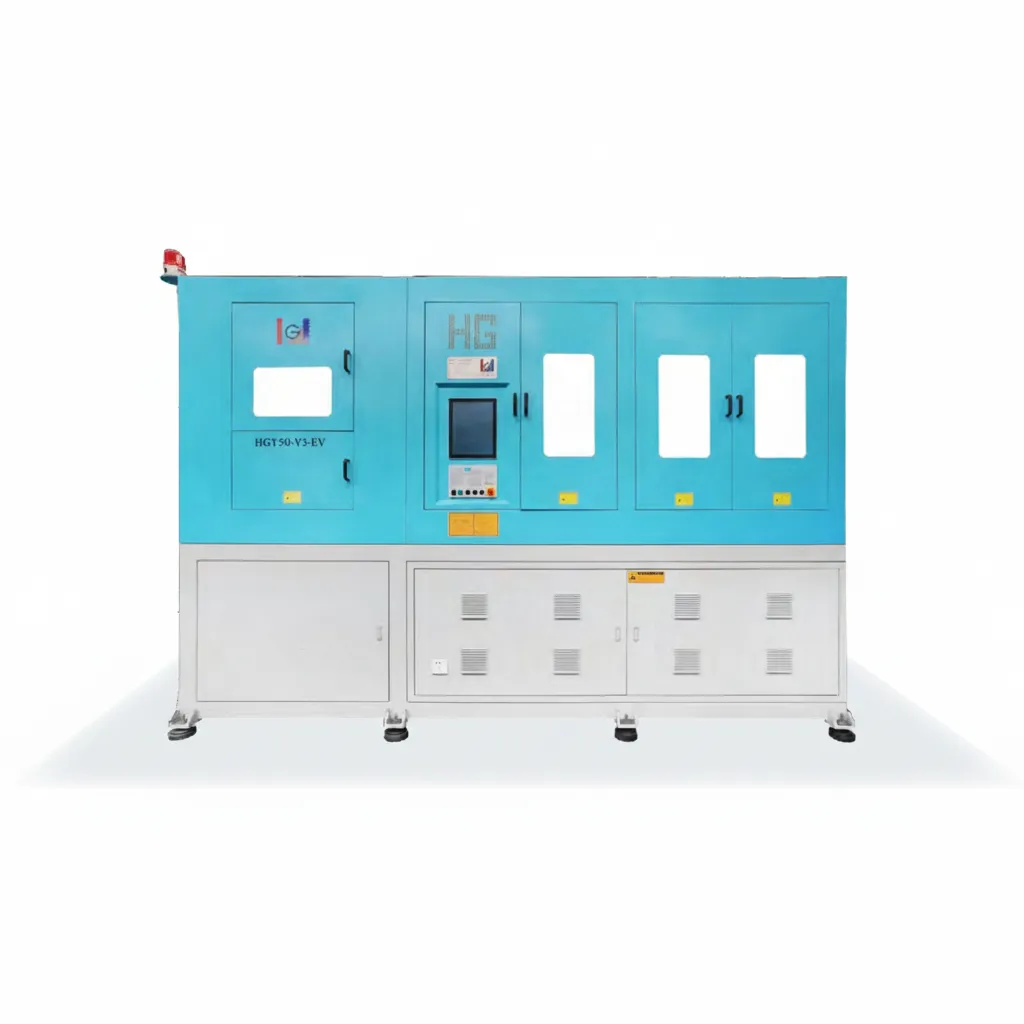
Australia Ever-Power’s full product range is engineered for dimensional compatibility with ASB tooling across all clamping force classes, from the HGY50-V3-EV through to the HGY250-V4. This compatibility is documented in the machine’s tooling interface specification sheet provided with every quotation.
Mould changeover time is the second critical tooling-related specification. Australia Ever-Power machines achieve changeover times of ≤60 minutes for trained operators using the machine’s standard quick-release tooling system. To put this in production scheduling context: a machine running three format changes per week at 2-hour changeover loses 312 production hours per year — approximately 3–4 weeks of three-shift capacity — compared with a machine achieving ≤60-minute changeover. At a conservative contribution margin of AUD 15 per thousand containers, that lost production time represents over AUD 150,000 in foregone annual margin on a medium-volume line.
7. Full 2025 Model Range Parameter Comparison
The table below presents the complete Australia Ever-Power 2025 دستگاه قالب گیری بادی کششی تزریقی تک مرحله ای model range with key specifications for each platform. All models carry full ASB mould compatibility and ≤60-minute changeover capability as standard.
| Specification | HGY50-V3-EV | HGYS150-V4 | HGYS150-V4-EV | HGYS200-V4/B | HGY250-V4/B |
|---|---|---|---|---|---|
| ایستگاهها | 3 | 4 | 4 | 4 | 4 |
| Drive System | سروو کامل | Servo-Hyd | سروو کامل | Servo-Hyd | Servo-Hyd |
| Max Container Volume | حدود ۲ لیتر | حدود ۵ لیتر | حدود ۵ لیتر | حدود ۱۰ لیتر | ۲۰ لیتر |
| ASB Mould Compatible | ✓ | ✓ | ✓ | ✓ | ✓ |
| Mould Changeover | ≤60 min | ≤60 min | ≤60 min | ≤60 min | ≤60 min |
| Resin Compatibility | PET, PETG, PP | PET, PP | PET, PETG, PP | PET, PP | PET, PP |
| بهترین اپلیکیشن | Cosmetic, pharma, speciality | Beverage, food, mid-volume | Premium bev, pharma, ESG | Oil, dairy, large format | Industrial, 20 L water |
8. Total Cost of Ownership: The Metric That Should Drive the Final Decision
Purchase price is a one-time cost. Energy, labour, maintenance and scrap are recurring costs that compound over the machine’s 10–15 year service life and typically exceed the purchase price within three to five years of operation. A structured 10-year total cost of ownership model for ISBM machine selection covers five categories: machine capital cost (including installation, commissioning and operator training); energy cost per thousand containers produced; labour cost based on required operators per shift and annual shifts operated; maintenance cost including scheduled parts replacement, unscheduled repairs and the cost of production downtime during both; and mould tooling cost including initial tooling, running maintenance and re-tooling amortisation for format changes. When these five categories are modelled over 10 years using Australian electricity tariff, labour cost and maintenance cost inputs, the full servo دستگاه دمیدن بطری PET platform consistently demonstrates a lower TCO than hydraulic equivalents — despite the higher purchase price — with the break-even point on the purchase premium reached at 24–36 months in most Australian operating scenarios.
8.1 After-Sales Support: The Criterion That Protects Your Uptime
A machine with excellent specifications but a supplier with no Australian technical presence imposes response times of days to weeks for issues requiring local engineering intervention — during which the production line is either stopped or running out of specification. Australia Ever-Power’s Sydney-based team at Condell Park NSW provides same-day telephone technical support for all installed machines in Australia, on-site service in NSW and VIC within 24 hours, and remote PLC diagnostic access through a secure VPN that resolves 60–70% of process issues without the cost or delay of a site visit. Critical spare parts — heating elements, servo amplifiers, core rod O-ring kits, cooling components and stretch rod guide sets — are stocked at Condell Park for same-day dispatch to any location in Australia.
8.2 The Free 10-Year TCO Model
Australia Ever-Power provides a complimentary 10-year TCO model with every machine quotation, populated with the buyer’s specific production schedule, electricity tariff, labour cost and maintenance budget inputs. This model is not a sales tool — it is an engineering document that sometimes recommends a lower-specification machine than the buyer initially enquired about, where the TCO analysis shows that the lower output capacity is more economical for the specific production requirement. This approach, reflecting 18 years of engineering-led commercial practice, is why Australia Ever-Power machines are specified by production engineers as well as purchasing managers.