The Packaging Shelf Is a Visual Battleground — and Clarity Is the First Weapon
In the chilled beverage aisle of any major Australian supermarket, a consumer’s purchase decision is made in under three seconds of shelf contact time. Within that window, the bottle’s visual properties — its clarity, the luminosity of the product inside, the sharpness of label contrast against the container surface, the premium or functional signal communicated by the bottle’s shape and wall finish — determine whether the product earns attention or is bypassed for a competitor sitting 10 centimetres away. This is not marketing abstraction. It is measurable consumer behaviour, documented consistently across beverage category research, that directly links packaging visual quality to purchase intent and brand premium perception.
The injection stretch blow molding process is uniquely positioned to deliver the optical and aesthetic properties that winning beverage packaging requires — not as a secondary benefit of a process designed primarily for structural performance, but as a direct consequence of the biaxial molecular orientation that is the process’s core mechanism. Understanding the precise connection between ISBM process variables and the visual outcomes they produce gives brand owners and packaging engineers the technical foundation to make informed decisions about which machine capabilities, tooling specifications, and process parameters deliver the bottle appearance their brand requires.
This article traces that connection — from the molecular physics of PET orientation through the practical tooling and process choices that control surface quality and geometric precision, to the brand strategy implications of packaging visual differentiation in competitive beverage categories. Australia Ever-Power Injection Stretch Blow Moulding Machine Co., Ltd works with beverage brands and manufacturers across Australia and the Asia-Pacific region to translate these principles into production-grade outcomes on real ISBM equipment.
The Physics of PET Clarity: Why Biaxial Orientation Produces Glass-Like Transparency
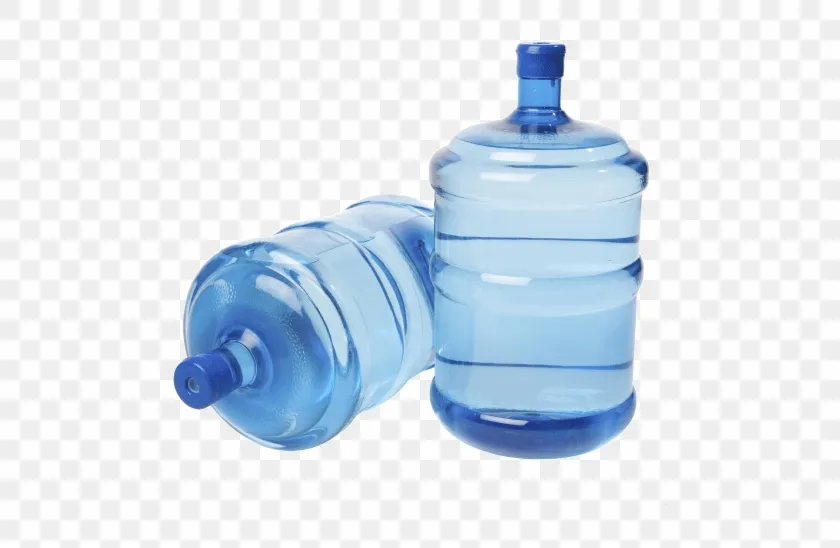
PET in its amorphous, unoriented state is optically clear — the polymer chains are randomly distributed, and light passes through without significant scattering. When PET undergoes biaxial orientation through the injection stretch blow molding process, it transitions into a strain-induced crystalline microstructure, and the question of clarity becomes a matter of how that crystallisation is managed at the molecular level.
Strain-Induced Crystallisation and Optical Haze
When PET polymer chains are stretched and aligned during the blow phase, they form crystallites — ordered regions within the material. If these crystallites are very small and uniformly distributed (typically below 50–80 nanometres in dimension), they do not scatter visible light and the bottle remains optically clear. This is the desirable outcome: high biaxial orientation producing small, uniformly distributed crystallites that deliver both mechanical strength and optical transparency simultaneously. If, however, the crystallisation is allowed to proceed in a poorly controlled temperature and strain environment — too cold, too fast, or with uneven temperature distribution across the preform — larger, irregular crystallites form that scatter light at wavelengths visible to the human eye, producing the milky white haze that makes a bottle appear cheap, contaminated, or simply unappealing on the retail shelf.
Temperature Window Control as the Clarity Foundation
The clarity outcome of the injection stretch blow molding process is determined primarily by the temperature at which the PET preform is stretched and blown. Processing within the correct window — typically 92–115°C for standard beverage PET grades — drives strain-induced crystallisation that produces small, clarity-preserving crystallites. Dropping below 88–90°C during stretch causes the material to crystallise thermally rather than through strain, producing larger spherulitic crystallites that scatter light and cause visible whitening (stress-whitening). Moving above 118–122°C allows the polymer chains to relax before they fully orient, producing a low-crystallinity structure that is mechanically weak even if initially clear. The injection stretch blow molding machine’s conditioning station is therefore the primary optical quality tool in the process — its ability to maintain the preform body within a ±2°C window across both its axial length and its circumference directly determines whether every bottle produced meets the clarity specification or whether optical defects appear sporadically or systematically.
PET Resin Quality and IV as Clarity Determinants
Beyond the process window, the optical quality of the finished bottle is fundamentally constrained by the quality of the PET resin entering the process. Intrinsic Viscosity (IV) below specification — caused by inadequate resin drying or by resin that has been degraded through poor storage or excessive reprocessing — produces PET with reduced molecular weight that cannot form the tight, uniform crystallite network required for premium clarity. Acetaldehyde content in the PET resin, generated by thermal degradation during processing, not only affects beverage taste but can also cause subtle turbidity in bottle walls that appears as a slight cloudiness distinguishable from the ideal water-white clarity of a premium product. Selecting food-grade PET material with appropriate AA (acetaldehyde) scavenger content, drying it properly, and processing it within the correct temperature range is the complete formula for optically excellent PET bottle production.
Cavity Surface Engineering: How Tooling Finish Determines Bottle Appearance
The clarity of the PET material itself is only half of the optical equation. The other half is the surface quality of the blow mould cavity — because the bottle surface is a faithful impression of the cavity surface it was formed against. Every scratch, every pit, every machining mark, and every trace of corrosion on the cavity surface transfers directly to the bottle wall, where it appears as a visible defect under the specific lighting conditions of the retail display environment.
Mirror Polish: The Gold Standard for Premium Beverage Bottles
For premium still water, premium juice, and functional beverage bottles where retail shelf impact is a brand priority, the blow mould cavity should be polished to a mirror finish — Ra ≤ 0.05 µm (surface roughness average) on the key body panel surfaces. At this surface quality level, the bottle wall acts as a near-transparent optical surface that maximises the luminosity of the product inside, makes label colours appear more vivid by contrast, and gives the bottle a visual weight and premium quality signal that consumers associate with glass rather than with cheaper plastic alternatives. Achieving and maintaining Ra ≤ 0.05 µm requires precision diamond polishing at manufacture and periodic re-polishing as the cavity surface erodes through the mechanical and air-stream stresses of production — which is why mould maintenance programmes that include cavity surface Ra measurement at scheduled intervals are a product quality programme, not merely an engineering one.
Deliberate Surface Texturing for Functional and Aesthetic Differentiation
Not all beverage bottle applications call for a mirror finish. Sports drink bottles often benefit from grip-enhancing surface textures applied to label panel and grip zone areas. Craft beverage brands sometimes use subtle geometric texture patterns on bottle body panels to create visual complexity and a hand-crafted aesthetic that distinguishes them from corporate mainstream brands. Functional textures — including embossed brand logos, embossed fill-level indicators, and debossed product category marks — can be incorporated into the blow mould cavity design to be reproduced on every bottle without additional labelling or printing operations. These functional and aesthetic surface effects are specified into the mould cavity at the design stage and reproduced with high fidelity by the ISBM process, provided that the cavity surface engineering is executed to the resolution required by the feature detail size.
Cavity Material and Finish Longevity
Aluminium alloy 7075, the standard cavity material for beverage bottle blow moulds, achieves excellent surface finish polishability and thermal conductivity. Hard anodising of the polished cavity surface — depositing a hard aluminium oxide layer of 20–50 µm thickness — significantly extends the life of the polished surface by protecting it against the erosive effects of the high-velocity blow air stream and the occasional mechanical contact during demoulding. Unanodised aluminium cavities in high-speed production environments begin showing surface degradation within 300,000–500,000 cycles in the most exposed zones. Hard-anodised equivalents retain their original surface quality for 1.5–2.5 million cycles with normal maintenance — a 3–5× improvement in surface life that reduces the re-polishing frequency and the associated mould downtime for premium bottle production operations.
Bottle Geometry and Shape Design: Where Branding Meets Engineering Constraint
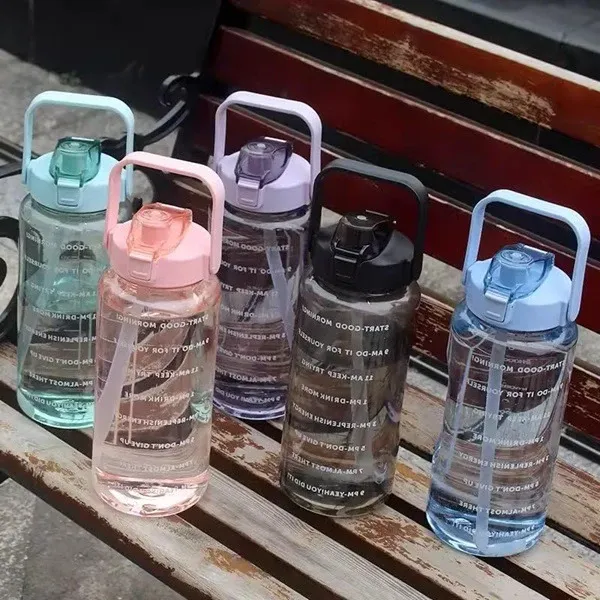
The visual identity of a beverage bottle is expressed most powerfully through its silhouette — the three-dimensional form that registers in a consumer’s peripheral vision before they consciously examine any label or surface detail. Injection stretch blow molding provides more geometric freedom than any other high-volume PET bottle production process, and understanding the practical envelope of that freedom allows brand designers to develop container shapes that are genuinely distinctive without exceeding the manufacturability constraints that would make them impractical at production scale.
What ISBM Can Achieve That Other Processes Cannot
The one-step ISBM process keeps the preform mounted on the blow core throughout the entire forming operation, meaning the neck finish is supported and retained at its precise injection-moulded geometry at all times. This continuous neck support allows neck designs — wide-mouth, offset, asymmetric, or unusually proportioned — that would be impractical in two-step systems where preform transport equipment constrains what neck geometries can be handled and presented to the reheat oven. The bottle body can incorporate complex curves, waisted profiles, panel structures, and contoured grip zones with the resolution that the mould cavity geometry provides. Undercut-free container shapes of almost any two-dimensional silhouette are achievable; the practical constraints are mould open/close direction (the container must demould cleanly in the direction the mould halves separate), sufficient wall thickness to allow complete cavity filling, and blow ratio compatibility with the preform weight and geometry selected.
Panel Design, Vacuum Panels, and Structural Aesthetics
Label panel design is one of the most commercially important aspects of bottle geometry engineering. A flat label panel with well-defined, sharp-radiused transition ribs to the bottle body makes labels appear flatter, reduces printing distortion on pressure-sensitive labels, and gives the overall bottle a more structured, premium appearance compared to a plain cylindrical body. For hot-fill juice and tea applications, vacuum compensation panels must be incorporated into the bottle design to accommodate the internal pressure drop that occurs as the hot-filled product cools and contracts — without these panels, the bottle deforms visibly and asymmetrically after capping, producing a shelf presence that signals poor quality regardless of the beverage inside. Engineering these panels into the bottle geometry without detracting from the overall aesthetic requires close collaboration between brand design and packaging engineering at the earliest stage of new bottle development.
Lightweight Bottle Design Without Visual Compromise
Lightweighting — reducing PET material per bottle — creates an aesthetic risk that is rarely discussed in technical literature: thin walls, if not properly engineered, can make a bottle feel flimsy in the hand and appear dimensionally unstable on the shelf. The solution is to concentrate material reduction in the zones where structural analysis confirms it is safe, while retaining material in the zones that contribute most to perceived quality in the consumer’s hand — typically the shoulder, the base, and the grip zones where finger pressure is applied. A well-engineered lightweighted bottle can feel more solid than a heavier bottle with poor material distribution, because its material is located where it creates structural stiffness rather than merely where the blow process deposited it without design intent.
How ISBM Visual Quality Compares Across Bottle Production Methods
Brand owners evaluating which production technology to use for a new beverage bottle range should understand how optical and aesthetic performance differs between the major PET and plastic container production methods. The table below compares the visual and brand-relevant properties of injection stretch blow molding against the most commonly evaluated alternatives for beverage packaging applications.
| Visual / Brand Property | ISBM in un solo passaggio | Two-Step RHSBM | Extrusion Blow (EBM) |
|---|---|---|---|
| Optical Clarity | ⭐⭐⭐⭐⭐ Glass-like | ⭐⭐⭐⭐ Excellent | ⭐⭐ Limited for PET |
| Wall Thickness Uniformity | ⭐⭐⭐⭐⭐ Tightly controlled | ⭐⭐⭐⭐ Good with optimisation | ⭐⭐⭐ Variable by design |
| Neck Finish Precision | ⭐⭐⭐⭐⭐ Injection-moulded | ⭐⭐⭐⭐ Very good | ⭐⭐⭐ Adequate |
| Shape Design Complexity | ⭐⭐⭐⭐⭐ Widest freedom | ⭐⭐⭐⭐ Very high | ⭐⭐⭐ Good for HDPE |
| Surface Detail Reproduction | ⭐⭐⭐⭐⭐ Fine emboss/deboss | ⭐⭐⭐⭐ Good detail | ⭐⭐⭐ Moderate resolution |
| Surface Scratch / Mark Risk | Low — no inter-stage handling | Moderate — preform handling marks | Low — limited handling |
| Premium Brand Signal | ⭐⭐⭐⭐⭐ Glass-comparable | ⭐⭐⭐⭐ Strong | ⭐⭐ Functional |
The advantage of one-step ISBM over two-step reheat stretch blow moulding in optical clarity terms reflects the absence of inter-stage preform handling — preform surface marks acquired during transport, storage, and reheater presentation in two-step systems produce micro-scale surface imperfections that occasionally transfer to the blown bottle surface and appear as visible clarity defects under certain lighting conditions. One-step ISBM’s continuous custody of the preform from injection to finished bottle eliminates this contamination pathway entirely.
The Custom Bottle Development Process: From Brand Brief to Production-Grade Tooling
Translating a brand’s visual identity requirements into a production-grade ISBM bottle involves a disciplined development sequence that bridges the gap between what a designer can sketch and what a mould can reliably produce at millions of cycles. Understanding this sequence helps brand owners set realistic development timelines, identify the decisions that must be made early to avoid expensive late-stage changes, and structure the relationship between brand team, packaging engineering, and ISBM supplier productively.
Brand Brief and Visual Identity Translation
The starting point is a written brief that defines the visual and functional requirements: clarity target (water-white, slight tint, frosted?), surface finish (mirror, satin, textured?), shape character (athletic, premium, functional, playful?), structural features (label panels, grip zones, shoulder design), and neck finish specification. A brief that defines these requirements concretely — with reference examples where available — enables a much faster and more accurate development process than a brief that uses aesthetic adjectives without functional translation.
3D CAD Design with Manufacturability Review
The packaging engineer develops a 3D CAD model of the bottle geometry incorporating the brand brief requirements and simultaneously reviewing each design feature against ISBM manufacturability constraints — draft angles, minimum wall thickness in high-stretch zones, blow ratio compatibility with the proposed preform, mould parting line placement. Features that cannot be produced in ISBM are identified at this stage and either redesigned or replaced with ISBM-compatible alternatives that achieve the same visual objective through a different route.
Mould Flow Simulation and Preform Design
The 3D bottle geometry is used as the input for mould flow simulation that predicts how material will distribute through the bottle during blow, identifies any zones of predicted material starvation or excess, and informs the preform geometry design needed to achieve the target wall thickness distribution. For visually critical applications, wall thickness uniformity simulation directly predicts the optical uniformity of the finished bottle — zones where wall thickness is significantly above or below the mean will appear as visible light refraction differences in the physical bottle under store lighting conditions.
Prototype Production and Brand Approval
Before committing to full production tooling, a small number of trial bottles from a single-cavity prototype tool — or from a rapid-prototyped preform blown in an existing similar mould cavity — are produced for brand team review. The prototype review should include assessment under the actual retail lighting conditions the bottle will face (LED cool-white refrigerated display lighting, warm-white ambient aisle lighting, and the oblique natural light that hits a street-level convenience store facing north or south). Optical defects that are invisible under studio photography conditions frequently become prominent under angled retail lighting.
Production Tooling Manufacture and Process Qualification
Once the bottle design is approved from prototype, production tooling is manufactured to the full specification — including the surface finish Ra value, the cooling channel configuration, and the cavity material and hardness treatment. The tooling is then installed in the ISBM machine and a production process qualification is conducted: the injection stretch blow molding process is optimised to achieve the target optical clarity, surface quality, and dimensional specification consistently across all cavities and across an extended production run that demonstrates process stability.
Colour, Tint, and Speciality Optical Effects in PET Beverage Bottles
The visual vocabulary available for PET beverage bottles extends well beyond clear and coloured options. Modern ISBM production using appropriately specified PET grades and colourant systems can deliver a range of optical effects that communicate distinct brand personalities and support different category positioning strategies.
Water-White Clarity
The zero-additive clear — processed virgin PET without colorants or tints — at premium quality communicates purity, naturalness, and source transparency. Particularly powerful for premium still water brands, alkaline water, and infused water categories where the product’s visual purity is a core brand claim. Requires strict PET drying, low AA resin grades, and precise processing temperature control.
Tinted PET
Light blue tints (common in premium water and sports drinks), green tints (natural/herbal positioning), amber tints (functional and pharmaceutical overtones), and custom brand colours communicate category belonging and brand personality. Tints are achieved through masterbatch colourants compounded into the PET during injection. For even tint distribution, colourant dosing precision and melt temperature uniformity are critical — inconsistent dosing produces visible colour banding in the bottle wall.
Pearl and Pearlescent Effects
Pearlescent colourant systems produce a shimmering, light-diffusing wall appearance that communicates luxury and distinctiveness. Commonly used in premium functional beverages, beauty drinks, and limited edition seasonal products. Achieving consistent pearlescent appearance in ISBM requires careful colourant particle size selection — particles that are too large create uneven sparkle distribution visible as texture variation in the bottle body.
Frosted / Satin Surface
A controlled surface micro-texture applied to the mould cavity produces a frosted or satin surface finish that diffuses light across the bottle and creates a premium tactile quality in the hand. Frosted surfaces work particularly well for craft beverage categories, sparkling water with a minimalist brand aesthetic, and any product category where differentiation from the clear-bottle mainstream is itself the brand message. The micro-texture also reduces fingerprint visibility — a practical benefit for point-of-sale display quality.
UV-Protective Tints
For light-sensitive juice, tea, and functional beverage products, UV-absorbing colourants in the PET wall filter the UV radiation spectrum without visibly affecting bottle clarity in the visible range. The brand benefit is the ability to display these products in transparent bottles (communicating the product’s colour and purity) while protecting the product’s nutritional content and flavour stability — a combination that glass achieves naturally but that clear PET cannot match without colourant assistance.
rPET Clarity Parity
Premium food-grade rPET, processed through a high-quality mechanical recycling stream and purified to food-contact certification, can produce ISBM bottles with optical quality that is commercially indistinguishable from virgin PET in most beverage applications. For brands where visible rPET content is itself a brand claim — communicated through on-pack messaging — achieving this clarity parity removes the “compromise” narrative that previously surrounded recycled content bottles.
Label Application and Bottle Surface Compatibility: The Overlooked Aesthetic Variable
A premium bottle with a poorly applied or poorly designed label is a wasted investment — the label is the primary information and brand expression surface, and its interaction with the bottle surface determines the final retail appearance that consumers actually see. The ISBM bottle’s surface characteristics directly influence which label formats and application methods work best, and understanding these interactions at the design stage prevents costly corrective actions after packaging line setup.
Pressure-Sensitive Label (PSL) Compatibility
Pressure-sensitive labels on ISBM PET bottles adhere most consistently when applied to a flat label panel zone with defined, sharp-radiused boundaries — a geometry that can be precisely specified in the mould design. PSL application wrinkle risk increases with the degree of label panel curvature; bottles designed with generous flat panel areas apply PSL labels more reliably at high application speeds. The surface energy of the PET bottle, determined by the surface chemistry of the PET material and any surface contamination from processing aids, directly affects PSL adhesion and must be verified during label qualification trials. Corona treatment of the bottle surface before label application is sometimes required for PET grades with lower surface energy or for labels with aggressive adhesive systems.
Shrink Sleeve Label Optimisation
Shrink sleeve labels — which wrap the entire bottle body and conform to its surface under heat — provide 360-degree printable branding coverage and are widely used in premium beverage categories for their visual impact. For ISBM bottles with complex surface textures or significant shape variation across the label zone, shrink sleeve specification must account for the differential shrinkage that will occur across areas of different bottle curvature. Under-specified sleeve shrink percentage leaves visible puckering at high-curvature zones; over-specified sleeve distorts the printed graphics at low-curvature zones. This matching of sleeve specification to bottle geometry is a straightforward engineering task when the bottle and sleeve are developed together, but becomes a costly corrective problem when the sleeve is specified without reference to the bottle surface profile.
Direct Print and Embossed Branding
For premium beverage brands seeking the glass-alternative aesthetic of label-free bottles, direct printing (UV inkjet, screen printing, or thermal transfer onto the PET surface) and embossed or debossed brand marks within the mould cavity offer two label-less branding routes. Embossed and debossed branding elements produced in the mould cavity are reproduced on every bottle at no per-unit cost after tooling investment, are impervious to moisture, and cannot be removed or damaged during handling. For brands where the bottle’s three-dimensional form is itself the primary brand expression — and where the product’s colour and the container’s shape tell the complete brand story — this approach eliminates the label as an element entirely and achieves a retail distinction that label-based competitors cannot easily replicate.
Measuring and Maintaining Optical Quality in Production: The Technical Quality Programme
Specifying premium optical quality in a bottle design is necessary but not sufficient. Maintaining that quality across millions of production cycles — as machine parameters drift, tooling ages, resin batches vary, and environmental conditions change — requires a structured quality measurement programme that makes optical performance as visible and trackable as dimensional or weight compliance.
Haze Measurement and Calibration
Optical haze — the most important single quantitative measure of PET bottle clarity — is measured using a hazemeter instrument that reports the percentage of transmitted light that is scattered (haze) versus transmitted directionally (clarity). For premium still water and premium juice bottles, a haze value below 2.5–3.5% on the flat body panel is the accepted specification range. A haze value above 4–5% begins to be visible to the naked eye as a slight cloudiness that diminishes the premium appearance of the bottle. Haze measurement should be conducted on a sample from each cavity at regular intervals — haze drift in one or more cavities relative to others indicates a conditioning temperature or mould cooling issue in that specific cavity station that warrants investigation before it becomes visible to consumers on shelf.
Visual Inspection Under Retail Lighting Simulation
The most practically relevant quality control step for optical quality is visual inspection under simulated retail lighting conditions — not under the overhead fluorescent or incandescent lighting typical of quality laboratories. A dedicated inspection light box or light tunnel with calibrated cool-white LED panels at angles representative of retail display environments allows quality inspectors to identify optical defects — haze patches, surface marks, weld lines from mould parting, gate vestige variation, and wall thickness shadow patterns — that would pass a measurement-only inspection but would be visible to consumers in the retail environment. Incorporating this inspection step into the end-of-shift quality routine requires less than 15 minutes but directly prevents the quality failure mode that most damages brand trust: visibly defective bottles reaching retail without being caught in production.
Resin Quality Incoming Inspection
PET resin quality is the upstream control that most directly affects downstream bottle optical quality. IV testing on incoming resin batches (specification: ≥ 0.78 dL/g for standard beverage grades, ≥ 0.80 dL/g for carbonated beverage grades), AA (acetaldehyde) content testing for sensitive beverage applications, and colour value (L*, a*, b*) measurement to verify resin colour consistency batch-to-batch are the three incoming quality controls that catch resin quality deviations before they enter production. Operations that skip incoming resin quality control and process all receipts without testing discover resin quality variability as unexplained bottle haze, colour, or clarity variation during production — at which point the affected resin has already been processed and the affected bottles must be dispositioned, adding cost and complication that a 15-minute incoming test would have prevented.
Brand Competitiveness Through Packaging Proprietary Design: The Strategic Case
Every beverage brand that uses a standard, non-proprietary bottle geometry — the same 500ml PCO 1881 neck, cylindrical body profile available to any competitor without tooling investment — is competing on label and product alone, with no structural visual differentiation from the container itself. In mature, crowded beverage categories where dozens of brands compete on the same shelf section, this limitation is increasingly a strategic disadvantage as more brand-forward competitors invest in proprietary bottle designs that make their products visually distinct and physically recognisable from any angle, including label-obscured angles caused by retail shelf crowding.
A proprietary bottle design, produced through ISBM on a dedicated tooling set, creates a physical brand asset that competitors cannot replicate without their own tooling investment — a period of exclusivity that can last years in a fast-moving consumer goods category. The three-dimensional form of the bottle communicates brand values before any label copy is read: the weight and solidity of a premium still water bottle’s base communicates confidence and quality; the athletic contoured grip of a sports drink bottle communicates performance and energy; the wide, generous shoulder of a premium juice bottle communicates abundance and freshness. These communications operate below the consumer’s conscious attention but accumulate into the brand associations that drive repeat purchase and price premium tolerance.
The ISBM process, with its design freedom, surface quality capability, and optical performance, is the production technology that makes these strategic packaging investments manufacturable at commercial scale. The relationship between brand strategy and injection stretch blow molding machine capability is therefore not just a technical connection — it is a competitive strategy enabler that is directly accessible to Australian and Asia-Pacific beverage manufacturers through Ever-Power’s design and engineering services.
Sustainability as a Visual Brand Value: How rPET and Lightweighting Enhance Brand Appeal
In the Australian beverage market, sustainability credentials have moved from a secondary attribute to a front-shelf purchase driver for a significant and growing consumer segment. The visual and tactile packaging experience is now part of the sustainability communication — consumers form impressions of a brand’s environmental commitment partly through the physical characteristics of its packaging, and packaging that communicates lightness, material efficiency, and recyclability supports the brand narrative in ways that on-pack claims alone cannot fully convey.
Lightweighted PET bottles, engineered to the minimum wall thickness consistent with structural performance through optimised ISBM processing, communicate material consciousness in the hand — the bottle feels deliberately lean, not cheap. Brands that actively communicate their lightweighting achievements (“30% less plastic than our previous bottle”) use the physical packaging itself as evidence of environmental commitment, converting a manufacturing efficiency achievement into a brand asset. The ISBM process, with its superior biaxial orientation capability, is the process that enables the most aggressive lightweighting without functional compromise — thinner walls achieve the same structural performance as heavier walls in unoriented alternatives, because orientation is doing the work that mass was previously required to do.
For rPET integration, achieving clarity parity with virgin PET removes the visual argument against recycled content that previously limited its adoption in premium beverage categories. A clear, premium-appearance bottle that carries 30% rPET and communicates that content on-pack gives the brand a triple advantage: lower material cost, lower embodied carbon footprint, and a visible sustainability credential on a product that does not look like a sustainability compromise. The ISBM process, with appropriate machine specification for rPET processing, is the technical enabler of this positioning.

Develop Your Brand’s Next Signature Bottle
Australia Ever-Power’s design and engineering team in Condell Park NSW provides bottle concept development, mould flow simulation, tooling specification, and production qualification services for beverage brands seeking packaging that is genuinely distinctive on the Australian retail shelf.
Start Your Bottle Development →
[email protected] | Condell Park NSW 2200, Australia | isbm-technology.com
Prodotto colorato
One-Step Injection Stretch Blow Molding Machine — 6-Station HGYS280-V6
For beverage brands that demand both maximum throughput and uncompromising optical quality, the HGYS280-V6 six-station one-step injection stretch blow molding machine from Australia Ever-Power represents the premium tier of the ISBM product range. The six-station rotary architecture delivers higher output per machine footprint than equivalent four-station configurations, while the one-step process architecture ensures the thermal continuity, contamination-free preform handling, and cavity surface fidelity that premium beverage packaging clarity requires. Servo-driven station indexing maintains the positional accuracy needed for consistent cavity-to-cavity optical quality across all six stations simultaneously. The HGYS280-V6 is engineered for PET and PETG materials across a broad bottle volume range, making it suited to the multi-SKU production environments typical of Australian premium beverage brands managing water, sparkling water, juice, and functional beverage ranges on a single production platform. Detailed technical specifications, cavity count options, and application configuration guidance are available at isbm-technology.com. To discuss how this machine can be configured for your specific bottle range and optical quality requirements, contact the Ever-Power engineering team at [email protected].