The Perfume Bottle’s Unique Position in Packaging Design
No other consumer product package carries the same combination of constraints and aspirations as a perfume bottle. The bottle must be an object of desire in its own right — something worth keeping, displaying, and sharing — because fragrance brands sell an emotional promise, and the bottle is the physical carrier of that promise across the entire product life, from retail shelf through gifting context through the years of display on a consumer’s dressing table. Simultaneously, it must protect a formulation that is often highly alcoholic (70–95% ethanol by volume), frequently contains photosensitive aromatic compounds, and must maintain olfactory integrity with zero migration of off-notes from the packaging material across a shelf life of several years.
Historically, glass held a near-monopoly on prestige fragrance bottles, partly through convention and partly because of glass’s genuine optical qualities and its excellent chemical inertness with alcohol. However, glass presents specific challenges for the fragrance market — breakage risk in distribution and retail, weight and shipping cost for global fragrance distribution, minimum batch size constraints that limit limited edition production flexibility, and the environmental impact of glass’s high production energy — that have driven growing interest in high-performance alternative materials. ISBM-produced PETG has emerged as the credible premium alternative for fragrance bottles in the accessible luxury and mass prestige segments, as well as for the body mist, EDC, and travel fragrance formats where the glass premium is hardest to justify economically.
Australia Ever-Power Injection Stretch Blow Moulding Machine Co., Ltd provides fragrance bottle producers, cosmetic contract manufacturers, and fragrance brand packaging operations with the injection stretch blow molding machine technology and application expertise to produce fragrance bottles that compete optically and tactilely with glass — at production economics that open commercial opportunities glass cannot serve. This article provides a complete technical and commercial account of ISBM’s advantages and applications in fragrance bottle production.

Alcohol Compatibility: The Primary Technical Requirement for Fragrance Bottles
Fragrance formulations are fundamentally different from skincare and personal care products in one critical respect: their alcohol content. A standard Eau de Parfum contains 15–20% fragrance concentrate in a 75–85% ethanol base, with the remaining small fraction comprising water and sometimes co-solvent. An Eau de Cologne may be 75%+ ethanol. Body mists and deodorant sprays vary from 15% to 70% alcohol. The packaging for these products must maintain dimensional stability, optical clarity, and chemical inertness in prolonged contact with concentrated ethanol — a requirement that eliminates many common plastics and requires careful material selection even for those that are compatible.
PETG’s Alcohol Resistance Advantage Over Standard PET
PETG has meaningfully better ethanol resistance than standard PET at the high concentrations encountered in fragrance applications. Standard PET can experience marginal plasticisation — very slight swelling and modulus reduction — at ethanol concentrations above 50% in extended contact. This plasticisation effect is typically imperceptible in normal use but may manifest as very minor dimensional change in extremely thin-walled bottles (below 0.25mm) under elevated temperature storage conditions. PETG’s modified polymer structure, with glycol co-monomer units reducing chain packing regularity, provides inherently better solvent resistance to ethanol at concentrations up to approximately 85%. Above 85% ethanol (relevant for high-concentration alcohol-based products), neither standard PET nor PETG provides absolute compatibility assurance without a formal stability study — but PETG provides a wider working range and a longer compatibility assurance across the ethanol concentrations most relevant to commercial fragrance production.
The Critical Importance of Fragrance Stability Testing
Fragrance stability testing — a structured programme of filling prototype bottles with the actual fragrance formulation, storing under controlled conditions (typically 40°C for accelerated assessment and ambient for normal shelf-life confirmation), and evaluating the fragrance’s olfactory profile, bottle dimensions, clarity, and closure sealing at regular intervals — is the non-negotiable validation step for any new fragrance-bottle combination. No amount of material characterisation data can substitute for this empirical compatibility confirmation, because fragrance formulations are complex mixtures of dozens to hundreds of aromatic compounds with individual solubility and partition behaviours that are difficult to predict from first principles. A six-week 40°C accelerated stability study with olfactory panel assessment at week 1, 3, and 6, combined with 12-week ambient storage confirmation, is the minimum validation programme that fragrance industry practice requires for a new bottle-formulation combination.
Fragrance Migration and Sorption: Managing the Less-Obvious Risks
Two less immediately obvious compatibility mechanisms are important for fragrance packaging: sorption (absorption of fragrance molecules into the packaging wall, reducing the concentration of aromatic compounds in the remaining formulation) and permeation (migration of fragrance molecules through the packaging wall into the environment, causing gradual product loss and a shelf-life-dependent reduction in fragrance character). PETG’s amorphous structure and relatively low free volume reduces both sorption and permeation compared to less polar polymers (LDPE, PP), but measurable sorption still occurs for some fragrance molecule classes — particularly the medium-molecular-weight musk and amber aromatic compounds that form the base notes of many fragrances. The formal stability assessment should include a gravimetric weight loss measurement (for total permeation monitoring) and an olfactory assessment specifically for changes in top-to-base note balance (the indicator of differential aromatic sorption). Bottle designs with thicker walls (0.5mm+) reduce permeation by simple path length — more material to traverse per unit area reduces the steady-state permeation flux.
Achieving Glass-Equivalent Visual Quality in ISBM Fragrance Bottles
The visual standard for fragrance bottles is set by glass — the benchmark that every non-glass fragrance bottle is measured against by the retail buyer, the fragrance brand marketing team, and the consumer. Achieving glass-equivalent visual quality in ISBM PETG fragrance bottles requires attention to every stage of the material and process chain, from resin specification through tooling polish to production parameter management.
PETG Resin Specification for Fragrance Optical Quality
Not all PETG is equivalent for fragrance bottle optical quality. The resin specification for glass-equivalent fragrance bottle production should include: intrinsic viscosity 0.75–0.80 dL/g (providing adequate melt viscosity for stable injection without excessive shear degradation); very low acetaldehyde (AA) generation (below 2 ppm AA in the injection moulded preform — fragrance is far more sensitive to AA off-notes than water, and even sub-ppm AA levels may be detectable in the headspace of a sealed fragrance bottle); water-white colour (b* value below 1.5 in the cast specimen — PETG with elevated b* from thermal history produces a barely perceptible warm tint that becomes visible in thick-wall fragrance bottles under display lighting and is unacceptable for clear fragrance bottles); and moisture content below 20 ppm at processing (desiccant drying to manufacturer specification, with dew point verification before each production run).
Fragrance Bottle Wall Thickness and Optical Weight
Fragrance bottles are among the most demanding ISBM applications for wall thickness specification, because the optical depth effect that creates the glass illusion is particularly important in a category where the bottle is displayed and examined very closely — on a dressing table, under bedroom lighting, handled multiple times daily. Walls of 0.8–2.5mm in body panel zones are appropriate for premium fragrance formats; the specific target varies with bottle volume (smaller bottles need proportionally thicker walls to create the same visual weight impression as larger bottles) and price positioning (ultra-prestige formats may specify 2.0–2.5mm panel walls that create a substantial, heavy-glass optical impression). The preform design must engineer the wall thickness distribution to deliver these targets consistently — fragrance bottles often have complex cross-sections (oval, rectangular, faceted) where material distribution in the blow phase requires careful preform geometry to achieve uniform panel thickness without thin zones at the widest points of the cross-section.
Mirror Polish for Fragrance Display Performance
Fragrance bottles are typically displayed in environments with the most sophisticated lighting in retail — department store beauty counters with individually targeted LED spotlights, luxury perfumery boutiques with precisely positioned beam angles, and cosmetic retail islands with programmable lighting schemes specifically designed to maximise product luminosity. In these environments, the specular reflectance quality of the bottle surface is the most commercially important optical property: the bright, crisp highlight that moves across a mirror-polished PETG bottle as the viewing angle changes is the primary quality signal that communicates premium value before any other assessment is made. Cavity Ra ≤ 0.04 µm, hard-anodised for surface protection, is the non-negotiable specification for fragrance bottle tooling. Surface condition monitoring and prompt re-polishing when Ra drifts above specification limit is the production management practice that maintains the optical performance that commands the premium position in fragrance retail.
Fragrance Bottle Geometry: ISBM Design Capabilities for the Fragrance Category
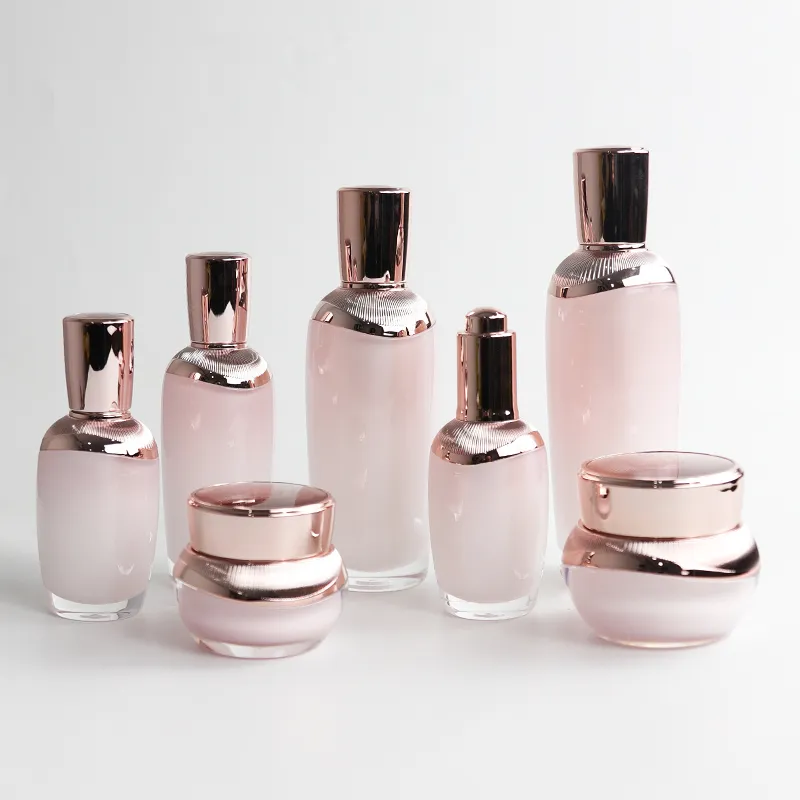
Fragrance bottle design is among the most ambitious and artistically complex briefs in packaging. Heritage fragrance brands commission architects, sculptors, and industrial design legends to create bottle forms that become cultural objects — bottles displayed in design collections and museum exhibitions as much as on dressing tables. For the accessible luxury and contemporary fragrance segments, the design brief may be less ambitious but no less demanding: a bottle that communicates sophistication, originality, and brand character within the visual language of its fragrance category.
Faceted Bottle Designs in ISBM
Faceted bottle designs — where the body cross-section is a polygon rather than a curve, creating flat face panels that catch and reflect light as discrete bright planes — are among the most popular visual languages in fragrance packaging. They evoke crystal cut glass, communicate geometric precision, and create a visual complexity under display lighting that curved forms cannot match. ISBM produces faceted fragrance bottles through a blow mould cavity with the facet geometry machined directly into the cavity walls — the facet planes are reproduced on the blown bottle with the same dimensional precision as any other geometric feature. Facet width, facet intersection angle, and edge radius (the sharpness of the facet-to-facet transition) are all controlled through the mould machining specification. Sharper edge radii (tighter edge radius specification, approaching a true geometric edge) create more dramatic light reflectance transitions between facets; larger radius edges create a softer, more rounded facet transition. The design specification for facet geometry must be confirmed with the ISBM tooling engineer to ensure that the cavity machining process can achieve the specified edge radius and that the blown bottle wall has sufficient thickness at the facet edges to reproduce them without material starvation or excessive thinning.
Tall Proportions and Narrow-Bodied Fragrance Formats
Fragrance bottles typically have higher aspect ratios (height-to-diameter ratios) than most other bottle categories — tall, narrow proportions that communicate precious, concentrated content and create a distinctive silhouette that occupies retail space more efficiently than broad-shouldered formats. ISBM handles tall, narrow fragrance bottle proportions through careful management of the axial stretch ratio, which must be sufficient to distribute material evenly from preform to the base of the bottle without creating excessively thin zones at the widest diameter section mid-body. For fragrance bottles with aspect ratios above 3:1 (height to maximum diameter), preform geometry optimisation through mould flow simulation is essential to validate that material distribution is uniform across the full bottle height before tooling manufacture is committed.
Integrated Shoulder Architecture for Fragrance Bottles
The shoulder zone of a fragrance bottle — the transition from the bottle body to the neck — is the design zone that most strongly determines the bottle’s personality. A rounded, flowing shoulder evokes femininity and organic nature; a sharp, angular shoulder transition evokes precision, masculinity, and architectural discipline; a pronounced reverse-taper shoulder (wider at the top than the body, flowing upward to the neck) creates a profile that reads as dramatic and architectural. ISBM’s blow mould geometry can produce all of these shoulder profiles with precision — including the reverse-taper profiles that create challenges for some other production processes — as long as the shoulder geometry is compatible with the mould opening direction. The critical requirement is that the shoulder geometry has sufficient draft angle in the mould opening direction to release cleanly, or is designed for a split-shoulder tooling arrangement that accommodates more complex shoulder geometries through additional tooling complexity.
ISBM vs. Glass for Fragrance Bottle Production: A Commercial Comparison
Fragrance brands evaluating ISBM PETG against glass for bottle production should conduct the comparison across the full set of commercially relevant dimensions — not just optical quality and material cost, but the complete supply chain economics, product safety profile, and commercial flexibility that each production technology provides.
| Commercial Dimension | ISBM PETG | Glass |
|---|---|---|
| Optical clarity (display condition) | Glass-comparable in premium grades; mirror-polish cavity | Benchmark; consistent across glass types |
| Breakage risk (distribution) | None — shatter-proof advantage for alcohol products | Significant — alcohol fire risk from broken fragrance in transit |
| Shipping weight (100 × 50ml bottles) | ~1.5–2.5 kg (bottle only) | ~8–18 kg (bottle only) |
| Hazardous goods classification (air freight) | Determined by alcohol content, not bottle; PETG eliminates broken-glass shrapnel risk | Same alcohol-determined classification plus broken-glass handling risk |
| Minimum order quantity (new design) | 3,000–10,000 from single-cavity tooling | 10,000–50,000+ for new glass mould design |
| Prototype/design iteration lead time | 6–10 weeks (single-cavity prototype tooling) | 14–22 weeks (glass prototype tooling) |
| Tooling cost (new custom design) | 30–55% of glass tooling cost for equivalent complexity | High; scales steeply with geometric complexity |
| Limited edition and seasonal flexibility | High — colour change in 2–3 weeks from existing tooling | Low — glass colour changes require furnace specification change; long lead |
| rPET sustainability option | 20–30% rPET achievable; documented recycled content claim | Recycled glass available; content varies by supplier |
| Travel and airline retail suitability | Preferred — no breakage risk, lighter packing weight | Breakage risk in luggage; regulatory concerns for carry-on |
The comparison confirms that ISBM PETG occupies a distinct and commercially compelling position relative to glass in the fragrance bottle market — not as a full substitute for ultra-prestige glass (where the material itself is the luxury signal and where price levels support the premium glass economics), but as the preferred production technology for the accessible luxury, contemporary fragrance, body mist, travel, and limited edition fragrance categories where optical quality, design flexibility, and production economics must all be served simultaneously.

Fragrance-Specific Colour, Tint, and Surface Effects in ISBM Production
Fragrance bottles use colour and surface effects to communicate the olfactory character of the fragrance before it is smelled — the visual vocabulary of the bottle is the first sensory signal of the fragrance’s personality. The colour and surface effects achievable through ISBM cover the full range of fragrance bottle visual languages, from the water-clear crystal that communicates fresh, transparent, aquatic fragrance families through the warm amber and gold tones of oriental and gourmand fragrances to the deep opaque blacks and navies of woody, leathery, and smoky accords.
Crystal Clear
Water-white optical-grade PETG, mirror-polish cavity, zero colourant. Showcases the fragrance liquid’s own colour — pale yellow floral note, amber oriental depth, blue-green aromatic freshness. This transparency creates a direct visual connection between bottle and juice that glass cannot surpass. Fragrance families: fresh, aquatic, floral, citrus.
Warm Amber and Gold Tints
Low-loading warm amber or gold masterbatch producing a translucent tint that warms the fragrance liquid’s appearance. Particularly effective for oriental, amber, vanilla, and gourmand fragrances where warm visual tone reinforces the expected olfactory character. The tint communicates warmth, richness, and depth — aligning packaging and product on the same sensory dimension.
Champagne and Rose Gold Iridescence
Very fine pearlescent additive in pale amber or pink PETG produces the warm, light-shifting iridescence of champagne or rose gold glass. Popular in feminine and floral oriental fragrances where the visual warmth and luxury connotation of precious metal tones reinforces the fragrance’s prestige positioning. Changes appearance under different lighting angles — more luminous under cool display lighting, warmer under ambient evening lighting.
Deep Black and Navy
Deep opaque tones in a mirror-polished PETG bottle create an intensely reflective, jewel-like surface that reads as extremely premium. Dark opaque fragrance bottles are popular in masculine, woody, leathery, and niche fragrance categories where the visual vocabulary of restraint and mystery aligns with the fragrance character. Deep navy provides the UV protection appropriate for photosensitive fragrance compounds while communicating a refined brand aesthetic.
Soft Feminine Tints
Soft blush rose, pale lavender, powder pink, or translucent white-blush tones with a satin or frosted surface finish communicate femininity, delicacy, and contemporary clean beauty aesthetics that resonate in floral, powdery, and clean musk fragrance categories. Subtle enough to appear effortless rather than obviously coloured — the kind of colour that the consumer can only identify as “slightly pink” when the bottle is placed against a white background.
Natural and Earthy Tones
Sage, forest green, terracotta, deep earth brown — natural material colours communicate botanical origin, sustainability positioning, and artisanal character that resonates with the growing niche and indie fragrance market. For brands whose fragrance narrative centres on natural ingredients, exotic botanicals, or place-of-origin sourcing, the bottle’s colour communicating that narrative before the name is read delivers powerful brand coherence.
Crimping Neck Compatibility and Spray Pump Integration for Fragrance ISBM Bottles
The fragrance delivery system — the spray pump or atomiser through which the consumer dispenses the fragrance — is attached to the bottle through a crimp-collar system that is specific to the fragrance industry and different from the screw or snap closures used in most other personal care packaging. Understanding the crimp-neck specification requirements for ISBM fragrance bottles is essential for any fragrance bottle development project.
Crimp Neck Geometry and Dimensional Requirements
Fragrance spray pumps are attached to the bottle using a metal crimp collar that is mechanically compressed around the bottle neck’s exterior and the pump’s flange simultaneously, creating a permanent, leak-proof attachment. The neck geometry for a crimped fragrance bottle must meet the pump supplier’s crimp collar specifications on: outside diameter at the crimp engagement zone (typically 15mm, 19mm, or specific custom dimensions depending on the pump collar size); neck wall thickness at the crimp zone (must be sufficient to resist collapse under crimp force without fracturing); finish roundness (ovality above ±0.15mm on outside diameter can cause incomplete crimp seal around the full circumference, creating potential for fragrance leakage); and the presence and dimensions of a crimp lock-ring or retention bead that prevents the crimp collar from pulling off under the pump discharge force. All of these dimensions are formed by injection in the ISBM process and are reproducible to ±0.05–0.10mm consistency across a production run — providing the dimensional stability that reliable crimping requires.
Crimp Qualification Testing for ISBM Fragrance Bottles
Crimped fragrance bottle qualification testing is more demanding than screw-closure compatibility testing because the crimp attachment is permanent — a failed crimp is a product defect with no field remedy. Qualification testing covers: crimp application force verification (the crimping equipment is set to the pump supplier’s specified crimp force, and the ISBM bottle neck must not show visible deformation or cracking at this force); pull-off force testing (the crimped pump assembly is subjected to tensile loading to confirm that the crimp holds above a minimum retention force, typically 200N or greater); and leak testing at maximum internal pressure (simulating pump actuation overpressure conditions). Qualification samples should be taken from the full production cavity set (not just selected cavities) because cavity-to-cavity dimensional variation in the neck finish can cause specific cavities to be marginally out of crimp specification while others pass — a problem that selectively produced qualification samples would not detect.
Dip Tube Specifications for Fragrance Formats
Fragrance pump dip tubes are typically manufactured to tighter tolerances than general personal care dip tubes because the pump metering valve’s performance — the consistency of the dose per actuation — is partially dependent on the dip tube providing unrestricted product flow from the bottle base. Dip tube length must match the internal bottle height within ±2mm to ensure the tube reaches the base without bottoming out and without leaving a significant dead volume of inaccessible product. Internal bottle height reproducibility in ISBM (typically ±1mm from the base to the neck datum) is consistent with this specification. For fragrance bottles with unusual base geometries (deep champagne punt, angled base), the dip tube end design may need to be customised to fit the base form — a detail that should be confirmed between the fragrance brand, the pump supplier, and the ISBM bottle producer during the development process.
Fragrance-Specific Applications Where ISBM Provides Clear Market Advantage
Several specific fragrance market segments are where ISBM PETG’s advantages over glass translate into directly accessible commercial opportunities — segments where glass’s limitations create market gaps that ISBM is positioned to fill.
Travel Retail and Miniature Fragrance
Travel retail — airport duty-free, in-flight, and cruise retail channels — is the fastest-growing and highest-margin distribution channel in the fragrance industry. It is also the channel where glass fragrance bottles face their most significant practical challenges: airline liquid restrictions (100ml maximum for cabin baggage) create demand for small formats that are commercially difficult in glass minimum batch quantities; the handling stresses of checked baggage and retail display cause breakage rates that create safety and liability concerns at airports; and the weight premium of glass adds measurable cost to the already-elevated logistics costs of travel retail supply chains. ISBM PETG fragrance bottles for travel retail — producing miniature, 15ml, 30ml, and 50ml formats with full visual quality in shatter-proof PETG — are the solution to these challenges and represent an accessible commercial entry point for fragrance brands exploring ISBM capability for the first time.
Body Mist and Hair Mist Formats
Body mist and hair mist products — alcohol-based fragrance in 100–200ml formats at lower concentration (3–8% fragrance) and lower price points than EDPs and EDTs — are the fragrance category’s entry-level volume driver and the primary category for the “fragrance wardrobe” trend where consumers maintain a collection of 5–10 body mists for daily mood-based selection rather than a single signature fragrance. Glass economics at these price points are challenging — the glass bottle cost as a percentage of the total product cost is too high for mass market body mist. ISBM PETG delivers premium-appearance bottles at the economics that body mist can accommodate, making visual premiumisation of the body mist category achievable for brands that could not justify glass at these price points.
Limited Edition and Seasonal Fragrance Collections
Fragrance brands release limited edition bottles — seasonal colour variants, designer collaboration editions, holiday gift packaging — that require small runs (5,000–20,000 units) in premium packaging at short lead times (8–12 weeks from brief to finished product). Glass minimum batch quantities (10,000–50,000 units per design) and lead times (14–22 weeks) make glass challenging for these limited edition programmes, particularly for mid-size fragrance brands that cannot absorb the inventory risk of overproducing a limited edition in glass. ISBM PETG limited editions — produced through a colour masterbatch change on existing bottle tooling, at minimum quantities as low as 3,000 units — are achievable in 6–8 weeks from colour approval, making limited edition packaging strategies commercially viable for fragrance brands that glass economics currently exclude.
Secondary Decoration for Fragrance ISBM Bottles
Premium fragrance bottles routinely incorporate secondary decoration that extends the visual vocabulary beyond what the blow mould cavity alone can produce. For ISBM PETG fragrance bottles, the most commercially relevant secondary processes — and their specific compatibility considerations — are covered below.
Vacuum metallising applied over a primer coat on PETG surfaces produces the chrome, silver, or gold metallic finish that communicates the highest level of fragrance luxury. The primer coat is essential — without it, adhesion of the metallic layer to PETG is insufficient for the physical handling and alcohol vapour contact conditions of fragrance packaging. The metallised surface creates an entirely different visual character from the transparent or tinted clear bottles it is applied to — covering the base PETG surface with a continuous reflective metal film that behaves optically like polished metal rather than like plastic. For fragrance brands with metallic packaging languages (gold-finish prestige lines, chrome-finish masculine ranges), vacuum metallised ISBM bottles are the commercially accessible route to this aesthetic without the production constraints of actual metal packaging.
Screen printing and pad printing with alcohol-resistant UV-curable inks applies brand name, logo, and decorative elements directly to the PETG bottle surface without a label — producing a clean, uncluttered aesthetic that many contemporary fragrance brands prefer over label-based decoration. Alcohol resistance of the ink system is the critical specification for fragrance bottle direct printing — the bottle’s surface is routinely contacted with fragrance liquid spillage and alcohol spray during use, and ink adhesion must survive this contact without lifting or colour fade across the product’s use life. Ink systems specified for alcohol contact on plastic substrates are available from specialist cosmetic packaging ink suppliers and should be confirmed with the printing supplier before production.
Hot foil stamping applies metallic foil to defined zones of the bottle surface — typically the brand name, logo, or decorative accent — creating a metallic highlight that contrasts with the underlying bottle surface material character. For clear or lightly tinted PETG bottles, a gold hot foil brand mark creates a prestige visual accent at modest secondary decoration cost. The critical requirement is that the stamping zone has sufficient wall thickness (0.5mm minimum) and structural rigidity to withstand the stamping head pressure without deforming, and that the surface radius in the stamping zone is within the capability of the stamping tooling to conform to.
Production Process and Quality Management for ISBM Fragrance Bottles
Fragrance bottle ISBM production quality management must address the specific optical, dimensional, and chemical quality requirements of the fragrance application — requirements that are more demanding in several respects than general personal care bottle production.
Optical quality inspection for fragrance bottles should be conducted under both spot lighting (to assess surface reflectance quality and detect surface marks) and backlight inspection (to assess wall thickness uniformity and detect haze variation). For clear PETG fragrance bottles, haze targets are typically tighter than for skincare or personal care — ≤1.5% haze is appropriate for premium fragrance; ≤2.5% for accessible fragrance — because the bottle’s transparency plays a more central visual role in fragrance retail than in most other categories. A haze meter reading taken from the body panel of a representative sample from each production run provides the objective quality record.
Crimp neck dimensional checks — outside diameter, ovality, and wall thickness at the crimp engagement zone — should be conducted on a sample of 5–10 bottles per cavity at the start of each production run and at each scheduled maintenance interval. Crimp qualification requires that all cavities pass simultaneously — a single cavity with out-of-specification crimp neck dimensions that is mixed with compliant bottles creates a reliability risk that is not manageable downstream.
Fragrance product compatibility monitoring should include a periodic ongoing stability check — filling sample bottles from current production with the production fragrance formulation, sealing with the production crimp and pump, and storing under controlled conditions for comparison against the initial qualification stability samples. This ongoing monitoring detects any change in the production bottle specification (from resin batch change, process parameter drift, or tooling maintenance adjustment) that could affect formulation compatibility before it manifests as a commercial product quality issue.
Ever-Power’s Capabilities for Fragrance ISBM Bottle Development
Australia Ever-Power Injection Stretch Blow Moulding Machine Co., Ltd provides fragrance bottle producers with dedicated application expertise in PETG processing for fragrance applications — including alcohol compatibility assessment guidance, crimp neck specification development, stability testing programme planning, and the machine configuration recommendations needed for fragrance-grade production quality.
For fragrance brands evaluating whether to develop a custom ISBM PETG bottle for a specific application, Ever-Power’s development process begins with a no-cost feasibility session covering: bottle design review against ISBM manufacturability criteria; material recommendation (standard PETG versus alcohol-resistant specification); crimp neck compatibility assessment against the brand’s specified pump/collar; and a development cost and timeline estimate. This front-end investment in alignment before tooling is commissioned protects the fragrance brand’s development budget and timeline from the surprises that undiscovered manufacturability issues create during production tooling manufacture.
The Condell Park NSW engineering team’s proximity to major Australian fragrance contract manufacturing and filling operations provides same-day or next-day on-site support for commissioning, crimp qualification, and process troubleshooting that international ISBM suppliers cannot provide. For Australian fragrance brands working with local contract fillers, this local technical partnership extends through the entire supply chain — from bottle production through filling and crimping to distribution. Contact [email protected] to discuss your fragrance bottle ISBM development requirements.
Develop Your Fragrance Bottle in ISBM PETG
Australia Ever-Power’s engineering team provides fragrance brands with ISBM feasibility assessment, PETG alcohol compatibility guidance, crimp neck specification development, and custom bottle development from initial brief through production-qualified tooling.
Request Your Fragrance Bottle Assessment →
[email protected] |コンデルパーク NSW 2200、オーストラリア | isbm-technology.com
注目の商品
One-Step Injection Stretch Blow Molding Machine — Four-Station HGYS150-V4-B
For fragrance bottle producers requiring a production platform that combines the process precision needed for optical-grade PETG fragrance bottles with the compact footprint and investment level appropriate for boutique, accessible luxury, and niche fragrance production scales, the HGYS150-V4-B four-station one-step injection stretch blow molding machine from Australia Ever-Power is well-suited to the fragrance packaging application. The four-station architecture delivers the independent conditioning zone control and precise conditioning temperature management that PETG optical quality in small-format fragrance bottles demands, while the machine’s servo-assisted drive components provide the shot-to-shot consistency in preform conditioning that prevents the banding and haze variation that would be immediately visible in a transparent fragrance bottle. The HGYS150-V4-B processes PETG and PET across the 10ml–500ml volume range appropriate for fragrance applications from miniature travel size through standard EDT and EDP formats to body mist. Its neck finish tooling accommodation covers the 15mm and 19mm crimp neck formats used by major fragrance pump suppliers, and its preform weight range supports the thicker-wall specifications that alcohol compatibility and optical depth targets require. Detailed specifications, PETG processing capability confirmation, and fragrance application notes are available at isbm-technology.com。 接触 [email protected] to discuss your fragrance bottle production requirements.