The Automotive Chemical Packaging Market and Its Unique Demands
The automotive chemical and aftercare product category spans a wide range of consumer and professional products: windshield washer fluid, fuel additives, engine flush products, wheel cleaner, tyre shine, paint protection compounds, leather conditioners, and a growing range of electric vehicle battery maintenance products. What these products share — despite their formulation diversity — is a combination of chemical aggressiveness, visual product differentiation, and a retail environment where packaging quality directly communicates product efficacy and brand positioning to the end consumer.
The injection stretch blow molding machine delivers against this combination more comprehensively than any alternative production technology. Its ability to produce optically clear or precisely tinted containers with injection-precision neck finishes, chemical-resistant biaxially oriented walls, and the production economics needed for the competitive automotive chemical retail segment makes it the preferred platform for the most commercially demanding packaging applications in this category.
Australia Ever-Power, operating from Condell Park NSW 2200, provides automotive chemical product manufacturers and packaging converters with ISBM machine technology, tooling development, and production support specifically calibrated for the chemical product packaging application. This article addresses the specific technical and commercial challenges of automotive chemical packaging and how ISBM resolves them.
Windshield Washer Fluid Bottles: Why Clarity and Chemical Resistance Define the Specification
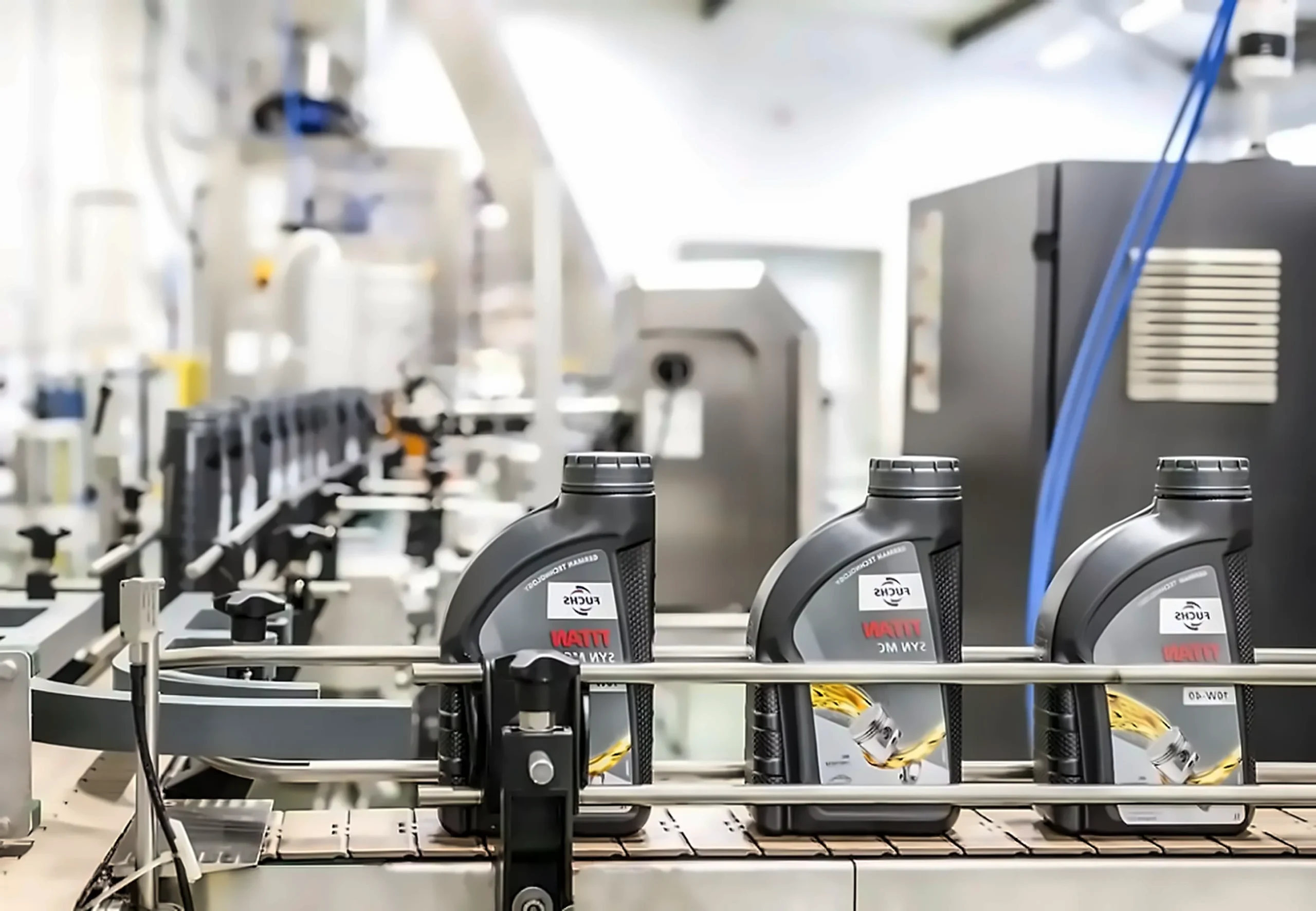
Windshield washer fluid is the highest-volume single product in the automotive chemical category in Australian retail — sold through supermarkets, service stations, auto retailers, and online channels in 1L, 2L, and 5L formats. The product is an ethanol-water blend (typically 20–40% isopropanol or ethanol) with surfactants and sometimes a blue colorant at very low concentration. From a packaging chemistry perspective, this is one of the more straightforward automotive chemical applications — the alcohol concentrations are well within the compatibility range of biaxially oriented PET, and the surfactant and colorant systems used in washer fluid are generally non-aggressive toward PET at ambient and moderate storage temperatures.
Why Transparency Is Commercially Critical for Washer Fluid
Windshield washer fluid is one of the few automotive products where the characteristic blue colour of the product itself is the primary visual product identifier — and a clear bottle that displays the bright blue fluid directly to the consumer is significantly more effective at communicating “windshield washer fluid” on a crowded automotive retail shelf than an opaque or translucent bottle relying entirely on label colour. The visual merchandising value of a clear PET bottle showing the product’s own colour is an established commercial advantage in washer fluid retail that ISBM PET uniquely provides versus HDPE.
ISBM Performance Specifications for Washer Fluid Containers
The washer fluid bottle specification for ISBM production covers several technical parameters that ensure performance across the product’s distribution and retail lifecycle:
🧪 Chemical Compatibility
PET at ≤ 40% isopropanol: excellent stability. Validate at 40°C for 6 weeks. For concentrate formulations above 70% alcohol, PETG or nylon barrier coatings may be required.
📐 Dimensional Stability
Body volume change ≤ 1.5% after 12-week ambient storage. Biaxial orientation in ISBM PET minimises creep under fill pressure versus unoriented alternatives.
💧 Leak Performance
Zero leak at 2× fill pressure. Injection-formed neck finish ensures ±0.08mm ovality — critical for reliable HDPE snap-cap and screw cap sealing in automated filling lines.
🌡️ Thermal Performance
No distortion at 50°C (summer retail storage) and no brittleness at −20°C (winter vehicle storage in southern states). Biaxial orientation provides both thermal resistance and low-temperature impact performance.
Fuel and Engine Additives: Meeting the Chemical Challenge with Appropriate Materials
Fuel additives, engine flush products, DPF cleaners, and diesel treatment compounds represent some of the most chemically aggressive products in the automotive category. Many contain high concentrations of aromatic solvents, detergent packages, or organometallic compounds that place significant demands on packaging material selection. The ISBM process addresses this through material versatility — the same machine platform processes standard PET, PETG, barrier-enhanced resins, and co-polymer systems depending on the specific chemical compatibility requirement of the product being packaged.
Material Options for Solvent-Based Automotive Additives
For fuel additive concentrates containing aromatic hydrocarbon solvents (toluene, xylene fractions) above 30% concentration, standard PET is not the recommended packaging material — these solvents cause measurable PET plasticisation at elevated temperatures, leading to bottle distortion and potential permeation. The options for ISBM production of solvent-bearing additive products include PETG (improved aromatic solvent resistance versus PET), multilayer barrier structures with EVOH or nylon inner layers (where the ISBM machine is configured for co-injection), or a coating applied post-blow. For products at lower solvent concentrations (below 15–20% aromatic content in a carrier base), standard PET with formal stability validation is the most cost-effective approach. Each product category requires individual assessment — not generic material compatibility statements.
Practical Chemical Compatibility Guidelines
| Product Type | Recommended Material | Stability Test Required |
|---|---|---|
| Windshield washer (≤40% IPA) | Standard PET | 40°C / 4 weeks minimum |
| Fuel additive (<15% aromatic) | PET or PETG | 60°C / 6 weeks |
| Engine flush (high detergent) | PETG preferred | 60°C / 8 weeks |
| DPF cleaner / solvent concentrate | HDPE or multilayer | Individual assessment required |
| Tyre shine / detailer (water-based) | PET — excellent | Ambient / 4 weeks |
| Paint protection compound | PET or PETG | 40°C / 6 weeks |
Automotive Car Care Packaging: Where Brand Identity Meets Product Performance
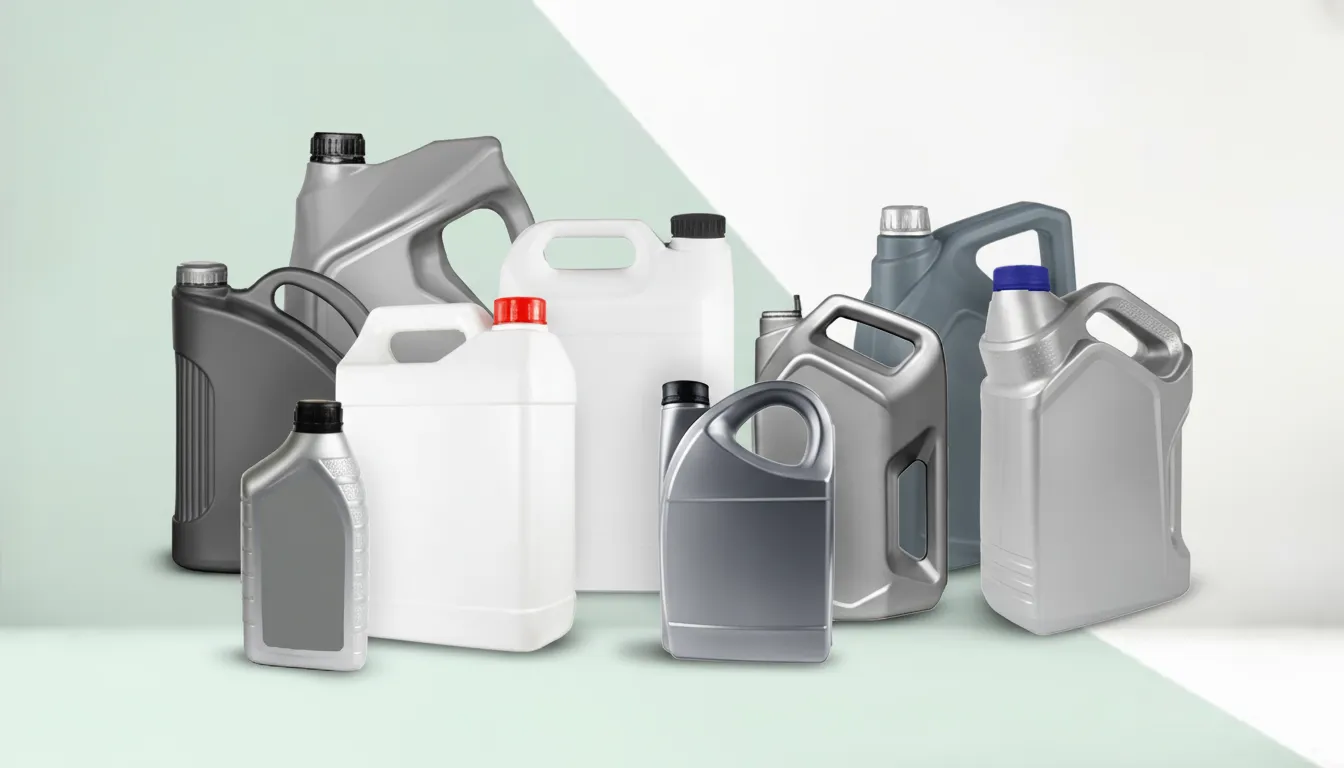
The car care and detailing segment — wheel cleaner, glass cleaner, interior detailer, leather conditioner, wax applicator fluid, and scratch remover compound — is one of the fastest-growing sub-categories in the automotive aftermarket, driven by consumer interest in vehicle appearance maintenance and the proliferation of online channels selling specialist detailing products to enthusiast buyers. This segment places the highest visual packaging requirements of any automotive product category: the consumer selects products from an online retailer based largely on packaging photography, and the product must match its digital representation precisely when it arrives.
Design Differentiation in Automotive Detailing Packaging
The ISBM process gives automotive detailing brand owners the full range of visual differentiation tools that premium consumer goods packaging commands: proprietary bottle silhouettes with custom embossed brand marks, transparent bodies showing the product’s characteristic colour, frosted or satin-finish zones for grip differentiation, and precisely colour-matched opaque tints for product tier identification. These design elements are all produced within the blow-moulding process from tooling specifications — they require no secondary decoration operations and therefore add no incremental production step cost once the tooling investment is made.
Trigger Spray and Fine Mist Neck Compatibility
Automotive detailing products are predominantly dispensed through trigger spray heads (for glass cleaner, interior detailer, tyre shine) or fine-mist pump sprays (for quick detailer and finishing spray products). The neck finish for trigger spray systems — typically 28/410 or 28/415 — requires thread major and minor diameter within ±0.10mm and finish roundness within ±0.08mm for reliable trigger head engagement and spray performance. ISBM’s injection-formed neck meets these tolerances as a production standard rather than through 100% inspection sorting, which is the operating reality of an automated filling line running at 10,000–20,000 bottles per hour.
Production Efficiency for Automotive Chemical Packaging: The ISBM Advantage at Scale
Automotive chemical product manufacturers typically run 10–30 SKUs across a product range — different formulations in different size formats, often across multiple brand tiers. The production flexibility and economics of an injection stretch blow molding machine platform are particularly well-suited to this multi-SKU, multi-format production challenge.
Rapid SKU Changeover
Mould set changeovers between bottle designs: 90–180 minutes with a trained operator and pre-staged tooling. Colour changeovers: 15–30 minutes for most transitions. For a 20-SKU automotive chemical range, this makes weekly or bi-weekly changeover schedules commercially viable from a single machine.
Multi-Cavity Output
4-cavity ISBM production on 500ml automotive chemical bottles: typically 6,000–9,000 BPH. At this output rate, a single machine produces a month’s supply of a 500ml SKU at 2 million units/year volume within 10–12 production shifts — leaving capacity for other SKUs.
Just-in-Time Supply
Local ISBM production eliminates the 8–14 week import lead times from offshore suppliers, reducing required safety stock from 8–14 weeks to 1–2 weeks. For a fast-moving automotive chemical SKU, this inventory reduction alone frees significant working capital.
Colour Flexibility
ISBM processes the full spectrum of automotive chemical bottle colours from a single machine platform. Colour-coded tier differentiation across a product range — clear for premium, blue for standard, black for professional — is achievable from one production unit with scheduled changeovers.
Labelling, Printing, and Secondary Decoration Compatibility for Automotive Chemical Bottles
Automotive chemical product labelling must meet both Australian chemical labelling requirements (GHS/HSIS compliant labels for classified chemical products) and the brand’s visual marketing standards for retail and online presentation. ISBM bottles provide the dimensional consistency and surface quality that both requirements demand.
Label Panel Engineering in ISBM Tooling
The label panel — the defined flat or slight-curvature zone on the bottle body where the pressure-sensitive label or paper-and-adhesive label is applied — must be dimensionally consistent from bottle to bottle for automated label application to function reliably. A label panel with ±0.5mm curvature variation causes label lifting at the corners on automatic labelling machines, creating both a visual quality defect and a regulatory compliance risk if the label is a mandatory GHS hazard label that partially detaches. ISBM production tooling specifies the label panel geometry exactly, and the injection-blow process reproduces it with ±0.20mm flatness consistency across all bottles in a production run — within the operating tolerance of all standard automatic labelling equipment.
Direct Bottle Printing for Premium Automotive Care Products
The premium automotive detailing segment is adopting direct digital printing on bottles (UV inkjet or thermal inkjet applied post-blow) for limited-edition runs and personalised packaging. The ISBM bottle’s precise, consistent cylindrical or flat panel geometry and the clean, smooth surface (from the mirror-polish cavity) are prerequisites for reliable digital print adhesion and registration. Automotive chemical brands investing in direct bottle printing should specify the surface finish Ra and dimensional tolerances of the ISBM bottle precisely — the print quality on shelf is only as good as the bottle surface quality and dimensional consistency beneath the print.
Child-Resistant Closure Compatibility for Automotive Chemical Products
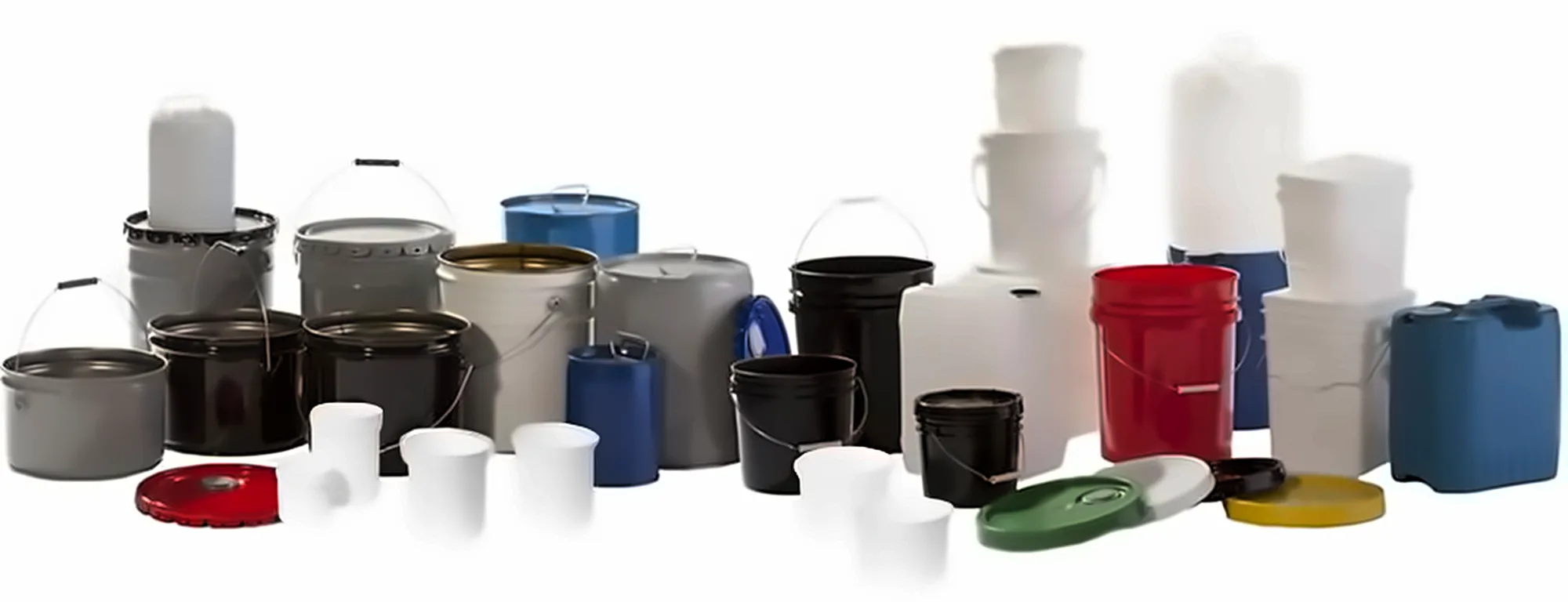
A significant proportion of automotive chemical products are classified under Australian law as requiring child-resistant packaging — including many engine flush products, concentrated fuel additives, and some wheel and tyre cleaner concentrates. Child-resistant closures operate through a press-and-turn or squeeze-and-turn mechanism that requires precise engagement between the bottle neck finish and the closure’s locking geometry. The tolerances required for reliable child-resistant closure performance are tighter than for standard closures, and ISBM’s injection-formed neck is the production approach that reliably meets them.
For a push-and-turn child-resistant closure operating on an automotive chemical container, the critical neck dimensions are: the outer diameter of the thread or retention bead (which the closure lock engages), the finish height (which positions the closure’s locking elements correctly relative to the thread), and the finish roundness (which ensures the push-and-turn mechanism engages uniformly around the circumference). ISBM production consistently delivers these dimensions within ±0.10mm — within the operating tolerance of all major CRC closure systems used in Australian automotive chemical packaging.
Qualification testing for child-resistant closure systems requires testing on bottles from all production cavities (not a single-cavity sample), because multi-cavity ISBM tooling sets can have cavity-to-cavity dimensional variation that, while within the overall tolerance band, may affect CRC engagement differently at the dimensional extremes. Ever-Power’s application engineering team can advise on the specific qualification protocol required for CRC closure systems with the machine and tooling configuration being considered.
EV-Specific Automotive Fluid Packaging: The Emerging ISBM Opportunity
The rapid growth of electric vehicle adoption in Australia is creating new automotive fluid packaging requirements that did not exist at scale five years ago. EV-specific products include battery thermal management fluid (a specialised coolant with different chemistry from traditional ethylene glycol coolant), electric power steering fluid, and a range of EV-specific exterior care products designed for the smooth, aerodynamic surfaces of modern electric vehicles. Each of these product categories has distinct packaging chemistry and labelling requirements.
Battery thermal management fluid used in lithium-ion battery cooling systems typically requires a non-conductive, non-ionic formulation specifically to avoid electrical conductivity if any fluid reaches the battery cells during a vehicle incident. The packaging for this fluid must meet the same non-ionic requirement — no ionic extractables from the container material into the fluid. Biaxially oriented PET, produced from food-contact-grade resin through ISBM, has extremely low extractable ionic content — generally below the detection limit for the non-conductivity specifications used in EV thermal management fluid specifications.
The EV detailing and care product segment is growing rapidly — ceramic coating applicators, EV-specific glass treatments, and waterless washing compounds are all launching with packaging specifications aimed at the premium automotive consumer. The ISBM platform’s design flexibility and optical quality capability is directly aligned with the premium packaging visual requirements of this segment. Automotive packaging converters investing in ISBM capacity for traditional fluid products today are naturally positioned to serve the EV-specific chemical product market as it grows.
A Practical Development Pathway for Automotive Chemical ISBM Packaging
Developing a new automotive chemical packaging range through ISBM follows a structured pathway that protects both the brand’s development investment and the production quality required for chemical product applications. The pathway below reflects the typical sequence for a new automotive packaging project with Ever-Power.
Product and Packaging Specification
Document formulation type, concentration ranges, storage temperature range, closure system, bottle volume(s), label type, dangerous goods classification, and annual volume by SKU. This specification drives all subsequent material and tooling decisions.
Material Selection and Compatibility Assessment
Based on formulation chemistry, select the appropriate ISBM material — PET, PETG, or barrier-enhanced variant. Initiate accelerated compatibility study at 40–60°C with the production formulation in prototype bottles before tooling investment is committed.
3D Design and Tooling Engineering
3D bottle design incorporating label panel, neck finish, ergonomic features, and brand elements. Mould flow simulation validates wall thickness distribution. Neck finish dimensions are confirmed against the closure supplier’s specification before tooling manufacture commences.
Prototype Production and Qualification
Single-cavity prototype tooling produces physical samples for closure compatibility testing, drop testing, labelling machine trials, and brand visual approval. GHS label placement is verified on physical samples before production tooling is committed.
Production Qualification and Commercial Release
Production tooling qualified through extended run at validated parameters. Full dimensional inspection, CRC closure engagement testing, and initial product-filled stability samples initiated. Commercial release signed off against the approved quality standard before first commercial production batch ships.
Why Australian Automotive Chemical Brands Choose Local ISBM Production
The competitive dynamics of the Australian automotive chemical market — concentrated retail buyers with strong negotiating power, online channels that commoditise price and create demand for packaging differentiation, and growing consumer sustainability expectations — create a commercial environment where local, agile production is a strategic advantage over offshore supply. Local ISBM production through Australia Ever-Power provides automotive chemical brands with the ability to respond to ranging opportunities with short lead times, accommodate design changes without 14-week minimum order cycles, and substantiate local manufacture claims that resonate with Australian consumer preferences.
The supply chain resilience argument is particularly strong for automotive chemical products because many of them contain classified dangerous goods components that add regulatory complexity to international logistics. Local bottle production eliminates one layer of international supply chain exposure and gives the brand control over packaging quality and availability that offshore supply cannot guarantee consistently.
Contact Australia Ever-Power at [email protected] to discuss your automotive chemical packaging production requirements, or visit isbm-technology.com/contact-us to request a feasibility consultation.
Recommended Machine
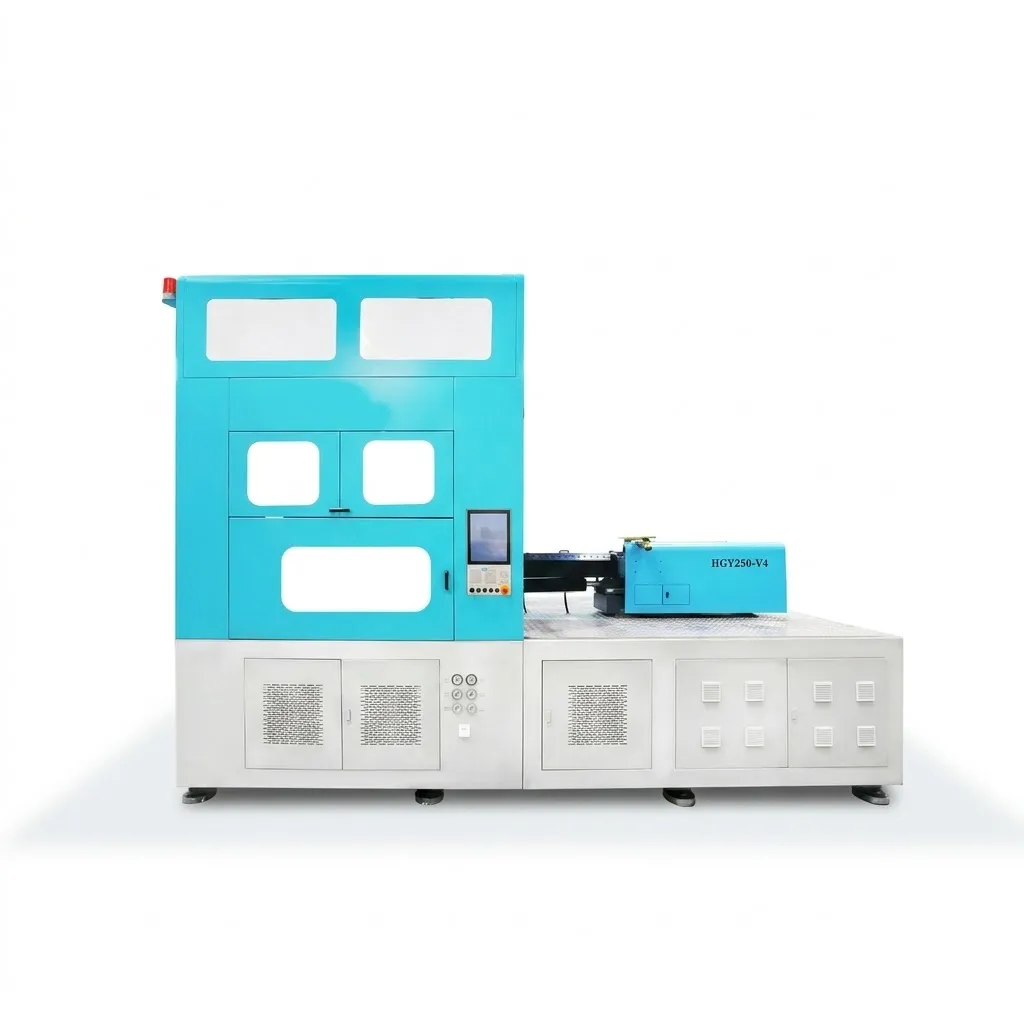
HGY250-V4 — Four-Station One-Step ISBM Machine for Mid-to-Large Formats
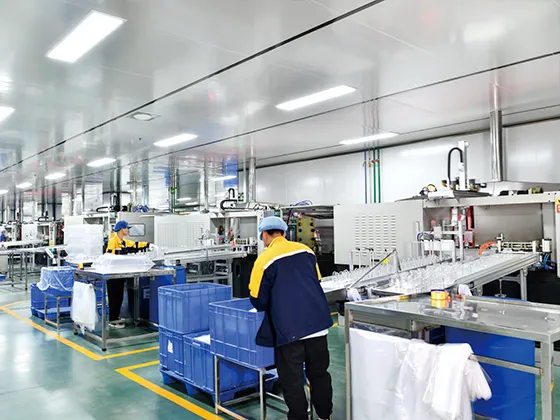
For automotive chemical packaging operations producing 250ml–1L containers across a diverse range of product formulations and closure systems, the HGY250-V4 four-station ISBM machine provides the production flexibility and precision that the category demands. The four-station rotary system delivers 4,000–8,000 BPH depending on format, with configurable cavity counts for different SKU volume requirements. The machine’s injection system handles PET and PETG with equal precision, supporting the material flexibility that diverse automotive chemical formulations require. Its rapid mould change system (90–180 minutes per full changeover) makes the multi-SKU production programmes of automotive chemical ranges manageable from a single production platform. Full servo-electric option available for improved energy efficiency and process repeatability.