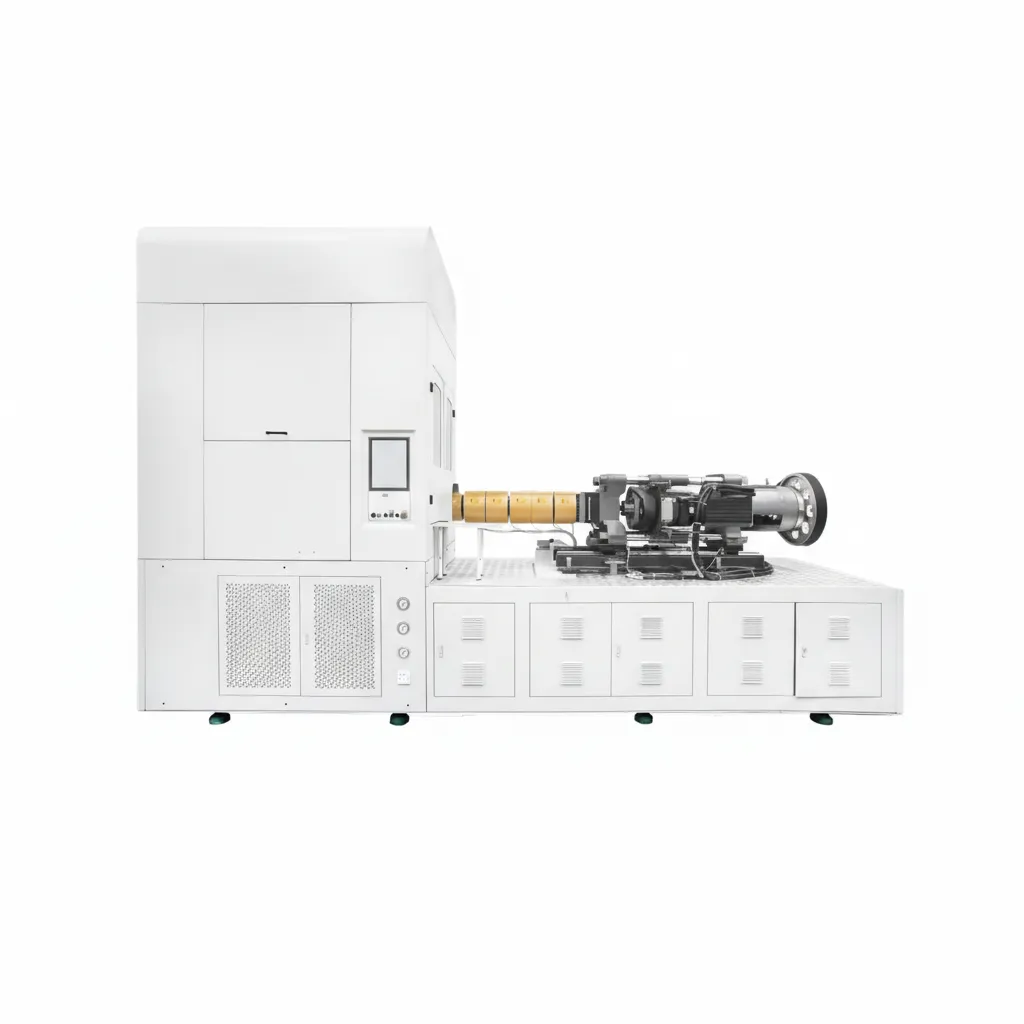
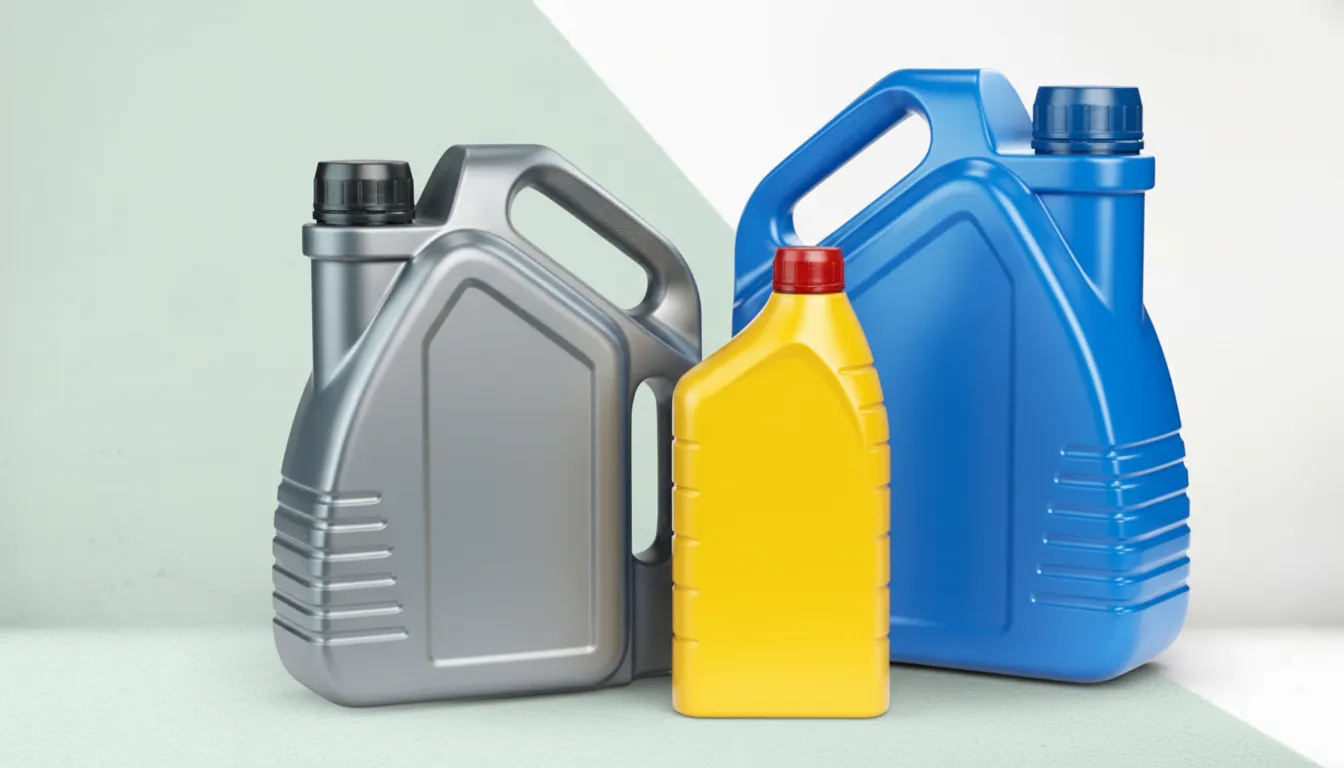
Car air freshener liquid is a product category where packaging serves two equally important functions: it preserves the fragrance composition from manufacture to the moment of use, and it communicates the brand’s quality, character and price positioning to a consumer making a purchase decision in a petrol station forecourt display, an automotive parts store shelf or an e-commerce product listing viewed on a phone screen. These twin imperatives — functional barrier performance and premium visual presentation — align precisely with the capabilities of injection stretch blow molding. No other plastic bottle production process simultaneously delivers the optical clarity and surface quality that fragrance product aesthetics demand, the fragrance compound barrier that prevents scent loss and concentration drift during a 12–24 month retail lifecycle, and the small-format production efficiency that the 50–200ml volumes typical of this category require at competitive unit cost. For brands building car air freshener product lines in Australia’s growing automotive consumer care market, ISBM is the production platform that removes the trade-off between performance and presentation.
The Car Air Freshener Market: Where Fragrance Meets Functional Packaging
The Australian car air freshener market spans three distinct product formats: vent-clip liquid diffusers (5–15ml refill bottles), dashboard placement gel or liquid diffusers (30–100ml), and spray application air fresheners (100–250ml trigger or pump sprays). Each format serves a different consumer occasion — the vent-clip for continuous passive diffusion, the dashboard diffuser for open-space fragrance presence, and the spray for active treatment of upholstery and cabin surfaces. The liquid formats across all three — which form the refill and primary product segments — are overwhelmingly packaged in small PET or PP bottles that must prevent fragrance loss through the bottle wall over the product’s distribution and retail shelf life while presenting attractively in the automotive consumer care category’s premium-oriented packaging aesthetic.
The category’s growth trajectory in Australia reflects two converging trends: the premiumisation of the automotive aftermarket consumer segment, with buyers investing in cabin experience products that communicate lifestyle and vehicle pride; and the rapid expansion of e-commerce automotive accessories sales, where product photography on a white background replaces the physical retail shelf as the primary purchase trigger. Both trends reward packaging that photographs strikingly, presents its fragrance product colour and clarity convincingly on screen, and justifies its price point through evident packaging quality in hand. These requirements cannot be met by standard HDPE or PP extrusion blow-moulded bottles — they require the optical quality, surface precision and colour consistency that injection stretch blow molding delivers as inherent process outcomes.
Fragrance Barrier Performance: The Technical Core of Air Freshener Packaging
Volatile Organic Compound Retention in Fragrance Products
Car air freshener liquids are formulated around fragrance concentrates at 5–30% loading in carrier solvents — typically isopropyl alcohol (IPA), dipropylene glycol (DPG) or fractionated coconut oil depending on the product type and price positioning. The fragrance concentrate contains volatile aromatic compounds including monoterpene alcohols (linalool, citronellol), esters (benzyl acetate, iso-amyl acetate) and aldehydes (citral, vanillin) that are the active sensory components of the product. These compounds are small, relatively non-polar molecules that permeate through polymer packaging materials at rates governed by the polymer’s free volume, polarity and crystallinity — exactly the molecular structure parameters that biaxial orientation controls in injection stretch blow molding. Every milligram of fragrance that permeates through the bottle wall is a milligram of the sensory experience the consumer expected to receive that has been lost during the distribution chain — a product performance failure invisible at purchase but experienced acutely when the diffuser is placed in the vehicle cabin.
Terpene Stress Cracking: The Primary Compatibility Risk
The fragrance packaging compatibility risk specific to PET is terpene-induced environmental stress cracking (ESC) — a failure mode where d-limonene and related monoterpene hydrocarbons initiate microscopic crack networks in PET under sustained contact, particularly at stress concentration points such as bottle base gate areas, label panel corners and neck-shoulder transitions. This failure mode is strongly concentration-dependent: fragrance concentrates with limonene content above 3% can initiate visible surface crazing in non-oriented PET within 4–8 weeks of contact at 40°C, while the same formulation in biaxially oriented ISBM PET may show no visible damage after 12 months under equivalent conditions. The biaxial orientation effect on ESC resistance arises from the same mechanism as the barrier enhancement — reduced free volume and increased crystallinity in the oriented structure slow both the rate of terpene diffusion into the polymer and the rate of crazing crack propagation once initiated. For car air freshener formulations with citrus, pine or spice fragrance profiles — the highest d-limonene categories — ESC compatibility testing using the specific fragrance concentrate at the maximum expected contact concentration is an essential pre-production qualification step that precedes ISBM tooling investment.
Premium Aesthetics and Surface Quality for Fragrance Brands
Glass-Like Clarity and Specular Gloss
Car air freshener is a category where the bottle is visible and prominent during use — mounted in a vent clip at the driver’s eye level, placed on a dashboard in direct sunlight, or displayed on a vanity shelf at home between drives. At these viewing distances and under these lighting conditions, bottle optical quality is directly perceived by the consumer as a proxy for product quality. ISBM PET achieves specular gloss values of 88–96 GU at 60° against glass-polished tooling (Ra 0.05–0.10µm) — a clarity level that places ISBM bottles visually indistinguishable from glass at arm’s length. This allows the fragrance product’s colour — the precise green of an eucalyptus formulation, the amber of a vanilla-sandalwood blend, the clear of an aquatic accord — to read through the bottle wall with the colour accuracy and visual depth that glass achieves but that HDPE or PP alternatives cannot approach. In e-commerce product photography, this clarity difference is directly visible in the product listing image and correlates measurably with click-through and conversion rate in the automotive accessories category.
Frosted, Tinted and Pearlescent Finishes for Brand Differentiation
Premium car air freshener brands use surface finish differentiation as a visual signature — frosted bodies that communicate luxury through tactile and visual matte quality, deep tints that create a sophisticated darkened-glass effect, and pearlescent formulations that catch light differently as the diffuser sways in a vent clip. ISBM accommodates all three surface treatments: frosted finishes through bead-blast or acid-etch texture applied to the blow mould cavity at Ra 0.8–2.0µm (permanent, consistent, zero production cost per bottle); deep tints through 1–3% colour masterbatch at gravimetric ±0.05% dosing for batch-to-batch consistency; and pearlescent effects through 0.5–1.5% mica-based masterbatch that produces a directional sheen through the entire bottle wall — not a surface coating that ages, flakes or wears. Custom automotive bottles with zone-differentiated surface finishes — a frosted body with a clear “window” panel revealing the liquid colour — are achievable in the same ISBM blow mould through selective mould cavity texturing without secondary processing.
Small-Format Production Efficiency: The Economics of 50–200ml Fragrance Bottles
Car air freshener liquid bottles typically fall in the 15–250ml volume range — the smallest formats in the automotive fluid packaging spectrum and among the highest-cavitation opportunities available to ISBM operators. A 50ml car air freshener bottle requires a preform shot weight of only 4–7g, enabling cycle times of 9–13 seconds on a four-station machine and output rates of 16,000–24,000 bottles per hour in 6–8 cavity configurations. These throughput rates, combined with the small preform weight that minimises injection unit wear and energy consumption per unit, produce unit economics that make ISBM PET the cost-competitive platform for fragrance bottle production in the automotive consumer category even at the lower price points of mass-market car freshener products retailing below $10.
The high-cavitation economics of small fragrance bottle production also support the short run flexibility that fragrance brands need for seasonal scent launches, limited edition variants and multi-SKU product ranges sharing a common bottle silhouette with different colourways. ISBM’s recipe-based parameter management allows colour changeovers — from clear to tinted to pearlescent variants within the same bottle design — through masterbatch recipe switching and barrel purge without full production shutdown, enabling the rapid SKU iteration that automotive consumer care brands require to respond to fragrance trend cycles in the Australian market. The same four-station ISBM platform that produces a promotional 50ml vent-clip refill in the morning can switch to the 150ml dashboard diffuser format in the afternoon through tooling exchange and parameter recipe recall — maximising machine utilisation across the full product width of a car air freshener brand’s portfolio.
ISBM Production Workflow for Car Air Freshener Bottles
Fragrance bottle production on ISBM equipment demands particular attention to visual quality at every stage — any process deviation that would be imperceptible in a functional automotive fluid bottle may read as a visible haze patch, colour streak or surface blemish in the premium-quality fragrance container that a car air freshener brand’s retail positioning requires.
① Precision Resin and Masterbatch Preparation
Low-AA PET (AA below 1 ppm) is specified for fragrance bottles where acetaldehyde off-notes can conflict with the product’s scent profile. Resin is dried to below 40 ppm at 165°C for 5–6 hours with dew point monitoring below −45°C. Pearlescent or colour masterbatch is pre-dried separately and blended gravimetrically at ±0.05% per shot. Consistent drying across the full hopper cross-section prevents the moisture non-uniformity that causes micro-splay surface defects visible in clear fragrance bottles under retail lighting.
② Low-AA Injection for Scent Purity
PET is injected at 268–282°C — toward the lower end of the barrel temperature range that still achieves complete plasticisation — to minimise AA generation. For pearlescent fragrance bottles, injection velocity is set for laminar gate fill to achieve streak-free mica platelet alignment throughout the preform wall. The 15–24mm neck finish for vent-clip refills and the 24/410 dispensing neck for spray formats are formed here at injection-moulding precision, establishing the dispensing accuracy that fragrance products require for both pump spray and drip diffuser application formats.
③ Conditioning for Maximum Barrier and Gloss
Body conditioning at 110–116°C — toward the upper range — maximises biaxial orientation during blow, reducing terpene permeation through the bottle wall and locking in the high-crystallinity structure that provides sustained fragrance barrier over the product’s shelf life. Conditioning temperature precision at ±1°C between zones prevents the wall thickness non-uniformity that produces visible light transmission variation bands in clear premium fragrance bottles viewed under retail display lighting.
④ High-Pressure Blow for Premium Surface Quality
High-pressure blow at 32–40 bar against glass-polished tooling (Ra 0.05–0.10µm for clear; Ra 0.8–2.0µm for frosted) with extended dwell time (3.5–5 seconds) produces the 88–96 GU gloss values and sub-1.5% haze that fragrance brand packaging requires. For frosted-finish car air freshener bottles, the mould texture character is reproduced uniformly across every bottle in the production run without any batch variation — the consistency advantage over post-production chemical frosting treatments that introduce haze variation between production batches.
⑤ 100% Visual Inspection for Premium Programmes
Premium fragrance bottle programmes use 100% inline vision inspection rather than statistical sampling — economically justified by the higher bottle value and the brand consequence of a clarity defect, colour non-uniformity or surface blemish reaching the retail shelf or an e-commerce unboxing photograph. Camera systems inspect for haze patches, splay marks, gate blush, embossing voids and colour deviation against tighter acceptance limits than standard automotive fluid bottle programmes. Non-conforming bottles are removed before the filling line, protecting brand presentation quality across the entire commercial programme.
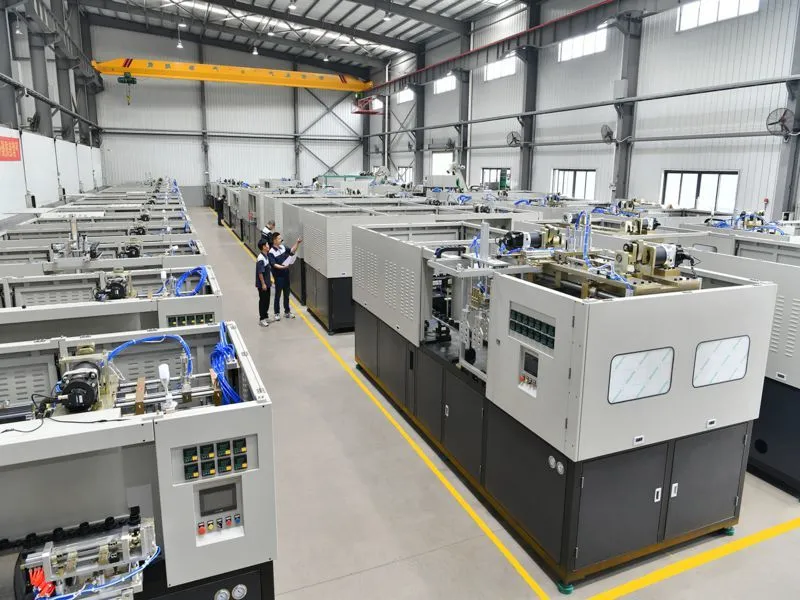
Machine Parameters Tuned for Fragrance Bottle Production
| Parameter | Fragrance Bottle Target | Effect on Fragrance Packaging Quality |
|---|---|---|
| Injection barrel temp | 268–282°C | Minimises AA generation for scent purity |
| Conditioning temp precision | ±1°C zone-to-zone | Wall uniformity — no light bands in clear bottles |
| Blow mould cavity finish | Ra 0.05–0.10µm (clear) / Ra 0.8–2.0µm (frosted) | Specular gloss 88–96 GU or consistent satin texture |
| High-pressure blow dwell | 3.5–5.0 seconds | Maximum crystallinity → terpene barrier; embossing depth |
| Masterbatch dosing accuracy | ±0.05% gravimetric | Colour consistency ΔE ≤0.8 across range SKUs |
| Cycle time (50ml, 6-cav) | 9–13 seconds | Output 16,000–24,000 bottles/hr |
The combination of low injection barrel temperature and high conditioning temperature — seemingly contradictory directions — is the characteristic parameter signature of premium fragrance bottle production on ISBM equipment. Low barrel temperature (268–282°C) minimises acetaldehyde generation, which is the primary concern when a fragrance product’s scent must remain unaltered by packaging migration. High conditioning temperature (110–116°C) maximises the biaxial orientation achieved during stretch-blow, delivering both the terpene barrier and the high specular gloss that premium fragrance bottles require. These two objectives — scent purity from low barrel temperature and barrier/aesthetics from high conditioning temperature — are independently controlled on a four-station ISBM machine, which is precisely the process flexibility advantage that one-step ISBM provides over alternative bottle production methods where barrel temperature influences both stages simultaneously.
E-Commerce Packaging and Unboxing Experience Design
Car air freshener brands selling through Amazon Australia, eBay Motors, Catch and direct-to-consumer websites face a packaging brief that retail channel brands do not: the bottle must photograph attractively as a standalone product against a white background for listing images, survive the rigours of postal delivery without breakage, and deliver an unboxing experience that justifies the consumer’s online purchase decision when the product physically arrives. The photographic requirement directly rewards ISBM’s optical quality — a high-gloss, glass-like PET bottle reflects light in a way that creates the premium product image that drives e-commerce conversion rates. The transport durability requirement rewards the biaxially oriented PET’s superior drop impact resistance compared to injection moulded or extrusion blow-moulded alternatives in the same wall gauge.
For e-commerce unboxing, the car air freshener bottle’s presentation in its shipping box — typically in a moulded insert tray or bubble-wrapped — benefits from the dimensional consistency that ISBM provides. Bottle height variation within ±0.5mm across a production lot ensures that tray-insert packaging designed to present multiple units uniformly actually does so without the height mismatch that creates the impression of poor product quality before the bottle is even touched. Brand embossing on the bottle body — the brand name, a decorative motif, or a fragrance accord visual cue — reads cleanly in unboxing photography when reproduced at the ±0.05mm feature depth precision that ISBM blow mould contact delivers, adding to the perceived value that justifies the e-commerce price premium that premium car air freshener brands target.
Regulatory Compliance and Sustainability for Car Fragrance Bottles
Car air freshener liquids in Australia containing isopropyl alcohol (IPA) carrier at concentrations above 25% by volume are classified as Class 3 Flammable Liquids under ADGC and require GHS label elements including the flame pictogram, Danger or Warning signal word (depending on flash point), and relevant H and P statements. The label panel design for alcohol-based air freshener products must accommodate this mandatory content at minimum text sizes, alongside product name, fragrance description, volume, batch code and manufacturer contact — a spatial requirement that the ISBM blow mould design must address with adequate flat panel area from the outset of the development process.
From a sustainability perspective, ISBM PET car air freshener bottles with no metal components, polyolefin closures and water-soluble label adhesives satisfy the design criteria for ARL ‘Recycle’ designation through Australia’s kerbside PET (01) stream. The refill concept — a durable premium diffuser body replenished from a small concentrate refill bottle — aligns particularly well with ISBM’s precision manufacturing: the refill bottle’s fill valve or neck geometry must mate reliably with the diffuser body’s receiver port across production lots, which requires the dimensional consistency that ISBM neck finish tolerances provide. Refill programmes for car air freshener reduce single-use plastic consumption per fragrance event by 40–60% compared to full-bottle replacement formats — a sustainability claim that resonates with Australia’s growing segment of environmentally conscious automotive accessory consumers and that ISBM manufacturing is uniquely positioned to support through its combination of precision neck manufacturing and lightweighted bottle construction.