Water Treatment and Industrial Fluid Packaging: The Dual Challenge of Chemistry and Compliance
Water treatment chemicals — pool chlorination agents, algaecides, pH adjusters, clarifiers, coagulants, anti-scalants, and biocides for cooling towers and industrial water systems — present some of the most chemically demanding packaging requirements in the industrial chemical sector. These products are often oxidising, acidic, alkaline, or all three simultaneously; they are handled by consumers with varying levels of chemical safety awareness in both domestic pool settings and industrial water management contexts; and they are shipped and stored in environments ranging from domestic garage shelving through industrial chemical storage to open-air poolside racks in direct UV exposure.
這 injection stretch blow molding machine addresses this dual challenge through material versatility (PET, PETG, and barrier-enhanced variants covering the full chemical resistance range of water treatment products), dimensional precision (meeting the child-resistant and tamper-evident closure requirements of chemical retail packaging), and the production economics needed to compete in a market where water treatment chemicals face significant price pressure from commodity chemical producers and private-label retail brands.
Australia Ever-Power Injection Stretch Blow Moulding Machine Co., Ltd, based in Condell Park NSW 2200, works with water treatment chemical producers, industrial fluid manufacturers, and packaging converters on ISBM solutions for the full range of water treatment and industrial fluid packaging applications in the Australian market.
Water Treatment Chemical Formulations and PET Compatibility: A Technical Analysis
Water treatment chemicals span a wider range of chemical aggressiveness than almost any other consumer or industrial product category. Understanding the specific compatibility of PET and PETG with the most common water treatment chemical formulations is the first and most critical step in any water treatment packaging project.
Chlorination Chemicals: The Most Widely Used Water Treatment Products
Swimming pool and potable water chlorination represents the largest volume segment of the water treatment chemical market in Australia. Chlorination products include liquid sodium hypochlorite (pool bleach), stabilised chlorine granules dissolved for use, and trichloro-s-triazinetrione (TCCA) tablet and granule products in solid form. Liquid sodium hypochlorite at the retail concentrations used in Australian pool maintenance (10–15% active chlorine) presents a significant oxidising environment for packaging materials. Standard PET shows progressive degradation (surface saponification and clarity loss) in contact with 10%+ sodium hypochlorite at ambient temperatures — the hydroxide ions and active chlorine compounds attack the PET ester linkages in a mechanism that is temperature-dependent and concentration-dependent. PETG provides meaningfully better resistance to hypochlorite than standard PET due to its modified polymer structure, but even PETG requires a 60°C/8-week accelerated stability validation before commercial adoption for concentrated hypochlorite products. For the highest hypochlorite concentrations (15%+ active chlorine), HDPE remains the preferred material for long-term compatibility assurance.
pH Adjustment Chemicals: Acid and Alkaline Treatments
Pool pH adjustment products — muriatic acid (dilute hydrochloric acid, typically 14–31% HCl) for pH reduction and sodium carbonate or sodium bicarbonate solutions for pH increase — represent a wide pH range from strongly acidic through moderately alkaline. For the acid-based products, PET has excellent resistance to HCl at the concentrations used in retail pool treatment products — standard PET is widely used for dilute acid packaging at concentrations up to approximately 20% HCl. For higher concentrations (above 25% HCl), HDPE or specific acid-resistant grades are preferred. Alkaline pH adjustment products (sodium carbonate at pH 11–12) are at the boundary of standard PET compatibility — PETG is the recommended material for alkaline pool treatment packaging.
Algaecides and Pool Clarifiers: Generally Favourable PET Compatibility
Quaternary ammonium compound (quat) algaecides, copper-based algaecides, and polyacrylamide pool clarifiers are generally fully compatible with standard PET across the concentration ranges used in retail pool maintenance products. Quat-based algaecides are cationic surfactants that do not interact aggressively with the PET ester backbone, and polyacrylamide clarifiers are aqueous polymer solutions at neutral pH with no significant PET compatibility concern. Copper sulfate-based algaecides (copper ions in acidic solution) are compatible with PET, though the highly coloured copper sulfate solution may show very minor UV-induced photodegradation over extended storage in clear PET bottles — UV-stabiliser additive or amber tinting addresses this concern.
Industrial Cooling Tower and Water System Chemical Packaging
Industrial cooling tower water treatment — scale inhibitors, corrosion inhibitors, biocides, dispersants, and pH control chemicals — serves manufacturing plants, commercial building HVAC systems, and industrial process cooling applications across Australia. These products are supplied in bulk intermediate containers (10L–20L) for large industrial operations and in standard retail-format containers (500ml–5L) for smaller commercial applications, with a professional applicator distribution channel rather than a direct consumer retail pathway.
Scale and Corrosion Inhibitor Compatibility
Scale inhibitors (phosphonate and polycarboxylate polymer formulations) and corrosion inhibitors (molybdate, zinc, and organic corrosion inhibitor packages) are predominantly aqueous solutions at moderate pH ranges (6.5–9.0). This pH range is comfortably within PET’s compatibility envelope, and standard PET ISBM containers are appropriate for the large majority of scale and corrosion inhibitor products at normal storage temperatures and shelf lives. The chemical diversity within this product category is significant — always confirm individual product compatibility through a stability study at the product’s specific formulation pH, active ingredient concentration, and target storage temperature, rather than relying solely on general category compatibility data.
Industrial Biocides: The Most Challenging Water Treatment Packaging Application
Industrial water system biocides — isothiazolinone derivatives (MIT, BIT, CMIT/MIT), oxidising biocides (peracetic acid, chlorine dioxide precursors), and quaternary ammonium biocides — represent the most chemically aggressive products in the water treatment category. Several industrial biocide active ingredients interact with PET through mechanisms that are not fully characterised in the published literature, and conservative material selection (PETG or validated PET with formal stability testing) is always recommended for biocide packaging projects. Peracetic acid-based biocides are particularly challenging — the acetic acid and hydrogen peroxide components of peracetic acid formulations can each interact with PET independently, and their combined effect at industrial biocide concentrations requires specific and thorough validation.
Potable Water Treatment Chemicals: Regulatory Considerations
Chemicals used in potable water treatment — disinfectants, coagulants, flocculants, and pH adjustment agents for drinking water systems — are regulated under the Australian Drinking Water Guidelines and must be approved under the Water Treatment Chemical Approval Scheme administered by state health authorities. The packaging for these products is part of the registered product approval, and changes to packaging materials or container dimensions require notification to the approving authority. PET and PETG ISBM containers can be included in potable water treatment chemical product approvals — but the specific container specification must be confirmed with the product registration in exactly the same way as agricultural chemical packaging is confirmed with APVMA.
UV Stability for Outdoor Water Treatment Packaging
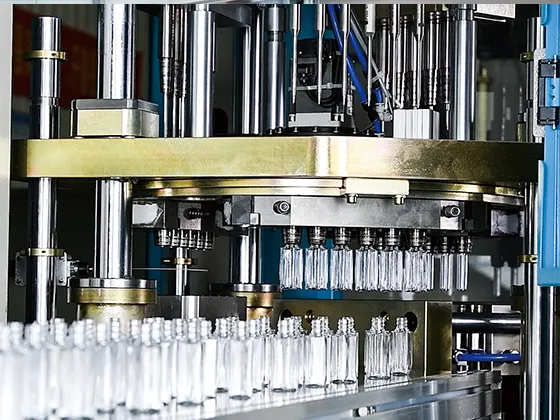
Pool chemical containers are stored and used in direct outdoor sun exposure — on poolside decking, in outdoor storage sheds with translucent roofing, and in garden retail displays that may have partial or full UV exposure during the retail period. Standard PET without UV stabilisation experiences photodegradation under extended UV exposure — yellowing, surface chalking, and embrittlement that can develop over 6–12 months of continuous outdoor UV exposure at Australian solar radiation intensities, which are among the highest in the world. Protecting pool chemical containers from UV degradation is therefore not a conservative precaution but a commercially necessary design specification.
UV Stabiliser Additives for Pool Chemical Containers
UV stabiliser additive systems — UV absorbers (benzotriazoles, benzophenones) and hindered amine light stabilisers (HALS) — are incorporated into the PET masterbatch for pool chemical containers requiring outdoor UV resistance. The additive loading is calibrated to provide a specific UV absorption performance (typically targeting ≥95% UV absorption at 340nm through the bottle wall at the production wall thickness) that protects the container from photo-oxidative degradation over the product’s intended outdoor shelf life and use life. The UV stabiliser additives used in the masterbatch must themselves be evaluated for compatibility with the water treatment chemical product — most commercial UV stabiliser packages for PET are non-extractable at normal storage conditions, but a formal extractables assessment at the actual product conditions is best practice for any chemical contact application.
Blue Tinting for UV Protection in Pool Chemical Containers
An alternative approach to UV protection for pool chemical containers is colour tinting — an opaque or semi-opaque blue, white, or black tint that blocks UV transmission physically rather than through UV absorber chemistry. This approach is particularly effective for pool chlorination products that are already associated with a characteristic blue colour in consumer perception (blue tint → pool chemical in the consumer’s visual vocabulary). A blue tinted bottle provides both UV protection and the visual brand association that supports product category identification without label reading — a dual commercial benefit from a single design decision. The tint loading is specified in L*a*b* notation and reproduced batch-to-batch with ΔE ≤ 2.0 consistency through ISBM masterbatch colour management.
Child-Resistant Packaging for Domestic Pool Chemicals: Compliance and CRC Engineering
Pool chemicals supplied in retail consumer packaging for domestic pool maintenance are among the highest-priority applications for child-resistant packaging in the Australian market. Sodium hypochlorite and concentrated acid pool treatment products have acute toxicity classifications that mandate CRC packaging under the Therapeutic Goods (Standard for Child-Resistant Packaging) Order and state poison regulations. For chemical products regulated as scheduled poisons, CRC is a legal requirement — not a commercial specification decision.
ISBM’s injection-formed neck finish delivers the dimensional consistency that domestic pool chemical CRC systems require across high-volume production. The challenge for pool chemical packaging that distinguishes it from standard consumer goods CRC applications is the combination of CRC requirement with chemical product characteristics: the closure must satisfy the child-resistant test, must maintain the chemical seal against an oxidising or acidic product over the product’s shelf life, and must continue to function correctly after exposure to the product chemistry (pool chemicals that contact the neck finish area during dispensing or storage).
The closure material for pool chemical CRC systems must itself be chemically compatible with the product. HDPE push-and-turn CRC closures are the standard for liquid pool chlorination products because HDPE provides good chemical resistance to sodium hypochlorite across the standard retail concentration range. The ISBM bottle’s injection neck finish interfaces with this HDPE CRC closure through a defined thread and sealing surface geometry — the closure selection and bottle neck finish geometry are jointly specified and must be validated as a system. Ever-Power provides CRC closure compatibility engineering support that addresses both the dimensional specification and the chemical compatibility of the container-closure interface.
Transparency as a Functional and Commercial Advantage in Water Treatment Packaging
The transparency of PET ISBM containers provides a commercially significant advantage in water treatment product retail that HDPE alternatives cannot replicate. Pool chemical products where the product’s own appearance communicates useful information to the consumer — the characteristic blue of copper algaecide, the clarity of properly diluted chlorination solution indicating concentration, the colour-coded tint of pH adjustment products (blue for pH minus, green for pH plus in many Australian brands) — benefit directly from containers that display the product visually before the label is read.
This visual product communication is not merely aesthetic — for pool maintenance consumers who may not reliably read chemical product labels before use, the visual product identification provided by a transparent or translucently tinted container reduces the risk of product misuse or incorrect application. A consumer who can see that their “pH minus” container holds a clear, slightly blue-tinted liquid is more likely to apply the correct product to their pool than one working from an opaque white container whose identity is determined solely by label reading. This safety-through-clarity argument is increasingly relevant as Australian pool chemical manufacturers respond to Safe Work Australia guidance on reducing chemical product misuse incidents.
For water treatment products where product transparency has commercial or safety value, PET ISBM is the material platform that delivers this value within the chemical compatibility constraints of the specific product. For products where chemical compatibility requires HDPE, the transparency advantage is simply unavailable — and the commercial positioning of the product must rely on other differentiation mechanisms.
Industrial Fluid Packaging: Hydraulic Fluids, Lubricating Oils, and Process Chemicals
Beyond water treatment, the industrial fluid packaging sector includes hydraulic oils, gear oils, compressor oils, cutting fluids, metalworking lubricants, specialty process chemicals for manufacturing operations, and electronic and precision cleaning solvents. Each of these product categories has distinct packaging requirements that ISBM addresses through material selection, design engineering, and production process management.
Hydraulic and Gear Oils
Mineral-base and synthetic hydraulic oils at industrial use concentrations are compatible with standard PET with a formal 60°C/6-week stability validation. Transparency advantage: internal contamination of hydraulic fluid (visible particle content, discolouration from system wear) is immediately visible through a clear PET container — a functional advantage for maintenance professionals monitoring fluid condition.
Cutting and Metalworking Fluids
Water-miscible metalworking fluid concentrates (typically 5–15% emulsifier plus corrosion inhibitor package in water) are within PET compatibility ranges at normal storage conditions. Straight cutting oils (petroleum-based, no water) require individual stability assessment. ISBM PET containers provide the clarity that allows machinists to assess fluid concentration by colour comparison — a practical maintenance advantage.
Electronics and Precision Cleaning
Isopropanol-based electronics cleaning solvents (≤70% IPA concentration), aqueous precision cleaning agents, and deionised water packaging are all compatible with PET ISBM. The clarity and low extractable profile of ISBM PET is particularly valued for precision cleaning applications where packaging-introduced contamination would be detectable in the cleaned components.
Laboratory and Research Reagents
Laboratory grade reagent packaging — buffer solutions, culture media, dilution reagents — in ISBM PET provides the low extractable profile, optical clarity, and dimensional precision for automated liquid handling equipment compatibility that laboratory supply applications require. Certified material data sheets from ISBM production records support laboratory reagent regulatory submissions.
UN Dangerous Goods Performance and Transport Packaging Requirements
Many water treatment and industrial fluid products are classified as dangerous goods under the Australian Dangerous Goods Code — Class 8 (corrosives) for acid and alkaline products, Class 5.1 (oxidising substances) for concentrated chlorination products, and Class 3 (flammable liquids) for solvent-containing industrial fluids. Packaging for these products must meet the UN performance testing requirements for their Packing Group classification.
The UN performance testing programme for ISBM PET and PETG dangerous goods containers follows the same test protocol structure as agricultural and industrial chemical packaging described in the earlier application article — drop test at 1.2m, stacking test, hydraulic pressure test, and compatibility/permeation assessment. What distinguishes the water treatment chemical application is the severity of the compatibility and permeation requirements: oxidising pool chemicals require the permeation test to be conducted with the specific oxidising product (not a surrogate) because the oxidation mechanism for these compounds is different from standard liquid permeation, and the test must confirm that the wall integrity is not compromised over the test period by the oxidation mechanism.
For water treatment chemical operations seeking UN performance qualification for PET ISBM containers, Ever-Power provides the production process documentation and container specification records required for the qualification submission, and can recommend accredited Australian testing laboratories for the physical performance testing component of the qualification programme. The specific testing laboratory selection should be confirmed with the dangerous goods regulator for the relevant Packing Group — not all accredited packaging test facilities are approved for all dangerous goods Packing Group classifications.
Production Configuration for Water Treatment Chemical ISBM Operations
Water treatment chemical packaging operations in Australia typically produce a range of SKUs across 500ml–5L formats, serving retail hardware and pool supply channels and industrial distribution. The production volume profile for this sector is moderately seasonal — with peak demand in the Australian summer swimming season (October–March) driving a 30–50% volume increase above the annual average. ISBM production planning for water treatment chemical operations must account for this seasonality and build sufficient summer stock during the lower-demand winter months, or configure production capacity to handle the peak demand period with sufficient buffer.
Seasonal Demand Planning and Safety Stock
For water treatment chemical operations with 30–50% peak-to-average volume variation, producing 6–8 weeks of peak-season safety stock during the February–August off-peak period is the standard approach. ISBM production’s just-in-time capability (1–2 week lead from production start to filled stock) allows operators to carry less safety stock than offshore-sourced bottle operations, but some summer buffer is still prudent against unexpected summer demand spikes.
Multi-SKU Production Scheduling
A typical water treatment ISBM operation with 8–15 SKUs across chlorination, algaecide, pH adjustment, and clarifier products benefits from a weekly production cycle that batches similar-format and similar-colour SKUs together to minimise changeover frequency. The changeover sequence planning — optimising the order of SKU production to reduce changeover time by moving from lighter to darker colours and from smaller to larger formats — is as important for chemical operations as for consumer goods operations in maximising productive output from the ISBM platform.
Quality Control for Chemical Packaging
Water treatment chemical packaging quality control must include CRC engagement testing (for products requiring child-resistant closures), GHS label placement verification (mandatory chemical labelling), and dimensional checks against the UN qualification specification. The inspection frequency and documentation requirements are higher for dangerous goods classified products — a documented in-process inspection record is not just good quality practice but a regulatory requirement for dangerous goods packaging production.
Ever-Power’s Water Treatment and Industrial Fluid ISBM Support
Australia Ever-Power provides water treatment and industrial fluid packaging operations with ISBM machine technology and application engineering support tailored to the chemical resistance, regulatory compliance, and production reliability requirements of this sector. The support programme covers material selection and stability testing guidance for specific water treatment formulations, CRC closure compatibility engineering for dangerous goods classified products, UV stabiliser specification for outdoor exposure applications, UN performance qualification documentation support, and ongoing process maintenance that sustains production quality across seasonal demand cycles.
For operations currently sourcing water treatment packaging from offshore suppliers — a common situation in this sector given the historically high offshore production cost advantage in commodity industrial packaging — Ever-Power’s pre-investment analysis compares the total cost of supply (including all supply chain components) against local ISBM production cost at the specific volume profile and product range of the operation. In most cases above 3–5 million units per year for standard pool chemical formats, the analysis confirms that local production is commercially competitive when the seasonal supply chain risk (the consequence of a supply disruption during peak pool season) is properly valued.
Contact [email protected] or visit isbm-technology.com/contact-us to arrange a water treatment or industrial fluid packaging feasibility consultation.
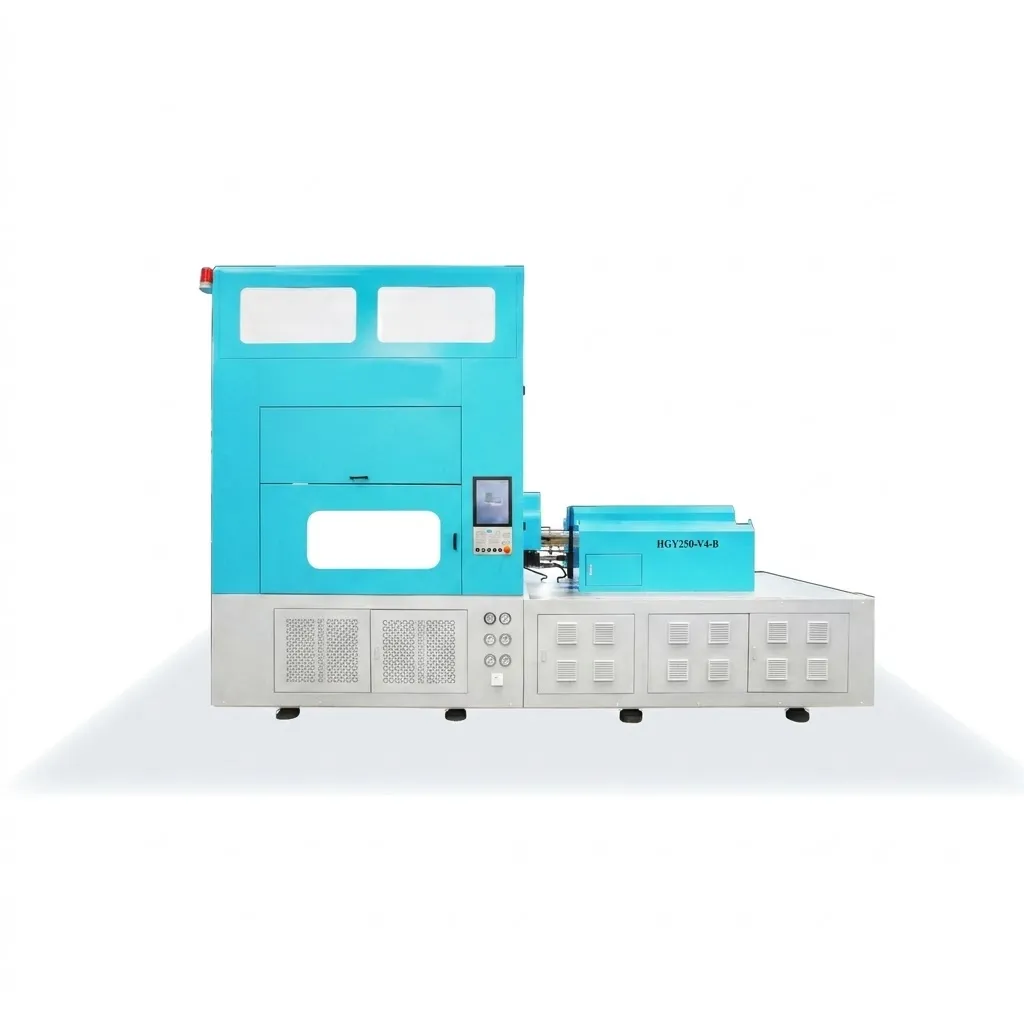
Recommended Machine
HGYS150-V4-B — Four-Station ISBM Machine for Water Treatment Packaging
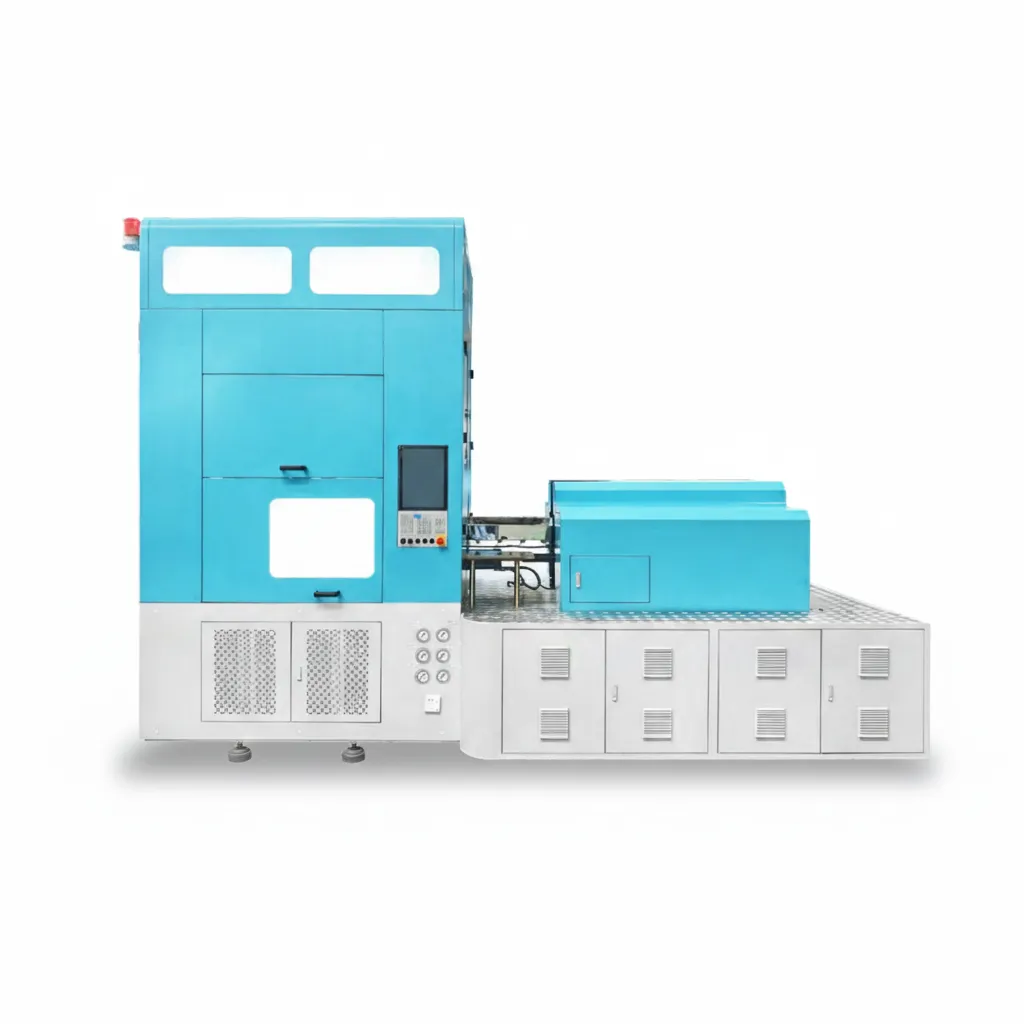
For water treatment chemical and industrial fluid packaging operations producing 500ml–2L containers across a multi-SKU product range with diverse chemical resistance requirements and dangerous goods compliance demands, the HGYS150-V4-B four-station one-step ISBM machine provides the production platform calibrated for the chemical packaging sector’s requirements. The four-station architecture delivers cycle-to-cycle consistency that the UN performance qualification process demands — every cavity producing containers within the dimensional specification that the qualification represents. The machine processes both PET and PETG with equal precision, supporting the material flexibility required across water treatment product pH ranges from strongly acidic through moderately alkaline. Its CRC-compatible neck insert system accommodates the child-resistant closure neck finishes required for domestic pool chemical products. The PLC-based process data logging system generates the production batch records that dangerous goods packaging quality management and regulatory compliance requires. UV stabiliser masterbatch processing is standard — the injection unit handles UV stabiliser-containing masterbatch blends without special configuration modifications.